
2027 Cheapest Accredited Online Patient Safety Master's Programs With Flat-Rate Tuition: Costs per Term and Total Degree Estimates

Co-Founder and Chief Data Scientist
Choosing a patient safety master's program based on a low advertised term price can be expensive if the degree takes more terms than expected. This guide explains how to calculate flat-rate tuition, identify added costs, and compare programs when schools package patient safety coursework within quality, healthcare administration, nursing, or informatics degrees.
The Bureau of Labor Statistics projects 23% growth for U.S. medical and health services manager jobs from 2024 to 2034, making cost-conscious preparation for quality and safety leadership especially relevant.
Key Things You Should Know
- A flat-rate term can be economical only when a student uses the full number of credits permitted; taking a light load can make the effective price per credit substantially higher.
- There is no universal flat-rate price for accredited online patient safety master's programs because patient safety is commonly a concentration within quality, nursing, healthcare administration, or informatics degrees; compare total required terms, not term tuition alone.
- For career context, the U.S. Bureau of Labor Statistics projects 23% employment growth for medical and health services managers from 2024 to 2034, but a master's degree does not guarantee a management role or a particular salary.
What Does Flat-Rate Tuition Mean for an Online Patient Safety Master's Program?
Flat-rate tuition means a school charges one published tuition amount for a defined enrollment period, such as a semester, quarter, or six-month term, rather than charging separately for every credit. The rate usually applies only within a stated credit range. It does not automatically mean unlimited courses, unlimited repeats, or that fees are included.
Patient safety is often delivered as a concentration rather than a stand-alone master's degree. Relevant program labels may include healthcare quality and safety, patient safety leadership, clinical quality improvement, health systems management, nursing leadership, or health informatics. Students entering from nursing may also compare an RN to BSN online no clinicals accredited pathway if they need an undergraduate credential before a graduate program.
Accreditation should be evaluated separately from tuition. Institutional accreditation confirms that the university meets recognized academic standards. Programmatic nursing accreditation may matter for nursing-focused degrees, while healthcare administration and quality programs may have other specialized recognition. A patient safety master's typically is not, by itself, a license-qualifying degree; confirm state, employer, and certification requirements for the role you want.
Before treating a rate as flat-rate, ask the admissions or bursar office to confirm the following details in writing.
- The exact term length and the maximum and minimum credits covered by the rate
- Whether practicum, capstone, clinical, technology, graduation, and course-material charges are outside tuition
- Whether repeated, withdrawn, or incomplete courses create separate charges
- Whether the published rate applies to all online students or varies by residence, program, or start date
How Much Does a Flat-Rate Online Patient Safety Master's Program Cost Per Term?
A trustworthy per-term comparison requires each school's current tuition schedule, credit policy, and mandatory-fee list. Because schools may classify patient safety differently and can revise tuition by academic year or cohort, a single "cheapest" national term price is not reliable without matching the same credential, required credits, and billing period.
Use the school's stated term tuition as the starting point, then add every unavoidable charge. The table shows the calculation framework that produces a comparable per-term figure without assuming that advertised tuition is the final bill.
| Cost component | What to verify | Comparison calculation |
| Published flat-rate tuition | Credits included and term length | Base term tuition |
| Required recurring fees | Technology, online learning, student services, distance-learning fees | Add once for each enrolled term |
| Program-specific charges | Practicum, assessment, portfolio, laboratory, or capstone charges | Add in the term charged |
| Materials | Texts, software, simulation platforms, certification preparation | Add only if required |
| Net term cost | All mandatory charges for the planned load | Tuition + recurring fees + program charges + required materials |
For example, the effective tuition cost per credit is calculated as flat-rate tuition divided by credits completed within that billed term. Calculate this figure using tuition alone first, then calculate a second version using tuition plus mandatory fees. The second figure is usually more useful for budgeting.
Students should avoid comparing a six-month competency-based term with a conventional 15-week semester as though they were identical. A lower-looking term price may cover a different amount of instruction, a different credit maximum, or different support services.
How Much Does an Online Patient Safety Master's Degree Cost in Total With Flat-Rate Tuition?
Total cost depends on how many paid terms are needed to finish, not merely on the school's first-term charge. The core estimate is: total tuition = flat-rate tuition per term × number of paid terms. Then add mandatory fees, required materials, and any one-time graduation or assessment charges.
A student should estimate at least three completion scenarios: an on-schedule plan, a conservative plan with one extra term, and a plan that includes any approved transfer credit. This table shows why an extra term is the central financial risk in flat-rate models.
| Scenario | Tuition estimate | Fee estimate | What it shows |
| On-schedule completion | Term tuition × planned terms | Recurring fees × planned terms + one-time fees | Best estimate when course sequencing is met |
| One additional term | Term tuition × (planned terms + 1) | Recurring fees × (planned terms + 1) + one-time fees | Financial effect of a delay, repeat, or unfinished capstone |
| Approved transfer-credit plan | Term tuition × reduced paid terms | Recurring fees × reduced paid terms + one-time fees | Potential savings only if transfer work removes a whole billed term |
Many master's programs require roughly 30 to 42 credits, but the exact requirement varies by curriculum and concentration. A transfer evaluation may reduce required coursework, yet it may not reduce tuition if the remaining courses still require the same number of terms. Ask whether the school will provide a written degree plan before you commit.
For return-on-investment planning, connect the total cost to the job you actually seek. Patient safety graduates may pursue quality improvement, risk management, accreditation support, clinical operations, data and safety analysis, or healthcare management roles. The BLS reported a $117,960 median annual wage for medical and health services managers in May 2024, but that occupation includes varied education and experience levels and should not be treated as a starting-salary estimate for every graduate.
How Does Course Load Affect the Cost of a Flat-Rate Online Patient Safety Master's Degree?
Course load is the deciding variable in a flat-rate model. If the same tuition covers a range of credits, completing more eligible credits in the term lowers the effective tuition cost per credit. Completing fewer credits does not necessarily lower the bill.
The following comparison uses formulas rather than assumed school prices, so you can insert the rate and credit policy from any program you are considering.
| Planned course load | Effective tuition per credit | Flat-rate value | Primary risk |
| Maximum credits allowed | Term tuition ÷ maximum completed credits | Usually strongest value per credit | Workload may reduce performance or delay completion |
| Typical full-time load | Term tuition ÷ completed credits | Often balances progress and affordability | Sequence requirements may limit available courses |
| Part-time load | Term tuition ÷ fewer completed credits | Often weak value under a true flat rate | More paid terms may be required |
| Single remaining course | Term tuition ÷ credits in that course | Potentially the highest effective cost | A final course can trigger an entire added term |
Working clinicians and healthcare staff should plan from the actual weekly workload, not the maximum credit allowance. Review synchronous meeting times, group work, practicum hours, and capstone milestones. A rapid option can be a poor value if it leads to a withdrawal, course repeat, or missed prerequisite.
Applicants who need flexible undergraduate preparation before graduate study may find that a nursing schools that do not require entrance exam comparison is useful, but graduate admissions standards remain program-specific. Common master's admissions requirements include a bachelor's degree, official transcripts, minimum GPA, résumé, statement of purpose, and sometimes clinical or healthcare experience.
Is Flat-Rate Tuition Cheaper Than Per-Credit Tuition for an Online Patient Safety Master's Degree?
Flat-rate tuition is cheaper only when its total tuition and mandatory fees are lower than the alternative for the same degree outcome and completion plan. It tends to favor students who can consistently complete a high approved course load. Per-credit tuition can be less expensive for students who need to enroll part time, have employer reimbursement capped by credit, or need only a few remaining courses.
Compare the two models using the same number of required credits and a realistic timeline. The table identifies the break-even logic.
| Pricing model | Total tuition calculation | Usually a better fit for | Watch for |
| Flat-rate per term | Term tuition × paid terms | Students able to maximize included credits and maintain steady progress | Added-term exposure and credit caps |
| Per-credit tuition | Price per credit × required credits | Part-time students or those with variable schedules | Separate course, online, and program fees |
| Hybrid pricing | Per-credit charge up to a threshold, then a flat rate | Students near the full-time threshold | Whether all required courses are available in the same term |
To find the break-even point, divide the flat-rate term tuition by the per-credit rate from a comparable alternative. The result is the number of credits at which tuition alone costs the same. Then repeat the calculation after including mandatory fees and expected terms.
Do not assume campus-based pricing is always higher or online pricing is always lower. Delivery mode, public or private institutional policies, residency rules, student services, and clinical or practicum requirements can change the final price.
What Fees and Additional Expenses Apply to a Flat-Rate Online Patient Safety Master's Program?
Flat-rate tuition rarely describes the complete cost of attendance. Fees may be charged each term, per course, or once at graduation. The school's tuition page, catalog, enrollment agreement, and financial-aid cost-of-attendance budget may describe different parts of the bill, so review all of them.
These categories are the most important to identify before comparing a low advertised term rate.
- Recurring institutional fees, including online learning, technology, student services, or distance-education charges
- Academic fees for graduate applications, course platforms, proctoring, assessments, practicum administration, or capstone evaluation
- Learning expenses such as textbooks, electronic resources, software, statistical tools, and required equipment
- Professional expenses such as background checks, immunizations, travel, site requirements, or certification examination preparation when a program includes field-based work
- Financial costs including interest on borrowed funds, payment-plan charges, and lost employer reimbursement if enrollment drops below eligibility requirements
Ask for a term-by-term sample bill based on your planned start date and course load. This is more useful than asking whether "fees are included," because schools may include some fees while excluding program-specific charges.
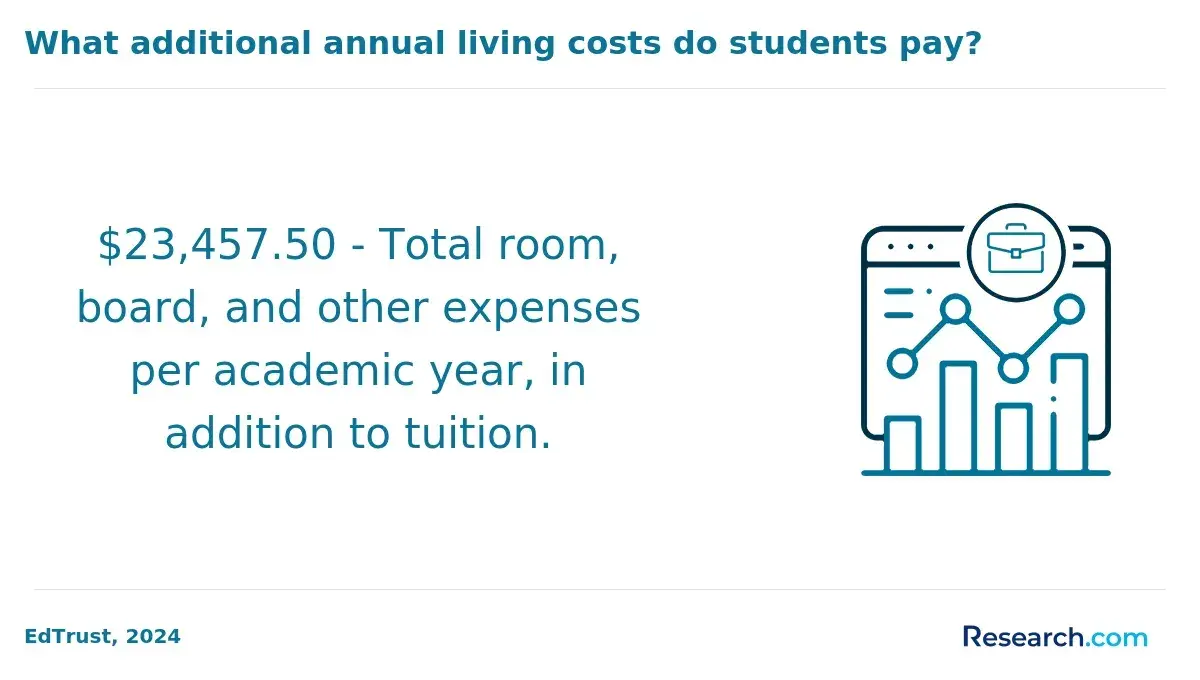
A common mistake is treating optional living expenses as mandatory program charges, or doing the reverse. Keep two budgets: direct educational charges billed by the institution and personal costs such as internet access, commuting to a practicum site, and reduced work hours. Both affect affordability, but they should not be confused when comparing tuition.
Can Accelerated Study Lower the Total Cost of a Flat-Rate Online Patient Safety Master's Degree?
Accelerated study can lower total tuition when it reduces the number of billed flat-rate terms without causing a repeat, withdrawal, or added final term. It can also shorten the time before a student can pursue a new role. It is not automatically cheaper when tuition is charged by credit, when a program limits course sequencing, or when accelerated pacing creates additional academic risk.
Before choosing an accelerated plan, confirm that all required courses, electives, practicum components, and capstone milestones can fit into the proposed schedule. A program may permit a high credit load on paper while offering a required course only once per year.
Students considering advanced practice nursing alongside safety leadership should distinguish these paths. A patient safety master's generally focuses on systems improvement rather than nurse practitioner preparation; a 12 month FNP program online serves a different clinical and licensure-oriented objective.
Use this decision sequence to test whether acceleration is financially sensible.
- Obtain the official degree map and identify every prerequisite and course-offering restriction.
- Calculate the number of paid terms under the standard and accelerated plans.
- Add recurring fees to each plan, not just tuition.
- Assess work, caregiving, clinical, and study capacity for the proposed load.
- Confirm the financial consequences of dropping, repeating, or deferring a course.
Can Financial Aid and Employer Reimbursement Reduce the Cost of a Flat-Rate Online Patient Safety Master's?
Yes. Federal student aid, institutional scholarships, private scholarships, payment plans, military or veteran education benefits where eligible, and employer tuition assistance can reduce out-of-pocket cost. Eligibility, award amounts, enrollment requirements, and repayment obligations vary widely, so aid should be evaluated against the net program cost rather than assumed from a published tuition rate.
Complete the FAFSA for the correct award year and ask the school whether the online program is eligible for the aid you expect to use. For employer support, verify whether reimbursement is paid upfront or after grades post, whether a grade minimum applies, and whether leaving the employer triggers repayment.
Healthcare employers may support education related to quality improvement, patient experience, risk reduction, or leadership, but they may set annual caps that do not align neatly with a flat-rate term. Divide the employer's annual benefit by the school's term calendar to see whether timing creates a cash-flow gap.
Career changers may also need to compare prerequisite pathways carefully. For example, the best online nutrition degree option can be relevant to population health interests, but it is not a substitute for a patient safety curriculum or a guarantee of graduate admission.
Borrowing decisions should account for completion risk. A lower monthly payment does not make a higher total degree cost more affordable, particularly if extra flat-rate terms are likely. Request a financial-aid counseling appointment and compare the program's estimated borrowing with your expected employer contribution and savings.
How Do Enrollment Breaks and Extra Terms Affect the Cost of an Online Patient Safety Master's Degree?
In a flat-rate program, an additional enrolled term can add nearly the full term tuition plus recurring fees even if only one course remains. Enrollment breaks can also affect tuition locks, financial-aid eligibility, course sequencing, catalog-year requirements, and employer reimbursement.
Plan for interruptions before enrollment rather than assuming a leave will be cost-neutral. The financial effect depends on whether the school charges only when enrolled, maintains the same tuition rate after a break, and allows students to resume the next required course without waiting for a later cycle.
These questions help expose added-term risk before it becomes a bill.
- What happens to tuition if I take a leave of absence or skip a term?
- Does my tuition rate remain locked, and for how long?
- Can I complete a capstone, practicum, or incomplete course without paying for another full term?
- Are failed or repeated courses included in the flat rate, limited by policy, or billed separately?
- Which required courses are offered infrequently or must be taken in sequence?
Students sometimes overestimate the value of transfer credit by assuming any transferred course eliminates a full term. The meaningful savings occurs only when the transferred credits reduce the number of billed terms. Obtain the official transfer decision and revised completion plan before using transfer credit in a cost calculation.
How Should Students Choose the Best-Value Flat-Rate Online Patient Safety Master's Program?
The best-value program is not necessarily the one with the lowest term price. It is the accredited option that fits your professional goal, can be completed on a realistic schedule, provides relevant quality and safety learning, and has the lowest credible net cost after fees, aid, and likely extra-term risk.
Compare finalists on the same assumptions: required credits, likely terms, recurring fees, transfer decisions, employer support, and required field experiences. This comparison framework keeps an appealing headline rate from obscuring a higher total commitment.
| Value factor | What to compare | Why it matters |
| Accreditation and fit | Institutional accreditation, applicable program recognition, curriculum, and intended role | Supports degree credibility and alignment with employer expectations |
| Completion structure | Terms required, credit cap, course sequence, and capstone timing | Determines whether flat-rate tuition can actually be used efficiently |
| Net price | Total tuition, mandatory fees, aid, reimbursement, and likely added-term cost | Shows the cost you are more likely to pay |
| Career relevance | Quality improvement, patient safety, data, regulation, leadership, and practicum opportunities | Helps connect coursework to target responsibilities |
| Student support | Advising, faculty access, technical support, career services, and scheduling flexibility | Can reduce the risk of delays that increase total cost |
Patient safety work is interdisciplinary. Professionals may collaborate with clinicians, analysts, administrators, social workers, and public-health teams to investigate adverse events, improve processes, measure outcomes, and support safer care. Applicants interested in the social and organizational side of health systems may also explore an online bachelors in sociology as a separate foundational route, depending on their current education and career plan.
Red flags include vague statements about "all-inclusive" tuition, no written credit cap, unclear practicum expenses, a degree plan that leaves one course for a final term, and claims that accreditation or a degree alone ensures certification, licensure, or promotion. Request written answers, calculate an on-time and one-extra-term total, and choose only after comparing the same completion assumptions across programs.
Other Things You Should Know About Patient Safety
Programs commonly cover quality improvement methods, root-cause analysis, human factors, healthcare data interpretation, risk management, regulatory expectations, communication, and systems leadership. Course titles and depth vary, so review the curriculum for the skills required in your target role.
Some do, especially clinicians in quality or safety leadership roles. Others work primarily with incident reports, performance data, policy development, accreditation preparation, staff education, and process redesign. Direct patient care is not required for every patient safety position.
No. A patient safety, quality, administration, or informatics master's generally does not qualify a person for initial nursing licensure. Nursing licensure requirements are set by state boards and usually require an approved prelicensure nursing education pathway and examination.
Certification requirements depend on the employer and role. Some employers prefer credentials in healthcare quality, patient safety, risk management, or a clinical specialty, while others prioritize relevant experience. Review job postings in your intended market and confirm each certifying organization's eligibility rules before selecting a degree.
References
- Graduate Tuition https://www.messiah.edu/school-gps/cost-and-aid/tuition
- Tuition and Fees https://www.unthealth.edu/tuition-and-fees/index.html
- Graduate Credit for CPHQ - NAHQ https://nahq.org/education/higher-education-programs/graduate-credit-for-cphq/
- EdAssist | Understanding college pricing models https://www.brighthorizons.com/resources/blog/edassist/understanding-college-pricing-models


