2027 Can Payroll Certification Strengthen a BS in Business Administration Plan? Credit and Career Questions
Audited and Verified:
Our Editorial and Data Verification Process
Research.com uses government datasets, official education statistics and primary institutional information to support its career and degree guides. Our review process checks factual accuracy, occupational definitions, source dates and the requirements associated with the credentials discussed.
How This Article Was Fact-Checked
Our editorial team verifies salary estimates, employment projections, education requirements and program information against original data providers and official organizations. Salary figures are checked against the relevant occupational definitions and reporting periods. Information about licensure, accreditation and required in-person training is reviewed separately.
Fact-checked and verified on:

Co-Founder and Chief Data Scientist
Payroll certification can give a business administration student a specific skill to build alongside a broad degree, but the credential may not earn college credit or qualify its holder for a higher-paying job. That distinction matters if you are choosing electives, paying for exam preparation, or trying to finish a BS without extra coursework.
This guide compares payroll credentials with degree requirements, explains where the skills overlap, and shows how to check credit, cost, and career value before committing.
Key Things You Should Know
- Payroll certification can strengthen a BS plan for payroll operations or HR support, but it does not replace the degree's business core or workplace experience.
- PayrollOrg offers the Fundamental Payroll Certification (FPC) and Certified Payroll Professional (CPP); CPP eligibility requires qualifying experience under the organization's current rules.
- Certification training does not automatically earn degree credit. Get a written evaluation before paying for a course you expect to apply toward graduation.
Can payroll certification strengthen a BS in business administration plan?
A BS in business administration develops broad knowledge of accounting, operations, management, and organizational decisions. Payroll certification focuses on applying payroll rules and processes accurately. Together, they can help a student explain both a business process and its place within an organization.
The combination is less compelling if your goal is general management and you have no interest in payroll work. In that case, relevant employment, an internship, or leadership-focused coursework may be a better use of time.
Students comparing that route can examine three-year-or-less leadership degree pathways, while checking whether an accelerated schedule actually fits their transfer credits and obligations.
What payroll certifications can business administration students pursue?
PayrollOrg's two principal credentials serve different stages of practice. Neither is an academic concentration or a degree; each has its own examination and credential rules.
The comparison below helps students avoid choosing an advanced exam before they have the experience needed to qualify.
| Credential | Likely fit | Key distinction |
| Fundamental Payroll Certification (FPC) | Students and people entering payroll | An entry-focused credential; check the current exam handbook for eligibility and content. |
| Certified Payroll Professional (CPP) | Practitioners with qualifying payroll experience | Eligibility has experience-based routes that must be documented under PayrollOrg's current rules. |
If your intended work is primarily recruiting or employee relations rather than pay processing, compare HR coursework before buying payroll exam preparation. For students still choosing a degree route, resources that compare HR bachelor's transfer policies can help frame that alternative; an HR degree does not itself award a payroll credential.
Do payroll certification courses count toward business administration degree credits?
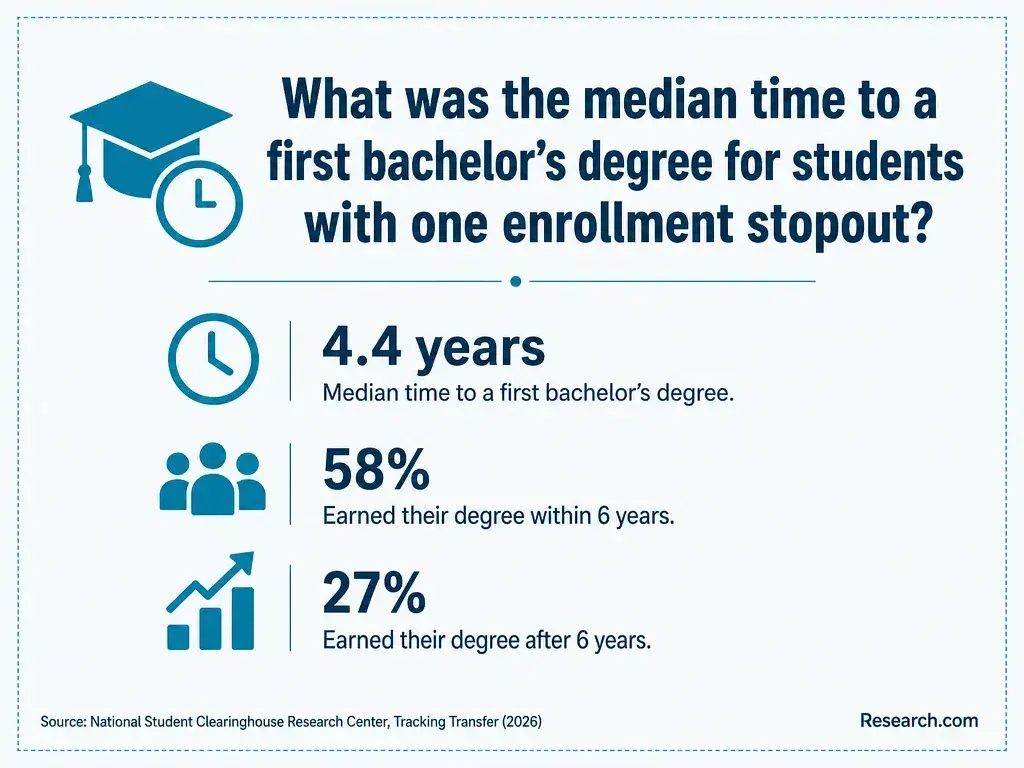
Passing a professional exam, completing a preparation course, and earning college credit are separate events. A school may accept a transcripted college course, evaluate documented prior learning, or award no credit for certification training. Even accepted credits may fill only free electives rather than accounting, HR, or business-core requirements.
Before enrolling, send the course syllabus, provider details, assessment method, and any official credit recommendation to the transfer or prior-learning office. Ask your business adviser for an updated degree audit showing where an approved award would apply, whether residency requirements remain, and whether the evaluation would affect financial aid or graduation timing. Do not count a preliminary estimate as a final award.
If you are comparing another major to preserve existing credits, apply the same audit standard. For example, accelerated degree planning for supply chain undergraduates is relevant only if that program fits your career goal and its school confirms how your credits apply.
Payroll connects classroom accounting and HR concepts to a recurring operating obligation: collecting approved time and pay data, applying withholding and deduction rules, checking results, keeping records, and resolving discrepancies.
Business coursework can add context about internal controls, budgets, information systems, and communication with employees and managers. Neither a general business class nor an exam-preparation course proves that someone can run an employer's payroll unsupervised.
A useful learning plan pairs a relevant course with supervised work or a permitted simulation. For example, a student could document a hypothetical payroll-control checklist and explain how errors would be identified and escalated. Real employee records should not enter a class project without employer permission and appropriate privacy safeguards.
If you would rather coordinate implementations and process changes than administer pay, compare that skill goal with lower-tuition online programs for project management. A project-management pathway builds different evidence of competence and should not be treated as payroll preparation.
The FPC is designed as an entry-focused option and does not generally require prior payroll employment. CPP applicants must meet a qualifying route involving payroll practice; PayrollOrg's current candidate handbook controls the precise experience, education, coursework, documentation, and exam requirements. A BS in business administration should not be assumed to satisfy a CPP route by itself.
Before registering, compare your actual tasks, not just your job title, with the credential's definition of qualifying practice. Keep records of duties and dates, and confirm that any planned preparation course meets the certifier's rules.
If you are weighing payroll against another specialization, compare credential and degree expenses separately; tuition and aid questions for project management students illustrate why financing a degree is a different decision from paying for professional exam preparation.
Choose the program in which you can complete the degree and gain relevant practice. An online student already working with timekeeping, HR systems, or payroll staff may have valuable opportunities to apply coursework. A campus student may find it easier to access local internships or in-person recruiting. Both still need to verify whether those opportunities exist.
Ask about live class sessions, group work, exam proctoring, internship approval, and required campus visits. An online label does not mean self-paced study. When comparing ranked US college pathways in online business, check the specific BS curriculum and schedule rather than relying on format or ranking alone.
There is no reliable single combined price: degree charges vary by school and remaining credits, while certification costs depend on the exam, preparation chosen, and possible retakes. Request current written prices rather than assuming that an advertised tuition rate covers every expense.
Compare these price components separately so you can see which costs are required and which are optional.
- BS price: Remaining tuition and mandatory fees, plus books, software, proctoring, and any required travel.
- Certification price: Current exam and application charges, optional preparation, materials, and any applicable renewal expenses.
- Out-of-pocket price: Charges after confirmed grants or employer benefits, accounting for reimbursement timing and any borrowing costs.
For degree comparisons, low-cost online business degree programs are a starting point, not a personal cost estimate. Ask each school to price your remaining approved degree plan; an inexpensive per-credit rate may not help if substantially more courses are required.
A student with relevant training can look for payroll clerk, payroll assistant, or payroll coordinator openings involving data entry, time-record review, record maintenance, and employee inquiries.
Some HR operations and benefits-support jobs include payroll coordination, but their duties vary by employer. Certification may help demonstrate knowledge; employers can still require software proficiency and prior processing experience.
A BS may support movement into broader HR or operations work, particularly when paired with demonstrated responsibility. Supervising a payroll team, owning compliance decisions, or managing a department usually calls for more than graduation and a newly earned credential.
If your preferred work concerns purchasing, inventory, or distribution instead, compare the role requirements and completion costs of an affordable supply chain education route. That is an alternative career direction, not an automatic advancement from payroll.
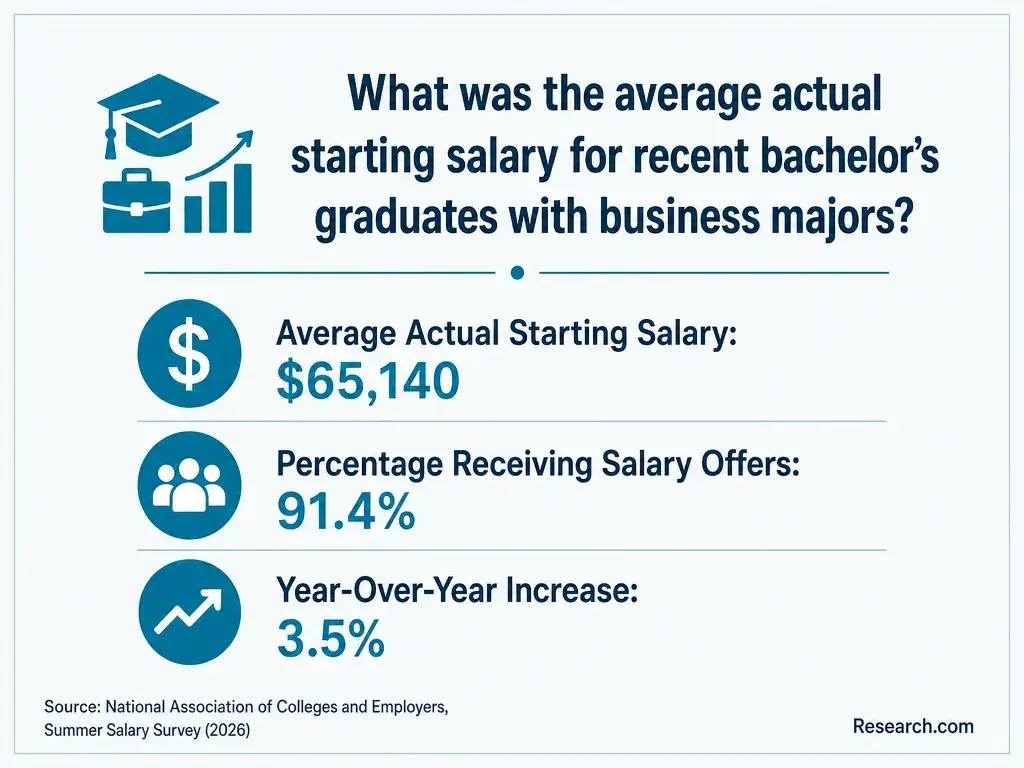
There is no dependable national salary figure for the specific combination of a business administration BS and payroll certification. Pay depends on the job's duties, location, industry, and experience; a credential does not establish a salary premium on its own. Compare local postings for the payroll roles you could qualify for now, then separate those from more experienced specialist or supervisory jobs.
For context, the U.S. Bureau of Labor Statistics reports a $75,940 median annual wage in May 2025 for human resources specialists. That is an occupation-wide median, not a payroll-specific wage, a starting salary, or the expected earnings of a certified graduate. Use it only when evaluating an HR specialist path with matching duties and qualifications.
Any earnings comparison should account for the cost of getting qualified. If you are also considering project-focused study, FAFSA grants and scholarships for project management students are relevant to that alternative degree's net cost, not evidence that its graduates, or payroll professionals, will earn more.
How should students choose an accredited business administration program?
First, confirm the institution's accreditation and that the exact BS program is available in your intended format. If a school advertises AACSB, ACBSP, or IACBE accreditation, check the accreditor's scope rather than assuming every business program is covered. Accreditation does not establish that payroll certification training will receive credit.
Then request a degree audit and compare programs on required accounting and HR courses, usable electives, transfer-credit application, access to supervised experience, course availability, and total remaining cost.
Ask who decides prior-learning credit and whether the answer can be documented before you purchase payroll training. If application charges are a constraint, no-application-fee online college choices may widen your shortlist, but should not outrank curriculum and credit fit.
The strongest plan is the one that meets graduation requirements without unnecessary credits and gives you a realistic way to demonstrate payroll skills for the role you want.
Other Things You Should Know About Business Administration Programs
No. The work can overlap in recordkeeping and reconciliations, but payroll centers on employee pay, deductions, and related reporting. Bookkeeping covers a broader set of financial transactions.
Professional credentials may have renewal and continuing-education rules. Check PayrollOrg's current requirements and include maintenance in your long-term budget.
Only with appropriate employer permission and safeguards. A hypothetical or fully authorized, de-identified example is safer than exposing employee pay or personal information.
Start with the systems named in realistic local job postings, but learn the underlying payroll checks and spreadsheet skills too. Software familiarity does not substitute for understanding pay rules or protecting employee data.
- Types of Accounting Degrees You Can Specialize In | Edison State Community College https://www.edisonohio.edu/blog/types-of-accounting-degrees-you-can-specialize-in
- Transfer credit practices - UC Admissions https://admission.universityofcalifornia.edu/counselors/preparing-transfer-students/transfer-credit-practice.html
- 13 High-Paying Jobs with a Bachelor's in Business Administration | PBA https://www.pba.edu/academics/outcomes/articles/degree-outcomes/13-high-paying-jobs-with-a-bachelors-in-business-administration/
- 10 Key Business Administration Skills for Every Role | University of the Cumberlands https://www.ucumberlands.edu/blog/business-administration-skills-for-every-role
- The Benefits of Earning a Degree in Business Administration | The Pennsylvania Institute of Technology https://www.pit.edu/news/the-benefits-of-earning-a-degree-in-business-administration/
- Transfer Credit | University of Alabama - UA Academic Catalog https://catalog.ua.edu/undergraduate/about/academic-regulations/policies/transfer-credit/
- Payroll Specialist Career Guide: Duties and Skills | American College of Education https://ace.edu/student-success/career-guides/payroll-specialist/
- How to Get Payroll Certified: A Guide for HR Professionals | justworks.com https://www.justworks.com/blog/what-is-a-payroll-certification-and-how-to-get-one
- United States University - Transfer Credit Policy https://usuniversity.smartcatalogiq.com/en/current/general-catalog/admissions/transfer-credit-policy