2027 Paying for an Online BS in Business Administration: A Failed Course That Must Be Repeated
Audited and Verified:
Our Editorial and Data Verification Process
Research.com uses government datasets, official education statistics and primary institutional information to support its career and degree guides. Our review process checks factual accuracy, occupational definitions, source dates and the requirements associated with the credentials discussed.
How This Article Was Fact-Checked
Our editorial team verifies salary estimates, employment projections, education requirements and program information against original data providers and official organizations. Salary figures are checked against the relevant occupational definitions and reporting periods. Information about licensure, accreditation and required in-person training is reviewed separately.
Fact-checked and verified on:

Co-Founder and Chief Data Scientist
A failed course can make an online BS in Business Administration more expensive than its advertised tuition suggests. The cost depends on whether the course is required, when it is offered again, how the school calculates grades, and whether you remain eligible for financial aid. For students balancing work, family, and a degree-completion plan, a delayed course can also mean another term of fees. This guide explains what to verify before paying to repeat the class, how to estimate the added cost, and when an appeal, approved equivalent, or revised schedule may be the better move.
Key Things You Should Know
- A failed required course usually must be passed or replaced by an approved equivalent; accepted credit is not necessarily credit that satisfies the business major.
- Budget for the repeat course, applicable fees, and any extra term it creates. The school's repeat-grade policy and financial-aid rules can change the final cost.
- Before registering again, request an updated degree audit and confirm the next offering, prerequisites, aid eligibility, and whether repeating the course will delay graduation.
What Is an Online Bachelor's Degree in Business Administration?
An online BS in Business Administration is an undergraduate degree covering business functions such as accounting, management, marketing, finance, and operations. "Online" describes how instruction is delivered; it does not mean courses are self-paced or that failed work can be made up without another enrollment. A BS, BBA, and specialized business degree can have different requirements, even when their course titles look similar.
That distinction matters after a failure. A required accounting course may block later finance classes, while an unsuccessful elective may have more replacement options. Use your official degree audit - not the number of credits on your transcript - to identify what remains. If you are considering another school, ranked school options for studying business online can provide a starting list, but only the receiving school can determine how your completed and failed courses affect its degree plan.
Is an Online Business Administration Degree Accredited?
An online degree should be evaluated under the institution's accreditation, just as an on-campus degree would be. Check the school's current institutional accreditation and, if it advertises AACSB, ACBSP, or IACBE accreditation, confirm that the claim covers the business program you would enter. Accreditation does not guarantee that another school will accept a repeated course or replace a failing grade.
If transferring seems cheaper than retaking the class, ask the prospective school for a written evaluation showing where each accepted credit applies. When you compare ranked accelerated undergraduate business schools, check their accreditation alongside transfer, residency, and repeat-course policies; a faster advertised format may still leave the failed requirement unresolved.
What Can You Do With an Online Business Administration Degree?
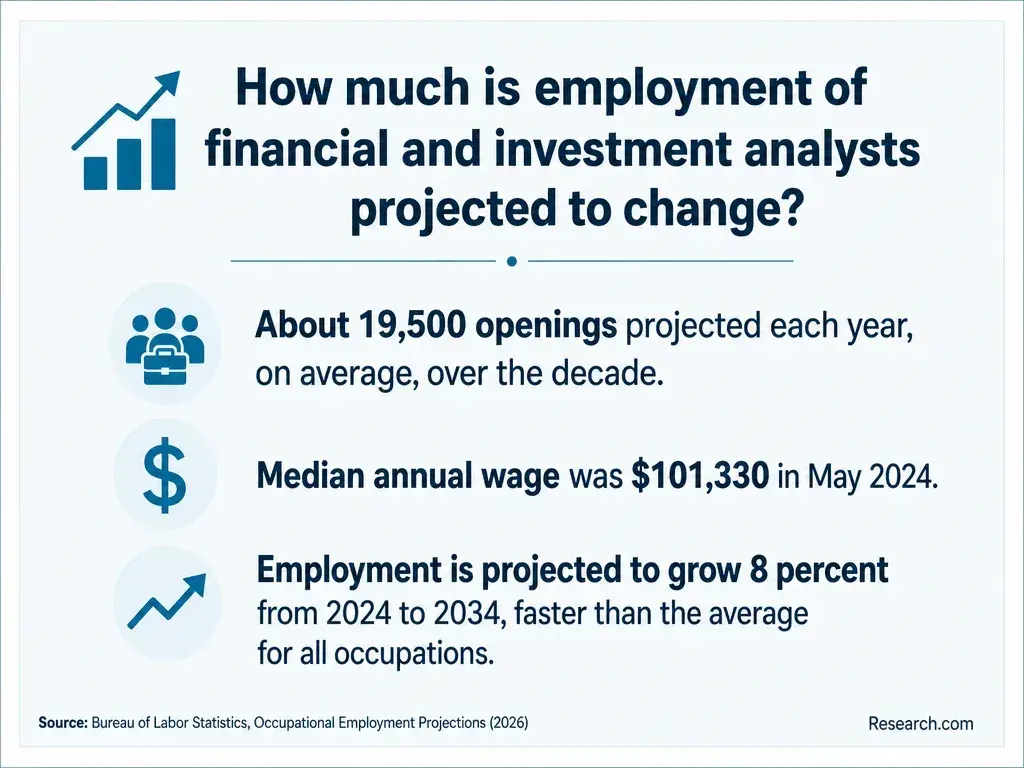
Business graduates may pursue entry-level work in operations, sales support, marketing coordination, procurement, or project coordination, depending on their skills and experience. The degree does not by itself qualify someone to manage staff or budgets. If the failed course is central to your intended role - for example, accounting for a finance-oriented path - retaking it is an opportunity to build a skill you will need beyond graduation.
If your goal is specifically project coordination, compare the remaining business-degree requirements with a more focused pathway before switching programs. Lower-tuition online programs for project management may be worth examining, but a change of major can add requirements or strand credits. Get both degree audits before treating a switch as a cost-saving solution.
Requirements vary by school but commonly include general education, a business core, electives or a concentration, and sometimes a capstone. Accounting, statistics, economics, and finance may form prerequisite sequences. A failed course early in such a sequence can affect several later registration choices, whereas a failed elective may not.
Ask your adviser whether the course is required by its exact number, whether an approved equivalent or substitution exists, and whether it must be passed before another class. Also check the catalog for minimum grades: earning credit is not always enough to satisfy a major requirement. If the failed class exposed a preparation gap, compare business administration admission prerequisites with the skills expected in your next course, then use tutoring or a preparatory class before repeating it.
A repeat delays graduation only if it changes your remaining sequence or forces another enrollment period. The same course might be offered in the next short session, once a year, or only after a prerequisite is completed. Online availability can also differ from the campus schedule.
Build two schedules with your adviser: one showing the next opportunity to repeat the course, and another showing every course that depends on it. If you work or provide care, include live meetings, group assignments, and exam windows - not just the course's start and end dates. Shorter pathways to an online business degree may help you compare calendars, but accelerated classes do not erase required coursework or the time needed to learn material you previously struggled with.
The added cost is more than the course's tuition if the repeat creates another term. First determine whether your school charges by credit, course, or term. Then request a revised bill and aid estimate rather than assuming the original degree price still applies.
These cost components show where a failed course can change your budget. Include only charges that apply to your actual enrollment plan.
| Cost component | What to verify |
| Repeat tuition | The charge for taking the course again and whether the rate changes next term |
| Course and term fees | Technology, materials, proctoring, and fees triggered by another enrollment period |
| Financing and cash flow | Available aid, loan borrowing, employer reimbursement timing, and payment deadlines |
| Delay costs | Any additional required term or change to your work schedule |
Financial aid eligibility depends on your enrollment and the school's satisfactory academic progress policy, including its treatment of attempted credits and repeated courses. A failed class does not automatically end federal aid, but an aid warning or suspension requires prompt attention. Ask the financial-aid office for an assessment before you register. Compare that estimate with lower-tuition online business administration programs only after a prospective school confirms how your credits would apply; a lower tuition rate can be offset by more required classes.
If you are already enrolled, the immediate issue is usually academic standing and permission to register again, not a new admission application. A school may have separate rules for repeating a course, progressing into the business major, or returning after an academic suspension. Confirm which rule applies to your record and enrollment term.
Transferring to avoid a repeat involves a different decision: admission does not mean the failed requirement has disappeared. Request a transfer evaluation and an official degree audit before paying an application fee or enrolling. If you are considering a project-management degree instead, check its project management bachelor's residency and transfer requirements; changing programs may still require coursework at the new institution.
Neither format automatically makes a repeat cheaper or easier. An online class may reduce travel and fit around work, but fixed deadlines, proctored exams, and group projects can remain. An on-campus repeat may offer face-to-face help or a more dependable course schedule. Compare the specific sections available for the course you failed, not the formats in general.
Choose the format that addresses why the first attempt went poorly. If scheduling was the obstacle, ask about asynchronous participation and assessment times. If the material was the obstacle, prioritize accessible tutoring, instructor feedback, and enough weekly study time. Accelerated degree options for working adults can broaden your comparison, but a compressed repeat may be a poor fit if you need more practice with the subject.
There is no single salary for a business administration graduate, and a repeated course does not set your earnings. Pay depends on the occupation, location, employer, and experience. For context, the U.S. Bureau of Labor Statistics reports a May 2025 median annual wage of $102,320 for project management specialists. That is an occupation-wide median, not a starting salary or a forecast for someone completing an online BS.
Use a realistic target role - not a management salary - to judge whether the cost of repeating the course is manageable. If a transfer is part of that calculation, compare the revised total degree cost with economical online college programs in business, allowing for credits that may not satisfy the new school's requirements.
Do Business Administration Careers Require Licenses or Certifications?
Many general business roles do not require a professional license, but particular occupations or activities may have separate state, employer, or certifying-body requirements. A BS in Business Administration - and a successfully repeated course - does not itself grant a CPA license, a financial-services license, or a project-management certification.
If you are considering a different degree because one required business course is proving costly, compare the full path to your target role before switching. For a project-management pathway, that includes remaining courses, relevant work experience, and financing. Undergraduate project management grants and scholarship planning may help frame the financing questions, but eligibility must be confirmed for your program and circumstances. Do not assume a new degree removes the original course obstacle or qualifies you for a separate credential.
Other Things You Should Know About Business Administration
Possibly. Review the school's grade-appeal grounds and deadline, then gather the syllabus, graded work, and relevant correspondence. An appeal is generally for a grading or procedural issue, not simply a request for another chance.
Do not assume so. Some schools replace a grade in the GPA calculation while retaining both attempts on the transcript. Ask the registrar how your school records and calculates repeated work.
Only if the institution accepts that option for the specific requirement. Ask the academic department which exams or prior-learning assessments, if any, qualify and whether repeat restrictions apply.
Contact your adviser promptly about available academic petitions and deadlines. Documented circumstances may support an exception or appeal, but approval and any effect on tuition or aid are separate decisions.
- Staying Eligible | Federal Student Aid https://studentaid.gov/understand-aid/eligibility/staying-eligible
- Program Integrity Questions and Answers - Retaking Coursework | U.S. Department of Education http://www.ed.gov/laws-and-policy/higher-education-laws-and-policy/program-integrity-information-questions-and-2
- Repeated Courses | University of Utah Catalog https://catalog.utah.edu/pages/w3tb7kgsbzhGxVW190jv
- Repeat-to-Replace - Office of the Registrar https://registrar.gsu.edu/academic-records/grading/repeat-to-replace/
- Repeating a Course & Grading for Repeated Courses | University of Arizona Office of the Registrar https://registrar.arizona.edu/records-enrollment/enrollment/how-register-classes/repeating-course-grading-repeated-courses
- Transfer credit practices - UC Admissions https://admission.universityofcalifornia.edu/counselors/preparing-transfer-students/transfer-credit-practice.html
- Academic Policies and Procedures | buffalo.edu https://catalogs.buffalo.edu/content.php
- Financial Aid for Repeated Coursework: Financial Aid Impact | nyit.edu https://catalog.nyit.edu/financial_aid_undergraduate/repeated_coursework
- Repeating courses and grade replacement policy | Illinois https://las.illinois.edu/academics/courses/repeating
- Repeating Coursework | Office of Scholarships & Financial Aid https://financialaid.arizona.edu/policies/repeat-coursework