2027 Is an Online BS in Business Administration the Right Next Step for Food Service Managers?
Audited and Verified:
Our Editorial and Data Verification Process
Research.com uses government datasets, official education statistics and primary institutional information to support its career and degree guides. Our review process checks factual accuracy, occupational definitions, source dates and the requirements associated with the credentials discussed.
How This Article Was Fact-Checked
Our editorial team verifies salary estimates, employment projections, education requirements and program information against original data providers and official organizations. Salary figures are checked against the relevant occupational definitions and reporting periods. Information about licensure, accreditation and required in-person training is reviewed separately.
Fact-checked and verified on:

Co-Founder and Chief Data Scientist
Food service managers already make business decisions every shift: controlling labor costs, ordering inventory, resolving customer problems, and leading staff. An online BS in business administration may help turn that experience into broader financial, analytical, and organizational skills - but it also demands time and money outside an unpredictable work schedule.
This guide is for managers considering advancement, a move into another business function, or eventual ownership. It explains what the degree can and cannot do, how online study fits restaurant work, and what to verify before enrolling.
Key Things You Should Know
- An online BS in business administration is most useful when a target role calls for bachelor's-level preparation or stronger finance, operations, and analytical skills; it is not required simply to keep managing a food service operation.
- Before enrolling, compare the degree's remaining requirements and total cost with your schedule and a more direct alternative, such as employer training or targeted coursework.
- U.S. employment of general and operations managers is projected to grow 5% from 2025 to 2035, but that occupation-wide outlook does not predict a food service manager's promotion or pay after graduation.
Is an online BS in business administration right for food service managers?
It can be a good next step if your goal requires broader business responsibility and you can complete the degree without undermining your income or work performance. A BS in business administration is an undergraduate degree covering several business functions, rather than a restaurant-specific management credential. It may suit a manager seeking multi-unit operations work, a corporate support role, or a stronger foundation for running a business.
Start with the job you want, not the degree name. Compare actual postings and conversations with hiring managers: do they require a bachelor's degree, prefer one, or prioritize a record of managing budgets and teams? If you mainly need better scheduling, food-cost, or supervisory skills in your current role, employer training or a focused course may be more direct. If you want a degree but primarily seek leadership coursework, faster bachelor's routes in organizational leadership offer another curriculum to compare - not a promise that your credits or schedule will support faster completion.
Fit also depends on your shifts. Ask whether attendance is live, when assignments close, and whether group work can accommodate evenings and weekends. An online program that requires fixed daytime meetings may be less workable than a campus program with reliable evening classes.
What can a business administration degree do for food service managers?
The degree's value lies in extending skills managers already use. Managerial accounting can help you distinguish food cost, labor expense, and cash flow; operations coursework can help you evaluate purchasing and service processes; and statistics can help you assess whether a change in sales or waste is meaningful. These are tools for better decisions, not substitutes for knowledge of a particular restaurant or employer.
Look for assignments you can connect to a real operating question, such as comparing scheduling approaches or mapping an inventory process. Using workplace records for a class project requires employer permission and appropriate protection of employee, customer, and financial information. A classroom proposal is not evidence that a change was implemented or saved money.
If your goal is primarily to lead people rather than broaden your finance and operations knowledge, compare the required coursework and remaining credits in business administration with accelerated undergraduate programs. A shorter advertised calendar is useful only if its course load remains manageable alongside service shifts.
What careers can food service managers pursue with a business degree?
The most credible moves build on responsibilities you can document. A manager who has handled staffing, vendor relationships, inventory, and performance reporting can describe those duties in terms employers outside food service recognize. The degree may strengthen an application, but a new function can still require experience or additional training.
The following comparison separates adjacent moves from transitions that usually need more function-specific evidence.
| Possible direction | Relevant food service experience | Likely gap to address |
| Multi-unit or regional operations | Staff supervision, service standards, cost control | Evidence of results across locations or larger budgets |
| Purchasing or operations coordination | Ordering, vendor communication, inventory control | Contracting, reporting systems, or broader supply processes |
| Training or HR support | Onboarding, coaching, scheduling | Formal HR practices, employment-law knowledge, and HR systems |
| Marketing coordination | Customer feedback, promotions, local market knowledge | Campaign measurement and marketing tools |
For an HR move, compare job descriptions before choosing electives; a general business core may offer less HR depth than a specialized program. If you have previous college coursework, compare HR bachelor's transfer policies against those of business administration programs before deciding which route leaves fewer requirements.
Online and campus programs can teach comparable business concepts, but their weekly demands may differ substantially. Online study removes a commute; it does not necessarily remove scheduled attendance, team meetings, proctored exams, presentations, or firm deadlines. Campus classes may offer easier in-person contact with classmates and faculty, but travel and fixed meeting times can conflict with changing shifts.
Ask each program for a recent course schedule and examples of assessment requirements, not just a description of its delivery format. Check whether required courses run often enough to maintain your planned pace, whether exams can be taken outside work hours, and what happens if your schedule changes midterm. National rankings of fast-paced business bachelor's programs can help you identify options, but the advertised pace should be tested against your transfer evaluation and available study hours.
Requirements vary by school, but a general business curriculum commonly includes accounting, economics, finance, marketing, management, operations, statistics, and business law, alongside general education courses. For food service managers, the most valuable distinction may be between courses that explain concepts and assignments that let you practice analyzing costs, processes, or customer demand.
Review the actual degree map for prerequisite chains and elective choice. A concentration in operations, analytics, marketing, or management has value only if its required courses match your target role and fit your graduation plan; taking one elective does not create an official concentration. If the school uses short terms, check which required courses are offered in each term. Online business degrees with compressed terms may allow a different pace, but concentrated deadlines can be difficult during peak service periods.
Schools set their own rules. Applicants generally need to document prior education, while transfer students may need college transcripts and may face separate requirements for entry to the business major. Mathematics, accounting, or other courses may be admission prerequisites at one school and degree requirements completed after admission at another.
If you have attended college before, request a written evaluation showing not merely which credits are accepted, but which satisfy general education, business core, electives, and any residency requirement. Ask admissions about entry requirements and an adviser about the remaining degree plan; the institution makes the final credit determination. Application charges are a smaller cost than tuition, but a guide to online colleges without application fees may help if you are comparing several eligible schools.
There is no reliable completion estimate without a school's evaluation of your previous coursework and a realistic enrollment plan. Remaining core courses, prerequisite sequences, course availability, and the number of classes you can handle while working all affect the timeline. An accelerated calendar does not eliminate required work.
Compare offers using the same assumptions: remaining credits that actually apply to the degree, tuition and required fees, books or software, possible proctoring costs, and the income you might lose by reducing shifts. Ask when employer reimbursement is paid and whether grades or continued employment affect eligibility. Loans can ease immediate cash flow while increasing the eventual cost. For additional context on business administration program length and salary context, treat advertised speed and earnings separately; neither determines your personal return.
Check that the institution holds recognized institutional accreditation and that it covers the school awarding the degree. This is distinct from business-school or programmatic accreditation, which may be held through AACSB, ACBSP, or IACBE. If a school advertises one of those accreditations, confirm its scope rather than assuming every business program is included.
Accreditation is an important screening step, not proof of flexible scheduling, strong advising, or a job outcome. Check the accreditor's listing and the school's current program information directly. Apply the same scrutiny if you compare business administration with another field: listings of financial aid at low-cost project management schools can start a comparison, but verify each institution's accreditation and the costs that apply to your enrollment.
A business administration degree does not replace food safety credentials or any permits required by a state, locality, employer, or food service operation. Verify the rules for your location and duties; they can differ from the requirements for awarding an academic degree. Likewise, a business course does not automatically qualify you for an unrelated professional certification.
Choose an additional credential for a specific task or target job. For example, a food safety certification may be directly relevant to your present operation, while project management education may matter if you are moving toward formal project work. If that move is your goal, compare certification eligibility and experience requirements with the cost of a full degree; FAFSA planning for project management bachelor's students is relevant only if you decide that another bachelor's pathway merits consideration.
What salary and job outlook can food service managers expect after earning a business degree?
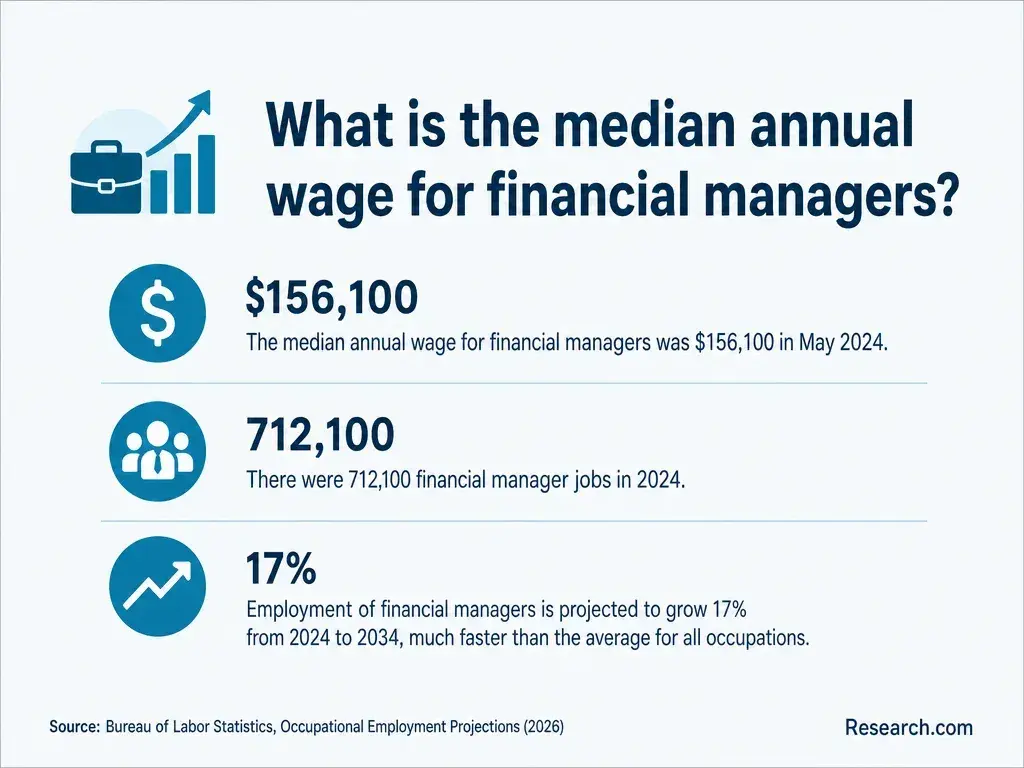
A degree does not carry its own salary. Pay depends on the occupation you enter, your responsibilities, location, employer, and experience. The U.S. Bureau of Labor Statistics reports a May 2025 median annual wage of $105,770 for general and operations managers and projects 5% employment growth from 2025 to 2035. Those figures describe an occupation across industries and experience levels - not the expected pay or promotion prospects of a newly graduated food service manager.
Use the target role's requirements and local job postings to judge whether the degree could remove a hiring barrier. A move into HR, for instance, should be assessed against HR-specific duties and qualifications rather than a general manager's wage. Comparing human resources degree pathways can help clarify whether a specialized curriculum better serves that transition.
Other Things You Should Know About Business Administration
Possibly. Some schools assess documented prior learning, but job experience does not automatically become credit. Ask how the school evaluates it and whether any award would satisfy a required course.
It depends on your missing skills and target job. Compare the remaining requirements with targeted undergraduate courses, a certificate, or graduate study before committing to another full degree.
Only the program can answer that. Current employment may not satisfy an internship requirement unless the school approves the role, learning objectives, and supervision.
Get employer permission first. Follow the school's rules and remove confidential financial details and employee or customer information from anything you share publicly.
- Types of Financial Aid: Grants, Work-Study, and Loans | studentaid.gov https://studentaid.gov/understand-aid/types
- What Management Skills Will I Learn in a Bachelor's in Business? | Baker College https://www.baker.edu/about/get-to-know-us/blog/management-skills-taught-in-bachelors-in-business/
- Modes of Instruction - Office of the Registrar https://registrar.berkeley.edu/modes-of-instruction/
- Business Administration Bachelor's Degree Online | The Pennsylvania Institute of Technology https://www.pit.edu/programs/b-s-business-administration/
- Business Management, BBA, Online | The University of Akron, Ohio https://www.uakron.edu/academic/programs/business-management-bba-online
- 12 Popular Business Management Degrees for 2023 | Western Governors University https://www.wgu.edu/blog/12-popular-business-management-degrees-20232302.html
- Food and Beverage Management - eCornell - Cornell University https://ecornell.cornell.edu/certificates/hospitality-and-foodservice-management/food-and-beverage-management/
- Online Bachelor's Degree in Business Administration | Purdue Global https://www.purdueglobal.edu/degree-programs/business/bachelor-business-administration/
- How Much does a Food Service Manager Make? | ECPI University https://www.ecpi.edu/blog/how-much-food-service-manager
- Credit for Prior Learning and How Work Experience Counts Toward Your Degree - Unity Environmental University https://unity.edu/articles/credit-for-prior-learning/