
2027 Business Development Degree vs. Certificate: Which Should You Choose?

Co-Founder and Chief Data Scientist
Choosing between a business development degree and a business development certificate is really a decision about time, cost, career level, and how much academic depth you need. A degree usually makes more sense if you want a broader business foundation, stronger advancement potential, or a path into management. A certificate is often the better fit when you need targeted skills quickly, want to update your resume, or are testing whether business development is the right direction before committing to a full degree.
This guide compares the two options in practical terms: program length, online availability, admission requirements, credits, tuition, transferability, accreditation, job outcomes, and starting salary. Use it to decide whether you need a credential that builds long-term career mobility or a shorter program that helps you apply business development skills sooner.
Key Points About Business Development Degree vs. Certificate Programs
- A business development degree offers comprehensive knowledge and higher salary potential, with graduates earning 15%-25% more than certificate holders on average.
- Certificate programs focus on targeted skills for faster completion, ideal for professionals seeking quick upskilling without long-term commitment.
- Degrees provide broader career flexibility and leadership pathways, while certificates enhance specific technical expertise, influencing professional growth based on individual goals.
What Are the Differences Between Business Development Degree and Certificate Programs?
The main difference is scope. A business development degree is a broader academic credential that combines business strategy, marketing, sales, finance, operations, leadership, and general education. A certificate is narrower and usually focuses on specific job-ready skills, such as prospecting, client development, market analysis, negotiation, or growth strategy.
Neither option is automatically better. The right choice depends on whether you need a comprehensive credential for long-term mobility or a shorter credential for focused skill development.
- Depth of learning: Degree programs usually provide a fuller business education, including theory, analysis, communication, and leadership. Certificate programs concentrate on applied skills that can often be used immediately at work.
- Time commitment: Degrees require a longer commitment and are better suited for students who can invest several years in structured study. Certificates are shorter and can be easier to fit around a full-time job.
- Career focus: A degree may support advancement into management, strategy, sales leadership, or corporate development roles. A certificate is often useful for entry-level candidates, career changers, sales professionals, entrepreneurs, or working professionals who need to strengthen one area.
- Cost and return: Degrees usually cost more but may carry more weight with employers that require or prefer a college credential. Certificates generally cost less, but their value depends heavily on provider reputation, curriculum quality, and how well the skills match your target role.
- Academic recognition: Degrees are usually easier to explain on resumes and may be required for graduate study. Certificates can be valuable, but recognition varies more widely between employers and industries.
A simple way to decide is this: choose a degree if you need a recognized academic credential for broader career options; choose a certificate if you already have some experience or education and need targeted business development skills quickly.
How Long Does It Take to Complete a Business Development Degree vs. a Certificate Program?
A business development certificate is usually the faster route, while a degree requires a much longer academic commitment. The difference matters because time in school affects cost, workload, career timing, and how soon you can apply your training in the job market.
- Typical degree timeline: A business development degree program duration usually spans 2 to 4 years for a bachelor's degree, while master's degrees add 1 to 2 more years. Part-time enrollment can extend the timeline, especially for working adults balancing coursework with professional or family responsibilities.
- Typical certificate timeline: How long to earn a business development certificate often ranges from 3 to 12 months. Some certificate formats are self-paced, while others follow a fixed academic calendar.
- Online and accelerated options: Degree programs are increasingly available online and in hybrid formats, including options such as 1 year online masters programs. Even so, degrees usually include more courses, broader requirements, and a longer sequence than certificates.
- Why certificates are shorter: Certificates typically skip general education requirements and focus on a defined skill set. This can make them efficient for professionals who need training in sales strategy, lead generation, client management, or business growth planning.
- What can change your timeline: Transfer credits, prior learning credit, full-time enrollment, course availability, capstone requirements, thesis requirements, and competency-based formats can all affect completion time.
If speed is your top priority, a certificate is usually the better fit. If you need a credential that supports advancement over many years, the longer degree timeline may be worth the investment.
Can You Complete a Business Development Degree or Certificate Entirely Online?
Yes, many business development degrees and certificates can be completed entirely online, but students should verify each program's exact format before enrolling. Some programs advertise online delivery while still including optional or required internships, live sessions, proctored exams, networking events, or occasional campus-based components.
Accredited online Business Development degree programs, such as those offered by Purdue Global, University of Alabama, and Champlain College, may be structured as business administration or business management degrees with concentrations or coursework related to business development. These programs can be useful for students who want a full academic credential without relocating or leaving the workforce.
Fully online Business Development certificate options are also widely available from institutions like Harvard Business School Online. Certificate programs often appeal to working professionals because they are shorter, more focused, and easier to schedule around current employment.
Before choosing an online program, review these details carefully:
- Delivery format: Confirm whether courses are fully asynchronous, live online, hybrid, or self-paced.
- Accreditation and provider reputation: For degrees, confirm institutional and business-program accreditation where applicable. For certificates, evaluate the provider's credibility and employer recognition.
- Experiential learning: Check whether internships, consulting projects, simulations, or capstones are required or optional.
- Technology and scheduling: Make sure required platforms, meeting times, and exam formats fit your work schedule and location.
- Career support: Online programs vary widely in advising, networking, resume help, and employer connections.
Students comparing online business programs may also find it useful to review easiest college degree options, especially if flexibility and workload are major concerns.
What Are the Admission Requirements for a Business Development Degree vs. a Certificate Program?
Business development degree programs usually have more formal admission requirements than certificate programs. Degrees often require transcripts, GPA review, test scores in some cases, and supporting documents. Certificates are typically easier to enter and are designed for faster enrollment.
The right option may depend on your current academic record, work experience, and how quickly you want to start.
Admission Requirements for Business Development Degree Programs
- Educational background: Bachelor's degree programs usually require a high school diploma or equivalent. Master's programs generally require a completed bachelor's degree from a regionally accredited institution.
- GPA minimum: Undergraduate admission often requires a minimum high school GPA around 2.5 to 3.0. Graduate programs typically expect an undergraduate GPA of 3.0 or higher in the last 60 credits.
- Standardized test scores: SAT or ACT scores may be required for undergraduate applicants. Graduate programs may ask for GMAT or GRE scores, although waivers are available at some schools for qualified candidates.
- Professional experience: Some graduate or specialized business development programs may prefer applicants with relevant work experience, especially in sales, marketing, entrepreneurship, management, or client-facing roles.
- English proficiency: International applicants generally must provide TOEFL or IELTS scores, such as TOEFL 79 iBT or IELTS 6.0, to demonstrate language readiness.
- Supporting documents: Applications may include resumes, letters of recommendation, personal statements, essays, and interviews, particularly for competitive programs.
Admission Requirements for Business Development Certificate Programs
- Educational background: Most certificate programs require only a high school diploma or GED, although advanced certificates may expect college coursework or professional experience.
- GPA minimum: Certificate programs generally do not enforce strict GPA requirements and often focus on proof of eligibility rather than competitive academic review.
- Standardized test scores: SAT, ACT, GMAT, and GRE scores are rarely required for certificate admission.
- Professional experience: Many certificates require little to no prior experience. However, executive or advanced certificates may be designed for working professionals.
- English proficiency: Non-native English speakers may need to demonstrate English skills, but requirements are usually less extensive than those for degree programs.
- Supporting documents: Certificate applications usually require fewer materials, which can make enrollment faster and less complicated.
Students who want a faster academic pathway may also compare these requirements with options to get an associates degree fast. The key is to choose a credential that matches both your current eligibility and your long-term career plan.
How Many Credits Do You Need to Complete a Business Development Degree vs. a Certificate?
Credit requirements show how much coursework a program includes. A business development degree typically requires far more credits because it includes general education, core business courses, electives, and often a capstone or applied project. A certificate requires fewer credits because it focuses on a narrower set of competencies.
- Business development degree: A bachelor's-level business development degree or related business degree typically demands about 120 semester credit hours. This usually includes general education, foundational business courses, advanced business topics, electives, and a culminating project or capstone.
- Business development certificate: A business development certificate requires roughly 25 semester credit hours. Coursework is usually concentrated in practical areas such as entrepreneurship, marketing, management, sales, or growth planning.
Credits also affect cost and transfer planning. If you may pursue a degree later, ask whether the certificate courses carry academic credit, whether those credits are undergraduate or graduate level, and whether they can apply to a future business program.
What Is the Average Tuition for a Business Development Degree vs. a Certificate?
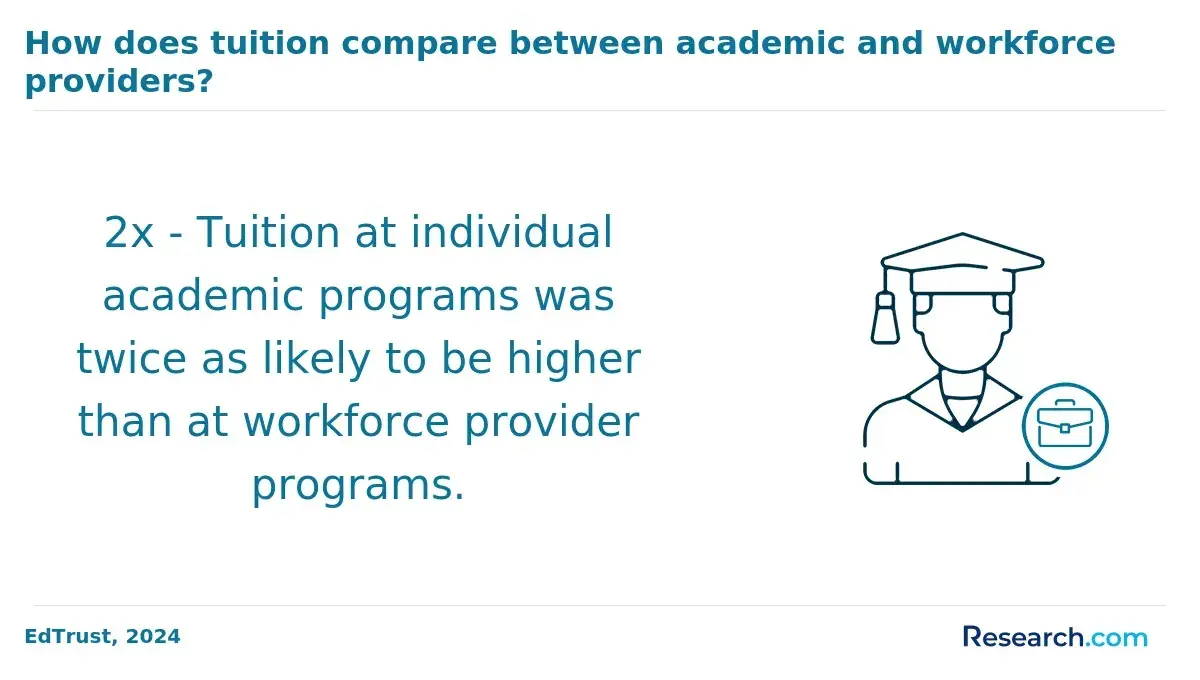
A business development degree usually costs substantially more than a certificate because it takes longer and includes more credits. A certificate may be the lower-cost choice for targeted training, but a degree may offer stronger long-term value if your target roles require a bachelor's or graduate credential.
Average Tuition for Business Development Degree Programs
- Undergraduate degree tuition: Annual tuition for in-state undergraduate business development programs averages about $9,398, while out-of-state students pay around $27,077 at public universities.
- Graduate degree tuition: MBA programs covering business development generally range between $28,410 and $76,073 per year at private institutions and top public universities.
- Online program costs: Online bachelor's business degrees tend to have lower costs, averaging approximately $12,278 per year at public universities online.
- What affects price: Tuition varies by institution type, program length, residency status, delivery format, and whether the school charges separate online fees.
- Additional expenses: Books, software, mandatory fees, travel, technology, and living expenses can increase the total cost beyond tuition.
Average Tuition for Business Development Certificate Programs
- Certificate tuition range: Business development certificate tuition usually falls between $1,000 and $7,000 total, depending on provider, length, format, and curriculum depth.
- Shorter duration: Because certificates often take only a few months to complete, the total upfront cost is typically lower than a multi-year degree.
- Provider differences: A certificate from a university, community college, professional organization, or private training provider may carry different pricing and different employer recognition.
- Online availability: Many certificates are offered online, sometimes at reduced costs compared with in-person options.
- Possible exclusions: Books, materials, exam fees, and platform fees may not be included in the listed certificate price.
When comparing costs, look beyond tuition and ask what the credential is likely to do for your specific career goal. Students trying to control degree costs can review options such as the cheapest business degree online, while those planning to use federal aid should also explore online school financial aid options.
Can You Transfer Certificate Credits Toward a Business Development Degree Later On?
Sometimes, but transfer is never guaranteed. Whether certificate credits can apply toward a future business development degree depends on the school receiving the credits, the accreditation status of the provider, the academic level of the courses, and how closely the certificate curriculum matches degree requirements.
Students often make the mistake of assuming that any certificate from a college will automatically count toward a degree. In practice, institutions evaluate transfer credits course by course.
- Accreditation matters: Credits from accredited institutions are more likely to be reviewed for transfer, but accreditation alone does not guarantee acceptance.
- Course match matters: A certificate course is more likely to transfer if it aligns with a required course or approved elective in the degree plan.
- Grades matter: Many colleges require a minimum grade, typically a "C" or higher, before considering transfer credit.
- Credit limits matter: Some colleges cap how many outside credits can apply to a degree, even when courses are eligible.
- Academic level matters: Noncredit professional certificates may strengthen your resume but may not convert into semester credits.
Before enrolling in a certificate with the goal of later earning a degree, ask the school for written guidance. Request confirmation of whether the certificate is credit-bearing, which courses may transfer, and how those credits would apply to your intended degree plan.
Are Certificate Programs Accredited the Same Way as Business Development Degrees?
No. Business development certificate programs are not always accredited in the same way as degree programs. Degree programs are typically connected to institutional accreditation and may also hold business-specific accreditation from organizations such as AACSB (Association to Advance Collegiate Schools of Business) or IACBE (International Accreditation Council for Business Education). These reviews examine areas such as curriculum, faculty qualifications, learning outcomes, and institutional resources.
Certificates vary more widely. Some are offered by accredited colleges and universities. Others come from professional associations, private education companies, or industry experts. A certificate may still be useful, but its quality and recognition depend heavily on the provider.
When evaluating a degree, check whether the institution is accredited and whether the business program has recognized programmatic accreditation when relevant. When evaluating a certificate, look for evidence of quality rather than relying on the word "certificate" alone.
- For degrees: Confirm accreditation through recognized accrediting agencies and review whether the program aligns with your career or graduate school goals.
- For certificates: Review the provider's reputation, instructor qualifications, curriculum, assessment methods, employer recognition, and whether the program is credit-bearing.
- For transfer plans: Ask whether credits can be applied to a future degree before you enroll.
- For employer value: Search job postings in your target field to see whether employers request a degree, accept certificates, or prioritize experience.
Accreditation affects more than prestige. It can influence financial aid eligibility, credit transfer, graduate school admission, and employer confidence in the credential.
What Jobs Can You Get with a Business Development Degree vs. a Certificate?
A business development degree generally supports a wider range of roles, including management-track and strategy-oriented positions. A certificate is more likely to support entry-level, support, sales, coordination, or skill-enhancement roles, especially when paired with relevant experience.
Jobs You Can Get with a Business Development Degree
- Business development manager: Oversees growth initiatives, identifies new markets, and builds partnerships that expand revenue opportunities.
- Account executive: Manages client relationships, develops prospects, and guides sales opportunities through the pipeline.
- Sales director: Leads sales teams, sets performance goals, and develops strategies to improve company-wide sales results.
- Strategic partnerships manager: Builds and manages partner relationships that support long-term business objectives.
- Product manager: Coordinates product strategy, development, launch planning, and market alignment.
- Corporate strategy analyst: Uses market research, competitive analysis, and business data to support planning and decision-making.
Jobs You Can Get with a Business Development Certificate
- Business development associate: Supports market research, lead generation, outreach, and early-stage opportunity development.
- Sales representative: Works directly with prospects or customers to promote products or services and meet sales goals.
- Client relationship coordinator: Helps maintain client communication, service follow-up, retention activities, and account support.
- Marketing assistant: Supports campaigns, content coordination, customer research, and performance tracking.
- Project coordinator: Organizes tasks, schedules, documentation, and communication for business initiatives.
Employers may weigh education differently depending on the role. For leadership or strategy roles, a degree may be preferred. For sales-oriented roles, demonstrated performance, communication ability, industry knowledge, and measurable results can matter as much as the credential.
What Is the Average Starting Salary for a Certificate vs. Business Development Degree Graduates?
Starting salary tends to be higher for business development degree graduates than for certificate holders, but the credential is only one factor. Experience, industry, location, sales performance, internships, employer size, and commission structure can all affect compensation.
- Typical certificate salary range: The average starting salary for graduates with a business development certificate typically falls between $44,000 and $57,000 per year, primarily in entry-level roles such as associates or representatives.
- Business development degree graduate starting salary: Those with a business development bachelor's degree generally start higher, ranging from $55,000 to $72,000 annually, with a median salary of about $71,000, according to national data.
- Education level: Degree holders often qualify for a broader set of roles, including positions with more responsibility and higher salary potential.
- Experience and internships: Candidates with internships, sales results, CRM experience, market research experience, or prior client-facing work may earn more than credential-only applicants.
- Industry differences: Fields like automotive, finance, and technology may offer greater starting pay for business development roles.
- Location differences: Cities like San Francisco, New York, and Seattle provide the highest salaries for business development roles.
- Long-term outlook: Certificate holders can improve earnings through experience, measurable performance, additional training, or later degree completion. Degree graduates may have faster access to management-track roles, but advancement still depends on results.
For readers comparing shorter training pathways, the trade school careers list and salaries offers additional salary context across practical career options.
Here's What Graduates of Business Development Programs Say About Their Degree or Certificate
- : "Choosing the business development certificate program was a perfect fit for me because I wanted a focused and fast-paced learning experience. It was affordable compared to degree options and immediately applicable to my current job, allowing me to boost my career without a long-term commitment. For anyone weighing cost and time, certificates can be incredibly efficient and impactful. — Iker"
- : "Pursuing a business development degree offered a comprehensive and deep dive into the field, which was essential for my long-term goals. The learning experience was more structured and paced, giving me time to absorb complex concepts thoroughly. Although it required a bigger financial investment, the degree opened doors to advanced career opportunities that a certificate alone might not provide. — Hayden"
- : "Completing both the business development certificate and degree programs gave me a unique perspective on how pace and depth affect learning outcomes. The certificate's cost-effectiveness and speed complemented the degree's detailed curriculum and broader career impact. Balancing both costs and personal growth, I feel well-equipped and confident in the business development field. — Caleb"
Other Things You Should Know About Business Development Degrees
Many accredited business development certificates use 12 to 30 semester credits, and those credits can transfer into an associate or bachelor's program only if the receiving college approves them. Transfer is usually stronger when the certificate comes from a regionally accredited institution with equivalent course content.
A business development degree often offers a deeper understanding of strategic concepts, networking opportunities, and comprehensive coursework. It generally provides a foundation for advanced roles and academic pursuits in 2027, whereas certificates are more focused on specific skills and shorter-term learning.
Yes, some business development certificates can be credited toward a degree program in 2027. However, this depends largely on the institution offering the certificate and the degree program's transfer policies. It's best to inquire directly with educational institutions for specifics.
Certificates generally emphasize practical, job-ready skills such as sales techniques, client relationship management, and market research tools. Degrees cover these areas but also include foundational business concepts, strategic management, and often offer broader training in areas like finance and organizational behavior. This broader focus supports long-term career growth and leadership roles.
References
- Certification vs. Bachelor Degree: Which is best for you? https://businessdegrees.uab.edu/blog/certification-vs-degree/
- Business Management Certificate vs. Business Administration Certificate https://business.vanderbilt.edu/business-management-certificate/business-management-vs-business-administration-certificate/
- Advancement Opportunities from Business Certificates to Diplomas - Humber College https://business.humber.ca/future-students/explore/continuous-professional-learning/advancement-opportunities-from-business-certificates-to-diplomas.html
- Degrees vs. Certificate Programs: What's the Difference? https://www.snhu.edu/about-us/newsroom/education/certificates-vs-degrees
- How to Choose the Right Online Course for Career Advancement https://online.hbs.edu/blog/post/career-advancement
- Certificate vs. degree programs: What's the difference? | edX https://www.edx.org/resources/what-is-the-difference-between-a-certificate-and-a-degree
- MBA or Business Certificate: What should you prefer? - Online Manipal https://www.onlinemanipal.com/blogs/mba-degree-or-business-management-certificate
- Transfer to UIBS | Flexible Credit Transfer & Global Campuses https://www.uibs.org/admission/transfer-students/
- How to Choose Between MBA Degree vs. Certificate | University of Phoenix https://www.phoenix.edu/articles/business/how-to-choose-between-mba-degree-vs-certificate-programs.html
- Business Management Certificate or Degree: What’s Best for you? https://www.mba.com/business-school-and-careers/career-possibilities/business-management-certificate


