2027 BS in Business Administration and Healthcare Administration: How to Check Whether a Job Needs a Separate Credential
Audited and Verified:
Our Editorial and Data Verification Process
Research.com uses government datasets, official education statistics and primary institutional information to support its career and degree guides. Our review process checks factual accuracy, occupational definitions, source dates and the requirements associated with the credentials discussed.
How This Article Was Fact-Checked
Our editorial team verifies salary estimates, employment projections, education requirements and program information against original data providers and official organizations. Salary figures are checked against the relevant occupational definitions and reporting periods. Information about licensure, accreditation and required in-person training is reviewed separately.
Fact-checked and verified on:

Co-Founder and Chief Data Scientist
A healthcare administration job posting may ask for a business degree, healthcare experience, a certification, or a state license. Those requirements are not interchangeable. If you are considering a BS in Business Administration with healthcare administration coursework, the distinction matters before you choose a program or apply for a role. This guide explains which jobs commonly rely on business preparation, where separate credentials enter the picture, and how to check the rules for your target job and state. It also shows how to weigh coursework, experience, cost, and program quality against the qualification you actually need.
Key Things You Should Know
- A healthcare administration concentration is an academic focus, not a professional license. Most hospital and medical-office administrative jobs do not have a general administrator license, but nursing home administrator positions require state licensure.
- Check the specific job duties, work setting, state licensing board, and employer posting before choosing a degree or certification. Clinical credentials and health information credentials have their own eligibility rules.
- Do not treat management pay as a new graduate's starting salary: the U.S. Bureau of Labor Statistics reports a May 2025 median of $114,130 for administrative services managers across industries, an occupation that typically requires relevant experience.
What Is a BS in Business Administration and Healthcare Administration?
Usually, this means a BS in Business Administration with a healthcare administration concentration, though schools use different names. The degree supplies a business core - such as accounting, management, operations, and data analysis - while the healthcare courses examine how those functions work in hospitals, clinics, or other care organizations. A concentration appears within the bachelor's degree; it is not a second degree or an occupational credential.
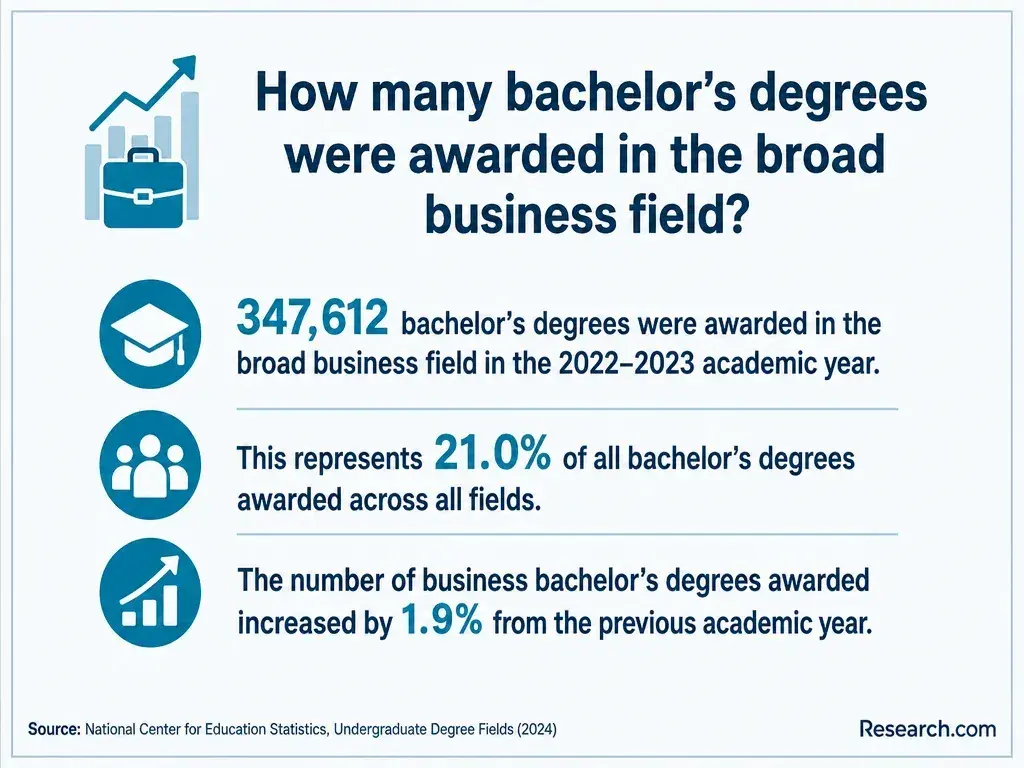
Check the exact award on the transcript and the required healthcare courses. A general business BS, a BBA with healthcare electives, and a dedicated healthcare administration bachelor's may cover different amounts of health policy, reimbursement, and care operations. If your goal is to finish an existing business degree, quick-completion business degree pathways can provide options to compare, but a shorter route is useful only if its curriculum fits your target job and your credits apply to graduation requirements.
Does Healthcare Administration Require a Separate License or Credential?
There is no single license for all healthcare administrators. The answer depends more on the position's duties and setting than on whether the degree says "healthcare administration." In particular, do not assume that a business degree authorizes clinical care, professional billing or coding work, or the operation of a licensed long-term-care facility.
The distinctions below help identify which authority to consult before you commit to a program or accept an offer.
| Target work | Credential distinction | Where to check |
| Hospital or medical-office operations | Generally no occupation-wide administrator license; employers set degree and experience requirements. | Current job posting and hiring department |
| Nursing home administrator | State licensure is required; education, training, examinations, and reciprocity rules vary. | State nursing home administrator licensing board |
| Assisted living or other residential-care leadership | Administrator requirements vary by state and facility type. | State licensing agency and facility regulator |
| Clinical, coding, or specialized health information work | May require a separate clinical license or a specified certification with its own eligibility rules. | Professional board, certifying organization, and employer |
Use this sequence for a particular opening: read the required qualifications and duties; identify the facility type and state; check the responsible board's eligibility rules; then ask the employer whether a listed certification is mandatory at hiring or preferred. If no separate credential is required, a less expensive business education option may be worth considering through online business programs for cost-conscious students - provided it still develops the healthcare knowledge and experience the employer wants.
Which Jobs Can You Get With a Healthcare Administration Degree?
For an early-career applicant, the most realistic target is often a role with defined administrative responsibilities, not immediate control of a facility or clinical department. Prior work in scheduling, customer service, finance, or healthcare can change which roles are within reach.
These examples separate possible entry routes from positions that usually call for substantial experience or additional authorization.
| Role or pathway | Typical work | What else to establish |
| Patient access or practice coordinator | Scheduling, registration workflows, service issues, and process tracking | Healthcare systems knowledge and evidence of reliable operations work |
| Revenue cycle or administrative analyst | Claims workflows, reporting, budgets, or process improvement | Relevant software, data skills, and employer-specific requirements |
| Hospital purchasing or supply chain coordinator | Orders, inventory, vendors, and delivery problems | Procurement or inventory experience and healthcare supply practices |
| Practice or department manager | Staffing, budgets, compliance coordination, and performance oversight | Relevant supervisory and operational experience |
| Nursing home administrator | Facility leadership and regulatory accountability | State licensure and any required training or examinations |
A hospital procurement goal may call for operations experience more directly than a healthcare administration title alone. Compare the skills and course depth described in an online supply chain bachelor's fast-track guide against healthcare-focused business programs, then check actual hospital postings.
The business core commonly introduces accounting, finance, management, statistics, and operations. Healthcare-focused courses may address health systems, reimbursement, quality improvement, healthcare law, and privacy. A capstone or internship can help you demonstrate applied work, but its presence and requirements vary by school.
Match courses to the duties in your target posting. Revenue cycle work calls for stronger payment and accounting knowledge; practice operations calls for staffing, process, and patient-service skills. An accelerated organizational leadership degree comparison can help clarify whether broad leadership study would suffice for your goal or leave a gap in healthcare-specific operations. Neither a leadership course nor a healthcare concentration substitutes for a required license.
An online degree can serve the same academic purpose as campus study when the institution is appropriately accredited and the program provides the courses and applied opportunities you need. Delivery format alone does not establish employer acceptance, internship access, or eligibility for a state-regulated job. A licensing board may have specific education or practical-training rules, so confirm those directly before enrolling.
Ask whether classes have live meetings, scheduled exams, group projects, campus visits, or required placements. These obligations matter if you work shifts or need local healthcare experience. American fast-paced business bachelor's degrees may shorten the calendar for some students, but faster pacing does not waive credential rules or make each week less demanding.
First, confirm the institution's current accreditation through the accreditor and the U.S. Department of Education's recognized-accreditor information. Then check the exact program: business-school accreditation from AACSB, ACBSP, or IACBE applies only within the accreditor's stated scope. Institutional accreditation, business accreditation, and eligibility for a separate occupational credential are three different questions.
Request a current course plan, sample schedule, internship requirements, and any available outcomes with their cohort and measurement period. If a school says its program prepares students for licensure, ask which state's requirements it addresses and obtain confirmation from that board. US online business education program comparisons can help you build a shortlist, but the school, accreditor, and licensing authority must verify the claims that affect your decision.
Requirements vary by school and by entry route. First-year applicants generally submit secondary-school records; transfer applicants submit prior college transcripts. Some programs admit students directly to the major, while others require particular coursework or standing before entry. Ask separately about admission, accepted transfer credits, and how those credits apply to the business core and healthcare concentration.
For an applicant with earlier health or non-business study, an official degree audit is more useful than an informal estimate: a course accepted as an elective may not replace accounting, statistics, or a required healthcare course. If application charges affect your shortlist, you can compare no-fee college applications; confirm each school's current policy and do not let an application-fee waiver outweigh program fit.
A bachelor's commonly represents about four years of full-time undergraduate study, but an individual completion plan depends on accepted credits, where they apply, course sequencing, and enrollment pace. Obtain a written audit and a term-by-term plan before relying on an advertised accelerated timeline.
Compare the cost of remaining required coursework, not just the advertised tuition rate. Include mandatory fees, books or software, placement-related travel, and any earnings lost to scheduling. An employer's reimbursement policy can also affect when you must pay. Use inexpensive online business administration colleges as candidates for comparison, then request a personalized cost estimate that accounts for your transfer evaluation and the healthcare courses you still need.
A voluntary certification can signal focused knowledge, but it is not a substitute for state licensure. The best choice follows the work you intend to do: revenue cycle credentials may fit billing operations, while project management credentials may help someone who already coordinates substantial projects. Health information or coding certifications have distinct education, examination, and sometimes experience requirements; check the issuing organization rather than assuming a healthcare administration BS qualifies you.
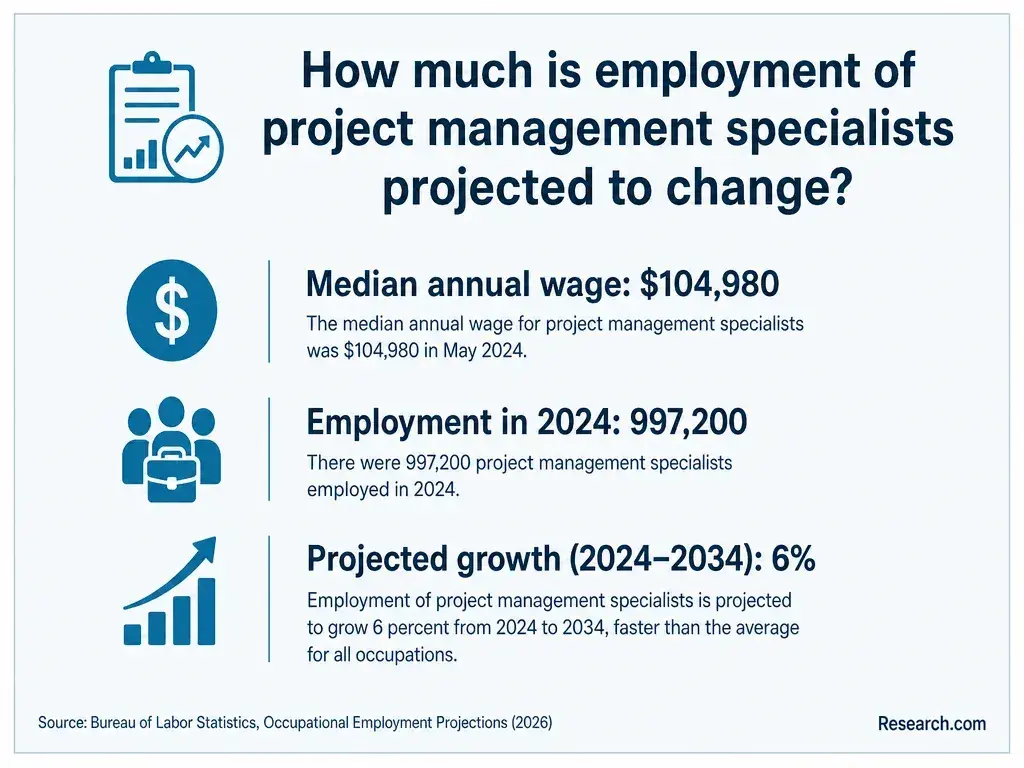
Before paying for preparation, compare the credential's eligibility rules and renewal obligations with actual employer postings. If project coordination is the goal, project management study costs beyond tuition provide a useful reminder to compare a full degree pathway with targeted training and certification costs. Choose the option that closes a documented qualification gap, not simply the one with the most credentials.
What Are the Salary and Job Outlook for Healthcare Administrators?
"Healthcare administrator" covers several jobs, so no single salary describes every graduate or facility. For context, the U.S. Bureau of Labor Statistics reports a May 2025 median annual wage of $114,130 for administrative services managers across industries. That is an occupation-wide figure - not a healthcare-specific figure or an expected starting salary - and management jobs generally require relevant experience.
Use the closest occupation to the job you actually want, then compare local postings by facility type, responsibilities, and required experience. Salary alone cannot establish the return on a degree, particularly if the target role also requires a license or several years of work. A guide to business administration tuition, time commitment, and career value can frame the education trade-off; your own remaining cost and realistic entry route should drive the decision.
Other Things You Should Know About Business Administration
That depends on the school. It may appear on the transcript rather than the diploma. Ask the registrar how the completed award and concentration are recorded.
Possibly, but employment does not automatically earn credit. Ask the program whether it offers an approved internship, workplace project, or prior-learning assessment and what documentation it requires.
Yes, if a posting accepts students or applicants with equivalent experience. State your expected graduation date accurately and distinguish completed qualifications from those still in progress.
No. Access requires organizational authorization and compliance with applicable privacy rules. Use approved, de-identified, or public data only as your employer and instructor permit.
- Licensing across state lines | hhs.gov https://telehealth.hhs.gov/licensure/licensing-across-state-lines
- Examples of Credentialing and Privileging Documentation | hrsa.gov https://bphc.hrsa.gov/compliance/site-visits/site-visit-protocol/credentialing-privileging
- Credentialing - StatPearls - NCBI Bookshelf - NIH https://www.ncbi.nlm.nih.gov/books/NBK519504/
- About CDC Continuing Education Accreditation https://www.cdc.gov/continuing-education/php/about/index.html
- /continuing-education-for-healthcare-professionals | Bouvé College of Health Sciences https://bouve.northeastern.edu/news/continuing-education-in-healthcare-what-to-know-about-ce-cme-cpe-and-bouves-professional-development-offerings/
- Jobs You Can Get With a Healthcare Administration Degree | Franklin University https://www.franklin.edu/blog/what-jobs-can-you-get-with-a-healthcare-administration-degree
- Career Guide: Healthcare Administrator | American College of Education https://ace.edu/student-success/career-guides/healthcare-administration/
- Bachelor of Science in Healthcare Administration | NU.edu https://www.nu.edu/degrees/healthcare-leadership/programs/bachelor-science-healthcare-administration/
- Health Information Manager - Explore Healthcare Careers | Mayo Clinic College of Medicine and Science https://college.mayo.edu/academics/explore-health-care-careers/careers-a-z/health-information-manager/
- 10 careers you can pursue with a Healthcare Administration Degree - SMWC https://www.smwc.edu/10-careers-you-can-pursue-with-a-healthcare-administration-degree-blog-december-22/