2027 BS in Business Administration and Digital and Social Media Management: What Math and Data Skills Should You Compare?
Audited and Verified:
Our Editorial and Data Verification Process
Research.com uses government datasets, official education statistics and primary institutional information to support its career and degree guides. Our review process checks factual accuracy, occupational definitions, source dates and the requirements associated with the credentials discussed.
How This Article Was Fact-Checked
Our editorial team verifies salary estimates, employment projections, education requirements and program information against original data providers and official organizations. Salary figures are checked against the relevant occupational definitions and reporting periods. Information about licensure, accreditation and required in-person training is reviewed separately.
Fact-checked and verified on:

Co-Founder and Chief Data Scientist
Two programs can advertise digital and social media management while teaching very different levels of math and data analysis. That difference matters if you want to measure campaigns, defend a budget, or move beyond posting content into marketing decisions.
This guide is for prospective and returning business students comparing a BS in Business Administration with a digital media concentration or related coursework. It shows which quantitative skills to look for, how to judge assignments and outcomes, and when a more specialized or less costly path may fit your goal better.
Key Things You Should Know
- Compare the required courses and assessed projects - not the concentration name - for evidence of spreadsheet work, statistics, campaign measurement, and budget decisions.
- Look for instruction on data quality, uncertainty, and privacy alongside platform metrics; a dashboard alone does not establish analytical competence.
- The U.S. Bureau of Labor Statistics projects 7% employment growth for market research analysts from 2025 to 2035, but that occupation's requirements and wages are not guaranteed outcomes for digital media graduates.
What is a BS in Business Administration and Digital and Social Media Management?
A BS in Business Administration typically combines a business core - such as accounting, finance, management, and marketing - with general education and electives. "Digital and social media management" may be an official concentration, a minor, an elective cluster, or simply language used to describe selected courses. Confirm the credential that will appear on the transcript and whether completing the media courses adds credits or delays graduation.
The combination fits students who want to connect content and campaign choices to customer research, spending, and organizational goals. A specialized marketing bachelor's may offer greater marketing depth; a general business degree may offer more room to explore other functions. If speed and broad business preparation matter more than a formal media focus, compare shorter pathways to an online business degree against the media courses you would give up.
What math and data skills do these business degree programs teach?
The useful question is not whether a program calls itself "data-driven." It is whether students practice moving from a business question to appropriate data, a defensible calculation, and a decision. A strong sequence builds from quantitative reasoning and spreadsheets through introductory statistics and marketing analytics.
The comparison below separates skills that support routine campaign work from deeper analysis. Course titles alone cannot establish which level a program reaches; request syllabi or assignment descriptions.
| Skill | What students should be able to demonstrate | What to check |
| Spreadsheets and business math | Clean a dataset, use formulas, compare budget scenarios, and distinguish revenue from profit. | Are spreadsheet files assessed, or are students only shown finished charts? |
| Statistics | Interpret variation, samples, and uncertainty without treating correlation as proof of causation. | Is statistics required before the analytics course? |
| Campaign measurement | Define a goal, calculate rates using appropriate denominators, and explain what platform metrics cannot show. | Do assignments distinguish reach, engagement, leads, and actual business outcomes? |
| Testing and reporting | Compare alternatives cautiously and communicate findings, limitations, and recommendations. | Must students explain data quality and possible confounding factors? |
For example, a high click-through rate can indicate interest without showing that a campaign produced profitable customers. Students should learn to connect marketing measures to costs and to identify when conversion or sales data is unavailable. If your goal is primarily schedule, cost, and resource analysis rather than audience behavior, compare that emphasis with affordable college choices for aspiring project managers; the quantitative work serves a different decision.
How do you compare digital media management programs by curriculum and outcomes?
Start with the required curriculum, then inspect what students actually produce. A program with one introductory analytics elective may be a good fit for content coordination but a weaker fit for a student seeking research-intensive marketing work.
Use the same evidence requests for each school so attractive course names do not obscure differences in depth:
- Obtain the current degree map and identify required statistics, accounting, marketing research, and digital analytics courses, including prerequisites.
- Ask for representative assignment briefs: Can students build a spreadsheet model, justify a metric, assess a test, and explain limitations?
- Confirm access to tools, practice datasets, faculty feedback, and a feasible internship or capstone; ask whether projects require access to a real organization.
- Request concentration-specific career evidence, including the graduating cohort, response rate, job definitions, and reporting period.
Published completion or employment figures deserve scrutiny when they describe the entire business school rather than digital media students. Likewise, US rankings for accelerated business bachelor's degrees can help identify programs to investigate, but a faster calendar does not establish stronger analytics instruction or better career outcomes.
Schools set their own admission rules, and entry to the institution may differ from entry to the business major or concentration. Applicants may need secondary-school records or prior college transcripts; transfer applicants should ask whether previous algebra, statistics, accounting, and marketing courses satisfy specific requirements. A course accepted for elective credit does not necessarily satisfy a business prerequisite.
If you are returning to school or coming from a non-business field, request a written transfer evaluation and degree audit before estimating your remaining time. Ask whether a quantitative placement assessment, prerequisite, substitution, or introductory course applies to you. For a broader explanation of distinctions between eligibility and required preparation, see business administration admissions eligibility rules.
Completion time depends on the school's credit requirements, accepted and applicable transfer work, enrollment pace, prerequisites, and how often required media courses are offered. An accelerated schedule can shorten calendar time without reducing coursework. A working student may find that a slower, predictable schedule makes applied projects more manageable.
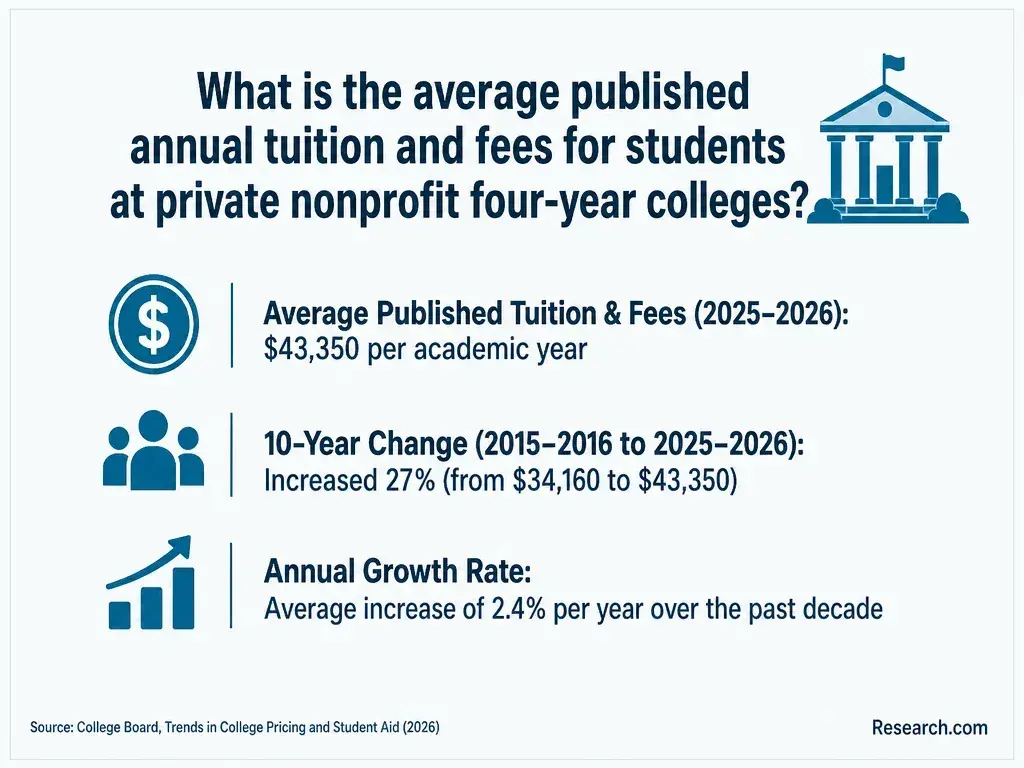
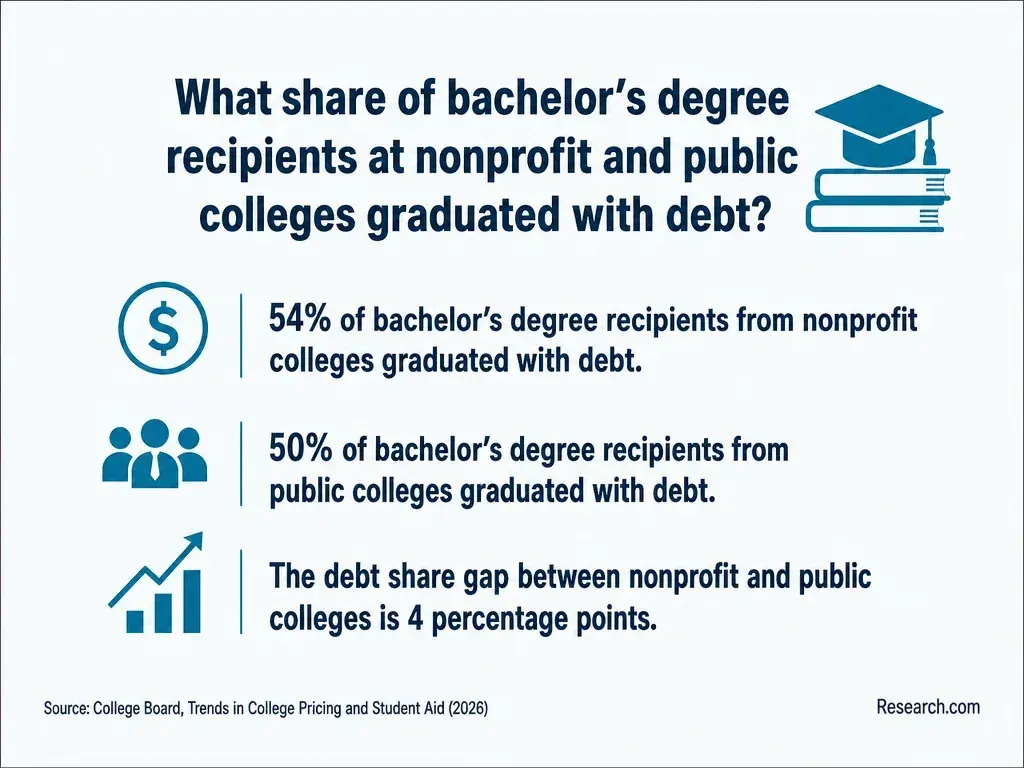
Compare each school using a personalized degree audit and a written cost estimate. Include tuition, mandatory fees, software, books, any required travel or proctoring, and the cost of extra terms if a course is unavailable. Distinguish aid that reduces cost from loans that must be repaid, and confirm eligibility before counting on employer reimbursement. Guidance on federal aid for undergraduate project management study explains aid concepts that may also matter when comparing eligible business bachelor's programs; the financial-aid office must confirm your own award and program eligibility.
Neither format is inherently better. Online study may suit students balancing work and classes, while campus study may make it easier to attend scheduled workshops or meet local employers. The decisive issue is whether you can complete the same substantive analytical work and obtain useful feedback in the format you choose.
For online programs, check live-session times, group-project deadlines, exam rules, software access, and whether internships or capstones can be completed remotely. For campus programs, check course availability and commuting demands. Students considering faster undergraduate completion pathways should also ask how intensive terms affect the time available to revise a campaign analysis or develop a portfolio sample.
Confirm institutional accreditation through the institution and the accreditor's official records. If a school advertises AACSB, ACBSP, or IACBE accreditation, verify the accreditor's stated scope and whether the particular business program is covered. Institutional accreditation, business-school accreditation, and an official digital media concentration answer different questions; none alone demonstrates the quality of a statistics course or guarantees employment.
Also distinguish accreditation from academic policies. A school's residency rule determines how much study must be completed there, while its transfer evaluation determines how prior courses apply. The same distinction matters when examining project management bachelor's residency and transfer requirements: ask the business program for its own current catalog rules and a written degree audit rather than inferring them from accreditation status.
Relevant starting work may include marketing coordinator, social media coordinator, campaign assistant, or research support. These roles can involve content scheduling, reporting, audience research, and collaboration with sales or creative teams. Hiring depends on the employer and on evidence of skills - not the degree title alone. Management roles generally require substantial experience making decisions and supervising work.
For a related but more analytical occupation, the U.S. Bureau of Labor Statistics reports a May 2025 median annual wage of $78,760 for market research analysts. That is an occupation-wide median, not a starting salary or an earnings estimate for graduates of this concentration. Use it to identify a possible career direction, then compare actual openings for the research methods and experience they request.
If you are drawn to employee communications rather than customer campaigns, compare education options for future HR professionals. Overlapping communication skills do not replace HR-specific preparation. For digital roles, strengthen applications with a clearly labeled class or authorized work sample that shows your question, calculations, recommendation, and limitations.
What certifications and job outlook trends affect digital marketing careers?
Platform training and voluntary certifications can demonstrate familiarity with an advertising or analytics tool, but they are separate from a bachelor's degree and may need updating as tools change. Compare a certification's assessed skills with your target job postings; a badge is less persuasive than being able to explain why you chose a measure and how you checked the underlying data.
The Bureau of Labor Statistics projects 7% U.S. employment growth for market research analysts from 2025 to 2035. That outlook supports investigating analytical marketing roles, but it does not predict demand for every social media title or guarantee an individual job. Students adding a certification or another short course should include fees, software, and time alongside tuition; the same cost discipline applies to project management study costs beyond tuition. Choose supplementary training to close a specific skill gap rather than collecting credentials without relevant work samples.
Other Things You Should Know About Business Administration
Often, but public visibility does not remove platform terms, privacy concerns, or assignment rules. Document the source and access date, avoid collecting personal information unnecessarily, and ask your instructor before publishing the analysis.
Report the observed results and sample size, state that the evidence is inconclusive, and recommend what additional measurement would help. Do not present a small apparent difference as a proven improvement.
Use your own work and check permissions first. Remove customer information and proprietary figures, and explain when a sample uses synthetic data rather than real campaign results.
Synthetic figures can help you rehearse calculations if your instructor permits them. Label them clearly, explain the assumptions, and never present generated numbers as observed customers, spending, or results.
- Conceptualising and measuring social media engagement | nih.gov https://pmc.ncbi.nlm.nih.gov/articles/PMC8354841/
- 7 Essential Data Analyst Skills to Advance Your Career | jhu.edu https://ep.jhu.edu/news/7-essential-data-analyst-skills-to-advance-your-career/
- Metrics and Analytics | Social Media | Michigan Technological University https://www.mtu.edu/social/specific/metrics/
- Bachelor of Business Administration (BBA) | National University https://www.nu.edu/degrees/accounting-finance-economics/programs/bachelor-business-administration/
- Guide to Measuring Social Media Success | Worcester State University https://www.worcester.edu/about/communications-and-marketing/web-digital-and-social-media/social-media/training-resouces/social-media-analytics-guide/
- Online Bachelor's Degree in Business Administration | Purdue Global https://www.purdueglobal.edu/degree-programs/business/bachelor-business-administration/
- 5 Tools Every Aspiring Data Analyst Should Learn | SCU https://www.scu.edu/business/blog/business-concepts/data-analyst-tools-to-learn/
- 5 Awesome Entry-Level Digital Marketing Jobs and How to Get Hired - Career Services Network I Michigan State University https://careernetwork.msu.edu/blog/2019/07/10/5-awesome-entry-level-digital-marketing-jobs-and-how-to-get-hired/
- Get Ready for Business School by Brushing Up on Quantitative Skills | Syracuse University https://onlinegrad.syracuse.edu/blog/get-ready-business-school-brushing-quantitative-skills/
- Does Business Administration Require Math? | MVNU https://mvnu.edu/blogs/does-business-administration-require-math/