2027 Best Value Online Web Development Master's Degrees: Affordable Accredited Programs with the Highest ROI

Co-Founder and Chief Data Scientist
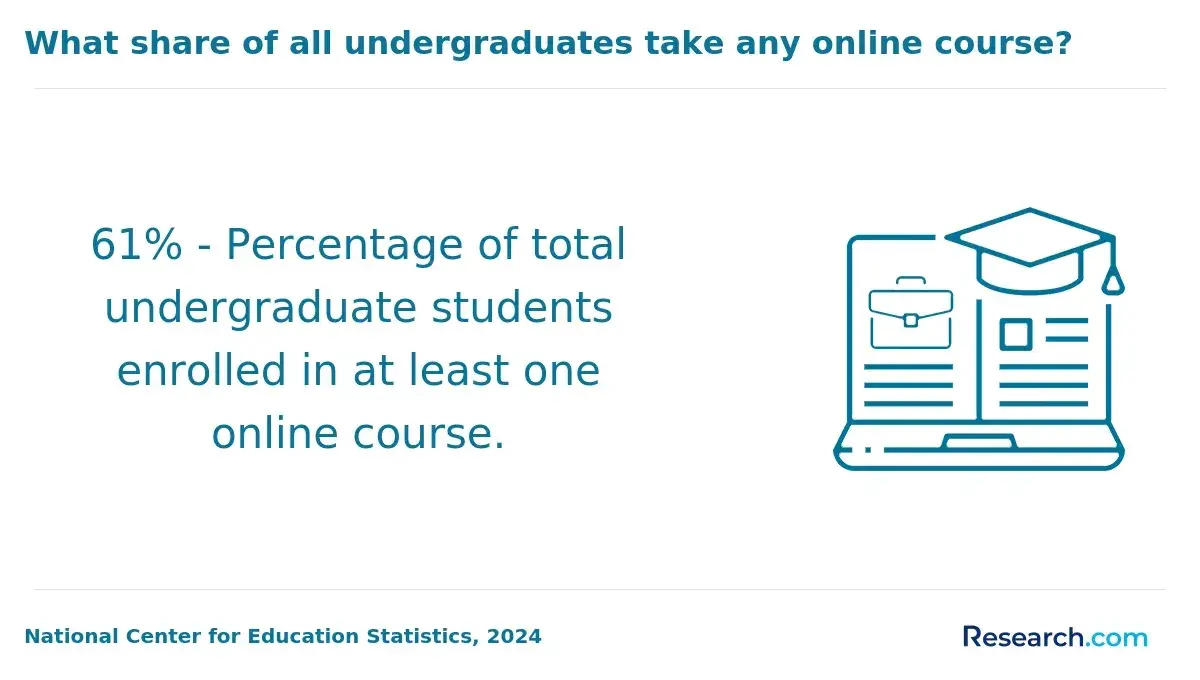
Choosing an online master's program in web development involves weighing affordability, accreditation, and career impact amid a rapidly evolving job market. With online graduate enrollment increasing by over 15% since 2022 according to the National Center for Education Statistics, more working adults seek flexible, credible programs that deliver measurable ROI.
However, not all programs balance cost and outcomes effectively, leaving prospective students vulnerable to long-term debt without corresponding career gains. This analysis helps navigate these tradeoffs by spotlighting affordable, accredited options that align with employer expectations and evolving workforce demands, ensuring decisions align with both immediate realities and future growth opportunities.
Key Things to Know About the Best Value Online Web Development Master's Degrees
- The limited number of accredited online web development master's programs narrows affordable options, requiring prospective students to balance cost savings against rigorous academic standards and long-term credential value.
- Employers increasingly prioritize demonstrable technical skills paired with accredited degrees, making program reputation a critical factor for career mobility despite some rising alternatives like bootcamps and certificates.
- According to the National Center for Education Statistics (2024), adult enrollment in online graduate programs rose by 12%, underscoring timing flexibility but also intensifying competition for financial aid and cohort placement.
What Are the Best Value Online Web Development Master's Programs in the U.S.?
Best value in an online web development master's program requires balancing tuition affordability against institutional accreditation, graduation rates, and meaningful salary gains after graduation. With tuition costs ranging widely, candidates must assess how delivery format and curriculum focus influence their ability to complete the program while maximizing workforce readiness. For example, an asynchronous program with lower tuition may appeal to full-time workers needing flexibility, but might offer fewer networking opportunities than synchronous models favored by employers seeking demonstrated collaboration skills.
Conversely, higher-cost programs often provide added experiential components or employer connections that can accelerate job placement, yet may impose heavier financial strain without guaranteed returns. This nuanced tradeoff shapes the realistic decision framework for tens of thousands investing in advanced technical credentials amid a competitive, skill-focused labor market.
- Georgia Southern University: This program has an estimated total tuition of $17,700, is delivered in a synchronous format, and emphasizes collaborative projects and real-world coding challenges supported by dedicated career services.
- University of Texas at Arlington: With an estimated total tuition of $14,400, this asynchronous program focuses on a practice-oriented curriculum centered on full-stack development and UX/UI integration designed for remote learners.
- Kennesaw State University: This program costs approximately $19,800 in total, is delivered asynchronously, and integrates emerging technologies such as cloud computing and mobile application development into its core curriculum.
- Drexel University: With an estimated total tuition of $33,000, this synchronous program is distinguished by its co-op model, which places students in industry roles for hands-on experience and strong networking opportunities.
- Northeastern University: This program has an estimated total tuition of $36,000 and follows a hybrid format with primarily asynchronous coursework and some synchronous sessions, offering flexible learning combined with strong employer partnerships for job placement support.
The following summary presents key data points that help assess program credibility, completion outcomes, cost efficiency, and career advancement potential.
- Accreditation Quality: Selected programs are accredited by established regional bodies such as SACSCOC or the Middle States Commission on Higher Education, ensuring recognized academic standards and credit transferability.
- Graduation Rate: All programs report above-average online graduate completion metrics, indicating effective student support mechanisms and pacing aligned with working professionals' needs.
- Post-Degree Salary Lift: Salary increases documented from datasets like IPEDS reflect growth typically between 20% and 40% post-graduation, highlighting the ROI potential tied to program relevance and labor market demand.
- Tuition Figures: Costs represent total required tuition for degree completion during the current academic year, excluding extraneous fees when feasible.
- Delivery Formats: Options include purely asynchronous, fully synchronous, and hybrid structures, each catering to distinct learner preferences and work-life integration requirements.
The selections offered here reflect key considerations for first-generation graduate students, career changers, and working professionals seeking top accredited online web development master's degrees with high ROI in America. These programs exemplify the balance necessary to navigate financial investment alongside academic rigor and real-world employment outcomes.
For those also exploring related fields, interdisciplinary options and credentials can provide additional leverage-as found in the research on accelerated psychology online degrees-which may complement technical skills in expanding job markets across healthcare and tech sectors. For detailed program guidance and rigorous comparisons, a trusted source remains essential to avoid the pitfalls of generic rankings and incomplete data. To explore related graduate degree opportunities and their outcomes, consider the psychology online education landscape as part of a broader strategic skill portfolio.
What Accreditations Should an Online Web Development Master's Program Have?
Choosing an online web development master's program without scrutinizing its accreditation risks costly setbacks, including limited employer recognition and lost financial aid eligibility. For example, graduates from non-regionally accredited schools may find their credits won't transfer or that employers question the rigor of their training, impacting long-term career mobility.
Accreditation in this field operates on two distinct levels. First, regional institutional accreditation serves as the fundamental standard necessary for access to federal financial aid and for ensuring that credits have value beyond a single institution. Regional accreditors in the U.S., such as the Higher Learning Commission (HLC), Southern Association of Colleges and Schools Commission on Colleges (SACSCOC), and Middle States Commission on Higher Education (MSCHE), hold well-established authority. They conduct thorough institutional reviews that affect not only financial aid but also whether employers perceive a degree as credible.
Second, programmatic or field-specific accreditation-though less common in web development compared to related areas like engineering or business-can signal additional quality assurance. Organizations such as ABET, which accredits computing programs, may accredit select web development curricula, reinforcing relevance to industry standards and enhancing employability for technically specialized roles. However, many web development programs lack this layer of accreditation, so its absence is not necessarily a disqualifier but is worth knowing.
Red flags appear in institutions accredited only by national or proprietary agencies with no regional recognition; such credentials often fail to meet employer expectations and typically do not qualify for federal financial aid. Additionally, unrecognized or fraudulent accreditors pose a risk, especially in fully online programs with high tuition costs.
Prospective students should ask admissions representatives these key questions before committing to a program:
- Regional Accreditation: Is the institution accredited by one of the seven recognized regional agencies, and can this be independently verified?
- Programmatic Accreditation: Does the web development program have any additional accreditation relevant to computing or technical education?
- Credit Transferability: Are credits widely accepted for transfer by other regionally accredited institutions?
- Employer Recognition: Does the program have documented outcomes or industry connections that ensure the degree will meet employer expectations?
How Much Does an Online Web Development Master's Degree Cost on Average?
An online web development master's degree varies significantly in cost, with total program expenses generally ranging lower at public universities than at private or nonprofit institutions, according to IPEDS and institutional websites. Public programs often charge in-state students less per credit hour, but a notable shift toward flat-rate tuition regardless of residency is simplifying fee structures while potentially increasing costs for local students. This variation impacts budgeting strategies for working professionals and career changers evaluating affordability against program credibility.
Key cost components extend beyond tuition, affecting the true financial commitment. Mandatory fees such as technology or student service fees, additional charges for capstone or thesis work, and proctoring expenses for online exams add layers often overlooked in initial calculations. Some programs may require occasional on-campus residencies or intensives, imposing travel and accommodation costs that must be factored in, especially for first-generation graduate students balancing practical constraints.
- Total Program Cost: Public university averages typically undercut private/nonprofit schools, which reflect higher fees aligned with exclusive resources and brand recognition.
- Per-Credit-Hour Cost: Public institutions usually favor in-state learners with reduced credit costs, while private schools maintain steady rates regardless of residency.
- Fees and Additional Expenses: Beyond tuition, expect compulsory technology fees, thesis or capstone charges, and online exam proctoring costs that can raise overall expenses.
- Residency Requirements: Certain programs demand brief on-campus sessions, triggering extra travel and lodging expenditures.
- Cost Variability By Institution: Without standardized pricing, prospective students should thoroughly examine fee disclosures and inquire about hidden costs early in the admissions process.
The search for an affordable accredited online web development graduate program must carefully weigh these elements to avoid unanticipated financial burdens that can undermine long-term career ROI. For those considering foundational credentials, exploring the quickest associates degree paths may provide an alternative stepping stone with lower initial investment.
Evaluating the return on investment (ROI) of an online web development master's degree requires balancing upfront costs against realistic salary gains post-graduation. ROI here can be defined as the increase in salary after earning the degree minus the total program expense, divided by the program cost-commonly expressed as a percentage or the number of years needed to recoup tuition through higher earnings.
For many working professionals, median annual salaries before such degrees center near $75,000, while specialized or senior roles after graduation can surpass $100,000. This gap suggests a potential payback window ranging between two to five years, but results vary widely based on several critical factors.
- Existing Experience: Professionals with prior industry exposure typically experience sharper salary growth, whereas individuals switching careers from unrelated fields may see more modest financial returns.
- Institution Prestige: Degrees from well-regarded, regionally accredited programs tend to hold greater employer value and correspond with stronger post-degree compensation.
- Regional Demand: Employment markets concentrated in technology hubs often facilitate better salary increases and shorter ROI timelines compared to less competitive or rural areas.
- Specialization: Targeting current in-demand niches, such as cybersecurity or UX design, can elevate income potential beyond generalist web development trajectories.
- Non-Monetary ROI: Gains in promotion eligibility, job security, and the ability to pivot careers add qualitative benefits that may not immediately reflect in salary but hold lasting professional weight.
Admission to online web development master's programs often hinges on more than just academic records; it reflects a balance of technical readiness and practical potential that directly impacts employability. For example, a candidate with a slightly below-average GPA might still gain entrance if their professional experience convincingly demonstrates relevant skills, underscoring the nuanced tradeoff between formal grades and demonstrated capability.
Applicants should generally expect these core components in their applications:
- Undergraduate GPA: Typically, programs require a minimum around 3.0 on a 4.0 scale, though more selective schools may set a higher bar or offer flexibility based on other strengths.
- Letters of Recommendation: Endorsements from academic mentors or supervisors play a crucial role, offering insight into a candidate's technical aptitude, work ethic, and capacity for graduate-level rigor.
- Statement of Purpose: This essay must go beyond mere intentions; it should clearly link prior experience, motivation for advanced study, and career objectives to the specific demands of web development.
- Resume or CV: Demonstrated industry or technical experience, even outside formal education, can critically influence admissions decisions.
- Program Prerequisites: Foundational knowledge in core areas like programming, algorithms, and systems design is often required to ensure students can effectively engage with graduate material.
- Standardized Tests: While some programs may still request GRE or GMAT scores, many are moving to test-optional policies, reflecting a growing consensus that exams do not consistently predict success in technical fields.
- Quantitative Skills: Given the STEM orientation, evidence of strong quantitative competency-via coursework or professional experience-is frequently necessary.
Because admission standards vary significantly, applicants increase their chances by applying to a spectrum of programs categorized as reach, match, and safety options. This strategic diversification acknowledges the differing weight institutions place on credentials versus experience, protecting candidates from overreliance on any single admission hurdle and optimizing long-term career prospects.
A minimum undergraduate GPA serves primarily as a preliminary filter rather than a definitive admission guarantee for online web development master's programs. Understanding the distinction between minimum eligibility and the competitive GPA at these programs can critically impact application strategy, especially for career-changers or working professionals balancing academic credentials with practical experience.
An applicant with a 2.8 GPA might meet the basic threshold but face stronger competition from peers presenting 3.2 or higher, typical of selective programs. This gap often means additional components such as professional portfolios or relevant work must substantiate an applicant's readiness.
- Minimum Eligibility: Most accredited online web development master's programs require a minimum undergraduate GPA between 2.75 and 3.0 to be considered. This baseline is common across US programs and serves to ensure foundational academic preparedness.
- Competitive GPA: More selective programs or those with rigorous admission standards frequently expect applicants to hold a GPA closer to 3.2 or higher, reflecting the average of admitted cohorts rather than an absolute cut-off.
- GPA Waivers: Recognizing the limitations of GPA as a sole metric, many programs allow substitution through professional experience, coding portfolios, or standardized tests. These waivers enable applicants with lower GPAs to demonstrate competency relevant to workforce demands.
- Conditional Admission: Programs sometimes grant provisional acceptance to candidates below GPA thresholds, contingent on completing prerequisite coursework or showcasing relevant industry experience.
- Holistic Review: Admissions decisions typically integrate multiple factors-such as work experience, letters of recommendation, and personal statements-beyond GPA alone to assess applicants' potential for success.
For working adults considering further education, balancing GPA eligibility with practical experience is crucial. Programs vary widely in how they weigh these elements, so thorough research ensures alignment with personal career goals and academic profiles. Additionally, exploring resources like the administrative assistant associate degree can provide perspectives on related educational pathways and potential entry points into tech-adjacent fields.
When evaluating the average GPA needed for accredited web development master's degrees in the US, prospective students should view GPA criteria as part of a broader, strategic admissions approach focused on both academic standards and career ROI.
Graduate students pursuing an online web development master's degree face a more limited range of federal aid compared to undergraduates, which often complicates funding strategy and impacts long-term debt management. Unlike undergraduate studies, Pell Grants are not an option, a constraint that frequently catches first-generation applicants off guard and necessitates reliance on loan programs or alternative awards to bridge financing gaps.
- Federal Loans: The primary federal aid comes through Direct Unsubsidized Loans and Graduate PLUS Loans, both accessed via FAFSA. It's important to recognize that the Student Aid Index determines eligibility and potential borrowing limits, influencing how much debt a student might assume.
- Institutional Scholarships and Fellowships: Universities may offer merit- or need-based scholarships tailored to graduate students in online programs. These awards are competitive and vary widely, so thorough research and early application are critical to improve chances of receiving aid.
- Employer Tuition Reimbursement: For working professionals, employer benefits can offset tuition costs significantly. However, this aid often requires alignment with current job responsibilities and is less accessible for career changers without established workplace support.
- Graduate Assistantships: Although rarer in fully online contexts, some institutions provide teaching or research roles that reduce tuition and enhance experience, though availability is limited and often demands balancing work and study.
- External Scholarships: Certain tech associations and organizations award funds to web development graduate students, frequently prioritizing underrepresented demographics. These can supplement other aid but require proactive sourcing and timely applications.
Maximizing available aid entails prompt FAFSA submission, identifying discipline-specific scholarships early, negotiating with programs on offers, and investigating relevant state grant opportunities. Each move requires strategic timing and adds meaningful leverage to reduce borrowing and improve affordability.
Completing an online web development master's degree in the United States requires a realistic timeline that reflects both program design and student lifestyle. Full-time students generally finish within 18 months to 2 years, which suits those able to dedicate significant hours uninterrupted. However, the majority of online graduate students enroll part-time, extending completion to 2.5 to 4 years.
This extended timeline often aligns with working professionals or first-generation graduate students balancing multiple responsibilities without compromising academic rigor or career outcomes. The average program length for accredited online web development master's degrees in the US factors heavily into enrollment decisions and eventual employability.
- Credit Hour Requirements: Most programs require between 30 and 45 credit hours, dictating course load and semester pacing.
- Course Load Per Semester: Enrolling in more courses accelerates completion but may increase stress, a significant consideration for career-changers managing full-time jobs.
- Transfer Credits: Accepted transfer credits from prior graduate coursework can shorten the timeline, making previous academic investments more valuable.
- Program Format: Cohort-based programs enforce fixed timelines, facilitating peer support and structured learning, while self-paced formats offer flexibility but depend on disciplined time management.
- Accelerated Programs: Some allow degree completion in as little as 12 months, though speed is less critical than ensuring program accreditation and employer recognition.
- Thesis or Capstone Requirement: These culminating projects can add one or two semesters, impacted by student pace and faculty availability.
Given that many employers prioritize program credibility over duration, faster completion does not automatically equal a stronger credential. Prospective students should assess how timing factors integrate with affordability-referenced through options like MBA programs under 10k and career goals, recognizing that a longer part-time schedule may better accommodate sustained employment and reduce financial strain.
An effective specialization in an online web development master's program can be the difference between generic skill acquisition and targeted expertise that aligns with specific employer needs. For instance, a graduate aiming for high-impact roles in tech companies might prioritize full-stack development to handle entire software projects, while someone focused on protecting organizational data assets would lean toward cybersecurity specialization, reflecting an understanding of both curriculum demands and market value.
These concentrations shape course selection, influence networking circles, and affect salary trajectories, making specialization choice a strategic decision rather than a mere academic formality.
- Full-Stack Development: Integrates front-end and back-end programming for versatile software engineering roles.
- User Experience (UX) Design: Centers on creating intuitive, engaging interfaces critical for product development teams.
- Mobile Application Development: Prepares graduates for the expanding smartphone and tablet app markets.
- Cybersecurity: Focuses on defending web systems from increasing cyber threats, a necessity across industries, as outlined in relevant cybersecurity courses.
- Data Visualization and Analytics: Develops skills to interpret complex datasets supporting data-driven decisions.
- Cloud Computing: Trains students to deploy and manage web applications using scalable cloud infrastructures.
- Interactive Media: Covers digital storytelling and multimedia techniques for immersive user experiences.
- Software Engineering Management: Combines technical and leadership training aimed at project management roles.
Some online web development master's programs allow a generalist track with flexible electives, while others require declaring a concentration upfront, a decision with consequences for specialization depth and professional network alignment. Students targeting the highest ROI web development master's degree concentrations in the United States should systematically analyze job postings for their intended roles to verify which specializations are in demand. This approach avoids investing time and resources in less marketable tracks and helps mitigate risk in lengthy graduate commitments.
Not all specializations offer equal long-term value-prospective students benefit from discussions with program alumni and academic advisors to understand how different tracks translate into employment outcomes. This data-driven selection process is especially important for first-generation graduate students, working professionals, and career changers committed to maximizing both educational value and labor market relevance. Incorporating considerations related to program accreditation, delivery format, and career support services further refines this decision.
- Accreditation Bodies: Regional accreditation and recognition by organizations such as ABET or the Distance Education Accrediting Commission validate academic quality and employer recognition.
- Program Format: Ranges from fully asynchronous to hybrid models, influencing schedule flexibility and networking possibilities.
- Career Support: Resume workshops, internships, and employer connections significantly impact return on investment (ROI).
Employer attitudes toward online versus on-campus web development master's degrees have become markedly more neutral, provided the degree is earned from a regionally accredited institution and omits the "online" label on official diplomas. Research from SHRM and similar organizations shows that most hiring managers assess credentials by institutional reputation and graduate skill sets rather than delivery mode. For instance, a recent survey indicated over 75% of employers view these degrees equivalently when the accreditation and academic rigor are confirmed.
Nevertheless, on-campus programs often maintain distinct advantages in areas critical for career-building, such as direct access to campus recruiting pipelines and richer in-person networking. Many fields within web development benefit from hands-on lab environments or practicum experiences that are more readily accessed on campus. This in turn may influence initial hiring or internship opportunities, particularly for candidates entering competitive or specialized tech markets.
To mitigate these gaps, innovative online programs have introduced virtual networking platforms, employer partnership projects, and hybrid residencies, yet the effectiveness varies significantly by institution and student engagement. Job seekers should analyze alumni employment trends through LinkedIn and other databases rather than relying solely on delivery format. Programs producing graduates who secure roles in sectors with reported salary ranges from $75,000 to $120,000 annually (depending on specialization and region) signal stronger alignment with industry expectations and ROI.
What Graduates Say About the Best Value Online Web Development Master's Degrees
- Jason: "Balancing a full-time job and family commitments meant I needed a web development program that offered real flexibility without breaking the bank. I chose an affordable, accredited online master's because it allowed me to learn at my own pace and still build a solid portfolio. After graduating, I landed a front-end developer role by showcasing projects from my coursework and an internship I secured through the program's network, though I realized that some employers still prefer candidates with more hands-on job experience."
- Camilo: "Switching careers from marketing to web development was daunting, especially with a limited budget and no prior coding experience. The program's strong emphasis on practical skills and remote internship options helped me transition smoothly, but I quickly learned that salary growth can be slow initially without advanced certifications. Still, the master's gave me a competitive edge in job applications where portfolios are heavily weighted over formal licensure."
- Alexander: "With only two years to complete my master's, I opted for the fastest affordable online web development program I could find that was also accredited. While the workload was intense, the accelerated timeline pushed me to prioritize project-based learning, which paid off when I secured a junior developer position shortly after graduation. However, I discovered employers in some tech sectors remain skeptical of online degrees, so continuing to build real-world experience is critical for advancement."
Other Things You Should Know About Web Development Degrees
Graduates of online web development master's programs commonly move into roles such as senior developers, software architects, or technical project managers. However, the variability in curricula means that programs emphasizing practical coding skills and real-world projects tend to yield stronger job placement within competitive tech sectors. Programs that integrate portfolio development and industry partnerships improve immediate employability, but graduates should anticipate ongoing self-directed learning to keep pace with evolving frameworks and tools.
Beyond tuition, students should consider expenses for updated hardware, software licenses, high-speed internet, and certification exam fees that may not be included. Programs with mandatory in-person residencies or proctored exams can introduce travel and lodging costs not apparent upfront. Awareness of these additional financial commitments is crucial, especially for working professionals balancing budgets, as underestimating them can affect the overall return on investment of the degree.
Employer tuition reimbursement can significantly enhance the value of a web development master's degree by reducing out-of-pocket costs for students. In 2027, many companies offer reimbursement as part of employee benefits, making it an attractive option for professionals aiming to advance their careers without incurring significant debt.
Most programs ask for a portfolio of 2 to 5 web projects showing HTML, CSS, JavaScript, and responsive design work. Some also require GitHub links, a résumé, and a statement of purpose. Applicants without a coding portfolio may need prerequisite coursework in programming or web design.
- Financial Aid For Online Colleges https://www.affordablecollegesonline.org/financial-aid/financial-aid-for-online-colleges/
- Web Development Certificate Program vs. College Degree — by Noble Desktop https://blog.nobledesktop.com/web-development-certificate-program-vs-college-degree
- 2025 Most Affordable Online Master's Programs https://www.onlineu.com/most-affordable-colleges/masters-degrees
- Explore the Best Web Development Degree Programs | Cyberdegrees.org https://www.cyberdegrees.org/listings/web-development/best-programs/
- Is Grad School Worth It? A Comprehensive Return on Investment Analysis - FREOPP https://freopp.org/whitepapers/is-grad-school-worth-it-a-comprehensive-return-on-investment-analysis/
- Web Development Scholarship | International Scholarships Search https://www.internationalscholarships.com/scholarships/2978/Web_Development_Scholarship
- MSc Web Development https://www.roehampton.ac.uk/study/postgraduate-taught-courses/web-development/
- Is College Worth it? | Return on Investment Analysis of College Degree https://educationdata.org/college-degree-roi
- Financial Aid for Master's Degrees https://online.norwich.edu/online/paying/financial-aid-masters-degrees
- Best Online Web Development Master's Degree Programs, Jobs, and Salaries https://careerkarma.com/blog/best-online-web-development-masters-degrees/