
2027 Best Two-Year Degrees With No SAT or ACT Requirement

Co-Founder and Chief Data Scientist
No SAT or ACT score should not mean choosing a degree without checking where it leads. Many two-year colleges admit students without either test, but a competitive nursing or healthcare major may have separate requirements. Cost matters, too: the College Board reported average published tuition and fees of $4,050 for in-district students at public two-year colleges in 2024-25. That figure excludes living expenses and program-specific costs.
This guide compares six degree fields for students seeking an accessible route to work or further study, then shows how to check admissions, accreditation, cost, and career fit before applying.
Key Things You Should Know
- Start with the goal: an AA or AS may suit transfer, while an AAS often emphasizes workforce preparation; the degree label alone does not determine where credits will apply.
- No SAT or ACT requirement for college admission does not guarantee entry into a selective major. Check that program's prerequisites, GPA rules, placement process, and application deadlines.
- Budget beyond tuition: the College Board's $4,050 public two-year average covers published in-district tuition and fees, not every expense or a particular student's net price.
Top 10 Best Two-Year Degrees With No SAT or ACT Requirement
Business Programs
Business administration AA or AS degrees commonly combine accounting, economics, communication, and general education for students planning to transfer. An AAS in accounting or office administration may instead emphasize workplace software and applied courses. Choose the transfer route if a bachelor's degree is central to your goal; choose a career-focused curriculum if its skills match the entry-level work you want. Ask whether admission to the college and to the specific business program both waive SAT and ACT scores.
Healthcare Programs
Health information technology and medical laboratory technology are distinct associate-degree paths. The former emphasizes records, coding, and data systems; the latter requires laboratory training and may involve clinical placements. An online lecture schedule does not remove hands-on requirements. Check program-specific admission rules, required placements, relevant programmatic accreditation, and eligibility for any credential you intend to pursue. These details matter more than a college-wide statement that SAT and ACT scores are optional.
Information Technology Programs
An IT AAS may cover networking, systems support, cybersecurity fundamentals, and hands-on labs. A computer science AS more often emphasizes mathematics and transfer preparation. Match the curriculum to your next step: an employer-facing portfolio and practical troubleshooting for support work, or transferable courses for a bachelor's degree. Ask how online labs work and whether the major has prerequisites even when the college does not request SAT or ACT scores.
Nursing / Pre-Nursing Programs
An associate degree in nursing is a clinical pathway toward registered nurse licensure; pre-nursing is preparation for applying, not admission to a nursing cohort. Colleges may admit applicants without SAT or ACT scores yet select nursing students using prerequisite grades, an entrance assessment, background checks, and clinical eligibility. Verify nursing-program accreditation, state board approval, clinical locations, and eligibility for the NCLEX-RN. If nursing admission is competitive, ask what happens to students who finish prerequisites but do not receive a seat.
Criminal Justice Programs
Criminal justice AA and AS degrees often suit students planning to transfer into broader justice or public-service studies. An AAS may emphasize applied procedures and workplace skills. Neither degree automatically makes someone eligible for police work: agencies set separate hiring, training, fitness, and background standards. Compare those requirements with the program's courses before enrolling, and confirm that the college - not just the major - has a published SAT/ACT-free admissions route.
Psychology / Counseling Programs
A psychology AA or AS generally provides introductory psychology, statistics, and general education for transfer. A human services AAS may include community-service coursework or a supervised placement. An associate degree does not qualify someone to practice independently as a licensed psychologist or counselor; those careers require substantially more education and state-specific credentials. Choose psychology for a planned bachelor's pathway, or compare human services programs if your immediate goal is an entry-level support role.
What Are the Best Two-Year Degrees With No SAT or ACT Requirement?
The best two-year degree without an SAT or ACT requirement is the one whose verified admissions route and curriculum match your next step. These are degree-field options, not a ranking of colleges: testing policies vary by institution, and some majors admit students separately. AA and AS degrees are often transfer-oriented, while AAS degrees often emphasize employment, but the actual course plan and transfer agreement are decisive.
This comparison separates likely goals from the admissions issue most likely to change an applicant's choice.
| Degree field | Strongest fit | Verify before applying |
| Business | Transfer or applied office and accounting skills | Whether required courses apply to a target bachelor's degree |
| Healthcare | A defined technical healthcare role | Major admission, placements, and credential eligibility |
| IT | Technical support skills or computer science transfer | Lab access and the transfer value of technical courses |
| Nursing / pre-nursing | A planned route toward nursing licensure | Separate cohort selection and clinical requirements |
| Criminal justice | Justice-related study or transfer | Separate employer and academy standards |
| Psychology / counseling | Transfer or entry-level human services preparation | Further education needed for licensed practice |
If earnings potential drives your choice, compare realistic entry requirements rather than assuming that lists of the most lucrative college majors describe jobs available with an associate degree alone.
How Can You Find Accredited Two-Year Programs Without Test Scores?
Start with the accreditor and the exact major, then confirm the testing policy in the current admissions materials. Institutional accreditation concerns the college; programmatic accreditation, when relevant, concerns a particular professional program. Neither tells you by itself whether SAT or ACT scores are required.
Use this sequence before paying an application fee or committing to prerequisite courses:
- Find the college's current institutional accreditation status through its accreditor or the U.S. Department of Education's accreditation database.
- Read both general admissions rules and the specific major's admissions page; ask admissions to confirm in writing whether SAT or ACT scores are required.
- For regulated fields, confirm program accreditation, state approval, and whether completion meets the educational requirements where you plan to seek a credential.
- If you plan to transfer, obtain the target university's course-equivalency information or a written articulation plan.
A red flag is a claim that "the college is open admission" without an explanation of how students enter a limited-seat major.
What Admission Requirements Replace SAT or ACT Scores?
Without SAT or ACT scores, colleges may use a high school diploma or equivalent, transcripts, prior college coursework, guided self-placement, or a placement assessment to determine course readiness. Placement is not necessarily an admission test: it may decide which math or writing course a student takes first.
A selective major can add prerequisite courses, minimum grades, an application, an interview, or a separate entrance assessment. Nursing and allied-health applicants may also face clinical-site requirements. Ask whether those rules apply before entry to the college or before entry to the major, and whether prerequisite courses extend your timeline. Do not treat an unlisted GPA minimum as proof that grades play no role in selection.
Which Two-Year Degrees Offer Online and Campus-Based Study Options?
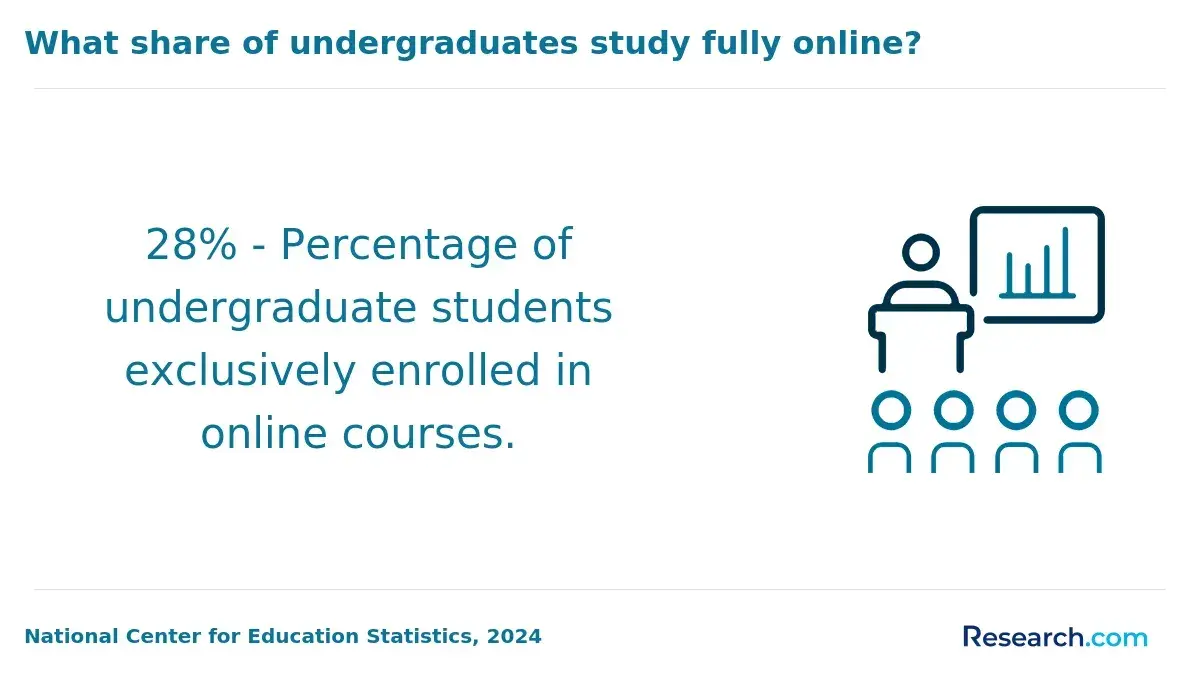
Business, IT, criminal justice, and transfer-oriented psychology courses may be available online or on campus, depending on the college. Healthcare and nursing pathways may offer online lectures but still require labs, supervised clinical work, or other in-person activities. Confirm the delivery format for every required course, not just the program description.
Online study can help someone comparing degrees for stay at home moms, but it is not automatically self-paced. Scheduled meetings, fixed deadlines, proctored assessments, and placements can shape the weekly schedule. Campus study may be a better fit when equipment access, clinical practice, or face-to-face support is essential.
What Coursework Do These Two-Year Degree Programs Include?
Most associate programs combine general education with major courses. Business students may study accounting and economics; IT students, networking and computing labs; criminal justice students, justice systems and writing; and psychology students, introductory psychology and research methods. Healthcare curricula can add science labs, while nursing requires sequenced science and clinical education.
Read the course map before choosing an AA, AS, or AAS. A workforce-focused course can be useful for an immediate role yet count only as an elective at a prospective university. Conversely, a transfer-focused curriculum may offer less occupation-specific practice. If a major requires prerequisites before formal admission, include those courses in your time and cost estimate.
How Much Do Two-Year Degrees Cost and How Long Do They Take?
The College Board's 2024-25 published average provides a starting point for comparing public two-year colleges, not a quote for completing a degree. The relevant price points and cost categories are:
- $4,050: average published in-district tuition and fees at public two-year colleges for 2024-25, according to the College Board.
- College-specific charges to request: total required tuition and fees, plus books, supplies, equipment, transport, and any lab or clinical expenses.
A student's net price can differ after grants or scholarships. Ask the financial aid office about aid eligibility, payment plans, and whether every required course counts toward the program. Compare the cost of the remaining credits you must take, not just a per-credit price.
A full-time student may finish a straightforward associate program in about two academic years, but part-time study, prerequisites, course sequencing, clinical placements, and transfer-credit decisions can extend that timeline. Students comparing online colleges for military spouses should also ask how a move would affect tuition classification, placement availability, and accepted credits.
What Careers Can You Pursue With a Two-Year Degree?
Career options depend on the major and on requirements outside the degree. Business or IT study may support applications for administrative, bookkeeping, or technical-support work; a human services AAS may fit some entry-level support positions. Employers can still require particular software skills, experience, or credentials. Criminal justice graduates must meet an agency's hiring standards for public-safety roles.
Healthcare paths are more specific: compare each curriculum with the occupation and any required certification. Nursing graduates must meet state eligibility rules and pass the licensure examination before practicing as registered nurses. Psychology is usually a foundation for further study, not an independent counseling credential. If licensed counseling is your goal, map the full education and licensure route; a search for easy masters programs cannot substitute for checking whether a graduate program meets your state's requirements.
What Salaries and Job Outlook Can Graduates Expect?
Occupational pay describes people working in a role - not the expected earnings of everyone who completes a related associate degree. The U.S. Bureau of Labor Statistics reports a May 2024 median annual wage of $93,600 for registered nurses. That figure includes nurses with different education and experience levels, and an associate nursing graduate must first qualify for licensure.
The Bureau of Labor Statistics also projects 5% employment growth for registered nurses from 2024 to 2034. A national projection does not predict openings in a particular community or guarantee a job. For other fields, compare the exact occupation you intend to enter, its usual entry-level education, local openings, and advancement requirements before treating a salary figure as a reason to enroll.
Which Licenses and Certifications Do These Careers Require?
Requirements follow the occupation and state, not the words "associate degree." Registered nurses need state licensure and must pass the NCLEX-RN. Other allied-health or health-information roles may involve certification, state rules, or employer preferences; check the credentialing organization's eligibility criteria before selecting a program.
IT certifications can demonstrate specific technical skills, but they do not replace every employer's education or experience requirements. Police agencies set hiring and training rules separately from criminal justice degrees. Independent counseling and psychology practice require additional education and licensure. For any regulated goal, ask the program which credential its graduates can seek, what further steps remain, and whether its approval or accreditation satisfies requirements in the state where you intend to work.
Other Things You Should Know About
Yes, if your chosen college does not require those scores for admission. Check the current policy and any separate rules for your intended major.
No. A nursing program may select applicants using prerequisite grades, an entrance assessment, and clinical eligibility even when the college does not require SAT or ACT scores.
Possibly, depending on the college and major. Check every required course and ask about labs, clinical placements, scheduled sessions, and proctored assessments.
Some credits may transfer, but acceptance is not the same as applying toward your intended major. Get a course-by-course evaluation or use a documented articulation agreement before enrolling.
References
- Typical education needed for entry | bls.gov https://www.bls.gov/emp/tables/education-summary.htm
- Cost of Attendance (Budget) | 2025-2026 Federal Student Aid Handbook https://fsapartners.ed.gov/knowledge-center/fsa-handbook/2025-2026/vol3/ch2-cost-attendance-budget
- Transfer Degrees | Colorado Department of Higher Education Home https://cdhe.colorado.gov/transfer-degrees
- Professional Licensure - State Authorization Network https://wcetsan.wiche.edu/resources/professional-licensure
- Licensure - Office of Academic Compliance - The University of Virginia https://academic-compliance.provost.virginia.edu/professional-licensure
- Internship? Co-op? Practicum? Clinical? Part-time Job? Some ways to know the differences | Career & Co-op Center https://career.uml.edu/resources/internship-co-op-part-time-job-some-ways-to-know-the-differences/
- Transferring Credits - Cuyahoga Community College Catalog - Tri-C https://catalog.tri-c.edu/transfer-information/transferring-credits/
- Resources - Transfer Student Resources - NC State University https://transfer.ncsu.edu/resources/
- Will an Associate's Degree Transfer? | University of Bridgeport https://www.bridgeport.edu/news/transfer-with-an-associates-degree/
- Transfer Glossary - NCCCS https://www.nccommunitycolleges.edu/transfer-glossary/


