2027 Best Professional Masters Degrees With Generous Transfer Credit Policies

Co-Founder and Chief Data Scientist
Already earned graduate credits? The next decision is whether a new master's program will apply them toward the degree you actually want. That question matters in growing fields: the U.S. Bureau of Labor Statistics (BLS) projects employment of information security analysts to grow 29% from 2024 to 2034, but demand alone cannot justify paying twice for equivalent coursework.
This guide compares career-oriented master's degree fields, explains where transfer credit may be most useful, and shows working professionals how to check eligibility, remaining requirements, and total cost before enrolling.
Key Things You Should Know
- The strongest transfer candidates usually have relevant, accredited graduate coursework that matches specific degree requirements - not merely unused college credits or professional experience.
- Compare the credits that apply to your degree, the credits you must complete at the new school, and any capstone or clinical requirements; a published transfer maximum is not a promise of acceptance.
- Prioritize career fit alongside transfer policy: BLS projects 23% employment growth for medical and health services managers from 2024 to 2034, but advancement into management also depends on experience.
Top 10 Best Professional Masters Degrees With Generous Transfer Credit Policies - Transfer-Friendly Degrees
Business / MBA Programs
A Master of Business Administration (MBA) is a practice-oriented choice for experienced professionals moving across functions or toward management. Prior graduate courses in accounting, finance, or management may fit common core requirements, but schools may require their own integrated curriculum or capstone. Ask whether a completed graduate business certificate can stack into the MBA and whether transfer credit replaces required courses or only electives. Choose an MBA for broad business preparation; a specialized MS may be a better fit if you want deeper technical training.
Healthcare Administration & Management Programs
A Master of Healthcare Administration (MHA) or healthcare management MS can suit professionals seeking operational or administrative roles. Previous graduate work in health policy, finance, or organizational leadership may be relevant, while internships and program-specific projects may remain mandatory. Check whether a school requires professional experience and whether its accreditation meets your employer's expectations. An MHA does not itself confer a clinical license or qualify a newcomer for a management position; relevant healthcare experience remains important.
Information Technology Programs
An MS in information technology commonly emphasizes systems, cloud infrastructure, and technology management. It may suit applicants whose earlier graduate coursework covers networking, databases, or project management. Compare course equivalencies carefully: a general technology elective might not replace a required systems course. Check how recently prior technical coursework must have been completed, particularly when tools have changed. Applicants seeking software research or advanced algorithms should compare computer science programs rather than assuming the degrees are interchangeable.
Computer Science Programs
An MS in computer science may be professionally focused or research-oriented, depending on its curriculum and thesis options. Graduate courses in algorithms, software engineering, or computing systems are potential transfer candidates if their content and rigor match. Applicants without undergraduate computing preparation may need foundation courses that do not count toward the master's degree. A generous transfer cap is less useful if essential core courses, laboratories, or a thesis must still be completed at the new institution.
Cybersecurity Programs
A cybersecurity MS can support technical specialization, risk management, or security leadership. Relevant graduate coursework might cover secure systems, digital forensics, or governance, but rapidly changing content may be subject to recency rules. Verify whether prior courses meet specific technical requirements rather than merely filling electives. Certifications may strengthen an application; they earn graduate credit only when the school publishes an applicable credit-award policy. Compare hands-on labs and projects as closely as the transfer limit.
Data Science / Analytics Programs
An MS in data science or analytics may accept comparable graduate work in statistics, programming, or machine learning. Programs differ substantially: some prioritize business decisions, while others require advanced mathematics and research. Applicants changing fields should check prerequisite math and coding requirements before estimating time saved by transfer. Because analytical tools evolve, schools may scrutinize older coursework. Review whether transferred courses satisfy the statistical and computing core or leave a sequence that cannot be accelerated.
Education / Educational Leadership Programs
A Master of Education (MEd) or educational leadership degree may build on earlier graduate coursework in curriculum, assessment, or school administration. The right choice depends on whether you want professional development or a state-approved route to an additional credential. Leadership practicums and state-specific courses may be difficult to replace with transfer credit. Teachers should confirm both graduate-credit equivalency and whether the completed program satisfies the requirements of the state where they intend to work.
Counseling / Psychology Programs
A counseling master's degree can be a route toward professional licensure; a general psychology MA or MS may instead emphasize research or nonclinical work. This distinction matters more than a high transfer allowance. Licensing-track programs may tightly control clinical coursework, supervised practica, and course sequencing, even when they accept electives. Before transferring, ask the program and the relevant state board whether the full curriculum - not just the degree title - meets educational requirements for your intended license.
Nursing Programs
A Master of Science in Nursing (MSN) may prepare registered nurses for leadership, education, or an advanced practice pathway. Prior graduate nursing courses can be useful, but clinical content and supervised hours often require close review. Verify admission requirements, including the required nursing credential and license, before comparing transfer policies. For advanced practice roles, confirm that the specific track supports the intended certification and state requirements; an MSN title or accepted transfer credits alone do not establish eligibility.
Engineering Management Programs
An MS in engineering management combines technical project work with operations, finance, and leadership. Graduate courses from engineering, analytics, or business may fit, although a school may reserve its project sequence or capstone for enrolled students. This degree can appeal to engineers moving toward coordination and management, but it is not a substitute for the engineering preparation a particular role requires. Compare how each school treats business electives and whether a previous technical course satisfies its management-focused outcomes.
What Are Professional Master's Degrees With Generous Transfer Credit Policies?
Professional master's degrees with generous transfer credit policies are career-oriented graduate degrees whose institutions allow eligible prior graduate coursework to satisfy a meaningful share of degree requirements. "Generous" is relative: the useful measure is how much coursework remains after evaluation, not the largest transfer maximum printed in a catalog. Policies belong to individual universities and programs, so no degree field automatically guarantees generous transfer credit.
These pathways best serve applicants with completed, relevant graduate courses or a certificate the destination school recognizes. A combined bachelor's/master's pathway is different: it allows specified coursework to count under that institution's published rules and may have separate admission conditions. If you have not finished a bachelor's degree, a fast track bachelor degree may be a more appropriate first step; ordinary undergraduate credits do not simply transfer into a master's degree.
Which Master's Programs Accept the Most Transfer Credits?
There is no reliable field-wide winner. An MBA, MSN, or computer science MS may have a large published transfer allowance at one school and a restrictive policy at another. Programs with elective space or an established certificate-to-master's pathway can be especially worth investigating, while tightly sequenced clinical and licensure curricula may offer less room for substitution.
The comparison below identifies where prior study may fit and what could limit its value. It compares curriculum patterns, not verified credit caps at every institution.
| Degree family | Potentially useful prior graduate work | Requirement to check closely |
| MBA and management | Business core or approved electives | Integrated core and capstone |
| IT, cybersecurity, and analytics | Matching technical courses or stackable certificates | Course recency, labs, and prerequisite sequences |
| Education and educational leadership | Curriculum, assessment, or leadership courses | State-specific content and practicum |
| Counseling and nursing | Approved foundational or elective courses | Clinical sequence, supervised hours, and credential rules |
To identify the best option for your record, compare written evaluations from programs in the same intended field. Request a degree audit showing each accepted course, the requirement it replaces, and the credits still needed. Do not rank schools by a maximum that your own transcript cannot use.
How Do You Verify Accreditation and Transfer-Credit Eligibility?
Start with the institution's recognized accreditation status, then check any programmatic approval important to your profession. Institutional accreditation and acceptance of another school's credits are separate matters: even accredited graduate coursework can be denied for an insufficient grade, outdated content, or poor course equivalency.
Use this sequence before paying an enrollment deposit:
- Check the destination school's accreditation with the accreditor or the U.S. Department of Education's institutional database, and confirm the prior institution's status for the period when you studied.
- Find the destination graduate catalog's transfer limit, minimum grade, age rule, and requirement for credits completed at that school.
- Send official transcripts and course descriptions or syllabi for a program-level evaluation, preferably before enrollment.
- For a regulated profession, confirm program approval and curriculum eligibility with the relevant accreditor or state licensing board.
A useful written response names both the accepted credits and their degree applications. "Transferable" should not be mistaken for "counts toward graduation."
Which Professional Master's Degrees Offer Online and Campus Options?
Business, technology, analytics, and some education degrees commonly have online options; campus and hybrid options also exist across these fields. Counseling, nursing, education, and laboratory-based pathways may include local placements or other in-person work even when academic classes are online. Delivery format does not change the need for an approved transfer evaluation.
These format differences affect the schedule you must manage after transfer credit is applied.
| Format | Potential advantage | Constraint to verify |
| Online | Study away from campus | Scheduled sessions, exams, residencies, and local placements |
| Hybrid | Mix of remote coursework and in-person contact | Frequency and location of required visits |
| Campus | Regular access to on-site classes and facilities | Commute and course availability by term |
Ask for a remaining-course schedule, not just an "online" label. A part-time student can still face a delay if a required course is offered infrequently.
What Coursework Do Transfer-Friendly Professional Master's Programs Require?
Professional master's programs usually combine a field-specific core with electives or a concentration and a culminating requirement. An MBA may end in an applied strategy project; an engineering management MS may require a team project; a research-oriented computer science MS may offer a thesis. Clinical programs can add supervised placements that transfer coursework cannot replace.
Transfer policies often distinguish electives from core requirements. Ask whether an accepted course substitutes for a required class, fills only elective space, or appears on the transcript without reducing the remaining degree credits. Also check foundation courses: a career changer may need undergraduate-level preparation before starting the graduate sequence, and those courses ordinarily are not transferable master's credits.
What Admission Requirements Apply to Professional Master's Degrees?
A completed bachelor's degree is the usual starting requirement. Graduate programs may also review transcripts, prerequisite courses, recommendations, statements of purpose, resumes, and, where applicable, portfolios or interviews. Minimum GPA rules and GRE or GMAT requirements vary by school and program; a test waiver or conditional admission policy should be confirmed on the current program admissions page.
Some pathways require more: nursing tracks may require an active nursing license, educational leadership programs may expect teaching experience, and technical MS programs may require mathematics or programming. Choosing the easiest bachelor degree to get without checking those prerequisites can close off the graduate path you want. Before applying, compare your transcript with both the admission checklist and the proposed transfer-course list; qualifying for admission does not mean qualifying for transfer credit.
How Long Do These Master's Degrees Take and What Do They Cost?
Completion time depends on the credits a program requires, how many of your graduate credits it applies, enrollment intensity, course scheduling, and any capstone or clinical sequence. A shorter advertised timeline may assume a qualifying certificate or full-time study. Request a personalized remaining-course plan before using it to make a financial decision.
For cost, compare the full amount you would pay to finish each program - not just the posted per-credit rate. Multiply remaining billable credits by the applicable tuition rate, then add mandatory, technology, program, residency, travel, and placement-related charges. Ask whether accepted transfer credit reduces billable courses and whether a required minimum of credits must still be taken at the destination school.
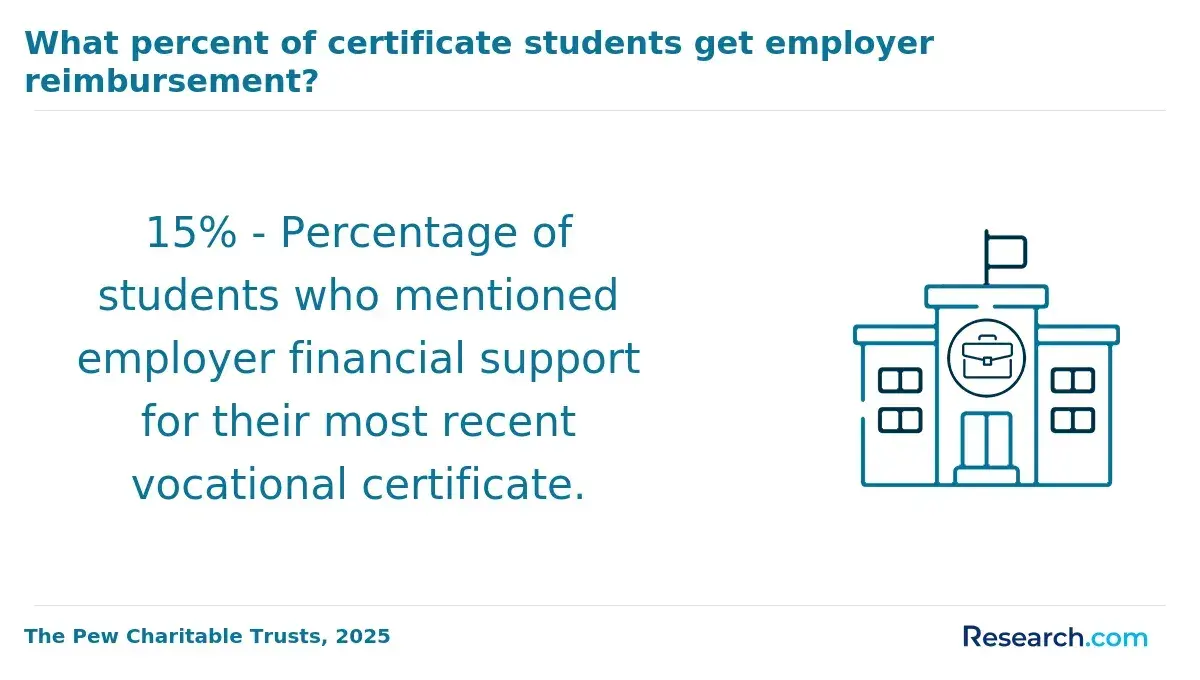
Employer tuition assistance, scholarships, and eligible federal aid may change what you pay out of pocket, but eligibility and coverage vary. The cheapest-looking option may cost more if few prior courses satisfy degree requirements; conversely, a high transfer allowance offers little financial benefit if it fills credits you would not otherwise need.
What Careers, Salaries, and Job Outlook Follow These Degrees?
Career value depends on the work the degree prepares you to do and what you could already pursue with your bachelor's degree and experience. An MBA can support a move across business functions; an analytics MS may deepen technical skills; a licensure-oriented counseling degree can serve a different purpose altogether. None independently guarantees employment, promotion, or management responsibility.
For context, BLS reports a 2024 median annual wage of $124,910 for information security analysts. That is an occupational wage for workers with varied education and experience - not a projected salary for cybersecurity master's graduates. When evaluating the highest paying degree or a master's option, compare the additional credential's cost with the requirements of specific jobs you could realistically pursue. Check employer postings for experience and certification expectations as well as degree preferences.
Which Licenses and Certifications Require a Professional Master's Degree?
A professional master's can provide required education for some credentials, but the degree and the credential are separate. Counseling licenses commonly involve state-approved coursework, supervised practice, and an examination. Certain advanced practice nursing roles require an appropriate graduate track, national certification, and state authorization. School leadership credentials may require teaching experience and state-specific preparation. Requirements vary by jurisdiction and role.
Before enrolling, identify the exact license or certification you want and ask the relevant board whether the specific program and delivery arrangement meet its educational rules. Do not assume that transferred clinical courses or hours will satisfy them. Some psychology careers require doctoral education rather than a general master's; if that is your goal, compare the required training and long-term cost, including the most affordable doctoral programs, without assuming an online doctorate meets a state's clinical requirements.
Other Things You Should Know About
Potentially. A destination program may evaluate completed graduate courses even if you did not earn the first degree. Its grade, recency, accreditation, and equivalency rules still apply.
No. It helps only if the school accepts its courses and applies them to requirements in the intended degree. Ask for a written degree audit.
Not automatically. Some institutions publish graduate-level credit mechanisms, but experience alone should not be treated as transfer credit without an explicit policy and evaluation.
Ideally before committing to a program. Submit transcripts and syllabi early enough to compare accepted courses, remaining requirements, likely completion time, and total cost across schools.
References
- Manage Transfer of F-1 SEVIS Record | Study in the States https://studyinthestates.dhs.gov/sevis-help-hub/student-records/transfers/manage-transfer-of-f-1-sevis-record
- Transfers for F-1 Students | ICE https://www.ice.gov/sevis/f1-transfers
- Program Eligibility, Written Arrangements, and Distance Education | 2024-2025 Federal Student Aid Handbook https://fsapartners.ed.gov/knowledge-center/fsa-handbook/2024-2025/vol2/ch2-program-eligibility-written-arrangements-and-distance-education
- Why Transfer to UMGC for Your Master's | UMGC https://www.umgc.edu/blog/why-transfer-to-umgc-for-your-masters
- Admission Requirements - Our Lady of the Lake University https://catalog.ollusa.edu/content.php
- Student Services - Page 3 - 2026-2027 Academic Catalog https://campus.collegeforcreativestudies.edu/catalog2627/category/student-services/page/3/
- Graduate School: Transfer Credits for Prior Coursework | wisc.edu https://policy.wisc.edu/library/UW-1216
- Certificate Policies | 2026-2027 School of Education Graduate Bulletin https://soegrbul.sites.iu.edu/policies-and-procedures/certificate.html
- POL 02.05.09 - Transfer Credit Evaluation Policy | UNC Pembroke https://www.uncp.edu/about/administration/policies-procedures-reports/pol-02-05-09-transfer-credit-evaluation-policy.html
- Graduate Academic Regulations | Columbus State University Academic Catalog https://catalog.columbusstate.edu/academic-regulations/graduate-academic-regulations/