
2027 Best Master's Degree Programs for Work-Life Balance

Co-Founder and Chief Data Scientist
A master's degree can fit around work and family - or make an already crowded schedule harder to manage. The distinction matters as demand grows in fields that attract working adults: the U.S. Bureau of Labor Statistics (BLS) projects employment of data scientists to grow 34% from 2024 to 2034. That outlook says nothing about an individual job's hours or a graduate program's flexibility. This guide compares ten master's degree fields by study requirements, likely career settings, and scheduling trade-offs so you can find a path you can realistically complete and use.
Key Things You Should Know
- For the most predictable study schedule, start by comparing part-time business, IT, data analytics, and engineering management programs; verify whether courses are asynchronous and offered often enough to maintain your pace.
- Career flexibility depends more on the role and employer than the credential. BLS reports a 2024 median wage of $133,080 for software developers, but that occupational figure is not a master's graduate salary or a measure of work-life balance.
- Counseling, teaching, and advanced nursing paths may require placements, supervised hours, or licensure. Check those obligations before assuming an online degree will fit your schedule.
Top 10 Best Master's Degree Programs for Work-Life Balance - Work-Life Balance Programs
Business / MBA Programs
A part-time Master of Business Administration (MBA) can suit professionals who want to keep working while building skills in finance, operations, and leadership. Look for predictable course rotation, asynchronous options, and group-project expectations; evening classes alone may still conflict with caregiving or shift work.
An MBA does not make management work predictable or qualify someone for a senior role without relevant experience. If you need a narrower skill set, a graduate certificate may demand less time and money.
Healthcare Administration & Management Programs
A Master of Healthcare Administration (MHA) or healthcare-focused MBA may fit someone seeking operational work rather than direct patient care. Online coursework can be compatible with employment, but internships or applied projects may add scheduling demands.
Healthcare managers can also face urgent staffing and compliance issues outside regular hours. Ask whether the program's placements accommodate employed students, and compare the roles its graduates pursue rather than assuming administration always means a predictable weekday schedule.
Information Technology Programs
A Master of Science (MS) in information technology often emphasizes systems, cloud services, and organizational technology decisions. Part-time online study may work well for employed IT professionals, particularly when projects use tools they can access outside scheduled class hours.
The career trade-off is important: support, infrastructure, and operations roles can involve on-call coverage. Compare the program's concentration with the type of job schedule you want, not just its delivery format.
Computer Science Programs
An MS in computer science can support specialization in software, AI, or systems, but coding assignments and research can be time-intensive even in asynchronous courses. Career changers should check programming and mathematics prerequisites; foundation courses can extend the path.
Software roles may offer scheduling discretion, while releases and incident response can create deadline pressure. If your goal is a specific technical skill rather than research or a broader career change, compare a certificate or professional experience first.
Cybersecurity Programs
An MS in cybersecurity can build skills in risk, security engineering, or policy. A part-time program with recorded instruction may fit a working professional, but intensive labs and team exercises still need protected time.
Job schedules differ sharply: governance and compliance roles may be more predictable than incident response, which can require urgent after-hours work. Choose a concentration for the work you want to do, and ask whether the curriculum prepares you for - but does not automatically award - any certification you need.
Data Science / Analytics Programs
An MS in data science or business analytics may appeal to people seeking project-based work with some scheduling autonomy. Expect substantial time for statistics, programming, and data projects; an online format does not reduce that workload.
Employers differ in their expectations for meetings, deadlines, and remote work. Compare prerequisite requirements and whether projects use realistic business or research problems. A narrower analytics certificate may be a better first step if you are testing your interest in the field.
Education / Educational Leadership Programs
A Master of Education (MEd) can help teachers specialize, while an educational leadership program may prepare experienced educators for administrative responsibilities. School calendars may make coursework planning easier, but student teaching, fieldwork, or leadership internships can restrict flexibility.
Principal and other leadership roles may involve evening events and urgent issues. Verify your state's certification rules and the program's placement requirements before enrolling; the degree alone may not confer a new credential.
Counseling / Psychology Programs
A clinical mental health counseling master's is a different path from a research-oriented MS in psychology. Counseling programs commonly involve supervised practica, internships, and state-specific steps toward licensure, making them difficult to fit around an inflexible full-time job.
Practice settings may eventually offer schedule choices, but client needs and documentation remain real commitments. If your goal is independent psychological practice, check the required credential carefully; a psychology master's alone generally does not qualify someone to practice as a psychologist.
Nursing Programs
A Master of Science in Nursing (MSN) may prepare a licensed registered nurse for education, leadership, or an advanced practice pathway. Online classes can reduce commuting, but clinical placements and supervised hours may still require daytime availability.
Roles also vary: an educator's schedule differs from a clinician's shifts or call duties. Check admission prerequisites, clinical placement support, state authorization, and the separate certification and licensure requirements for your intended role before committing.
Engineering Management Programs
An MS in engineering management combines technical decision-making with project, operations, and leadership coursework. It can be a practical part-time option for engineers whose employers support predictable study time. Group projects and capstones may still require coordination outside class.
Management jobs can offer autonomy but also carry deadline and staffing pressures; a degree does not replace the experience employers expect for leadership positions. Compare its curriculum with an MBA if you want to move beyond technical organizations.
What master's degrees offer the best work-life balance?
The best fit depends on two separate schedules: the hours needed to finish the degree and the hours expected in the career afterward. Part-time business, IT, analytics, and engineering management programs are reasonable starting points if you need to remain employed.
Education, counseling, and nursing may be better aligned with a specific professional goal but harder to schedule around because of field requirements.
This comparison highlights the main scheduling constraint in each group. It describes possibilities, not a ranking or a promise about individual jobs.
| Master's degree field | Potential study advantage | Work-life balance constraint to check |
| MBA, IT, analytics, engineering management | Part-time, coursework-focused options may be available | Scheduled classes, group work, deadlines, or on-call career paths |
| Computer science, cybersecurity | Some coursework can be completed remotely | Time-intensive technical projects; incident or release demands at work |
| Healthcare administration, education | Can build on existing professional experience | Internships, school calendars, or after-hours management duties |
| Counseling, nursing | Clearer preparation for specific practice paths | Clinical placements, supervision, and licensing obligations |
If you already like your field but need more control over your hours, investigate employers and job functions before paying for another degree. A change in team, specialty, or workplace may address the problem more directly.
Are online master's programs better for work-life balance?
Online can reduce travel, but it is not automatically more flexible. An asynchronous, part-time program may let you study around shifts or family responsibilities. A fully online program can still require live sessions, fixed weekly deadlines, team meetings, proctored assessments, or full-time enrollment.
Hybrid study may be worth the commute when hands-on instruction or local connections matter. For licensure-oriented degrees, clinical work, practica, or student teaching may take place in person even when academic courses are online. Ask for a sample course schedule and the complete list of required on-site activities before choosing a format.
Which careers offer strong salaries and flexible work schedules?
Software development, data science, and information security can offer opportunities for flexible arrangements, depending on the employer and role. Their wages may make graduate tuition easier to evaluate, but neither pay nor schedule follows automatically from earning a master's degree. Many positions also accept bachelor's-level preparation and experience.
The BLS occupational medians below provide U.S. wage context. They are not starting salaries, master's graduate earnings, or evidence that these jobs have predictable hours.
| Occupation | U.S. median annual wage, 2024 | Scheduling question |
| Software developer | $133,080 | How often do releases require evening or weekend work? |
| Information security analyst | $124,910 | Does the role include incident response or on-call duty? |
| Data scientist | $112,590 | How much control does the team have over project deadlines? |
When reviewing jobs, look for stated hours, on-call rotation, location rules, and manager expectations. A flexible arrangement at one employer does not establish a field-wide norm.
What should you look for in an accredited master's program?
Start with institutional accreditation and confirm the school's current status with its recognized accreditor. Then check any programmatic accreditation or approval relevant to your goal. For example, a counseling or nursing program may need to meet requirements tied to a particular state license or certification; institutional accreditation alone does not settle that question.
Review the graduate catalog for required courses, course rotation, experiential work, and policies for part-time enrollment.
A non profit university may be one option to investigate, but nonprofit status is not a substitute for checking accreditation, total cost, and whether the specific master's program fits your schedule. A red flag is an unclear answer about where placements occur or whether graduates meet requirements in your state.
Which master's programs require professional licensure or certification?
Requirements depend on the occupation, not just the degree's name. Clinical counseling, advanced practice nursing, teaching, and some educational leadership roles commonly involve state-specific licensing or certification steps.
These can include approved coursework, supervised practice, examinations, and applications separate from graduation. A psychology master's should not be confused with the education generally required for psychologist licensure.
Most business, IT, computer science, analytics, cybersecurity, and engineering management jobs do not require a professional license merely because they relate to those degrees.
An employer may value a separate industry certification, however. Before applying, identify the exact role and state where you intend to work, then confirm its requirements with the relevant licensing board or credentialing body.
What do you study in work-life balance master's programs?
Coursework depends on whether the degree is intended for professional advancement, career change, research, or licensed practice. An MBA commonly combines management subjects; an MS in computer science or data science emphasizes technical methods; an MEd, MSN, or counseling degree adds field-specific practice. Concentrations and electives let students narrow their focus, but required courses determine much of the weekly workload.
Compare the culminating requirement as closely as the course list. A thesis can suit research or doctoral ambitions, while a capstone may center on an applied problem. Laboratories, internships, practica, and clinical placements can be essential preparation but leave less control over study hours. Ask who arranges placements and whether the required hours can coexist with your job.
How long do master's programs take and how much do they cost?
Completion time varies with required graduate credits, part-time or full-time enrollment, course availability, prerequisites, and any thesis or placement. An accelerated calendar does not necessarily mean a manageable weekly workload. Ask a program for a term-by-term plan based on your intended course load, not only its fastest advertised timeline.
Compare total cost rather than tuition per credit alone: include mandatory and program fees, books or software, travel, and income you may forgo during placements. Financial aid eligibility and employer tuition assistance may change what you pay; review the conditions before relying on either.
A search for most affordable masters degrees online is a useful starting point, but calculate the full cost of each eligible program. If you have previous graduate coursework, request an evaluation of whether it applies to your intended degree; accepted credit is not automatic.
What are the admission requirements for master's degree programs?
Master's admission normally requires a completed bachelor's degree. Depending on the program, applicants may also need prerequisite courses, a minimum GPA, recommendations, a statement, professional experience, an interview, a portfolio, or GRE or GMAT scores.
Requirements may differ between the graduate school and the specific department, so check both. Career changers should ask whether foundation courses add time or cost.
For clinical or placement-based paths, ask whether background checks or other site requirements affect participation. If a criminal record could affect placement or eventual licensure, check the applicable state and program rules before enrolling; information about degrees felons can get can help you explore options but cannot establish eligibility for a particular license.
How can you compare master's programs by job outlook and career outcomes?
Start with a job title, then work backward. Check the BLS description for typical entry-level education, projected employment, and occupational wages; compare those findings with current job postings and the program's published graduate outcomes. A strong job outlook signals potential demand, not a predictable schedule or an individual job offer.
Before applying, make a shortlist and use the same questions for every school:
- Which roles do recent graduates enter, and how does the school document those outcomes?
- Can I complete required courses and placements while maintaining my intended work hours?
- What will the full program cost after fees, aid, and any accepted graduate transfer credit?
- Does my target role require experience, certification, licensure, or another degree beyond this master's?
Compare the degree's added value with a certificate, employer training, or a job change. If your intended occupation instead requires doctoral preparation, research cheap doctoral programs alongside their time and practice requirements before investing in a master's that may not meet your goal.
Other Things You Should Know About
Often, but check the actual course schedule and weekly workload. Clinical, internship, and student-teaching hours can make full-time employment difficult even when classes are online.
It may build relevant skills, but remote work depends on the occupation, employer, and position. Confirm location expectations in job postings rather than assuming the degree determines them.
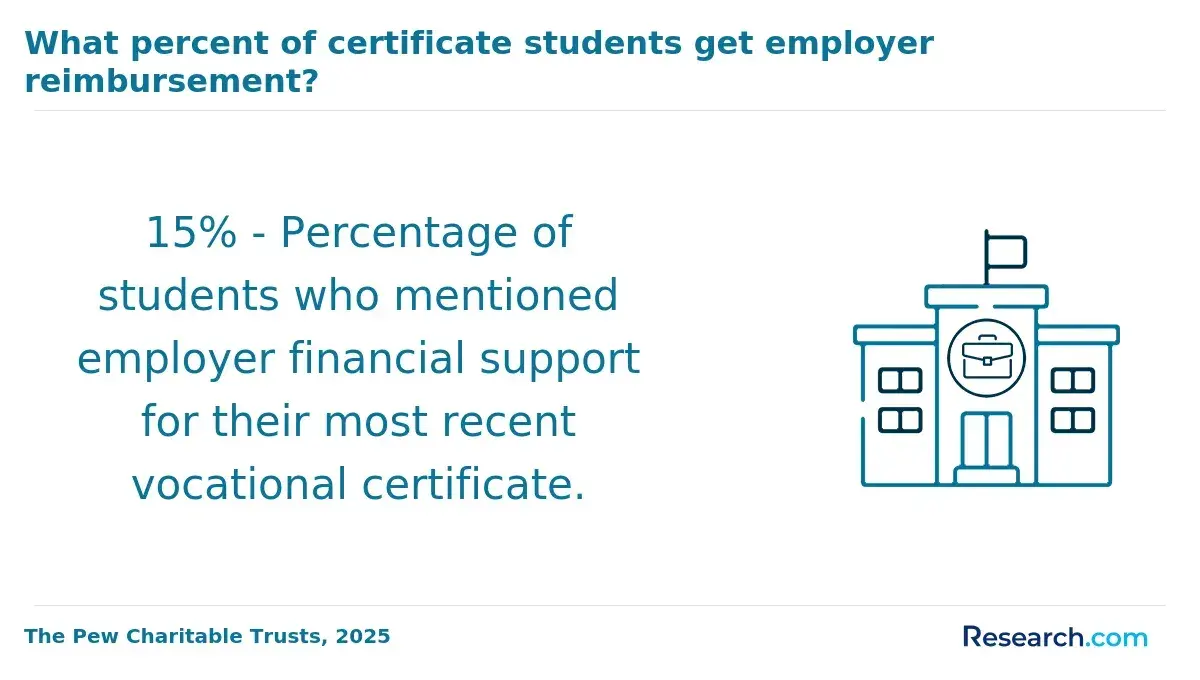
Some employers offer tuition assistance. Ask about eligible degrees, reimbursement limits, required grades, and any obligation to remain employed afterward.
Not necessarily. A lower tuition bill may be offset by infrequent courses, required travel, or placements that interrupt paid work. Compare total cost and a realistic completion schedule together.
References
- Alternative Work Schedules | U.S. Office of Personnel Management https://www.opm.gov/policy-data-oversight/pay-leave/reference-materials/handbooks/alternative-work-schedules/
- Burnout and Maladjustment Among Employed Students - PMC https://pmc.ncbi.nlm.nih.gov/articles/PMC9072968/
- The Most Flexible Online Teaching Programs for Busy Adults | Moreland University https://moreland.edu/resources/blog-insights/flexible-online-teaching-programs-busy-adults
- Childcare choices for student parents in higher education | sciencedirect.com https://www.sciencedirect.com/science/article/pii/S0885200622000965
- How Do Asynchronous Classes Work? | Hopkins EP Online https://ep.jhu.edu/news/how-do-asynchronous-classes-work/
- Work-life balance and well-being of graduate students | sagepub.com https://journals.sagepub.com/doi/10.1080/15236803.2020.1771990
- How Does Online Learning Work at CSU? | colostate.edu https://online.colostate.edu/faqs/online-learning.dot
- How Many Hours of Work Per Online Course Credit | ASU Online https://asuonline.asu.edu/newsroom/online-learning-tips/discover-weekly-number-hours-online-students-study/
- Student Workload in Online Learning | fgcu.edu https://www.fgcu.edu/digitallearning/online-education/student-workload-in-online-learning
- FAQs for Clinical Courses: Practicum, Internship, & Field Experience - Wake Forest Department of Counseling https://counseling.wfu.edu/faqs-for-clinical-courses-practicum-internship-field-experience/


