2027 Best Online Master's Degrees for Students With Some College Credit

Co-Founder and Chief Data Scientist
If you have college credit but no bachelor's degree, can you start an online master's? Usually, no - and choosing the wrong pathway could cost you time and money. If you have completed a bachelor's and taken graduate courses, some of that later coursework may count toward a master's.
The decision matters as career demands change: the U.S. Bureau of Labor Statistics (BLS) projects 29% employment growth for medical and health services managers through 2033. This guide compares ten degree fields, clarifies what credit can count, and shows how to evaluate programs against your starting point and career goal.
Key Things You Should Know
- Some undergraduate credit is not enough for standard master's admission. You generally need a completed bachelor's degree; undergraduate courses ordinarily do not count toward master's requirements.
- Previous graduate coursework is the credit to evaluate. A school must decide whether each course meets its grade, age, equivalency, and degree-residency rules before it reduces your remaining requirements.
- Career demand is not proof of degree value. BLS projects 36% growth for data scientists through 2033, but the right program still depends on your preparation, total cost, and whether the occupation requires graduate study.
Top 10 Best Online Master's Degrees for Students With Some College Credit - Top 10 Degrees
Business / MBA Programs
A Master of Business Administration (MBA) suits experienced professionals seeking broader management skills; an MS in a business specialty may suit someone seeking deeper technical expertise. Applicants generally need a bachelor's degree, though many programs accept any undergraduate major.
Previous graduate business courses or a graduate certificate may apply if the MBA program finds them equivalent. Ask whether accepted credits replace core courses or only electives: that distinction affects both time and value. Work experience often strengthens an application, but an MBA alone does not qualify someone for a management position.
Healthcare Administration & Management Programs
A Master of Healthcare Administration (MHA) or healthcare management MS can prepare graduates for operations, finance, and policy work rather than clinical licensure. Some programs accept applicants without a healthcare bachelor's degree but require foundational coursework or relevant experience.
Graduate credits in health policy or administration may be useful; clinical coursework might not satisfy management requirements. Check whether a practicum is required and whether you can complete it locally. Leadership jobs commonly require healthcare experience in addition to graduate education.
Information Technology Programs
An MS in information technology often emphasizes systems, cloud infrastructure, and technology management. It can fit professionals advancing from technical roles or changing fields after completing a bachelor's degree. Prior graduate IT coursework may shorten the path only when it matches the new program's core or electives.
Compare required programming and networking preparation, scheduled online labs, and capstone projects. If you need one narrowly defined skill, an employer-recognized certification or graduate certificate may cost less than a full master's.
Computer Science Programs
An MS in computer science generally demands stronger preparation in programming, algorithms, and mathematics than a general IT master's. Career changers with a bachelor's in another field may need bridge courses before graduate work begins; those undergraduate prerequisites usually do not count toward the MS.
Previously completed graduate CS courses are more promising transfer candidates, subject to equivalency review. Compare research-thesis options with project-based tracks: a thesis may serve future doctoral goals, while a project may better fit an applied software goal.
Cybersecurity Programs
An MS in cybersecurity can focus on technical defense, risk management, or policy, so compare curricula rather than degree titles alone. A bachelor's degree is generally required, and technical tracks may expect networking or programming knowledge. Previous graduate security courses may transfer, but a school can reject outdated or non-equivalent content.
Look for hands-on labs and assess whether scheduled exercises fit your work hours. The degree can support specialization; experience and, for some roles, certifications or clearance eligibility remain separate considerations.
Data Science / Analytics Programs
An MS in data science usually combines statistics, programming, and applied modeling; an analytics master's may place more emphasis on business decisions. A completed bachelor's is normally required, with mathematics prerequisites varying by program. Prior graduate statistics or computing courses may count if their content and grades meet policy.
Ask whether a portfolio or capstone uses realistic data and whether the curriculum addresses responsible use of AI. BLS demand for data scientists is strong, but its occupational outlook does not establish a return on any particular degree.
Education / Educational Leadership Programs
A Master of Education (MEd) may support instructional specialization, while an educational leadership master's may be designed around administrator credentials. Students who have completed graduate education courses should check whether those courses satisfy the specific endorsement or degree sequence - not merely an elective requirement.
Online classes may still include school-based internships. State rules, teaching credentials, and experience requirements determine whether a program supports principal or other licensure; an online degree by itself does not grant it.
Counseling / Psychology Programs
A counseling MA or MS can be designed for clinical licensure; a general psychology master's may instead emphasize research or nonclinical practice. This distinction matters more than speed or transfer flexibility. Applicants usually need a bachelor's degree, and relevant graduate courses may transfer only if they satisfy tightly sequenced professional requirements.
Counseling programs often require supervised, in-person practica and internships despite online coursework. Before applying, confirm the program's accreditation and whether its curriculum meets the licensing rules where you intend to practice.
Nursing Programs
A Master of Science in Nursing (MSN) typically serves registered nurses pursuing advanced practice, education, informatics, or leadership. Admission pathways depend on existing nursing credentials: RN-to-MSN and bachelor's-to-MSN routes do not start from the same point.
Prior graduate nursing courses may transfer, but specialty, clinical-hour, and residency requirements can limit savings. Online coursework often comes with supervised clinical placements. For advanced practice, verify state licensure and certification eligibility separately from admission to the MSN.
Engineering Management Programs
An MS in engineering management blends technical decision-making with operations, project management, and finance. It often fits engineers with a completed bachelor's degree and relevant work experience better than someone seeking an entry-level engineering qualification.
Previous graduate engineering or management courses may count if approved, but prerequisites and a capstone may remain. Compare it with an MBA: the MS usually keeps technical systems closer to the center of study, while an MBA generally offers broader business training.
What Master's Degrees Can You Earn Online With Some College Credit?
The best online master's degree depends first on which credits you actually have. "Some college credit" can mean an unfinished bachelor's, a completed bachelor's, or previous graduate study. Those are different starting points, not interchangeable admission pathways.
This comparison shows what each starting point usually permits. It can help you avoid counting credits toward a master's before a school has evaluated them.
| Starting point | Likely next step | What may count toward a master's |
| Undergraduate credit, no bachelor's | Finish a bachelor's degree first | Ordinarily none of the undergraduate credit |
| Bachelor's degree, no graduate credit | Apply to a standard master's or eligible combined pathway | Graduate courses specifically approved for dual counting, if offered |
| Bachelor's degree and prior graduate courses | Request a program-specific transfer evaluation | Approved graduate courses that fulfill degree requirements |
| Bachelor's degree and graduate certificate | Check whether the certificate stacks into the intended degree | Approved certificate courses, subject to program policy |
Once eligible, choose a field based on the work you want to do: an MBA for broad business leadership preparation, an MHA for healthcare operations, an MS for technical specialization, or a licensure-oriented degree where professional practice is the goal. "Best" means the program fits both your career target and your verified remaining requirements - not that it accepts the most credits on paper.
Can You Get Into an Online Master's Program Without a Bachelor's Degree?
Usually, no. Standard master's admission requires a completed bachelor's degree. Having earned undergraduate credits, worked in the field, or nearly finished a bachelor's does not normally substitute for that credential. Exceptional combined bachelor's/master's pathways may let qualified undergraduates take designated graduate courses before graduation, but the institution sets separate eligibility and degree-completion rules.
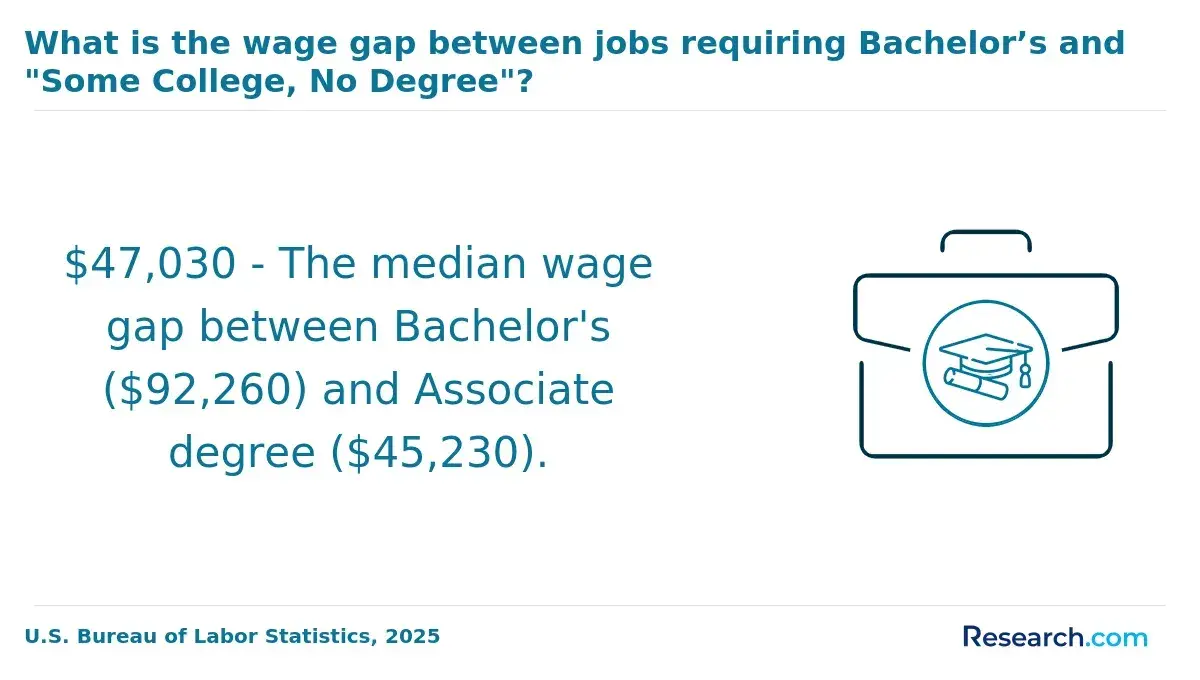
If your bachelor's is unfinished, ask your current or prospective undergraduate school to evaluate your credits and map the courses still needed. Accelerated degree programs online may offer a route to finishing that first credential; confirm how many of your existing credits apply before judging the advertised timeline. Then assess master's prerequisites and combined-degree options.
How Do You Transfer College Credits to an Online Master's Program?
Graduate transfer is a course-by-course decision, not a blanket acceptance of your transcript. A course may be accepted by a university yet fail to satisfy the core, concentration, or elective requirements of your intended master's. Undergraduate courses generally do not transfer into graduate requirements unless a published combined-degree policy expressly permits it.
Use this sequence before paying a deposit so you can estimate your actual remaining workload:
- Collect official transcripts and syllabi for prior graduate courses, including courses in a graduate certificate or qualifying military or professional education.
- Ask the program which courses are equivalent, the minimum acceptable grade, any age limits, and whether accreditation affects eligibility.
- Confirm the maximum transferable graduate credit, credits that must be earned at the new school, and whether approved courses meet core requirements or only electives.
- Request a written degree audit showing remaining courses, capstone or clinical requirements, expected course availability, and a revised cost estimate.
Work and life experience do not automatically award graduate credit. If a school advertises such credit, ask for its published graduate-level assessment policy and how any award applies to this specific degree.
Which Online Master's Programs Have the Best Career Outcomes?
No field guarantees the best outcome for every student. Compare the occupation you want with the credential and experience it requires, then weigh any likely benefit against program cost and time. BLS occupational data describe jobs - not the earnings or placement rates of a particular master's program.
These U.S. BLS figures illustrate demand in occupations connected to several fields above. They are useful context, but none shows that earning the related master's alone qualifies someone for the job.
| Occupation | Median annual pay | Projected employment growth through 2033 | Important qualification check |
| Medical and health services managers | $110,680 | 29% | Employers commonly seek relevant healthcare experience. |
| Information security analysts | $120,360 | 33% | Relevant technical experience can matter more than a master's. |
| Data scientists | $108,020 | 36% | Strong mathematics and computing skills are essential; graduate study is not universally required. |
For an individual program, request outcomes for graduates in your intended role and examine how those outcomes were measured. If you already have the skills and credentials for a target job, compare the master's with gaining experience, earning a focused certificate, or seeking employer-funded training.
How Much Do Online Master's Degrees Cost and How Long Do They Take?
Many master's programs require roughly 30-60 graduate credits, but professional and clinical programs can require more. Completion may take about one to three years or longer, depending on enrollment, prerequisites, course sequencing, accepted transfer credit, and required fieldwork. A short course term does not establish a short degree timeline.
Compare total remaining cost, not tuition per credit alone. Multiply the school's published rate by the graduate credits you must still earn, then add mandatory and program fees, books or software, travel, and placement expenses. An accepted transfer course saves money only if it replaces a course you otherwise would have paid to take; ask whether aid eligibility or residency rules change your calculation.
Employer assistance, scholarships, and eligible federal student aid may reduce what you pay out of pocket, but aid rules and borrowing costs deserve separate review. If speed is important, compare 1-year online master's options against their stated entry qualifications, course load, and remaining requirements rather than assuming every applicant can finish in a year.
What Do You Study in an Online Master's Degree Program?
Coursework depends on the field and the degree's purpose. An MBA commonly covers finance, operations, and strategy; a technical MS may emphasize advanced computing or quantitative methods; an MEd, MSN, or counseling degree may combine specialized coursework with supervised practice. Programs can include electives and a thesis, applied capstone, portfolio, comprehensive examination, internship, or clinical placement.
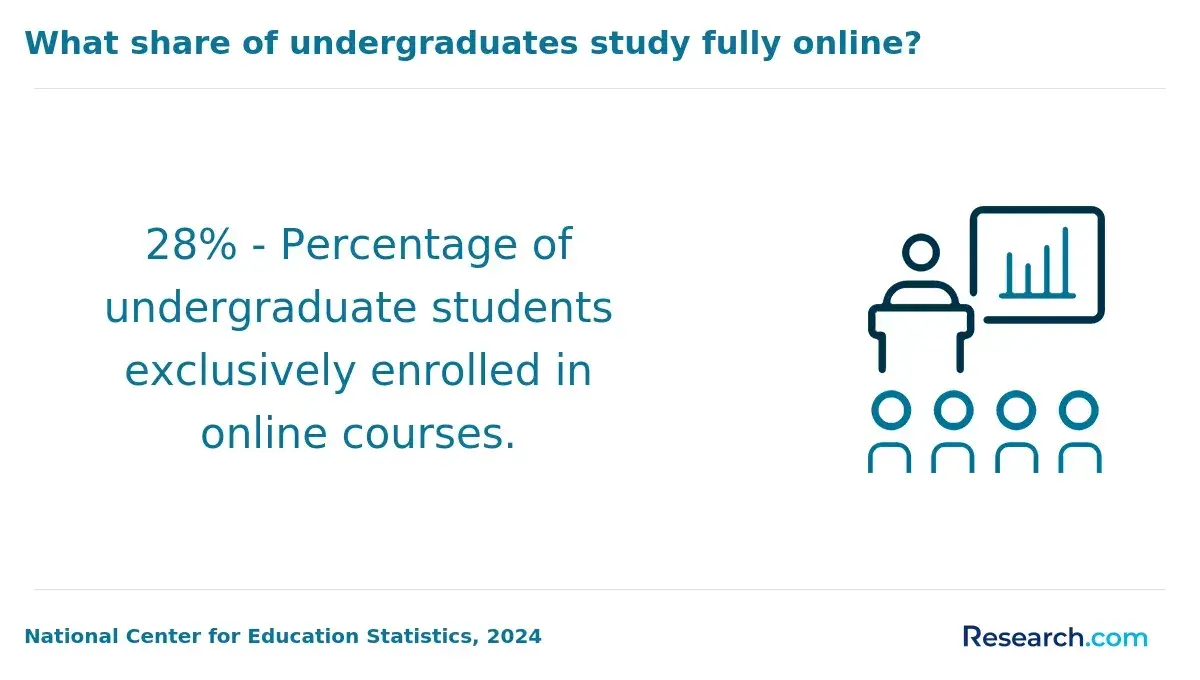
Read the curriculum as a remaining-degree plan if you have prior graduate credit. A transferred elective might reduce your credit total without replacing a sequential core course offered only in certain terms. Also check whether online classes meet live, require proctored work, or involve local placements: online delivery does not necessarily mean you can study at any hour or from any location.
Are Online Master's Degrees Accredited and Recognized by Employers?
An online master's can be a recognized credential when its institution holds appropriate institutional accreditation. Verify the institution's current status with its accrediting agency or the U.S. Department of Education, rather than relying on a marketing badge. Where relevant, also check programmatic accreditation - for example, accreditation tied to counseling, nursing, or other professional preparation.
Employers may evaluate the school, curriculum, skills, and your experience; the online format alone does not determine whether a degree serves your goal. If you plan to transfer graduate credits again or pursue doctoral study, ask the receiving institution about its rules. Accreditation is important, but it does not guarantee that another program will accept every course.
Do Online Master's Degrees Lead to Licensure or Certification?
Sometimes - but earning the degree and obtaining a credential are separate steps. Counseling, nursing, and school leadership pathways may require a particular curriculum, supervised hours, examinations, an existing license, or state approval. An MBA or general IT master's typically does not itself confer a professional license. Requirements depend on where you intend to work, including when you study online from another state.
Before enrolling, compare the program's published licensure disclosures with the relevant state board's requirements. If a career has background-check or character requirements, ask the licensing body directly how it reviews eligibility; a school's admission decision cannot settle that question. Readers considering degrees for felons should make that check before paying for a licensure-oriented program.
How Do You Choose a Reputable Online Master's Program?
Start with your bachelor's status, career target, and the graduate courses you have already completed. Then compare programs using the same evidence: a written credit evaluation, required remaining courses, total cost, online attendance rules, accreditation, and any location-specific practice requirements. A program accepting more credits is not necessarily the better choice if they apply only as electives or leave a lengthy clinical sequence untouched.
Watch for claims of guaranteed admission, universal credit for experience, or a fast completion date that omits its prerequisites. Graduate GPA and test policies vary by program; an institution's undergraduate admission policy is not evidence of its master's requirements. If grades are a concern, use online graduate programs that accept 2.0 GPA as a starting point for questions, then verify the current graduate-program policy directly. Request written answers before committing.
Other Things You Should Know About
Usually not directly. They may help you finish the bachelor's needed for admission. Only a school's published combined-degree or similar policy can establish whether designated courses also count toward a master's.
No. The program evaluates subject match, grades, course age, transfer limits, and how each course fits the degree. Request a written evaluation.
Sometimes. Online coursework can still involve live meetings, campus visits, local internships, student teaching, or clinical placements. Check requirements for your specific location.
Not automatically. Compare the credits that actually fulfill requirements, remaining time and cost, accreditation, and fit with your career or licensing goal.
References
- Credit for Prior Learning - Ohio Department of Higher Education https://highered.ohio.gov/initiatives/access-acceleration/credit-for-prior-learning
- Data Home - College Scorecard - Department of Education https://collegescorecard.ed.gov/data/
- College Credit for Military Training & Experiences | dantes.mil https://www.dantes.mil/credit4training/
- Institutional Accrediting Agencies | ed.gov http://www.ed.gov/laws-and-policy/higher-education-laws-and-policy/college-accreditation/institutional-accrediting-agencies
- General Schedule Qualification Policies | U.S. Office of Personnel Management https://www.opm.gov/policy-data-oversight/classification-qualifications/general-schedule-qualification-policies/
- Community College Program Outcomes | iowa.gov https://educate.iowa.gov/higher-ed/community-colleges/program-outcomes
- Licensure Programs - Office of Institutional Effectiveness https://institutionaleffectiveness.louisiana.edu/accreditation/licensure-programs
- Licensure - Office of Academic Compliance https://academic-compliance.provost.virginia.edu/professional-licensure
- Undergraduate and Graduate Tuition and Fees | Purdue Global https://www.purdueglobal.edu/tuition-financial-aid/undergraduate-graduate-tuition-and-fees/
- Master's Degrees | Graduate College https://grad.arizona.edu/degree-services/degree-requirements/masters-degrees