
2027 Best Online Master's Degree Programs With Easy Admission Requirements

Co-Founder and Chief Data Scientist
A low undergraduate GPA, an unrelated bachelor's degree, or a long gap since college does not necessarily rule out an online master's degree. But "easy admission" can mean anything from no entrance exam to a chance to qualify through coursework - and neither guarantees acceptance.
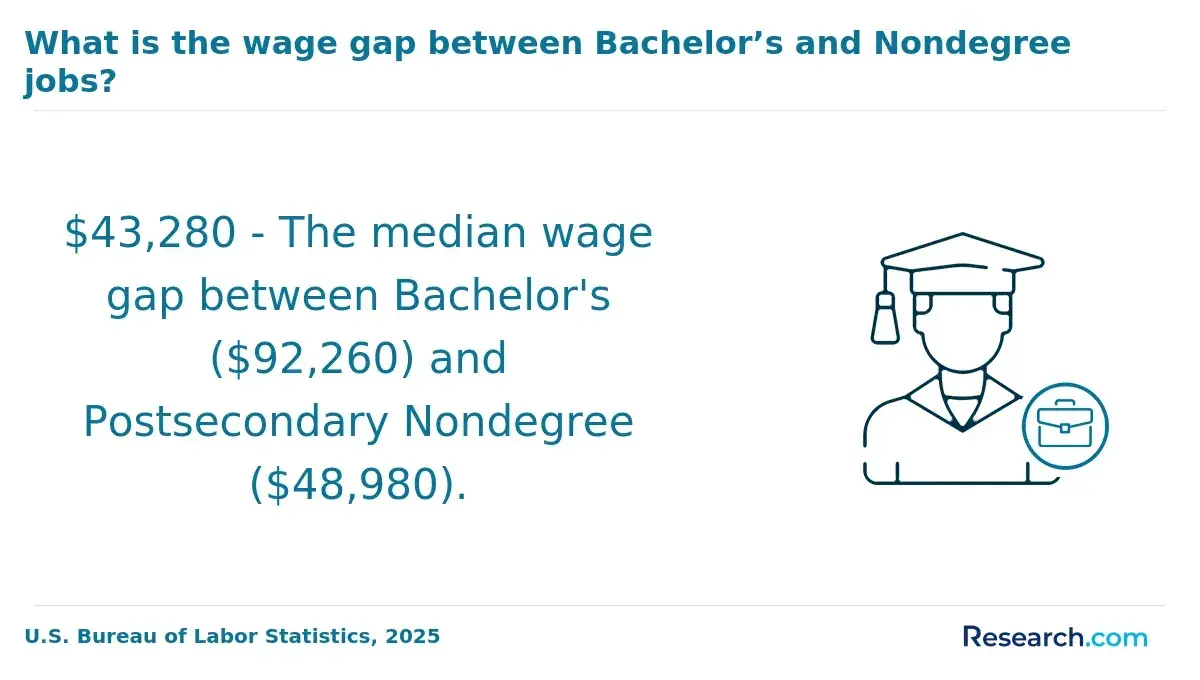
The U.S. Bureau of Labor Statistics (BLS) reported 2024 median weekly earnings of $1,840 for workers with a master's degree, versus $1,543 for those with a bachelor's degree. That comparison does not predict your return. This guide helps career changers and working adults identify accessible paths, compare requirements, and avoid enrolling in a program that cannot meet their goals.
Key Things You Should Know
- No GRE or GMAT removes one requirement; performance-based admission instead lets eligible students demonstrate readiness through specified graduate courses.
- A published graduate GPA guideline, prerequisites, professional license, or clinical placement may still apply even when admission is described as flexible.
- BLS's 2024 earnings figures describe broad education groups, not the payoff from a particular program; weigh total cost, career fit, accreditation, and completion requirements.
Top 10 Best Online Master's Degree Programs With Easy Admission Requirements
Business / MBA Programs
An online Master of Business Administration (MBA) can suit applicants with bachelor's degrees in many fields. Programs may waive the GMAT or GRE, but still evaluate transcripts, work history, and readiness for quantitative coursework. Some require experience; others admit early-career applicants. Choose an MBA for broad management preparation, not because admission appears easier than a specialized Master of Science (MS). Compare the program's published GPA policy, foundation courses, and any live team projects before applying. An MBA does not by itself qualify someone for a management position.
Healthcare Administration & Management Programs
An online Master of Healthcare Administration (MHA) or healthcare-management MS may accept applicants from business, health, and other undergraduate fields. That broader eligibility can help career changers, although programs may expect healthcare experience, statistics coursework, or a practicum. These degrees prepare students for organizational work rather than clinical licensure. Compare admissions requirements and experiential components separately: an accessible application is little help if a required placement conflicts with your schedule. Healthcare leadership jobs typically require relevant experience beyond the degree.
Information Technology Programs
Online information technology MS programs often emphasize systems, cloud infrastructure, databases, or technology management. Some offer foundation courses for applicants without a computing bachelor's degree; others require prior programming or technical work. A bridge option can make admission more attainable but add time and expense. Ask whether prerequisites must be completed before admission or can count toward the master's. For an applicant seeking a specific technical job, compare the curriculum with that job's skills rather than assuming any IT degree provides the same preparation.
Computer Science Programs
An online MS in computer science can support software specialization or career change, but admission is rarely "easy" for applicants without programming, algorithms, and mathematics preparation. Georgia Tech's Online Master of Science in Computer Science does not require the GRE; its published admissions guidance nevertheless expects evidence of computing readiness. The University of Colorado Boulder offers an online MS in computer science with a performance-based admission pathway through designated courses. Verify current pathway grades, course availability, and total degree requirements directly with the institution before committing.
Cybersecurity Programs
An online cybersecurity MS may be more accessible to applicants with IT, military, or adjacent professional backgrounds than a theory-heavy computer science degree, depending on the school. Programs can still require networking, programming, or security foundations. Compare technical and policy-oriented curricula: the latter may fit governance or risk goals but not prepare you equally for hands-on engineering. A degree can strengthen expertise; it does not replace experience, an employer's certification requirements, or a security clearance where a role requires one.
Data Science / Analytics Programs
Online analytics and data science master's programs commonly assess statistics and programming preparation, even when they admit applicants from varied majors. Colorado Boulder's online MS in data science offers a performance-based admission route through specified coursework rather than relying solely on a traditional application. That route tests readiness; it is not automatic admission. Compare an applied analytics curriculum with a more mathematical data science MS, and check whether missing prerequisites add credits or time. A portfolio of projects may matter alongside the credential when seeking work.
Education / Educational Leadership Programs
An online Master of Education (MEd) may welcome applicants from several bachelor's fields, especially in nonlicensure specializations such as instructional design. Educational leadership programs can have narrower entry rules, including a current teaching license or classroom experience. "Online" may still involve school-based assignments. Determine whether the program advances your existing credential, prepares you for a specific state license, or offers professional development only. Check your state's rules before treating flexible graduate admission as eligibility for a teaching or administrator role.
Counseling / Psychology Programs
An online psychology MA or MS may offer broader undergraduate-major eligibility than a licensure-focused counseling master's. These are not interchangeable credentials. Counseling programs may require interviews, background checks, supervised practica, internships, and state-specific coursework even without a GRE requirement. Psychology master's programs do not ordinarily qualify graduates to practice independently as licensed psychologists; that path generally requires doctoral training and other state requirements. If licensure is your goal, verify the program's state eligibility and placement arrangements before applying.
Nursing Programs
An online Master of Science in Nursing (MSN) usually requires an active registered nurse (RN) license and an eligible nursing degree or bridge pathway. No-GRE admission does not remove those professional requirements. Clinical or practicum hours may have to be completed in person, even when classes are online, and applicants may need to arrange approved sites. Nurse practitioner tracks have additional preparation and certification considerations. Compare a leadership or education MSN with an advanced-practice track according to the role you want and the rules in your state.
Engineering Management Programs
An online engineering management MS combines technical-project decisions with operations, finance, or leadership coursework. Some programs accept applicants with related STEM degrees or substantial technical experience; others require an engineering bachelor's degree and calculus preparation. No entrance exam does not make those prerequisites optional. This path may fit experienced technical professionals who want broader responsibility, but it is not a substitute for an engineering license where one is required. Review team-project schedules and the program's exact eligibility rules.
What Are the Easiest Online Master's Degree Programs to Get Into?
No master's field is universally easy to enter. For applicants who already hold a bachelor's degree, the most accessible option is usually a program whose published prerequisites match their preparation and whose admission process gives them a realistic way to demonstrate readiness.
This comparison separates admission features from the conditions that still matter. Use it to narrow your search, not as an acceptance-rate ranking.
| Admission route | Potential advantage | What still needs checking |
| No GRE or GMAT | No entrance-test preparation | GPA review, prerequisites, experience, and program selectivity |
| Performance-based admission | Demonstrate readiness in designated courses | Required grades, course costs, and whether credits apply to the degree |
| Conditional admission | Opportunity to meet academic conditions after entry | Eligibility, grade threshold, and consequences of not meeting conditions |
| Bridge or foundation pathway | Access from a different undergraduate field | Added courses, cost, and completion time |
If you need undergraduate preparation first, easy online college courses may help you explore subjects, but they should not be mistaken for graduate admission or transferable master's credits.
Which Online Master's Programs Do Not Require the GRE or GMAT?
Published examples include Georgia Tech's Online Master of Science in Computer Science, which does not require the GRE, and the University of Colorado Boulder's online MS in computer science and MS in data science, which use performance-based admission pathways without a GRE. These are examples of test-free routes, not a ranking of easy-to-enter programs.
Test policies can differ between a graduate school and its individual programs - and can change. Check the current page for your exact degree and entry term. Confirm whether a test is not required, optional, or waived only for applicants meeting particular conditions; then examine the remaining academic requirements.
What Admission Requirements Do Online Master's Programs Typically Have?
Most require a completed bachelor's degree and official transcripts. Depending on the program, applicants may also submit a statement of purpose, recommendations, résumé, portfolio, or interview. A published minimum GPA can be a firm requirement, a preference, or a threshold for standard rather than conditional admission. Relevant coursework, an RN license, or professional experience may matter more than test scores in some fields.
Before paying an application fee, ask an admissions adviser whether the specific online program will consider your degree, GPA, prerequisites, and experience. Ask separately whether graduate courses taken elsewhere could apply to the degree: admission and transfer-credit approval are different decisions.
How Can You Verify an Online Master's Program's Accreditation?
First, identify the institution awarding the degree and check its current institutional accreditation through the U.S. Department of Education's accreditation database or the accreditor's directory. Then determine whether your profession expects programmatic accreditation - for example, from an applicable nursing, counseling, or healthcare-management accreditor.
Finally, check the relevant state licensing board if you plan to enter a regulated occupation. Institutional accreditation, programmatic accreditation, and state authorization answer different questions. A university's accreditation alone does not establish that a particular online track meets your state's licensure rules.
How Much Do Online Master's Degrees Cost and How Long Do They Take?
There is no reliable single price or completion time across these fields. Required graduate credits, course load, prerequisites, clinical hours, capstones, and course scheduling all affect the answer. An advertised timeline may assume full-time study or previously completed qualifying coursework; an advertised tuition rate may exclude fees.
This cost comparison shows which figures to obtain from each school so you can estimate the expense of finishing, rather than comparing tuition rates alone.
| Cost component | Why it changes the comparison |
| Tuition and required graduate credits | A lower rate may not mean a lower degree cost if more credits are required. |
| Mandatory and program fees | Technology, course, and other charges may be separate from tuition. |
| Prerequisites and experiential work | Bridge courses, travel, and placement expenses can add cost and time. |
| Accepted graduate transfer credit | Applicable credits may reduce remaining coursework, subject to school rules. |
Request a written estimate for your enrollment pace, including any required in-person components. Ask about scholarships, employer tuition assistance, and federal aid eligibility before borrowing. If the degree exceeds what your goal requires, compare it with 12 month certificate programs that pay well; a certificate is usually narrower and does not replace a master's or professional license.
What Do You Learn in an Online Master's Degree Program?
Coursework depends on the credential. An MBA typically combines management functions; a technical MS may build depth through programming, analytics, or engineering projects; an MEd or MSN may center on professional practice. Programs can also require electives, a concentration, a thesis, a capstone, an internship, or supervised clinical work.
Look beyond course titles to the assignments and final requirements. A research-oriented thesis may suit someone considering doctoral study, while an applied capstone may better fit a workplace project. Neither format is inherently easier: both require time, preparation, and access to appropriate support.
Are Online Master's Degrees as Valuable as Campus-Based Degrees?
An online degree from an appropriately accredited institution can be a sound choice when its curriculum, instruction, and required experiences meet your goal. Delivery mode alone cannot establish quality or employer value. Compare the degree awarded, faculty access, projects, career support, and any licensure eligibility - not just whether the application is simple.
Online also does not always mean self-paced. Scheduled meetings, fixed deadlines, campus visits, proctored work, and local placements can affect whether you can finish. Ask for a sample course schedule and the complete list of in-person obligations before choosing online over campus study.
What Careers and Salaries Can Online Master's Degree Graduates Expect?
A master's may support specialization, a career change, or advancement, but occupational pay is not the salary caused by earning one. BLS reported a 2024 median annual wage of $124,910 for information security analysts, for example. That figure covers workers across education and experience levels; the occupation commonly requires relevant preparation, not necessarily a master's degree.
The comparison below connects program families to plausible directions without implying that admission or graduation qualifies you for the role.
| Program family | Possible career direction | Important additional consideration |
| MBA or engineering management | Business or technical leadership | Employers commonly expect relevant work experience. |
| Computer science, IT, or cybersecurity | Technical specialization | Projects and role-specific skills matter alongside a degree. |
| Counseling, education, or nursing | Regulated professional practice | State rules, supervised work, examinations, or licensure may apply. |
For a narrower technical skill goal, online certifications that pay well may be worth comparing. Assess the credential against actual job requirements rather than assuming either route produces a particular wage.
How Do You Choose a Reputable Online Master's Program for Your Goals?
How Do You Choose a Reputable Online Master's Program for Your Goals? Build a shortlist around your intended role and current qualifications, then compare each program using the same questions. This sequence helps prevent a no-test policy or low advertised tuition from overshadowing requirements that could stop you from enrolling - or finishing.
- Check the exact online program's bachelor's-degree eligibility, GPA policy, prerequisites, test rules, and any conditional-admission route.
- Verify institutional accreditation and, where relevant, programmatic accreditation and state licensure eligibility.
- Request the full curriculum, required credits, course schedule, placement obligations, and a cost estimate for your enrollment pace.
- Ask for a pre-enrollment evaluation of any previous graduate coursework, including whether accepted credits satisfy your intended degree requirements.
- Compare the degree's likely added value with your existing experience and with a narrower credential.
Red flags include a claim that "no GRE" means guaranteed admission, an online label that obscures in-person requirements, or a quoted price that omits required fees. If you need focused training rather than a graduate degree, quick certifications that pay well offer another option to investigate - provided employers in your target role recognize them.
Other Things You Should Know About
Possibly. Some programs review applicants holistically or offer conditional or performance-based routes. Check the exact program's published policy; a low GPA does not guarantee eligibility.
No. Programs can omit the GRE while requiring prerequisites, a competitive academic record, relevant experience, or qualifying grades in pathway courses.
Sometimes. Certain business, healthcare-management, and other programs welcome varied undergraduate majors, but may require foundation coursework. Technical and licensure-focused tracks can have stricter preparation requirements.
Some do. Others have no campus visits but still require local clinical work, practica, student teaching, or scheduled online attendance. Verify every requirement for your specific track.
References
- Types of Financial Aid: Grants, Work-Study, and Loans | studentaid.gov https://studentaid.gov/understand-aid/types
- Accreditation in the U.S. | ed.gov https://www.ed.gov/laws-and-policy/higher-education-laws-and-policy/college-accreditation/accreditation-in-the-us
- Cost of Attendance (Budget) | 2025-2026 Federal Student Aid Handbook https://fsapartners.ed.gov/knowledge-center/fsa-handbook/2025-2026/vol3/ch2-cost-attendance-budget
- Rule 3341-3-76 - Ohio Administrative Code | Ohio Laws https://codes.ohio.gov/ohio-administrative-code/rule-3341-3-76
- Admission Status Categories - Mississippi State catalogs https://catalog.msstate.edu/archives/2018-19/graduate/admissions-information/admission-procedure/status/
- Conditional Admission | University of Texas at Rio Grande Valley https://www.utrgv.edu/admissions/graduate/resources/conditional-admission/index.htm
- Graduate Admission Policies | George Mason University Catalog https://catalog.gmu.edu/admissions/graduate-policies/
- Conditional Admissions | Relay GSE https://support.relay.edu/kb/article/84-provisional-admissions/
- Admission Requirements & Criteria | Southern University and A&M College https://www.subr.edu/page/296


