
2027 Best Online Two-Year Degrees With High Acceptance Rates

Co-Founder and Chief Data Scientist
Getting into college and getting into your chosen major are not always the same thing. An open-admission college may still limit seats in nursing or another clinical program. Cost matters, too, the College Board reported average published tuition and fees of $4,050 for in-district students at public two-year colleges in 2024-25, before books and other expenses.
This guide is for students seeking an accessible online associate degree. It compares fields by admission barriers, online requirements, and career fit so you can identify a realistic option, not just an easy application.
Key Things You Should Know
- Business, information technology, criminal justice, and psychology are often worth checking first for accessible online enrollment; admission to a college does not prove that a particular major is unrestricted.
- Expect roughly 60 credits for many associate degrees, but ask how prerequisites, part-time study, and required in-person work affect your timeline.
- The $4,050 public two-year tuition-and-fees average is a starting point, not a program quote, compare your residency rate, remaining credits, and all required expenses.
Top 10 Best Online Two-Year Degrees With High Acceptance Rates
Business Programs
An online associate degree in business administration or accounting can suit students who want broadly useful office skills without a clinical placement. Courses commonly cover accounting, management, spreadsheets, and communication. An Associate of Arts (AA) or Associate of Science (AS) may emphasize transfer; an Associate of Applied Science (AAS) may focus on immediate workplace skills. Ask whether the major admits all eligible college applicants and whether its courses transfer into your intended bachelor's program. The degree can support entry-level applications, but management jobs generally require experience.
Healthcare Programs
Healthcare administration and medical billing or coding programs may offer more accessible admissions than clinical healthcare majors. They can prepare students for administrative or records-related work, although employers may prefer experience or a relevant certification. Check whether courses are fully online and whether the curriculum prepares you for any certification you plan to pursue. Do not confuse a nonclinical healthcare degree with a pathway to a licensed patient-care role; those programs have different training and admission requirements.
Information Technology Programs
Online IT associate degrees commonly cover networking, operating systems, cybersecurity fundamentals, and technical support. Some AS programs support transfer, while AAS programs may emphasize applied skills. College admission may be straightforward, but math placement, course prerequisites, or limited course availability can still slow progress. Look for hands-on virtual labs and opportunities to build a portfolio. An associate degree can help with entry-level applications; certifications and demonstrable troubleshooting skills may also matter to employers.
Nursing / Pre-Nursing Programs
Pre-nursing coursework may be available online through an open-admission college, but admission to an associate degree in nursing is often separate and selective. Nursing students must complete supervised clinical work in person, and laboratories or skills assessments may also require attendance. Compare prerequisite grades, entrance assessments, clinical-site rules, and state nursing-board eligibility before applying. Finishing the degree alone does not confer a registered nurse license; graduates must meet state requirements and pass the licensing examination.
Criminal Justice Programs
An online criminal justice AA, AS, or AAS may cover courts, corrections, policing, and research methods without requiring a clinical placement. That can make the major easier to access than a capacity-limited health program, though you must verify the school's policy. Choose a transfer-oriented path if a bachelor's degree is your goal. Police and other public-safety hiring processes have separate age, background, fitness, training, and state-specific requirements; the associate degree does not replace them.
Psychology / Counseling Programs
An online psychology associate degree usually introduces human development, research, and behavior. It is generally a transfer foundation, not a qualification to practice as a counselor or psychologist. Confirm that the courses apply to the bachelor's degree you want, particularly if you hope to pursue graduate study. A counseling-related AAS may instead target support roles; check its stated outcomes carefully. Professional counseling and psychology practice typically require further education and state licensure.
What Are the Best Online Two-Year Degrees With High Acceptance Rates?
The best option is the field you can enter, complete, and use toward your goal. For many applicants prioritizing accessible admissions, business, IT, criminal justice, and psychology are sensible first comparisons. Healthcare administration offers a nonclinical alternative; nursing requires a separate admissions check. These are degree-field recommendations, not claims that every school offering them has a high acceptance rate.
The comparison below separates admission accessibility from the purpose of each degree. Use it to narrow your search, then confirm the actual policy and delivery format at each college.
| Degree field | Admission question | Best fit | Key trade-off |
| Business | Is the major open to admitted students? | Broad office skills or bachelor's transfer | General coursework may need a focused internship or specialization |
| Healthcare administration or coding | Are there prerequisites or program caps? | Nonclinical healthcare work | Certification or experience may matter for specific jobs |
| Information technology | Are there placement or course-sequence requirements? | Technical support skills or transfer | Hands-on practice matters alongside coursework |
| Criminal justice | Is the online major unrestricted? | Public-safety studies or transfer | Agency hiring rules are separate |
| Psychology | Will the intended bachelor's program accept the courses? | Transfer toward further study | Clinical practice requires substantially more education |
| Nursing | Is admission to the nursing cohort selective? | A licensed nursing pathway | In-person clinical work and licensure requirements |
What Are the Easiest Online Two-Year Degrees to Get Into?
The easiest degrees to get into are usually those without separate selection into the major, not necessarily those with the easiest coursework. At an open-admission college, an eligible applicant may be admitted to the institution while still needing to meet placement or prerequisite requirements. Business, general studies, criminal justice, and psychology are useful majors to investigate first; policies vary by college.
Ask admissions whether everyone who meets the college's entry requirements can declare the online version of your chosen major, when required courses are offered, and whether seats are limited. A free application removes one upfront expense, not an academic requirement. If application costs affect where you apply, compare online colleges free application options, then verify the major's policy directly.
How Much Do Online Two-Year Degrees Cost and How Long Do They Take?
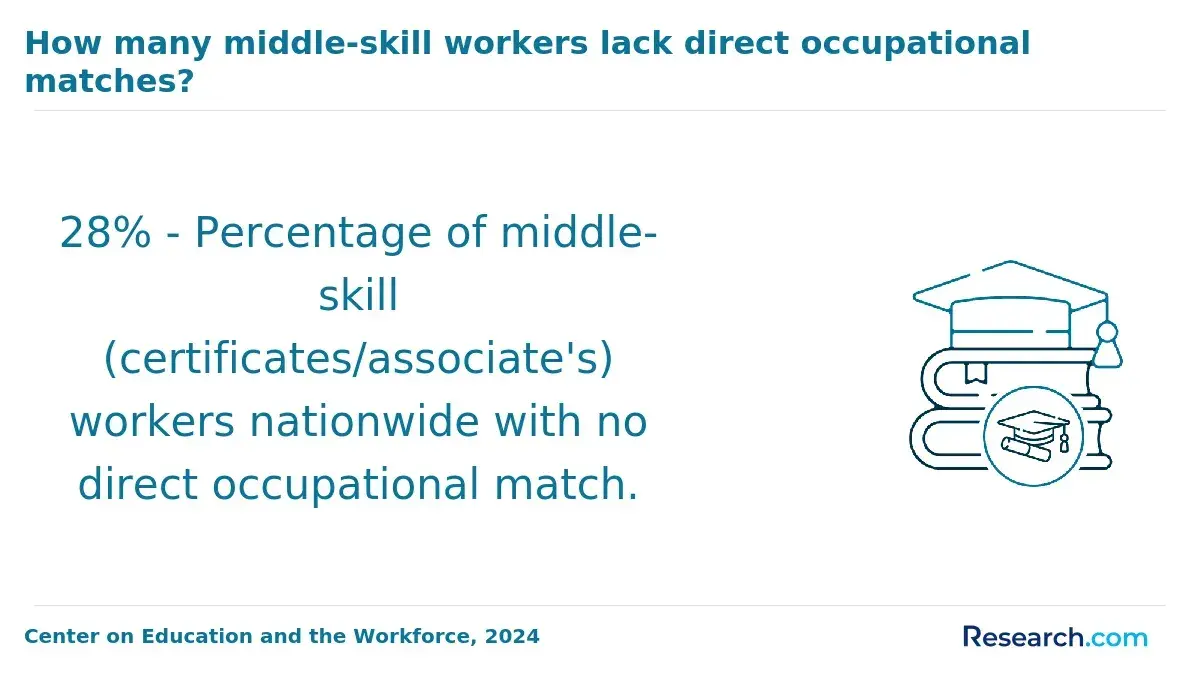
Many associate degrees require about 60 semester credits. A full-time student who can take the required courses in sequence may finish in about two years; part-time enrollment, prerequisites, transfer evaluations, and clinical scheduling can extend that timeline. Short online course terms do not, by themselves, shorten the entire degree.
The public two-year average cited earlier covers published in-district tuition and fees, not your total bill. Out-of-district or out-of-state rates may differ, and books, technology, transportation, proctoring, and clinical expenses can add costs. Request an estimate based on your residency status and remaining credits. Ask the financial aid office about federal-aid eligibility, grants, scholarships, payment plans, and employer assistance before borrowing.
What Accreditation Should Online Two-Year Degree Programs Have?
Start by verifying that the college has institutional accreditation recognized by the U.S. Department of Education. Institutional accreditation matters when assessing educational quality, federal-aid eligibility, and potential credit transfer, although the receiving college decides which credits count toward a particular degree. A starting list of online accredited colleges is not a substitute for checking a school's current accreditation and transfer agreements.
For a regulated career, check program-specific requirements as well. Prospective nursing students should confirm that the program meets the relevant state nursing board's educational requirements and ask about any applicable programmatic accreditation. Accreditation alone does not guarantee licensure eligibility in every state.
What Are the Admission Requirements for Online Two-Year Degrees?
College-level admission commonly involves an application and proof of high school completion or an accepted equivalent. A school may request transcripts and use prior coursework or placement measures to determine which classes you can take first. Testing, GPA rules, and documentation requirements vary; never assume that a missing published minimum means no requirement exists.
More importantly, ask whether the major has a second application. Nursing and some allied-health programs may require prerequisite courses, minimum grades, entrance assessments, background checks, and limited-seat selection after college admission. If you have previous college credit, request a course-by-course evaluation before enrolling: accepted credits may shorten your path only if they fulfill requirements in your chosen degree.
What Do You Study in Popular Online Two-Year Degree Programs?
Associate programs combine general education with major courses, but their purpose differs. AA and AS curricula often support transfer, while AAS curricula often emphasize workforce preparation; individual colleges may design them differently. Business students might study accounting and management; IT students, networking and security; criminal justice students, courts and corrections; and psychology students, development and research. Healthcare programs may add terminology, records systems, labs, or fieldwork.
Match the curriculum to your next credential. If counseling is your long-term goal, an associate degree is an early step, not clinical preparation. Even when considering 1 year online masters programs later, verify that any graduate counseling program meets the licensing rules where you intend to practice; speed is not a substitute for eligibility.
Which Careers Can You Start With an Online Two-Year Degree?
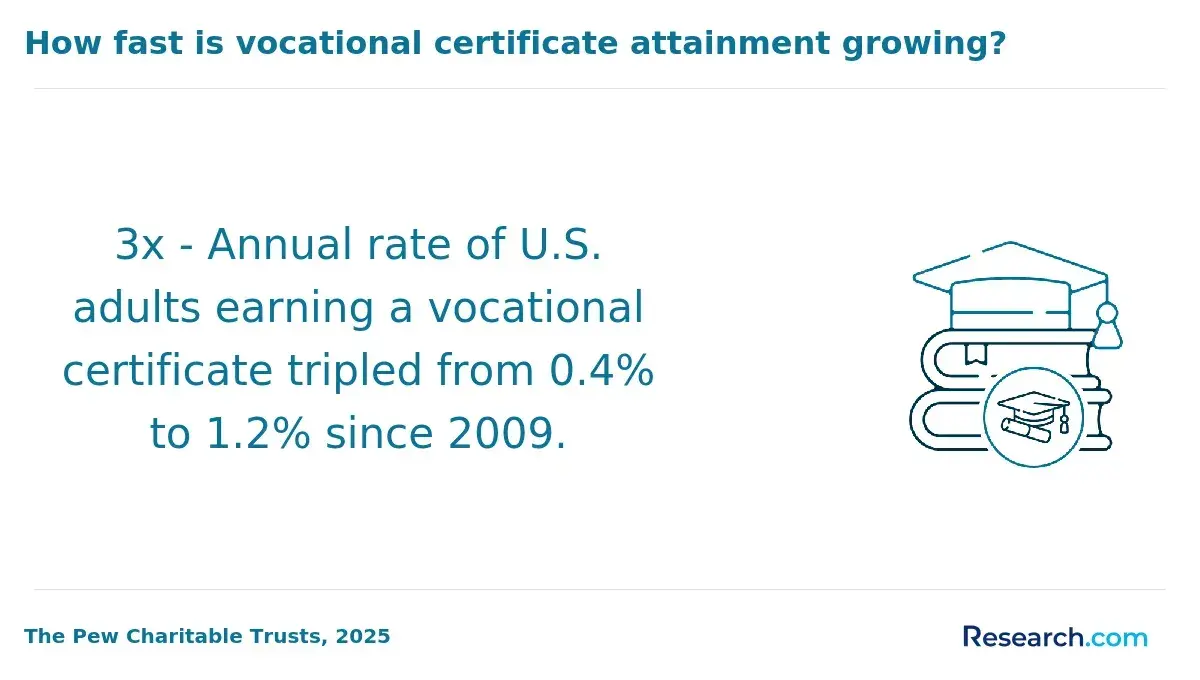
An online associate degree can provide relevant preparation, but hiring depends on the role, employer, skills, and any separate credential rules. The examples below distinguish plausible starting points from occupations that need further qualifications.
| Field | Possible starting direction | What to verify beyond the degree |
| Business | Administrative or bookkeeping support | Software skills and employer experience requirements |
| Healthcare administration or coding | Medical office or records-related work | Certification preferences and job-specific training |
| Information technology | Help desk or technical support | Practical skills and certification preferences |
| Criminal justice | Public-safety support or further study | Agency hiring and training rules for sworn roles |
| Psychology | Human-services support or bachelor's transfer | Role-specific requirements; licensure for clinical practice |
| Nursing | Registered nursing after an eligible program | State licensure and examination |
If a specific job is your goal, read several current local postings before selecting a major. A shorter certificate or apprenticeship may be more direct for some roles; a bachelor's pathway may be better when postings consistently require one.
How Much Can You Earn With an Online Two-Year Degree?
Earnings depend more on the occupation you enter than on the degree title alone. For context, the U.S. Bureau of Labor Statistics reports a May 2024 median annual wage of $93,600 for registered nurses. That is an occupational median across nurses with different experience and education - not a predicted starting salary for associate-degree graduates. BLS projects employment growth for registered nurses over 2024-34, but admission to a nursing program, completion of clinical training, and licensure remain substantial hurdles.
Compare likely entry-level jobs in your area with your full education cost, not a field's highest-paid occupation. If income potential is a priority, easiest college majors with high pay can broaden your search, but verify the degree level and additional credentials behind each career before treating its wage as attainable with an associate degree.
How Do You Choose a Reputable Online Two-Year Degree Program?
Start with two or three colleges offering your intended major, then confirm the facts that could prevent you from enrolling, finishing online, or using the credential. Request answers in writing where possible, particularly for selective admission, transfer, and licensure.
Use these checks to compare programs on more than their advertised acceptance rate:
- Confirm institutional accreditation and ask whether the online major has a separate application, prerequisites, seat limit, or minimum grades.
- Request a degree plan showing remaining credits, course availability, scheduled online meetings, and any campus, lab, clinical, internship, or proctored requirements.
- Get an individualized total-cost estimate and, if you plan to transfer, written guidance on how credits apply to your intended bachelor's major.
- For a regulated career, check state eligibility directly with the relevant licensing authority before enrolling.
Red flags include a school quoting only per-credit tuition, describing a clinical program as entirely online without explaining placements, or implying that open college admission guarantees a nursing seat. The strongest choice is one whose actual requirements fit your schedule, budget, and next step.
Other Things You Should Know About
No. Open admission generally concerns entry to the college. A major can have prerequisites, capacity limits, or a separate selection process.
Some programs can be completed without required campus classes, but delivery varies. Check for scheduled meetings, proctored assessments, labs, and in-person clinical or fieldwork requirements.
An AA or AS is often designed for transfer, but the label does not guarantee it. Compare the actual courses with the receiving university's degree requirements; an AAS may also transfer, though some credits may apply only as electives.
No. Verify admission to the specific major, accreditation, total cost, required attendance, and how the degree supports your intended job or transfer plan.
References
- An Overview of Accreditation of Higher Education in the United States | Congress.gov | Library of Congress https://www.congress.gov/crs-product/R43826
- Fast Facts: Tuition costs of colleges and universities (76) | ed.gov https://nces.ed.gov/fastfacts/display.asp
- School-Determined Requirements | 2024-2025 Federal Student Aid Handbook https://fsapartners.ed.gov/knowledge-center/fsa-handbook/2024-2025/vol1/ch1-school-determined-requirements
- DAPIP | Homepage - Office of Postsecondary Education (OPE) https://ope.ed.gov/dapip/
- Recognition of Accrediting Agencies | Texas Higher Education Coordinating Board https://www.highered.texas.gov/recognition-of-accrediting-agencies/
- Online Associate's Degrees - MDC Online - Miami Dade College https://online.mdc.edu/online-programs/online-associates/
- Online Associate Degree Programs | SNHU https://www.snhu.edu/online-degrees/associate
- Online Associate Degree Programs | University of Phoenix https://www.phoenix.edu/online-associate-degrees.html
- How the BSN Online Clinical Experience Works | Chamberlain University https://www.chamberlain.edu/academic-resources/bsn-online-clinical-experience
- Explore Our 2-Year Online Associate Degree Programs | generations.edu https://www.generations.edu/academics/2-year-associate-degree-programs/


