2027 Best Online Radiology Technician Degree Programs at Nonprofit Universities

Co-Founder and Chief Data Scientist
Choosing an online radiology technician program is complicated because entry-level radiography education cannot be completed entirely from home: supervised clinical training is essential for certification and state licensure. The U.S. Bureau of Labor Statistics projects 6% employment growth for radiologic and MRI technologists from 2023 to 2033, faster than the average for all occupations.
This guide helps prospective students compare nonprofit programs by accreditation, clinical placement, cost, scheduling, career outcomes, and long-term education options so they can identify a credible path to imaging work.
Key Things You Should Know
- For first-time radiography students, the strongest option is usually a nonprofit associate degree with programmatic accreditation, ARRT eligibility, and guaranteed or well-defined local clinical placements; "online" normally describes lecture coursework, not the entire program.
- Radiologic and MRI technologist employment is projected to grow 6% from 2023 to 2033, according to the U.S. Bureau of Labor Statistics, but eligibility for certification and licensure depends on the specific program, clinical education, and state rules.
- Compare total cost, not nonprofit status or advertised per-credit tuition alone: include fees, imaging uniforms, background checks, immunizations, travel to clinical sites, exam costs, and the income effect of required daytime clinical hours.
What Makes an Online Radiology Technician Degree Program at a Nonprofit University Different?
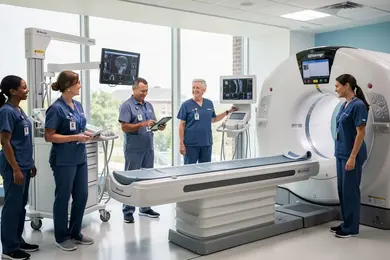
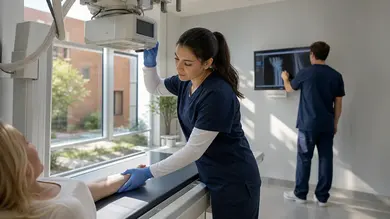
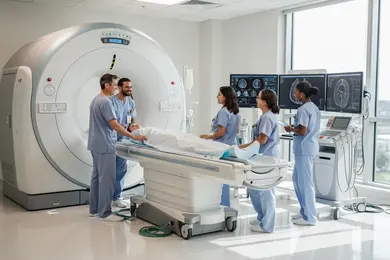
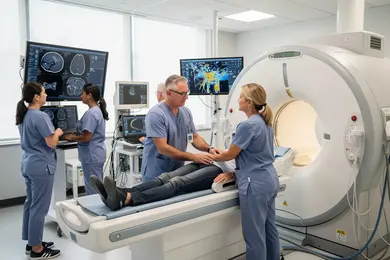
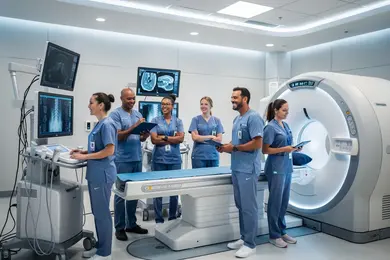
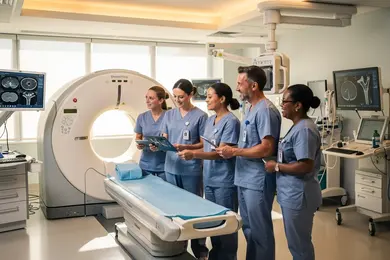
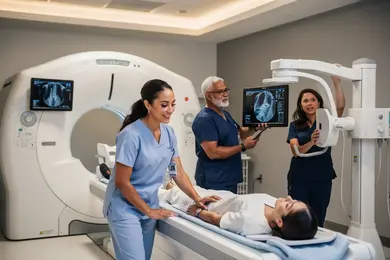
An online radiology technician degree generally refers to a radiography, medical imaging, or radiologic sciences program that delivers some academic courses online. "Radiology technician" is a common informal term; employers and credentialing organizations more often use radiologic technologist or radiographer. These professionals position patients, operate X-ray equipment, follow radiation-safety procedures, document examinations, and work with radiologists and other clinical staff.
Nonprofit universities include public institutions and private nonprofit institutions. Their tax status does not establish educational quality, affordability, certification eligibility, or job outcomes. The important distinction is whether the school has recognized institutional accreditation and whether the radiography program has the specialized accreditation and clinical structure needed for the student's intended credential.
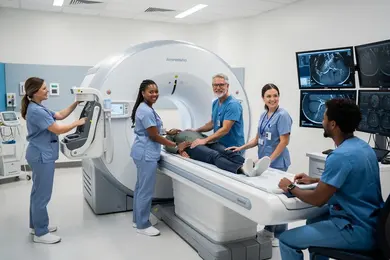
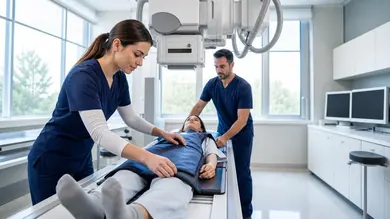
For students seeking initial ARRT certification in radiography, a "fully online" claim deserves careful scrutiny. Image acquisition, patient care, positioning, equipment operation, and competency assessment require in-person practice. Programs may offer online general education, imaging theory, ethics, and some science courses while requiring clinical rotations at affiliated hospitals or imaging centers.
The degree level should match the student's starting point and objective. The comparison below separates common pathways rather than treating all online imaging degrees as interchangeable.
| Pathway | Typical fit | Online role | Important limitation |
| Associate degree in radiography | New students pursuing entry-level radiographer certification | May include online academic coursework | Clinical education and skill evaluations are in person |
| Bachelor's completion in radiologic sciences | Already credentialed radiographers seeking advancement | Often substantially or fully online | Usually does not replace initial radiography training |
| Postprimary certificate or bachelor's concentration | Credentialed technologists pursuing CT, MRI, management, or education | Didactic content may be online | Clinical experience requirements can still apply |
| Graduate imaging, education, or administration degree | Professionals pursuing leadership, teaching, research, or administration | Often online or hybrid | Usually does not qualify a newcomer for entry-level radiography |
Public nonprofit colleges may offer lower in-state tuition and established regional clinical networks. Private nonprofit universities may offer smaller cohorts, multiple start dates, or adult-focused advising, but their published tuition can be higher. Neither model is automatically better; a local clinical arrangement and verified credential pathway can be more valuable than a lower posted tuition rate.
Students exploring adjacent clinical careers should avoid assuming their education routes are interchangeable. For example, the fastest way to become a medical assistant may involve a shorter training timeline, but medical assisting and radiography involve different scopes of practice, clinical skills, certifications, and earnings patterns.
How Can Students Verify Accreditation for an Online Radiology Technician Degree at a Nonprofit University?
Accreditation is the first screening step because institutional accreditation and programmatic accreditation answer different questions. Institutional accreditation evaluates the college or university broadly and affects federal aid eligibility and transferability. Programmatic accreditation evaluates the radiography curriculum, faculty, clinical education, learning resources, and assessment practices. For an entry-level radiography student, programmatic accreditation is often the more consequential credential.
The Joint Review Committee on Education in Radiologic Technology (JRCERT) is the principal specialized accreditor for radiography, radiation therapy, magnetic resonance, and medical dosimetry programs in the United States. A prospective student should verify the program directly in the JRCERT directory and should not rely only on a college webpage, marketing language, or an admissions representative's summary.
Use the following sequence before submitting a deposit. It helps identify whether a program can support the credential and state where the student plans to work.
- Confirm the university's institutional accreditation through the U.S. Department of Education or CHEA-recognized accreditor records.
- Search the exact campus and program name in the JRCERT directory, and check the accreditation status and next review date.
- Ask whether graduates are eligible to apply for the ARRT radiography examination and whether any conditions apply.
- Check the licensing rules of the state where you expect to complete clinical training and work; requirements vary by state.
- Request written details on clinical sites, supervision, competency requirements, travel expectations, and whether placement is guaranteed.
A degree titled "health sciences," "medical imaging," or "radiologic sciences" may be academically legitimate without being an initial certification program. This is common with online bachelor's-completion programs for registered technologists. It is not a problem when the student already holds the needed credential, but it can be a costly mismatch for a beginner.
Red flags include vague statements such as "career-ready imaging education" without naming the qualifying exam, no published clinical-site information, expired or unclear specialized accreditation, and a promise that clinical placement is entirely the student's responsibility. Also ask whether clinical affiliates can accept students in your area before committing, especially if you live outside the institution's home state.
How Rigorous Are Online Radiology Technician Degree Programs at Nonprofit Universities?
A credible radiography program is academically and clinically demanding regardless of whether some lectures are online. Students commonly complete anatomy and physiology, medical terminology, patient care, radiation physics, imaging principles, positioning, pathology, image evaluation, ethics, and quality assurance. Clinical education then requires supervised examinations and documented competencies across a range of patient and procedure types.
Online delivery can make reading, discussion, quizzes, and some lectures more accessible, but it does not remove performance standards. Students should expect proctored assessments, lab intensives when required, fixed clinical shifts, health and safety documentation, and deadlines that may be less flexible than those in a typical online liberal-arts degree.
The academic format matters most for working adults. Students considering a science-heavy prerequisite route can compare preparation options through online biology degrees, but should confirm that each anatomy, physiology, chemistry, or physics course meets the radiography program's laboratory and recency requirements before enrolling.
This table shows what rigor usually looks like at each stage and why an "online" label should not be interpreted as an easy or self-paced pathway.
| Program component | Common learning activity | Flexibility level | What applicants should verify |
| Prerequisite sciences | Anatomy, physiology, math, and communication coursework | Varies by course and lab format | Minimum grades, lab requirements, and course expiration rules |
| Radiography didactic courses | Lectures, case studies, image critique, and exams | May be asynchronous or scheduled | Required live sessions, exam proctoring, and attendance rules |
| Laboratory practice | Positioning, equipment use, and safety practice | Usually fixed and in person | Campus visits, lab days, and travel costs |
| Clinical education | Supervised patient examinations and competency documentation | Generally least flexible | Shift times, site distance, placement policy, and remediation procedures |
Accelerated programs can compress academic terms, but they do not eliminate clinical competencies. They fit students with completed prerequisites, strong time management, reliable transportation, and the ability to reduce work hours. Traditional or part-time options may be more realistic for students with caregiving or full-time employment obligations, although part-time progression can delay entry into the field.
Do not choose a program solely because it advertises accelerated completion. Ask for a sample term-by-term schedule and calculate the combined weekly commitment for coursework, clinical shifts, commuting, studying, and family responsibilities.
How Much Does an Online Radiology Technician Degree Cost at a Nonprofit University?
The cost of an online radiology technician degree depends more on residency status, degree level, transfer credit, clinical requirements, and institutional aid than on the nonprofit label. Community colleges and public universities often offer a lower tuition rate for in-state residents, while private nonprofit universities may charge one rate regardless of residence. A bachelor's-completion program can be economical for a registered technologist with many transfer credits but is not necessarily the least expensive entry route for a new student.
Published tuition is only one part of the financial decision. The National Center for Education Statistics reported that average undergraduate tuition, fees, room, and board at public four-year institutions were $24,920 for in-state students in the 2023-24 academic year, compared with $58,600 at private nonprofit four-year institutions. Those broad institutional averages are not radiography-program prices, but they illustrate why students should request a program-specific estimate rather than relying on school type.
Ask each program for a written estimate that separates billed charges from expenses that students pay independently. The categories below are especially relevant to clinical imaging programs.
| Cost category | Why it varies | Question to ask |
| Tuition and mandatory fees | Residency, credit load, and public or private pricing model | What is the total required tuition and fee estimate through graduation? |
| Clinical expenses | Site location, parking, transportation, uniforms, and health clearances | Which clinical costs are not included in tuition? |
| Technology and course materials | Remote proctoring, software, textbooks, and device requirements | Are online-learning and proctoring fees charged per course? |
| Credentialing expenses | Application, examination, and state licensing rules | Which certification and licensing costs should I budget for after graduation? |
| Opportunity cost | Clinical schedules may limit paid work | Can clinical shifts be completed evenings, weekends, or only weekdays? |
Low tuition is not always the best value if a program offers limited clinical access, adds repeated fees, requires extensive travel, or delays graduation. Conversely, a higher-cost program may be worth closer review if it has transparent local placements, strong support, and a schedule that lets a student retain more work hours. Compare the net price after grants, the expected time to completion, and out-of-pocket clinical costs.
What Financial Aid Is Available for an Online Radiology Technician Degree at a Nonprofit University?
Students at eligible nonprofit institutions may qualify for federal student aid by completing the FAFSA, provided their program meets federal eligibility requirements. Aid can include Pell Grants for eligible undergraduates, Direct Loans, Federal Work-Study where available, institutional grants, state aid, workforce scholarships, and external awards. Eligibility, award amounts, and satisfactory academic progress standards vary by student and school.
Clinical schedules can make traditional work-study difficult, so applicants should ask whether the financial aid office has experience packaging aid for students in health programs with required daytime rotations. Students should also ask whether clinical semesters carry different credit loads that could affect enrollment status and aid eligibility.
For learners whose long-term interest is healthcare leadership rather than direct imaging practice, an healthcare administration degree online accredited option can be a separate path to compare. It generally prepares students for administrative roles rather than ARRT radiography certification, so it should not be viewed as a substitute for clinical imaging education.
Before borrowing, build a conservative financing plan. The following checks can prevent an aid package from being misunderstood as a final affordability answer.
- Complete the FAFSA early and review every grant, scholarship, loan, and work-study item separately.
- Ask whether scholarships renew automatically or require a particular GPA, enrollment level, or clinical progression status.
- Confirm whether transfer credits reduce the number of billable credits and whether all prerequisite courses qualify for aid.
- Compare the net price and likely borrowing across each year, including semesters with intensive clinical attendance.
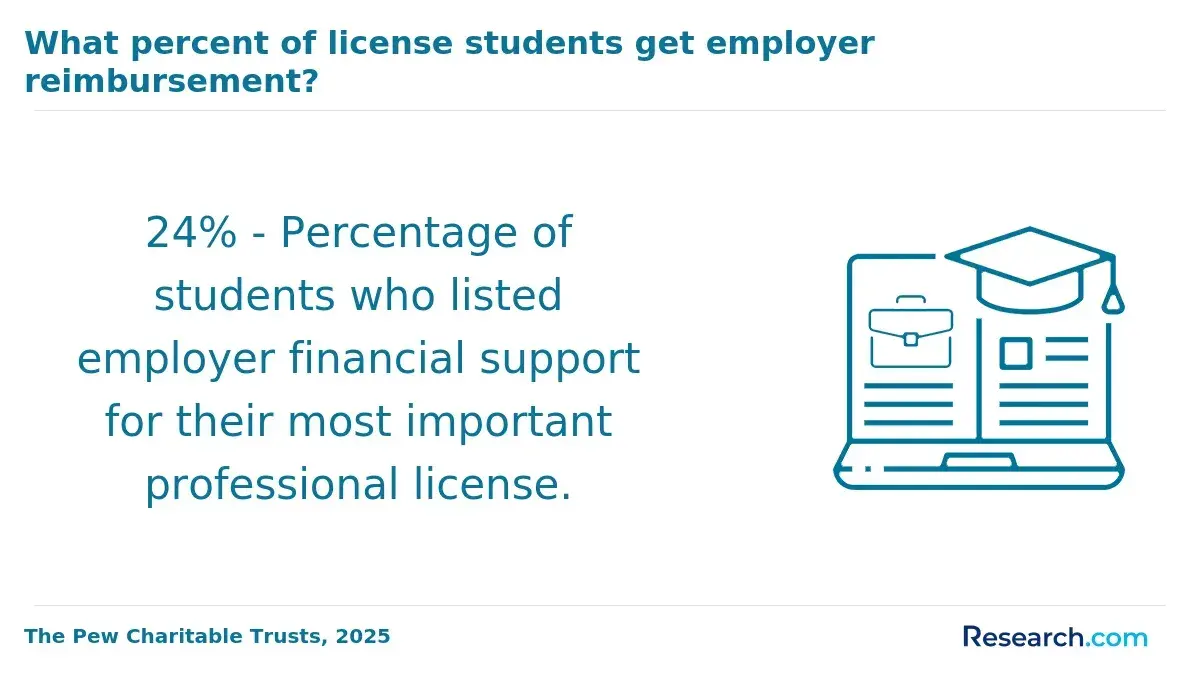
- Ask whether an employer, hospital, union, military benefit, or state workforce program offers tuition assistance for imaging students.
Private loans should usually be considered only after grants, scholarships, employer support, and federal aid have been reviewed. They may have different repayment protections and underwriting requirements than federal loans. Financial aid staff can explain institutional policies, but students should independently assess whether projected debt remains manageable if graduation takes longer than planned.
How Flexible Are Online Radiology Technician Degree Programs at Nonprofit Universities?
Online radiology technician programs are flexible in different ways, and applicants should distinguish course flexibility from clinical flexibility. Asynchronous coursework may allow students to watch lectures and complete discussions within weekly deadlines. Synchronous classes require attendance at set times. Clinical education is commonly scheduled by the affiliate site and may involve daytime, evening, weekend, or rotating shifts depending on availability.
A program designed for currently registered technologists is often more online-friendly than an entry-level radiography program because the student already has clinical competence and credentials. In contrast, first-time students should expect a hybrid structure even when the school promotes distance learning.
This comparison helps applicants decide whether a format fits their work and family responsibilities.
| Format | Best fit | Main advantage | Main trade-off |
| Asynchronous didactic courses with local clinicals | Students needing flexibility in lectures | More control over study time | Clinical shifts remain structured |
| Live online courses with local clinicals | Students who value regular faculty contact | Predictable class interaction | Evening or daytime attendance may be mandatory |
| Hybrid campus-based program | Students near the institution | Direct access to labs and faculty | Commute and fixed campus sessions |
| Online bachelor's completion program | ARRT-credentialed professionals | Often compatible with employment | Not an entry-level radiography pathway |
Before enrolling, obtain the clinical calendar for at least one cohort. Ask how far students have traveled to sites, whether the program can place students near home, whether students may decline a distant site, and what happens if a clinical affiliate loses capacity. A school that cannot provide clear answers may not fit a student whose schedule or transportation is constrained.
Students interested in a different patient-care route with its own accelerated scheduling considerations may also compare an LPN 6 month program. Practical nursing requires separate state-approved education and nursing licensure, so the clinical commitments and professional outcomes differ from radiography.
What Student Support Services Do Nonprofit Universities Provide for Online Radiology Technician Degree Students?
The most useful support services are those that address the realities of clinical education, not just online course access. Strong nonprofit programs commonly provide academic advising, tutoring, disability services, library access, technical support, financial aid counseling, faculty office hours, career services, and clinical coordination. Availability may differ between the university as a whole and the imaging department, so applicants should ask what is specifically available to distance or clinical-site students.
Clinical coordination is especially important. Students need clear onboarding guidance for immunizations, CPR certification, drug screening, background checks, HIPAA training, and site-specific paperwork. A dedicated clinical coordinator can reduce administrative delays, but students remain responsible for meeting eligibility and conduct requirements.
Evaluate support using evidence rather than general promises. These questions can reveal whether a program is equipped for online and geographically dispersed learners.
- Who is the named contact for clinical placement, schedule changes, and site conflicts?
- Can online students access tutoring for anatomy, physics, math, and image-analysis coursework?
- What technical support hours are available during evenings and weekends?
- How are students supported if they fail a competency assessment or need remediation?
- What career services are available for résumé preparation, interview practice, employer connections, and credentialing guidance?
- Can the program share recent completion, credential-exam, and job-placement information with definitions and reporting periods?
Be cautious about interpreting general university services as proof of program quality. A large online library or broad career center can be helpful, but neither replaces qualified imaging faculty, accessible lab instruction, or reliable clinical relationships. Speak with current students or recent graduates when possible and ask about responsiveness during clinical problems.
Do Online Radiology Technician Degree Programs at Nonprofit Universities Prepare Graduates for In-Demand Careers?
They can, provided the program leads to the credential required for the intended role and includes robust clinical education. Entry-level radiographers commonly work in hospitals, outpatient imaging centers, physician offices, urgent care settings, and mobile imaging services. With experience and additional documented education, technologists may pursue postprimary modalities such as computed tomography, magnetic resonance imaging, mammography, or vascular/interventional procedures, subject to employer, credentialing, and state requirements.
The U.S. Bureau of Labor Statistics reports a median annual wage of $77,660 for radiologic and MRI technologists in May 2024. This is a national occupational measure, not a starting-salary promise: pay varies by modality, setting, geographic area, shift differential, experience, and local demand. Use it as labor-market context while reviewing regional job postings and employer requirements.
Career readiness depends on more than degree completion. Employers often look for ARRT credentials, a state license where required, clinical confidence, patient communication, safe radiation practices, electronic documentation skills, and the ability to work across a care team. AI-enabled image analysis and workflow tools are expanding in imaging, but they do not remove the need for technologists to ensure patient positioning, safety, quality, and compassionate in-person care.
Applicants should request outcomes that are specific to the program rather than assuming an institutional employment figure applies to radiography students. The following measures are useful when their definitions and reporting periods are transparent.
| Outcome to review | Why it matters | How to interpret it |
| Program completion rate | Shows whether students progress through the curriculum | Ask which entering cohort is counted and why students left |
| ARRT examination pass rate | Relates to initial credential readiness | Confirm the exam type, first-attempt definition, and reporting period |
| Job-placement rate | Indicates employment outcomes after completion | Ask what jobs count, the time window, and response rate |
| Clinical affiliate network | Creates supervised learning and potential employer exposure | Verify whether sites are available where you live |
| Graduate advancement | Can signal pathways to specialized imaging roles | Do not treat anecdotes as a guaranteed progression path |
A student interested in nonclinical leadership after gaining healthcare experience may later consider an healthcare administration degree online accredited pathway only if it aligns with a move into administration. For immediate radiography employment, the priority remains an accredited initial program, successful clinical training, and the appropriate credentialing process.
Can an Online Radiology Technician Degree From a Nonprofit University Prepare Students for Graduate School?
An associate degree in radiography can establish an entry-level clinical career, but it usually does not by itself meet graduate admission requirements. Students considering graduate school should generally plan to complete a bachelor's degree, meet prerequisite and GPA requirements, and build the professional experience required by their target program. Requirements differ substantially across health administration, education, public health, health informatics, advanced practice, and research degrees.
A bachelor's-completion degree in radiologic sciences can be a practical bridge for credentialed technologists who want leadership, teaching, quality, informatics, or management opportunities. It may also strengthen an application for graduate study. However, it does not ordinarily prepare a student for roles that require a distinct professional license, such as nurse practitioner practice.
For example, online MSN PMHNP programs are designed for nurses who meet nursing education and licensure prerequisites; a radiography degree alone does not qualify someone for that route. Comparing prerequisites early can prevent spending time and tuition on a degree that does not support the intended next step.
Students should choose academic options based on a specific destination. The comparison below clarifies the usual relationship between imaging education and further study.
| Long-term goal | Common preparation | Planning consideration |
| Imaging department leadership | Bachelor's completion plus experience; sometimes a graduate degree | Look for management, finance, quality, or informatics coursework |
| Radiography or imaging education | Bachelor's or graduate education-related study plus clinical expertise | Check faculty credential expectations in your state and target schools |
| Healthcare administration | Bachelor's degree followed by relevant graduate study if desired | Seek transferable general education and leadership credits |
| Clinical advanced practice in another profession | That profession's designated degree and licensure route | Do not assume imaging credentials substitute for nursing or other licensure |
| Research or doctoral study | Bachelor's degree, strong academic record, and program-specific prerequisites | Review statistics, research, and science requirements well in advance |
Before choosing an associate or bachelor's program, ask whether credits are institutionally transferable, whether the school has articulation agreements, and whether upper-division completion options accept the associate coursework. Transfer policies are institution-specific; no college can guarantee that another institution will accept every credit.
How Should Students Compare the Best Online Radiology Technician Degree Programs at Nonprofit Universities?
The best program is the one that creates a realistic, compliant route to the student's intended credential at a manageable total cost. For a beginner, an accredited associate radiography program with dependable clinical placement may be a better investment than an online bachelor's degree that does not lead to initial certification. For an already credentialed technologist, a flexible bachelor's-completion program may offer the stronger balance of advancement potential and work compatibility.
Build a short list of programs that meet your geographic and eligibility needs, then compare them on the same facts. This scorecard focuses on decision factors that nonprofit status and broad rankings cannot answer.
| Comparison factor | Strong evidence | Potential concern |
| Credential pathway | Written confirmation of ARRT eligibility and applicable state alignment | Unclear claims about certification or career readiness |
| Accreditation | Recognized institutional accreditation and appropriate JRCERT status for entry-level training | Only institutional accreditation is disclosed |
| Clinical education | Named affiliates, placement process, schedule examples, and travel expectations | Student must independently find every site |
| Total price | Written estimate of tuition, fees, supplies, clinical costs, and exam expenses | Only a per-credit tuition figure is available |
| Flexibility | Clear distinction between asynchronous courses, live classes, labs, and clinical shifts | "100% online" language without clinical details |
| Transfer policy | Written credit evaluation and published limits or articulation agreements | Verbal promises that credits will transfer |
| Outcomes | Recent program-level completion, exam, and employment data with definitions | Only institution-wide outcomes or unsupported testimonials |
| Student support | Accessible clinical coordinator, faculty, tutoring, and technical support | No clear contact for clinical or academic problems |
Use a final application process that puts nonnegotiable requirements first. This prevents an attractive tuition rate, brand name, or online marketing claim from overshadowing licensure and clinical realities.
- Identify your endpoint: initial radiography credential, bachelor's completion, modality advancement, or a future graduate degree.
- Eliminate programs that cannot document the accreditation, clinical education, and credential eligibility your endpoint requires.
- Request a written transfer evaluation and a full program-cost estimate from each remaining school.
- Compare clinical schedules against your job, caregiving, transportation, and residence constraints.
- Review program-level outcome data and speak with the program director about local employer connections.
- Apply to more than one qualified option when admission is selective or clinical capacity is limited.
Common mistakes include assuming every nonprofit program is equally credible, confusing an online degree-completion program with initial radiography training, overlooking clinical travel, and comparing tuition without fees or lost work time. A careful comparison should lead to a smaller list of programs that are accredited, affordable after aid, locally feasible, and aligned with the exact credential you need.
Other Things You Should Know About Radiology Technician
No. A radiologic technologist performs imaging examinations and works directly with patients under established protocols. A radiologist is a physician who interprets medical images and may perform image-guided procedures after completing medical education and specialty training.
Requirements vary, but ARRT primary eligibility generally includes an associate degree or higher, completion of an ARRT-approved educational program, and ethics requirements. Verify the current requirements and your state's licensing rules before selecting a certificate program.
Successful students typically build anatomy knowledge, attention to radiation safety, patient communication, technical problem-solving, physical stamina, professionalism, and the ability to follow detailed procedures. Comfort working with patients who may be in pain or anxious is also important.
Many credentialed technologists complete continuing education to maintain credentials, and employers or states may impose additional requirements. Requirements can change, so check the rules of the relevant credentialing body, state licensing agency, and employer.
References
- What to Look for in a Radiologic Technology Program | NWHSU https://www.nwhealth.edu/blog/what-to-look-for-in-a-radiologic-technology-program/
- Admissions - School of Radiologic Technology at Peconic Bay Medical Center | Northwell Health https://professionals.northwell.edu/professional-development/center-for-learning-innovation/programs-services/school-of-radiologic-technology-pbmc/admissions
- School of Radiologic Technology - Des Moines Area Hospitals https://www.unitypoint.org/join-our-team/medical-education-and-career-growth/school-of-radiologic-technology---des-moines-area-hospitals
- Radiologic Technology https://johnson.edu/divisions-of-study/health-and-animal-sciences/radiologic-technology/
- General Requirements - RAD https://www.schs.edu/programs/associate-degree-programs/radiologic-technology/general-requirements
- Radiologic Technology https://wallace.edu/programs-training/health/radiologic-technology/effectiveness-indicators/
- Radiologic Technology https://www.century.edu/programs/radiologic-technology/
- Radiologic Technology Associates https://an.edu/programs/associates/radiologic-technology-associates/
- Online Radiology Tech Program | Stepful https://www.stepful.com/training/radiology-tech
- Program Effectiveness Data - JRCERT https://www.jrcert.org/program-effectiveness-data/