2027 Best Online Physical Therapy Degree Programs at Nonprofit Universities

Co-Founder and Chief Data Scientist
Choosing an online physical therapy degree requires more than finding a nonprofit university with online classes: licensure-track physical therapist education includes substantial in-person clinical training. The U.S. Bureau of Labor Statistics projects 14% employment growth for physical therapists from 2023 to 2033, faster than the average for all occupations. This guide helps prospective students compare online bachelor's, degree-completion, and graduate pathways by accreditation, price, schedule, clinical expectations, and career fit.
Key Things You Should Know
What Makes an Online Physical Therapy Degree Program at a Nonprofit University Different?
An online physical therapy degree at a nonprofit university may be offered by a public university or a private nonprofit institution. Nonprofit status means the institution is organized to reinvest revenue into its educational mission rather than distribute profits to owners, but it does not by itself confirm program quality, affordability, accreditation, or licensure eligibility.
For most students, "online physical therapy degree" means an online or hybrid academic pathway related to rehabilitation rather than an entirely online professional physical therapist program. A bachelor's in exercise science, kinesiology, health science, or rehabilitation studies can provide prerequisite coursework for a future DPT application. Licensed physical therapist assistants may also find degree-completion or advanced-study options, although PTA education itself generally requires hands-on training.
The table distinguishes the most common paths so students do not enroll in a program that cannot lead to their intended credential.
| Pathway | Typical online availability | Primary purpose | Can it lead directly to PT licensure? |
| Associate degree for physical therapist assistants | Hybrid; labs and clinicals are in person | Prepare for PTA licensure | No; prepares for PTA, not PT, licensure |
| Bachelor's in kinesiology, exercise science, or health science | Often online or hybrid | Build DPT prerequisites or rehabilitation knowledge | No; a DPT is still required |
| Entry-level Doctor of Physical Therapy | Hybrid at most; clinical education is in person | Prepare for PT licensure | Yes, if the program is CAPTE-accredited and state requirements are met |
| Postprofessional or transitional DPT | Often online or hybrid | Advanced education for already licensed clinicians | No; applicants generally already hold professional credentials |
Students who want a science-heavy undergraduate foundation should also compare best online kinesiology programs, especially when their eventual goal is DPT admission rather than immediate licensure.
Public nonprofit universities can be especially cost-effective for in-state residents, while private nonprofit universities may offer smaller cohorts, fixed tuition, or adult-oriented scheduling. Compare the actual program - not the tax status - using curriculum, clinical infrastructure, net price, transfer rules, and student outcomes.
How Can Students Verify Accreditation for an Online Physical Therapy Degree at a Nonprofit University?
Accreditation has two separate meanings in physical therapy education. Institutional accreditation evaluates the university as a whole, while programmatic accreditation evaluates whether a professional PT or PTA program meets field-specific educational standards. Students pursuing licensure must verify both the school and the professional program.
For entry-level physical therapist and physical therapist assistant education, the key programmatic accreditor is the Commission on Accreditation in Physical Therapy Education (CAPTE). A program's online coursework does not remove the need to confirm its CAPTE status, accreditation date, campus location, and clinical education structure.
Before applying, complete these checks because admissions staff may describe a program as "pre-PT," "rehabilitation," or "physical therapy focused" even when it is not a licensure program.
- Confirm the university's institutional accreditation through the institution's accreditor and the U.S. Department of Education database.
- Search CAPTE's directory for the exact DPT or PTA program, not merely the university name.
- Ask whether the program is accredited, developing, on probation, or seeking accreditation, and request the effective dates in writing.
- Contact the physical therapy licensing board in the state where you expect to practice before enrolling.
- Verify whether online learners receive the same laboratory instruction, clinical-placement support, and eligibility documentation as campus-based learners.
A major red flag is a school implying that a general online bachelor's degree qualifies a graduate to sit for the National Physical Therapy Examination. It does not. For PT licensure, graduates generally need a CAPTE-accredited entry-level DPT, a passing examination score, and compliance with state-specific requirements.
How Rigorous Are Online Physical Therapy Degree Programs at Nonprofit Universities?
Strong online rehabilitation-related programs are academically demanding because students must master anatomy, physiology, biomechanics, exercise prescription, research literacy, communication, and ethical patient care. Online delivery changes where lectures, discussions, and assignments occur; it should not reduce the scientific depth or performance expectations of the curriculum.
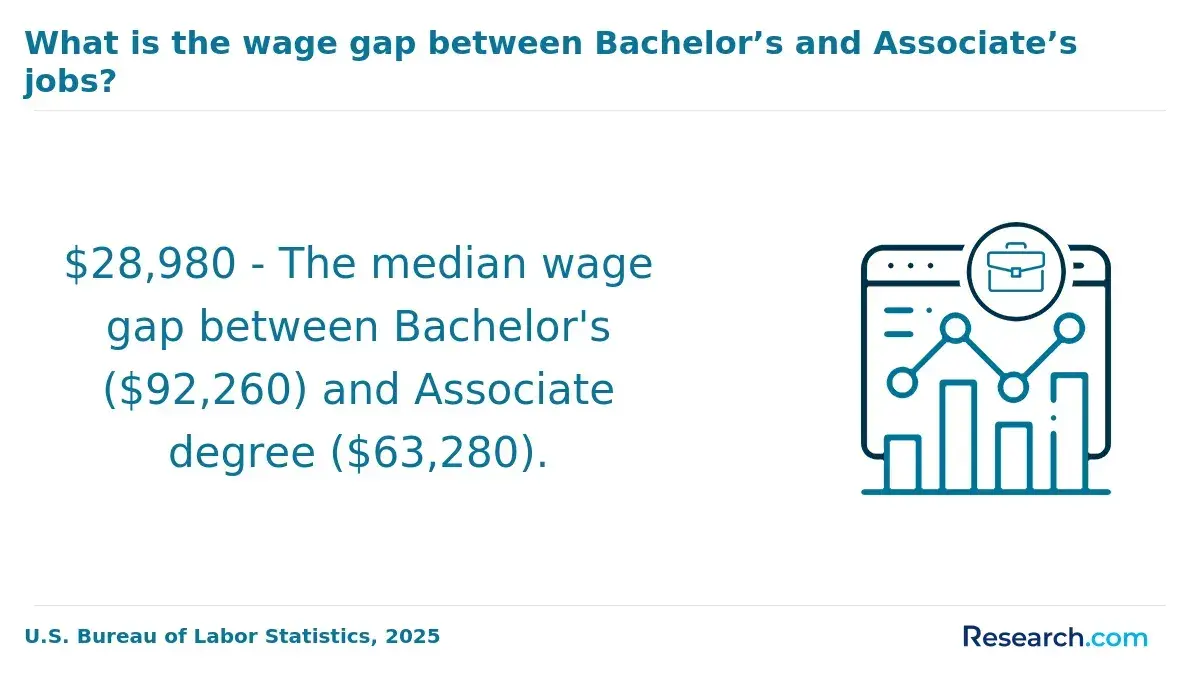
Academic bachelor's programs usually fit students building prerequisites for graduate school. Career-focused PTA programs emphasize direct patient-care skills but require in-person labs and clinical experiences. DPT programs are the most intensive pathway because they combine doctoral coursework, practical skills assessment, and full-time clinical education.
The following comparison shows why degree level matters more than whether a lecture is delivered online.
| Degree level | Typical academic emphasis | Experiential requirement | Best fit |
| Associate | Foundational science and PTA technical skills | Required labs and clinical education | Students seeking PTA licensure |
| Bachelor's | Science prerequisites, movement science, health studies | May include internship or observation hours | Future DPT applicants or rehabilitation-adjacent careers |
| Master's | Specialized health, exercise, administration, or research study | Varies by concentration | Professionals seeking advancement outside entry-level PT licensure |
| Doctoral | Clinical reasoning, diagnosis, intervention, evidence-based practice | Extensive in-person labs and clinical rotations | Future licensed physical therapists |
Expect proctored exams, group case analysis, recorded skill demonstrations, and firm deadlines in quality online programs. Accelerated terms can work for organized students with prior college credit, but they compress the workload. Part-time formats offer more time to absorb difficult science courses but extend the time to graduation.
Ask whether faculty are licensed clinicians, whether practical competencies are assessed in person, and whether students can access tutoring for science-heavy courses. Avoid programs that promise clinical preparation without clearly explaining laboratory and placement requirements.
How Much Does an Online Physical Therapy Degree Cost at a Nonprofit University?
Cost depends mainly on degree level, residency, transfer credit, required fees, and clinical expenses - not simply on online delivery. Online students may avoid relocation and commuting costs, but they can still pay technology fees, lab fees, textbooks, background-check costs, immunization expenses, travel to intensives, and clinical-placement expenses.
For a broad benchmark, the National Center for Education Statistics reported average published tuition and fees for full-time undergraduates in 2022-23 of $9,800 at public four-year institutions for in-state students and $40,700 at private nonprofit four-year institutions. These are institution-wide averages rather than physical therapy program prices, so use them only to frame the public-private trade-off.
Compare the full financial commitment rather than a single per-credit figure.
| Cost category | Why it matters | What to request |
| Tuition and mandatory fees | May vary by residency, modality, and course load | Program-specific cost of attendance |
| Transfer credits | Accepted credits can reduce remaining coursework | Written preliminary transfer evaluation |
| Clinical and residency travel | Required in-person experiences may create major out-of-pocket costs | Location, duration, and estimated travel expectations |
| Books, equipment, and technology | Science courses and remote testing may require additional purchases | Itemized annual estimate |
| Time away from work | Clinicals and intensive terms can limit employment hours | Sample term-by-term schedule |
A lower-tuition program is not automatically the better value if it accepts few transfer credits, requires repeated travel, or offers limited advising. Conversely, a higher-priced nonprofit program may be reasonable if it provides a clear prerequisite plan, strong clinical coordination, and enough flexibility to help a working student remain employed.
What Financial Aid Is Available for an Online Physical Therapy Degree at a Nonprofit University?
Eligible students at accredited nonprofit universities may qualify for federal aid by submitting the Free Application for Federal Student Aid. Aid eligibility depends on factors including enrollment level, satisfactory academic progress, program eligibility, dependency status, and remaining borrowing limits. Online enrollment alone does not automatically prevent federal aid eligibility.
Students should assemble funding in layers before relying on private loans. The most useful sources to investigate are listed below.
- Federal Pell Grants for eligible undergraduate students with financial need
- Federal Direct Loans, subject to annual and aggregate borrowing limits
- University merit awards and departmental scholarships for health or science students
- State grants, which may have residency or attendance requirements
- Employer tuition assistance for workers in health systems, rehabilitation settings, or related fields
- Veterans education benefits for eligible service members, veterans, and dependents
Request a written financial-aid offer and compare net cost after grants and scholarships, not just the loan amount offered. Also ask whether summer enrollment, accelerated sessions, part-time study, or repeated prerequisite courses change eligibility.
Students considering adjacent clinical careers can compare funding timelines with nursing online options, but should not assume that nursing credentials and physical therapy credentials have interchangeable licensure requirements.
How Flexible Are Online Physical Therapy Degree Programs at Nonprofit Universities?
Flexibility varies substantially. Some programs are asynchronous, allowing students to view recorded lectures within weekly deadlines. Others require live evening sessions, group projects, virtual testing appointments, campus residencies, or daytime clinical hours. A program can be marketed as online while still requiring significant in-person participation.
Working adults often benefit most from an asynchronous bachelor's completion program with predictable course sequences. Students preparing for DPT school should be cautious about overly accelerated science courses if they need time for strong grades, observation hours, and prerequisite labs. Future PTA and DPT students must plan around in-person clinical education, which may resemble full-time employment.
Before committing, compare the format details that most directly affect work and family responsibilities.
| Format feature | More flexible version | Less flexible version |
| Lectures | Recorded with weekly deadlines | Required live meetings |
| Course pacing | Part-time or multiple start dates | Lockstep cohort progression |
| Assessments | Scheduled online windows | Fixed proctored sessions or campus testing |
| Practical training | Local approved site when applicable | Travel to campus or assigned placement |
| Clinical education | Advance planning with placement support | Limited control over schedule or geography |
Ask for a sample weekly calendar and the dates of every required residency before paying an enrollment deposit. Students who want a shorter direct-care credential should review an LPN accelerated program separately, since practical nursing is a distinct profession with different scope-of-practice rules.
What Student Support Services Do Nonprofit Universities Provide for Online Physical Therapy Degree Students?
Online learners need support that is practical as well as academic. Strong nonprofit universities typically provide virtual library access, academic advising, financial-aid counseling, disability services, tutoring, writing support, technical help, and career services. The quality of access matters more than the length of a service list.
Students in science-intensive and clinical pathways should prioritize services that help them stay on track toward admission or licensure requirements. Ask whether an advisor understands DPT prerequisites, whether tutoring covers anatomy and physiology, and whether the school can document course equivalencies for graduate applications.
The most valuable support areas include the following.
- Dedicated online advising with a documented degree plan
- Science tutoring and supplemental instruction
- Pre-health advising for observation hours, prerequisite planning, and DPT applications
- Clinical education coordination for programs that require placements
- Career coaching, résumé review, and interview preparation
- Accessibility accommodations and reliable evening or weekend technical support
Do not assume career services can place every student in a clinical site or job. Instead, ask for the school's written policy on placement responsibilities, local-site approvals, and support when a placement falls through.
Do Online Physical Therapy Degree Programs at Nonprofit Universities Prepare Graduates for In-Demand Careers?
They can prepare graduates for relevant careers when the degree level matches the role. The Bureau of Labor Statistics projects physical therapist employment to grow 14% from 2023 to 2033. Demand is connected to an aging population, chronic conditions, and rehabilitation needs, but local hiring, licensure, specialty interests, and experience still influence individual opportunities.
A CAPTE-accredited DPT is the standard entry credential for physical therapists. Physical therapist assistants generally need a CAPTE-accredited associate degree and state licensure or certification requirements. An online bachelor's in kinesiology, health science, or exercise science can support roles in wellness, fitness, rehabilitation coordination, and health promotion, but it does not authorize independent physical therapy practice.
Use this role comparison to align your degree choice with the work you want to perform.
| Role | Typical education path | Core responsibilities | Median annual wage |
| Physical therapist | CAPTE-accredited DPT plus state licensure | Evaluate patients, create treatment plans, and direct rehabilitation care | $101,020 |
| Physical therapist assistant | CAPTE-accredited associate degree plus applicable state credential | Provide treatment under PT supervision | $64,510 |
| Rehabilitation or wellness support roles | Varies; bachelor's may be relevant | Support exercise, patient services, program coordination, or health promotion | Varies by occupation and employer |
Median wage figures are national BLS estimates for May 2023 and are not graduate earnings guarantees. Compare your target occupation's state rules and local job postings before choosing a degree. Those drawn to nutrition-focused preventive care may also explore online masters in nutrition and dietetics, recognizing that dietetics has separate education and credentialing pathways.
Can an Online Physical Therapy Degree From a Nonprofit University Prepare Students for Graduate School?
Yes, an online bachelor's from an institutionally accredited nonprofit university can prepare students for graduate study if it includes the exact prerequisites required by their target programs. DPT admissions commonly consider anatomy and physiology, biology, chemistry, physics, psychology, statistics, prerequisite grade performance, observation or exposure to physical therapy practice, recommendations, and evidence of professional readiness. Requirements vary by school.
Bachelor's versus master's is not a simple progression for future physical therapists. A master's in exercise science, health science, public health, or rehabilitation may deepen knowledge, but it does not replace an entry-level DPT for PT licensure. For applicants who lack core sciences, a well-planned bachelor's or post-baccalaureate prerequisite sequence may be more efficient than a master's degree.
Before enrolling in an online undergraduate program, take these steps to protect your graduate-school options.
- Choose several DPT programs you may realistically apply to and save their current prerequisite lists.
- Map every prerequisite against the online degree plan, including required laboratory components.
- Ask prospective DPT programs whether they accept the proposed online science and lab courses.
- Maintain a strong academic record and document observation or volunteer experiences where required.
- Keep syllabi and course descriptions in case graduate admissions offices request equivalency review.
Students who already hold a bachelor's degree should compare the cost and time required for missing prerequisites against a second degree or master's program. The best choice is the one that closes verified admission gaps without adding unnecessary credits.
How Should Students Compare the Best Online Physical Therapy Degree Programs at Nonprofit Universities?
The best online physical therapy-related program is the one that leads to your intended next step at a manageable total cost. Start by defining whether you want PTA licensure, DPT preparation, a rehabilitation-adjacent bachelor's degree, or advanced study as an already licensed professional. Then eliminate programs that do not meet that goal.
Use a short list of three to five eligible programs and compare the same information for each one. This prevents a well-designed website, a low advertised tuition rate, or nonprofit status from overshadowing more consequential factors.
| Comparison factor | What a strong answer looks like | Red flag |
| Career alignment | Degree clearly supports your intended role or DPT prerequisites | Vague claims about becoming a physical therapist online |
| Accreditation | Institutional accreditation and CAPTE status where licensure applies | School discusses accreditation but will not identify the program status |
| Total cost | Written estimate including fees, travel, and clinical expenses | Only a per-credit tuition figure is provided |
| Transfer policy | Written evaluation of prior credit and maximum transfer allowance | Promises transferability without evaluating transcripts |
| Schedule | Clear live-session, lab, residency, and clinical calendar | "Fully flexible" language without details |
| Student outcomes | Relevant retention, graduation, licensure, or career information explained in context | Unsupported job or salary promises |
In your admissions conversations, ask who secures clinical sites, whether labs can be completed near you, how many credits will transfer, and what students pay beyond tuition. Also confirm whether the program can serve students in your state; online authorization and professional-licensure disclosures can affect eligibility.
For students deciding between rehabilitation and a faster patient-care route, medical assistant programs provide a different entry point into healthcare, with different training expectations and scope of practice. Choose based on the role you want to hold, not on whichever program appears shortest or cheapest.
A final decision should balance academic preparation, verified accreditation, realistic scheduling, net cost, and the credential required for your destination. That approach is more reliable than choosing solely by rankings, delivery format, or institutional type.
Other Things You Should Know About Physical Therapy
No. An online bachelor's degree may help you complete DPT prerequisites, but physical therapists generally need to graduate from a CAPTE-accredited Doctor of Physical Therapy program and meet state licensure requirements.
Physical therapists evaluate patients and develop treatment plans. Physical therapist assistants provide treatments under PT supervision. PTs typically need a DPT, while PTAs typically need an accredited associate degree and the applicable state credential.
Some do, but policies vary by DPT program and may differ for lecture and laboratory courses. Confirm acceptance directly with each prospective DPT program before taking online science prerequisites.
It can be a strong fit for people who enjoy science, problem-solving, communication, and hands-on patient care. The work also requires documentation, collaboration with healthcare teams, physical stamina, and comfort working with patients over extended rehabilitation plans.
References
- Physical Therapy https://www.unthealth.edu/college-of-pharmacy/health-professions/doctor-of-physical-therapy.html
- Full Story https://acapt.org/news/news-detail/2021/05/03/future-of-physical-therapist-education-programs-in-higher-education
- Scholarships https://onlinephysicaltherapyprograms.com/scholarships/
- Best Online Physical Therapy Degrees Of 2025 | AffordableCollegesOnline.org https://www.affordablecollegesonline.org/degrees/physical-therapy-schools/
- Accredited Physical Therapy Programs https://www.capteonline.org/programs/accredited-physical-therapy-programs
- The Ultimate List of Physical Therapy Schools to Choose From https://www.masmedicalstaffing.com/blog/list-of-physical-therapy-schools/
- Education - Physical Therapy Association of Georgia https://aptageorgia.org/page/Education
- College of Health and Human Services https://www.utoledo.edu/hhs/pt/outcomes.html