
2027 Best Online Majors That Pay Well

Co-Founder and Chief Data Scientist
Choosing an online major for its earning potential means looking beyond the degree name: the occupation, experience requirements, and total cost matter just as much. The U.S. Bureau of Labor Statistics (BLS) reported a $132,270 median annual wage for software developers in 2023, but a computer science degree alone does not secure that role or salary.
This guide compares online fields - including graduate paths - by career fit, pay, growth, and licensing requirements. It will help working adults, career changers, and prospective students narrow their options before applying.
Key Things You Should Know
- Computer science and information technology offer routes into well-paid technical work; BLS reported a $120,360 median wage for information security analysts in 2023, although these roles commonly require experience.
- Healthcare and nursing can support stable career paths, but online coursework does not replace required clinical training or licensure; registered nurses had a $86,070 median wage in 2023.
- Compare each major by the job you want, the credential that job requires, total program cost, and any in-person requirements - not by an occupational salary alone.
Top 10 Best Online Majors That Pay Well
Business Programs
Online master's programs in business administration, accounting, finance, and analytics can help experienced professionals pursue specialized or leadership work. Accounting is a clearer fit for aspiring accountants; an MBA is broader and may be more useful after gaining work experience. BLS reported a $156,100 median wage for financial managers in 2023, but that occupation typically requires substantial related experience. Compare concentrations, employer recruiting, and total cost before paying a premium for a general business credential.
Healthcare Programs
Online master's degrees in health administration or public health generally prepare students for management, policy, or population-health work - not patient care licenses. BLS reported a $110,680 median wage for medical and health services managers in 2023; employers commonly expect related experience. Choose administration if you want to manage services and public health if you want to study prevention or policy. Check whether an internship or field placement is required locally.
Information Technology Programs
Online master's programs in cybersecurity, information systems, and IT management suit professionals who want to deepen technical or operational expertise. Information security analyst roles may draw on these skills, but employers often value hands-on experience and relevant certifications alongside a degree. Look for substantial labs, current tools, and opportunities to demonstrate projects. A management-focused curriculum may be a poor fit if your immediate goal is an entry-level technical job.
Computer Science Programs
Online computer science master's programs can cover algorithms, software engineering, artificial intelligence, and advanced computing. They may fit developers seeking deeper technical work, though applicants without a computing background may need foundation courses. Review programming and mathematics prerequisites before relying on an advertised completion time. A portfolio of working software can complement the degree; for a first developer role, compare a master's with lower-cost ways to build those skills.
Nursing Programs
Online master of science in nursing (MSN) programs may prepare registered nurses for advanced practice, education, or leadership. Admission typically requires a nursing credential, and advanced-practice tracks have clinical and state licensing requirements. Online classes do not mean the degree can be completed entirely from home. Check your state's eligibility rules, clinical-placement support, and whether the track matches your intended role before applying.
Psychology Programs
An online psychology master's may support research, human-services, or further doctoral study, depending on its curriculum. It does not, by itself, qualify graduates to practice as licensed psychologists; that occupation generally requires a doctorate and state licensure. If your goal is counseling, investigate a specifically designed counseling degree and your state's supervised-practice rules instead. Verify any practicum requirements and the exact career outcomes a program prepares you for.
Education Programs
Online education master's degrees include curriculum and instruction, educational leadership, and teacher-preparation tracks. Some serve already licensed teachers; others may provide a route toward initial certification, subject to state requirements and student teaching. Salary potential depends heavily on the role and employer's pay structure. Ask whether the program meets certification requirements where you intend to work and whether required school placements fit your schedule.
Criminal Justice Programs
Online master's programs in criminal justice, criminology, or emergency management can be relevant to experienced public-safety professionals seeking specialized or supervisory work. They do not automatically qualify someone for a law-enforcement position or promotion; agencies set their own hiring, training, and experience requirements. Compare the curriculum with the job description you are targeting. For entry-level roles, a graduate degree may cost more than the career benefit it offers.
Engineering Programs
Online engineering master's degrees often serve engineers advancing in a specialty such as electrical, mechanical, or systems engineering. Some programs require an engineering bachelor's degree or substantial prerequisite coursework; labs or projects may also limit remote flexibility. BLS reported a $95,890 median wage for civil engineers in 2023, an occupational figure rather than a master's-graduate outcome. Check whether professional engineer licensure matters for your goal and what your state requires.
Social Work Programs
An online master of social work (MSW) can prepare students for social-work practice, but required field education takes place in person. Clinical practice also requires state licensure and usually supervised experience after graduation. Students with a qualifying bachelor of social work may be eligible for an advanced-standing track; others generally need the standard pathway. Compare placement support, state eligibility, and total cost against the earnings and work you expect in your preferred setting.
What are the best online majors for high-paying careers?
For high-paying careers, computer science, information technology, business, and selected healthcare or engineering majors are strong options - but the best choice is the one that matches a realistic job path. These fields lead to different kinds of work, and a master's is not always needed for entry.
This comparison shows where each field can make sense and the qualification that is easiest to overlook.
| Field | Potential career direction | Important qualification |
| Computer science | Software development | Demonstrable programming skills; a master's is not normally required for entry |
| Information technology | Cybersecurity | Hands-on IT or security experience is often important |
| Business | Financial management | Usually substantial related experience |
| Healthcare administration | Health services management | Knowledge of healthcare operations and often related experience |
| Nursing | Advanced practice | Existing nursing licensure, clinical training, and state-specific requirements |
A career changer aiming for remote technical work might also compare the best degrees for work from home jobs. Remote eligibility depends on the employer and role, not simply the major.
Which online majors offer the strongest job growth?
Job growth is strongest in selected technology and healthcare occupations, not uniformly across entire majors. BLS projected 33% employment growth for information security analysts from 2023 to 2033. That signals demand, but cybersecurity is rarely an automatic first job: candidates may need IT experience, practical skills, and employer-preferred credentials.
Use growth projections to identify opportunities, then check local job postings for required skills and experience. If a degree is more than you need to test a new field, easy certifications to get may offer a smaller first step; a certificate is not a substitute for a required professional license.
How much can graduates of high-paying online majors earn?
Occupational medians provide useful salary context, but they are not starting salaries or the typical earnings of graduates from a particular online program. The BLS figures below describe U.S. workers in these occupations across experience levels and educational backgrounds.
| Occupation | 2023 median annual wage | What to consider |
| Software developer | $132,270 | A computer science master's is not generally required |
| Information security analyst | $120,360 | Related technical experience may matter |
| Medical and health services manager | $110,680 | Management roles commonly require related experience |
| Civil engineer | $95,890 | Licensure may be needed for some responsibilities |
| Registered nurse | $86,070 | Requires an approved education pathway and licensure |
Estimate value using the likely job you can pursue after meeting all requirements, not the highest-paid occupation associated with the major. Location, experience, employer, and specialty can materially change pay.
Which online majors lead to careers requiring licenses or certifications?
Nursing, clinical social work, teaching, and some engineering roles have requirements beyond earning an online degree. An advanced-practice nurse may need a qualifying nursing program, clinical hours, certification, and state authorization. Clinical social workers generally need supervised practice and a state license. Teachers must meet state certification rules, while professional engineer licensure applies to certain engineering work.
Requirements differ by state and role. Before enrolling, ask the program which state requirements its specific track is designed to meet, whether it helps arrange placements, and whether relocating could affect eligibility. Business and IT certifications may help with hiring but should not be confused with state licenses.
What accreditation should an online degree program have?
Start with institutional accreditation recognized by the U.S. Department of Education; then check field-specific accreditation when it affects your goal. Programmatic accreditation can be especially consequential in nursing, social work, counseling, and some engineering pathways. The relevant accreditor depends on the credential and occupation.
Do not assume that an accredited university's every degree track meets a licensing board's rules. Confirm the status of the exact online program and ask the applicable state board about eligibility before paying a deposit. Accreditation alone also does not establish that courses are fully online or that credits will transfer elsewhere.
How long do high-paying online degree programs take and cost?
Completion time and total cost vary more by program structure than by the "online" label. Many master's degrees require roughly one to two years of full-time study, while prerequisites, part-time enrollment, and clinical or field placements can extend the timeline. An advertised 1 year masters option should be checked against its course load and any prior-education assumptions.
The cost comparison below identifies expenses that a tuition-only quote can miss. Request an individualized estimate before deciding which option is cheaper.
| Cost component | Why it matters |
| Tuition and mandatory fees | Per-credit prices can obscure the cost of the full required curriculum |
| Prerequisite or foundation courses | May add time and charges for career changers |
| Travel and placements | Residencies, labs, or local clinical work can create additional expenses |
| Reduced working hours | Intensive study or unpaid placements can affect income |
What coursework do high-paying online majors typically include?
Coursework should build practical skills used in your target occupation rather than merely sound relevant to it. For instance, computer science students might focus on algorithms and software design, cybersecurity students on networks and security operations, business students on finance and analytics, healthcare administration on operations and policy, and social work or nursing students on advanced theory combined with supervised clinical practice.
To evaluate whether a degree aligns with your career goals, compare required courses, electives, and the final project or thesis against actual job descriptions. Be sure to ask how online students access essential resources—such as labs, specialized software, faculty feedback, and clinical or field placements. Keep in mind that a research-focused curriculum may serve as excellent preparation for further academic study, but it offers less direct training for a practice-oriented role.
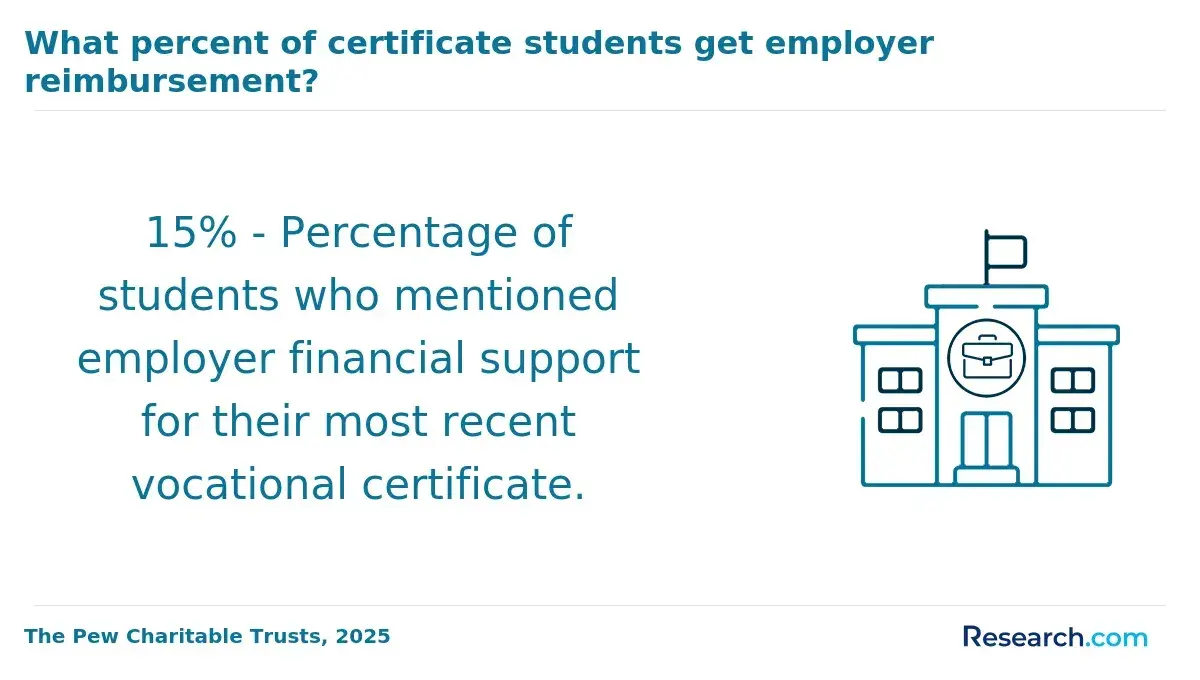
Finally, evaluate overall financial feasibility by asking about employer tuition assistance, scholarships, and federal aid eligibility, then compare the amount you may need to borrow against plausible earnings in your intended field. When conducting a broader cost comparison, evaluate most affordable online masters options by reviewing total overall expenses rather than relying on tuition rates alone.
Are online majors as effective as campus-based programs for career preparation?
An online major can prepare you effectively when its instruction, practice opportunities, and credential meet the same career requirements you would expect on campus. Delivery format alone does not establish quality or employer acceptance. In technical fields, assess projects and hands-on tools; in licensed fields, assess placement access and state eligibility.
Online also does not necessarily mean self-paced. Live sessions, fixed deadlines, proctored assessments, and in-person placements can affect whether you can keep working while enrolled. Choose the format you can complete consistently, not the one that appears most convenient in an advertisement.
How can you choose a reputable online major and accredited school?
Choose backward from a specific occupation, then verify the program against that goal. This approach helps prevent three costly mistakes: assuming a degree alone qualifies you for a licensed job, treating an occupational median as your expected pay, and comparing schools by tuition alone.
Use these steps to turn a shortlist of online majors into a defensible enrollment decision:
- Identify two or three target job titles and compare their typical education, experience, and licensing requirements.
- Confirm institutional accreditation, relevant programmatic accreditation, and any state-specific eligibility with the appropriate authorities.
- Ask each school for the exact online schedule, in-person obligations, prerequisites, and an evaluation of any prior coursework.
- Calculate total tuition, fees, placement and travel expenses, likely borrowing, and income you may forgo.
- Compare the curriculum and demonstrated student work with job postings; choose the lowest-risk path that meets your actual career requirements.
Other Things You Should Know About
No major has a guaranteed salary. Computer science connects to high-paying occupations such as software development, but wages reflect the role, skills, location, and experience - not the delivery format of the degree.
Not necessarily. Many software and business roles do not require one for entry. A master's may be more consequential when it provides a needed specialization or forms part of a regulated career path.
Coursework may be online, but required clinical or field education is typically in person. Confirm where placements occur and whether the program meets your state's requirements.
Compare total required credits, fees, prerequisites, travel, time away from work, and likely borrowing. Then check whether both programs actually prepare you for the same target role.
References
- Occupation Finder: Occupational Outlook Handbook | bls.gov https://www.bls.gov/ooh/occupation-finder.htm
- Accreditation in the U.S. | ed.gov http://www.ed.gov/laws-and-policy/higher-education-laws-and-policy/college-accreditation/accreditation-in-the-us
- Online Program Exclusions | In-Person Components | Military Affairs https://www.liberty.edu/online/exclusions/
- Undergraduate and Graduate Tuition and Fees | Purdue Global https://www.purdueglobal.edu/tuition-financial-aid/undergraduate-graduate-tuition-and-fees/
- Work Experience and Field of Study Matter for Graduates' Earnings - Public Policy Institute of California https://www.ppic.org/blog/work-experience-and-field-of-study-matter-for-graduates-earnings/
- The Jobs and Degrees Underemployed College Graduates Have | stlouisfed.org https://www.stlouisfed.org/open-vault/2025/aug/jobs-degrees-underemployed-college-graduates-have
- The Financial Returns of Online Graduate Programs | Third Way https://www.thirdway.org/report/the-financial-returns-of-online-graduate-programs
- Career earnings by college major - The Hamilton Project https://www.hamiltonproject.org/data/career-earnings-by-college-major/


