2027 Best Online History Degrees for Jobs

Co-Founder and Chief Data Scientist
Choosing the best online history degrees for jobs can be challenging-accreditation standards vary widely, curriculum rigor differs significantly, and tuition costs often do not align with career outcomes. For working adults and veterans especially, finding programs that balance practical experience requirements with robust student support infrastructure is critical.
According to the National Center for Education Statistics, only 62% of online bachelor's graduates secure employment in their field within a year. This article evaluates top online history degree programs through a data-driven lens-highlighting factors that impact return on investment and career advancement-to help readers select programs that meet their professional and financial goals with confidence.
Key Things to Know About the Best Online History Degrees for Jobs
- Accreditation ensures programs meet academic quality standards-ABET-accredited history degrees significantly improve employers' confidence in graduate competencies.
- Rigorous curricula-combining research methods, critical analysis, and interdisciplinary study-equip students with essential skills for varied career paths.
- Cost and return on investment matter-graduates with online history degrees report median salaries around $55,000, making affordable programs with strong outcomes preferable.
What Is a History Degree, and What Can It Do for Your Career?
A history degree provides a formal education in exploring human societies through time-analyzing events, cultures, and interactions within diverse contexts. The American Historical Association defines history as the study of past events through evidence and critical analysis to explain change and continuity. This discipline builds skills in research, interpretation, and critical thinking-setting it apart from adjacent fields like archaeology or anthropology, which emphasize material culture or social behavior.
Core knowledge domains in history include political, social, economic, and cultural developments, often approached through historiography-the study of how history is written and understood. Degree holders develop practical competencies in synthesizing sources, constructing coherent narratives, and evaluating primary documents. These are essential skills that extend beyond academia, opening doors to many professional roles.
- Associate's degree: Focuses on foundational knowledge and research skills, preparing students for entry-level jobs or further study.
- Bachelor's degree: The most common credential-offers broad study with chances for specialization, qualifying graduates for diverse jobs in education, government, research, and cultural institutions.
- Master's degree: Provides advanced training and specialization, often required for higher-level positions in public history and policy.
- Doctoral degree: Geared toward scholarly research or university teaching, demanding original contributions to historical knowledge.
This guide is dedicated to the best online history degree programs for career advancement, addressing key factors such as accreditation, curriculum depth, affordability, career outcomes, hands-on experience, and student support. For those seeking jobs and career opportunities with an online history degree, the flexible format supports working adults and other students balancing complex schedules. Those considering their options can benefit from reviewing resources like the easiest online bachelor degree to identify accessible pathways that fit their goals.
How Do Online History Degree Programs Compare to Traditional Campus Programs?
Curriculum Depth and Rigor: Top online history degree programs versus traditional campus programs offer comprehensive course selections that reflect broad historical periods and research methodologies. Accredited institutions uphold standards consistent with regional and national benchmarks, demonstrated through challenging assessments and research projects.
Faculty Qualifications: Data confirms that reputable online history programs employ faculty possessing terminal degrees-PhDs or equivalents-ensuring parity with on-campus instruction and maintaining academic integrity across delivery modes.
Student-Faculty Interaction: While historically limited, online programs now leverage synchronous video sessions, interactive discussion boards, and timely feedback to enhance engagement. Virtual office hours and small cohort structures further personalize student support.
Peer Collaboration: Though online cohorts may lack the spontaneity of onsite interactions, digital platforms enable structured group projects and study forums that encourage meaningful connection and teamwork.
Clinical or Practicum Requirements: History degrees rarely mandate internships, but where practicums exist-such as archival or museum experiences-leading programs facilitate local placements or virtual alternatives to balance hands-on learning with flexibility.
Employer Perception: Accredited online history degrees have earned growing employer acceptance, especially in education, research, and public history sectors. Surveys indicate that degree authenticity and graduates' demonstrable skills outweigh delivery format concerns.
Structural Advantages: For working adults, caregivers, military veterans, and remote learners without easy campus access, online programs offer essential flexibility without sacrificing quality. The blend of synchronous and asynchronous options allows study that fits around complex schedules, making online history degree programs versus traditional campus programs a crucial consideration for many.
Limitations and Innovations: Online history degrees may lack organic campus community and on-site archival access. Leading institutions mitigate these drawbacks through on-campus residencies, immersive intensives, and advanced virtual reality archives, enriching the virtual learning environment.
Prospective students seeking career-focused history programs should consider accredited online options that balance rigor with flexibility and proven outcomes. For those interested in exploring career prospects, reviewing data on top paying degrees can offer valuable insight into potential return on investment and labor market trends.
Careful evaluation across these dimensions empowers learners pursuing differences between online and on-campus history degrees to make informed choices aligned with their educational goals and lifestyle needs.
What Are the Accreditation Standards That Define a Reputable Online History Degree?
Regional accreditation is the most respected standard for online history degrees in the U.S., signaling overall institutional quality to employers and graduate schools. These accreditors assess entire schools, ensuring high academic and operational standards. Key regional bodies include the Middle States Commission on Higher Education (MSCHE), which serves the Mid-Atlantic; the New England Commission of Higher Education (NECHE); the Southern Association of Colleges and Schools Commission on Colleges (SACSCOC) across the South; and the Higher Learning Commission (HLC) covering the Midwest. National accreditors, overseeing specialized or vocational institutions, generally hold less sway in the history field.
While less common, some history programs gain prestige through endorsements by organizations like the American Historical Association, which highlights curriculum quality and faculty expertise. These programmatic recognitions, although optional, can boost a program's credibility.
Choosing an unaccredited or poorly accredited online history program risks substantial drawbacks: credits may not transfer, degrees might lack recognition by employers, and professional licensure could be unattainable. These barriers directly impact both educational and career advancement.
To confirm accreditation status, students should consult the U.S. Department of Education's Database of Accredited Postsecondary Institutions and Programs and the Council for Higher Education Accreditation's (CHEA) directory. These resources offer authoritative, current accreditation records for institutions and programs.
Accreditation must be a foundational filter when assessing any online history program - a vital precaution beyond cost or scheduling convenience.
A professional who completed an online history degree shared that navigating accreditation was initially confusing but crucial. He explained, "I faced uncertainty until I verified the school's status through official databases. Knowing the program was regionally accredited gave me confidence that my degree would be respected in the job market. Without that assurance, I might have wasted years and resources on a worthless credential." His experience underscores how accreditation safeguards both education quality and future opportunities.
Which Types of History Degrees Are Available Online-Bachelor's, Master's, or Doctoral?
Associate's Degree: Ideal for recent high school graduates or working adults aiming for foundational skills and entry-level roles. This credential generally takes two years to complete and requires a high school diploma, building core knowledge in historical research. Graduates often secure administrative or educational support positions.
Bachelor's Completion Programs: Designed for those with some college experience-such as transfer students or veterans-seeking to finish their degree. These flexible programs, lasting 1-2 years full-time, prepare students for careers in teaching, public history, or government. Median salaries for completers improve as they gain qualifications. These programs often serve working adults balancing education and career demands.
Master's Degree: Requires a bachelor's degree, usually in history or a related field, and caters to professionals pursuing specialized expertise or leadership roles. Typical duration is 1.5 to 2 years, focusing on historiography, critical analysis, and practical internships. Graduates often advance to museum, archival, education, or research positions with higher earning potential. The best online history master's programs emphasize both academic rigor and applied skills.
Doctoral Programs: Targeted at candidates holding master's degrees who aim for academia, research, or senior leadership. Programs extend over 3-7 years and demand original scholarship. Graduates frequently become university professors, senior historians, or policymakers. Completion rates are more variable compared to undergraduate tracks due to research intensity.
Post-Baccalaureate Certificates: Flexible credentials for professionals adding history expertise without committing to full degrees. These stackable certificates-credits often transfer to master's programs-require a bachelor's and take under two years. They equip students for niche or interdisciplinary careers.
IPEDS data shows bachelor's degrees have stronger completion rates than doctoral paths, reflecting their different challenges. Students can advance efficiently through stackable pathways-from certificates to bachelor's to master's-maximizing career impact while managing personal commitments. For options in related fields, consider exploring construction management programs.
What Is the Typical Cost of an Online History Degree, and How Can You Finance It?
Tuition costs for an online history degree vary widely depending on the type of school. Public in-state tuition generally falls between $4,000 and $12,000 annually, making it the most budget-friendly choice. Public out-of-state students can expect to pay considerably more-often $12,000 to $30,000 per year. Private nonprofit institutions typically charge $15,000 to $40,000 each year but often provide merit-based scholarships to ease the burden. For-profit colleges are known for unpredictable pricing, sometimes above $25,000 annually, frequently accompanied by extra fees for technology and course materials.
Beyond tuition, students should prepare for mandatory fees, technology charges, and occasional campus visits or orientations, which can add several hundred to thousands of dollars to the total program cost.
Federal financial aid plays a key role in financing these degrees:
- Pell Grants: Need-based grants that do not require repayment and can significantly offset tuition expenses.
- Federal Student Loans: Subsidized loans waive interest while enrolled, whereas unsubsidized loans accumulate interest immediately-both require repayment after graduation or if enrollment drops below half-time.
- GI Bill Benefits: Available to qualifying veterans and active military personnel, covering tuition, fees, and housing allowances to make education more accessible.
Scholarships tailored for history students are offered by entities like the American Historical Association, state workforce agencies, and individual colleges through merit awards, providing valuable support to reduce costs.
Calculating the full program cost-including fees, books, and residency expenses-is crucial rather than focusing solely on per-credit fees. Using resources such as the College Scorecard's net price calculator helps prospective students gauge the true out-of-pocket expense to make well-informed choices.
Reflecting on her experience, a professional who launched her career after completing an online history degree shared that managing finances was initially overwhelming. She noted how navigating different aid options-grants, loans, and scholarships-required persistence and patience. "I had to carefully balance applying for funding while keeping an eye on hidden costs like technology fees and occasional campus trips," she recalled. Ultimately, the careful financial planning she undertook allowed her to focus on her studies without excessive stress, reinforcing the importance of understanding the entire cost structure before enrolling.
How Long Does It Take to Complete an Online History Degree Program?
Associate's Degree: Generally finished in about two years full-time, though many online programs allow part-time study, which can extend completion to three years or more.
Bachelor's Degree: Typically a four-year commitment, but accelerated and year-round formats can shorten this to 2.5-3 years. Students enrolling part-time or transferring fewer credits may take five years or longer.
Master's Degree: Often completed within 1.5 to 3 years. Some programs use competency-based models or offer accelerated tracks, enabling working adults to finish in as little as one year.
Doctoral Degree: Usually requires 3 to 6 years, depending on research demands, dissertation progress, and whether enrollment is full- or part-time. Flexible pacing is common but subject to maximum time limits.
Transfer Credits: Accepting previously earned college credits can reduce degree duration significantly-especially at the bachelor's level-by focusing study on advanced coursework.
Enrollment Status: Full-time students generally complete degrees faster than part-time learners managing work or family, though online programs often offer adaptable schedules for both.
Accelerated and Year-Round Enrollment: Continuous course offerings and compressed sessions help students bypass traditional academic breaks, speeding up graduation timelines.
Prior Learning Assessment (PLA): Many programs grant credit for relevant work experience, military training, or certifications, helping reduce both time and expenses.
Minimum and Maximum Time Limits: Accredited programs commonly enforce maximum completion windows-often six years for bachelor's degrees-and set minimum credit loads for maintaining financial aid eligibility.
Financial Aid and SAP Requirements: Extending a program beyond set timelines can jeopardize federal aid eligibility if satisfactory academic progress standards are unmet, emphasizing the need for steady advancement.
Realistic Timelines: Reported average completion times typically exceed advertised minimums due to part-time enrollment and life obligations-reflecting the real pace of most online history students.
What Core Curriculum and Coursework Should a Quality Online History Program Include?
High-quality online history programs distinguish themselves through a robust curriculum aligned with standards from professional accrediting bodies such as the American Historical Association. These programs emphasize a balanced mix of core courses, practical skills, and integrative experiences designed to prepare students for diverse history-related careers.
- Core Courses: Essential subjects include historiography, research methods, global civilizations, and comprehensive survey courses in American, European, and world history that establish a broad, solid foundation.
- Research and Writing Skills: Rigorous training in archival research, critical analysis of primary and secondary sources, and academic writing equips students with skills vital to roles in education, public history, and archival management.
- Capstone or Integrative Experiences: Thesis projects or senior seminars provide opportunities for original research and synthesis, demonstrating mastery of key concepts and methodologies.
- Competency-Based Outcomes: Graduates should be able to critically evaluate historical evidence, construct persuasive arguments, and communicate effectively-competencies highly sought after by employers in museums, libraries, government agencies, and cultural organizations.
- Curriculum Currency: Leading programs implement scheduled curriculum reviews-often every 3-5 years-with input from advisory boards of historians and industry professionals to ensure content reflects emerging methodologies, labor market needs, and regulatory updates.
For prospective students, requesting a sample course sequence, detailed syllabi, and a learning outcomes map is critical for verifying that the program's academic rigor and practical training align with career goals rather than relying on marketing materials alone. According to a survey by the National Center for Education Statistics, history-related jobs emphasizing digital literacy and archival skills have grown by 12%, underscoring the need for curricula that evolve with workplace demands.
Which Online History Programs Offer the Best Return on Investment for Working Adults?
When comparing the best online history degree programs for career advancement, return on investment (ROI) emerges as a decisive factor-highlighting the balance between tuition costs and graduates' success in competitive job markets. Public universities often deliver the strongest ROI by combining affordable tuition rates with extensive employer networks, making their programs especially appealing for working adults. Many schools also offer in-state tuition reciprocity agreements, enabling students from nearby states to benefit from reduced tuition and thereby lowering overall expenses.
Examining employment outcomes is essential to gauge a history program's true value. Graduates who find employment in education, government, cultural institutions, or research roles at satisfactory salaries provide tangible proof of a program's effectiveness. Low loan default rates further support the financial soundness of investing in these degrees.
- Employer Tuition Reimbursement: Numerous employers assist staff pursuing online degrees by subsidizing tuition, reducing personal financial burdens and accelerating return on investment.
- Scholarship Availability: Targeted scholarships for working adults, veterans, and online students reduce dependence on loans and enhance post-graduation earnings potential.
- In-State Tuition Reciprocity: Agreements across state lines allow students just outside a university's primary state to access lower tuition, making programs more cost-effective.
It is critical to look beyond generic institutional rankings and instead prioritize program-specific outcome data-especially median earnings six and ten years after enrollment. These metrics-available from federal databases and institutional reports-offer the clearest insight into a history degree's long-term financial benefits, a vital consideration for those pursuing top online history degrees with high return on investment for working adults.
Accreditation and Curriculum: A rigorous curriculum accredited by recognized agencies ensures that degrees meet employer standards and open doors for advanced academic opportunities.
Student Support Infrastructure: Accessible advising, career services, and internship options enhance graduate outcomes and increase employment rates.
Working adults should also consider programs' links to real-world industries, much like those highlighted in a well-regarded online hospitality management program, where practical experience significantly boosts career prospects.
What Admissions Requirements Do the Top Online History Programs Typically Require?
Admissions requirements for competitive online history programs vary significantly-often reflecting the institution's selectivity and the degree level sought. For working adults and professionals seeking advanced credentials, aligning qualifications with program expectations is essential. Understanding typical prerequisites for top history programs online helps applicants target the right programs for their goals.
Minimum GPA: Most selective master's programs require a minimum undergraduate GPA of around 3.0 on a 4.0 scale, though research universities often demand 3.3 or higher. Open-enrollment community college history programs may have little to no GPA requirements, widening access for diverse learners.
Standardized Tests: Test-optional policies for the GRE have become widespread in humanities fields, but some programs still recommend or require GRE scores to contextualize applicants' academic records. Since these policies shift frequently, contacting admissions advisors is important to verify current requirements.
Letters of Recommendation: Strong references from professors or professional supervisors offer insight into applicants' research skills, critical thinking, and readiness for graduate-level study-often playing a decisive role in admissions decisions.
Personal Statement: A thoughtfully written statement expressing academic interests, career objectives, and reasons for pursuing graduate history study is expected-demonstrating motivation and program fit.
Professional Experience: Relevant work or volunteer experience-especially in applied or public history-can strengthen applications. This is particularly valuable for career changers, veterans, and working adults.
Prerequisite Coursework: Applicants lacking a formal history background may need foundational courses in history, research methods, or historiography before or alongside advanced study, ensuring preparedness for rigorous graduate content.
Admissions requirements span a broad spectrum-from open access community colleges with minimal barriers to highly selective universities with comprehensive reviews. Prospective students should assess their credentials realistically and consider programs where they are most competitive. For those interested in related fields and accelerated options, exploring an accelerated human services degree online may also be worthwhile.
What Career Paths and Job Titles Are Available to Online History Degree Graduates?
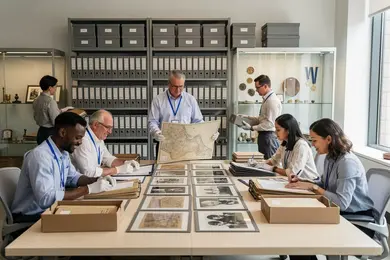
Museum and Archival Specialists: Entry-level positions include roles like museum technicians and archivists' assistants, responsible for cataloging, preserving, and organizing historical artifacts and documents. As professionals gain experience and possibly advanced certifications, they may advance to curatorial or collections management roles involving exhibit design and stewardship of historical resources.
Education and Public History: Graduates often begin as teaching aides, museum educators, or outreach coordinators who facilitate learning programs and public engagement with history. Further qualifications enable transitions to classroom teaching, university-level instruction, or leadership in educational program development within cultural institutions.
Research and Analysis: Early career roles such as research assistants or historical consultants focus on collecting and interpreting historical data to support decision-making. Advanced careers-often requiring graduate degrees-include senior researchers, specialized archivists, and policy analysts who lead studies and advise organizations on historical context.
Government and Cultural Resources: Initial opportunities encompass cultural resource technicians and heritage interpreters contributing to preservation and public history projects. Experienced practitioners may progress to leadership positions in heritage conservation, public archives, or agencies managing national parks and cultural affairs.
Writing and Publishing: History graduates may work as content creators, editors, or contributors to educational and media outlets. With experience, they often move into senior editorial or consultancy roles supporting documentaries, publications, and digital historical platforms.
Career Pivot Opportunities: The versatile skill set from a History degree supports shifts into fields like law, library science, public administration, or education-particularly when complemented by certifications or graduate study. Professionals from related disciplines can leverage historical knowledge to enhance research, analysis, and communication capabilities.
Typical Career Progression: Over five to ten years, graduates usually advance from entry-level or assistant roles to positions with greater responsibility-such as managing museum departments, directing research teams, or coordinating public history initiatives. Lateral moves among public, nonprofit, academic, and private sectors offer chances to expand expertise or specialize in niche areas depending on career ambitions.
What Is the Salary Outlook for Professionals with an Online History Degree?
- Degree Level: Salaries improve significantly with higher academic attainment-bachelor's degree holders usually earn median salaries between $50,000 and $65,000 in early to mid-career roles. Master's degree holders often see incomes rise to $60,000-$75,000, especially in research or policy positions. Doctorate holders typically command salaries above $80,000, notably in academia or leadership roles.
- Years of Experience: Entry-level positions start near the lower salary bounds, but compensation grows steadily with time. After five to ten years, median wages tend to increase by 20-35% as professionals take on advanced responsibilities.
- Industry Sector: Common employment sectors include public education and local government, where median pay ranges from $50,000 to $70,000 with limited variation. Private sectors such as consulting, archival work, and cultural resource management offer wider salary ranges-often exceeding $80,000 for specialist or managerial roles.
- Geographic Market: Location greatly influences pay levels. Urban areas and high-cost regions like Washington D.C., New York, and California typically offer salaries 15% to 25% above the national average. Conversely, compensation can be lower in rural or smaller communities.
- Specialization: Proficiency in areas like digital History, public History, or archival science brings salary advantages. Technical skills such as GIS mapping and data analysis increase marketability and earning potential.
- Professional Certifications and Credentials: Credentials including Certified Archivist and Museum Studies often add 10% to 20% to salary prospects. Online History graduates can pursue these through accredited programs and professional bodies to enhance career growth and income.
- Forward-Looking Projections: Employment opportunities in History-related fields are expected to grow steadily with inflation-adjusted salary gains following demand for cultural and educational services. Prospective students should consult the latest BLS and industry reports to ensure salary expectations reflect current market dynamics.
What Graduates Say About the Best Online History Degrees for Jobs
- Taylor: "The rigorous curriculum was a game-changer for me-the way courses were structured pushed me to think critically and engage deeply with different periods in history. The emphasis on accreditation standards assured me the degree held real value in the job market. Plus, the balance between cost and return on investment was impressive-it truly felt like a smart financial and educational choice. "
- Cruz: "Reflecting on my time in the program, the strong student support infrastructure stood out the most-advisors and tutors were always just a message away, which made a huge difference when tackling complex material. Inclusion of practical experience requirements meant I graduated not just with knowledge but with applicable skills. These factors-combined with a degree that is well-regarded due to its accreditation-made the journey not only manageable but truly rewarding."
- Luka: "Professionally speaking, career outcomes are what convinced me to enroll-the program's emphasis on connecting academic work with real-world history-related careers made all the difference. The curriculum rigor prepared me for the challenges I face in my job, while the program's accreditation ensured my credentials opened doors. It was the perfect blend of theory and practice that gave me confidence stepping into the workforce."
Other Things You Should Know About History Degrees
The best online history programs develop strong research and critical thinking skills-essential for analyzing complex historical events and sources. Graduates gain proficiency in effective written and oral communication, allowing them to present arguments clearly and persuasively. Programs also emphasize digital literacy, including the use of archives and databases, preparing students to work confidently with modern research tools.
Many accredited online history programs incorporate practicum or internship components to provide real-world experience. These placements often partner with museums, archives, or cultural institutions-allowing students to apply classroom knowledge in professional settings. Students typically coordinate site visits or virtual projects locally, supported by faculty supervision to meet both academic and professional standards.
One of the biggest mistakes to avoid in 2027 is overlooking program accreditation. Ensure that the online history degree is accredited by a recognized body, as this validates the quality of education and enhances job prospects after graduation.
Prospective students should avoid programs lacking proper regional accreditation, as this can affect credit transfer and employment prospects. It is also important to verify whether the program offers practical experience opportunities-an essential feature for career-focused learners. Another mistake is overlooking student support services and faculty accessibility, which play critical roles in online learning success.
References
- How Long to Get a History Degree | ValidGrad https://validgrad.com/blog/how-long-does-it-take-to-get-a-history-degree/
- How To Choose Between Online Vs. Traditional Education Programs | PLNU https://www.pointloma.edu/resources/accelerated-undergraduate/how-choose-between-online-vs-traditional-education-programs
- The 20 Best Online History Degree Programs | HistoryDegree.net https://www.historydegree.net/online-history-degree/
- The Best Affordable Online Master’s In History Degree Programs | GradSchoolHub https://www.gradschoolhub.com/affordable/online/masters/history/
- WhatsApp Web https://web.whatsapp.com/
- WHAT - Translation from English into Polish https://en.pons.com/translate/english-polish/what
- Online History Degrees https://mycollegeguide.org/online-history-degrees/
- HIST What can I do with my History degree? https://arts.ucalgary.ca/history/future-students/undergraduate/what-can-i-do-my-history-degree
- what - Tłumaczenie po polsku - Słownik angielsko-polski Diki https://www.diki.pl/slownik-angielskiego
- Career outlook https://clas.wayne.edu/history/programs/career-outlook