2027 Best Online Database Management Degree Programs at Nonprofit Universities

Co-Founder and Chief Data Scientist
Choosing an online database management degree means weighing more than a school's nonprofit status. Database administrators and architects had a median annual wage of $123,100 in May 2024, according to the U.S. Bureau of Labor Statistics, but employers evaluate practical SQL, cloud, security, and data-governance skills as well as the degree. This guide helps prospective students compare nonprofit online programs, identify worthwhile curricula, estimate costs, verify legitimacy, and select a format aligned with work, transfer, graduate-school, and career goals.
Key Things You Should Know
- Look for institutionally accredited nonprofit universities with a curriculum covering SQL, relational design, cloud databases, security, backup and recovery, and hands-on projects - not merely a broad IT degree label.
- Database administrators and architects earned a $123,100 median annual wage in May 2024; the U.S. Bureau of Labor Statistics projects 9% employment growth for the occupation from 2024 to 2034, although a degree alone does not ensure a particular job or salary.
- The strongest value usually comes from comparing total net cost, transfer-credit limits, required live sessions, career support, and employer-relevant technical practice rather than choosing the lowest advertised tuition.
What Makes an Online Database Management Degree Program at a Nonprofit University Different?
Nonprofit status describes an institution's tax and governance structure, not a universal measure of academic quality. Public universities are generally nonprofit, while many private universities are nonprofit as well. A nonprofit program may offer established faculty, library access, transfer pathways, and student services, but students should still examine the individual program's outcomes and requirements.
The comparison below shows how common degree routes fit different starting points and goals. The right route depends on the learner's prior credits, desired job level, and need for technical depth.
| Program route | Best fit | Typical focus | Key trade-off |
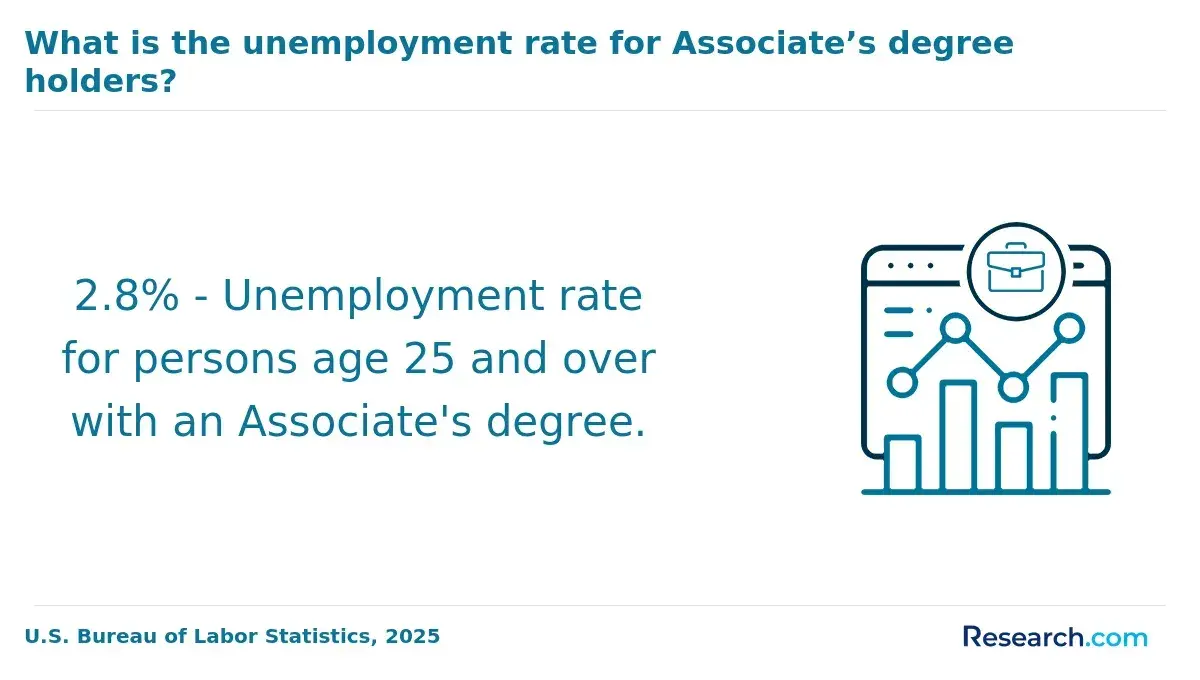
| Associate degree or certificate | Career changers seeking entry-level skills or a lower-cost starting point | SQL basics, introductory programming, database concepts | May not meet bachelor's-preferred hiring requirements |
| Bachelor's in IT, information systems, or computer science | Students seeking broad entry-level technology preparation | Databases plus programming, networking, systems, and security | Usually takes longer but provides broader career mobility |
| Specialized database administration bachelor's pathway | Students already certain about data infrastructure work | Administration, performance tuning, backup, recovery, and governance | Can be narrower if career interests later change |
| Master's in information systems, data analytics, or computer science | Professionals with a bachelor's degree pursuing advanced roles | Architecture, cloud platforms, analytics, leadership, and advanced data work | Requires stronger prior preparation and carries higher opportunity cost |
A career-focused program emphasizes applied tools, labs, and portfolio work. An academic computer science program may provide stronger theory and algorithms preparation, which can be useful for software engineering or later doctoral study. Neither approach is automatically better; compare coursework against the roles you actually intend to pursue.
How Can Students Verify Accreditation for an Online Database Management Degree at a Nonprofit University?
Institutional accreditation is the first legitimacy check. It means an accrediting agency recognized by the U.S. Department of Education or the Council for Higher Education Accreditation has reviewed the university. For database management, separate programmatic accreditation is less common than in regulated fields, so institutional accreditation, curriculum quality, and employer relevance matter most.
Students should verify accreditation independently rather than relying on a logo or a statement in marketing materials. Use the university's legal name and confirm that the accreditation applies to the degree-granting institution and, where relevant, the online division.
- Search the U.S. Department of Education's Database of Accredited Postsecondary Institutions and Programs for the institution and accreditor.
- Confirm the university appears in the accreditor's own directory and that its status is current.
- Read the online program's catalog page to verify the exact degree, concentration, delivery method, credit requirements, and campus responsible for the award.
- Ask whether the program has specialized recognition, such as computing accreditation, and what that recognition covers.
- For transfer or graduate-school plans, ask the receiving institution in writing how it evaluates the credits.
A common mistake is confusing institutional accreditation with a certification exam, a professional association membership, or a school's authorization to operate in a state. Those are different matters. Accreditation supports federal aid eligibility and transfer credibility, but it does not promise that every credit will transfer or that a particular employer will prefer the degree.
How Rigorous Are Online Database Management Degree Programs at Nonprofit Universities?
A rigorous online program should require students to do more than watch lectures and pass multiple-choice quizzes. Database work is practical: graduates need to translate business needs into data models, write and optimize queries, manage access controls, document systems, protect data, and explain trade-offs to technical and nontechnical colleagues.
Review syllabi and course descriptions for progressive technical depth. A credible bachelor's curriculum commonly moves from database concepts and SQL to normalization, data modeling, programming, security, cloud platforms, administration, and a capstone. Master's programs should build further into architecture, analytics, governance, research, or management rather than repeating introductory material.
Before enrolling, evaluate whether the academic workload fits your schedule and career goal by looking for these evidence-based features:
- Hands-on labs using database management systems, cloud environments, or realistic datasets
- Assessed projects that require schema design, queries, documentation, and troubleshooting
- Faculty with relevant academic credentials and current technical or industry experience
- Clear policies for proctored exams, group work, internships, capstones, or optional residencies
- Feedback from instructors, not only automated scoring
Accelerated terms can shorten calendar time but do not reduce the expected learning. They concentrate weekly reading, coding, and project deadlines, making them most suitable for students who can dedicate consistent time. Students seeking a management-oriented technology path may also compare a fastest business degree online, but business acceleration is not a substitute for the database and programming practice required for technical database roles.
Total cost is more useful than a per-credit tuition figure. It includes required credits after transfer evaluation, mandatory technology or distance-learning fees, books, proctoring, software, and any travel for residencies. It should also include the income or time a student gives up by reducing work hours.
For context, College Board reported average published tuition and fees for 2024-25 of $11,610 for in-state students at public four-year institutions and $43,350 at private nonprofit four-year institutions. These national averages do not represent online database programs specifically, and financial aid can substantially change net price. Public out-of-state rates may also erase an apparent public-school savings advantage.
This comparison framework helps applicants distinguish sticker price from a more decision-ready estimate.
| Cost question | Why it matters | What to request |
| How many credits are required after transfer? | Transfer credit can change both completion time and tuition | A written preliminary transfer evaluation |
| Is online tuition different by residency? | Some public universities charge separate online or nonresident rates | The applicable per-credit rate and fee schedule |
| Which fees are unavoidable? | Technology, lab, assessment, and graduation charges raise total cost | An itemized program-cost estimate |
| Are materials included? | Textbooks, access codes, and cloud-lab subscriptions vary | A current course-materials policy |
| What happens if a course is repeated? | Retakes can materially change cost and timeline | The repeat-course and satisfactory-progress rules |
Students pursuing a bachelor's degree should compare database pathways with other cheap online degrees only after confirming that the lower-priced option includes the technical courses needed for their target role. A low tuition rate is not necessarily the best value if the program lacks database labs, transfer acceptance, or career-relevant electives.
Eligible students at accredited nonprofit institutions may use federal student aid, including Pell Grants for qualifying undergraduate students, Direct Loans, work-study where available, and federal graduate loans for eligible master's students. Aid availability and amounts depend on FAFSA information, enrollment intensity, satisfactory academic progress, remaining eligibility, and institutional policies.
Start with aid that does not need repayment, then compare federal loan terms before considering private loans. Many nonprofit universities also offer institutional scholarships, employer-partnership discounts, military benefits, payment plans, and scholarships for transfer or adult learners. Ask whether an award applies to online students, continues after the first term, and can be combined with other assistance.
A practical aid review should focus on the net price and the conditions attached to each offer:
- File the FAFSA early and review the school's complete aid offer, not tuition alone.
- Separate grants and scholarships from loans, which must generally be repaid with interest.
- Ask whether part-time enrollment changes scholarship eligibility or expected completion time.
- Check whether employer tuition assistance requires continued employment or repayment after leaving the employer.
- Use the school's net-price information and borrowing disclosures to estimate the amount you may need to finance.
For applicants who already hold a bachelor's degree, comparing aid rules and tuition structures with guidance on what is the cheapest online master's degree program can help frame costs, but the final choice should still account for database specialization, prerequisite courses, and career fit.
"Online" does not always mean self-paced. Programs can be asynchronous, with weekly deadlines but no scheduled meetings; synchronous, with required live sessions; or hybrid, combining online work with occasional campus, testing-center, or residency requirements. A program's flexibility should be assessed course by course because formats can vary within the same degree.
Part-time enrollment is often the most workable option for employed adults, while full-time study can reduce calendar time. Accelerated terms suit students who can handle concentrated weekly workloads. Traditional semesters may offer more time for complex coding projects, tutoring, and recovery from a demanding work week.
Before applying, ask the enrollment advisor and program chair the following questions in writing:
- Are any live classes scheduled at fixed times, and are they set in a particular time zone?
- Can students choose part-time enrollment every term without losing admission status or aid eligibility?
- Are exams remotely proctored, and what equipment or identity-verification requirements apply?
- Do any courses require internships, group projects, field experiences, or travel?
- How often are core database courses offered, and what happens if a required course is full?
Online study works best for independent learners who can set a regular schedule, seek help early, and maintain a suitable computer and internet connection. Students who learn best through immediate, in-person coaching may prefer hybrid or campus-based options, especially for their first programming and database courses.
Strong online support can affect persistence as much as course design. Nonprofit universities commonly provide online library access, academic advising, tutoring, technical support, accessibility services, financial-aid counseling, career services, and alumni networks. Availability, response times, and evening or weekend coverage vary substantially by institution.
For database management students, the most valuable services are often technical tutoring, virtual lab help, librarian support for research and data ethics, resume feedback for technology roles, mock interviews, and career guidance that recognizes technical portfolios. Ask whether career services are available to online students after graduation and whether they help students translate course projects into employer-ready evidence.
Use this support checklist during program comparison. It identifies services that can be especially important when students cannot visit campus regularly.
| Service | Why it matters for online students | Question to ask |
| Academic advising | Helps sequence prerequisites and avoid delayed graduation | Is there a dedicated advisor for online technology students? |
| Technical support | Database software and virtual labs can create access barriers | What hours and channels are available for urgent help? |
| Tutoring and writing support | Supports programming practice and technical documentation | Are appointments available evenings or weekends? |
| Career services | Helps connect coursework to job searches and portfolios | Do online students receive individual coaching and employer events? |
| Accessibility services | Ensures eligible students can request appropriate accommodations | How are accommodations implemented in proctored online courses? |
A red flag is a school that describes extensive services but cannot explain how an online learner accesses them, how quickly staff respond, or whether the services apply to students in every state. Request demonstrations of the learning platform and virtual library before committing.
Database management education can prepare students for roles such as database administrator, database architect, SQL developer, data analyst, systems analyst, data engineer, business intelligence analyst, or cloud-data support specialist. Job titles and duties overlap, so applicants should read local job postings and identify the tools employers request before selecting a concentration.
The U.S. Bureau of Labor Statistics projects 9% growth in employment for database administrators and architects from 2024 to 2034, faster than the average for all occupations. This projection is useful evidence of continued demand for data infrastructure skills, but it covers an occupation rather than every job title, region, or graduate outcome.
AI adoption increases the importance of data quality, governance, privacy, access control, and reliable data pipelines; it does not remove the need for people who design and maintain systems. Programs that teach only one vendor tool may date quickly. Prefer curricula that combine transferable concepts - normalization, query logic, transaction management, security, and governance - with exposure to current cloud and analytics environments.
Students considering technology alongside people-centered careers should understand that the educational path differs from an online MSW. Social work programs prepare students for social services practice and may include field education and state-specific licensure considerations, while database programs focus on technical data systems.
Career preparation is strongest when students can show work. Build a portfolio containing a documented schema, SQL queries, a data-cleaning or reporting project, security decisions, and a short explanation of business impact. Certifications can complement a degree, particularly for cloud platforms or database technologies, but employers vary in whether they require them.
An accredited online bachelor's degree in information systems, IT, computer science, or a closely related database field can support admission to many graduate programs. Admission committees commonly consider institutional accreditation, GPA, prerequisite coursework, quantitative readiness, recommendations, statement of purpose, and evidence that the applicant can succeed in advanced study.
A bachelor's degree is usually the appropriate first investment for students without a four-year degree who want broad technology access. A master's degree can make sense for professionals seeking advanced architecture, analytics, leadership, or specialization. A doctoral degree is generally best reserved for research, university teaching, or highly specialized technical investigation rather than as a routine requirement for database administration.
Students who may pursue graduate school should preserve options by selecting electives in programming, statistics, discrete mathematics, data structures, research methods, and data ethics where available. They should also save syllabi and major project materials; graduate admissions offices may need course detail when evaluating prerequisites.
Graduate study should match the intended field. For example, a learner interested in developmental or clinical psychology would need a psychology-focused route such as child psychologist masters programs, not a database degree. Likewise, a database-focused master's is most useful when it builds meaningfully beyond the student's prior technical preparation.
How Should Students Compare the Best Online Database Management Degree Programs at Nonprofit Universities?
The best online database management program is the one that meets a student's target role, budget, academic background, and scheduling constraints with the fewest avoidable compromises. Rather than relying on a generic ranking, create a shortlist of accredited nonprofit options that offer the appropriate degree level and document how each option performs on the factors below.
This final comparison table can help turn broad research into an enrollment decision. Score each school using published information and written answers from admissions staff.
| Decision factor | High-value evidence | Potential red flag |
| Accreditation and authorization | Current institutional accreditation and clear authorization for your state | Vague claims or inability to identify the accreditor |
| Curriculum | SQL, data modeling, administration, security, cloud, and capstone work | Few database courses or outdated, tool-only content |
| Cost and transfer | Written total-cost estimate and transparent transfer evaluation | Tuition quote without fees or unclear credit acceptance |
| Format | Documented course schedules and predictable sequencing | Unclear live-session, proctoring, or residency requirements |
| Student support | Accessible advising, tutoring, technical help, and career coaching | Services unavailable to online students or difficult to reach |
| Career alignment | Projects, employer-relevant tools, internships, and portfolio guidance | Unsupported salary promises or no evidence of practical work |
Make a final shortlist of three programs. Request a transfer review, ask for a term-by-term plan, calculate direct costs after grants, and compare the time needed each week. Then choose the program whose documented requirements best align with your intended database role - not simply the school with the lowest price, most recognizable name, or nonprofit designation.
Other Things You Should Know About Database Management
No. Employers often consider graduates of information systems, information technology, computer science, data analytics, and related programs. The important factor is whether your coursework and portfolio demonstrate SQL, data modeling, database security, administration, and problem-solving skills.
SQL is foundational. Python is widely useful for automation, data processing, and analytics. Depending on the role, familiarity with a general-purpose language such as Java, C#, or JavaScript may also help, especially when databases support applications.
Yes, but beginners should choose a program with introductory programming, systems, and database courses. Entry-level roles may include data support, junior analyst, help desk, or application support work before moving into full database administration responsibilities.
A certification can demonstrate familiarity with a specific cloud or database platform, but it should supplement rather than replace foundational learning. Consider one after completing related coursework and choose it based on the tools requested in the jobs you want.
- Database Design & Analytics Certificate | Mercer University https://professionaladvancement.mercer.edu/academic-programs/undergraduate/database-design-analytics-certificate/
- Data Modeling/Warehousing and Database Administration https://www.fastweb.com/directory/scholarships-for-data-modeling-warehousing-and-database-administration-majors
- Can Online Colleges Offer Competitive Career Outcomes? https://www.onlineu.com/magazine/popular-online-schools-career-outcomes
- Best Database Management Bachelor's Degrees https://www.computerscience.org/degrees/bachelors/database-management/
- Database Management Degree Online | DeVry https://www.devry.edu/online-programs/bachelors-degrees/computer-information-systems/database-management-specialization.html
- Data Sources for Post-Graduation Outcomes https://www.airweb.org/article/2021/09/30/data-sources-for-post-graduation-outcomes
- Courses in nonprofit technology | NTEN https://www.nten.org/education/courses/
- The Rise of the Online Degree at Public and Nonprofit Universities - OnlineColleges.net https://www.onlinecolleges.net/for-students/online-degrees-at-nonprofit-universities/
- Best Online Bachelor's in Information Technology Programs I Computerscience.org https://www.cyberdegrees.org/listings/best-online-bachelors-in-information-technology-programs/
- The Most Affordable Online Christian Associate's Degree in Nonprofit Management - City Vision University https://www.cityvision.edu/lp/the-most-affordable-online-christian-associates-degree-nonprofit-management/