
2027 Best Online Criminal Justice Administration Doctorate Programs for Private Sector and Corporate Careers

Co-Founder and Chief Data Scientist
A Criminal Justice Administration doctorate can be valuable far beyond government or academic careers. Private employers now need leaders who can manage investigations, security risk, fraud prevention, compliance, crisis response, and data-informed policy. BLS May 2024 data places the median pay for management analysts at $101,190, showing why advanced analytical and leadership credentials matter in corporate environments.
This guide is for working professionals comparing online doctorate programs with private sector goals. You will learn which programs fit corporate paths, how applied and research doctorates differ, and how to judge ROI before enrolling.
Key Things to Know About Online Criminal Justice Administration Doctorate Programs for Corporate Careers
- Online Criminal Justice Administration doctorates are strongest for corporate professionals targeting senior roles in security leadership, compliance, investigations, fraud risk, risk intelligence, consulting, or corporate training rather than entry-level criminal justice jobs.
- For most private sector goals, applied doctorates such as a Doctor of Criminal Justice or practitioner-focused PhD are usually more directly useful than purely theory-driven research doctorates, especially when the program includes policy analysis, organizational leadership, analytics, and a capstone or dissertation tied to workplace problems.
- BLS May 2024 salary data shows relevant corporate-adjacent roles often sit in the $78,420 to $124,910 median range, including compliance officers at $78,420, management analysts at $101,190, and information security analysts at $124,910; a doctorate may support advancement, but it does not guarantee promotion or pay.
Will Criminal Justice Administration doctorate programs benefit corporate professionals?
A Criminal Justice Administration doctorate can benefit corporate professionals when the degree solves a specific career problem: moving from operations into strategy, leading enterprise investigations, advising executives on risk, or building evidence-based compliance and security programs. It is less useful when the goal is simply to qualify for a first criminal justice job, because most entry and mid-level roles do not require doctoral study.
The best candidates are usually experienced professionals who already work in corporate security, fraud prevention, law enforcement liaison roles, internal investigations, emergency management, compliance, loss prevention, intelligence analysis, or public safety consulting. A doctorate adds the most value when it builds on existing field credibility rather than replacing it.
Professionals coming from earlier academic pathways may first compare an online criminal justice degree with graduate options before committing to doctoral study. The doctorate is a larger investment, so it should be tied to a leadership, consulting, research, or executive-track objective.
The benefit is usually strongest in situations like these:
- You need advanced research skills to evaluate security programs, audit investigation outcomes, or defend policy recommendations with evidence.
- You want to compete for director-level or senior manager roles where a master's degree is common and a doctorate can differentiate your profile.
- You plan to teach corporate training, adjunct college courses, executive seminars, or professional certification programs alongside your main career.
- You want to move into consulting and need a credential that signals subject-matter depth to clients in regulated or high-risk industries.
- You are already in a leadership role and want a structured way to produce a dissertation or applied project that addresses a real organizational problem.
The main limitation is opportunity cost. Online programs can be flexible, but doctoral work still requires sustained writing, research, and project management. If your target role values certifications, investigative experience, cyber credentials, or industry-specific compliance knowledge more than a doctorate, those options may produce faster ROI.
What makes online Criminal Justice Administration doctorate programs ideal for private sector or corporate careers?
An online Criminal Justice Administration doctorate is ideal for private sector careers when it connects criminal justice systems thinking with corporate risk, leadership, ethics, analytics, and operational decision-making. The strongest programs are not just "online versions" of traditional academic degrees; they are designed for working adults who need to apply research to complex organizational problems.
When reviewing programs, look for features that directly support corporate outcomes rather than only academic prestige. The table below summarizes the traits that matter most and why each one affects private sector value.
| Program feature | Why it matters for corporate careers | Best-fit professional |
| Regional accreditation | Signals institutional legitimacy to employers, graduate schools, and tuition assistance programs. | Any professional using the degree for promotion, consulting, or teaching. |
| Applied dissertation, capstone, or policy project | Lets you study a real corporate problem such as fraud controls, workplace violence prevention, loss prevention strategy, or compliance failure points. | Managers, consultants, and corporate security leaders. |
| Courses in leadership and organizational change | Prepares graduates to influence executives, manage teams, and translate research into policy. | Director-track and executive-track professionals. |
| Quantitative, qualitative, and mixed-methods research | Supports evidence-based decision-making in investigations, audits, risk assessments, and program evaluation. | Analysts, investigators, auditors, and policy leaders. |
| Corporate-relevant electives | Improves alignment with roles in homeland security, cybercrime, fraud, compliance, emergency management, or intelligence. | Professionals with a defined industry target. |
| Asynchronous or low-residency format | Reduces career disruption and helps working professionals continue gaining experience while studying. | Full-time employees, military-affiliated learners, and shift-based professionals. |
Program flexibility also matters because many learners are balancing work, family, and professional certifications. If you are still mapping the full education ladder, comparing the best online associate degree programs in criminal justice can clarify how undergraduate, master's, and doctoral credentials serve different career stages.
A strong corporate-fit program should help you answer practical questions: How do organizations prevent misconduct? How should security resources be allocated? How can investigators reduce bias and improve documentation? How should a company measure whether a risk program is working? If the curriculum cannot support those questions, it may be less useful for private sector advancement.
What are the best online Criminal Justice Administration doctorate programs for private sector careers?
The best online Criminal Justice Administration doctorate for a private sector career depends on your target role, but the strongest options tend to combine online delivery, accredited institutions, advanced research training, leadership coursework, and electives that can be connected to corporate risk or security work. Availability, curriculum, tuition, and residency rules can change, so confirm details with each university before applying.
The programs below are useful starting points for professionals seeking private sector or corporate-aligned doctoral study in criminal justice, justice administration, or closely related applied security leadership fields.
| Program | Credential type | Corporate career fit | Best for |
| PennWest California Doctorate in Criminal Justice | Doctor of Criminal Justice | Strong applied orientation for leadership, policy, and justice administration problems that can translate to corporate security and compliance settings. | Experienced professionals seeking a practitioner-focused doctorate. |
| Liberty University PhD in Criminal Justice | PhD | Offers online doctoral study with specialization options that may align with leadership, homeland security, and policy-focused roles. | Professionals who want a research doctorate with flexible online delivery. |
| Saint Leo University Doctor of Criminal Justice | Doctor of Criminal Justice | Designed for criminal justice leaders and can support advancement into security administration, consulting, and organizational leadership. | Working professionals seeking an applied terminal credential. |
| Nova Southeastern University PhD in Criminal Justice | PhD | Can fit professionals interested in research, teaching, investigations, policy analysis, and leadership in justice-related organizations. | Learners who want a research-heavy doctorate with practical specialization potential. |
| Walden University PhD in Criminal Justice | PhD | Online format and specialization structure may support professionals connecting justice research to policy, public safety, or organizational practice. | Adult learners who need flexible pacing and a dissertation-based path. |
| Keiser University Doctor of Criminal Justice | Doctor of Criminal Justice | Applied doctoral option that may suit professionals focused on administration, leadership, and justice system problem-solving. | Practitioners seeking a professional doctorate rather than a purely academic path. |
For corporate careers, do not choose based on name recognition alone. A less famous program with the right dissertation support, relevant faculty, flexible schedule, and strong employer tuition compatibility may be a better fit than a highly visible program that is oriented mostly toward traditional academic research.
Before shortlisting any program, ask whether you can shape coursework or the dissertation around a private sector topic. Examples include insider threat prevention, corporate fraud investigations, workplace violence risk assessment, supply chain security, ethics hotline outcomes, crisis leadership, compliance training effectiveness, or security governance.
For most corporate professionals, an applied Criminal Justice Administration doctorate is the better fit because it is designed around solving problems in organizations. A research-focused doctorate can still be valuable, especially for professionals who want to publish, teach, lead analytics-heavy work, or move into thought leadership, but it may require more effort to connect the dissertation to private sector practice.
The distinction matters because doctoral labels can be confusing. A PhD is often research-oriented, while a Doctor of Criminal Justice, Doctor of Public Safety, or other professional doctorate is usually more applied. However, titles are not enough; the real difference is in curriculum, dissertation expectations, faculty expertise, and how much room you have to study workplace problems.
The table below compares the two paths in terms of corporate usefulness, not academic prestige.
| Factor | Research-focused doctorate | Applied doctorate |
| Primary purpose | Generate original scholarship and contribute to theory or empirical research. | Use advanced research to solve professional, organizational, or policy problems. |
| Best corporate use | Research leadership, analytics, consulting, teaching, policy evaluation, or expert commentary. | Corporate security leadership, investigations management, compliance improvement, crisis planning, or executive advising. |
| Dissertation style | Often emphasizes original theory, rigorous methodology, and scholarly contribution. | Often allows a practice-based problem, applied project, or policy solution. |
| Potential drawback | May feel too academic if your goal is operational leadership. | May be less ideal if your goal is a tenure-track academic career at a research university. |
| Best-fit learner | Professionals who enjoy research design, publication, and advanced analysis. | Professionals who want to improve systems, lead teams, and apply evidence in the workplace. |
A practical way to choose is to start with your intended final product. If you want to produce publishable research on justice administration, a PhD may fit. If you want to build a corporate risk framework, evaluate an investigations unit, or redesign a compliance training model, an applied doctorate may be more useful.
Current labor market trends also favor applied problem-solving. BLS projects management analyst employment to grow 9% from 2024 to 2034, which is faster than the average for all occupations. That does not mean a doctorate is required for consulting or strategy roles, but it does show that employers continue to value professionals who can diagnose organizational problems and recommend defensible solutions.
Criminal Justice Administration doctorate programs can build corporate skills that go beyond law enforcement knowledge. The most valuable skills are transferable: research judgment, ethical leadership, risk analysis, policy design, communication, and the ability to turn messy organizational problems into evidence-based decisions.
The table below connects common doctoral learning areas with the corporate capabilities they can support. Use it to compare whether a program's curriculum matches the work you want to do after graduation.
| Doctoral learning area | Corporate skill gained | Where it applies |
| Advanced research methods | Evaluating programs, interpreting data, identifying weak evidence, and designing credible studies. | Corporate investigations, compliance audits, security assessments, and consulting. |
| Criminal justice leadership | Managing teams, setting policy, resolving conflict, and leading ethically under pressure. | Security departments, risk teams, emergency management groups, and executive advisory roles. |
| Policy analysis | Writing defensible procedures and assessing how rules affect behavior and risk. | Compliance, fraud prevention, workplace safety, privacy, and corporate governance. |
| Cybercrime or intelligence electives | Understanding digital threats, investigative coordination, and information-sharing challenges. | Cyber risk, fraud intelligence, insider threat teams, and threat assessment units. |
| Ethics and legal issues | Balancing risk control with fairness, privacy, civil rights, and organizational accountability. | Internal investigations, HR partnership, employee misconduct cases, and executive reporting. |
| Crisis and emergency management | Planning for disruption, coordinating response, and improving resilience after incidents. | Business continuity, physical security, corporate safety, and operational risk. |
AI and automation are changing how these skills are used. Corporate investigators and risk leaders increasingly work with data systems, surveillance tools, fraud detection platforms, and automated alerts. Doctoral training can help professionals question false positives, assess bias, document decisions, and explain risk findings to nontechnical executives.
Some corporate paths overlap with safety, environmental risk, and regulatory compliance. Professionals whose work includes workplace safety, incident prevention, or compliance systems may also compare adjacent fields such as the best online environmental health and safety programs before deciding whether criminal justice administration is the most relevant doctoral direction.
A Criminal Justice Administration doctorate can help unlock corporate roles where employers value advanced judgment, leadership credibility, research ability, and the capacity to manage high-stakes risk. It is usually not a basic qualification for these jobs; instead, it can strengthen candidacy when paired with experience, certifications, industry knowledge, and measurable achievements.
The table below shows private sector roles that may benefit from doctoral-level criminal justice administration expertise, along with relevant salary context from BLS May 2024 occupational data where a direct or close occupational match exists.
| Corporate role | How the doctorate may help | Relevant BLS May 2024 salary context |
| Director of corporate security | Supports enterprise-level policy, investigations oversight, executive reporting, and risk governance. | Often aligns with management categories; general and operations managers had a median wage of $102,950. |
| Compliance or ethics leader | Strengthens policy evaluation, misconduct response, training design, and regulatory risk analysis. | Compliance officers had a median wage of $78,420. |
| Fraud investigations manager | Supports evidence handling, investigative standards, analytics, and cross-functional coordination. | Comparable salary data varies by industry; BLS categories may not isolate corporate fraud leadership. |
| Risk management or security consultant | Helps establish expert credibility and supports data-driven client recommendations. | Management analysts had a median wage of $101,190. |
| Cybercrime or threat intelligence leader | Connects criminal behavior, investigative process, organizational risk, and digital evidence issues. | Information security analysts had a median wage of $124,910. |
| Corporate trainer or adjunct instructor | Supports curriculum design, adult learning, and credibility in professional education settings. | Pay varies widely by employer, contract type, and teaching load. |
Private sector advancement is rarely linear, so the doctorate should be part of a broader career strategy. Many professionals combine it with certifications such as Certified Fraud Examiner, Certified Protection Professional, Professional Certified Investigator, cybersecurity credentials, emergency management credentials, or industry-specific compliance training.
A realistic career progression may look like this:
- Build field credibility through investigations, security operations, compliance, law enforcement liaison work, intelligence analysis, fraud prevention, or risk management.
- Use a master's degree, certifications, or specialized training to move into supervisory or analytical roles.
- Begin doctoral study when you have a clear leadership problem, research question, or consulting niche to develop.
- Use coursework and the dissertation to produce work samples, frameworks, presentations, or policy models relevant to your employer or target industry.
- Position the doctorate as evidence of advanced problem-solving, not as a substitute for measurable professional results.
Corporate partnerships can offer an advantage, but only when they create real career value. A program that has employer tuition agreements, advisory boards, internship or project channels, guest speakers, industry-informed curriculum, or alumni connections in corporate security and compliance may provide stronger practical exposure than a program with no private sector ties.
The trade-off is that partnership language can be vague. Some schools use "industry aligned" broadly, while others have concrete employer pathways, project opportunities, or curriculum input from practitioners. Ask for specifics before treating partnerships as a deciding factor.
Useful partnership signals include the following:
- Faculty or advisors with corporate security, fraud, compliance, intelligence, emergency management, or consulting experience.
- Dissertation or capstone flexibility that allows private sector data, case studies, policy analysis, or organizational improvement projects.
- Employer tuition arrangements or education benefits that reduce out-of-pocket cost without locking you into a poor-fit program.
- Guest lectures, advisory boards, or professional events involving corporate risk leaders rather than only public sector agencies.
- Alumni outcomes showing movement into senior security, compliance, consulting, training, or corporate investigations roles.
Current corporate upskilling trends make these connections more relevant. Employers increasingly fund targeted education when it supports retention, leadership pipelines, compliance readiness, or specialized risk capabilities. Still, a partnership should not outweigh accreditation, curriculum quality, faculty fit, dissertation support, or total cost.
The best approach is to treat partnerships as a multiplier, not the foundation of your decision. A strong program with no formal corporate partnership may still be excellent if it lets you produce a high-quality dissertation tied to your field. A weak program with impressive-sounding partnerships may not help if the curriculum is generic.
Corporate employers generally care less about whether a doctorate was earned online and more about whether the institution is accredited, the program is rigorous, and the graduate can show relevant outcomes. Online learning is now common enough that the old assumption that online equals inferior is less useful, especially for experienced professionals who studied while working full time.
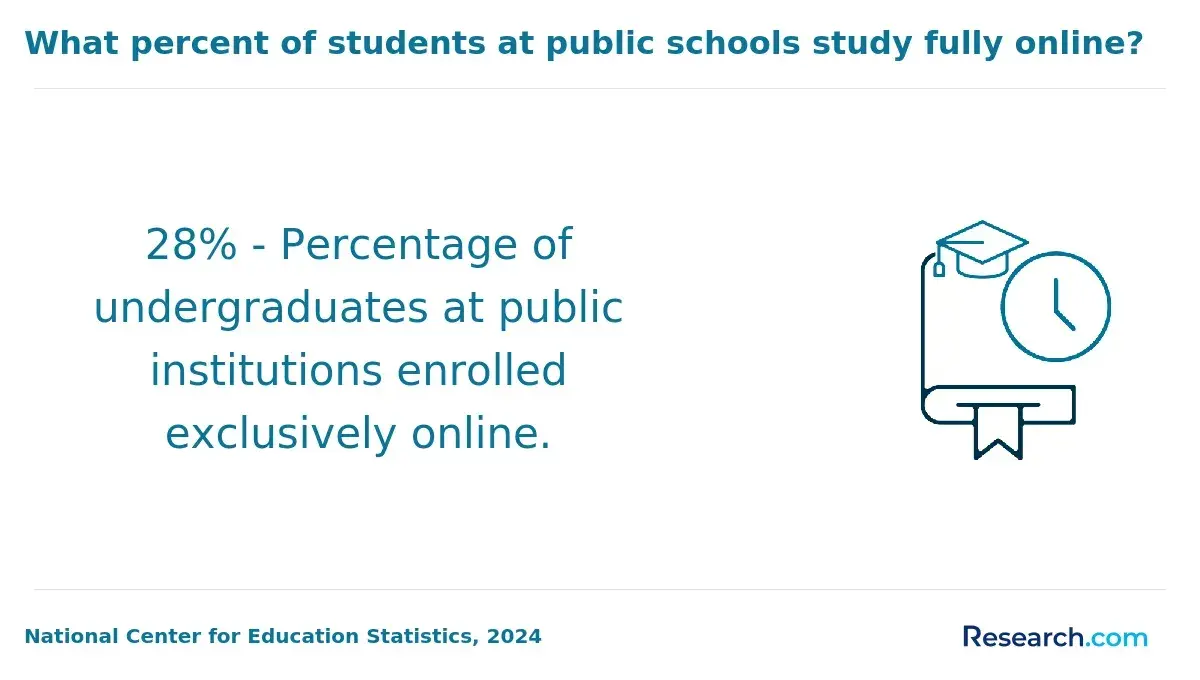
A helpful way to understand employer perception is to look at how mainstream distance education has become. NCES Digest 2024 data shows that more than half of U.S. postsecondary students took at least one distance education course in fall 2022. That does not measure every employer's opinion, but it does show that online learning is no longer unusual in higher education.
Employer perception is strongest when the credential is easy to verify and clearly connected to the job. Weak perception usually comes from red flags: unclear accreditation, aggressive marketing, limited faculty transparency, poor dissertation support, or a degree title that does not match the professional's goals.
To make an online doctorate more credible to corporate employers, focus on evidence you can show:
- Choose a regionally accredited institution and verify whether the program structure is accepted for your intended teaching, consulting, or employer tuition purpose.
- Use your dissertation or capstone to solve a recognizable workplace problem, not an abstract topic with no connection to your target role.
- Document measurable outputs such as policy models, audit frameworks, training programs, risk dashboards, conference presentations, or published articles.
- Keep building field experience during the program so the doctorate complements your resume instead of creating a long practical gap.
- Explain the online format as a professional advantage: it allowed you to continue leading, working, and applying research in real time.
Employers may view a doctorate differently by sector. A consulting firm may value the research credibility, a regulated company may value compliance expertise, and a security department may value leadership plus operational experience. The same degree can be powerful in one context and unnecessary in another, so align the credential with the employer's actual needs.
Salary outcomes for Criminal Justice Administration doctorate holders in the private sector vary widely because the degree can lead to different roles rather than one standardized occupation. The most realistic way to estimate income is to map your target job to BLS occupational data, then adjust for industry, location, experience, certifications, and management level.
BLS May 2024 data provides useful benchmarks for corporate roles commonly connected to advanced justice administration expertise. These figures are medians for occupational categories, not guaranteed salaries for doctorate holders.
| Role category | Relevant corporate path | BLS May 2024 median wage |
| Compliance officers | Ethics, compliance monitoring, regulatory investigations, internal controls, policy enforcement. | $78,420 |
| General and operations managers | Security operations leadership, risk program management, executive operations oversight. | $102,950 |
| Management analysts | Security consulting, risk process improvement, organizational assessment, policy evaluation. | $101,190 |
| Information security analysts | Cybercrime analysis, insider threat, digital risk, security intelligence, incident response coordination. | $124,910 |
| Detectives and criminal investigators | Investigative expertise that may transfer into corporate investigations or fraud leadership. | $91,100 |
The doctorate may improve salary potential when it helps you qualify for higher-responsibility roles, compete for executive-track promotions, build a consulting practice, or move into specialized risk leadership. It may not improve pay if your employer does not reward doctoral credentials, if the role is experience-driven, or if the program does not align with your industry.
ROI should include more than salary. Compare tuition, fees, financing, employer reimbursement, time to completion, lost consulting or overtime income, and whether the dissertation can create a career asset. If cost is a major concern, researching criminal justice degree price ranges can help you understand how tuition and fees differ before you evaluate doctoral affordability.
A strong ROI case usually includes three elements: a clear target role, a program that supports that role, and a realistic plan to convert doctoral work into workplace value. Without those elements, even a reputable doctorate may be an expensive credential with limited private sector payoff.
How do you narrow down online Criminal Justice Administration doctorate programs for corporate goals?
Narrowing down online Criminal Justice Administration doctorate programs starts with your corporate goal, not the school list. The right program for a fraud investigations manager may be different from the right program for a security consultant, compliance executive, or future adjunct instructor.
Use the following process to reduce the risk of choosing a program that looks impressive but does not serve your career path:
- Define your target role in one sentence, such as "I want to become a director of corporate investigations in a financial services company."
- List the skills that role requires, including leadership, analytics, compliance, cybercrime knowledge, policy writing, or crisis management.
- Compare each program's curriculum against those skills and remove programs that are mostly unrelated to your target work.
- Check accreditation, delivery format, residency requirements, faculty expertise, dissertation model, and student support before comparing tuition.
- Ask whether you can complete a dissertation or capstone on a corporate or private sector problem.
- Estimate ROI using total cost, time to completion, employer reimbursement, likely career use, and your current earnings trajectory.
- Speak with an advisor, faculty member, current student, or alumnus before applying if possible.
Common mistakes are avoidable if you know what to watch for. The table below summarizes red flags and better alternatives.
| Common mistake | Why it hurts corporate ROI | Better alternative |
| Choosing only by ranking or brand | A recognizable name may not offer the specialization, flexibility, or dissertation support you need. | Compare curriculum-to-role fit first, then reputation. |
| Assuming a doctorate guarantees promotion | Corporate advancement depends on performance, business need, leadership readiness, and timing. | Confirm how your employer evaluates advanced degrees for promotion or pay. |
| Ignoring dissertation format | A purely academic dissertation may be harder to convert into a workplace asset. | Look for applied research options tied to organizational problems. |
| Underestimating workload | Doctoral writing and research can affect job performance if scheduling is unrealistic. | Ask about weekly workload, milestones, and support for working adults. |
| Overlooking faculty fit | Faculty with little connection to your area may limit mentoring value. | Review faculty publications, practice experience, and dissertation supervision areas. |
| Comparing tuition only | The cheapest program is not always the best value if completion support is weak. | Compare total cost, completion structure, advising, and career relevance together. |
Before applying, ask program advisors direct questions. Can corporate case studies be used in assignments? Are dissertations allowed to focus on private sector risk? How often do doctoral students interact with faculty? What happens if a dissertation chair leaves? What career paths do recent graduates pursue? How does the school support online doctoral persistence?
The best final choice is the program you can finish, afford, and clearly connect to your next role. If a school cannot explain how its doctorate supports your corporate goals, keep looking.
Other Things You Should Know About Criminal Justice Administration
Many online doctorates take about three to five years, depending on transfer credits, enrollment pace, dissertation progress, and whether the program uses a cohort or self-paced structure. The dissertation stage is often the biggest variable.
Most doctoral programs require a master's degree, often in criminal justice, public administration, homeland security, criminology, law enforcement, or a related field. Some schools may consider applicants from other backgrounds if they have strong professional experience.
No. A Doctor of Criminal Justice is typically a professional or applied doctorate, while a PhD usually emphasizes research and scholarship. Employers may respect either credential, but the better choice depends on whether your goal is practice leadership, consulting, teaching, or academic research.
Yes, many online programs are designed for working adults, but full-time work plus doctoral study can be demanding. Before enrolling, ask about weekly workload, synchronous meetings, residency requirements, dissertation timelines, and whether part-time enrollment is allowed.
- Guide To Criminal Justice Degrees And Majors https://www.criminaljusticedegreeschools.com/degrees/
- Forensic Social Worker https://socialworklicensemap.com/social-work-careers/forensic-criminal-justice-social-worker/
- UK early careers - virtual internship | Herbert Smith Freehills Kramer https://careers.hsfkramer.com/global/en/uk/early-careers/virtual-internship
- How to Choose a Criminal Justice Specialization | AIU https://www.aiuniv.edu/degrees/criminal-justice/articles/how-to-choose-a-criminal-justice-specialization
- Internships, trainee programs https://careers.societegenerale.com/en/internships-trainee-programs
- Career opportunities for students at RÖDL | RÖDL Careers https://careers.roedl.com/students/
- Internships https://leopolisforfuture.org/en/internships/
- Doctor of Criminal Justice | Online with Limited Residency | Tiffin University https://go.tiffin.edu/doctorate-programs/doctor-of-criminal-justice/
- Internship Program https://www.wipo.int/en/web/working-at-wipo/internship-program
- Internship Program at the PCA Vienna Office https://pca-cpa.org/en/about/employment/internship-program/


