
2027 Best Online Criminal Justice Administration Doctorate Programs for Government and Public Sector Careers

Co-Founder and Chief Data Scientist
Choosing an online Criminal Justice Administration doctorate is a high-stakes decision for professionals aiming at agency leadership, policy, research, or public safety administration. The U. S. Bureau of Labor Statistics reported government employment above 23 million in 2024, making public sector advancement a large but competitive market.
This guide is for working law enforcement, corrections, courts, homeland security, and public administration professionals who need flexibility without sacrificing credibility. You will learn how to compare accreditation, cost, format, curriculum, dissertation or capstone expectations, and government career relevance before enrolling.
Key Things You Should Know
- The strongest online Criminal Justice Administration doctorate programs are institutionally accredited, built for working professionals, and clearly connected to public sector leadership, policy analysis, emergency management, corrections, policing, courts, or homeland security careers.
- Costs vary widely, so compare total credits, per-credit tuition, residency travel, dissertation extension fees, and employer tuition assistance; BLS May 2024 data also shows relevant public sector leadership roles such as emergency management directors had a median wage of $86,130, but pay depends heavily on agency, location, and rank.
- A professional doctorate such as a DCJ, DPA, or DBA-style public safety doctorate usually fits agency leadership and applied reform goals, while a PhD is usually better for research, university teaching, policy evaluation, or analyst roles in government and think tanks.
What Are the Best Online Criminal Justice Administration Doctorate Programs for Government and Public Sector Careers?
The best online Criminal Justice Administration doctorate program is not simply the one with the lowest tuition or the most familiar name. For government and public sector professionals, the best fit is usually the program that combines recognized accreditation, applied public safety coursework, experienced faculty, flexible online delivery, and a dissertation or capstone that can address a real agency problem.
Because schools change formats, tuition, and program names, use the following as a decision-focused shortlist rather than a fixed ranking. Always confirm current accreditation status, curriculum, residency rules, and total program cost directly with the university before applying.
| Program to Compare | Doctorate Type | Why It May Fit Public Sector Professionals | Best-Fit Career Direction |
| Pennsylvania Western University, California | Doctorate in Criminal Justice | Professional doctorate structure with a criminal justice focus and online delivery designed for experienced practitioners. | Agency leadership, corrections administration, policing leadership, public safety executive roles |
| Saint Leo University | Doctor of Criminal Justice | Applied criminal justice doctorate with leadership-oriented coursework and a format often considered by working public safety professionals. | Criminal justice administration, homeland security, organizational leadership, teaching-oriented practitioner roles |
| Liberty University | PhD in Criminal Justice | Research doctorate with online coursework and specialization options that can support policy, leadership, and homeland security interests. | Policy research, higher education, federal or state analyst roles, public safety leadership |
| National University | PhD in Criminal Justice | Online doctoral model with flexible scheduling and research pathways relevant to criminal justice systems and leadership problems. | Research, consulting, policy evaluation, organizational change roles |
| Walden University | PhD in Criminal Justice | Online doctoral study with practitioner-facing research themes that may appeal to professionals studying justice reform, public administration, and community outcomes. | Applied research, nonprofit justice leadership, policy analysis, public sector consulting |
| University of the Cumberlands | PhD in Leadership Studies with criminal justice-related focus options | Leadership-centered doctoral path that can work for students whose career goals are broader than a single criminal justice agency. | Cross-agency leadership, public administration, training, organizational development |
The key distinction is degree purpose. A DCJ or other professional doctorate is usually best when you want to solve operational problems in agencies, while a PhD is often stronger when you want to produce research, teach, or move into policy evaluation. If you are still building your academic foundation, an online criminal justice degree may be a more appropriate first step before doctoral study.
How Should You Compare Online Criminal Justice Administration Doctorate Programs for Your Public Sector Career Goals?
Start with your public sector goal, then work backward to the degree type, curriculum, faculty expertise, and format. A doctorate for a future police chief should not be evaluated the same way as a doctorate for a federal policy analyst, correctional system administrator, emergency management leader, or professor.
Use these criteria to compare programs in a practical order, from employer credibility to daily fit:
- Verify institutional accreditation through a recognized accreditor before reviewing tuition, rankings, or marketing claims.
- Match the doctorate type to your goal: choose a PhD for research-heavy careers and a professional doctorate for applied leadership, administration, and agency reform.
- Review the curriculum for courses in public administration, policy analysis, ethics, budgeting, leadership, data analysis, program evaluation, and criminal justice systems.
- Check whether faculty have public sector experience, peer-reviewed research, agency consulting work, or expertise in your target area.
- Ask how the dissertation or capstone can connect to a real public agency problem, such as recidivism reduction, officer wellness, emergency response, community supervision, or digital evidence management.
- Compare online format details, including synchronous class times, residency requirements, dissertation milestones, cohort structure, and part-time pacing.
- Calculate total cost, not just advertised tuition, by including fees, books, technology, residencies, travel, and continuation credits.
The following comparison can help you identify the type of doctorate that best matches your intended role rather than relying on a generic "best program" label.
| Career Goal | Best-Fit Doctorate Feature | What to Prioritize | Possible Trade-Off |
| Agency executive leadership | Professional doctorate or applied PhD | Leadership, budgeting, organizational change, ethics, public administration | May be less research-intensive than a traditional PhD |
| Policy analyst or program evaluator | Research-focused PhD | Statistics, methods, policy analysis, evaluation design | May require more independent research time |
| Higher education teaching | PhD or research-oriented doctorate | Dissertation rigor, publication support, research faculty | Online adjunct teaching markets can be competitive |
| Homeland security or emergency management leadership | Doctorate with homeland security, emergency management, or public safety specialization | Risk, intelligence, interagency coordination, crisis leadership | Specialized curriculum may be narrower than general administration |
| Corrections or court administration | Applied doctorate with systems and policy coursework | Reentry, sentencing policy, supervision, evidence-based practice | Fewer programs may offer deep specialization in courts or corrections |
Common mistakes include choosing a school only because it is fast, assuming all online doctorates have the same employer recognition, and ignoring dissertation expectations until after enrollment. A better approach is to ask for a full degree plan, sample dissertation titles, student support data, and examples of public sector alumni roles before committing.
Are Online Criminal Justice Administration Doctorate Programs Accredited and Respected by Government Employers?
Online Criminal Justice Administration doctorates can be respected by government employers when the university is properly accredited and the program aligns with the role. Most public agencies care less about whether coursework was online and more about whether the institution is legitimate, the degree is relevant, and the candidate can demonstrate leadership, analytical skill, and ethical judgment.
For U.S. doctoral programs, the most important quality marker is institutional accreditation from an accreditor recognized by the U.S. Department of Education or the Council for Higher Education Accreditation. Criminal justice doctorates generally do not have one universal programmatic accreditor comparable to fields such as nursing, counseling, or law, so students must pay close attention to institutional accreditation and program substance.
When evaluating employer respect, focus on signals that public agencies can understand and verify:
- Institutional accreditation that is current and clearly listed on the university's website and accreditor database.
- Curriculum that uses public administration, criminal justice policy, research methods, leadership, and ethics rather than vague management-only coursework.
- Faculty with criminal justice research, government service, law enforcement, courts, corrections, emergency management, or policy experience.
- Transparent dissertation, capstone, or applied research requirements that show doctoral-level rigor.
- Alumni outcomes, advisory boards, agency partnerships, or practicum-style projects connected to public service.
Government hiring rules vary by agency and position. Some jobs require only a bachelor's or master's degree plus experience, while others may value a doctorate for executive, research, training, or policy leadership roles. Before enrolling, compare job postings in your target agency and confirm whether a doctorate is preferred, required, or mainly a differentiator.
Admission requirements vary, but online Criminal Justice Administration doctorate programs usually target experienced professionals rather than recent undergraduates. Many programs expect applicants to show graduate-level readiness, professional maturity, and a clear research or leadership interest connected to criminal justice or public service.
Most applicants should be prepared to submit a combination of academic, professional, and writing materials. These requirements help schools judge whether a student can complete advanced coursework and sustain a multi-year dissertation or capstone process.
- Master's degree from an accredited institution, often in criminal justice, public administration, homeland security, law, criminology, public safety, sociology, psychology, or a related field.
- Graduate transcripts showing minimum GPA requirements that commonly fall around the 3.0 level, though standards vary by school.
- Professional resume showing leadership, public safety, legal, corrections, military, emergency management, policy, or administrative experience.
- Statement of purpose explaining career goals, research interests, and reasons for choosing the doctorate.
- Academic or professional writing sample that demonstrates analytical ability.
- Letters of recommendation from supervisors, professors, agency leaders, or professional colleagues.
- Interview, prerequisite coursework, or research concept paper, depending on the program.
Students without a criminal justice background may still qualify if they bring relevant experience in public administration, public safety, social services, military leadership, cybersecurity, compliance, or legal systems. Applicants who are much earlier in the education pipeline may want to compare foundational options first, including the best online associate degree programs in criminal justice, before planning a long-term path to graduate and doctoral study.
A doctorate may not be the right next step if you are seeking entry-level law enforcement employment, trying to meet basic academy or certification requirements, or unsure whether you want a research-intensive credential. In those cases, a bachelor's degree, master's degree, academy training, or specialized certificate may produce a clearer near-term return.
The best curriculum for government careers combines criminal justice expertise with public administration, data literacy, leadership, and policy evaluation. Public agencies increasingly need leaders who can manage budgets, interpret evidence, supervise diverse teams, communicate with communities, and use technology responsibly.
Look for coursework that prepares you to make decisions in complex public systems, not just study crime in theory. The following curriculum areas are especially relevant for public sector advancement.
- Criminal justice policy and administration: useful for roles involving agency strategy, reform implementation, legislative analysis, and system-wide coordination.
- Research methods and statistics: essential for evaluating programs, reading evidence, designing interventions, and defending policy recommendations.
- Leadership and organizational change: important for chiefs, wardens, directors, command staff, and cross-agency managers.
- Public budgeting and finance: valuable for leaders responsible for grants, staffing plans, procurement, and resource allocation.
- Ethics, accountability, and public trust: central to policing reform, corrections oversight, community relations, and transparent governance.
- Homeland security and emergency management: relevant for disaster response, intelligence coordination, infrastructure protection, and public safety planning.
- Cybercrime, digital evidence, and technology governance: increasingly important as agencies address AI, surveillance tools, body-camera systems, data privacy, and digital investigations.
The right specialization depends on where you want to apply doctoral-level expertise. This table summarizes common public sector directions and the academic focus that tends to support them.
| Public Sector Focus | Useful Specialization or Concentration | Skills Developed |
| Law enforcement administration | Public safety leadership, policing, organizational leadership | Command strategy, accountability systems, personnel leadership, community engagement |
| Corrections and reentry | Corrections administration, rehabilitation policy, evidence-based practice | Program evaluation, risk assessment literacy, reentry planning, institutional management |
| Courts and justice policy | Justice administration, policy analysis, criminology | Sentencing policy, court operations, access-to-justice analysis, interagency coordination |
| Emergency management | Homeland security, emergency management, risk management | Crisis leadership, planning, continuity of operations, intergovernmental coordination |
| Research and higher education | Criminology, criminal justice research, quantitative methods | Study design, publication, teaching, grant writing, statistical analysis |
Current trends make curriculum selection more important. AI-assisted policing tools, digital forensics, public records transparency, workforce shortages, officer wellness, and evidence-based public spending all require leaders who can evaluate data critically rather than adopt new tools uncritically.
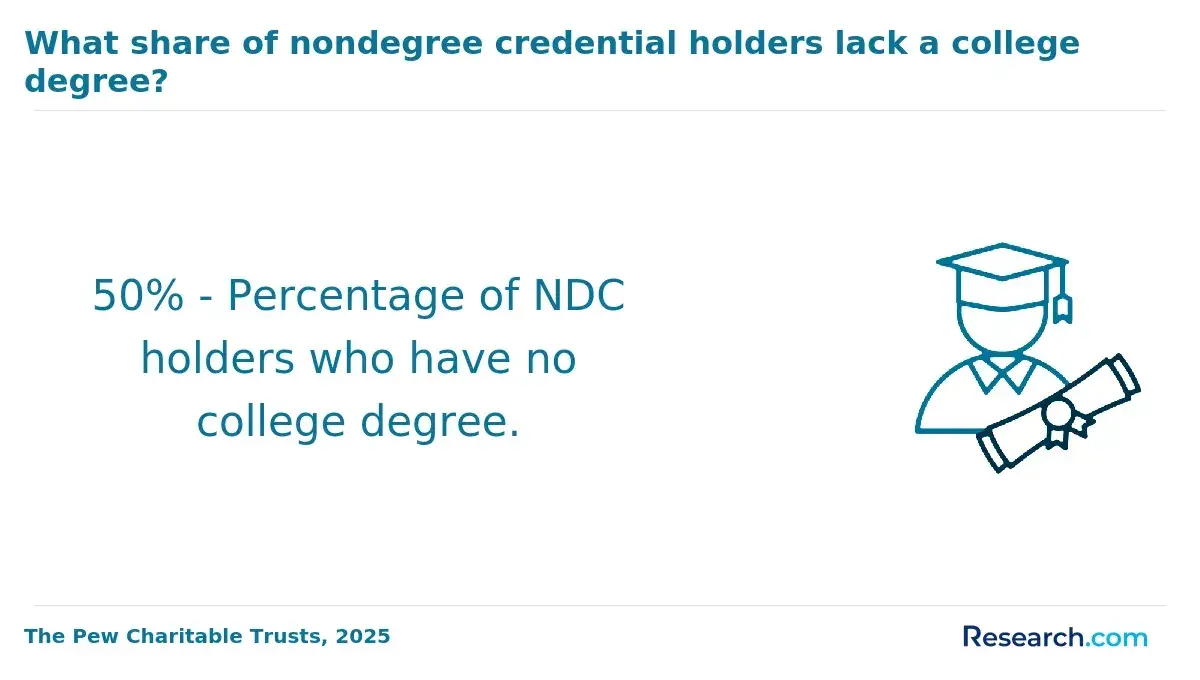
Online doctoral programs are usually designed for adults with demanding schedules, but "online" does not always mean self-paced or residency-free. Before enrolling, clarify how the program delivers courses, evaluates research progress, and supports students through the dissertation or capstone stage.
Most online Criminal Justice Administration doctorates use one of several learning formats. Understanding the difference can help you avoid choosing a format that conflicts with shift work, command responsibilities, court schedules, or family obligations.
| Program Feature | What It Means | Why It Matters for Working Public Sector Students |
| Asynchronous online courses | Students complete weekly work without a fixed class meeting time. | Often best for law enforcement, corrections, military, and emergency management professionals with irregular schedules. |
| Synchronous online courses | Students attend live virtual sessions at scheduled times. | Can improve interaction but may be harder for rotating shifts or travel-heavy roles. |
| Hybrid or residency model | Most coursework is online, with short in-person sessions. | May strengthen networking and dissertation support but adds travel cost and time away from work. |
| Dissertation | Original research supervised by a committee. | Best for students seeking research, policy analysis, teaching, or evidence-based leadership roles. |
| Applied capstone | Practice-oriented project addressing a real organizational or policy problem. | Best for practitioners who want to solve agency problems and produce usable recommendations. |
Ask admissions advisors specific operational questions before applying. These questions reveal whether the program is truly workable for a full-time public sector professional.
- Are courses asynchronous, synchronous, or mixed, and how often are live sessions required?
- Are residencies required, and what are the travel, lodging, and time-off expectations?
- How early do students begin dissertation or capstone planning?
- Can students use agency-related problems as research topics while protecting confidentiality and human-subjects requirements?
- What support is available for statistics, research design, academic writing, and institutional review board approval?
- What happens if a student needs to pause enrollment because of deployment, promotion, transfer, overtime, or public emergency duty?
A dissertation can be more valuable if your goals include research credibility, policy evaluation, or college teaching. A capstone may be a better fit if you want a practical deliverable that supports agency improvement, though some employers and academic hiring committees may still prefer dissertation-based doctorates.
Working professionals often complete an online Criminal Justice Administration doctorate in about three to seven years, depending on transfer credits, enrollment intensity, dissertation progress, and whether the program is designed as a cohort or individually paced model. The coursework phase may feel manageable, but the independent research phase is where many students slow down.
The timeline is shaped less by online delivery and more by research complexity, committee feedback, work responsibilities, and consistency. A student with a clear topic, supportive supervisor, and predictable weekly study time may progress faster than a student balancing overtime, shift changes, and an unclear dissertation idea.
| Study Pattern | Typical Fit | Main Advantage | Main Risk |
| Full-time doctoral study | Students with flexible work, employer support, or reduced outside obligations | Faster coursework and stronger academic momentum | Hard to sustain alongside demanding agency leadership roles |
| Part-time doctoral study | Most full-time public sector professionals | More realistic workload and less career disruption | Longer time to completion and possible continuation costs |
| Accelerated format | Students with strong writing skills, clear goals, and stable schedules | Can reduce time in coursework | May compress reading, research, and family/work balance |
| Cohort format | Students who want peer accountability | Built-in networking and structured milestones | Less flexibility if work demands change |
| Self-paced or individualized format | Students who need maximum scheduling control | Can adapt to professional obligations | Requires strong self-direction and time management |
To improve your odds of finishing while working full time, treat doctoral study as a standing professional commitment rather than a side project. Block weekly writing time, choose a research topic tied to your career experience, and confirm that family, supervisors, and mentors understand the time commitment before you enroll.
Online Criminal Justice Administration doctorate costs vary by institution type, credit load, transfer policy, residency rules, and dissertation timeline. The advertised tuition rate can be misleading because doctoral students may also pay technology fees, residency travel costs, continuation credits, graduation fees, and extra terms if the dissertation takes longer than expected.
When comparing cost, start with the full degree price rather than the per-credit rate alone. Typical cost components may include:
- Per-credit graduate tuition multiplied by the total required doctoral credits.
- University fees for technology, online learning, student services, library access, or graduation.
- Residency travel, lodging, meals, and unpaid time away from work if in-person sessions are required.
- Books, statistical software, transcription, research tools, editing, or data collection expenses.
- Dissertation or capstone continuation credits if research extends beyond the standard timeline.
Recent cost pressure makes careful planning important. The College Board's 2024 higher education pricing data shows graduate tuition remains a major expense across sectors, and doctoral students may borrow at higher federal loan limits than undergraduates, which can increase long-term repayment exposure. For a deeper look at tuition components, compare the criminal justice degree price factors that commonly affect online students.
Common funding sources include employer tuition assistance, federal student aid for eligible institutions, veterans education benefits, military tuition support, agency professional development funds, scholarships, graduate assistantships, and payment plans. Public sector employees should also review whether their employer participates in federal or state loan forgiveness programs, but they should not assume future forgiveness will apply without checking current eligibility rules.
Before enrolling, ask the school for a written cost estimate that includes tuition, fees, residency expenses, and dissertation continuation policies. A lower-priced program may be the better investment if it is accredited, relevant, and finishable; an expensive program may still make sense if it provides stronger faculty fit, public sector networks, and research support that reduce the risk of stopping before completion.
An online Criminal Justice Administration doctorate can support careers in public safety leadership, policy, research, higher education, emergency management, corrections, courts, and public administration. It is most useful for professionals who already have experience and want to move from operational roles into strategic, analytical, executive, or teaching-oriented work.
Salary outcomes depend on agency level, rank, union rules, location, credentials, and years of experience. BLS May 2024 data reported a median wage of $86,130 for emergency management directors, a useful benchmark because it reflects a public-sector-adjacent leadership role where planning, interagency coordination, and crisis governance matter; however, a doctorate is not universally required for this occupation.
| Career Path | Typical Responsibilities | How a Doctorate May Help | Important Limitation |
| Police, sheriff's office, or public safety executive | Strategic planning, personnel leadership, accountability systems, community partnerships | Builds evidence-based leadership, policy analysis, and organizational change skills | Promotion often depends on rank, civil service rules, and experience more than degree level alone |
| Corrections administrator | Facility operations, staff management, reentry programs, compliance, safety policy | Supports program evaluation, leadership, ethics, and system reform work | State requirements and agency budgets can shape advancement opportunities |
| Emergency management or homeland security leader | Risk planning, disaster response coordination, grant management, continuity planning | Strengthens interagency strategy, research use, and crisis leadership | Specialized certifications and field experience may be equally important |
| Criminal justice policy analyst | Research, legislative analysis, program evaluation, data interpretation | Provides advanced methods training and credibility for evidence-based recommendations | Quantitative skills and writing samples may matter more than the credential alone |
| College instructor or professor | Teaching, research, curriculum development, student mentoring | Doctoral credential is often expected for full-time higher education roles | Tenure-track hiring is competitive and may favor strong research records |
| Inspector general, compliance, or oversight professional | Audits, investigations, ethics reviews, policy compliance, public accountability | Helps with systems thinking, research, and governance analysis | Legal, audit, or investigative credentials may also be required |
Some public sector professionals also move into adjacent safety, compliance, and risk roles. For example, students interested in workplace safety regulation, emergency preparedness, or public agency risk management may also compare the best online environmental health and safety programs if their goals extend beyond criminal justice agencies.
A doctorate is usually worth considering if you want to lead systems, evaluate policy, teach, publish, consult, or compete for senior administrative roles. It may be less useful if your near-term goal is academy entry, patrol promotion, a pay step that only requires a master's degree, or a specialized technical credential.
Which Online Criminal Justice Administration Doctorate Programs Offer the Best Public Sector Career Support and Professional Networks?
The programs with the strongest public sector career support are not always the ones with the largest enrollment or the most aggressive marketing. Look for schools that understand government careers, offer doctoral mentoring, and connect students with faculty, alumni, agencies, and professional associations in criminal justice and public administration.
Career support at the doctoral level should be more specialized than basic resume help. For government and public sector professionals, the most valuable services usually include:
- Faculty mentoring for dissertation or capstone topics tied to agency problems, policy reform, public safety technology, or justice system outcomes.
- Alumni networks that include law enforcement executives, corrections leaders, emergency managers, policy analysts, faculty, military leaders, and public administrators.
- Support for conference presentations, publications, teaching portfolios, grant writing, and research dissemination.
- Career coaching that understands civil service hiring, federal resumes, public sector leadership competencies, and promotion systems.
- Partnerships, advisory boards, guest lectures, or applied projects involving public agencies and nonprofit justice organizations.
Ask each program for concrete evidence rather than general promises. Strong questions include whether doctoral students publish with faculty, whether graduates hold senior public sector roles, whether capstone projects have been used by agencies, and whether the school offers support for federal resume writing or academic job searches.
Red flags include unclear accreditation language, no public information about faculty qualifications, vague dissertation support, no published curriculum sequence, pressure to enroll quickly, and an inability to explain total cost. A credible program should welcome detailed questions because doctoral enrollment is a major professional, financial, and personal commitment.
Other Things You Should Know About Criminal Justice Administration
Yes, but program format matters. Asynchronous courses are usually easier for rotating shifts, while live classes and residencies require more schedule control. Ask about attendance rules before applying.
It depends on the role. A doctorate is stronger for executive leadership, teaching, research, and policy evaluation, while a second master's may be more practical for specialized skills such as cybersecurity, public administration, social work, or emergency management.
Not always. Many programs consider applicants from corrections, courts, military service, public administration, legal services, homeland security, compliance, nonprofit justice work, and related fields. Experience expectations vary by school.
Possibly. If your research uses agency data, employees, clients, or internal records, you may need university review board approval and agency permission. Plan early so confidentiality and access issues do not delay your timeline.
- Online MPA Programs in Criminal Justice & Administration https://www.onlinempaprograms.com/specializations/criminal-justice
- What does a Criminal Justice Faculty Member do? Career Overview, Roles, Jobs | Together SC https://jobs.togethersc.org/career/criminal-justice-faculty-member
- Earn An Online Criminal Justice Degree | OEDb.org https://www.oedb.org/rankings/online-criminal-justice-programs/
- Guide To Criminal Justice Degrees And Majors https://www.criminaljusticedegreeschools.com/degrees/
- Top Online Criminal Justice Degrees https://www.criminaljusticeprograms.com/online-criminal-justice-degrees/
- Doctor of Criminal Justice | Online with Limited Residency | Tiffin University https://go.tiffin.edu/doctorate-programs/doctor-of-criminal-justice/
- Online Doctorate in Criminal Justice https://www.criminaljustice.com/online-degrees/doctorate-in-criminal-justice/


