2027 Best Online Communication Disorders Degree Master's Programs for Working Professionals

Co-Founder and Chief Data Scientist

Reviewed by Rhea Paul, PhD
SLP Education & Research Expert
Choosing an online master’s in communication disorders is not just a convenience decision. For working professionals, the right program must fit around employment while still meeting the academic, clinical, accreditation, and licensure expectations tied to speech-language pathology and related communication sciences careers. The Bureau of Labor Statistics projects a 17% growth in speech-language pathologist roles through 2035, which makes program quality, clinical preparation, and credential recognition especially important for adults planning a career move or advancement.
This guide explains how to evaluate online communication disorders master’s programs with a practical lens: accreditation, admissions standards, prerequisites, curriculum, clinical requirements, scheduling formats, cost, financial aid, technology needs, and likely career outcomes. It is designed for applicants who need flexibility but cannot afford to choose a program that limits licensure eligibility, employer acceptance, or long-term career options.
Key Things to Know About the Best Online Communication Disorders Degree Master's Programs for Working Professionals
- Most programs require a bachelor's degree in communication disorders or related fields, along with minimum GPA and standardized test scores, with streamlined online application processes designed for working adults.
- The curriculum balances synchronous and asynchronous coursework, allowing flexibility around work schedules while meeting accreditation standards essential for credentialing and licensing.
- Comparing programs involves evaluating total cost, financial aid availability, faculty expertise, student support, and graduate employment rates to ensure alignment with career advancement goals.
What Are the Best Online Communication Disorders Master's Programs Available for Working Professionals Today?
The best online communication disorders master’s programs for working professionals combine three essentials: recognized accreditation, a realistic path to supervised clinical experience, and course delivery that can fit around employment. With employment in communication disorders projected to grow by 17% from 2025 to 2035, applicants should look beyond convenience and confirm that a program supports licensure preparation, faculty access, and clinical placement planning.
The following programs are commonly noted for flexible delivery models, student support, and graduate-level preparation for communication disorders careers:
- University of Wisconsin-Madison: Uses a hybrid model that blends online coursework with on-site clinical practica. The program is ASHA-accredited, emphasizes evidence-based practice, and offers structured student support for learners managing academic and clinical expectations.
- East Carolina University: Provides a fully online curriculum with synchronous classes and flexible clinical placements. The program is nationally accredited, includes attention to emerging communication technologies, and reports favorable graduate employment outcomes.
- University of Cincinnati: Offers primarily online coursework with weekend cohort sessions designed for working clinicians. Students benefit from experienced faculty and an alumni network that can help with professional connections and career development.
- Montclair State University: Delivers fully online coursework with attention to multicultural communication disorders and interprofessional collaboration. Its customizable practicum site approach can be useful for students who must complete clinical training near where they live or work.
- Northeastern University: Combines asynchronous online modules with live webinars. The program also offers career services and financial aid support geared toward working adults, with instruction from nationally recognized faculty.
When comparing these or similar programs, ask admissions staff direct questions about accreditation status, clinical placement responsibilities, live attendance requirements, graduation timelines, and licensure preparation in your state. Cost should also be reviewed carefully; applicants comparing tuition and program formats may find online speech language pathology programs useful for additional affordability context.
What Accreditation Standards Should an Online Communication Disorders Master's Program Meet?
An online communication disorders master’s program should have both institutional accreditation and, when relevant to speech-language pathology preparation, programmatic accreditation. Accreditation affects whether employers recognize the degree, whether students can access federal financial aid, and whether graduates may meet state licensure or certification requirements. With the Bureau of Labor Statistics projecting a 17% job growth in speech-language pathology through 2035, choosing an accredited program is one of the most important risk-control steps for working professionals.
Key accreditation checks
- Institutional accreditation: The college or university should hold recognized institutional accreditation from an agency such as the Southern Association of Colleges and Schools Commission on Colleges (SACSCOC) or the Higher Learning Commission (HLC). This confirms that the institution meets broad academic and operational standards.
- Programmatic accreditation: Communication disorders programs tied to speech-language pathology preparation should be reviewed for accreditation by the Council on Academic Accreditation in Audiology and Speech-Language Pathology (CAA). This is especially important for students seeking clinical practice roles.
- Licensure relevance: Many states require graduation from CAA-accredited online communication disorders graduate degrees for speech-language pathology licensure. Requirements vary by state, so applicants should verify rules where they plan to practice before enrolling.
- Employer acceptance: Employers often prefer or require graduates from accredited programs because accreditation signals that the curriculum, faculty qualifications, supervised clinical education, and assessment practices meet recognized standards.
- Federal aid eligibility: Accreditation is required for access to federal loans and grants. Working professionals who plan to use federal aid should confirm eligibility before paying application or enrollment deposits.
- Verification sources: Applicants should check the U.S. Department of Education database and the Council for Higher Education Accreditation (CHEA) to confirm accreditation status directly rather than relying only on marketing pages.
- Warning signs: Be cautious of programs with no recognized accreditation, vague licensure language, minimal faculty information, unusually low tuition paired with “fast certification” claims, or limited evidence of supervised clinical preparation.
Program flexibility matters, but it should never replace accreditation. Applicants comparing workload and accessibility across graduate fields may also review easiest masters degrees, while keeping in mind that communication disorders programs include clinical and licensure-related requirements that can make them more structured than many general graduate programs.
What Is the Minimum GPA Requirement for an Online Communication Disorders Master's Program?
Most online communication disorders master’s programs expect a minimum undergraduate GPA near 3.0 on a 4.0 scale. Some programs are more selective and may prefer applicants with GPAs of 3.3 or higher, while others consider conditional admission for candidates slightly below 3.0 if the rest of the application shows readiness for graduate study. Acceptance rates generally range from 30% to 40%, so applicants should treat GPA as important but not the only admissions factor.
How GPA is usually evaluated
- Minimum threshold: A GPA near 3.0 on a 4.0 scale is common because graduate coursework in communication disorders is academically demanding and tied to clinical preparation.
- Conditional admission: Some institutions may admit applicants below the preferred GPA if they complete additional coursework, earn specific grades in early graduate classes, or meet other performance requirements.
- Holistic review: Admissions committees commonly review professional experience, recommendation letters, personal statements, prerequisite completion, and evidence of commitment to the field.
- Recent academic performance: Applicants with a weaker overall GPA may be helped by strong grades in recent post-baccalaureate or prerequisite courses related to speech, language, hearing, development, or statistics.
- Program fit: More competitive programs typically expect stronger academic records, while more accessible programs may place greater emphasis on professional maturity, prerequisite readiness, and career alignment.
What to do if your GPA is below the target
- Complete missing or weak prerequisite courses before applying.
- Use the personal statement to explain academic growth without making excuses.
- Choose recommenders who can speak to your readiness for graduate-level clinical and academic work.
- Highlight relevant employment, volunteer experience, or exposure to communication disorders settings.
- Ask admissions staff whether conditional admission or a leveling pathway is available.
A graduate from an online communication disorders master’s program described the admissions process as challenging but manageable because the program considered experience and motivation alongside GPA. “The flexibility allowed me to balance job obligations and study, and the admissions team’s willingness to see beyond just numbers made all the difference,” they recalled. For working professionals, the lesson is clear: apply strategically, document readiness, and do not assume one imperfect metric automatically ends your chances.
Online communication disorders master’s programs usually expect applicants to have a bachelor’s degree and foundational coursework in communication sciences or closely related areas. Applicants with degrees outside the field can still qualify for some programs, but they may need bridge, leveling, or post-baccalaureate coursework before beginning advanced graduate classes.
Common prerequisite expectations
- Undergraduate degree: Many programs prefer a bachelor’s degree in communication disorders, speech-language pathology, or a closely related field such as linguistics or psychology. Applicants from unrelated majors should expect a more detailed prerequisite review.
- Foundational coursework: Programs often look for courses in anatomy and physiology of speech and hearing mechanisms, phonetics, language development, and statistics. These subjects help prepare students for graduate diagnostics, intervention planning, research interpretation, and clinical work.
- Bridge or leveling courses: Students without a communication disorders background may need to complete leveling courses before or alongside graduate study. These courses can affect total cost and time to graduation, so applicants should ask whether they are included in the published program length.
- Professional experience: Relevant work in education, healthcare, rehabilitation, early childhood services, or related support roles can strengthen an application. However, experience does not always replace academic prerequisites, especially when licensure preparation is involved.
- Documentation: Applicants should be ready to submit transcripts, course descriptions, syllabi when requested, and evidence of any clinical or professional experience relevant to communication disorders.
Prerequisite audit checklist
- Confirm whether your bachelor’s degree meets the program’s stated admissions requirement.
- Compare your transcript against required courses in speech, language, hearing, development, and statistics.
- Ask whether missing prerequisites must be completed before admission or can be completed after admission.
- Calculate the extra time and tuition associated with leveling coursework.
- Verify whether prerequisite completion affects clinical placement eligibility or program sequencing.
Careful prerequisite planning prevents avoidable delays. Applicants weighing the return on different undergraduate or career pathways may also compare broader education options through resources such as highest paying degrees, but communication disorders candidates should prioritize licensure alignment and prerequisite readiness over general salary rankings alone.
The curriculum of an online communication disorders master’s program usually combines advanced academic coursework, supervised clinical training, and applied projects or assessments. For working professionals, the main question is not only what courses are required, but how those courses are sequenced around practicum expectations, live sessions, exams, and clinical availability.
Typical curriculum components
- Core courses: Students commonly study speech-language pathology, audiology, neuroanatomy, language development, assessment, intervention planning, and evidence-based practice. These courses build the clinical reasoning needed for work with diverse populations.
- Elective tracks: Some programs allow students to focus on areas such as pediatric speech disorders, adult neurogenic communication disorders, multicultural communication, or specialized intervention approaches.
- Practicum and internships: Supervised clinical experience is mandatory for many career paths and is central to licensure and certification preparation. Online students should ask how sites are approved, who arranges placements, and whether placements can be completed near home.
- Flexible course formats: Programs may use 8-week modules, asynchronous lessons, live evening sessions, weekend intensives, or hybrid meetings. Each model has trade-offs: asynchronous work offers scheduling freedom, while live sessions provide direct interaction and structure.
- Curriculum models: Traditional credit-hour programs follow a set course sequence and semester schedule. Competency-based education (CBE) allows students to progress by demonstrating mastery, which may suit experienced, self-directed learners. Credit-hour formats may work better for students who want predictable pacing and regular deadlines.
- Capstone or thesis: Some programs end with a capstone, thesis, or integrative clinical project. These assignments help students connect research, assessment, intervention, and professional decision-making.
- Advising and planning: Prospective students should request sample syllabi and a term-by-term plan before enrolling. This is especially important for applicants who cannot reduce work hours during practicum semesters.
Questions to ask before enrolling
- Are lectures asynchronous, synchronous, or mixed?
- How many live sessions are required each week?
- Can clinical placements be completed in my local area?
- Are weekend intensives or campus visits required?
- How early does practicum planning begin?
- What happens if a student cannot secure a placement on the original timeline?
One graduate said the greatest advantage of the online format was adaptability: “I appreciated being able to complete courses asynchronously, which meant I could study after work or on weekends without missing important clinical hours.” They also noted that 8-week terms helped maintain momentum, while advisor communication made elective planning easier. The main challenge was balancing practicum with employment, which is why applicants should evaluate clinical scheduling as closely as they evaluate online coursework.
Online communication disorders master’s programs often take 12 to 18 months for full-time students and 2-3 years for part-time students. Accelerated tracks may allow completion in under 12 months, though these are less common because communication disorders programs typically include supervised practicum requirements that cannot always be compressed easily.
For working professionals, the best timeline is the one that is realistic enough to finish. A shorter program may reduce time away from higher-level roles, but it can create pressure during clinical placements. A part-time plan may be easier to manage with employment, but it can extend tuition payments, fees, and opportunity costs.
Factors that affect completion time
- Enrollment status: Full-time students generally finish faster because they take heavier course loads. Part-time students have more room for work and family responsibilities but need a longer overall plan.
- Accelerated scheduling: Some programs condense coursework for motivated students. Applicants should confirm whether the accelerated option also includes clinical requirements or only the classroom portion.
- Credit transfer: Eligible graduate coursework may shorten the program if the institution accepts transfer credits. Policies vary, so students should request a formal transfer evaluation.
- Prior learning and dual enrollment: Prior learning assessments and dual-enrollment opportunities may reduce time for some working professionals with relevant academic backgrounds.
- Clinical placement timing: Delays in practicum approval, site availability, supervisor matching, or documentation can extend graduation timelines.
- Work and financial pressures: Job responsibilities, unexpected expenses, changing schedules, and evolving program requirements can slow progress.
Planning tips for working adults
- Map the full program sequence before the first term begins.
- Identify practicum-heavy semesters early and discuss workload options with your employer.
- Ask whether taking fewer courses affects financial aid eligibility.
- Build a backup plan for clinical placement delays.
- Schedule advising check-ins before registration deadlines, not after problems arise.
The cost of an online communication disorders master’s program depends on tuition per credit, total credit requirements, institutional fees, clinical costs, and indirect expenses. Programs typically charge between $500 and $1,200 per credit hour, and most require 36 to 60 credit hours. That creates a tuition range from roughly $18,000 to $72,000 before adding fees and other costs.
Major cost categories
- Tuition: Per-credit pricing is the largest expense. Applicants should multiply the exact tuition rate by the required number of credits and confirm whether leveling courses add cost.
- Flat tuition rates: Many online Communication Disorders master’s programs use a flat tuition rate regardless of in-state or out-of-state residency. This can simplify budgeting for students who live outside the institution’s state.
- Technology and institutional fees: Technology fees commonly range from $100 to $500 per semester. Other charges may include residency fees, clinical tracking fees, graduation fees, or thesis submission fees.
- Books and materials: Textbooks may exceed $1,000 throughout the program. Students may also need software, assessment materials, or subscriptions required for coursework.
- Professional expenses: Budget for professional organization memberships, such as the American Speech-Language-Hearing Association, along with examination or certification-related fees when applicable.
- Clinical placement costs: Some students may face background checks, immunization documentation, travel, parking, onboarding fees, or schedule changes that reduce work hours during practicum.
- Research tools: Enrollment in Communication Disorders programs has grown by about 11%, so applicants should compare costs carefully using the U.S. Department of Education’s College Scorecard and school-specific Net Price Calculators.
Cost comparison checklist
- What is the total number of credits required?
- Are prerequisite or leveling courses included in the published estimate?
- Is tuition the same for online out-of-state students?
- Which fees are charged every semester?
- Are campus visits, residencies, or travel required?
- Can the program provide a full cost-of-attendance estimate before enrollment?
Applicants comparing graduate costs across fields may also find it useful to review how much does it cost to get a masters in psychology, since tuition, fees, books, technology, and professional credentialing expenses can follow similar budgeting patterns.
Working professionals can often combine several funding sources for an online master’s in communication disorders, including federal loans, scholarships, employer tuition benefits, and, in some cases, graduate assistantships or fellowships. The best approach is to build a funding plan before enrollment rather than waiting until the first bill arrives.
Common funding options
- Federal student loans: Graduate students may qualify for Direct Unsubsidized Loans and Graduate PLUS Loans regardless of financial need. Students must file the Free Application for Federal Student Aid (FAFSA) annually to determine eligibility.
- Scholarships and fellowships: Awards for communication disorders students may be available through scholarship platforms such as Fastweb and Scholarships.com, as well as professional organizations such as the American Speech-Language-Hearing Association. Awards generally range from $500 to $5,000, and deadlines often fall in late winter or early spring.
- Employer tuition reimbursement: Working professionals should ask whether their employer offers tuition assistance for coursework related to current duties or career advancement. Approval may require documentation of accreditation, degree relevance, grades, and payment deadlines.
- Graduate assistantships and fellowships: These are less common in online programs but may be available at some institutions. They can reduce costs while offering teaching, research, administrative, or clinical exposure.
How to make employer benefits work
- Request the reimbursement policy in writing before enrolling.
- Confirm annual benefit limits and grade requirements.
- Ask whether fees, books, and prerequisite courses are covered.
- Match course registration dates to your employer’s reimbursement cycle.
- Prepare a short explanation of how the degree supports your current role or future responsibilities.
Financial aid can reduce immediate out-of-pocket costs, but loans must be repaid. Compare total borrowing against expected career outcomes, licensure plans, and the amount of time you can realistically continue working while enrolled.
Online communication disorders master’s programs support working professionals by offering flexible course delivery, predictable cohort structures, recorded materials, evening or weekend options, and adult-learner advising. The strongest programs are clear about which parts are flexible and which are not. Coursework may be online and adaptable, but clinical placements, live skills practice, exams, and residencies may still require fixed times.
Common delivery formats
- Asynchronous courses: Students complete lectures, readings, discussions, and assignments on their own schedule within set deadlines. This format is helpful for professionals with variable work hours.
- Synchronous courses: Students attend live online classes at scheduled times. This provides real-time interaction but may be harder for those with evening shifts, caregiving responsibilities, or irregular schedules.
- Hybrid formats: Programs combine online coursework with in-person labs, intensives, or clinical activities. Hybrid designs can strengthen hands-on preparation but may require travel or time away from work.
- Cohort models: Students progress through courses with the same group of peers. Cohorts can create accountability and community, though they may offer less scheduling freedom than fully self-paced models.
- Evening and weekend offerings: Courses outside standard business hours help students maintain employment while earning credits.
- Recorded lectures: Recordings allow students to revisit complex material, review clinical examples, and catch up when work obligations interfere with study time.
- Mobile-optimized platforms: Mobile access can help students review materials during short breaks, commutes, or travel, though major assignments and clinical documentation usually require a full computer setup.
- Adult-learner support: Academic coaches, peer mentors, and advisors can help students plan course loads, manage time, and prepare for clinical placement requirements.
Before choosing a format, ask these questions
- How many live sessions are required each week?
- Are attendance policies flexible for work conflicts?
- Are exams proctored, and when are they scheduled?
- Can lectures be downloaded or viewed later?
- Does the program offer part-time sequencing?
- Can prospective students test the learning management system before enrollment?
Flexibility should be evaluated in practical terms. A program that is “online” may still require scheduled participation, clinical hours during business days, or short campus visits. Read the program handbook and ask for a sample weekly schedule before committing.
Students in an online communication disorders master’s program need reliable technology for live classes, recorded lectures, assignments, clinical simulations, advising, and secure testing. A weak setup can create avoidable stress, especially for working professionals who study during limited evening or weekend hours.
Typical technology requirements
- Computer hardware: Students typically need a computer or laptop with at least 8GB of RAM, a dual-core processor, and an updated operating system such as Windows 10 or later, or macOS 10.14 or later.
- Internet connection: A stable connection with minimum speeds around 10 Mbps download and 5 Mbps upload is recommended for live lectures, video conferencing, and interactive content.
- Learning platforms: Common systems include Zoom, Blackboard, and Canvas. Students should be comfortable uploading assignments, joining discussions, taking quizzes, viewing recordings, and contacting instructors through these platforms.
- Specialized software: Some programs require speech analysis software, clinical documentation tools, simulation environments, or proctoring systems. Institutions may provide access, but students may occasionally need to purchase licenses.
- Audio and video equipment: A webcam, headset, microphone, and quiet study space are important for live participation, presentations, advising, and simulated clinical activities.
- Accessibility and ADA compliance: Programs should support screen readers, captioning, assistive technologies, and approved accommodations for students with disabilities.
- Technical support: Working adults should confirm whether help desk support is available during evenings or weekends, not only during standard business hours.
Technology readiness checklist
- Test your internet speed where you plan to study.
- Confirm that your computer meets program specifications.
- Install required browsers, video tools, and security updates before classes begin.
- Check whether employer-owned devices can be used for schoolwork or are restricted.
- Identify a backup location with reliable internet in case of outages.
- Ask whether specialized software costs are included in tuition and fees.
Students comparing online programs in other applied fields, including options such as a 2 year construction management degree, should use the same practical test: the format may be online, but success still depends on dependable technology, clear support, and realistic scheduling.
An online communication disorders master’s degree can prepare working professionals for advancement into speech-language pathology and related communication disorders roles, depending on licensure requirements, clinical preparation, and the student’s prior background. Salary and career outcomes vary by role, state, employer, setting, and experience, so applicants should use program-level data rather than relying only on national averages.
Career and salary considerations
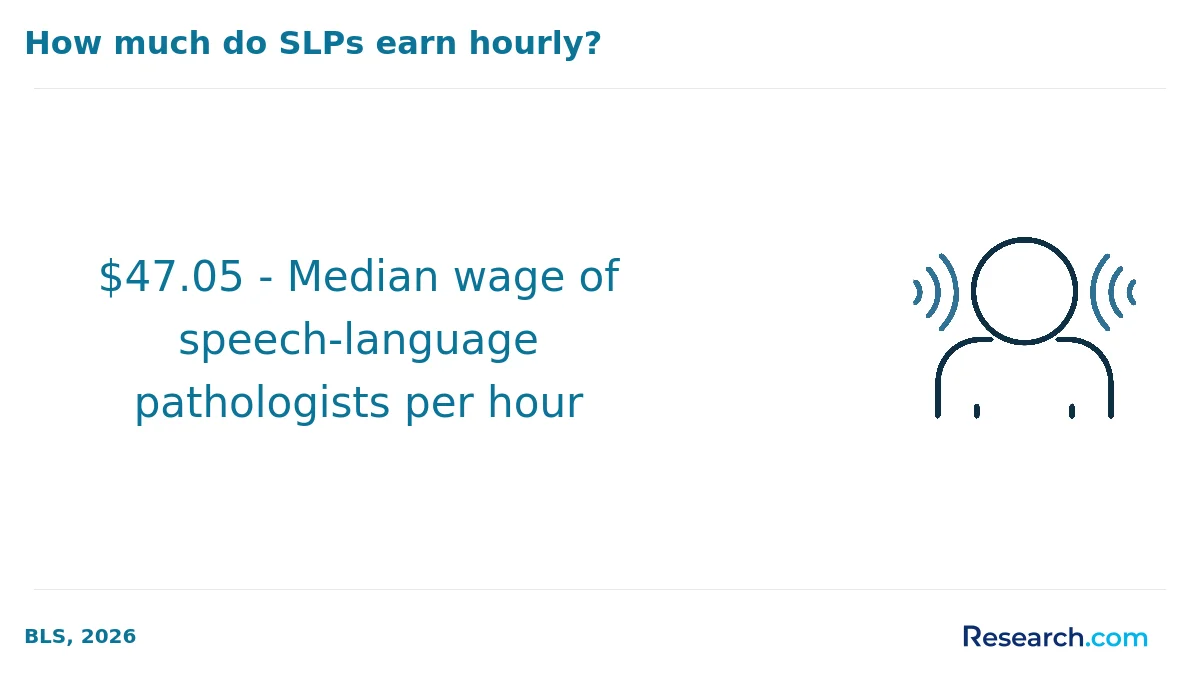
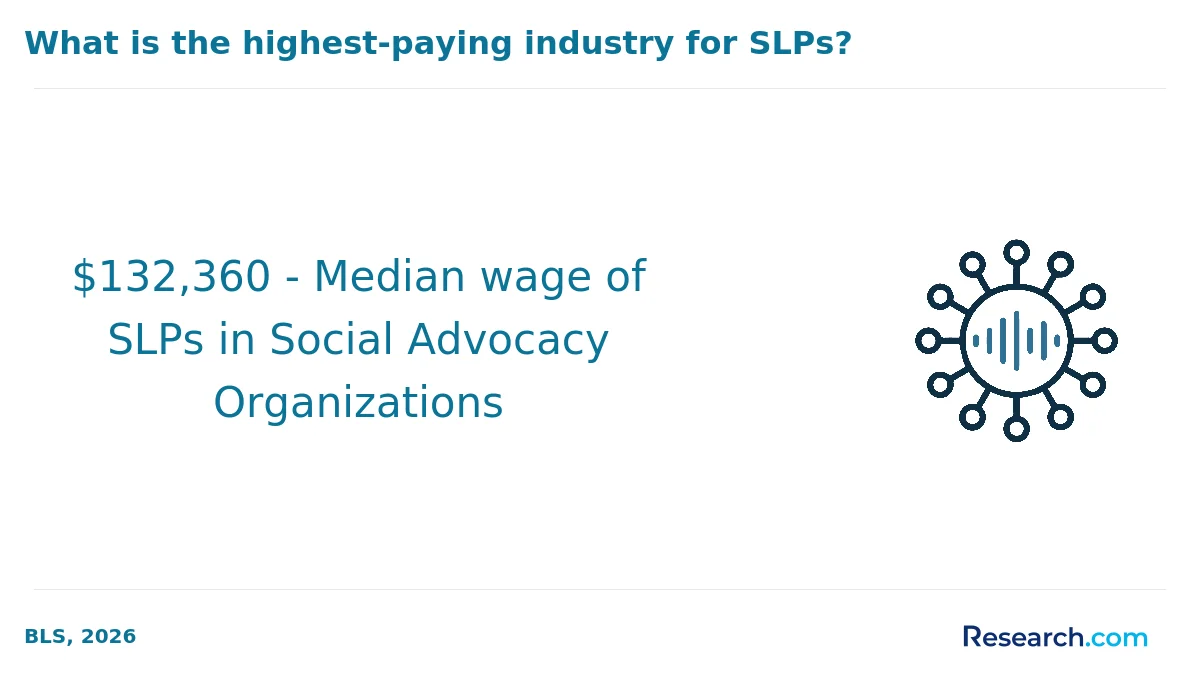
- Salary prospects: Data from the U.S. Bureau of Labor Statistics shows speech-language pathologists, a common career destination for graduates, earn a median annual wage near $80,000, with top-tier professionals making over $120,000. A master’s degree can support movement from assistant or support roles into higher-responsibility clinical positions when licensure requirements are met.
- Licensure-linked advancement: For many students, the degree is valuable because it can help meet educational requirements for licensed clinician roles. Applicants should verify state-specific licensure rules before enrolling.
- Upward mobility: Professionals already working in education, healthcare, rehabilitation, or related services may use the credential to pursue expanded responsibilities, clinical roles, or leadership pathways.
- Career pivoting: Applicants entering communication disorders from another field can use the master’s program to build the academic and clinical foundation needed for new job titles, provided they complete all required prerequisites and supervised experiences.
- Employment rates: Institutional data frequently highlight graduate employment exceeding 85% within the first year after program completion, which reflects strong demand for qualified degree holders.
- Outcome transparency: Prospective students should ask each program for median starting salaries, employment percentages, licensure exam outcomes when available, common employer types, and geographic placement patterns.
Questions to ask about outcomes
- What percentage of graduates are employed within the first year?
- Which employers or settings commonly hire graduates?
- What licensure or certification outcomes does the program track?
- Does the program provide career advising for online students?
- Are alumni available to discuss workload, clinical placement, and job search experiences?
The value of the degree depends on more than the diploma format. Employers and licensing bodies generally focus on accreditation, clinical preparation, competencies, and credentials. Online delivery can be a strong option when the program meets those standards and provides the support needed to complete clinical requirements.
What Graduates Say About Getting Accepted in Online Communication Disorders Degree Master's Programs for Working Professionals
- : "Applying for admission to an online communication disorders master’s program designed for working professionals felt overwhelming at first. What helped most was finding a flexible program with a curriculum that matched my career goals. I also paid close attention to accreditation because I wanted confidence that the degree would be respected in the field. — Iker"
- : "Reviewing accredited providers was one of the most important parts of my decision. Official academic catalogs and federal education resources made the requirements, timelines, and outcomes easier to compare. That research helped me choose a program that fit both my professional goals and my personal schedule. — Hayden"
- : "I relied on academic catalogs and accrediting agencies to understand what an online communication disorders master’s degree would actually require. The rigor was real, but the standards prepared me for professional expectations. The process strengthened my commitment to the field and helped me approach graduate study with a clearer plan. — Rebecca"
Other Things You Should Know About Communication Disorders Degrees
Most online communication disorders master’s programs require supervised clinical practica and externships arranged in approved settings near the student. The Council for Clinical Certification in Audiology and Speech-Language Pathology requires at least 400 supervised clinical practice hours for ASHA certification, including a specified number in graduate-level practicum.
Accredited online programs generally match the quality of on-campus offerings, with identical curricula and clinical competencies. Employers in healthcare and educational settings commonly recognize accredited online degrees as equivalent, provided the program meets certification board requirements. The key factors in perception are accreditation status and hands-on clinical experience rather than delivery format.
Online programs typically offer personalized academic advising, virtual tutoring, and technical support to accommodate remote learners. Career services, including job placement assistance and networking opportunities with alumni, are increasingly common. Many programs also provide access to digital libraries and virtual clinical simulation labs to enhance learning for working professionals balancing education and employment.
- U.S. Bureau of Labor Statistics - Speech-Language Pathologists https://www.bls.gov/ooh/healthcare/speech-language-pathologists.htm
- ASHA EdFind - Accredited Speech-Language Pathology Programs https://find.asha.org/ed/
- O*NET OnLine - Speech-Language Pathologists https://www.onetonline.org/link/summary/29-1127.00
- New England Institute of Technology - Master of Science in Speech Language Pathology https://www.neit.edu/academics/graduate-degrees/speech-language-pathology-ms
- California State University-San Marcos - Online MS in Speech-Language Pathology https://www.csusm.edu/slp/programs/mastersonline/index.html
- University of Wisconsin-Eau Claire - Master of Science in Speech-Language Pathology (Online) https://www.uwec.edu/speech-language-and-hearing-sciences-department/graduate-program/speech-language-pathology-online
- Emerson College - Master of Science (M.S.) in Communication Disorders (Speech@Emerson, online) https://speech.emerson.edu/
- James Madison University - Master of Science (M.S.) in Speech-Language Pathology (Distance Education / Online) https://www.jmu.edu/chbs/csd/online_ms/index.shtml