2027 Best Online Business Administration Degree Programs at Nonprofit Universities

Co-Founder and Chief Data Scientist
Choosing an online business administration degree involves more than finding the lowest tuition rate. Students need a credible nonprofit university, a schedule that works, transferable coursework, and preparation for real career goals. The U.S. Bureau of Labor Statistics projects management occupations to grow faster than the average for all occupations from 2023 to 2033, creating an important reason to evaluate business credentials carefully. This guide explains how to compare nonprofit online programs, assess total cost and quality, and build a shortlist that fits your education and career plans.
Key Things You Should Know
- Public and private nonprofit universities can both offer credible online business administration degrees; institutional accreditation, curriculum, transfer policies, and total cost matter more than nonprofit status alone.
- A bachelor's degree is the typical entry credential for many business roles, while an MBA or specialized master's degree is usually most useful after gaining work experience or when pursuing management-level advancement.
- The U.S. Bureau of Labor Statistics reports a $116,880 median annual wage for management occupations in 2023, but outcomes vary substantially by role, location, experience, industry, and individual performance.
What Makes an Online Business Administration Degree Program at a Nonprofit University Different?
An online business administration degree at a nonprofit university is a business program delivered primarily through digital learning systems by a public or private institution organized as a nonprofit. Public universities are generally nonprofit institutions, while many private universities are nonprofit as well. Neither category automatically delivers better instruction, lower debt, or stronger career outcomes.
Students comparing college paths more broadly may also benefit from reviewing best majors in college before committing to a business specialization. The best fit is the program whose requirements, learning format, and outcomes support a specific goal rather than the institution's tax status alone.
The comparison below highlights the practical differences students should examine between public and private nonprofit options.
| Factor | Public nonprofit university | Private nonprofit university | What to verify |
| Tuition structure | May differentiate in-state and out-of-state tuition | Often uses one published tuition rate, sometimes with institutional discounts | Full online tuition, fees, and residency rules |
| Program scale | May offer broad elective catalogs and large alumni networks | May offer smaller cohorts or more structured advising | Class format, faculty access, and student-to-advisor availability |
| Transfer policies | May have statewide transfer pathways | May evaluate transfer work individually | Maximum credits accepted and applicability to the major |
| Learning experience | Often combines asynchronous courses with selected live options | May use cohort, accelerated, or term-based models | Required meeting times, team projects, and pacing |
How Can Students Verify Accreditation for an Online Business Administration Degree at a Nonprofit University?
Do not rely solely on a school logo, an admissions representative's statement, or a third-party ranking. Use the university's accreditation page, identify the named accreditor, and confirm recognition through the U.S. Department of Education or the Council for Higher Education Accreditation. Then ask whether the online business administration program is covered by the same institutional approval and whether any concentration has additional standards.
Before applying, complete these checks in writing so that claims can be compared consistently across schools.
- Confirm the institution's legal name and institutional accreditor through an official accreditation directory.
- Ask whether online students receive the same degree, transcript designation, faculty oversight, and academic policies as campus students.
- Determine whether the business school holds voluntary specialized accreditation and whether that distinction matters for your target employer or graduate program.
- Request written confirmation of transfer-credit evaluation, federal aid eligibility, and any state authorization restrictions.
A red flag is an institution that uses vague language such as "licensed," "authorized," or "internationally accredited" without naming a recognized institutional accreditor. Authorization to operate is not the same as institutional accreditation, and specialized business accreditation does not replace it.
How Rigorous Are Online Business Administration Degree Programs at Nonprofit Universities?
Well-designed online business administration programs can be academically demanding because they require students to apply quantitative, communication, and decision-making skills rather than simply memorize business terms. Typical bachelor's curricula include financial and managerial accounting, microeconomics, macroeconomics, statistics, finance, marketing, management, operations, information systems, and a capstone course. Students may complete case analyses, presentations, spreadsheets, collaborative projects, simulations, and research-based assignments.
Rigor is determined by course expectations, qualified faculty, assessment quality, feedback, and academic integrity practices - not by whether lectures occur online. A course that is asynchronous may still have weekly deadlines, group work, proctored exams, and intensive reading. Synchronous courses add fixed meeting times, which can improve real-time interaction but reduce scheduling freedom.
Degree level also changes the workload and intended outcome. The following comparison can help students avoid enrolling in a credential that is either too narrow or more advanced than their current goal requires.
| Degree level | Typical purpose | Common timeline | Best fit |
| Associate degree | Introduces foundational business concepts | About two years full time | Students seeking entry-level preparation or a transfer pathway |
| Bachelor's degree | Builds broad professional and analytical business competence | About four years from no prior credit | Career starters, career changers, and transfer students |
| MBA or specialized master's | Develops advanced leadership, strategy, or functional expertise | Often one to two years, depending on pacing | Professionals with clear advancement goals |
| Doctoral degree | Supports advanced research, executive leadership, or teaching goals | Usually multiple years | Experienced professionals pursuing high-level specialization |
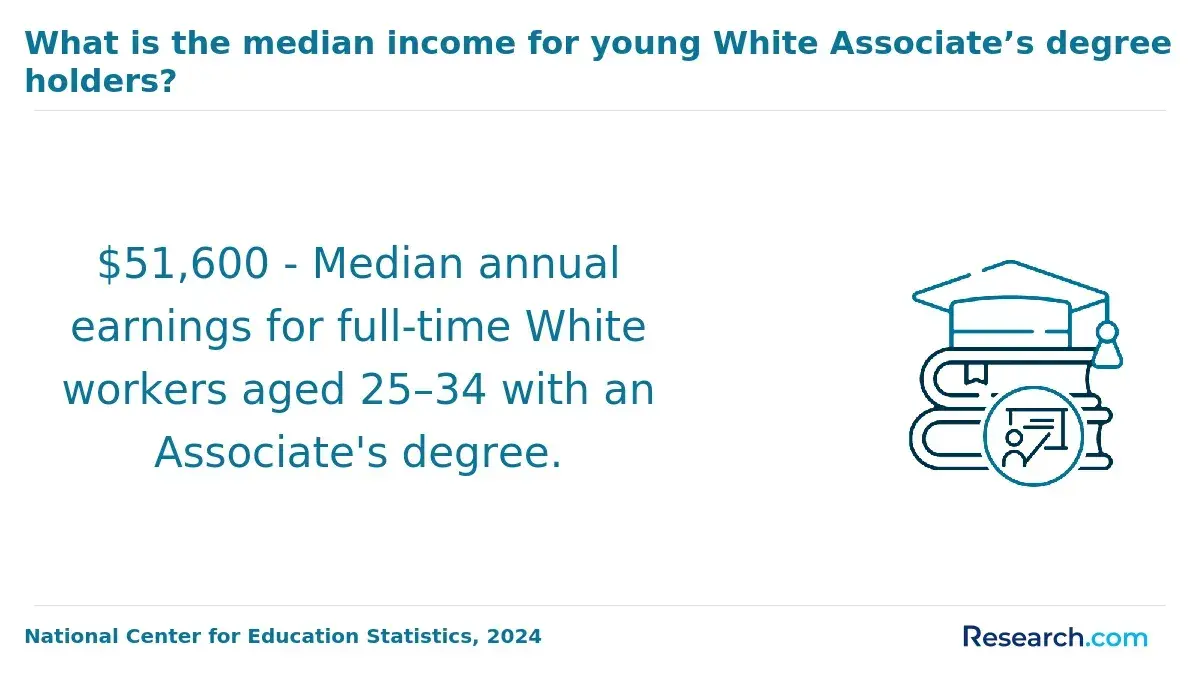
Students who already hold an associate degree and need a fast route to upper-level study should assess whether accelerated options preserve sufficient time for learning. An accelerated associate degree online may fit a focused student, but it should not be treated as a substitute for carefully checking transferability and prerequisite coverage.
How Much Does an Online Business Administration Degree Cost at a Nonprofit University?
Cost comparisons should begin with the total estimated price to completion, not a school's advertised per-credit tuition. Required fees, technology charges, textbooks, course materials, proctoring, graduation fees, transfer-credit limits, and the number of credits remaining can materially change the final amount. Students attending public nonprofit universities should also determine whether an online rate differs by state residency.
National averages provide context but cannot predict an individual program bill. For the 2023-24 academic year, the National Center for Education Statistics reported average undergraduate tuition and fees of $11,610 at public four-year institutions and $43,350 at private nonprofit four-year institutions. Those figures describe broad institutional averages, not online business programs, and financial aid can significantly alter net price.
This framework shows why a lower tuition rate does not always mean lower total cost.
| Cost component | Why it matters | Question to ask |
| Tuition per credit | Sets the base price but does not show remaining credits | What is the rate for all required business and general-education courses? |
| Transfer credit | Can reduce both completion time and tuition | How many credits will apply specifically toward graduation requirements? |
| Mandatory fees | May be charged per term, course, or service | Which online, technology, assessment, and graduation fees are required? |
| Course materials | Business textbooks, simulations, and software may add costs | Are materials included, low-cost, or billed separately? |
| Time to completion | Extra terms can add fees and delay earnings progression | What is the realistic completion plan based on my transferred credits and availability? |
A higher-priced program can be reasonable if it accepts more applicable credits, offers needed scheduling flexibility, or provides support that helps a student persist. Conversely, a low sticker price is less attractive when it excludes prior coursework or requires expensive add-ons.
What Financial Aid Is Available for an Online Business Administration Degree at a Nonprofit University?
Eligible students at accredited nonprofit universities may use federal financial aid, including Pell Grants for qualifying undergraduates, Direct Loans, and work-study when available. Students should submit the Free Application for Federal Student Aid each year and compare each university's aid offer by grant aid, borrowing, work expectations, and net cost rather than by the total amount labeled "aid." Loans must be repaid with interest, while grants and scholarships generally do not require repayment when eligibility conditions are met.
Nonprofit universities may also offer institutional scholarships, transfer scholarships, need-based grants, military benefits support, payment plans, and employer-partnership discounts. Availability can vary between online and campus students, by enrollment level, and by program. Employer tuition assistance can be especially valuable for working adults, but students should check reimbursement rules, grade requirements, annual limits, and any employment commitment.
Use the following sequence to make aid comparisons more meaningful.
- File the FAFSA and resolve any verification requests promptly.
- Request a program-specific cost estimate based on your anticipated transfer credits and enrollment pace.
- Separate grants and scholarships from loans, then identify the amount you would need to borrow each year.
- Ask whether institutional awards renew automatically and what grade-point average or credit load is required to keep them.
- Compare the expected debt at graduation with the entry-level career options you are realistically pursuing.
A common mistake is accepting the largest aid package without noticing that most of it consists of loans. Another is assuming part-time online enrollment always receives the same institutional aid as full-time enrollment. Get award conditions in writing before making a deposit.
How Flexible Are Online Business Administration Degree Programs at Nonprofit Universities?
Online business administration programs range from highly flexible asynchronous models to structured cohort programs with live evening classes. Asynchronous learning usually lets students access lectures and assignments at convenient times within weekly deadlines. Synchronous learning requires attendance at scheduled virtual sessions. Hybrid programs may require occasional campus visits, orientations, internships, presentations, or residencies.
Working adults often benefit from predictable course sequences and multiple start dates, while students with irregular work schedules may prefer asynchronous courses. Accelerated terms can shorten the calendar time to graduation but require more weekly study hours per course. Traditional 15- or 16-week terms may be easier to manage alongside full-time employment or family obligations.
Before choosing a format, compare these scheduling details rather than assuming "online" means self-paced.
- Whether classes require live attendance, and the days and time zones for those meetings
- Weekly due-date patterns, group-project expectations, and exam-proctoring requirements
- How often courses begin and whether required classes are offered in a dependable sequence
- Any in-person residency, internship, orientation, or capstone presentation requirement
- Whether students may enroll part time, pause enrollment, or take summer courses without losing aid eligibility
Students considering graduate study should be particularly cautious with compressed formats. A 6 month MBA can be appealing for speed, but prospective students should confirm admissions prerequisites, workload, employer perception in their field, and whether rapid pacing matches their professional and family commitments.
What Student Support Services Do Nonprofit Universities Provide for Online Business Administration Degree Students?
Online students need support that is designed for distance learning, not merely access to a campus office during business hours. Strong nonprofit universities typically provide academic advising, library access, tutoring, technical support, financial-aid counseling, disability services, career coaching, and faculty office hours through online channels. The practical question is whether those services are responsive when an online student actually needs them.
Ask prospective programs how new students are oriented to the learning platform, how quickly technical support responds outside standard hours, and whether an advisor remains assigned through graduation. Also ask whether career services offer résumé reviews, virtual interviewing practice, internship guidance, employer events, and networking opportunities specifically accessible to online learners.
Do Online Business Administration Degree Programs at Nonprofit Universities Prepare Graduates for In-Demand Careers?
The labor market rewards experience and role-specific capability as well as education. The U.S. Bureau of Labor Statistics projects management occupations to grow faster than the average for all occupations from 2023 to 2033. This category includes many roles that often require prior professional experience, so a bachelor's degree should be viewed as a foundation for progression rather than an automatic management title.
Artificial intelligence and automation are increasing the value of graduates who can interpret data, evaluate outputs, communicate with stakeholders, and apply business judgment. When reviewing curricula, look for meaningful exposure to analytics, information systems, responsible AI use, cybersecurity awareness, and digital collaboration without overlooking core accounting, finance, and management principles.
The table below connects common career directions with coursework that can strengthen preparation. It is not a guarantee of employment or salary.
| Career direction | Helpful coursework | Experience to seek |
| Operations or project coordination | Operations management, analytics, project management | Process-improvement project, internship, or scheduling responsibility |
| Marketing or sales support | Marketing, consumer behavior, communications, analytics | Campaign analysis, customer research, or CRM experience |
| Financial or administrative analyst support | Accounting, finance, statistics, spreadsheets | Budgeting, reporting, or data-cleaning project |
| Human resources support | Management, organizational behavior, business law | Recruiting, onboarding, or training-related experience |
| Entrepreneurship or small-business operations | Finance, marketing, strategy, business law | Business plan, market validation, or supervised venture project |
Can an Online Business Administration Degree From a Nonprofit University Prepare Students for Graduate School?
Yes. An accredited online bachelor's degree in business administration can meet the educational baseline for many MBA and specialized master's programs, provided the student earns the required grades and completes any prerequisite coursework. Graduate admissions decisions may also consider professional experience, quantitative preparation, recommendations, writing ability, and standardized test policies that vary by institution.
Students planning graduate school should choose a bachelor's program with recognizable academic rigor, graded coursework, qualified faculty, and access to transcripts and recommendation opportunities. Finance, statistics, accounting, economics, and research or analytics courses can be especially useful preparation for quantitatively oriented graduate programs. A generalist bachelor's degree works well for many students; a specialized undergraduate concentration may be preferable when the intended master's program expects relevant prior knowledge.
For experienced professionals, the decision between an MBA, specialized master's degree, and doctorate should be based on the target role. An MBA generally emphasizes broad leadership and management, while a specialized master's develops depth in an area such as analytics or finance. A doctorate in organizational leadership online is typically a later-career option for professionals seeking advanced leadership, research, consulting, or postsecondary teaching pathways.
Do not choose an undergraduate program solely because it advertises a graduate-school pathway. Confirm whether admission is guaranteed or merely simplified, whether graduate credits are transferable, and whether an accelerated bachelor's-to-master's route affects financial aid or workload.
How Should Students Compare the Best Online Business Administration Degree Programs at Nonprofit Universities?
The best online business administration program is the one that meets your nonnegotiable requirements while producing the strongest overall value. Begin with a manageable shortlist of accredited nonprofit universities, then compare each program using the same evidence. Rankings can be a useful starting point, but they cannot replace a personal assessment of cost, schedule, academic fit, transferability, and career relevance.
Use this comparison scorecard to organize information from university websites, catalogs, financial-aid offices, and admissions advisors.
| Decision category | Evidence to collect | Strong sign | Potential concern |
| Accreditation | Named institutional accreditor and program information | Clear, verifiable accreditation disclosures | Vague or unverifiable claims |
| Total cost | Written estimate through graduation | Transparent tuition, fee, and transfer-credit calculation | Only a per-credit price is provided |
| Transfer pathway | Official evaluation of prior credits | Many credits apply to degree requirements | Credits accepted only as electives |
| Curriculum | Course list, concentrations, capstone, experiential learning | Courses align with target career skills | Few upper-level business or analytics options |
| Flexibility | Term length, live sessions, course rotation | Schedule matches work and family demands | Required courses create likely delays |
| Student outcomes and support | Career services, advising, retention and completion disclosures | Online-specific support and transparent information | General promises without details |
After gathering evidence, take the following practical steps before enrolling.
- Identify your target credential: associate degree for a foundation or transfer, bachelor's for broad career entry, master's for advanced progression, or doctorate for specialized long-term goals.
- Request an official transfer-credit review from each finalist, not an informal estimate.
- Calculate net cost after grants and scholarships, then estimate borrowing under your preferred full-time or part-time pace.
- Review the degree map to confirm that required courses, concentrations, and capstone experiences support your intended career.
- Attend an online class demonstration or information session and ask current students about responsiveness, workload, and group projects.
- Choose the program that satisfies your academic and financial requirements with the fewest unresolved assumptions.
Common mistakes include treating nonprofit status as a quality guarantee, comparing only tuition instead of total cost, overlooking live attendance requirements, assuming all transfer credits will count, and selecting a concentration without reviewing job requirements. A careful comparison process reduces the risk of paying for a degree that does not fit your schedule or career direction.
Other Things You Should Know About Business Administration
Employers generally focus on whether the university is accredited, the degree matches the role, and the candidate can demonstrate relevant skills and experience. The online format may matter less than the institution's credibility, academic record, internship experience, and professional accomplishments.
Many programs are designed for working adults, especially asynchronous and part-time options. Check weekly workload expectations, live-session requirements, group assignments, and course sequencing before enrolling. One or two courses per term may be more sustainable than an accelerated full-time schedule.
Not always. A generalist degree can suit students seeking broad business knowledge or who are still exploring career options. A concentration is more useful when it aligns with a defined target such as marketing, finance, human resources, operations, or analytics.
It can provide useful foundations in finance, marketing, operations, strategy, and business law. Starting a business also requires market validation, risk tolerance, industry knowledge, access to resources, and practical execution, so look for programs with entrepreneurship projects, mentorship, or experiential learning.
References
- Which BS Business Administration specialization should you choose to take? https://www.enderuncolleges.com/articles/which-bs-business-administration-specialization-should-you-choose-to-take/
- Online Business Degree Programs - OnlineEducation.com https://www.onlineeducation.com/business/
- Profit or nonprofit? Why it matters. https://ps.sckans.edu/profit-or-nonprofit-why-it-matters/
- Business Administration Degrees (Types, Courses & FAQ) https://www.allbusinessschools.com/business-administration/degrees/
- Earn An Online Business Administration Degree | OEDb.org https://www.oedb.org/rankings/online-business-administration-programs/
- Myth vs Fact - Virginia Private Colleges https://cicv.org/why-private/myth-vs-fact/
- Business Administration, BA Online https://www.nec.edu/programs/online-bachelor-of-business-administration
- Bachelor's in Business Job Satisfaction | University of Bridgeport https://www.bridgeport.edu/news/bachelors-in-business-administration-job-satisfaction/