2027 Best Graduate Degrees With the Best ROI

Co-Founder and Chief Data Scientist
A graduate degree can increase your options, but it can also leave you paying for a credential your target job does not require. U.S. Bureau of Labor Statistics (BLS) data show that workers with master's degrees had median weekly earnings of $1,840 in 2024, compared with $1,543 for those with bachelor's degrees. That population-wide gap does not predict an individual graduate's raise. This guide compares master's-level fields by career relevance, cost, time, and credential requirements so you can identify where further study may be worth the investment - and where experience or a shorter credential may be the better move.
Key Things You Should Know
- Best potential ROI depends on your starting point: Technical master's degrees can support specialized roles, while nursing and counseling degrees may open regulated paths unavailable with a bachelor's degree alone.
- Salary is not a degree payoff: BLS reports $1,840 in median weekly earnings for workers with master's degrees overall, but that figure does not account for your field, prior experience, tuition, or lost income.
- Compare total cost with realistic career gains: Include fees, prerequisites, time away from work, and any additional licensing steps before treating a high-paying occupation as an attainable outcome.
Top 10 Best Graduate Degrees With the Best ROI - Best ROI Degrees
Business / MBA Programs
A Master of Business Administration (MBA) emphasizes management, finance, operations, and strategy; an MS in finance or business analytics offers narrower specialization. ROI is strongest when the curriculum supports a defined promotion, career change, or employer-sponsored advancement. Managers usually need substantial work experience, so an MBA alone is not a ticket to leadership. Compare tuition with your expected change in responsibilities and earnings. An experienced professional whose employer funds most of an MBA faces a different investment than someone borrowing heavily without a target role.
Healthcare Administration & Management Programs
A Master of Healthcare Administration (MHA) or healthcare-focused MBA prepares students for finance, operations, quality, and policy work. It may offer strong advancement value to clinicians or healthcare staff who already understand the industry. Medical and health services management roles typically require relevant experience; the degree does not confer clinical licensure. Compare programs' employer connections and applied projects, then check whether your intended role favors an MHA, an MBA, or experience supplemented by a shorter credential.
Information Technology Programs
An MS in information technology often covers systems architecture, cloud infrastructure, databases, and technology leadership. Its potential payoff is clearest when it fills a skill gap needed for a specific technical or supervisory role. A candidate with little hands-on experience may benefit more initially from projects, industry certifications, or an entry-level job. Check whether courses teach current tools and require practical work; a management-oriented curriculum may not suit someone seeking deeper engineering skills.
Computer Science Programs
An MS in computer science can deepen expertise in algorithms, software systems, artificial intelligence, or computing research. It may suit experienced developers seeking specialization and career changers who can meet substantial programming and mathematics prerequisites. Many software roles do not require a master's, making incremental value - not occupational salary - the key ROI question. Compare prerequisite costs, access to projects or research, and whether an MS or a less expensive portfolio-building route better supports your target job.
Cybersecurity Programs
An MS in cybersecurity may cover security engineering, risk management, digital forensics, or governance. It is most useful when it advances an existing IT professional toward a clearly defined specialty; employers commonly value practical systems experience alongside education. Some positions require clearance or particular certifications, neither of which a degree automatically provides. Before enrolling, compare hands-on labs and employer relevance with the cost of focused certifications and workplace experience.
Data Science / Analytics Programs
An MS in data science or analytics usually combines statistics, programming, data management, and applied projects. Demand for data skills makes it attractive, but applicants should distinguish rigorous technical training from programs that teach only introductory tools. Mathematics prerequisites can extend time and cost for career changers. Look for substantial projects using messy, real-world data and compare the degree with a graduate certificate if your goal is to add analytics to an existing role rather than change occupations.
Education / Educational Leadership Programs
A Master of Education (MEd) or educational leadership degree can have measurable value when a school district's salary schedule rewards graduate credits or the program supports a specific administrative credential. Principal roles generally require teaching experience and state licensure. Verify your district's pay rules and your state's approval requirements before enrolling; a low-tuition program has weak ROI if its credits do not count toward your intended advancement.
Counseling / Psychology Programs
A master's in clinical mental health counseling may provide a route toward counseling licensure, but supervised experience and examinations typically follow graduation. A general MA or MS in psychology is not interchangeable with a licensure-track counseling degree, and psychologist roles generally require doctoral preparation. ROI depends on the eligible license, clinical placement access, total tuition, and time spent completing postdegree requirements. Confirm state eligibility before valuing the degree against a licensed occupation's pay.
Nursing Programs
A Master of Science in Nursing (MSN) can prepare an eligible registered nurse for advanced practice, education, or leadership. For advanced practice, admission may require RN licensure and clinical experience, while graduation is followed by applicable certification and state licensing requirements. Clinical placements can restrict scheduling even in online programs. The financial case is strongest when the intended role requires the credential and the nurse has verified program eligibility, placement support, and the full cost of completing the path.
Engineering Management Programs
An MS in engineering management blends technical decision-making with finance, operations, and leadership. It may suit engineers moving toward project or people management without shifting into a broad MBA curriculum. Employers generally expect engineering experience for managerial positions; the degree alone does not establish it. Compare the program's technical depth, employer recognition, and price with an MBA or on-the-job advancement. For early-career engineers, gaining project responsibility first may clarify whether graduate study is necessary.
What Graduate Degrees Offer the Highest Return on Investment?
There is no single highest-ROI graduate degree for everyone. Return on investment means the additional value of the degree relative to its full cost - not the salary of a job associated with its field. The strongest candidates either help you enter a credential-gated occupation, build a specialization an employer rewards, or qualify you for a documented pay increase.
This comparison identifies where a master's may add value and the main condition that can weaken its payoff. It compares degree fields, not individual schools or guaranteed graduate outcomes.
| Degree field | Potential source of incremental value | Main ROI constraint |
| MSN, advanced-practice track | Preparation for a distinct, regulated nursing role | RN eligibility, clinical training, certification, and state licensure |
| Counseling master's | Educational path toward a counseling license | State-approved coursework and postdegree supervised practice |
| Computer science, cybersecurity, or data science MS | Advanced technical skills or a credible career-change pathway | Employers may prefer experience; prerequisite work raises cost |
| MBA, MHA, or engineering management MS | Preparation for broader responsibilities | Management jobs commonly require relevant experience |
| MEd or educational leadership master's | Documented salary-schedule increase or credential eligibility | District and state rules vary |
How Much Do High-ROI Graduate Degrees Cost?
There is no dependable field-wide price for a high-ROI graduate degree. Schools charge different tuition by residency, delivery format, and program, and programs require different numbers of credits. A low per-credit rate can still produce a high bill when prerequisites, clinical fees, or extra terms are required.
For each program, request a cost estimate based on your actual admission status and enrollment pace. The estimate should separate these components so you can compare the amount you may need to pay or borrow:
- Required graduate credits multiplied by your applicable tuition rate, plus mandatory and program-specific fees.
- Prerequisite or foundation courses that do not count toward the degree.
- Travel, campus visits, clinical or internship expenses, equipment, and certification or licensing costs.
- Interest and lost earnings if study requires reducing work hours.
Ask about scholarships, assistantships, employer tuition assistance, and federal aid eligibility; aid and employer funding can change your personal cost. An application with no fee can reduce an upfront expense, but free online college application options should not be mistaken for low-cost graduate degrees. Compare total program costs before deciding.
Which Graduate Degrees Lead to the Highest-Paying Careers?
High occupational pay can signal opportunity, but it cannot establish what a new master's graduate will earn. BLS median wages cover everyone in an occupation, including experienced workers and people without the degree being discussed. The figures below provide U.S. career context, not a ranking of graduate programs or a projected return on tuition.
These BLS 2023 occupational median wages show why career fit matters alongside pay. Each path has qualifications beyond choosing a degree title.
| Occupation | 2023 median annual wage | Important qualification context |
| Computer and information systems managers | $169,510 | Typically requires substantial related IT experience; a master's is not generally required. |
| Information security analysts | $120,360 | Typically requires relevant computing preparation and experience; certifications may matter. |
| Medical and health services managers | $110,680 | Typically requires related healthcare experience; requirements depend on the role. |
| Data scientists | $108,020 | Requires strong analytical and computing skills; employers' degree preferences vary. |
A midcareer IT worker considering management should compare the degree's likely effect on promotion prospects with the value of additional leadership experience. A career changer considering data science must also account for prerequisites and the difficulty of securing a first relevant role. Neither should use the occupation's median wage as an expected starting salary.
What Job Outlook Can Graduates Expect From High-ROI Degrees?
Job outlook strengthens a graduate degree's case only when you can meet the occupation's entry requirements. In its 2024-2034 projections, BLS projects 34% employment growth for data scientists. That points to demand for analytical work, not an assurance that every analytics master's graduate will obtain a data scientist job.
Demand also differs within broad fields: cybersecurity includes technical and governance jobs, while healthcare administration spans many settings and levels of responsibility. AI may change the tools and tasks used in technical roles, making applied projects and adaptable skills important. Use BLS projections to identify occupations worth investigating, then check local openings for recurring requirements such as experience, software skills, credentials, and location.
What Are the Best Online Graduate Degrees for Career ROI?
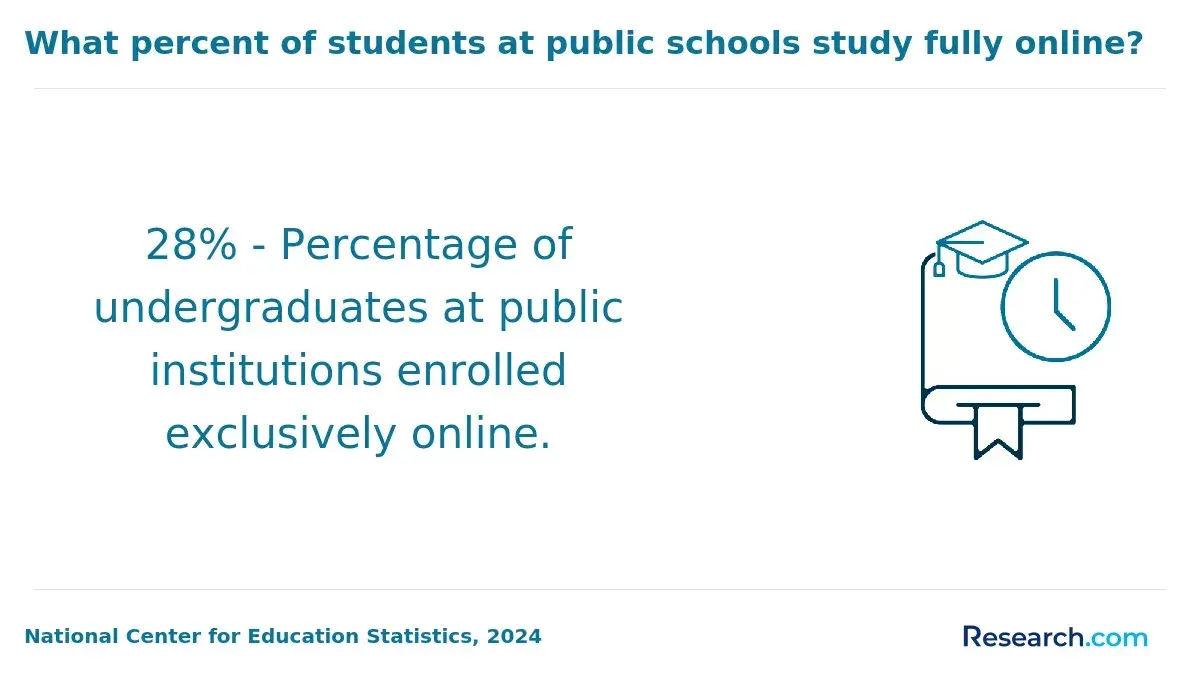
The best online graduate degree for career ROI is one that leads toward your intended role and lets you complete every requirement without an unplanned interruption to work. Online computer science, analytics, cybersecurity, and MBA study may allow working professionals to retain income. Nursing, counseling, and education programs may deliver classes online while still requiring local clinical work, practicums, or student teaching.
Do not equate "online" with self-paced. Ask whether courses have live meetings, whether required classes run often enough for part-time students, and who arranges experiential placements. When comparing online colleges, verify the institution's recognized accreditation and the graduate program's actual delivery requirements; an institution's online offerings do not establish that a particular master's can be completed remotely.
What Accreditation Should High-ROI Graduate Programs Have?
Begin with institutional accreditation recognized by the U.S. Department of Education. It matters for federal aid eligibility and can affect credit recognition. Then check whether a field-specific accreditor or state program approval is required or preferred for your goal.
Examples include Commission on Collegiate Nursing Education (CCNE) or Accreditation Commission for Education in Nursing (ACEN) accreditation for relevant nursing programs, Council for Accreditation of Counseling and Related Educational Programs (CACREP) accreditation in counseling, and state approval for educator preparation. Business and healthcare management also have field-specific accreditors, but employer preferences vary. Verify a program's current status with the accreditor and, for a licensed role, confirm directly with the licensing board that the curriculum meets the state's rules. Institutional accreditation alone does not establish licensure eligibility.
What Are the Admission Requirements for High-ROI Graduate Degrees?
Most master's programs require a completed bachelor's degree, transcripts, and an application. Programs may also consider GPA, recommendations, a statement of purpose, an interview, or work experience; GRE and GMAT policies vary. Technical programs may require calculus or programming, while MSN tracks can require an RN license and qualifying nursing preparation. Counseling and education programs may have separate requirements tied to clinical or credential pathways.
If you have not completed a bachelor's degree, a bachelor degree online in 2 years comparison may help you explore undergraduate completion options, but an accelerated undergraduate timeline does not itself shorten a master's program. If you already hold graduate credits or a certificate, request a written evaluation of which courses apply to the intended degree. Accepted transfer credit is not useful for ROI if it does not replace required coursework.
How Long Do High-ROI Graduate Degrees Take to Complete?
Many full-time master's pathways take roughly one to two years, but that range is not a promise. Required credits, part-time enrollment, course sequencing, prerequisites, a thesis or capstone, and clinical or internship hours can extend completion. An online format changes where coursework happens; it does not eliminate those requirements.
A shorter timeline can improve ROI when it reduces tuition or lost earnings without weakening preparation. Check what an advertised accelerated schedule assumes: a related bachelor's degree, full-time enrollment, a combined bachelor's/master's pathway, or accepted graduate-level credit. Ask the school to map your remaining courses by term before comparing a fast option with a lower-cost part-time program that lets you keep working.
Which Licenses and Certifications Do High-ROI Careers Require?
Required credentials depend on the occupation, not simply the master's title. Advanced-practice nursing generally involves an eligible nursing degree, national certification, and state authorization. Professional counseling generally requires a qualifying degree, supervised practice, examinations, and state licensure. Public-school leadership typically involves state-specific educator experience and administrator credential requirements.
By contrast, an MBA, MS in computer science, or MS in cybersecurity does not generally confer an occupational license. Employers may value particular technical certifications, but requirements vary by job. Before enrolling in a regulated pathway, obtain the relevant state board's current education and practice rules and ask the program how it supports each requirement. A common costly mistake is pricing only the degree while overlooking the time and expense between graduation and independent practice.
Other Things You Should Know About
It can be when its additional career value exceeds tuition, fees, borrowing costs, and lost earnings. Compare your likely path with what you could achieve through experience or a shorter credential; population-wide salary averages cannot calculate your return.
There is no universal winner. A licensure-track degree may open an otherwise unavailable occupation, while a technical MS can support a transition if you can meet prerequisites and demonstrate practical skills. Compare the full path to an entry-level role, not just the degree.
Delivery format alone does not determine value. Evaluate accreditation, curriculum, applied work, employer relevance, and whether any required placements or in-person activities fit your schedule.
Get a written total-cost and completion plan, identify the jobs you can realistically pursue, and compare the likely change in earnings or opportunities with your current trajectory. Include licensing steps and test a less expensive alternative before borrowing.
References
- Research Summary: Education and Lifetime Earnings | ssa.gov https://www.ssa.gov/policy/docs/research-summaries/education-earnings.html
- Your financial path to graduation | consumerfinance.gov https://www.consumerfinance.gov/paying-for-college/your-financial-path-to-graduation/
- Data Home - College Scorecard - Department of Education https://collegescorecard.ed.gov/data/
- Occupation Finder: Occupational Outlook Handbook | bls.gov https://www.bls.gov/ooh/occupation-finder.htm
- Graduate degrees pay - but it's complicated | Brookings https://www.brookings.edu/articles/graduate-degrees-pay-but-its-complicated/
- Data Sources for Post-Graduation Outcomes | Association for Institutional Research https://www.airweb.org/article/2021/09/30/data-sources-for-post-graduation-outcomes
- The Financial Returns of Online Graduate Programs | Third Way https://www.thirdway.org/report/the-financial-returns-of-online-graduate-programs
- A Guide to Higher Education Federal Earnings Data | Lumina Foundation https://www.luminafoundation.org/resource/a-guide-to-higher-education-federal-earnings-data/
- Is Grad School Worth It? A Comprehensive Return on Investment Analysis - FREOPP https://freopp.org/whitepapers/is-grad-school-worth-it-a-comprehensive-return-on-investment-analysis/
- The Labor Market for Recent College Graduates | newyorkfed.org https://www.newyorkfed.org/research/college-labor-market