2027 Best Master's Degree Programs With Weekend Classes

Co-Founder and Chief Data Scientist
Can you earn a master's degree without giving up your weekday job? Weekend classes may make graduate study possible, but a program advertised as flexible can still require Friday evenings, weekday clinical hours, or campus visits. The stakes can be substantial: the U.S. Bureau of Labor Statistics (BLS) reported a $117,960 median annual wage for medical and health services managers in May 2024 - an occupational figure, not a promise to MHA graduates. This guide compares degree fields by scheduling fit, career purpose, and requirements so working adults can identify programs worth investigating.
Key Things You Should Know
- Start with career fit: an MBA supports broad management goals, while nursing, counseling, and education degrees require closer checks of professional credentials and placements.
- Verify the actual calendar before applying. "Weekend" may mean every Saturday, occasional intensive weekends, or a hybrid schedule with weekday obligations.
- Consider demand alongside access: BLS projects 29% employment growth for information security analysts from 2024 to 2034, but a cybersecurity master's alone does not qualify someone for every security role.
Top 10 Best Master's Degree Programs With Weekend Classes - Weekend Master's Programs
Business / MBA Programs
A Master of Business Administration (MBA) is a strong weekend option for employed professionals seeking broader management skills. Executive and part-time formats may group classes into scheduled weekends; confirm whether travel, Friday sessions, and team meetings fit your job. Courses commonly cover finance, operations, strategy, and leadership. Choose an MBA over a specialized MS if you want cross-functional preparation; choose the MS if your goal requires deeper technical study. Management positions generally also require relevant experience.
Healthcare Administration & Management Programs
A Master of Healthcare Administration (MHA) or healthcare-management MBA suits professionals moving toward healthcare operations. Weekend cohorts can reduce weekday classroom conflicts, although internships or employer-based projects may require weekday access. Compare healthcare-specific coursework, internship rules, and the program's fit with your experience. An MHA prepares students for management responsibilities; it does not confer a clinical license or replace the experience employers may require.
Information Technology Programs
An MS in information technology can suit working professionals who manage systems, cloud infrastructure, or IT services. Weekend sessions offer scheduled collaboration, but labs and group projects may extend into weekdays. Compare concentrations and check whether required software or equipment is accessible remotely. This field is a better fit than computer science when your goal is applying and managing technology rather than studying computing theory or advanced algorithms.
Computer Science Programs
An MS in computer science supports deeper work in software, algorithms, or computing research. Weekend classes can help employed developers, but prerequisites in programming and mathematics may add time for career changers. Ask whether labs, examinations, and thesis meetings occur outside advertised class hours. A practice-oriented track may suit software work; a research-oriented track may be better preparation for doctoral study.
Cybersecurity Programs
An MS in cybersecurity can develop skills in risk management, secure systems, and incident response. Weekend instruction may appeal to working IT professionals, though hands-on labs and team exercises can require additional scheduled time. Compare technical prerequisites and practical projects before enrolling. The degree can support specialization, but employers may also expect security experience, relevant certifications, or eligibility for a security clearance.
Data Science / Analytics Programs
An MS in data science or analytics may suit professionals who use data to guide decisions. Weekend cohorts provide live instruction in statistics, programming, and modeling, while assignments usually continue between meetings. Check prerequisites, access to computing tools, and whether the curriculum emphasizes business analytics or technical modeling. Choose the emphasis that matches the work you want to do; neither format nor degree title guarantees a data-science job.
Education / Educational Leadership Programs
A Master of Education (MEd) or educational-leadership master's may serve teachers pursuing instructional or school-leadership goals. Weekend classes can accommodate teaching hours, but classroom observations, fieldwork, and administrator internships may occur on weekdays. If your goal is a principal credential or another regulated role, verify the program's approval and your state's experience, examination, and licensure requirements before applying.
Counseling / Psychology Programs
A counseling master's may offer weekend coursework, but required practicum and internship hours often depend on client-service schedules. Confirm that the curriculum and supervised placements align with the license you intend to pursue in your state. A general MA or MS in psychology is not interchangeable with a professional counseling degree and may not lead to independent practice. Choose this path only if you can accommodate the full training schedule, not just the classes.
Nursing Programs
A Master of Science in Nursing (MSN) can support advanced nursing practice, education, or leadership, depending on the track. Weekend coursework may fit an employed nurse's shifts, but clinical hours and approved sites may not be available on weekends. Applicants typically need an appropriate nursing background and license; advanced-practice tracks have additional clinical and certification considerations. Verify state authorization, placement support, and the requirements for your intended nursing role.
Engineering Management Programs
An MS in engineering management combines technical project work with operations, finance, or leadership study. Weekend cohorts may suit employed engineers who can apply coursework at work, though projects can demand time between meetings. Compare technical admissions prerequisites and the balance of engineering and business courses. This degree may fit someone seeking responsibility for technical teams; an MBA may offer broader preparation for a move beyond engineering.
What are the best master's degrees with weekend classes for working professionals?
The best weekend master's degree is the one whose full schedule and curriculum match your career goal. For professionals already established in a field, an MBA, MHA, engineering-management MS, or specialized technology MS may offer a practical route to advancement. Licensure-oriented nursing, counseling, and education programs need extra scrutiny because field experiences may be harder to schedule than classes.
The comparison below groups options by the scheduling issue most likely to affect a working student. It compares degree fields, not individual schools or a verified ranking of weekend cohorts.
| Career goal | Fields to compare | Weekend-schedule test |
| Broader management | MBA, MHA, engineering management | Check cohort meeting dates, travel, and group-project expectations. |
| Technical specialization | IT, computer science, cybersecurity, data science | Check labs, prerequisites, and required live sessions. |
| Licensed or regulated practice | Nursing, counseling, educational leadership | Check clinical or fieldwork hours and state-specific eligibility. |
If you need a quicker, narrower skill upgrade rather than a graduate credential, compare a certificate, employer training, or fast track career programs. Those alternatives are not substitutes when a specific master's degree is required for your goal.
How do weekend master's programs compare with online and campus-based formats?
A weekend program describes when at least some instruction happens, not necessarily where. Classes may meet on campus, online at scheduled times, or in a hybrid format. A fully online program may offer more location freedom yet still require weekday meetings and fixed deadlines.
Use this format comparison to identify the commitment behind each label. The right choice depends on how much predictable attendance, travel, and independent study your week can accommodate.
| Format | Potential advantage | Commitment to verify |
| Scheduled weekend classes | Predictable live contact around many weekday jobs | Friday sessions, frequency, travel, and weekday assignments |
| Asynchronous online | Greater control over study hours | Deadlines, group work, exams, and any in-person requirements |
| Traditional campus schedule | Regular access to campus facilities and classmates | Weekday attendance and commuting time |
| Hybrid weekend schedule | Some campus contact with less routine travel | Required visit dates and live online meeting times |
Request a recent course calendar and ask whether every required course - not just the introductory courses - is available in a schedule you can attend.
Are weekend master's degree programs accredited and eligible for licensure?
Weekend instruction does not determine accreditation or licensure eligibility. Check that the institution holds recognized institutional accreditation. Where applicable, check programmatic accreditation, state approval, and whether the specific degree track meets the educational requirements for your intended credential.
This distinction matters most in nursing, counseling, and education. A program can be academically accredited yet fail to meet a particular state's licensing requirements or leave students responsible for securing placements. Licensure may also require examinations, supervised experience, and an application after graduation. If you expect to work in another state, ask the program for written guidance specific to that state before enrolling.
What admission requirements apply to master's programs with weekend classes?
Master's admission normally requires a completed bachelor's degree, transcripts, and a program-specific application. Depending on the field, schools may also request recommendations, a statement of purpose, relevant work experience, prerequisite courses, an interview, or a portfolio. An MBA may value professional experience, while a computer science MS may require specific programming and mathematics preparation. Nursing tracks may require an active nursing license.
Do not infer graduate eligibility from a university's general admissions page. Check the individual program's current GPA policy, any GRE or GMAT requirement or waiver, and whether missing prerequisites can be completed before or after admission. Ask about conditional admission only if the school publishes or confirms that option for the master's program.
What do students study in weekend master's degree programs?
Most weekend master's programs combine core courses with electives or a concentration. What students study depends on the credential: an MBA emphasizes cross-functional business decisions; an MS may emphasize technical depth; an MEd or MSN may connect coursework to professional practice. A capstone, thesis, portfolio, internship, or clinical experience may be required even when classes meet on weekends.
Read the degree plan alongside the calendar. A research-focused computer science or psychology master's may include a thesis, while a practice-oriented program may center on applied projects. If your long-term aim is research, compare the master's thesis option with possible online PhD programs; doctoral study has different admissions, research, and time commitments.
How long do weekend master's programs take and how much do they cost?
Completion time depends on required graduate credits, part-time course load, sequencing, prerequisites, and any thesis or supervised practice. Weekend meetings do not make the degree accelerated by themselves. A cohort that admits students infrequently can also delay progress if a required course is missed.
Total cost is more useful than a single tuition rate. This comparison shows expenses that can change the amount you pay and the time you need away from work.
| Cost or time factor | Why it matters |
| Tuition and mandatory program fees | Per-credit prices omit some required charges. |
| Travel and weekend residencies | Transportation, lodging, and missed work can raise total cost. |
| Prerequisites and course sequencing | Additional courses or limited offerings can extend enrollment. |
| Clinical or internship requirements | Placement hours may reduce the time available for paid work. |
| Accepted graduate transfer credit | Applicable credits may reduce remaining coursework, subject to school policy. |
Request a written estimate covering all required credits and fees. Ask whether employer tuition assistance, scholarships, assistantships, or eligible federal aid could lower your out-of-pocket cost. If you have prior graduate coursework, request an evaluation of how it applies to this degree; acceptance as transfer credit does not necessarily mean it fulfills a required course.
Which careers can you pursue with a master's degree earned on weekends?
A weekend master's can support a career change, specialization, or advancement within an existing profession. Examples include an experienced healthcare worker pursuing administration, an IT professional specializing in cybersecurity, or a licensed teacher preparing for educational leadership. The degree is one part of the qualification picture: employers may also require experience, technical skills, certifications, or a professional license.
Compare the work itself with your preferences, not just the degree title. For example, readers exploring introvert jobs should investigate a role's actual collaboration, client contact, and management demands rather than assume that data or technology work is solitary. Before enrolling, review job postings for the role and location you want, then identify which stated requirements the program would - and would not - help you meet.
What salaries and job outlooks are available after weekend master's programs?
Occupational data can show demand, but it cannot predict an individual graduate's salary. For example, BLS projects employment of information security analysts to grow 29% from 2024 to 2034. That projection describes an occupation, not the outcomes of a cybersecurity master's cohort; entry into the role can depend on prior IT or security experience.
For a useful return-on-investment check, compare the program's full cost and the work hours you may forgo with the qualifications in jobs you could realistically pursue. Ask schools for clearly defined graduate outcomes, including which graduates were employed before enrolling. Be wary of claims that use a manager's occupational median wage as though it were the starting salary of every master's graduate.
How can you choose a reputable master's program with weekend classes?
Start with your target role, state, and available study hours, then compare programs using the same questions. This prevents an attractive weekend label or low advertised tuition from hiding a poor fit.
Use these checks when speaking with program staff; request written policies and a sample schedule where possible.
- Confirm how often required classes meet on weekends and identify every Friday, weekday, online-live, and campus obligation.
- Match the degree plan and any concentration to your goal; ask about prerequisites, capstones, placements, and access to required courses.
- Verify institutional accreditation and, for regulated occupations, program approval and eligibility in the state where you intend to work.
- Calculate total tuition, fees, travel, and potential lost work time; ask about aid, employer benefits, and evaluation of eligible graduate transfer credit.
- Compare documented student support and outcomes without treating career services or an occupational salary figure as a job guarantee.
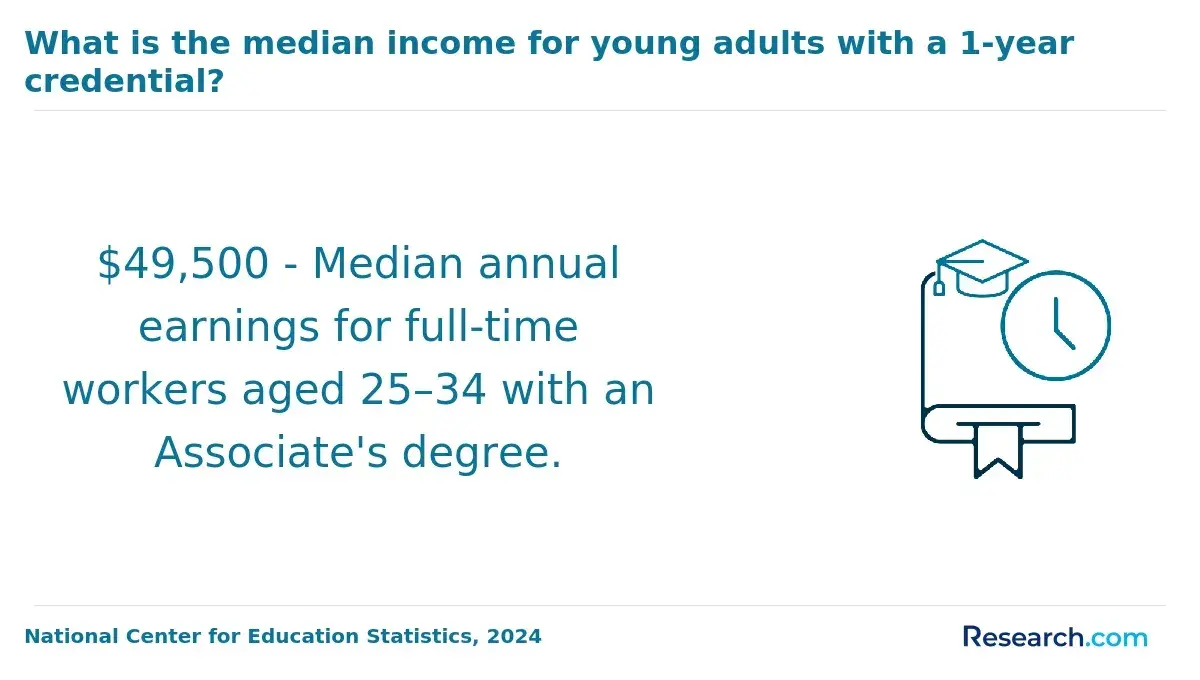
If you have not completed a bachelor's degree, undergraduate options such as 1 year associate degree programs may be an earlier step, but an associate degree alone does not meet standard master's admission requirements. For everyone else, the most useful next step is to obtain the actual calendar and degree plan for each program on your shortlist.
Other Things You Should Know About
Not necessarily. Some meet on alternating weekends or during occasional intensive sessions; others add Friday evenings or scheduled online classes. Ask for the full required-course calendar.
Many students plan to, but feasibility depends on assignments, travel, course load, and any internship or clinical hours. Test the complete weekly commitment against your work schedule.
The schedule alone does not determine the credential's value. Consider the institution, curriculum, accreditation, relevant experience, and any professional requirements.
Do not assume so. Sites set their own operating hours, and programs may have placement rules. Confirm feasible locations and schedules before accepting an offer.
References
- Requirements Related to the Practice of Counseling - NCBI https://www.ncbi.nlm.nih.gov/books/NBK259170/
- Career Outcomes for Graduate Students | Meruelo Family Center for Career Development https://careerdevelopment.nd.edu/outcomes/graduate/
- Can You Work Full-Time While Earning Your MBA? | Carson-Newman University https://www.cn.edu/cps-blog/tips-for-working-while-earning-mba/
- Learning Modalities | Golden Gate University https://ggu.edu/learning-modalities/
- Executive MBA - Texas McCombs MBA Insider https://blogs.mccombs.utexas.edu/mba-insider/tag/executive-mba/
- Graduate Programs at SUNY Empire https://sunyempire.edu/academics/graduate-academics/index.html
- What is the tuition at Wichita State University? https://www.wichita.edu/tuition
- Cost of Attendance - Financial Aid and Scholarships | The University of Utah https://financialaid.utah.edu/tuition-and-fees/cost-of-attendance.php
- How Do Asynchronous Classes Work? | Hopkins EP Online https://ep.jhu.edu/news/how-do-asynchronous-classes-work/
- What are Asynchronous Classes? | University of Bridgeport https://www.bridgeport.edu/news/what-are-asynchronous-classes/