2027 Best Doctoral Programs for Remote Jobs

Co-Founder and Chief Data Scientist
Which doctorate is worth pursuing if you want to work remotely? The answer depends less on the degree's online format than on the work you hope to do. The U.S. Bureau of Labor Statistics (BLS) reports a 2024 median wage of $140,910 for computer and information research scientists, illustrating the appeal of advanced technical roles - but not the availability of remote jobs or the earnings of doctoral graduates.
This guide compares doctoral fields by remote-work fit, degree requirements, cost, and career alternatives so you can decide whether a doctorate is the right investment.
Key Things You Should Know
- Computer science, cybersecurity, research, analytics, and some policy roles often have the clearest remote-work potential; clinical and school-based work usually has more location constraints.
- A Doctor of Philosophy (PhD) develops original research expertise, while professional doctorates such as the DBA, EdD, and DNP generally emphasize applying evidence in practice. Neither degree guarantees a remote position.
- Compare the entire pathway - not just online coursework - including funding, dissertation or project requirements, clinical hours, campus visits, and whether the target job requires a doctorate at all.
Top 10 Best Doctoral Programs for Remote Jobs
Business / DBA Programs
A Doctor of Business Administration (DBA) typically serves experienced professionals who want to apply research to organizational problems. Business PhDs instead emphasize original scholarship and often prepare students for research careers. Strategy, analytics, and consulting projects may be done remotely, but executive and client-facing roles can require travel. Compare a DBA with an MBA or additional management experience: if your goal is simply to qualify for a remote business job, the doctorate may add cost without being required.
Education / EdD Programs
A Doctor of Education (EdD) commonly emphasizes improving educational practice through applied research or a doctoral project; an education PhD generally puts more weight on original research. Curriculum design, learning analytics, and instructional consulting can sometimes be remote. Classroom teaching and many administrative positions cannot. Check whether the program's specialization matches the work you want, whether field-based projects are required, and whether a master's degree or professional experience would meet employers' expectations.
Educational Leadership Programs
Educational leadership doctorates may award an EdD or PhD and prepare students for different kinds of work. An EdD may suit experienced leaders solving organizational problems; a PhD may better fit researchers studying education systems. Remote-capable possibilities include policy analysis and consulting, while principal and superintendent jobs generally involve substantial on-site work. School-leadership certification rules vary by state, and a doctorate alone does not satisfy every requirement or secure a leadership appointment.
Psychology Programs
Psychology PhDs can support research, assessment development, or academic work; a Doctor of Psychology (PsyD) generally places greater emphasis on clinical practice. Some research and telehealth tasks are remote-capable, but supervised training, internships, and licensing requirements can require in-person participation. For clinical practice, verify the program's accreditation and your intended state's licensing rules before enrolling. A remote research goal and a teletherapy goal call for different training paths.
Nursing / DNP Programs
A Doctor of Nursing Practice (DNP) focuses on advanced nursing practice, systems improvement, or leadership; a nursing PhD emphasizes research. Informatics, quality improvement, and some telehealth roles may offer remote work, but clinical placements and many nursing jobs remain in person. Admission pathways and required clinical hours depend on the program and the nurse's existing credentials. Verify state licensure and any advanced-practice certification separately from the degree. A DNP is not necessary for every remote nursing role.
Public Health Programs
A Doctor of Public Health (DrPH) typically develops applied public health leadership skills; a public health PhD emphasizes original research. Epidemiology, data analysis, and program evaluation can support remote or hybrid work, although community partnerships and fieldwork may require travel. Compare curricula for quantitative methods, the culminating project or dissertation, and relevant work-experience requirements. For many analyst positions, a Master of Public Health and strong data skills may be a more direct route.
Computer Science Programs
A computer science PhD is a research doctorate that can prepare students for specialized industry or academic research. Some computing research can be done remotely, while lab access, secure systems, team schedules, and employer policies may limit flexibility. Adviser fit, research area, dissertation expectations, and funding matter more than an "online" label. If your aim is general software development rather than research, compare the doctorate's time commitment with a master's degree or relevant work experience.
Cybersecurity Programs
Cybersecurity doctorates may be research-oriented PhDs or practice-oriented professional degrees. Security research, risk analysis, and policy work may be remote-capable; incident response or work on restricted systems may require on-site access. Examine whether the curriculum develops research, technical, or executive skills that match your target role. Many cybersecurity positions do not require a doctorate, so compare its cost and opportunity cost with a relevant master's degree, certifications, and experience.
Social Work / Human Services Programs
A Doctor of Social Work (DSW) commonly focuses on advanced practice and leadership; a social work PhD generally prepares researchers. Program evaluation, teaching, and some telehealth services can be remote-capable, but direct service and supervised training may not be. Clinical social work licensure depends on state rules and prior supervised experience, not the doctorate alone. If your goal is remote counseling, confirm that your existing or planned license permits the services and locations involved.
Public Administration / Public Policy Programs
A Doctor of Public Administration (DPA) often emphasizes applied public-sector leadership, while a public policy PhD centers more on research and methods. Policy research, evaluation, and consulting can sometimes be performed remotely, subject to employer and data-security rules. Government leadership may still require local presence and substantial experience. Compare each program's methods training and culminating requirement against the roles you want; a public policy master's may be sufficient for many analyst jobs.
What doctoral degrees lead to the most remote job opportunities?
No degree reliably leads to a remote job: remote eligibility belongs to a particular role and employer. For doctoral-level work, computer science, quantitative public health, cybersecurity research, and policy research are strong starting points because much of the work can involve digital analysis. Clinical practice and school leadership face more location-specific obligations.
This comparison shows where doctoral training may add value - and where remote work remains conditional.
| Doctoral path | Potential remote-capable work | Key limitation |
| Computer science PhD | Specialized computing research | Some projects require labs, secure access, or on-site collaboration |
| Cybersecurity doctorate | Research, risk analysis, security policy | Restricted systems and incident response may require on-site work |
| Public health PhD or DrPH | Epidemiology, evaluation, analytics | Fieldwork and community partnerships may require travel |
| Policy PhD or DPA | Research, evaluation, consulting | Employer rules and sensitive data can restrict location |
| Clinical doctorate | Some licensed telehealth practice | Licensure, supervision, and patient-location rules apply |
Choose the work first, then identify whether that work actually rewards doctoral research or advanced practice. Searching job descriptions for location rules and required credentials is more useful than treating a degree field as a remote-work promise.
They can be, but "online" is a delivery method, not an accreditation status. Verify that the institution holds recognized institutional accreditation and, where relevant, that the specific program meets applicable programmatic accreditation and state licensing requirements. Employers may also weigh research output, professional experience, and the skills demonstrated in your work.
Confirm whether the diploma differs from the campus program's, whether doctoral students have access to appropriate faculty supervision, and whether any required placements can be completed where you live. For a licensure-oriented degree, obtain written clarification about eligibility in your intended state before paying a deposit.
Possible paths include industry research, cybersecurity research, epidemiology, policy evaluation, instructional design research, consulting, and some licensed telehealth practice. Academic teaching and research can also include remote tasks, but faculty jobs are competitive and may require campus presence. Each opening sets its own location, experience, and credential rules.
Start with real job postings: distinguish "remote" from "hybrid," check state-of-residence restrictions, and note whether a doctorate is required, preferred, or absent. If you are still exploring the education ladder, even easy associate degrees that pay well can illustrate how different the time and cost commitments are; they are not substitutes for doctoral research or licensed advanced practice.
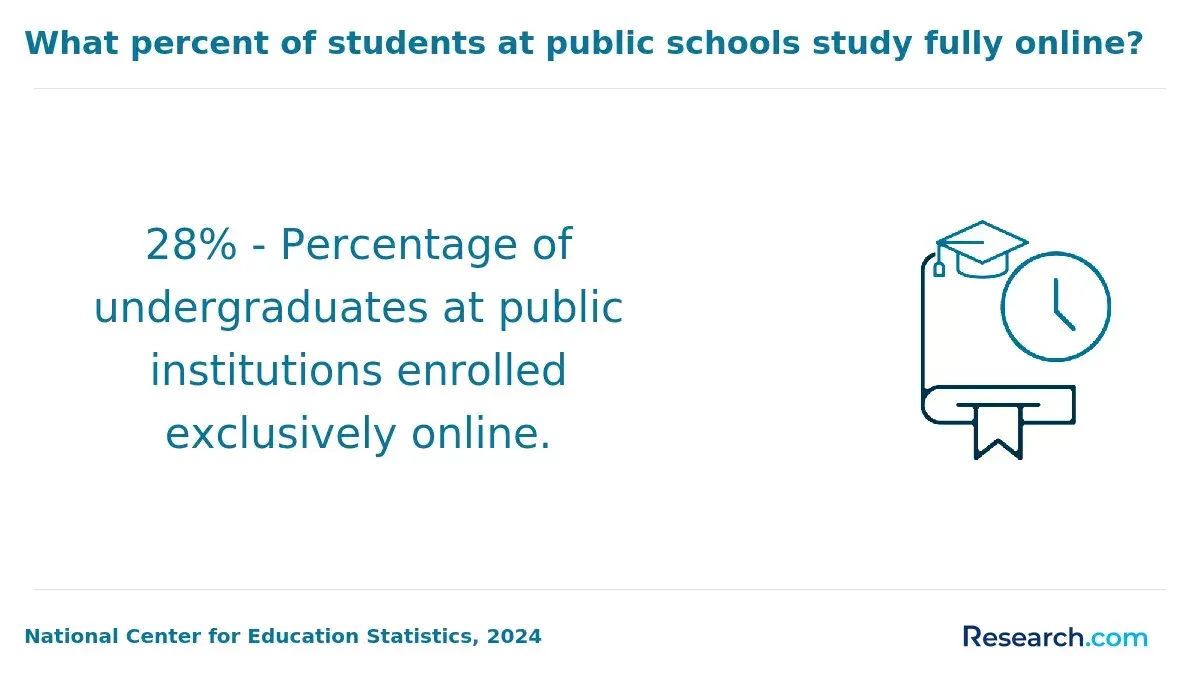
Online study can reduce routine travel, but it does not necessarily allow learner-controlled pacing or eliminate scheduled meetings. Campus study may make laboratory access and frequent in-person collaboration easier. Hybrid and low-residency models fall between those options.
The format comparison below focuses on constraints that matter when you need to keep working while studying.
| Format | Potential advantage | Requirement to verify |
| Online | Less routine campus travel | Live sessions, visits, placements, exams, and defenses |
| Hybrid or low-residency | Remote coursework with periodic in-person work | Visit frequency, travel cost, and scheduling notice |
| Campus-based | Regular access to labs and research groups | Residency, employment restrictions, and commuting |
Programs described as asynchronous can still impose fixed deadlines and adviser meetings. If control over pace is essential, compare published doctoral schedules rather than assuming the flexibility associated with some self paced colleges applies to a doctorate.
Research doctorates generally develop advanced methods, subject expertise, independent research, and scholarly communication. They commonly include examinations, advancement to candidacy, a dissertation, and an oral defense. Professional doctorates often combine field-specific methods and leadership coursework with an applied project, clinical project, or dissertation, depending on the program.
For remote-capable work, look beyond the credential name. A curriculum in statistical analysis, secure computing, evaluation, research design, or digital collaboration may align with your target job. Clinical hours, field placements, laboratory research, and other hands-on requirements can remain essential even when classes are online.
Requirements vary by degree and institution. Applicants generally need at least a bachelor's degree; many professional doctorates require or prefer a relevant master's degree, professional experience, or an existing license. Research PhDs may place particular weight on preparation in the field, research interests, writing, and faculty fit.
Review the program's own admissions page for prerequisites, GPA standards, test policies, recommendations, writing samples, interviews, and any adviser-contact requirement. An online college with no GPA requirements at another level of study tells you nothing about its doctoral admissions policy. If your academic record is uneven, ask how the doctoral committee evaluates recent graduate work and professional accomplishments rather than assuming admission is unavailable - or assured.
There is no reliable single figure across fields. A student entering after a bachelor's degree may face a different sequence from an experienced professional entering a post-master's doctorate. Coursework, research progress, adviser availability, dissertation or project approval, clinical hours, and defense scheduling all affect completion.
For cost, request a written estimate covering required credits, tuition, mandatory fees, travel, placements, and additional terms if research runs long. Ask whether PhD funding includes tuition remission and a stipend, for how long, and under what conditions; do not assume every PhD is funded or compare published tuition alone. Also ask whether previous graduate courses apply to degree requirements, not merely whether the institution accepts transfer credit. If the target occupation does not require a doctorate, compare its total commitment with online 1 year masters programs where a relevant accelerated master's path exists.
Occupational statistics describe jobs, not the earnings of graduates from a particular doctorate or of remote employees. BLS reports a 2024 median wage of $140,910 for computer and information research scientists. That figure is useful when considering a research career, but it cannot establish what a new PhD graduate will earn - or whether an employer will permit remote work.
Compare posted pay ranges for jobs you could realistically qualify for with the doctorate's net cost, years of study, and earnings you might forgo. Check whether the role requires research publications, experience, licensure, or a security clearance. Growth in an occupation does not guarantee an individual offer, and a higher occupational wage does not prove that the doctorate caused it.
How can you choose a reputable doctoral program for remote work?
Start with a target occupation and three actual job postings. Identify the credentials, experience, and location rules they share; then compare programs against those requirements rather than a general ranking.
Use these checks before applying or committing to tuition:
- Confirm institutional accreditation and any program accreditation or state approval needed for your intended occupation.
- Request the full curriculum, culminating requirements, expected completion pathway, and written details of any in-person obligations.
- For a PhD, assess faculty research fit and ask about adviser access, funding terms, and time to degree; for a professional doctorate, examine the applied project and career relevance.
- Compare net cost, funding conditions, graduate transfer rules, and the doctorate's value against a master's degree, certification, licensure, or experience.
- Ask career services or the department for evidence of relevant graduate outcomes, without treating access to support as a job-placement guarantee.
Warning signs include vague accreditation claims, an advertised "fully online" program with unexplained residency rules, and salary claims tied to occupational medians rather than graduate outcomes. The best choice is the credible program whose requirements you can complete and whose training serves a career you actually want - even if that career is only sometimes remote.
Other Things You Should Know About
Sometimes, but online classes do not establish that every requirement is remote. Check for campus visits, clinical placements, labs, examinations, and in-person defenses in the official program requirements.
It depends on the role. Some specialized research positions require a PhD, while other analyst and research-support jobs accept a master's degree or relevant experience. Read the qualifications for the work you want.
Neither is inherently better for remote work. Choose a PhD for a research-intensive goal or an appropriately focused professional doctorate for advanced practice or applied leadership, then assess the location rules of the target jobs.
Not by itself. Telehealth practice depends on the profession, your license, supervised-training history, and applicable state rules, including rules tied to the patient's location.
- The global polarisation of remote work - PMC - NIH https://pmc.ncbi.nlm.nih.gov/articles/PMC9584402/
- Students & Recent Graduates | U.S. Office of Personnel Management https://www.opm.gov/policy-data-oversight/hiring-information/students-recent-graduates/
- Accreditation in the U.S. | ed.gov http://www.ed.gov/laws-and-policy/higher-education-laws-and-policy/college-accreditation/accreditation-in-the-us
- The Rise of Remote Work: Effects on California's Labor Market | California Legislative Analyst's Office https://lao.ca.gov/Publications/Report/5182
- Which Jobs Require a Graduate Degree? | UCLA https://www.ucla.edu/academics/graduate-benefits/which-jobs-require-a-graduate-degree
- How Do Different Remote Work Arrangements Impact Employee Job Satisfaction and Retention? - McDonough School of Business https://msb.georgetown.edu/igrs-blog/how-do-different-remote-work-arrangements-impact-employee-job-satisfaction-and-retention/
- Trends and Opportunities in Remote Work | Institute for Decision Making https://idm.uni.edu/trends-and-opportunities-remote-work
- The Geography of Remote Work | sciencedirect.com https://www.sciencedirect.com/science/article/pii/S0166046222000011
- How the PhD Program Works - Doctoral https://doctoral.wharton.upenn.edu/overview/degree-requirements/
- The Uneven Geography of Remote Work | Economic Innovation Group https://eig.org/the-uneven-geography-of-remote-work/