2027 Best Degrees for Military Spouses

Co-Founder and Chief Data Scientist
A permanent change of station can interrupt a degree just as easily as a job. For military spouses, the best degree is one they can finish through moves and use in the places they may live next.
The stakes are substantial: the U.S. Bureau of Labor Statistics (BLS) reports a May 2024 median annual wage of $93,600 for registered nurses, but nursing also requires supervised clinical training and state licensure. This guide compares degree fields, especially master's options, by career portability, scheduling, cost, and licensing so you can choose a path that fits your circumstances.
Key Things You Should Know
- For spouses seeking location-flexible work, business, information technology, and computer science merit consideration; remote jobs still depend on employer policies and hiring demand.
- Among careers discussed here, software developers had a May 2024 median annual wage of $133,080, according to BLS. That is an occupational median, not a predicted salary for degree graduates.
- A spouse pursuing nursing, education, counseling, or social work should check licensing rules and local placement requirements before enrolling in an online program.
Top 10 Best Degrees for Military Spouses
Business Programs
An MBA or master's in management can suit a spouse with a bachelor's degree who wants to build on experience in operations, finance, marketing, or project coordination. Online coursework may travel well, but scheduled group projects can complicate moves.
Compare generalist programs with specialized degrees: an MBA may broaden management skills, while accounting or analytics coursework may prepare you for more specific roles. Neither degree guarantees a remote job or promotion. Ask whether the program requires work experience, offers part-time enrollment, and includes an internship you can complete after relocating.
Healthcare Programs
A master of health administration (MHA) or master of public health (MPH) can prepare bachelor's degree holders for healthcare operations, policy, or population-health work. These are alternatives to clinical training, not shortcuts to a medical license.
Administration roles may require experience and access to local healthcare employers; public-health projects may involve community-based placements. If you expect frequent moves, check whether any internship can be arranged near your next duty station and whether the curriculum supports the specific job you want.
Information Technology Programs
A master's in information technology, cybersecurity, or information systems may fit spouses who want to manage networks, secure systems, or bridge technology and business needs. Programs commonly admit applicants with a bachelor's degree, but technical prerequisites vary.
Hands-on virtual labs can make online study practical, while security jobs may still require on-site access or a clearance. Compare a degree with a targeted industry certification if your goal is entry into a specific technical role; employers may value demonstrated skills and experience alongside either credential.
Computer Science Programs
A master's in computer science can deepen software development, algorithms, or data-systems skills. It is most useful when the spouse's career goal calls for advanced computing knowledge, not simply because software jobs can pay well. Applicants without a computing bachelor's degree may need programming and mathematics prerequisites or a formal bridge pathway.
Ask whether the program has a thesis, capstone, live classes, or team projects. A portfolio and relevant experience also matter in hiring, and remote-work eligibility varies by employer and location.
Nursing Programs
A master of science in nursing (MSN) generally builds on registered-nurse preparation and a current RN license; some entry pathways have different requirements.
Specialties include nursing education, leadership, and advanced practice. Online classes do not eliminate clinical hours, placement approval, or state authorization. An MSN alone does not confer an advanced-practice license: state boards may require certification, examinations, and other conditions. If you are not already a nurse, compare approved entry-level nursing programs first, including their in-person clinical commitments.
Psychology Programs
A master's in psychology can support research, behavioral-health administration, or further study, but it usually is not a direct route to psychologist licensure.
Spouses seeking therapy work should compare programs specifically designed for clinical mental health counseling or marriage and family therapy, then check the licensing board in every state they may move to. Those pathways typically require supervised fieldwork and postdegree requirements. Even when classes are online, practicum sites and supervisor qualifications can limit portability.
Education Programs
A master of education (MEd) can help experienced educators specialize in curriculum, instructional technology, or leadership. A master's designed for initial teacher certification serves a different purpose and may require student teaching.
Teaching and school-administrator licenses are state-regulated, so an online degree does not automatically qualify a relocating spouse everywhere. Ask whether a program is intended for licensed teachers, how it arranges placements, and which state's certification requirements it meets. Corporate learning roles may offer an alternative for spouses who do not need a teaching license.
Criminal Justice Programs
A master's in criminal justice can serve spouses interested in policy, emergency management, research, or advancement within a justice agency. It is not generally required for entry-level policing, and many agency positions depend on local hiring, background checks, or location-specific training.
Online academic study may be portable even when the target job is not. Compare the curriculum with public administration or cybersecurity if those fields more closely match the work you want, and confirm whether an internship is required.
Engineering Programs
A master's in engineering can help a spouse with appropriate undergraduate preparation develop a specialty such as systems or electrical engineering. Admissions may require a related bachelor's degree and specific mathematics coursework. Some programs offer online lectures but require laboratories or a project with an approved employer.
Engineering work can be tied to physical facilities, even when design tasks are remote. For roles involving public engineering services, check state professional engineer licensing rules separately; the master's degree itself is not a license.
Social Work Programs
A master of social work (MSW) is the usual graduate pathway toward clinical social-work licensure, but the degree is only one step. Programs require field education, which may be difficult to arrange across moves.
Applicants with an eligible accredited bachelor of social work may qualify for an advanced-standing pathway; other bachelor's graduates generally follow a longer foundation route.
When considering schools, ask how the school approves placements in your state and whether its curriculum supports your intended license. Clinical practice also requires state-specific supervised experience and examination requirements.
What Are the Best Degrees for Military Spouses?
The best degree for a military spouse depends on whether the intended career travels with them. Business, IT, and computer science offer skills that can transfer across employers and locations. Nursing, education, and social work offer clearer professional pathways for some students but require more planning around placements and licenses. The ten fields above are master's-level options, not a claim that every spouse needs graduate school.
This comparison highlights the principal trade-off for each path. "Portable" means the skills can be used in multiple locations; it does not mean every job can be done remotely.
| Degree field | Potential advantage | Constraint to check first |
| Business, IT, or computer science | Skills applicable across industries | Experience requirements and remote-work policies |
| Healthcare administration or public health | Nonclinical healthcare career options | Local employer access or internship placement |
| Nursing, education, counseling, or social work | Defined professional practice paths | State licensure and in-person training |
| Engineering or criminal justice | Specialized professional preparation | Related prerequisites or location-dependent jobs |
A spouse without a bachelor's degree should usually compare associate and bachelor's pathways before evaluating these master's programs. Start with the occupation you want, identify its actual entry credential, then choose the least disruptive credible route to it.
Which Online Degrees Offer Military Spouses Portable Careers?
Online degrees in business, accounting, IT, computer science, and some healthcare administration fields can support careers with transferable skills. The strongest choice matches a real entry-level role: for example, an accounting program should cover the coursework needed for your intended accounting path, while an IT program should offer practical technical work. A degree that is online is not necessarily self-paced, and a portable skill does not guarantee a remote position.
If you need a shorter first credential, compare certificates and 1-year associate degree programs online with the bachelor's degree your target occupation may require. Check the advertised timeline against your own transfer credits, course load, and remaining requirements; a short starting credential may be useful without replacing a later degree.
How Can Military Spouses Pay for College and Training?
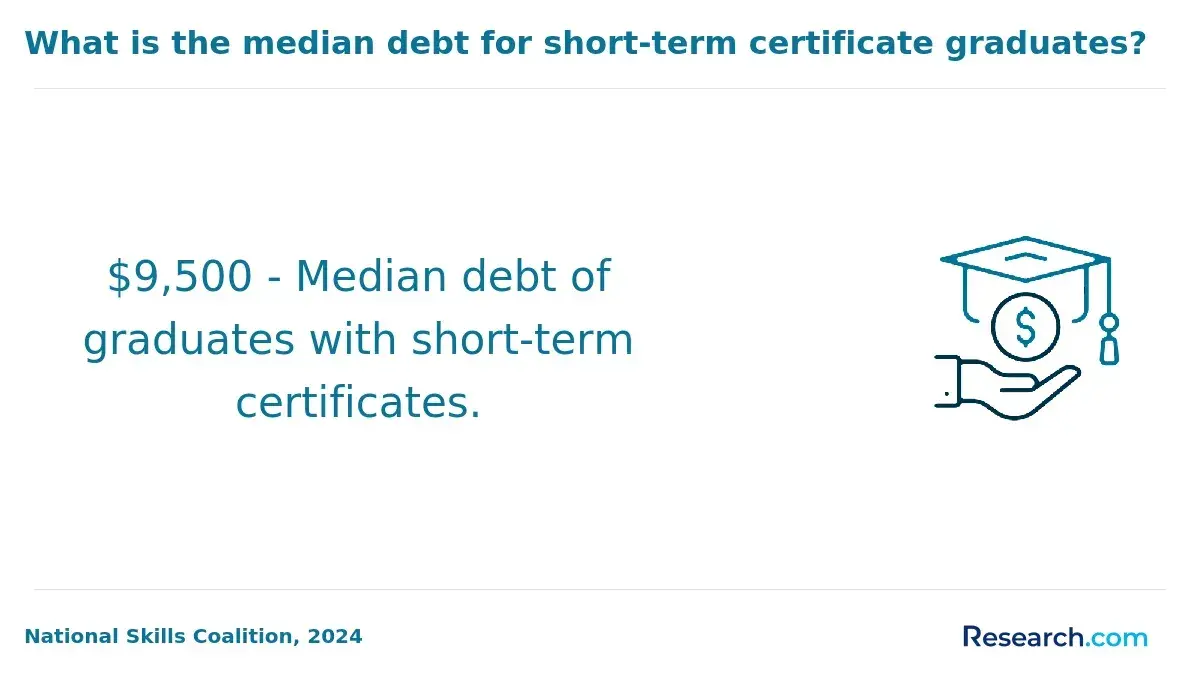
Begin with the school's full cost of attendance and its financial-aid offer, not the tuition rate alone. Eligible spouses can investigate federal student aid through the FAFSA, school scholarships, military-spouse scholarships, and employer tuition assistance. Pell Grants generally apply to eligible undergraduates rather than graduate students. Federal loans must be repaid, so compare expected borrowing with the credential actually required for your career.
The Department of Defense's My Career Advancement Account (MyCAA) scholarship can provide eligible spouses up to $4,000 for approved education and training, subject to current eligibility and program rules. It is not general funding for any degree. Some spouses may also be able to use transferred Post-9/11 GI Bill benefits if the service member completed the required transfer process. Confirm your eligibility and the school's participation before counting either benefit in your budget.
Are Online Degrees Better Than Campus Programs for Military Spouses?
Online study is often the better fit when a spouse may relocate before graduation and the program can deliver required courses consistently from each destination. Campus study can be preferable for equipment-intensive labs, local employer connections, or students who learn best in person. Neither format solves a required clinical, practicum, or student-teaching placement automatically.
Ask for a sample course schedule: Are classes live or asynchronous? Can you enroll part time? Will required courses run after a move? Short classes, including 6-week courses, can change the pace of study, but they do not make the entire degree a six-week program. Confirm deadlines and the complete degree timeline before choosing on flexibility alone.
What Accreditation Should Military Spouses Look For?
First, verify that the college holds recognized institutional accreditation; this matters for federal aid eligibility and can affect credit transfer.
Then check programmatic accreditation when the intended profession requires or commonly relies on it. Examples include Commission on Collegiate Nursing Education or Accreditation Commission for Education in Nursing review for relevant nursing programs, Council on Social Work Education accreditation for social work, and appropriate accreditation for counseling or teacher preparation.
Accreditation is not the same as licensure approval. A program may be accredited yet fail to meet a particular state's education or placement rules. Ask the program to identify the states for which it has determined licensure eligibility, and verify the answer with the relevant state board before paying a deposit.
How Long Do Military Spouse Degree Programs Take and Cost?
A bachelor's degree commonly takes about four years of full-time study from the start; a master's often takes one to three years after a bachelor's, depending on the program. Part-time enrollment, prerequisites, fieldwork, and course availability can extend either timeline. Accepted transfer credits may reduce remaining undergraduate requirements, but a school must evaluate how those credits apply to the specific major. Graduate transfer rules are typically separate.
Published tuition is not total cost. Request a degree-specific estimate covering remaining credits, mandatory fees, books or software, travel, and any clinical or internship expenses. Compare the amount you would pay after grants with the time you may need to reduce paid work. If your goal eventually requires research training, investigate affordable online PhD programs separately rather than assuming a master's will meet that goal.
Which Careers Offer Military Spouses the Best Salaries and Job Outlook?
Salary matters, but compare occupations only after checking whether you can realistically enter them from your chosen program. The BLS May 2024 median annual wages below describe workers in each occupation nationwide - not graduates of a particular degree, new hires, or remote workers.
| Occupation | May 2024 U.S. median annual wage | Entry consideration |
| Software developer | $133,080 | Programming ability and relevant preparation; a master's is not the usual entry requirement |
| Registered nurse | $93,600 | Approved nursing education, examination, and state licensure |
These figures show why a high-paying occupation is not automatically the best return on a new master's degree. Compare the BLS outlook for the specific occupation you want, local openings near possible duty stations, the education employers request, and your likely total education cost. Experience, specialty, employer, and location all affect individual pay.
What Licenses and Certifications Do Military Spouse Careers Require?
Licensing rules attach to occupations, not simply to degree titles. Registered nurses, teachers, clinical social workers, counselors, and psychologists must meet the applicable state's requirements; some pathways also require supervised experience, examinations, or national certification. A business, IT, or computer science degree generally does not itself create a state professional license, although employers may request role-specific certifications.
Interstate licensure compacts and military-spouse provisions may help some professionals after a move, but eligibility and application steps vary by occupation and state. Before enrolling, identify your likely destination states, check each board's education and supervised-practice requirements, and ask how the school supports students who relocate during fieldwork. Do not rely on a promise that an "online degree qualifies you everywhere."
How Should Military Spouses Choose a Reputable Degree Program?
Work backward from a specific job, then compare programs on the requirements most likely to interrupt your plans. A spouse returning to school after time away may also find useful questions about scheduling and support in guides to the best degrees for older adults; age-specific recommendations are not a substitute for checking military-spouse needs.
Before applying, get written answers to these questions:
- Does this exact program prepare students for my intended occupation and, if relevant, licensure in states where I may live?
- Which credits will apply to my degree, what must I complete at this school, and what is my individualized graduation plan?
- Are live classes, campus visits, labs, clinicals, internships, or student teaching required, and can placements continue after a move?
- What will all remaining credits and required fees cost after confirmed aid, and how many terms will my planned course load take?
Be wary of a school that cannot explain placement arrangements, presents occupational median pay as a graduate outcome, or quotes a completion time without stating its transfer-credit assumptions. A reputable option should let you verify its accreditation, requirements, costs, and career fit before you commit.
Other Things You Should Know About
No. Many business and technology roles have bachelor's, associate, certificate, or experience-based entry routes. Choose a master's when it serves a specific professional requirement or advancement goal.
Coursework may be online, but nursing, counseling, social work, and teaching pathways commonly require supervised in-person placements. Ask how the school handles placements across state lines.
No. The receiving school evaluates eligible courses and decides whether they meet general education, major, or elective requirements. Request an evaluation and remaining-degree plan.
Pick two or three realistic occupations, check their entry and licensing requirements, then compare programs on total cost, scheduling, placement logistics, and career relevance.
References
- Military Spouse Employment Partnership | U.S. Department of the Interior https://www.doi.gov/veterans/msep
- License Recognition - Military Spouses https://www.dol.gov/agencies/vets/veterans/military-spouses/license-recognition
- College Credit for Military Training & Experiences | dantes.mil https://www.dantes.mil/credit4training/
- Transferring Your Professional License | militaryonesource.mil https://www.militaryonesource.mil/benefits/transferring-your-professional-license/
- Jobs for military spouses - VA Careers https://vacareers.va.gov/career-guidance/military-spouses/
- 4 Flexible Ways to Earn a College Degree on Your Schedule | stjohns.edu https://www.stjohns.edu/news-media/johnnies-blog/4-flexible-ways-earn-college-degree-your-schedule-0
- Training for Military Spouses - SDSU Global Campus https://globalcampus.sdsu.edu/student-resources/military-and-veterans/training-for-military-spouses/
- Careers for Military Spouses: Facing Employment Challenges Head-On | Purdue Global https://www.purdueglobal.edu/blog/military/careers-for-military-spouses/
- UMass Global MyPath: Self-Paced Programs https://www.umassglobal.edu/why-umassglobal/flexible-ways-to-learn/self-paced
- MyCAA | Texas Woman's University | BOLDLY GO https://twu.edu/veterans/veterans-educational-benefits/mycaa/