2027 Best Degree Programs With Fast Admissions Decisions

Co-Founder and Chief Data Scientist
Waiting weeks for an admissions decision can disrupt plans to change careers, seek a promotion, or use employer tuition benefits. This guide compares master's degree fields where a quick decision may be possible, and explains why a fast reply is not the same as easy admission or a quick degree.
The stakes extend beyond enrollment, the U.S. Bureau of Labor Statistics reported a 2024 median annual wage of $133,080 for software developers, but that occupational figure is not a promised outcome for computer science graduates. You'll learn how to compare decision timelines against eligibility, cost, career fit, and licensing requirements.
Key Things You Should Know
- Compare the program's decision clock, not its application deadline. Ask when review begins after every transcript, reference, and prerequisite is received.
- Check for a second admissions gate. Nursing, teaching, counseling, and social work pathways may require licensure, placements, or separate program approval even when the university admits applicants quickly.
- The BLS's $133,080 median wage for software developers describes an occupation, not a return guaranteed by a fast-admission master's program.
Top 10 Best Degree Programs With Fast Admissions Decisions
Business Programs
Master of Business Administration (MBA), management, and accounting programs suit applicants seeking advancement or a career change. Some review completed applications on a rolling basis, but an MBA may require experience, while an accounting master's may require foundation courses. A quick university-level decision does not confirm admission to a particular concentration. Compare published review timelines alongside total tuition, employer reimbursement rules, and whether a required internship or capstone fits your schedule. Choose accounting only after checking the coursework your state requires for CPA eligibility.
Healthcare Programs
Healthcare administration and health informatics master's programs can fit applicants interested in operations, data, or policy rather than direct patient care. Admissions may move quickly when a program accepts varied undergraduate majors, although statistics or healthcare experience can still be expected. These degrees do not confer a clinical license. Before applying, distinguish general graduate admission from admission to a specific track, and check whether an internship requires access to a local healthcare organization.
Information Technology Programs
Master's programs in information technology or cybersecurity can appeal to working professionals because some offer multiple starts and review applications as they arrive. Eligibility varies: one program may welcome career changers with foundation coursework, while another expects substantial technical preparation. Compare networking, security, and systems coursework with your target role. An IT degree is not a substitute for experience or any certification an employer requires; ask whether hands-on projects, scheduled labs, or a capstone affect your timetable.
Computer Science Programs
A master's in computer science is generally more mathematically and programming-intensive than a broad IT degree. It may suit software developers seeking deeper study in algorithms, AI, or systems, but prerequisite reviews can delay an otherwise quick decision. Career changers should ask whether bridge courses are required before graduate enrollment and whether those courses add cost or time. A prompt admission offer is most useful when the curriculum matches both your preparation and the work you want to do.
Nursing Programs
Master of Science in Nursing (MSN) pathways commonly require an active RN license, qualifying nursing education, and clinical placement planning. A school might review applications promptly while a nurse practitioner specialty has additional prerequisites, limited seats, or a later clinical start. Verify the exact specialty's admission process, approved placement locations, and state licensure implications before treating an offer as a workable start date. Applicants without RN preparation need a different entry pathway, not simply a faster MSN application.
Psychology Programs
Psychology master's programs vary sharply by purpose. A general psychology degree may support research or further study, while a clinical or counseling pathway has distinct supervised-training and licensing requirements. Neither a rapid decision nor a program title establishes eligibility to practice independently. Check prerequisites, research or practicum expectations, and the applicable state board's education rules. If your goal is therapy, confirm that the specific program - not merely its psychology department - meets that goal.
Education Programs
Master's degrees in curriculum, educational leadership, or teaching can serve different applicants. A degree for licensed teachers may admit quickly but be unsuitable for someone seeking an initial teaching license. Initial-licensure tracks can require background checks, subject prerequisites, and student teaching that complicate both admission and scheduling. Confirm whether the program accepts your current credential, meets your state's requirements, and places students in schools where you can realistically complete fieldwork.
Criminal Justice Programs
A criminal justice master's can provide advanced study in policy, administration, or research for people in public service. Some programs accept applicants from multiple undergraduate fields and review complete files throughout the year. The degree does not replace agency hiring standards, a background investigation, or experience required for leadership roles. Compare the curriculum with your intended employer's requirements; applicants targeting analytical work may prefer a program with strong statistics and research training.
Engineering Programs
Engineering master's programs can offer a fast administrative review, but faculty review, technical prerequisites, and laboratory capacity may govern the actual decision. A professional, coursework-based program may fit an employed engineer better than a research thesis pathway; neither is automatically quicker. Applicants changing disciplines should ask whether undergraduate leveling courses are necessary. For work involving licensed professional engineering practice, check state board rules rather than assuming the master's itself establishes licensure eligibility.
Social Work Programs
A Master of Social Work (MSW) is a distinct professional pathway, not interchangeable with a general psychology or human services degree. Programs may admit on a rolling basis, yet field placement availability and separate advanced-standing eligibility can determine when study begins. Advanced standing generally depends on a qualifying bachelor's in social work; it is not a shortcut available to every applicant. Verify program accreditation, placement requirements, and your state's post-degree examination and supervised-practice rules before enrolling.
What Are the Best Degree Programs With Fast Admissions Decisions?
The best fast-decision program is one that can review your completed file promptly without compromising your career requirements. Business, IT, and some nonclinical healthcare programs may be practical starting points for applicants with varied undergraduate backgrounds. Licensed-profession pathways can still be good choices, but a quick offer matters less if you cannot meet specialty admission or placement requirements.
This comparison shows the admissions issue most likely to separate a quick decision from a useful one. It is a way to shortlist program types, not a claim that every school in a field follows the same policy.
| Program family | Good fit when | Decision-stage question |
| MBA or management | You want business advancement or a career change | Are experience or foundation courses required? |
| IT or health informatics | You want technical or data-focused work | Will prerequisites delay a decision or start? |
| MSN or MSW | You meet the prior-credential requirements for professional practice | Is specialty admission separate from graduate admission? |
| Education or counseling-related study | You have a defined teaching or practice goal | Does this exact track meet state requirements? |
If you are still choosing a field, compare these options with other best majors based on the work you want to do, not solely on how soon an admissions office replies.
Which Online Colleges Offer Rolling Admissions and Quick Decisions?
Southern New Hampshire University and Western Governors University are two online institutions worth checking for frequent enrollment opportunities. SNHU advertises rolling admissions for many online offerings, while WGU offers frequent starts for many programs. Neither feature establishes a decision deadline for every master's degree. Program eligibility, completed documents, and an available start can differ.
Ask each school's admissions office for the current policy for your exact graduate program, whether review is rolling, when the completed-file clock begins, who makes the decision, and the earliest start after acceptance. Request the answer in writing. If a program uses a cohort deadline or separate faculty review, exclude it from your fast-decision shortlist unless its actual timetable works for you.
How Quickly Can You Get Accepted Into These Degree Programs?
There is no reliable field-wide acceptance window. A school may acknowledge an application quickly but wait to decide until transcripts, recommendations, prerequisite evaluations, or a department review are complete. Rolling admission means applications can be reviewed as they arrive; it does not promise acceptance within a set number of days.
To estimate your own timeline, work backward from the start date you need:
- Ask what makes your file complete and arrange official transcripts and references before submitting.
- Confirm whether the department issues a separate decision and ask for its current expected review window.
- Check the deadlines for accepting an offer, arranging aid, and securing any required placement.
Students balancing study with caregiving should also check schedules after admission, these best online degrees for stay at home moms offer additional ways to think about fit. An early offer helps little if required live sessions or placements cannot fit your week.
Which Fast-Admission Programs Offer the Best Career Opportunities?
Career opportunity depends more on the occupation, your preparation, and local hiring conditions than on admissions speed. IT and computer science programs may support technical advancement; accounting, healthcare administration, and education programs serve different professional goals. Clinical nursing and social work pathways can connect directly to regulated work, but only when the applicant meets the relevant licensing steps.
For salary context, the BLS reported a 2024 median annual wage of $133,080 for software developers. That is an occupational median across workers, not the expected salary of someone admitted quickly to a computer science master's. Applicants who prefer focused analytical work can also explore introvert jobs, then assess whether a proposed degree is actually needed for a target role. Ask employers or review job postings for the experience and credentials they request.
What Are the Admission Requirements for Fast-Decision Degree Programs?
Most master's applicants need a completed bachelor's degree and official transcripts. Beyond that, requirements are program-specific: a school may request references, a statement of purpose, relevant experience, prerequisite courses, an interview, or a portfolio. Some programs waive or do not use the GRE or GMAT; do not infer a waiver from a university's general graduate admissions page.
Before paying an application fee, compare the requirements for the exact track and applicant category. Check whether a minimum GPA is published, how applicants below it are evaluated, and whether conditional admission is possible. For regulated fields, confirm licenses and prerequisite credentials first. A common mistake is applying to a fast-review university only to discover that its desired specialty uses a separate, selective process.
How Do Online and Campus Programs Compare for Speed and Flexibility?
Online study may make it easier to apply from anywhere and continue working, but it does not automatically speed an admissions decision or degree completion. Campus programs may provide easier access to laboratories, faculty, or local placement networks; online programs may still require live meetings, fixed deadlines, residencies, or in-person clinical work.
Compare online degree programs by their actual schedule rather than their delivery label. Ask for a sample term calendar and identify every required live, campus, and local field component. Choose the format you can complete consistently: a conveniently timed acceptance into an impractical schedule is not a faster route to graduation.
How Long Do These Programs Take and What Do They Cost?
Decision time, time to start, and time to finish are different measures. A master's commonly requires substantial graduate coursework, but credit totals and timelines vary by program, enrollment load, prerequisites, course sequencing, and thesis or fieldwork requirements. Advanced-standing MSW pathways, for example, have separate eligibility rules; their shorter advertised timelines should not be applied to standard-track applicants.
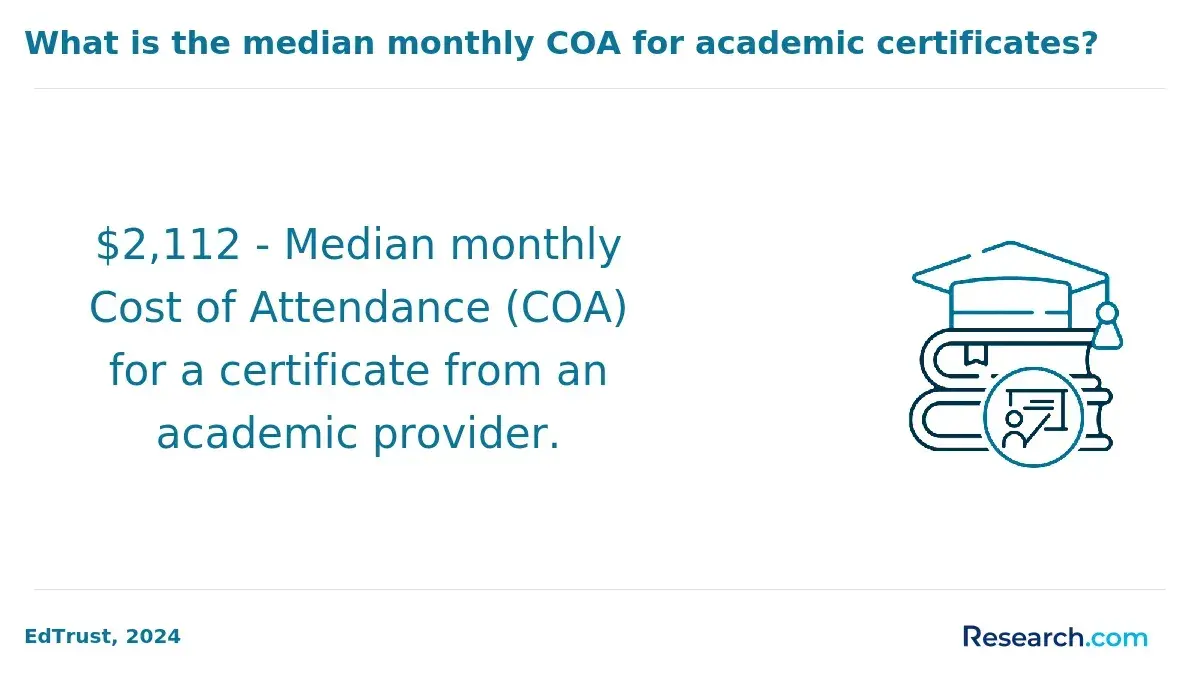
Published per-credit tuition is only a starting point for cost comparisons. Calculate tuition for your remaining required credits, then add mandatory and program fees, books or software, travel, and placement expenses. Ask whether accepted graduate transfer courses actually satisfy degree requirements; undergraduate credits do not automatically count toward a master's. Compare the resulting total with available aid or employer assistance, and ask how part-time enrollment changes both your bill and completion date.
Do These Programs Require Professional Licenses or Certifications?
Some paths do; others do not. Nursing, social work, initial teacher preparation, and certain counseling pathways involve state-regulated practice. Requirements can include a qualifying accredited program, examinations, supervised hours, background checks, or an existing professional license. Rules differ by occupation and state. A general business, IT, or criminal justice master's does not itself grant a professional license, although an employer may value separate certifications.
Identify the occupation first, then check the relevant state board's requirements against the specific program and concentration. Do this before accepting an offer, especially if you intend to study online from another state. Do not mistake eligibility to apply for a license after graduation for a license awarded with the degree.
How Can You Verify a Fast-Admission Program's Accreditation and Quality?
Verify institutional accreditation through the U.S. Department of Education's accreditation database or the named accreditor. Then check programmatic accreditation where it matters to your goal - for example, social work, nursing, or certain professional licensure pathways. Accreditation should apply to the institution or program you will actually attend, not merely to a related department.
Use this short check before committing a deposit:
- Match the school's official catalog entry to the exact degree, concentration, delivery format, and admissions policy you were offered.
- Confirm applicable institutional and programmatic accreditation directly with the accrediting body, and check state board approval where licensure is the goal.
- Request a written estimate of required courses, total charges, in-person obligations, and any conditions attached to admission.
Treat pressure to enroll before receiving these details as a red flag. A credible fast decision should leave enough time to verify what you are buying.
Other Things You Should Know About
No. It means a program can review applications as they arrive. Its decision may still depend on a complete file, faculty review, or available seats.
Sometimes. Business and some IT or healthcare administration programs may consider varied backgrounds, while technical and licensed-profession tracks may require specific courses or credentials.
Not necessarily. Course start dates, financial aid processing, prerequisite completion, and clinical or field placements can create a gap between acceptance and enrollment.
Confirm the exact program's accreditation, any conditions on your offer, total expected cost, earliest workable start, in-person requirements, and whether the degree meets your intended career or licensing goal.
References
- DAPIP | Homepage - Office of Postsecondary Education (OPE) https://ope.ed.gov/dapip/
- Cost of Attendance (Budget) | 2025-2026 Federal Student Aid Handbook https://fsapartners.ed.gov/knowledge-center/fsa-handbook/2025-2026/vol3/ch2-cost-attendance-budget
- Accreditation in the U.S. | ed.gov http://www.ed.gov/laws-and-policy/higher-education-laws-and-policy/college-accreditation/accreditation-in-the-us
- Student Outcomes | DeVry University https://www.devry.edu/about/student-outcomes.html
- What is Conditional Admission? | reach.edu https://info.reach.edu/support/what-is-conditional-admission
- Admissions FAQs - Graduate Studies - Georgetown University https://grad.georgetown.edu/admissions/admissions-faq/
- Post-Submission Changes | PharmCAS https://www.pharmcas.org/application-instructions/after-you-submit
- Start Online College Anytime: Open Enrollment Schools (2026) | edsmart.org https://www.edsmart.org/online-colleges-open-enrollment-start-anytime/