2027 Best College Programs With Monthly Start Dates

Co-Founder and Chief Data Scientist
Waiting for a semester to begin can delay a career change, but an earlier start is useful only if the program fits your schedule and goal. The U.S. Bureau of Labor Statistics reports that registered nurses earned a median annual wage of $93,600 in 2024 - a reminder that career requirements matter as much as enrollment timing. This guide compares master's program families that adult learners may consider, explains what a monthly start actually means, and shows you how to verify dates, costs, and professional requirements before applying.
Key Things You Should Know
- Prioritize a confirmed start date for your specific program, not a college-wide claim; application deadlines and first-course availability may differ.
- Western Governors University publishes first-of-month starts for its online MBA, but its six-month tuition terms are not the same thing as month-long courses.
- For nursing, teaching, counseling, and social work, check state eligibility and required placements before choosing the earliest available start.
Top 10 Best College Programs With Monthly Start Dates
Business Programs
An online MBA is a practical choice for experienced professionals seeking broader management training. Western Governors University publishes first-of-month starts for its online MBA, making it a concrete option to investigate if waiting for a semester is a problem. Compare accounting, finance, operations, and capstone requirements with your goals; an MBA is not a substitute for specialized accounting licensure. Ask when you must submit transcripts and whether the first courses you need are available immediately. Also compare the total cost of WGU's six-month terms with your realistic pace of study.
Healthcare Programs
Healthcare administration and health informatics master's programs can suit professionals who want to improve care delivery without pursuing a clinical license. Compare an MHA's management focus with an informatics program's emphasis on data and systems. A college's frequent admissions dates do not establish monthly starts for either degree: confirm the next start for the named program, whether prerequisite coursework is required, and whether a practicum or capstone can be completed locally. Clinical healthcare careers generally require a different educational and licensing path.
Information Technology Programs
Master's programs in cybersecurity or IT management serve different goals: one emphasizes security practice, while the other focuses more on leading technology operations. Western Governors University advertises first-of-month starts for its online master's in cybersecurity; verify current admissions timing and any required preparation for that exact degree. Compare hands-on projects, technical prerequisites, and access to needed software before enrolling. A monthly entry point may help you begin sooner, but it does not establish how quickly you will finish or qualify you automatically for a senior security role.
Computer Science Programs
An MS in computer science usually offers deeper work in algorithms, software, or computing research than an IT management degree. It may suit developers seeking technical specialization, but applicants from other fields can face programming or mathematics prerequisites that delay entry. Confirm whether the computer science program itself has monthly starts; an institution's flexible calendar may not extend to every graduate program. Compare required foundations, project or thesis options, and course sequencing - not just the first date on which you can enroll.
Nursing Programs
MSN programs may focus on education, leadership, informatics, or advanced clinical practice. Most require an active RN license, and entry routes differ for nurses with an associate degree and those with a BSN. A monthly online start does not make clinical hours or placements self-paced. Before applying, confirm the named track's start calendar, state authorization, placement support, and any professional accreditation relevant to your goal. Nurse practitioner pathways have additional clinical, certification, and state licensing requirements; an MSN in another specialty is not interchangeable.
Psychology Programs
A general master's in psychology can support research or further study, while counseling-oriented programs have different supervised-training and licensure implications. Choose based on the intended occupation, not the promise of a quick start. Ask whether the specific track admits new students monthly and whether required research methods courses or practica follow a fixed sequence. A psychology master's alone generally does not qualify someone to practice as a licensed psychologist; state rules and further doctoral training may apply.
Education Programs
Education master's programs serve different applicants: some advance licensed teachers' skills, while initial-licensure programs prepare career changers to teach. Check that you qualify for the route you select. Even if online coursework can begin monthly, student teaching depends on school calendars and placement approval. Verify the program's actual start dates, state approval, background-check requirements, and whether it leads to the credential you need. A master's designed for practicing teachers may not provide an initial teaching license.
Criminal Justice Programs
A master's in criminal justice can deepen study of policy, leadership, or analysis for people already working in public service. It is not normally required for entry-level policing and does not replace academy or agency requirements. Compare courses and employer expectations before paying for an advanced degree. If you need a monthly start, request the calendar for the exact concentration and check when required courses and a capstone are offered; an open enrollment date will not help if a key course runs infrequently.
Engineering Programs
Engineering master's programs often serve graduates who already have substantial mathematics and technical preparation. Compare a technical MS with an engineering management degree: the latter may be better for project leadership but less suitable for specialized design work. Labs, thesis supervision, and sequenced courses can limit how useful a monthly start is. Ask whether your intended specialization accepts new students monthly and whether it requires campus work. Professional engineer licensure is governed by state rules, examination, and experience - not by enrollment timing.
Social Work Programs
An MSW is a professional degree for social work practice; applicants with a qualifying BSW may be eligible for a separate advanced-standing route. Do not assume that route, or its shorter timeline, applies to every applicant. Field education requires approved placements and substantial scheduled hours, even when classes are online. Check Council on Social Work Education accreditation, the specific cohort's start date, placement arrangements, and your state's licensing rules. A monthly admissions opportunity cannot remove required supervised practice after graduation.
What college programs offer monthly start dates for adult learners?
Which programs can adult learners start monthly? Online business and technology master's programs offer concrete examples: Western Governors University publishes first-of-month starts for its MBA and cybersecurity master's. Other program families in this guide are worth comparing, but they should not be treated as monthly-start options until the college confirms dates for the exact degree and track.
A monthly start means a new student can begin the applicable program in successive months; it does not mean every class starts monthly or that admission is automatic. Ask admissions for the next available start, the deadline for a complete application, and the first term in which required courses will be available. That distinction is especially important if you work shifts or need to coordinate tuition assistance.
Are online colleges with monthly starts accredited?
Yes, a monthly-start college can be accredited. Start frequency and accreditation answer different questions. Western Governors University, for example, holds institutional accreditation from the Northwest Commission on Colleges and Universities. Verify a school's current status with its accreditor or the U.S. Department of Education rather than relying on an advertisement.
Institutional accreditation does not settle every professional question. If your goal is nursing, teaching, counseling, or social work, check the applicable program accreditation or state approval and confirm that the specific online track meets requirements where you intend to practice. Do this before paying a deposit or accepting an admission offer.
How do monthly-start college programs compare with campus programs?
Monthly-start online programs can reduce the wait to enroll and may simplify relocation or changing work schedules. Campus programs can offer more predictable access to in-person labs, peers, and local placements. Neither format is automatically more flexible once coursework begins. The comparison below highlights commitments to check beyond the start date.
| Feature | Monthly-start online program | Campus program |
| Entry timing | May allow a faster start for the specified degree | Often tied to a semester or other set intake |
| Weekly schedule | May still include live meetings and deadlines | Typically includes scheduled in-person sessions |
| Practical work | May require local placements or campus visits | May provide nearby labs or placement networks |
| Best fit to investigate | Adults who need location flexibility | Students who need regular on-site access |
Students who relocate often should also check state authorization and placement rules. An online school for military spouses may offer relevant scheduling ideas, but you still need to confirm the dates and location requirements of your chosen program.
What types of certificates and degrees can you earn through monthly-start programs?
Colleges may offer certificates, associate degrees, bachelor's degrees, and master's degrees on calendars with frequent starts. The ten program families above focus on master's degrees; a school that starts one credential monthly may use a different calendar for another. Certificates can be useful for a narrow skill, while a degree generally covers a broader curriculum. Neither is a shortcut around occupational licensing requirements.
If you need a smaller commitment before choosing a degree, compare 6 week certification programs online with college certificates. A six-week course describes the length of that course, not the time needed to earn a degree or become professionally certified. Check whether credits can later apply to your intended program before assuming the credentials stack.
What are the admission requirements for monthly-start college programs?
Requirements depend on the credential and track. Master's applicants generally need a bachelor's degree and transcripts; some programs also evaluate prerequisites, professional experience, recommendations, or a statement of purpose. Nursing tracks may require an RN license, while engineering or computer science programs may require substantial prior technical coursework. A college's general graduate admission policy may not override a selective program's rules.
For the earliest possible start, ask when all materials must be received - not merely when the application form is due. If you have previous graduate credit, request a program-specific evaluation: accepted credits must apply to remaining requirements, and schools may limit how much can transfer. Do not assume professional experience automatically earns graduate credit.
How long do monthly-start programs take and what do they cost?
A monthly start changes when you begin, not how much work the program requires. Completion depends on required credits, enrollment pace, prerequisites, course sequencing, and any thesis, capstone, or placement. Likewise, compare the cost to finish, not an advertised price for one course or term.
These cost structures can affect two working adults differently even when they choose the same field. Use the comparison to identify what belongs in your personal estimate.
| Cost structure | What determines the total | Key trade-off |
| Per credit | Remaining credits, tuition rate, and required fees | A lighter schedule may spread payments without reducing the total |
| Flat rate per term | Number of terms needed, term price, and additional fees | A faster pace may lower total tuition but increase weekly workload |
| Programs with placements | Tuition plus possible travel, screening, and placement-related expenses | Online classes may not eliminate local costs |
Ask the school for a written estimate covering tuition, mandatory fees, materials, and any in-person requirements, along with federal-aid eligibility for your enrollment status. If your goal ultimately requires doctoral study, compare that separate investment using a cheap online PhD guide rather than treating a master's price as the full cost of the career path.
What careers and salaries can monthly-start programs lead to?
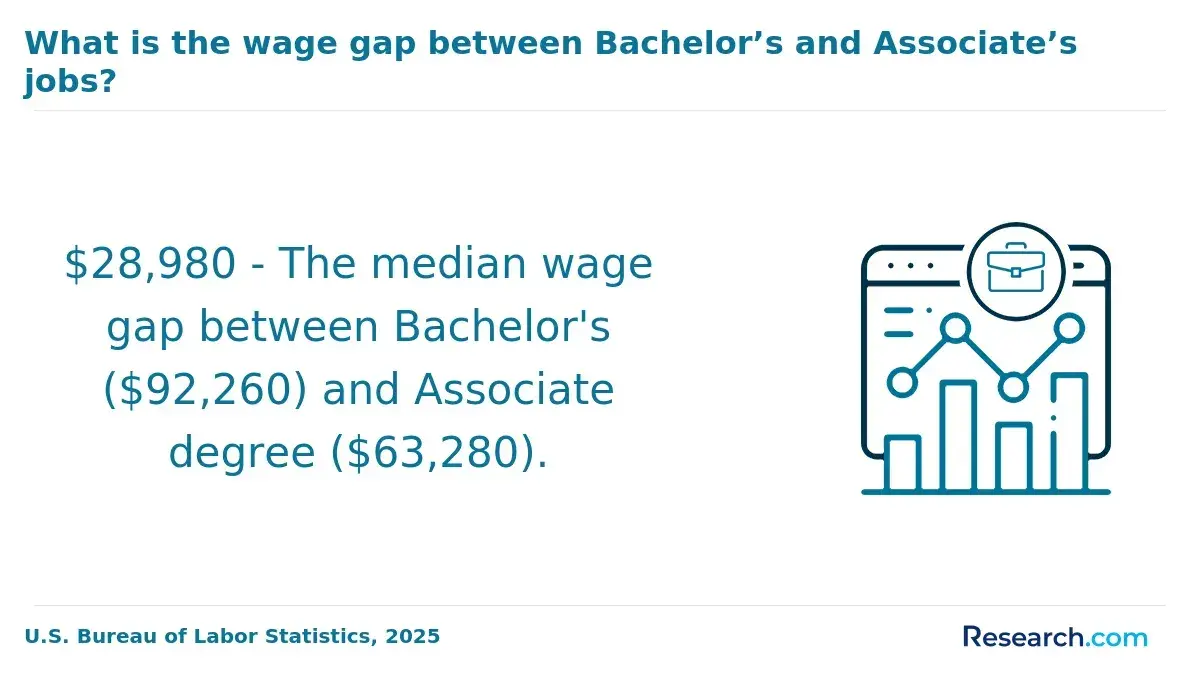
A monthly-start program can help you begin preparing sooner, but it does not promise a job or salary. The U.S. Bureau of Labor Statistics' 2024 median annual wage of $93,600 for registered nurses, for example, describes people employed in that occupation - not MSN graduates. RN licensure is required for nursing practice, and pay varies by role, experience, and location.
For a useful return-on-investment comparison, match each degree to jobs you could realistically pursue, then consider the full program cost and any licenses or experience still needed. Business and technology employers may value demonstrated skills alongside education; regulated clinical and teaching roles have additional formal requirements. Lists of most profitable majors can suggest fields to investigate, but occupational wages should not be read as guaranteed earnings from a particular master's program.
Which monthly-start programs require professional licenses or certifications?
Nursing, education, clinical mental health, and social work require the closest licensing review. Requirements depend on the role and state: they can include an approved degree, supervised experience, examinations, and background checks. An advanced nursing track may also require specialty certification. A general psychology or healthcare administration master's should not be mistaken for a license-qualifying clinical program.
Engineering graduates pursuing professional engineer licensure face separate state requirements, typically involving examinations and experience. In cybersecurity, industry certifications may be useful for particular jobs but are not automatically awarded with a degree. Ask the relevant state board or credentialing body whether the exact program and delivery format meet your intended pathway's rules.
How can you choose a reputable college with monthly start dates?
The best choice is the program you can enter, complete, afford, and use for your intended goal - not simply the one with the next open date. Before applying, compare finalists using evidence from their program pages, catalogs, calendars, and tuition schedules. These checks catch common mistakes that a general "monthly starts" claim can hide:
- Get written confirmation of the next start and application deadline for the exact degree, concentration, and applicant route.
- Check institutional accreditation and, where needed, program approval and state licensure eligibility.
- Request an individualized estimate of remaining credits, transferable coursework, fees, and realistic time to completion.
- Confirm live-class times, course sequencing, campus visits, and who arranges required placements.
- Compare the program's curriculum with actual job requirements; do not treat an occupational median wage as a promised outcome.
If a school cannot explain when required courses run or whether it supports placements in your location, pause before enrolling. An early start has little value if those unanswered questions prevent you from finishing.
Other Things You Should Know About
Not necessarily. A program may offer monthly entry while requiring transcripts and other materials before a separate deadline. Ask which upcoming start your completed application can meet.
No. Start dates, course length, deadlines, and pacing are separate policies. Some programs also require scheduled meetings or placements.
Potentially, if the institution and program are eligible and you meet aid requirements. Confirm your enrollment status and available aid with the college's financial aid office.
Not by itself. Your timeline depends on required coursework, approved transfer credit, pace, course availability, and any clinical, practicum, or capstone requirements.
References
- Accreditation in the U.S. | ed.gov http://www.ed.gov/laws-and-policy/higher-education-laws-and-policy/college-accreditation/accreditation-in-the-us
- Types of Aid and Eligibility | Federal Student Aid https://financialaidtoolkit.ed.gov/tk/learn/types.jsp
- Tuition and Fees Data - Texas Higher Education Coordinating Board https://www.highered.texas.gov/legislative-appropriations-overviews/tuition-and-fees-data/
- Admission Requirements https://graduate.appstate.edu/graduate-admissions/apply-graduate-school/application-requirements
- Application Requirements - CAS Admissions | American University https://www.american.edu/cas/admissions/requirements.cfm
- Admissions Requirements and Procedures - Pitt Catalog https://catalog.upp.pitt.edu/content.php
- What Is an Accredited University? Understanding Accreditation | National University https://www.nu.edu/blog/what-is-an-accredited-university/
- Best Online Colleges To Start Anytime Of 2025 https://thebestschools.org/rankings/online-colleges/start-anytime/
- Online Courses and Certification Prep Classes | ed2go https://www.ed2go.com/