2027 Best College Majors for Job Security

Co-Founder and Chief Data Scientist
Choosing a major for job security means asking more than whether a field is growing: Will employers need the work, and will your degree qualify you to do it? The U.S. Bureau of Labor Statistics (BLS) projects 15% employment growth for software developers, quality assurance analysts, and testers from 2024 to 2034 - but growth alone does not make every applicant competitive.
This guide compares career paths across ten fields, including the credentials, costs, and practical experience they may require, so you can choose a major with realistic options after graduation.
Key Things You Should Know
- Nursing offers a relatively direct route to a licensed occupation; BLS reports 2024 median annual pay of $93,600 for registered nurses, not a guaranteed starting salary for graduates.
- Information security analysts have a strong projected outlook - 29% employment growth from 2024 to 2034 - but many positions also require relevant IT experience.
- For job security, compare access to entry-level work, local demand, licensing eligibility, total education cost, and opportunities to adapt as jobs change - not salary or growth alone.
Top 10 Best College Majors for Job Security
Business Programs
Accounting is a stronger job-security choice than a broad business major if you want a clearly defined entry role: organizations need financial records, reporting, and compliance. Finance, supply chain, and business analytics can also lead to varied employers, but hiring depends heavily on internships and technical skills. A bachelor's degree is a common starting point; an MBA or specialized master's usually makes more sense after you have experience. Check your state's CPA education and examination rules before choosing an accounting curriculum. Business is less direct if you want a job that requires a specific professional license.
Healthcare Programs
Healthcare majors can prepare students for clinical, administrative, or technical roles, but those paths are not interchangeable. Clinical laboratory science and respiratory therapy are more occupation-specific than general health sciences; each may require approved clinical training and a credential. Health administration can offer broader employer options, though leadership roles commonly require experience. A master's in public health or health administration can support specialization or advancement, not automatically qualify you for clinical practice. Choose the occupation first, then confirm that the degree level and supervised training meet its requirements in your state.
Information Technology Programs
Information technology majors emphasize operating systems, networks, cloud services, and organizational computing. They can lead toward support or systems roles that build experience for more specialized work. Cybersecurity is attractive, but an entry-level degree alone may not qualify someone for an analyst position; employers can expect hands-on administration or security experience. A master's in IT or cybersecurity is most useful when it adds a needed specialization, not when it substitutes for basic technical practice. Prioritize labs, internships, and demonstrable projects, and check whether the curriculum keeps pace with changing tools.
Computer Science Programs
Computer science offers routes into software development, data-related work, and computing infrastructure. Its durable value comes from algorithms, programming, and problem-solving skills that transfer across tools - not from learning one language. Competition for entry-level roles makes internships, team projects, and a portfolio important. A bachelor's degree is a common route into software development; a master's may suit advanced specialization or research but is not generally necessary for entry-level work. Students who prefer maintaining systems or helping users directly may find IT a better fit.
Nursing Programs
A nursing major has a clear occupational target: registered nursing. Prospective students can compare associate degree and bachelor of science in nursing (BSN) pathways, but either must meet state board requirements for eligibility to take the NCLEX-RN licensing exam. Admission, clinical placements, and progression standards may be more selective than general college admission. A master's in nursing can support advanced practice, education, or leadership; advanced practice roles have separate certification and state licensing requirements. Consider shift work and clinical responsibilities alongside employment demand.
Psychology Programs
Psychology develops research, communication, and behavioral-analysis skills applicable to varied workplaces, but a bachelor's degree does not qualify someone to practice as a psychologist. Students seeking counseling or clinical roles should identify the specific occupation before enrolling: qualifying graduate programs, supervised experience, examinations, and state licensure differ by role. A master's in counseling may be a more direct practice pathway than a general master's in psychology. Choose an undergraduate psychology major for its versatility if you are also willing to build work experience or pursue further education.
Education Programs
Education majors can provide a structured path into teaching when the program meets the intended state's certification requirements. Subject specialization, student teaching, and licensure exams matter as much as the degree title. Openings vary by location and subject, so research the districts where you intend to work. A master's in education may support specialization or advancement, but it is not automatically an initial teaching credential. If you want to teach a specific subject, compare an education major with a subject-area major plus an approved teacher-preparation pathway.
Criminal Justice Programs
Criminal justice covers law, corrections, and public-safety systems, but it is not a universal prerequisite for working in those fields. Hiring for policing and related roles may involve agency training, background checks, physical standards, and location-specific rules. A bachelor's degree can also support administrative or analytical applications when paired with writing, statistics, or technology skills. A master's may help experienced professionals specialize, but it cannot replace an employer's entry process. Compare the actual requirements of your target agency before choosing this major over a more transferable discipline.
Engineering Programs
Engineering majors connect mathematics and design to infrastructure, manufacturing, energy, and other essential work. Job security differs by specialty and region; electrical, civil, and industrial engineering lead to different employers and projects. Seek a program whose accreditation supports your intended career, particularly if you may pursue a professional engineer license. Internships and design projects strengthen entry-level applications. A master's can deepen a technical specialty but is not required for every engineering job. Choose a specialty you can succeed in academically, not simply the one with the highest advertised pay.
Social Work Programs
Social work offers a defined service-oriented path in healthcare, community organizations, and public agencies. A bachelor of social work can prepare students for some entry-level roles; clinical social work generally requires a master of social work, supervised experience, and state licensure. Field placements are central to preparation and can limit scheduling flexibility. An accredited BSW may make a student eligible to apply for an advanced-standing MSW, subject to the graduate program's rules. Consider the work's emotional demands and local opportunities as well as the credential pathway.
What college majors offer the strongest job security?
The strongest job-security choices are majors with a clear route to work that employers consistently need. Nursing and certain allied-health majors offer defined clinical pathways; accounting, engineering, IT, and computer science provide skills used across industries. Education and social work can offer similarly direct routes when students meet licensing requirements. No major removes the risk of local hiring slowdowns or difficult entry-level competition.
The comparison below separates a major's occupational connection from its main qualification hurdle. Use it to narrow your options, then investigate the jobs available where you plan to live.
| Major or field | Potential job-security advantage | Main hurdle to check |
| Nursing and clinical healthcare | Clearly defined patient-care occupations | Clinical placement and state licensing eligibility |
| Accounting | Financial reporting needs across organizations | Experience and any CPA requirements for your goal |
| IT and computer science | Transferable computing skills | Entry-level competition and practical experience |
| Engineering | Specialized design and technical work | Specialty, location, and possible licensing |
| Education and social work | Defined public-service occupations | State-specific credential and placement rules |
Psychology, business, and criminal justice may also be sound choices. Their security depends more heavily on the specific occupation, skills, and additional credentials you pursue than on the major name alone.
Which majors have the best salary and job outlook?
Salary and outlook favor different choices depending on the job you actually want. BLS reports a 2024 median annual wage of $133,080 for software developers. That is the occupation's median across workers, not the expected pay of a new computer science graduate. Nursing offers a more defined entry route, while software roles can reward a strong portfolio but involve competitive hiring.
Use BLS occupational outlook figures to test whether a field is expanding, then check typical entry requirements and local openings. A fast-growing occupation may employ relatively few people or expect prior experience. Likewise, the occupations featured among highest paying jobs may require graduate education, licensure, or years of practice. The better comparison is the compensation and opportunities realistically available after the credentials and experience you are prepared to earn.
What degree pathways lead to high-demand careers?
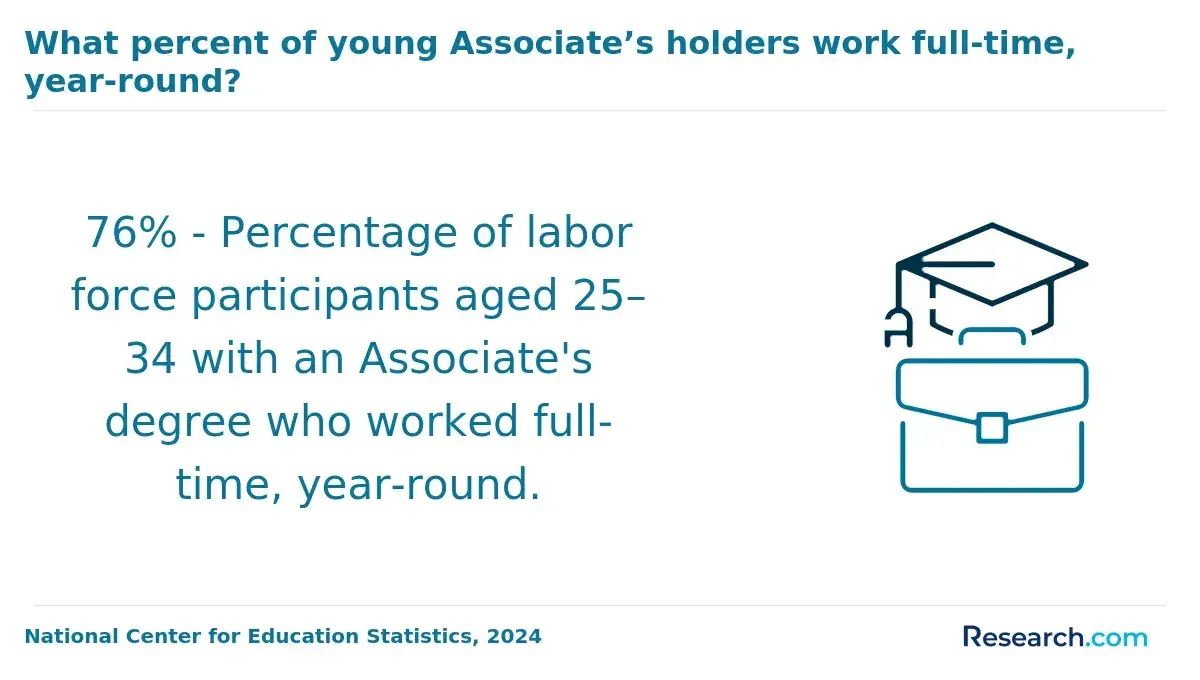
Start with the occupation and work backward to the credential. Registered nursing may be accessible through an approved associate or BSN program followed by licensure; engineering typically starts with a relevant bachelor's degree; software development commonly draws applicants with a bachelor's degree and demonstrable programming skills. Clinical social work and many counseling roles require graduate education beyond a bachelor's degree.
An online associate degree may be a lower-cost starting point for some careers or a transfer pathway, but confirm whether required labs or clinicals take place in person. If you intend to transfer, obtain a course-by-course evaluation showing which credits will satisfy your future major - not merely how many credits the school will accept.
How do online and campus-based programs compare?
Choose the format that lets you complete required work well, not simply the one with the most online classes. Online lectures can reduce commuting, while campus access can make labs, advising, and peer projects easier. Nursing, education, social work, and other practice-oriented paths still require clinical placements, student teaching, or fieldwork regardless of how lectures are delivered.
Check whether online courses have live meetings, fixed deadlines, proctored exams, or scheduled in-person components. If location flexibility matters after graduation, distinguish study format from career format: options discussed in best degrees for work from home jobs will not necessarily lead to remote entry-level positions. Ask each program how it arranges required placements near you, especially if you live outside the school's state.
What coursework do job-focused majors typically include?
Job-focused majors usually combine foundational courses with applied work. Nursing includes science prerequisites and supervised clinical training; engineering pairs mathematics and science with laboratories and design; computer science combines programming, algorithms, and projects. Accounting students study financial reporting and auditing, while education and social work students complete supervised practice relevant to their intended roles.
Read the required-course sequence, not just the catalog description. A major with frequent labs, placements, or prerequisite chains may be difficult to accelerate or complete part time. If you are considering a master's, check whether it assumes an undergraduate major in the same field and whether it includes a thesis, capstone, internship, or supervised practice.
What admission requirements apply to high-demand majors?
General admission to a college does not guarantee entry to a selective major. Nursing and some allied-health programs may separately review science prerequisites and clinical eligibility. Engineering and computer science programs can require preparatory mathematics or restrict entry to the major. Graduate programs may assess prerequisite courses, professional experience, recommendations, or a portfolio; requirements vary by school.
Before applying, request the program-specific admissions criteria and ask when selection occurs. If you are changing fields, find out whether missing foundation courses add terms or cost. Do not assume that a school's general test-optional policy or GPA standard applies to a separately admitted professional program.
How long do secure majors take and what do they cost?
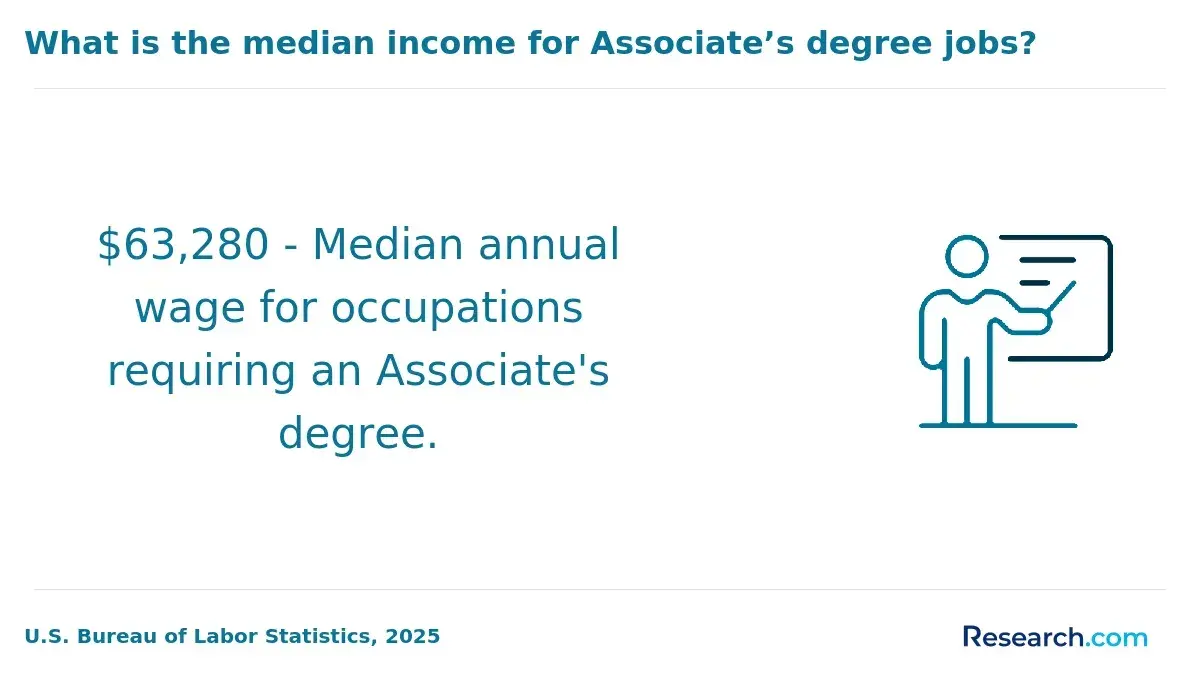
Most bachelor's pathways are designed around roughly four years of full-time study, but prerequisites, course availability, placements, transfer evaluations, and part-time enrollment can change the timeline. A master's adds a separate period of study; licensing may add examinations or supervised work after graduation. An accelerated schedule is useful only if you can complete the entire sequence, not just individual short courses. That distinction also matters when comparing easiest online degrees that pay well.
For a cost comparison, request a written estimate through graduation covering tuition, mandatory and program fees, books, equipment, transportation, and any unpaid placement time. Compare that total with grants, scholarships, employer assistance, and likely borrowing. The annual federal Direct Loan limit for a dependent first-year undergraduate is $5,500; a gap beyond available aid may require savings, work income, or other financing. Check eligibility and current aid rules with each school before making a commitment.
Which careers require licenses or professional certifications?
A degree and permission to practice are separate things. Registered nurses must meet state eligibility rules and pass the NCLEX-RN. Teachers need the certification required by the state and assignment. Clinical social workers generally need a qualifying MSW, supervised experience, and a state license. Counselors and psychologists follow distinct graduate-level licensing paths; engineering licensure matters for certain professional duties.
Accounting offers another important distinction: many accounting jobs do not require a CPA license, but using the CPA designation does. IT certifications may help demonstrate skills without being legal licenses. Before enrolling in any licensure-oriented program, check the relevant state board's requirements for the state where you expect to work.
How can you choose an accredited program with strong outcomes?
Begin by verifying that the college has institutional accreditation recognized for federal student aid purposes. Then check program-specific approval where it affects your goal: for example, confirm nursing board eligibility, teacher-preparation approval, or the relevant engineering and social-work accreditation. Institutional accreditation alone does not establish eligibility for every professional license.
Next, ask for evidence tied to your decision: recent completion rates, licensure-exam results where applicable, placement support, and career outcomes for the specific program. Find out how the school measures employment and whether results distinguish graduates who continued studying. A warning sign is a program that advertises occupational pay as a graduate salary or cannot explain required in-person work. Compare documented outcomes with your total cost and a realistic backup career path before committing.
Other Things You Should Know About
No major is universally safest. Accounting, IT, and computer science offer skills used by multiple industries, but you will still need relevant experience. If you want a defined licensed occupation, investigate nursing or another approved clinical program.
Nursing has a clearer licensing-to-occupation pathway. Computer science offers a wider range of technical roles but less direct entry into any single one. Your fit with clinical work, technical work, local demand, and training requirements matters more than a universal ranking.
Generally, no. Licensed therapy roles typically require a qualifying graduate degree, supervised practice, and state licensure. Check the requirements for the specific counseling or mental-health occupation you want.
Not by itself. Growth describes an occupation, not your chance of being hired. Also compare the number and location of openings, entry requirements, education costs, and whether you would want to do the work.
References
- The Far-Reaching Impact of Job Loss and Unemployment - PMC https://pmc.ncbi.nlm.nih.gov/articles/PMC4553243/
- Employment Outcomes of Bachelor's Degree Holders - COE https://nces.ed.gov/programs/coe/indicator/sbc/bachelor-degree-holder-outcomes
- Research Summary: Education and Lifetime Earnings | ssa.gov https://www.ssa.gov/policy/docs/research-summaries/education-earnings.html
- Education pays: U.S. Bureau of Labor Statistics https://www.bls.gov/emp/chart-unemployment-earnings-education.htm
- College major, internship experience, and employment opportunities: Estimates from a résumé audit - ScienceDirect https://www.sciencedirect.com/science/article/abs/pii/S0927537115001207
- Recession-Proof Industries: The 6 Most Secure Jobs | USC Online https://online.usc.edu/news/recession-proof-industries-careers-economic-downturn/
- The Major Payoff: Evaluating Earnings and Employment Outcomes Across Bachelor's Degrees - CEW Georgetown https://cew.georgetown.edu/cew-reports/major-payoff/
- The Labor Market for Recent College Graduates | newyorkfed.org https://www.newyorkfed.org/research/college-labor-market
- A College Degree Still Pays Off - But Student Choices Matter | collegeboard.org https://newsroom.collegeboard.org/college-degree-still-pays-student-choices-matter
- Graduate Outcomes - Job Market https://www.naceweb.org/job-market/graduate-outcomes