2027 Best Bachelor's Completion Programs With 6-Week Courses

Co-Founder and Chief Data Scientist
Choosing a bachelor's completion program is usually about time, credit transfer, and career payoff. The need is large: the National Student Clearinghouse Research Center reported in 2024 that more than 40 million U.S. adults under 65 had some college credit but no credential. Six-week courses can help working adults use prior credits and move faster, but they also demand steady weekly effort. This guide explains which majors fit accelerated formats, how to compare programs, what costs to expect, and how to avoid mistakes before enrolling.
Key Things You Should Know
- More than 40 million U.S. adults under 65 have some college credit but no credential, making bachelor's completion programs especially relevant for returning students.
- A 6-week course format can shorten calendar time, but the credit load is not "easier"; students often complete the same outcomes in fewer weeks.
- College Board's 2024 data shows published 2024-25 tuition and fees averaged $11,610 at public in-state four-year colleges, $30,780 at public out-of-state colleges, and $43,350 at private nonprofit four-year colleges, so transfer credit can materially affect total cost.
Top 10 Best Bachelor's Completion Programs With 6-Week Courses
Business Degrees
Business is one of the strongest fits for 6-week bachelor's completion programs because many courses use projects, case studies, and applied management problems rather than lab-heavy requirements. Common options include business administration, management, accounting, marketing, finance, and human resources. Students with associate-level business credits may transfer smoothly, but accounting and finance tracks can have tighter prerequisite sequences. This path works best for adults seeking supervisory, operations, sales, entrepreneurship, or analyst roles and for workers whose employers require a bachelor's degree for promotion.
Healthcare Degrees
Healthcare completion degrees often focus on administration, public health, health information management, or allied health leadership rather than direct clinical licensure. They can suit medical assistants, radiologic technologists, respiratory therapists, and other credentialed professionals who want management or coordinator roles. Before enrolling, confirm whether clinical credits transfer and whether the curriculum aligns with your target role. If the job requires state licensure, such as nursing or some therapy fields, the completion degree alone may not meet all requirements.
Information Technology Degrees
Information technology completion programs usually emphasize systems administration, networking, cloud platforms, databases, project management, and user support. Six-week courses can work well because IT topics can be organized into focused modules, but students should expect frequent labs, troubleshooting assignments, and certification-aligned projects. This degree fits help desk staff, junior administrators, military IT personnel, and career changers with technical credits. Look for programs that accept industry certifications for credit and include hands-on work, not only theory.
Computer Science Degrees
Computer science can be completed in accelerated blocks, but it is less forgiving than some majors because math, programming, algorithms, and software design build on each other. Students entering with calculus, discrete math, and introductory programming credits may progress efficiently. Those missing prerequisites may need more time. This route is best for learners who want software development, data, systems, or technical graduate study options and who can handle intensive coding assignments on a compressed weekly schedule.
Cybersecurity Degrees
Cybersecurity completion programs commonly cover network defense, risk management, incident response, digital forensics, governance, and cloud security. A 6-week format can be effective when courses include labs, simulations, and security tools. Students with IT, networking, military, or law enforcement backgrounds may receive useful transfer credit. Check whether the curriculum maps to employer-recognized certifications and whether faculty have current industry experience. Cybersecurity is a strong choice for detail-oriented students who enjoy policy, technical investigation, and constant learning.
Psychology Degrees
Psychology completion programs are popular because upper-division courses can often be delivered fully online in short terms. Topics may include lifespan development, abnormal psychology, research methods, statistics, social psychology, and organizational behavior. This degree can support roles in human services, case management, behavioral health support, HR, and graduate school preparation. Students should understand that becoming a licensed psychologist, counselor, or therapist typically requires graduate education and state licensure beyond the bachelor's degree.
Nursing Degrees
Nursing completion programs most often refer to RN-to-BSN pathways for licensed registered nurses. These programs may use 6-week online courses for leadership, evidence-based practice, community health, informatics, and research, while clinical requirements vary by school and state. They are designed for working nurses who already hold an ADN or diploma and an active RN license. Before applying, confirm license requirements, clinical placement expectations, employer tuition benefits, and whether the program has appropriate nursing accreditation.
Education Degrees
Education completion programs may lead to non-licensure degrees, paraprofessional advancement, early childhood roles, or teacher preparation, depending on the school. Six-week courses can handle theory and methods, but student teaching and fieldwork usually follow separate timelines. Students seeking teacher licensure must verify state approval, testing requirements, background checks, and supervised classroom hours. This path fits instructional aides, childcare workers, substitute teachers, and adults who want education-related roles, but licensure goals require careful program matching.
Criminal Justice Degrees
Criminal justice completion degrees often suit police officers, corrections staff, military veterans, security professionals, and public service employees with prior training. Courses may cover courts, policing, corrections, ethics, criminology, homeland security, and leadership. Many programs evaluate academy training, military credit, or professional certificates for transfer. The degree can support advancement in agencies that use education for promotion, but hiring standards, physical requirements, background checks, and civil service rules still vary widely by employer and jurisdiction.
Engineering Degrees
Engineering is harder to compress than many completion majors because ABET-aligned curricula usually require sequenced math, science, design, and lab work. Some schools offer engineering technology, industrial technology, construction management, or applied engineering completion pathways in accelerated terms. These may be more flexible for technicians and military-trained students than traditional engineering degrees. If professional engineering licensure is a goal, verify ABET accreditation, state board rules, and whether online or hybrid labs meet degree requirements.
What is a bachelor's completion program with 6-week courses and who is it for?
A bachelor's completion program with 6-week courses is a degree pathway designed for students who already have college credits and want to finish the upper-division portion of a bachelor's degree in short academic terms. Instead of taking 15-week semester courses, students take concentrated 6-week classes, often one or two at a time, throughout the year.
This model is usually best for adults who have completed an associate degree, stopped out before finishing a bachelor's degree, earned military or professional training credits, or need a bachelor's credential for promotion. It is less ideal for students who need extensive lower-division prerequisites, cannot study consistently each week, or want a highly residential college experience.
The key distinction is that "accelerated" refers to calendar structure, not reduced academic expectations. A 3-credit course still requires reading, assignments, discussion, assessments, and instructor interaction. The advantage is momentum; the trade-off is pace.
How do accelerated 6-week bachelor's completion programs compare to traditional formats?
Accelerated 6-week completion programs differ from traditional formats mainly in pacing, enrollment rhythm, and student workload. The best format depends on whether you need flexibility, campus services, slower learning time, or the fastest possible route to finishing remaining credits.
The comparison below summarizes the practical differences most working adults should evaluate before choosing a format.
| Format | Typical Strength | Main Trade-Off | Best Fit |
| 6-week online completion program | Fast progress through focused short courses | Heavy weekly workload and less recovery time | Working adults with transfer credits and strong time management |
| 8-week accelerated program | Still fast, with slightly more breathing room | May take longer than a 6-week sequence | Students balancing work, family, and moderate course loads |
| 15-week semester program | More time for complex material and campus engagement | Slower calendar progress | Students who prefer traditional pacing or need labs and fieldwork |
| Hybrid completion program | Combines online convenience with in-person support | Requires travel or scheduled attendance | Students in clinical, education, technical, or cohort-based programs |
For many adults, the best choice is not the shortest term but the format they can complete consistently. A 6-week class can be efficient if you can protect study time several days per week; it can become risky if work schedules change unpredictably.
What admission requirements and prior credits do you need for these completion programs?
Admissions requirements vary by school, but bachelor's completion programs usually expect previous college credit, a minimum GPA, official transcripts, and proof that general education or lower-division requirements are partly complete. Some programs admit students with as few as 30 credits, while others are designed for students with 60 to 90 transferable credits.
Before applying, ask the school for a written transfer evaluation. This document should show which credits apply to general education, major prerequisites, electives, and upper-division requirements. Students who still need lower-division credits may want to compare options such as a best associate degree in 6 months online pathway before entering a completion program.
Use this checklist before you submit an application because transfer policy can determine both timeline and cost.
- Request official transcripts from every college you attended, including dual-enrollment and community college records.
- Ask whether the school accepts military credit, industry certifications, standardized exams, portfolio credit, or prior learning assessment.
- Confirm the maximum number of transfer credits accepted toward the bachelor's degree.
- Check whether your prior credits satisfy prerequisites or only count as electives.
- Get the remaining course plan in writing before committing financially.
A common mistake is assuming that "90 accepted credits" means "90 credits toward the major." Many schools accept credits at the institutional level but still require specific upper-division courses in residence.
How can you verify accreditation and regional recognition for 6-week completion programs?
Accreditation is one of the most important checks for any 6-week bachelor's completion program because it affects transferability, employer recognition, graduate school admission, and access to federal financial aid. For most U.S. bachelor's degrees, institutional accreditation from an agency recognized by the U.S. Department of Education is the baseline requirement.
Some fields also require or strongly prefer programmatic accreditation. Nursing students may need CCNE or ACEN recognition; engineering students should verify ABET when licensure is relevant; business students may see AACSB, ACBSP, or IACBE as quality signals, though employer requirements vary.
Follow these steps before enrolling, especially if the program is fully online or heavily accelerated.
- Search the institution in the U.S. Department of Education's accreditation database and confirm the accreditor is currently recognized.
- Check whether the program, not just the institution, has field-specific accreditation when your career requires it.
- Ask whether online students receive the same transcript and degree title as campus students.
- For licensure fields, contact your state board or certification authority before relying on admissions claims.
- Be cautious of schools that avoid clear accreditation language, pressure you to enroll immediately, or promise guaranteed jobs.
Regional recognition also matters. A nationally available online degree may be legitimate, but local employers, school districts, hospitals, or licensing boards may have specific expectations.
What majors and specializations are commonly offered in 6-week bachelor's completion formats?
Common 6-week bachelor's completion majors tend to be fields where upper-division coursework can be delivered in modular, project-based, or discussion-driven formats. Programs with extensive labs, studios, supervised practice, or licensure placements can still be accelerated, but they usually require more planning.
The table below helps you compare common completion majors by fit and caution points rather than treating all accelerated degrees as equal.
| Major Area | Why It Works in 6-Week Terms | What to Verify |
| Business and management | Applied assignments, case studies, and flexible electives | Accounting prerequisites, capstone requirements, and concentration options |
| Healthcare administration | Leadership and policy courses often fit online delivery | Whether the program is administrative or clinical |
| Information technology | Focused technical modules and certification alignment | Hands-on labs, cloud access, and accepted certifications |
| Psychology and social science | Reading, research, and discussion-based course design | Statistics, research methods, and graduate school preparation |
| Criminal justice | Policy, ethics, courts, and leadership topics adapt well online | Credit for academy, military, or professional training |
| Education | Theory courses may accelerate smoothly | State approval, fieldwork, and student teaching requirements |
If speed and course difficulty are major concerns, comparing an easiest bachelor degree list can help you identify majors with fewer lab or licensure barriers, but fit should still come before simplicity.
How are 6-week bachelor's completion programs structured online versus on campus or hybrid?
Most 6-week bachelor's completion programs are online because returning students often need asynchronous access around work and family responsibilities. Online courses may include weekly modules, discussion boards, quizzes, recorded lectures, projects, exams, and scheduled virtual meetings. Some programs require proctored exams, group work, or synchronous sessions.
Campus and hybrid formats can be better when the degree requires labs, clinical practice, classroom observation, equipment, studio work, or local employer partnerships. The trade-off is less scheduling flexibility. Hybrid programs may also be location-limited, which matters if you move, travel for work, or live far from campus.
Before choosing online, on-campus, or hybrid delivery, compare the learning experience rather than only the label.
- Ask whether courses are asynchronous, synchronous, or a mix of both.
- Confirm how often new 6-week sessions start and whether you can pause without losing sequence momentum.
- Review technology requirements, exam proctoring rules, group project expectations, and required login frequency.
- Check whether advising, tutoring, library access, disability services, and career support are available to online students.
- For hybrid programs, calculate commute time, parking, childcare, and missed work hours as real costs.
A common red flag is a program that advertises "online" but requires frequent daytime attendance that conflicts with full-time employment.
How much do bachelor's completion programs with 6-week courses cost and how are they funded?
The cost of a bachelor's completion program depends less on the 6-week format itself and more on remaining credits, tuition per credit, fees, books, technology costs, residency status, and how much aid or employer support you receive. Transfer credit is one of the biggest cost levers because every accepted course can reduce both tuition and time.
College Board's 2024 pricing report gives useful national context for published 2024-25 tuition and fees at four-year institutions. These are not completion-program prices, but they help you benchmark whether a school's tuition is unusually high or low.
- Public four-year in-state average published tuition and fees: $11,610
- Public four-year out-of-state average published tuition and fees: $30,780
- Private nonprofit four-year average published tuition and fees: $43,350
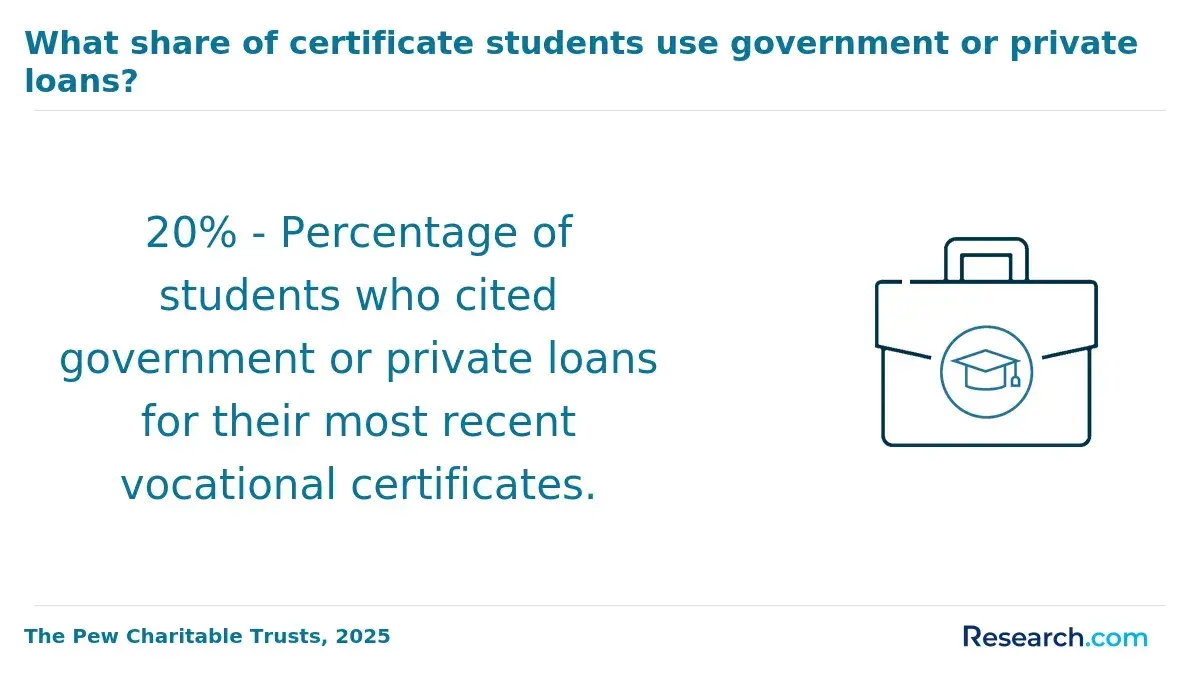
Many adult learners fund completion programs through federal aid, employer tuition assistance, military education benefits, scholarships for returning students, payment plans, or out-of-pocket monthly payments. If you plan to use federal aid, confirm that the institution participates in Title IV aid and that your enrollment intensity qualifies for the aid type you expect.
To estimate total cost, multiply tuition by the credits you still need, then add required fees and subtract grants or employer benefits that do not need to be repaid. Avoid comparing only per-credit tuition because a school with lower tuition but poor transfer acceptance may cost more overall.
What careers and salary outcomes can graduates of accelerated completion programs expect?
Career outcomes depend on the major, your prior work experience, location, industry, certifications, and whether the degree is tied to licensure. A bachelor's completion program can be especially valuable when you already have experience but lack the degree required for promotion, management eligibility, or a career pivot.
The table below uses U.S. Bureau of Labor Statistics May 2024 median wage data for selected occupations connected to common completion majors. These figures describe occupations, not guaranteed outcomes for any program graduate.
| Degree Direction | Related Role Example | May 2024 Median Annual Pay | How to Interpret It |
| Business | Accountants and auditors | $81,680 | Accounting coursework and CPA eligibility rules may affect advancement. |
| Healthcare administration | Medical and health services managers | $117,960 | Management roles often value healthcare experience plus leadership training. |
| Information technology | Computer occupations broadly | $105,990 | Technical skills, portfolios, and certifications can matter alongside the degree. |
| Cybersecurity | Information security analysts | $124,910 | Employers often look for hands-on security experience and current tools. |
| Nursing | Registered nurses | $93,600 | RN licensure is essential; a BSN may support advancement in some settings. |
| Education | Elementary school teachers | $64,290 | State licensure requirements determine access to public school teaching roles. |
Students considering graduate school after finishing should also think about timing. Some careers require a master's degree for advancement or licensure, and researching quick masters degrees online can help you map the next step without overextending your budget.
The best ROI usually comes when the completion degree removes a clear barrier: a promotion requirement, a bachelor's-only job posting, a licensure pathway, or admission to a graduate program. It is weaker when the degree is unrelated to your target role or when you borrow heavily without a realistic salary plan.
How can working adults choose the best 6-week bachelor's completion program for their goals?
Working adults should choose a 6-week bachelor's completion program by matching the program to a specific career goal, not by speed alone. The right program should accept a meaningful amount of transfer credit, fit your weekly schedule, hold appropriate accreditation, and lead to a credential your target employers or graduate schools recognize.
Use this decision process before enrolling so you can compare programs on outcomes, not marketing claims.
- Define the job, promotion, license, or graduate program you want the bachelor's degree to support.
- Request a transcript evaluation from at least two schools and compare remaining credits, not just accepted credits.
- Calculate total net cost after grants, employer benefits, military benefits, and transfer credits.
- Ask for a sample 6-week syllabus to judge reading load, assignment frequency, exams, and group work.
- Verify accreditation and, when relevant, licensure alignment with your state or employer.
- Check student support hours, career services, tutoring, and advising availability for online learners.
- Choose a sustainable pace, even if that means taking one course per term instead of two.
Common mistakes include choosing the fastest advertised program, ignoring fees, assuming all credits will apply to the major, overlooking fieldwork requirements, and borrowing based on best-case salary expectations. If graduate education is part of your long-term plan, compare downstream options such as an easiest masters degree only after confirming that your bachelor's program will be accepted by reputable graduate schools.
A strong final test is simple: if a school cannot clearly explain what you still need, what it will cost, how long it will take, and how the degree connects to your goal, keep comparing options.
Other Things You Should Know About
No. They are usually shorter, not easier. A 6-week course often covers the same credit-bearing outcomes in a compressed schedule, so students should expect more frequent deadlines and consistent weekly study time.
Possibly, but it depends on how many credits you transfer, how many credits remain, and how many courses you can handle each term. Students with 90 applicable credits are in a much better position than students with only 30.
Employers are more likely to focus on accreditation, institution reputation, skills, experience, and whether the degree matches the job. The transcript usually does not emphasize that courses were 6 weeks, but the school's legitimacy matters.
The biggest risk is enrolling before receiving a clear transfer-credit and degree-completion plan. Without that, you may discover later that accepted credits do not satisfy major requirements or that the program takes longer than expected.
References
- Jessup Playbooks: Transitioning to a 7-Week Course Schedule: Why 7-Week Courses? https://libguides.pvcc.edu/7-week-course-schedule/why-7-week-courses
- Best Accredited Online Universities in 2025 https://www.study.eu/article/best-accredited-online-universities
- Graduation Rates and Student Success https://aascu.org/resources/graduation-rates-and-student-success-squaring-means-and-ends/
- College Graduation Rates and How ACE Compares | ACE Blog https://ace.edu/blog/college-graduation-rates-and-how-ace-compares/
- 2025 List of Accredited Online Degree Programs https://www.onlineu.com/degrees
- Online College Degree Programs & Courses | DeVry University https://www.devry.edu/online-programs.html
- List of College Majors https://www.mymajors.com/college-majors/
- How Long Does it Take to Earn a Bachelor's Degree? (How Many Years?) https://www.onlineeducation.com/faqs/how-many-years-to-earn-a-bachelors-degree
- Best Online Colleges for Working Adults [2026] https://www.straighterline.com/blog/degree-completion-best-online-colleges-for-working-adults