2027 Best Associate Degree Completion Programs for Career Changers

Co-Founder and Chief Data Scientist
If you have college credits but no degree, changing careers can raise a practical question: which credits will help you finish a credential that employers value?
The College Board reported average published in-district tuition and fees of $4,050 at public two-year colleges for 2024-25, but your remaining credits, not the sticker price alone, will determine much of your cost. This guide compares six associate degree paths by career fit, transfer-credit requirements, and qualifications needed after graduation, so you can identify a realistic next step rather than start over unnecessarily.
Key Things You Should Know
- Best fit depends on your target job. Business and IT can support several entry-level paths; nursing and some allied-health programs require selective admission, hands-on training, and separate credentials.
- Prior credits change the calculation. Ask each college which courses satisfy your chosen major and how many credits you must complete there before relying on a quoted timeline or price.
- Compare total cost, not tuition alone. The College Board's 2024-25 public two-year in-district average was $4,050 in published annual tuition and fees; books, equipment, travel, and remaining coursework can add substantially to your bill.
Top 10 Best Associate Degree Completion Programs for Career Changers
Business Programs
A business administration AA or AS can suit career changers who want transferable coursework in accounting, management, and communication before pursuing a bachelor's degree. An AAS may emphasize immediate workplace skills, such as bookkeeping or office operations.
Prior general education credits can be useful, but check whether accounting and other major courses still need to be taken in sequence. Choose this path if you want broad options; choose a more specialized program if a specific job requires technical training. An associate degree alone does not usually qualify someone for management roles.
Healthcare Programs
Healthcare options differ sharply. Health information or medical coding programs may offer more online coursework, while radiologic technology and many other clinical fields require labs and supervised placements.
An AS or AAS may prepare students for workforce entry, but employers or credentialing bodies may require certification or licensure. Science credits can expire under some programs' policies, so returning students should request a course-by-course evaluation before assuming old prerequisites count. Confirm clinical scheduling, programmatic accreditation where relevant, and eligibility for the credential required in your state.
Information Technology Programs
IT associate programs commonly cover networking, systems support, programming, or cybersecurity fundamentals. They suit career changers who can demonstrate skills through labs, projects, and, where useful, industry certifications. An AAS may prioritize job-ready practice; an AS may offer a clearer bachelor's transfer route.
Online delivery can help working students, but check for scheduled labs and required software. Prior math or general education credits may shorten the path, while rapidly changing technical content may need to be retaken. Entry-level support work is more realistic than assuming an associate degree leads directly to a senior cybersecurity role.
Nursing / Pre-Nursing Programs
An associate degree in nursing can provide an educational route toward registered nurse licensure, but admission is often selective and completing the degree does not itself grant a license. Graduates must meet state requirements and pass the NCLEX-RN. Pre-nursing AA or AS programs instead prepare students to apply to nursing programs; they are not nursing credentials.
For returning students, verify science-course age limits, prerequisite grades, clinical schedules, and whether acceptance into the college differs from acceptance into nursing. This route fits people able to accommodate in-person clinical training.
Criminal Justice Programs
A criminal justice AA or AS can provide a transfer foundation in law, courts, and corrections. An AAS may focus more on workplace applications. It can suit someone exploring public safety or administrative justice roles, but hiring standards vary: police applicants may face academy training, background checks, physical standards, and state certification.
Ask whether the program supports your intended agency's requirements and whether credits will apply toward a bachelor's degree. A degree is not a substitute for agency selection or required training.
Psychology / Counseling Programs
A psychology AA or AS is generally a transfer pathway, not a qualification to practice counseling. It introduces research methods, human development, and behavior; an associate-level human services program may also prepare students for supervised support roles. Licensed counselor and psychologist roles require substantially more education and state-specific requirements.
This option makes sense if your goal includes further study or a clearly defined support position. Before enrolling, confirm that psychology courses transfer into the intended bachelor's major and that any field placement fits your schedule.
What Are Associate Degree Completion Programs for Career Changers?
An associate degree completion program is a route to finishing an AA, AS, AAS, or similar credential using applicable credits earned previously. It is not necessarily a separate major or a promise of accelerated graduation. A college evaluates earlier coursework against its current general education, major, and graduation requirements; the courses you still need form your completion plan.
AA and AS pathways are often designed with bachelor's transfer in mind, while AAS programs often emphasize workforce preparation. Those labels are guides, not guarantees. A college may accept a course as elective credit without applying it to your major, so request a written degree audit before choosing a path.
Which Associate Degrees Offer the Best Career Opportunities for Career Changers?
For career changers, the strongest option is the one that connects credits you already have to a reachable next role or a necessary further credential. This comparison highlights the principal trade-off in each field; it does not rank every program within that field.
| Field | Best fit | Key limitation to check |
| Business | Broad entry-level business work or bachelor's transfer | Management roles generally require experience |
| Healthcare | A defined health information or clinical occupation | Clinical, certification, or licensure requirements vary by role |
| IT | Technical support or a foundation for further specialization | Employers may expect demonstrable projects and current skills |
| Nursing | A route toward registered nurse licensure | Selective admission, clinicals, and licensing examination |
| Criminal justice | Justice-related study or bachelor's transfer | Agency hiring requirements are separate from the degree |
| Psychology | Transfer or supervised support work | Professional counseling requires further education and licensure |
If you want to enter a specific occupation soon, compare the program with actual job and licensing requirements. If you are considering psychology, a licensed profession may involve graduate study; even doctoral programs online no dissertation should not be mistaken for a shortcut around a state licensing board's education and supervised-practice rules.
How Long Do Associate Degree Completion Programs Take and Cost?
Many associate degrees require roughly 60 semester credits, but an individual program may require more. Your completion time depends on how many prior credits apply to the degree, whether required courses run every term, your course load, and any prerequisites or clinical placements. An advertised short timeline may assume you enter with nearly all general education requirements complete.
The College Board's $4,050 public two-year in-district tuition-and-fees average for 2024-25 is a benchmark, not a quote for your remaining coursework.
Compare colleges using a degree audit and an estimate covering remaining tuition, mandatory fees, books, technology, equipment, and travel. A low per-credit rate can cost more overall if fewer of your old credits apply. Listings of most affordable online colleges can provide candidates to investigate, but calculate your own completion cost before deciding.
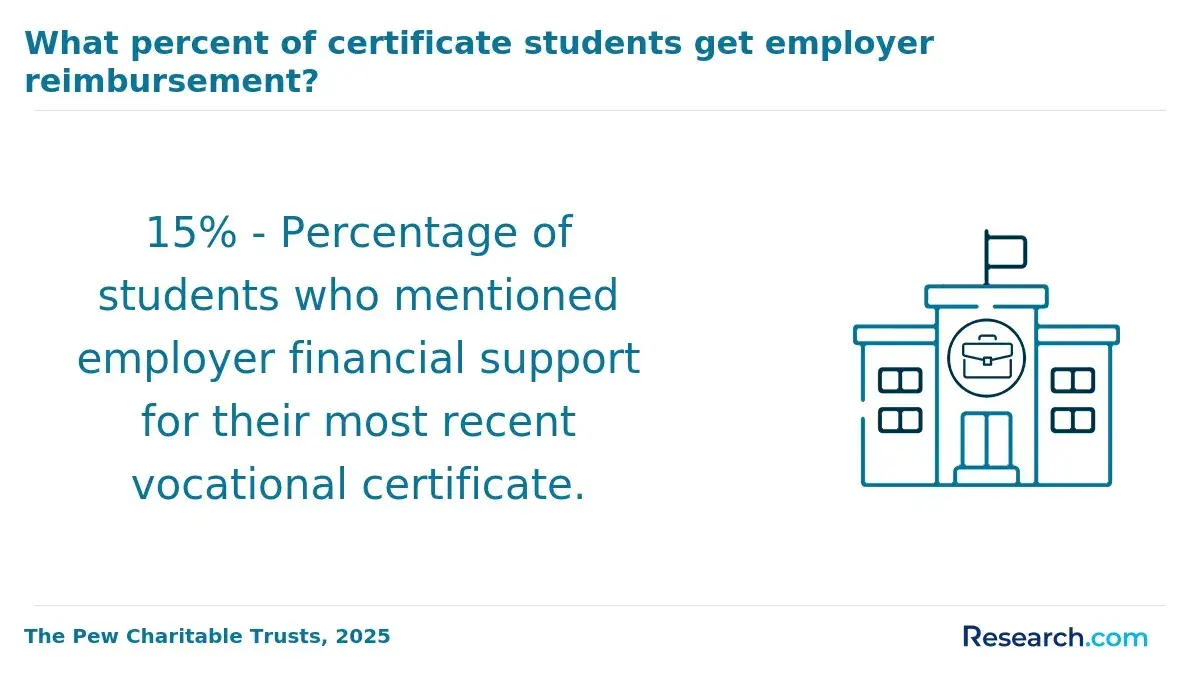
Ask about federal aid eligibility, scholarships, employer tuition assistance, and payment plans. Aid eligibility depends on the institution, your enrollment, and your circumstances; do not assume prior credits or part-time study will be treated identically at every school.
Are Online Associate Degree Completion Programs Accredited and Legitimate?
Online associate degree completion programs can be legitimate when the institution holds recognized institutional accreditation and the program meets the requirements of your intended career.
Check the college's current accreditation status through the accreditor or U.S. Department of Education. For regulated healthcare and nursing paths, also verify any relevant programmatic approval or accreditation and confirm eligibility with the state licensing board.
"Online" does not always mean self-paced or entirely remote. Ask about live classes, proctored assessments, campus labs, clinical placements, and whether local placements can be arranged. A program's institutional accreditation also does not ensure every course will satisfy another college's transfer rules.
What Do You Learn in an Associate Degree Completion Program?
Most completion students finish a combination of remaining general education and major courses, rather than repeating an entire degree. Business students might complete accounting; IT students might build and troubleshoot systems; healthcare students may need current science, lab, or clinical work.
A transfer-oriented program may prioritize courses required by a bachelor's major, while a workforce-oriented program may emphasize applied projects or supervised practice.
Review the degree map with an advisor before registration. A course can be interesting or career-relevant yet still fail to fill a requirement you need for graduation. Ask which courses are offered in the format and term you can attend.
What Are the Admission Requirements for Associate Degree Completion Programs?
Colleges commonly request an application and official transcripts from every prior institution. They may also assess placement needs. Admission to the college is not the same as admission to a selective nursing or allied-health major, which may require particular prerequisite grades, entrance assessments, health documentation, or background checks.
Transfer rules deserve equal attention. Ask whether the school has a minimum grade for accepted courses, limits older science or technology credits, awards evaluated credit for military training or prior learning, and requires a minimum number of credits taken at the institution.
Professional experience alone does not automatically earn credit. A school described as an easiest online college option still may have a competitive major or demanding graduation requirements.
Which Careers Can You Pursue After Completing an Associate Degree?
Potential starting points include business support, bookkeeping-related work, IT support, medical records work, and some supervised human services positions. Eligibility depends on the specific job, employer expectations, and any certification requirements.
Nursing provides a route toward RN practice only after graduation and successful completion of licensing requirements; criminal justice agency jobs involve separate hiring processes.
Some associate degrees work better as steps toward a bachelor's or graduate credential than as stand-alone career preparation. Psychology is a clear example: people considering research careers may eventually compare affordable online PhD programs, but they should first establish the bachelor's transfer route and investigate the qualifications their desired role actually requires.
A shorter certificate or apprenticeship may be better than an associate degree when it directly matches an employer's requirements.
What Salaries and Job Outlook Can Career Changers Expect?
The U.S. Bureau of Labor Statistics reports a May 2024 median annual wage of $93,600 for registered nurses. That is an occupational median, not the expected salary of a new associate degree graduate; it includes nurses with different education and experience levels, and practice requires licensure.
Use occupational wage and outlook figures to compare potential destinations, then check local entry-level postings for the credentials employers request.
Demand also differs within broad fields such as healthcare and IT. Technology changes can shift required skills, while licensing rules can limit access to clinical occupations. Compare openings in the area where you intend to work instead of treating a national median or projection as a job offer.
How Do You Choose a Reputable Associate Degree Completion Program?
Start with your intended job or bachelor's destination, then compare schools using the same requirements. A reputable option should be able to explain what transfers, what remains, how courses are delivered, and what qualification the program does - and does not - provide.
Before paying an enrollment deposit, get answers to these decision-critical questions:
- Which prior courses satisfy specific degree requirements, and can I receive a written evaluation before enrolling?
- How many credits must I complete at this college, and when are my remaining required courses offered?
- What is my estimated total remaining cost, including mandatory fees and any in-person requirements?
- Does the program meet the transfer, certification, or licensing requirements for my next step?
Be wary of guaranteed job or salary claims, vague statements that "all credits transfer," and online programs that do not disclose clinical or campus obligations. The best program for a career changer is usually the one with a verified, affordable route from your existing transcript to a credential that fits your goal.
Other Things You Should Know About
Often, yes. Send official transcripts from each school and ask for a degree audit. The receiving college decides which credits apply and which requirements you must complete there.
Possibly, if the college offers credit for prior learning and formally evaluates your training, examination results, or documented experience. Ask about fees, limits, and whether awarded credit fulfills your major.
Nursing coursework may be offered partly online, but approved clinical training requires in-person participation. Confirm lab and placement arrangements before enrolling.
Choose based on the curriculum and your next step, not the abbreviation alone. Confirm bachelor's transfer requirements for an AA or AS and employer or licensing requirements for a career-focused AAS.
References
- General Schedule Qualification Policies - OPM https://www.opm.gov/policy-data-oversight/classification-qualifications/general-schedule-qualification-policies/
- Cost of Attendance (Budget) | 2025-2026 Federal Student Aid Handbook https://fsapartners.ed.gov/knowledge-center/fsa-handbook/2025-2026/vol3/ch2-cost-attendance-budget
- Five types of transfer credit in addition to college courses | pa.gov https://collegetransfer.pa.gov/Student/Types-of-Transfer-Credit
- Transfer Requirements - Chestnut Hill College https://www.chc.edu/admissions-aid/accelerated-adult-students/accelerated-adult-admission-process/transfer-requirements/
- Adult Degree Completion - Reach Higher | Rose State College https://rose.edu/academics/academic-outreach/adult-degree-completion-reach-higher/
- Degrees & Certificates - Oklahoma City Community College - OCCC https://catalog.occc.edu/content.php
- How Do Transfer Credits Work? A Guide for Adult Learners | Whitworth Online https://online.whitworth.edu/news-articles/how-do-transfer-credits-work-when-you-go-back-to-school/
- Transfer Credits - Rutgers Catalog https://catalogs.rutgers.edu/generated/nwk-ug_1618/pg24.html
- Transfer Credit Policy - Medgar Evers College - CUNY https://www.mec.cuny.edu/admissions/transfer-applicant/transfer-policy/