
2027 Best Online Two-Year Degrees for Working Adults

Co-Founder and Chief Data Scientist
Choosing an online associate degree around a work schedule means looking beyond the word "online." Some programs let you study after your shift; others require live classes, labs, or clinical hours. Cost matters, too: the College Board reported average published tuition and fees of $4,050 for in-district students at public two-year colleges in 2024-25. That is a starting point, not a total program price. This guide compares degree fields by scheduling fit, career purpose, and requirements so you can shortlist programs you could realistically finish.
Key Things You Should Know
- Business and information technology often offer the most scheduling flexibility, but check whether courses are asynchronous and available when you need them.
- Healthcare and nursing can lead toward regulated occupations, but online coursework may still require in-person labs, clinical hours, and separate licensure or certification.
- Many associate degrees require about 60 credits; compare total costs rather than tuition alone. The 2024-25 public two-year in-district tuition-and-fee average was $4,050 per year.
Top 10 Best Online Two-Year Degrees for Working Adults
Business Programs
An online associate degree in business administration or accounting can suit adults seeking office work, a new specialty, or a bachelor's pathway. An Associate of Arts (AA) or Associate of Science (AS) may emphasize transferable coursework; an Associate of Applied Science (AAS) may emphasize workplace skills. Look for asynchronous sections, predictable deadlines, and required classes offered every term. Accounting coursework can provide a clearer entry-level skill set than a broad business curriculum, but either path may require further education or experience for management roles.
Healthcare Programs
Healthcare administration and health information programs may offer online coursework that fits irregular schedules. Compare their goals: administration focuses on office operations, while health information emphasizes records, data, and privacy. An allied-health degree tied to a clinical occupation is a different commitment; it may require on-site labs, supervised placements, and professional credentials. Ask who arranges placements and whether you can complete them near home. Do not assume a healthcare-branded degree qualifies you for patient-care work.
Information Technology Programs
IT support, networking, and cybersecurity associate degrees can pair online study with hands-on practice through virtual labs or equipment used at home. For a working adult, check lab access hours, scheduled team projects, and whether courses prepare students for relevant industry certifications. An AAS may prioritize job-ready technical courses; an AS may leave more room for transfer. Entry-level support work can be an initial goal, while cybersecurity analyst positions commonly call for additional experience, education, or credentials.
Nursing / Pre-Nursing Programs
An online pre-nursing AA or AS generally covers prerequisites; it does not qualify graduates to practice as registered nurses. An associate degree in nursing may put students on a path toward RN licensure, but clinical training occurs in person, admission is often selective, and graduates must meet state requirements and pass the licensing exam. Working adults should examine clinical shifts, prerequisite sequences, and placement locations before committing. If those hours cannot fit your job, completing prerequisites part-time may be more realistic than entering a nursing cohort immediately.
Criminal Justice Programs
A criminal justice AA, AS, or AAS can introduce courts, corrections, and public-safety systems. It may fit adults exploring civilian support roles or planning to transfer into a bachelor's program. It does not replace an agency's hiring process, academy training, background checks, or other requirements for sworn positions. Compare elective choices with your target role, and verify whether an internship has fixed hours. If your goal is a specific agency job, check its eligibility rules before selecting a degree.
Psychology / Counseling Programs
An online psychology AA or AS is usually a transfer foundation, not a counseling qualification. Courses in development, research, and statistics can prepare you for further study; some human-services associate programs instead emphasize entry-level support work and may require a practicum. Licensed counselor and psychologist roles require substantially more education and state-specific steps. Choose this path if you have a plan for the next credential, and confirm that the courses will apply to your intended bachelor's major.
What are the best online two-year degrees for working adults?
The best field is the one whose required hours and credential outcome match your goal. For many adults working full-time, online business or IT offers the strongest potential for scheduling flexibility. Healthcare administration and health information can also work well when they do not require placements. Nursing is a stronger choice for someone specifically pursuing RN licensure who can accommodate in-person clinical training; psychology is more appropriate as a transfer path than as a direct route to counseling.
This comparison summarizes the main trade-off: a convenient course format is valuable only if the degree moves you toward the job or further education you want.
| Degree field | Likely scheduling consideration | Best-fit goal |
| Business | Check for asynchronous classes and reliable course rotation | Office skills or transfer |
| Healthcare administration or information | Check for internships or other on-site requirements | Nonclinical healthcare work |
| Information technology | Check lab access and project meeting times | Technical entry-level skills or transfer |
| Nursing | Plan around required in-person clinical hours | Path toward RN licensure |
| Criminal justice or psychology | Check practicums and bachelor's transfer plans | Career exploration or further study |
"Best" does not mean easiest. If manageable coursework is your immediate priority, what is the easiest associate degree to get can help frame that question, but choose only after checking where the credential leads.
How much do online two-year degrees cost and how long do they take?
Most associate programs require roughly 60 credits, but prerequisites, clinical sequencing, and accepted prior credits can change the total. Two years is a common full-time planning estimate, not a promise; part-time study around a full-time job often takes longer. Short classes do not necessarily shorten the degree if required courses are unavailable next term.
The College Board's 2024-25 average of $4,050 in published annual tuition and fees applies to in-district students at public two-year colleges. Your bill may differ by residency and institution, and that figure excludes expenses such as books, technology, transportation, and clinical supplies. Compare the estimated cost to finish at your expected pace, including mandatory fees. Ask about federal financial aid eligibility, scholarships, employer tuition assistance, and whether aid covers summer enrollment before assuming the lowest sticker price is your cheapest option.
Are online two-year degree programs accredited and transferable?
Many online associate programs are offered by institutionally accredited colleges, but accreditation belongs to the institution and does not make every credit automatically transferable. Confirm the college's current institutional accreditation with its accreditor. For nursing or another regulated field, also check any relevant program approval or accreditation required for your intended license or next school.
An AA or AS often aims toward transfer, while an AAS often emphasizes workforce preparation; exceptions exist. Get a course-by-course evaluation from your intended bachelor's institution. Acceptance of credits is not the same as applying them to your major. If you are comparing an online nonprofit university with a community college, compare the destination degree's remaining requirements as well as the associate degree's price.
What admission requirements apply to online two-year degree programs?
Colleges commonly ask associate-degree applicants for a high school diploma or equivalent, an application, and prior college transcripts where applicable. Placement measures or prerequisite courses may affect which classes you can take first. Open admission to a college does not mean automatic entry into a selective nursing or allied-health major; those programs may have separate academic, health, and background-check requirements.
If you have previous college credit, request an evaluation before enrolling. Ask how transfer courses, military learning, exams, or assessed prior learning might count, and whether minimum grades, credit limits, or credits earned at the new college apply. Work experience by itself does not automatically award academic credit.
What coursework do students complete in online two-year degree programs?
Most associate degrees combine general education - often writing, mathematics, and humanities or social sciences - with courses in the major. Business students may study accounting and management; IT students may complete networking labs; psychology students may take research methods. A career-focused AAS may devote more credits to technical coursework than a transfer-oriented AA or AS.
Read the full course sequence, not just the catalog description. Prerequisites can delay access to advanced classes, while labs, proctored exams, internships, practicums, and clinical placements can require scheduled or in-person participation. Ask whether required courses run online in the terms you expect to attend.
Which careers can online two-year degrees prepare you for?
An associate degree can support entry-level applications in office administration, accounting support, IT support, health information, or human services, depending on coursework and employer requirements. Nursing graduates who meet licensing requirements may pursue RN roles. Criminal justice and psychology degrees can also provide a foundation for further education rather than immediate qualification for a particular occupation.
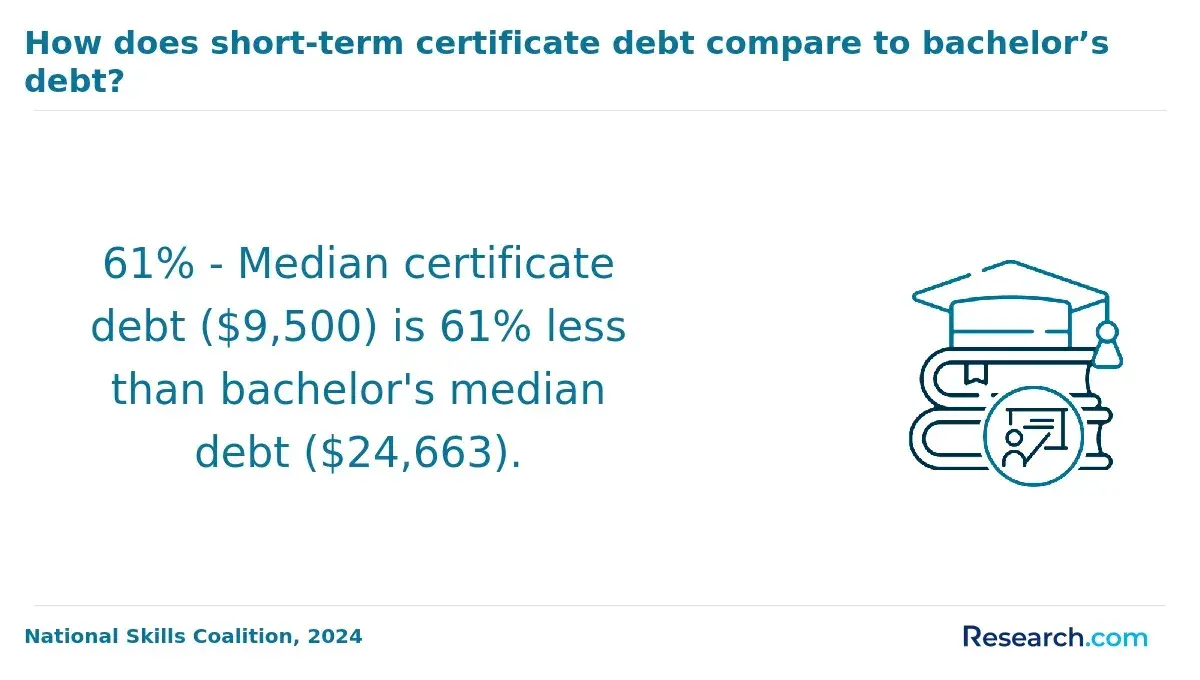
Match the curriculum to actual job postings in your area, including their experience and credential requirements. If working from home is a priority, explore degrees for remote jobs while remembering that remote eligibility depends on the role and employer, not the degree alone. A certificate or apprenticeship may be a better fit if it teaches the specific skills you need without unrelated degree requirements.
What salaries can graduates earn with two-year online degrees?
Pay varies by occupation, location, experience, and employer - not simply by holding an associate degree. As one career reference point, the U.S. Bureau of Labor Statistics reported a 2024 median annual wage of $93,600 for registered nurses. That figure describes employed RNs across education and experience levels; it is not the typical salary of new associate-degree graduates. RN practice also requires licensure.
For any field you are considering, compare occupational wage information with local job requirements and the amount you would need to borrow. An inexpensive degree with limited relevance to your target job may offer less value than a costlier program with the right approved curriculum and schedule.
Which online two-year degrees lead to licenses or certifications?
Nursing is the clearest example of a degree linked to a required professional license: finishing an associate nursing program is one step, followed by meeting state board rules and passing the applicable licensing exam. Some allied-health occupations likewise require program-specific training, exams, certification, or state authorization. Requirements depend on the occupation and where you plan to work.
IT programs may prepare students for optional industry certifications, but the degree does not automatically grant them. Before enrolling in any credential-focused program, ask which exam it prepares you for, whether graduates are eligible to sit for it, and whether in-person components can be completed locally.
How should working adults choose a reputable online two-year program?
Start with your target role or bachelor's program, then test each college's claims against your real weekly availability. A fully online course can still have live meetings and fixed deadlines; a clinical program can demand daytime hours even when lectures are online.
Use these questions to compare your finalists before paying a deposit:
- Which required courses are asynchronous, which have live meetings, and when are they offered?
- Are labs, exams, internships, or clinical hours in person, and who arranges local placements?
- What will I pay to finish after transfer credit, mandatory fees, and required supplies?
- Will the credential satisfy my intended transfer, certification, or state-licensure requirements?
- What advising and tutoring can I access outside my working hours?
Be wary of a program that advertises "fully online" without explaining required placements, quotes only per-credit tuition, or promises career outcomes without documenting requirements. If a bachelor's or eventual graduate degree is your goal, plan the full pathway first; even the easiest masters degree to get online is not a substitute for checking undergraduate transfer requirements now.
Other Things You Should Know About
Some business, IT, and other nonclinical programs allow fully online study, but they may still impose live sessions or fixed deadlines. Nursing and many allied-health programs require in-person training. Verify every requirement before enrolling.
Choose by destination, not abbreviation. AA and AS programs often support transfer; AAS programs often emphasize employment skills. Check the actual curriculum and how its credits apply to your next step.
It can if the college accepts the credit and applies it to remaining requirements. Request a written evaluation; course sequencing and the college's own credit requirements may still affect your timeline.
Not by itself. For regulated occupations, confirm program eligibility, required hands-on training, exams, and state rules with the relevant licensing board before enrolling.
References
- Accreditation, Attrition, and On Time Completion Rates | ca.gov https://www.rn.ca.gov/education/attrition.shtml
- Fast Facts: Tuition costs of colleges and universities (76) | ed.gov https://nces.ed.gov/fastfacts/display.asp
- Associate's degree - Career Outlook - Bureau of Labor Statistics https://www.bls.gov/careeroutlook/subject/associates_degree.htm
- An Overview of Accreditation of Higher Education in the United States | congress.gov https://www.congress.gov/crs-product/R43826
- Out of State Pathways - Wisconsin Department of Public Instruction https://dpi.wi.gov/licensing/general/oos-paths
- DAPIP | Homepage - Office of Postsecondary Education (OPE) https://ope.ed.gov/dapip/
- Admissions Eligibility - Colorado Department of Higher Education https://cdhe.colorado.gov/admissions-eligibility
- Recognition of Accrediting Agencies | Texas Higher Education Coordinating Board https://www.highered.texas.gov/recognition-of-accrediting-agencies/
- Admissions Policies & Procedures | scsu.edu https://scsu.edu/admissions/admissions_policies.php
- Credit for Prior Learning (CPL) Glossary | NCCCS https://www.nccommunitycolleges.edu/credit-for-prior-learning-glossary/


