2027 Best Accredited Online Education Degree Programs: Compare Tuition, Admissions, and Career Outcomes

Co-Founder and Chief Data Scientist
Choosing an online education degree is a high-stakes decision because cost, accreditation, licensure fit, and student-teaching requirements can all affect your return on investment. The need is real: NCES reported that 86% of U.S. public schools had difficulty hiring teachers for the 2023-24 school year.
This guide is for first-time students, career changers, working adults, and current educators comparing accredited online education programs. You will learn how to evaluate tuition, admissions, formats, support services, and career outcomes so you can choose a program that fits your budget, schedule, and licensing goals.
Key Things You Should Know
- The best overall value usually comes from regionally accredited public universities, licensure-aligned completion programs, and online master's degrees that combine reasonable tuition with strong field-placement support.
- Accreditation matters more than delivery format: institutional accreditation is essential, while CAEP, AAQEP, or state approval may be critical for teacher licensure depending on your state.
- BLS May 2024 wage data places many K-12 teaching roles in the low-to-mid $60,000 range, so students should compare total program cost against local salary scales, licensure requirements, and debt levels.
Which Accredited Online Education Degree Programs Offer the Best Overall Value?
The best accredited online education degree program is not always the cheapest or the most selective. Strong value usually means the program is accredited, affordable for your residency status, aligned with licensure in your state, flexible enough to complete, and supported by real field-placement help.
For most students, the strongest value categories fall into a few patterns. The table below summarizes which type of online education degree tends to fit each student profile and where the trade-offs appear.
| Program type | Best fit | Value advantage | Watch carefully |
| Online bachelor's in elementary or secondary education | First-time college students and transfer students seeking initial teacher licensure. | Direct preparation for classroom teaching with general education, pedagogy, and supervised fieldwork. | Student-teaching location rules, state approval, and transfer-credit limits. |
| Online degree-completion program in education | Students with prior college credits or an associate degree. | Can reduce time to graduation and total cost when many credits transfer. | Whether upper-division education courses and field experiences are available online or locally. |
| Online Master of Arts in Teaching | Career changers with a bachelor's degree who want initial licensure. | Focused pathway into teaching without earning a second bachelor's degree. | Prerequisite coursework, state testing, and clinical practice requirements. |
| Online M.Ed. or curriculum and instruction program | Licensed teachers seeking advancement, specialization, or leadership roles. | Often flexible for working educators and may support salary-lane movement in some districts. | Whether the program leads to an added endorsement, certification, or only professional development. |
| Competency-based online education program | Self-directed adults with strong time-management skills. | May lower cost if you progress quickly through mastered material. | Pacing pressure, limited cohort interaction, and employer or licensure recognition in your state. |
A good rule is to rank programs by total value, not reputation alone. If two programs are both accredited and licensure-aligned, the better choice is often the one with lower net cost, stronger placement support, clearer transfer policies, and a schedule you can realistically sustain.
Students comparing education pathways with faster graduate options may also want to understand how accelerated master's structures work; this overview of 1 year masters programs can help you compare speed, workload, and credential value before choosing a teaching-focused route.
What Accreditation Should Students Look for in an Online Education Degree Program?
Accreditation is the quality-control system that determines whether a college or program meets recognized academic standards. For online education degrees, it affects transfer credits, federal financial aid eligibility, graduate school admission, employer recognition, and in many cases teacher licensure.
Students should evaluate accreditation in layers. The first layer is institutional accreditation; the second is education-specific approval or recognition; the third is state licensure alignment.
| Accreditation or approval type | Why it matters | What to verify |
| Institutional accreditation | Confirms the college or university meets broad academic and financial standards. | The school is accredited by an agency recognized by the U.S. Department of Education or CHEA. |
| CAEP accreditation | Signals that educator-preparation programs meet national standards for teacher preparation. | The specific education program, not only the university, appears in CAEP records. |
| AAQEP accreditation | Provides another recognized quality review model for educator-preparation programs. | The program's accreditation status and review cycle are current. |
| State approval | Often determines whether the program can recommend graduates for teacher licensure. | The program is approved for the subject, grade band, and state where you plan to teach. |
| Specialized endorsement approval | Important for areas such as special education, ESL, reading, or school leadership. | The endorsement is recognized by the relevant state licensing board. |
The biggest mistake is assuming "accredited" means "licensure-approved everywhere." Teacher certification is state-regulated, so an online program based in one state may not automatically meet requirements in another. Before enrolling, ask the school for a written explanation of whether the program meets licensure requirements in your state.
Use this verification sequence before you apply:
- Confirm institutional accreditation through the U.S. Department of Education's recognized accreditor database or the accreditor's own directory.
- Check whether the education program has CAEP, AAQEP, or state educator-preparation approval.
- Contact your state licensing board to confirm grade level, subject area, testing, student-teaching, and background-check requirements.
- Ask the program whether it can arrange field placements in your local school district.
- Save written confirmation from the school and licensing board before paying an enrollment deposit.
How Do Tuition Costs Compare Across Accredited Online Education Degree Programs?
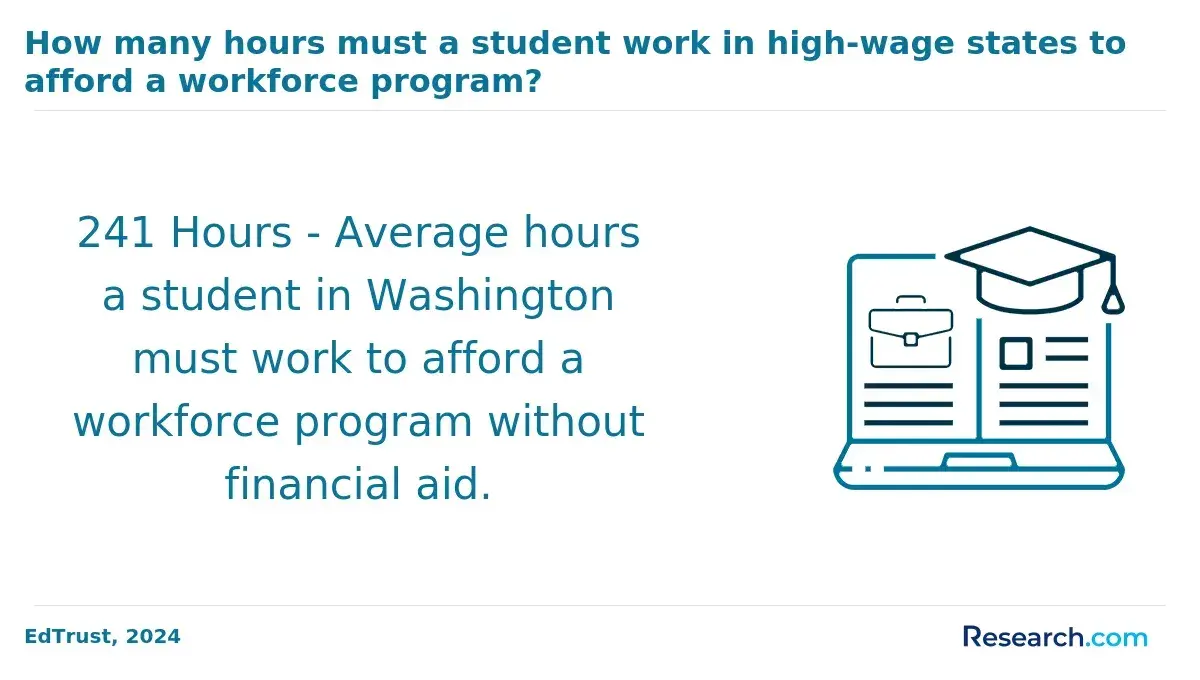
Tuition for accredited online education degrees varies widely by institution type, residency status, degree level, and whether the program charges online-specific fees. Published tuition is only the starting point; the more useful number is total net cost after grants, scholarships, transfer credits, employer tuition assistance, and required expenses.
Recent College Board data released in 2024 shows that published tuition and fees remain substantially lower at public in-state institutions than at private nonprofit colleges. For online education students, that difference matters because teaching salaries are often tied to district pay scales rather than the prestige or price of the degree.
| Cost factor | How it affects total cost | Decision tip |
| In-state versus out-of-state tuition | Public universities may charge different rates based on residency, though some online programs use flat online tuition. | Ask whether online students receive a separate tuition rate. |
| Transfer-credit acceptance | Accepted credits can shorten time to graduation and reduce tuition. | Request a formal transfer evaluation before enrolling. |
| Program fees | Technology, assessment, clinical-placement, and graduation fees can raise the final bill. | Compare full cost of attendance, not only per-credit tuition. |
| Student teaching or practicum costs | Unpaid clinical hours may reduce work availability during the final term. | Plan for transportation, schedule changes, and possible lost income. |
| Licensure exam costs | Teacher candidates may need state exams, background checks, and fingerprinting. | Ask which tests are required and when they are typically taken. |
Students often underestimate indirect costs. An inexpensive program can become less affordable if it accepts few transfer credits, requires repeated campus visits, or delays student teaching. A higher-tuition program may be worth considering if it shortens your timeline, provides better placement coordination, or aligns cleanly with your state license.
Cost-conscious students comparing education with other human-services majors may also review an online psychology degree affordable pathway to understand how tuition, career direction, and graduate-school expectations differ across related fields.
How Competitive Is Admission to Accredited Online Education Degree Programs?
Admissions competitiveness depends on the degree level and whether the program leads to licensure. Many online education programs are accessible, but licensure tracks can include minimum GPA requirements, prerequisite coursework, background checks, interviews, and state-mandated testing before full admission to teacher candidacy.
The table below compares common admissions expectations. Requirements vary by school, so students should use this as a planning checklist rather than a universal rule.
| Program level | Typical admissions requirements | What makes admission harder |
| Bachelor's in education | High school diploma or GED, transcripts, application, and sometimes minimum GPA. | Competitive teacher-candidacy checkpoints after lower-division coursework. |
| Transfer or degree-completion program | Prior college credits, minimum GPA, transcript review, and general education completion. | Low transfer-credit acceptance or missing prerequisite courses. |
| Master of Arts in Teaching | Bachelor's degree, transcripts, statement of purpose, references, and prerequisite subject coursework. | Licensure testing, content-area requirements, and limited clinical-placement availability. |
| Master of Education | Bachelor's degree, transcripts, resume, and sometimes teaching license or classroom experience. | Leadership, counseling, or specialist tracks may require active licensure. |
| Doctorate in education | Master's degree, professional experience, writing sample, recommendations, and interview. | Research fit, leadership experience, and cohort capacity. |
Open or flexible admissions do not automatically signal weak academic quality. Some reputable online programs intentionally serve working adults and transfer students. The better question is whether students admitted under flexible policies receive advising, academic support, field-placement guidance, and clear milestones.
Before applying, reduce your risk by completing these steps:
- Ask whether admission to the university is separate from admission to the teacher-preparation program.
- Confirm GPA thresholds for field experience, student teaching, and licensure recommendation.
- Request a prerequisite review if you are applying to a graduate licensure program.
- Ask whether prior classroom work, substitute teaching, or paraprofessional experience can strengthen your application.
- Compare application fees, transcript deadlines, and start dates before submitting multiple applications.
If you are exploring education but want a shorter career-entry credential outside teaching, comparing online paralegal certificate programs can clarify how certificate admissions, timelines, and career outcomes differ from degree-based teacher preparation.
Which Learning Formats Offer the Greatest Flexibility in Online Education Degree Programs?
Online education degrees can be fully online, hybrid, synchronous, asynchronous, cohort-based, or competency-based. The most flexible format depends on your work schedule, learning style, local field-placement options, and whether you need a licensure pathway that includes supervised classroom practice.
Format matters because education degrees are not only lecture-based. Even in online programs, students often complete observations, practicums, student teaching, or school-based projects in approved settings.
| Learning format | Flexibility level | Best for | Potential drawback |
| Asynchronous online | High | Working adults who need to study around jobs and family responsibilities. | Requires strong self-discipline and proactive communication. |
| Synchronous online | Moderate | Students who want live discussion and structured class times. | Evening or scheduled sessions may conflict with work. |
| Hybrid | Moderate | Students near campus who benefit from in-person labs, seminars, or networking. | Travel requirements can reduce flexibility. |
| Cohort-based | Moderate | Students who want peer support and predictable course sequencing. | Less ability to accelerate or pause. |
| Competency-based | High for self-paced learners | Experienced adults who can move quickly through familiar material | Can be isolating and may not suit students who need frequent instructor interaction. |
The best format for a future teacher is the one you can complete without compromising field requirements. A fully online course schedule will not help if the program cannot approve student teaching in your local area.
Ask these questions before choosing a format:
- Are courses live, self-paced, or a mix of both?
- How often are students required to attend campus, weekend residencies, or synchronous meetings?
- Can field experiences be completed in a school near my home?
- Does the program offer part-time enrollment without disrupting course sequencing?
- What happens if I need to pause for a semester because of work, caregiving, or health obligations?
What Student Support Services Improve Success in Online Education Degree Programs?
Support services can make the difference between enrolling and graduating. In education programs, students need more than access to recorded lectures; they need advising, licensure guidance, field-placement coordination, assessment preparation, and career support tied to school hiring cycles.
NCES postsecondary data released in 2024 continues to show that completion varies significantly across student populations and institution types. For online students, that means program support should be part of the value calculation, not an afterthought.
| Support service | Why it matters for education students | What strong support looks like |
| Academic advising | Education degrees often have strict course sequences and gatekeeping requirements. | Dedicated advisors who understand licensure, transfer credits, and fieldwork milestones. |
| Field-placement coordination | Student teaching and observations must meet school and state rules. | Staff who help secure approved placements near the student. |
| Licensure exam preparation | Teacher candidates may need content, pedagogy, or performance assessments. | Practice exams, workshops, tutoring, and testing timelines. |
| Online tutoring and writing help | Education majors complete lesson plans, research papers, and reflective portfolios. | Evening, weekend, and remote appointments. |
| Career services | Hiring timelines in school districts can be seasonal and competitive. | Resume help, mock interviews, district connections, and job-fair access. |
Red flags include vague answers about student teaching, no dedicated licensure advisor, limited online tutoring hours, or unclear complaint-resolution processes. If a school cannot explain how online students complete fieldwork, keep comparing options.
When speaking with admissions or advising staff, ask for specifics rather than general assurances:
- Who helps me secure a local practicum or student-teaching site?
- What is the average time to graduation for online students in this program?
- Which licensure exams do students take, and what preparation is included?
- How quickly do faculty respond to online student questions?
- What support exists if I fail a required exam or need to repeat a field experience?
Which Financial Aid Options Are Available for Accredited Online Education Degree Students?
Students in accredited online education degree programs may qualify for the same major financial aid categories as campus students, provided the institution participates in federal aid programs and the student meets eligibility rules. The key is to compare net price after aid, not only sticker tuition.
The U.S. Department of Education implemented the redesigned FAFSA for the 2024-25 award year, changing how many students and families provide financial information. Because aid packaging can vary by school, applicants should file early and compare award letters carefully.
| Aid option | Who may qualify | Important limitation |
| Federal Pell Grant | Undergraduate students with financial need. | Eligibility depends on federal formulas, enrollment status, and remaining lifetime limits. |
| Federal student loans | Eligible undergraduate and graduate students. | Loans must be repaid, and graduate borrowing can increase debt quickly. |
| State grants | Residents who meet state-specific rules. | Some grants require enrollment in approved in-state programs. |
| TEACH Grant | Students preparing for high-need teaching fields who meet service obligations. | If service requirements are not fulfilled, the grant can convert to a loan. |
| Institutional scholarships | Students meeting academic, need-based, transfer, or program-specific criteria. | Renewal rules may require minimum GPA or continuous enrollment. |
| Employer or district tuition assistance | Paraprofessionals, school employees, or working educators. | May require continued employment or service after graduation. |
| Loan forgiveness or repayment programs | Teachers serving in qualifying schools or public service roles. | Rules can be complex and depend on loan type, employer, and repayment plan. |
Financial aid should be evaluated like a contract. A program with a larger scholarship may still cost more if fees are high or credits do not transfer. A TEACH Grant can be valuable for committed teachers in qualifying fields, but it is risky for students who are uncertain about meeting the service obligation.
Use this process to compare offers:
- Calculate total cost for the full degree, including fees, books, exams, travel, and unpaid fieldwork.
- Subtract grants and scholarships before considering loans.
- Separate loans from gift aid so you know what must be repaid.
- Ask whether scholarships renew automatically or require a new application.
- Compare monthly loan repayment estimates against local teacher salary schedules.
Which Career Outcomes Are Associated With Accredited Online Education Degree Programs?
Career outcomes depend on degree level, licensure area, state demand, district pay scales, and whether the student completes required certification steps. An accredited online education degree can support classroom teaching, curriculum work, instructional design, education administration, training, or specialized support roles, but no program can guarantee employment or salary.
BLS May 2024 wage data places median pay for many elementary, middle, and high school teaching roles in the low-to-mid $60,000 range, while some education leadership and instructional coordination roles report higher median wages. For students, this means ROI should be judged against local salary schedules and career advancement policies, not national averages alone.
| Career path | Common degree pathway | Licensure or credential issue | ROI consideration |
| Elementary school teacher | Bachelor's in elementary education or MAT with elementary licensure | State teacher license and supervised student teaching are usually required. | Strong fit for students committed to classroom teaching and child development. |
| Middle or high school teacher | Bachelor's or MAT in education plus subject-area preparation | Content-area testing and grade-band certification may apply. | Value improves when the program aligns with high-need subject areas in your region. |
| Special education teacher | Special education degree, endorsement, or master's track | Specialized license or endorsement is commonly required. | Can offer strong demand, but workload and compliance responsibilities are significant. |
| Instructional coordinator | M.Ed. in curriculum and instruction, instructional design, or related field. | Teaching experience or administrator credentials may be preferred or required. | Often better suited to experienced educators seeking advancement. |
| School administrator | Master's in educational leadership or Ed.D. | Administrator licensure and teaching experience are commonly required. | Higher responsibility and pay potential, but requirements vary widely by state and district. |
| Corporate trainer or learning designer | Education, instructional design, or learning technologies degree | Licensure may not be required outside K-12 schools. | Good fit for educators who want non-classroom roles. |
The strongest career outcomes usually come from matching the degree to a specific employment goal. A general education studies degree may be useful for nonprofit, tutoring, childcare, or training roles, but it may not lead to teacher licensure. A licensure-focused program is more appropriate if your goal is to become a public school teacher.
Students who are comparing education with broader earnings-focused degree choices may find it useful to review highest paying majors, especially if long-term salary growth is a major part of the decision.
How Do Online and Campus-Based Education Degree Programs Compare?
Online and campus-based education degrees can both be rigorous and accredited. The meaningful differences are not academic legitimacy alone; they are scheduling, placement logistics, peer interaction, access to campus resources, and how well the program supports licensure requirements in your location.
The comparison below shows when each format tends to make sense. Students should choose based on fit, not assumptions that one format is automatically better.
| Factor | Online education degree | Campus-based education degree |
| Schedule flexibility | Often stronger for working adults, parents, and rural students. | More structured weekly schedule. |
| Field experience | May be completed locally if the school approves placements. | Often arranged through established nearby school partnerships. |
| Peer and faculty interaction | Depends on discussion boards, live sessions, cohorts, and advising. | More frequent in-person interaction. |
| Campus resources | Available remotely in strong programs, but access varies. | Easier access to labs, libraries, events, and faculty offices. |
| Cost | May reduce relocation and commuting costs. | May provide better access to campus scholarships or local placements. |
| Best fit | Self-directed students who need flexibility and can manage deadlines. | Students who benefit from structure, in-person mentoring, and local school networks. |
Online programs work best when students are organized, comfortable with technology, and proactive about communication. Campus programs may be better for students who want daily structure, face-to-face mentoring, or easier access to local school partnerships.
A common mistake is assuming an online program will be easier. In practice, online education degrees often require the same readings, lesson planning, assessments, and fieldwork as campus programs. The flexibility is real, but so is the responsibility.
How Should Students Choose the Best Accredited Online Education Degree Program?
To choose the best accredited online education degree program, start with the outcome you want and work backward. A student who wants initial teacher licensure should evaluate programs differently from a licensed teacher seeking a pay-scale upgrade, a paraprofessional moving into a classroom role, or a career changer exploring non-classroom education jobs.
The best decision balances affordability, accreditation, licensure fit, support, flexibility, and realistic career outcomes. Use this sequence to narrow your list:
- Define your goal: initial licensure, added endorsement, master's advancement, leadership, instructional design, or non-licensure education work.
- Verify institutional accreditation and program approval before comparing rankings or tuition.
- Confirm that the program meets licensure requirements in the state where you plan to work.
- Request a written transfer-credit evaluation and a full cost estimate.
- Compare course format, start dates, part-time options, and field-placement rules.
- Ask for student outcome indicators such as completion rates, licensure exam support, and job-placement resources.
- Review financial aid offers by separating grants, scholarships, loans, and service obligations.
- Choose the lowest-risk program that meets your professional goal, not simply the program with the lowest advertised tuition.
Students should avoid programs that cannot clearly explain accreditation, licensure alignment, field placements, total cost, or student support. Another red flag is pressure to enroll before you receive written answers about transfer credits or certification requirements.
Who should choose this path? An accredited online education degree is a strong fit for students who want to teach, advance in schools, or work in learning-focused roles and need flexibility. Who should consider another option? Students who are unsure about classroom teaching, unwilling to complete fieldwork, or seeking the fastest route to a high salary may want to compare adjacent fields before committing. For example, students interested in counseling-related graduate study can explore online clinical psychology masters programs to understand how licensure, supervised experience, and career paths differ from education degrees.
Other Things You Should Know About Education
Most accredited universities do not label the delivery format on the diploma, but policies vary. Ask the registrar whether the transcript or diploma distinguishes online, hybrid, and campus programs.
Often, yes, but only if the program approves the site and the placement meets state and school requirements. Confirm this before enrolling, especially if you live outside the university's home state.
No. Education studies programs may cover learning, policy, or child development without preparing students for certification. If you want to become a licensed teacher, choose a state-approved educator-preparation program.
Students typically need a reliable computer, high-speed internet, webcam, microphone, learning-management-system access, and the ability to record or upload assignments. Some programs may also require proctoring software or video tools for teaching demonstrations.
References
- Financial Aid Guide for Students at Online Colleges - OnlineColleges.net https://www.onlinecolleges.net/for-students/financial-aid-online-students/
- National survey focuses on outcomes of new college graduates - Utah System of Higher Education https://ushe.edu/new-national-survey-focuses-on-outcomes-of-new-college-graduates/
- Average Cost of Online College [2025]: Yearly Tuition + Fees https://educationdata.org/average-cost-of-online-college
- Accreditation as a Strategic Driver of Alignment Across Higher Education and Industry https://acbspjournal.org/2026/05/22/accreditation-as-a-strategic-driver-of-alignment-across-higher-education-and-industry/
- Types of Financial Aid for Online Colleges https://www.umassglobal.edu/blog-news/types-financial-aid-online-colleges
- Understanding Accreditation https://www.collegesanddegrees.com/accreditation
- Can I get financial aid for an online degree? | edX https://www.edx.org/resources/can-i-get-financial-aid-for-an-online-degree
- The Rise of Online Education and the Importance of Accreditation https://www.qahe.org/article/the-rise-of-online-education-and-the-importance-of-accreditation/
- Placement and Education of Graduates https://www.iona.edu/about-iona-university/consumer-information/placement-and-education-graduates
- 2025 Most Affordable Online Master's Programs https://www.onlineu.com/most-affordable-colleges/masters-degrees