2027 Online Education Degree Programs With No Application Fee and Rolling Admissions

Co-Founder and Chief Data Scientist
Choosing an online education degree is easier when you can apply without paying a fee and avoid a once-a-year deadline. It matters because the U.S. Bureau of Labor Statistics reported a May 2024 median wage of $59,940 for education, training, and library occupations, higher than the median for all occupations.
This guide is for prospective teachers, school staff, career changers, and working adults comparing flexible online programs. You will learn how rolling admissions work, what "no application fee" really saves, and how to judge cost, accreditation, licensure fit, and career value before applying.
Key Things You Should Know
- No-application-fee programs can save useful upfront money, but the real affordability test is total tuition, technology fees, field-placement costs, transfer-credit policy, and financial aid eligibility.
- Rolling admissions usually means applications are reviewed continuously, but students still need to meet term start dates, financial aid deadlines, transcript deadlines, and cohort capacity limits.
- For education careers, accreditation and licensure alignment matter more than the application fee; BLS May 2024 data shows education, training, and library occupations had a median annual wage of $59,940, but state requirements vary by role.
Which Online Education Degree Programs Have No Application Fee and Rolling Admissions?
Online education degree programs with no application fee and rolling admissions are usually offered by universities that run multiple online terms each year. They may include bachelor's degrees in education studies, early childhood education, or child development; master's degrees in curriculum and instruction, educational leadership, instructional design, or special education; and doctoral degrees such as an EdD.
The table below summarizes examples of U.S. institutions that commonly advertise free applications and flexible or rolling online admissions for education-related programs. Policies can change, so students should verify the current fee, start date, licensure pathway, and program availability directly with the school before applying.
| Institution | Online education program examples | Application-fee position to verify | Admissions pattern to verify | Best-fit student profile |
| Southern New Hampshire University | BA in Education Studies, MS in Education, education-focused graduate certificates | Generally advertises no application fee | Rolling admissions with multiple online term starts | Working adults seeking broad education, training, or non-licensure pathways |
| Purdue Global | Early childhood administration, instructional design, higher education, and related graduate options | Generally advertises no application fee | Frequent start dates and continuous application review | Students comparing career-focused online formats and transfer-credit options |
| American Public University | Education, early childhood, instructional design, and related programs | Generally advertises no application fee | Monthly or frequent online course starts | Military-affiliated students, public-service workers, and adult learners |
| Capella University | MS in Education, EdD, PhD in Education, and specializations | Generally advertises no application fee | Multiple start opportunities depending on program format | Graduate students seeking competency-based or flexible online study models |
| Walden University | MS in Education, EdD, education specialist, and related certificates | Generally advertises no application fee | Rolling or frequent admissions windows by program | Educators pursuing advanced credentials, leadership, or specialization |
| Liberty University | Online bachelor's, master's, doctoral, and certificate programs in education | Often advertises online application-fee waivers or no-fee application periods | Rolling admissions with multiple annual start dates | Students seeking a large catalog of online education and Christian-affiliated programs |
| National University | Education, teaching, credential, leadership, and instructional design programs | Generally advertises no application fee | Year-round enrollment and frequent course starts | California students, career changers, and educators comparing credential-related routes |
These programs are not automatically cheaper or better because they remove the application fee. A strong choice is one where the admissions flexibility matches your schedule, the total cost fits your budget, and the degree supports your intended role, especially if you need teacher licensure, principal certification, or a state-recognized endorsement.
How Does Rolling Admission Work for Online Education Degree Programs?
Rolling admission means a school reviews applications as they arrive instead of waiting for one fixed deadline. For online education programs, rolling admissions are often paired with six-week, eight-week, monthly, or quarterly starts, which can help students begin sooner than a traditional semester calendar allows.
The comparison below shows why rolling admission can be useful but not deadline-free. It helps students understand where the flexibility is real and where planning is still required.
| Feature | Rolling admissions | Fixed-deadline admissions | What it means for students |
| Application review | Applications are reviewed continuously or in frequent batches | Applications are reviewed after a set deadline | Rolling review can produce faster decisions, but incomplete files still delay admission |
| Start dates | Often several per year | Usually fall, spring, and sometimes summer | More start dates help working adults, but not every course may be offered every term |
| Seat availability | May close when a term or cohort fills | Capacity is usually managed after the deadline | Applying early can matter even when the school says applications are accepted year-round |
| Financial aid timing | Separate aid and scholarship deadlines may still apply | Aid deadlines are often tied to the admission cycle | Students should not wait until the last admissions window if they need aid packaged before enrollment |
| Best use case | Students who want flexibility and can submit materials quickly | Students targeting competitive cohorts, assistantships, or traditional campus structures | The better model depends on program selectivity, schedule, funding, and licensure requirements |
A common mistake is assuming rolling admissions means admission is easier or guaranteed. Schools can still require minimum GPAs, prerequisite coursework, background checks, recommendation letters, interviews, writing samples, or proof of classroom experience.
How Much Can Students Save by Choosing an Online Education Degree With No Application Fee?
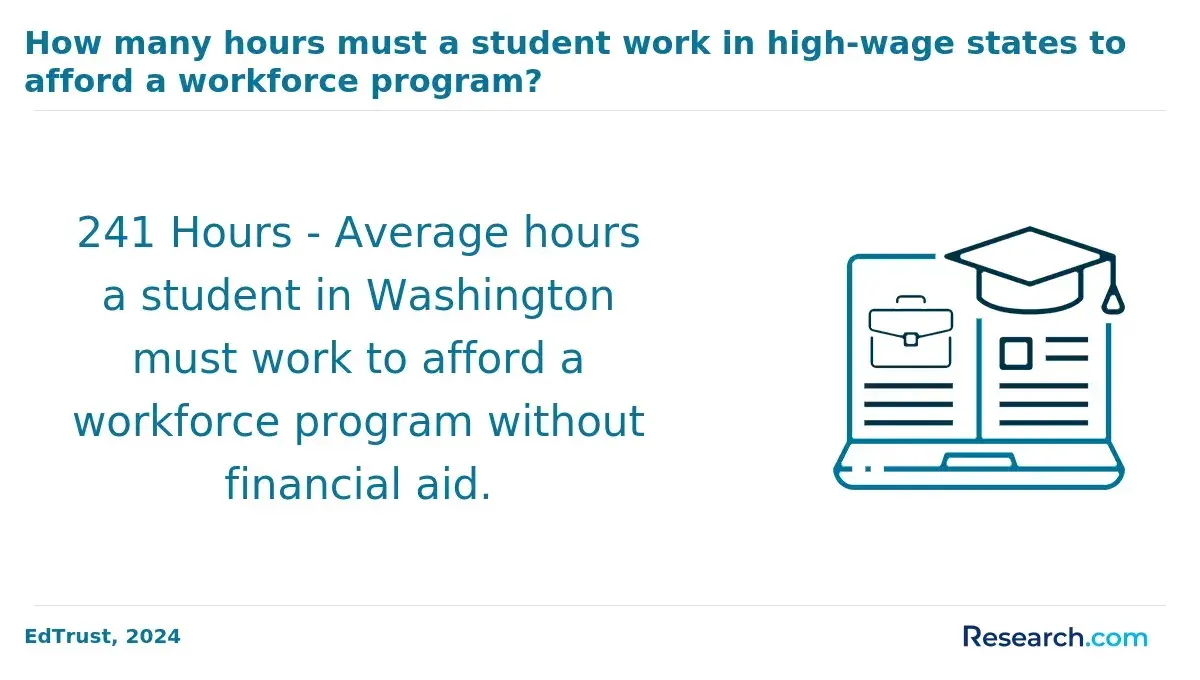
The direct savings from a no-application-fee online education degree are usually modest compared with tuition, but they matter when students are applying to several programs. For example, a student who applies to five schools that would otherwise charge $50 each avoids $250 in upfront application costs; that is useful, but it should not outweigh a tuition difference of thousands of dollars.
The smartest way to treat the waived fee is as a way to compare more programs without increasing your search cost. Before enrolling, look beyond the application screen and ask for a full cost breakdown that includes the following items:
- Tuition per credit or per term, including whether online students pay a different rate than campus students.
- Mandatory technology, student services, graduation, clinical placement, background check, testing, or portfolio-assessment fees.
- Transfer-credit limits, because accepting more prior credits can reduce total cost more than a waived application fee.
- Course load options, since part-time enrollment may help cash flow but can extend time in school.
- Licensure-related expenses such as exams, fingerprinting, student teaching requirements, and state application fees.
Students comparing graduate education options should also consider time-to-completion. A shorter program can reduce opportunity cost if it is appropriately accredited and aligned with the student's goal; for comparison, students exploring accelerated graduate formats may also review 1 year masters options to understand how program length affects value.
What Are the Admission Requirements for No-Fee Online Education Degree Programs?
No-fee online education programs can still have selective or program-specific requirements. The application may be free, but the school must still evaluate whether the student is academically prepared and, for licensure programs, eligible for fieldwork or certification pathways.
The table below outlines common requirements by degree level. Exact requirements vary by institution, state, degree type, and whether the program leads to teacher licensure.
| Program type | Common requirements | Requirements that often depend on the school or state | Decision point |
| Bachelor's in education studies or child development | High school diploma or GED, transcripts, online application, placement information | Minimum GPA, transfer-credit review, prerequisite college credits | Good for students seeking a broad education-related degree or a path toward graduate study |
| Bachelor's teacher-preparation program | Transcripts, GPA review, background check, field-placement eligibility | State tests, supervised student teaching, specific general education courses | Best for students who need an initial teaching license and can complete fieldwork locally |
| Master's in education | Bachelor's degree, official transcripts, resume, statement of purpose | Teaching license, classroom experience, recommendation letters, minimum GPA | Best for licensed teachers or education professionals seeking advancement or specialization |
| Educational leadership or administration | Bachelor's degree, professional resume, transcripts | Teaching license, years of experience, principal internship, state leadership requirements | Important for students targeting assistant principal, principal, or administrative roles |
| Doctoral education programs | Graduate degree or substantial professional experience, transcripts, writing sample, resume | Interview, research statement, professional references, cohort requirements | Best for students pursuing leadership, research, policy, or advanced practitioner roles |
One red flag is a program that advertises "easy admission" without clearly explaining academic requirements, accreditation, field-placement expectations, or licensure outcomes. A legitimate admissions process should be accessible, but it should not be vague.
When Should Students Apply to Online Education Degree Programs With Rolling Admissions?
Students should apply earlier than the final posted date for their intended start term, especially if they need transfer credits evaluated, financial aid processed, or field placement approved. Rolling admissions can shorten the waiting period, but it does not eliminate the time needed for transcripts, FAFSA processing, advising, registration, and onboarding.
A practical application timeline helps prevent missed aid deadlines and rushed enrollment decisions. Use this sequence when targeting a specific start date:
- Eight to twelve weeks before the desired start, confirm that the program still has no application fee and that the next start date is open for your specific degree or specialization.
- Six to eight weeks before the start, request official transcripts from every college attended and ask whether unofficial transcripts can be used for a preliminary review.
- Five to six weeks before the start, ask admissions whether courses in the first term are available, whether there is a cohort cap, and whether fieldwork or synchronous sessions are required.
- Four to six weeks before the start, complete the FAFSA if using federal aid and ask the school about scholarship or employer-tuition-assistance deadlines.
- Three to four weeks before the start, review your transfer-credit evaluation, degree plan, tuition estimate, and refund policy before signing enrollment documents.
Applying early can improve your planning position, not because rolling admission guarantees a better admissions result, but because it gives you more time to compare offers, correct missing documents, and avoid starting a term without a clear funding plan.
How Can Students Strengthen an Online Education Degree Application?
A strong online education degree application shows readiness for remote learning, clarity of purpose, and alignment with the program's outcomes. This is especially important for graduate, licensure, leadership, and doctoral programs, where schools may evaluate professional experience and communication skills as closely as grades.
Applicants can improve their file by focusing on evidence rather than vague enthusiasm. The following steps are most useful for students applying to education programs:
- Write a focused statement of purpose that connects your target role, such as teacher, instructional designer, reading specialist, administrator, or training professional, to the program's curriculum.
- Explain any GPA issues with context and evidence of recent academic or professional improvement.
- Choose recommenders who can speak to teaching ability, leadership, reliability, communication, or work with learners.
- Prepare a resume that highlights classroom experience, tutoring, training, childcare, curriculum work, technology use, or leadership responsibilities.
- For licensure programs, ask early about field placement, student teaching, background checks, and state testing so your application does not stall after admission.
- Use AI tools carefully for brainstorming or proofreading only, and make sure essays reflect your own voice, experiences, and professional goals.
A common mistake is submitting a rushed application because the school accepts applications continuously. Rolling admissions reward readiness; they do not make incomplete transcripts, generic essays, or missing recommendations less important.
Are Online Education Degree Programs With No Application Fees Accredited and Legitimate?
Many legitimate online education programs have no application fee, but the fee policy itself does not prove quality. Students should verify institutional accreditation, programmatic accreditation when relevant, state authorization, licensure alignment, and field-placement support before enrolling.
Institutional accreditation from a U.S. Department of Education-recognized accreditor is the baseline for federal financial aid eligibility and credit transfer. For teacher-preparation programs, students should also ask whether the program is approved for licensure in their state or whether it is designed only for non-licensure roles such as instructional design, education studies, corporate training, or childcare administration.
Use this legitimacy checklist before choosing a no-fee program:
- Confirm the institution appears in the U.S. Department of Education's accreditation database.
- Ask whether the exact online program, not just the university, meets your state's teacher licensure or endorsement requirements.
- Verify whether student teaching, practicum, internship, or residency requirements can be completed where you live.
- Review graduate outcomes carefully, but avoid relying on vague claims such as "career-ready" without placement, licensure, or employer-context details.
- Check whether credits are likely to transfer if you later change schools or pursue graduate study.
This level of verification is also important in other regulated or practice-focused fields; students comparing programs such as online clinical psychology masters programs face similar questions about accreditation, supervised experience, and state requirements.
How Do Financial Aid and Total Costs Compare Among Online Education Degree Programs?
Financial aid can make a bigger difference than the waived application fee. For the 2024-25 award year, the maximum federal Pell Grant was $7,395, which shows why eligible undergraduate students should prioritize aid deadlines, cost of attendance, and net price over application convenience alone.
The table below shows cost factors that commonly affect online education degree affordability. It helps students separate small upfront savings from the costs that shape long-term return on investment.
| Cost factor | Why it matters | Question to ask the school |
| Tuition model | Per-credit, per-term, and competency-based pricing can produce very different totals | What is the estimated total tuition for my degree plan after transfer credits? |
| Mandatory fees | Technology, student services, graduation, testing, and placement fees can add to the bill | Which fees are required for online students in this exact program? |
| Transfer credits | Accepted credits can reduce both cost and completion time | How many credits can I transfer, and when will I receive an official evaluation? |
| Financial aid eligibility | Federal aid usually requires institutional accreditation and eligible enrollment status | Is this program eligible for federal aid, scholarships, military benefits, or employer assistance? |
| Licensure expenses | Teacher testing, background checks, fingerprinting, and state applications may be separate | Which licensure-related costs are not included in tuition? |
| Time to completion | Longer enrollment can increase total tuition and delay career advancement | How long do students with my transfer credits and schedule usually take to finish? |
Students should compare education degrees with realistic career goals in mind. If earning potential is a major factor, it can help to review broader salary patterns across fields, including highest paying majors, while remembering that education careers often involve public-sector pay scales, licensure rules, union contracts, and regional salary differences.
Which Students Benefit Most From No-Fee, Rolling-Admission Online Education Degrees?
No-fee, rolling-admission online education degrees are most valuable for students who need flexibility and want to compare multiple programs without paying several upfront application charges. They are especially useful when the student has already clarified the desired role and can quickly gather transcripts, recommendations, and financial aid documents.
These programs tend to fit the following students best:
- Working adults who need several start-date options because of job, family, or military schedules.
- Transfer students who want multiple credit evaluations before choosing the lowest-cost path.
- Licensed teachers pursuing a master's degree, endorsement, or leadership credential without waiting for a fall-only admission cycle.
- Career changers exploring education studies, early childhood education, training, or instructional design before committing to a licensure pathway.
- Students with limited upfront cash who want to apply broadly while preserving money for transcripts, testing, books, or technology.
Students should avoid choosing a program primarily because the application is free if the tuition is high, the program is not aligned with state licensure, or the degree does not match the intended career. If the goal is a faster credential outside education, comparing shorter options such as online paralegal certificate programs can help clarify whether a full education degree is the right level of investment.
How Should Students Choose Among No-Fee Online Education Degree Programs?
The best no-fee online education degree is not the one that is easiest to apply to; it is the one that best balances accreditation, cost, transfer credits, learning format, support services, and career alignment. Students should compare programs side by side before submitting enrollment documents.
Use this decision process to narrow your choices without being distracted by the waived application fee:
- Define the target outcome first, such as initial teacher licensure, advancement on a district salary schedule, instructional design work, education leadership, childcare administration, or doctoral-level leadership.
- Separate licensure and non-licensure programs, because a non-licensure education degree may be legitimate but unsuitable for becoming a classroom teacher.
- Ask each school for the total program cost after transfer credits, not just the cost per credit.
- Confirm the number of annual start dates and whether your required first-term courses are available at the start date you want.
- Compare support services, including advising, field-placement assistance, tutoring, career services, library access, and technology support.
- Review refund policies, satisfactory academic progress rules, and financial aid timing before committing.
- Choose the program that offers the strongest match between affordability, completion timeline, accreditation, and career relevance.
It is also reasonable to compare education with adjacent helping-profession degrees before enrolling. For example, students interested in child development, counseling-adjacent roles, or human services may want to compare affordability across fields, including online psychology degree affordable options, before deciding which academic path best supports their goals.
Other Things You Should Know About Education
Yes, but only if the program is designed and approved for licensure in the state where you plan to teach. Many online education degrees are non-licensure programs, so students should confirm state approval, student teaching requirements, and testing rules before enrolling.
Most accredited universities issue the same diploma format for online and campus students, but policies vary. If this matters to you, ask the registrar how the degree, major, concentration, and delivery format appear on the diploma and transcript.
Licensure-focused programs usually require supervised fieldwork, practicum hours, or student teaching. Non-licensure programs may not require classroom placement, but they can still include projects, portfolios, or applied assignments.
Yes. Transfer credits can reduce both tuition and time to completion, often more meaningfully than a waived application fee. Students should request an official transfer evaluation before enrolling and ask which credits apply directly to the degree plan.
References
- How Can Institutions Best Support Their Online Learners? https://www.higheredtoday.org/2025/04/21/how-can-institutions-best-support-their-online-learners/
- Grad Schools with No Application Fees https://www.onlinemastersdegrees.org/best-programs/no-application-fees/
- Beyond the Classroom: Exploring the Benefits of Online Student Support https://lakewood.edu/beyond-the-classroom-exploring-the-benefits-of-online-student-support/
- Student Services for Online Learners: Choosing the Right School for You https://www.onlineu.com/resources/college-planning/student-services-for-online-learners
- Online College Tuition Comparison: Online vs. In-Person https://www.uagrantham.edu/blog/online-college-tuition-comparison-online-vs-in-person/
- How Online College Costs Vary in the US and Europe https://orlandomom.com/how-online-college-costs-vary-in-the-us-and-europe/
- Academic Requirements https://www.coleurope.eu/admission/academic-requirements
- Online Colleges No Application Fee: Schools With No Fees to Apply https://www.top10onlinecolleges.org/with-no-application-fee/
- LAB Rolling Admission for bachelor's degrees https://lab.fi/en/rolling-admission-bachelors
- Rolling Admissions Explained: How It Works and When You Should Apply https://riseglobaleducation.com/blogs/rolling-admissions-explained-how-it-works-and-when-you-should-apply