2027 Cheapest Accredited Online Education Degree Programs That Accept FAFSA

Co-Founder and Chief Data Scientist
Choosing the cheapest online education degree is not just about finding the lowest tuition; it is about finding an accredited, FAFSA-eligible program that can actually lead to your teaching or education career goal. Federal Student Aid lists the maximum Pell Grant at $7,395 for the current award cycle, which can substantially reduce out-of-pocket costs for eligible students.
This guide is for future teachers, career changers, paraprofessionals, and adult learners who want a practical way to compare costs, aid, accreditation, transfer policies, and long-term value before enrolling.
Key Things You Should Know
- The cheapest FAFSA-eligible online education degrees are usually public universities or competency-based nonprofit programs, with published online undergraduate tuition often falling around the low-$200s to low-$300s per credit before fees and aid.
- FAFSA participation does not mean a program will be free: the current maximum Pell Grant is $7,395, while remaining costs may still require scholarships, savings, employer aid, payment plans, or federal loans.
- For teacher licensure, institutional accreditation is not enough; students must also verify state approval, student-teaching rules, field placement requirements, and whether the online program meets licensing requirements where they plan to teach.
Which Are the Cheapest Accredited Online Education Degree Programs That Accept FAFSA?
The cheapest accredited online education degree programs that accept FAFSA are typically offered by regionally accredited public universities or nonprofit institutions that participate in federal student aid programs. The best starting shortlist is not always the school with the lowest advertised tuition; it is the school with the lowest estimated net cost after grants, scholarships, transfer credits, required fees, and any student-teaching expenses.
The table below highlights examples of accredited online education-related bachelor's programs that are commonly considered affordable and are offered by institutions that participate in federal student aid. Tuition changes frequently, so use these figures as a comparison starting point and confirm current charges, program availability, state authorization, and FAFSA eligibility directly with each school.
| School | Example online education degree area | Institution type | Cost structure to verify | Why it may be affordable | Important caution |
| Fort Hays State University | Elementary education, early childhood, education-related pathways | Public | Low online per-credit tuition plus fees | Often competitive for students seeking a public university price | Licensure requirements and field placements vary by state |
| Western Governors University | Teacher preparation and education degrees | Private nonprofit | Flat six-month term tuition | Can be cost-effective for motivated students who complete courses quickly | Students who need more time may not save as much |
| Eastern New Mexico University | Online education and early childhood-related programs | Public | Online tuition, required fees, and residency rules | Public pricing can be strong for transfer and adult learners | Confirm whether the specific program leads to licensure |
| Valdosta State University | Elementary education, special education, and education-related options | Public | Online tuition and e-rate policies | May offer a lower online rate than many private options | Admissions and clinical experience rules may be specific |
| University of West Alabama | Early childhood development and education-related programs | Public | Per-credit online tuition and program fees | May fit students seeking flexible online coursework | Some pathways may be non-licensure or designed for specific roles |
| University of North Carolina system online options | Education studies, elementary education, birth-kindergarten, or related programs depending on campus | Public | In-state, out-of-state, and distance education tuition | Can be especially affordable for qualifying residents | Not every online option is available in every state |
When comparing these programs, separate "education degree" from "teacher licensure program." A bachelor's in education studies, child development, or educational leadership may support careers in schools, training, childcare, or nonprofit learning environments, but it may not qualify you for an initial teaching license unless the program is specifically approved for that purpose.
A practical search strategy is to filter schools by four conditions before comparing price. This helps prevent the common mistake of choosing a low-cost program that is not usable for your intended career.
- Confirm the institution is accredited by an agency recognized by the U.S. Department of Education or the Council for Higher Education Accreditation.
- Confirm the school participates in federal student aid and has a valid federal school code for the FAFSA.
- Confirm the specific online program is eligible for federal aid, not just the institution as a whole.
- Confirm whether the program is licensure-track, non-licensure, or designed for students who already hold a teaching credential.
How Does FAFSA Eligibility Work for Online Education Degree Programs?
FAFSA eligibility means a student can use the Free Application for Federal Student Aid to be considered for federal grants, federal loans, and work-study at a participating institution. For online education degrees, the key point is that aid eligibility depends on the school, the student, the program, the credential level, and enrollment status.
Since the FAFSA redesign, federal aid uses the Student Aid Index, often called SAI, instead of the older Expected Family Contribution. A lower SAI can increase eligibility for need-based aid, but it does not automatically cover the full cost of attendance. Online students may still pay tuition, technology fees, books, background checks, testing fees, transportation to field placements, and student-teaching costs.
Before assuming an online education degree will qualify, students should ask the financial aid office direct questions. These questions are especially important for accelerated, competency-based, licensure, and non-licensure programs:
- Is this exact online education degree program Title IV eligible for federal student aid?
- What is the school's federal FAFSA code, and which campus or program should I select?
- What enrollment level is required to receive grants, loans, or work-study?
- Will field experience, student teaching, or clinical practice affect my enrollment status or aid disbursement?
- Are there satisfactory academic progress requirements I must meet to keep aid?
- Does the program meet teacher licensure requirements in my state?
A major red flag is a school that says it "accepts financial aid" but cannot clearly explain whether federal aid applies to the specific online education degree. Institutional scholarships, private loans, military benefits, and payment plans are not the same as FAFSA-based federal aid.
How Much Does an Online Education Degree Cost After Financial Aid?
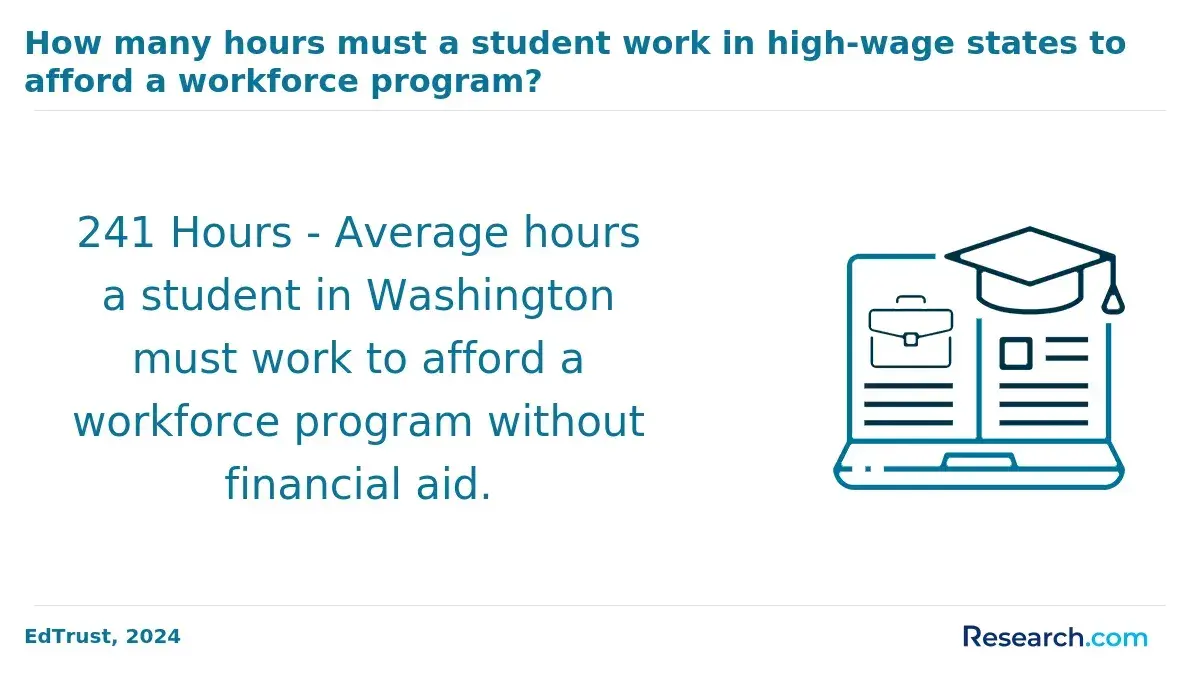
The out-of-pocket cost of an online education degree depends on tuition, fees, transfer credits, grant eligibility, borrowing choices, and how long the student takes to finish. The current maximum Pell Grant of $7,395 can make a low-cost public or nonprofit online program much more affordable, but many students will still need to cover a remaining balance.
The table below shows how to think about gross cost versus net cost. It uses simplified examples to show why the "cheapest" program is the one with the lowest total cost after aid and transfer credits, not necessarily the lowest sticker price.
| Cost scenario | What it means | Why it matters |
| Low tuition, low transfer credit acceptance | The per-credit rate is cheap, but the student must retake many courses | Total cost can rise because more credits are required |
| Moderate tuition, generous transfer policy | The school costs more per credit but accepts more prior coursework | Fewer remaining credits may reduce the final bill |
| Flat-rate term tuition | The student pays by term instead of by credit | Fast completers may save money, while slower completers may not |
| High aid eligibility | Grants and scholarships reduce direct charges | Net price may be lower than a school with cheaper published tuition |
| Heavy loan reliance | Federal loans cover the balance after grants | Monthly repayment can reduce career ROI after graduation |
Students planning to earn a bachelor's degree and later move into graduate study should also consider the total education pathway, not just the first credential. If you may eventually need an advanced degree for administration, curriculum leadership, or specialized roles, comparing accelerated options such as 1 year masters programs can help you estimate the longer-term cost of your education plan.
To estimate your own net cost, do the calculation in this order. This gives you a more realistic number than simply multiplying tuition by total program credits.
- Start with the remaining credits you actually need after transfer evaluation.
- Multiply remaining credits by tuition, or estimate the number of flat-rate terms required.
- Add required fees, books, software, testing, background checks, and field placement expenses.
- Subtract grants and scholarships that do not need to be repaid.
- Subtract employer tuition assistance, military benefits, or state grants if available.
- Review any remaining balance and decide how much, if any, you would need to borrow.
Which Affordable Online Education Degree Programs Offer the Best Value?
The best-value online education degree is the one that aligns cost, accreditation, licensure fit, student support, and career outcomes. For a future licensed teacher, a slightly more expensive state-approved program may be a better value than a cheaper non-licensure degree that requires additional coursework later.
Value also depends on the student's goal. A paraprofessional seeking teacher licensure, a childcare worker seeking career advancement, and a corporate trainer seeking a bachelor's credential may need different types of education programs.
| Student goal | Best-value program type | Why it can make sense | When to be cautious |
| Become a licensed classroom teacher | State-approved online teacher preparation program | Aligns coursework, student teaching, and licensure requirements | A low-cost non-licensure degree may not qualify |
| Advance in early childhood or childcare settings | Early childhood education or child development degree | May support preschool, childcare, Head Start, or center leadership roles | Public school licensure may require a separate approved pathway |
| Work in training or learning design | Education studies, instructional design, or workforce training degree | Can fit corporate, nonprofit, or adult learning roles | Teacher licensure may not be included |
| Finish a degree with many prior credits | Transfer-friendly online education or interdisciplinary studies program | Can reduce time and total cost | Too much flexibility can weaken alignment with licensure goals |
| Move into leadership later | Bachelor's program with a clear graduate pathway | Can support future master's, administration, or curriculum roles | Graduate costs should be included in ROI planning |
Because education careers often pay less than some technical or business fields, debt control matters. Students who are still comparing majors can review broader earnings patterns across the highest paying majors to understand the opportunity cost of borrowing heavily for any degree.
A more expensive online education program may be worth choosing when it has stronger licensure alignment, better placement support, a higher transfer credit award, required student-teaching partnerships in your state, or a schedule that lets you keep working. It may not be worth it if the higher price is mainly for convenience and does not improve completion, licensure, or employment fit.
Are the Cheapest Online Education Degree Programs Properly Accredited?
The cheapest online education degree programs can be properly accredited, but students should verify accreditation before applying. In the United States, institutional accreditation is the baseline requirement for federal student aid eligibility, transfer credit recognition, and general academic legitimacy.
For education degrees, there are two accreditation or approval layers to understand. Institutional accreditation applies to the college or university. Program approval or specialized accreditation may apply to teacher preparation, especially if the degree is designed to lead to licensure.
| Credential check | What to verify | Why it matters |
| Institutional accreditation | The school is accredited by a recognized accrediting agency | Usually required for federal aid and transfer credit acceptance |
| Federal aid participation | The school has a valid federal school code and participates in Title IV aid | Required for FAFSA-based grants and federal loans |
| State teacher preparation approval | The program is approved for licensure in the relevant state | Critical for students seeking initial teacher certification |
| Specialized education accreditation | The educator preparation unit may hold CAEP or other recognized approval | Can signal alignment with professional preparation standards |
| State authorization for online learning | The school can enroll students from your state | Some online programs cannot serve every state |
Students should be especially careful with programs advertised as "education," "teaching," or "teacher preparation" without a clear licensure statement. A legitimate non-licensure education degree may still be useful, but it should not be marketed as a direct path to public school teacher certification if it does not meet state requirements.
Use this quick verification process before paying an application fee. It can prevent costly mistakes that are difficult to reverse later.
- Search the school in the U.S. Department of Education's accredited institution database.
- Check the school's federal student aid code using the FAFSA school search tool.
- Review the program page for explicit language about licensure or non-licensure status.
- Contact your state education agency to confirm whether the program meets local certification requirements.
- Ask the school where online students complete student teaching, observations, or practicums.
What FAFSA Grants and Federal Aid Can Pay for an Online Education Degree?
FAFSA can open access to several forms of federal student aid for eligible online education degree students. The most valuable aid is usually grant aid because it does not have to be repaid if the student meets the rules attached to the award.
The current federal Pell Grant maximum is $7,395, but individual awards depend on need, enrollment intensity, cost of attendance, and eligibility rules. Federal loans can fill gaps, but they should be treated as a financing tool rather than a discount.
| Aid type | Can it apply to eligible online degree programs? | Repayment required? | Best use |
| Federal Pell Grant | Yes, for eligible undergraduate students | No, if rules are met | Reducing tuition and fee costs first |
| Federal Supplemental Educational Opportunity Grant | Sometimes, depending on school funding | No, if rules are met | Additional help for high-need students |
| Federal Direct Subsidized Loan | Yes, for eligible undergraduate students with need | Yes | Covering remaining costs after grants |
| Federal Direct Unsubsidized Loan | Yes, for eligible students | Yes | Covering gaps when subsidized aid is not enough |
| Federal Work-Study | Sometimes, depending on school and student eligibility | No | Part-time earnings while enrolled |
| TEACH Grant | Only for eligible programs and students who meet service requirements | Not if service rules are fulfilled | Students committed to qualifying teaching service |
The TEACH Grant deserves special attention because it can be useful for future teachers but has strict service obligations. If the student does not meet the required teaching service terms, the grant can convert into a loan, so it should not be accepted casually.
Students comparing education with other career-focused online credentials should also think about time to employment and total borrowing. For example, shorter career pathways such as online paralegal certificate programs may serve different goals and should be compared on credential requirements, job fit, and cost rather than tuition alone.
Common FAFSA mistakes include assuming every online class qualifies for aid, dropping below the required enrollment level, missing satisfactory academic progress rules, and using loans before applying for state grants or school-based scholarships. The safest approach is to accept free aid first, then subsidized loans if needed, and only then consider unsubsidized or private borrowing.
How Do Transfer Credits Lower the Cost of an Online Education Degree?
Transfer credits can be one of the biggest cost reducers for online education students. A student who enters with an associate degree or substantial prior coursework may reduce both tuition and time to completion, especially at schools with generous transfer policies.
The key is to compare remaining credits, not total program credits. A $320-per-credit program requiring 45 remaining credits may cost less than a $250-per-credit program requiring 75 remaining credits.
| Transfer situation | Potential cost impact | What to verify |
| Completed associate degree | May satisfy many lower-division general education credits | Whether the school accepts the degree as a block transfer |
| Prior college credits without a degree | Can reduce required credits if courses match requirements | Course-by-course equivalency and minimum grade rules |
| Community college pathway | Can lower the cost of the first two years | Articulation agreements with online education programs |
| Military or workplace training | May count as elective or professional credit at some schools | ACE recommendations and institutional credit policies |
| Prior learning assessment | May reduce elective requirements | Fees, portfolio rules, and whether credits apply to the major |
Transfer-friendly programs are especially useful for adult learners who have already completed general education courses. Students comparing several human-service majors may also want to look at how transfer rules differ in related fields, such as an online psychology degree affordable pathway, because accepting more prior credits can sometimes matter more than a lower per-credit rate.
To avoid overpaying, do not enroll until you receive a written transfer evaluation. Ask whether transferred courses apply to the major, general education, electives, or licensure prerequisites because only credits that reduce remaining requirements create real savings.
- Request an unofficial transfer review before applying when possible.
- Ask for a written degree plan showing remaining courses and estimated completion time.
- Check whether older education, math, science, or child development courses expire for licensure purposes.
- Confirm whether student-teaching prerequisites must be completed at the degree-granting school.
- Compare the final number of credits required at each school, not just the transfer credits accepted.
Which Students Benefit Most From a Low-Cost Online Education Degree With FAFSA?
Low-cost FAFSA-eligible online education degrees are especially useful for students who need flexibility, cannot relocate, and want to reduce borrowing. They can be a strong fit for working adults, paraprofessionals, childcare workers, substitute teachers, military-connected students, and community college graduates.
These programs may be less suitable for students who need a highly structured campus environment, require guaranteed local placement support, or are pursuing a state license that the online program does not support. The lowest-cost option is risky if it creates delays, transfer problems, or licensing gaps.
| Student type | Why a low-cost online program can help | What to check first |
| Paraprofessionals and teacher aides | Can keep working while completing a bachelor's or licensure pathway | Whether fieldwork can be completed near the current workplace |
| Community college graduates | Can use transfer credits to shorten the bachelor's timeline | Whether the associate degree transfers cleanly |
| Career changers | Can earn a credential without moving or leaving full-time work immediately | Whether the program includes student teaching during work hours |
| Childcare and early learning workers | Can support advancement in preschool, childcare, or early childhood settings | Whether the degree meets employer or state requirements |
| Rural students | Can access teacher preparation without relocating | Whether local clinical placements are available |
Students who are unsure whether classroom education is the right long-term path should compare adjacent graduate and professional pathways before committing. For example, those drawn to assessment, counseling, or mental health work may find that online clinical psychology masters programs align better with their goals, although licensure and graduate training requirements are very different.
The biggest warning sign is choosing an education degree because it is inexpensive without confirming what job it prepares you to do. A low-cost non-licensure education degree can be a smart choice for training, childcare, education nonprofits, or graduate preparation, but it may not be enough for public school teaching.
How Does the Cost of an Online Education Degree Affect Career ROI?
Career ROI for an online education degree depends on total cost, debt, completion time, licensure fit, and the job market in the student's state. Education can be a stable and meaningful career path, but salary growth is often tied to state pay schedules, district budgets, union contracts, years of service, and graduate credits rather than the prestige of an online program alone.
BLS wage data published for May 2024 shows that median pay for many classroom teaching roles sits in the middle-income range rather than at the top of the labor market. That means students should be careful about borrowing heavily unless the degree directly supports licensure, pay advancement, or a clear move into a higher-responsibility education role.
| Career direction | How the degree may help | ROI factor to watch |
| Elementary or secondary teacher | May satisfy bachelor's and teacher preparation requirements if licensure-track | State licensure approval and local teacher salary schedule |
| Special education teacher | May support entry into a high-need teaching area | Program approval, practicum quality, and certification area |
| Early childhood educator | May support childcare, preschool, or early learning roles | Whether the role requires licensure, certification, or a bachelor's degree |
| Instructional coordinator or curriculum role | May be a foundation for later graduate study and experience | Additional credentials and classroom experience may be needed |
| Corporate trainer or learning specialist | May support adult learning and training roles | Technology, instructional design, and industry experience may matter more |
A cheaper program usually improves ROI when it is accredited, aid-eligible, transfer-friendly, and aligned with the student's career goal. However, the cheapest option can reduce ROI if it delays graduation, lacks licensure approval, provides weak advising, or requires extra coursework after completion.
Students should estimate debt before enrolling. A useful rule is to compare expected first-year earnings in the intended role with total projected borrowing, while remembering that wages vary widely by state, district, specialization, and experience.
How Should Students Choose the Cheapest FAFSA-Eligible Online Education Degree?
Students should choose the cheapest FAFSA-eligible online education degree by comparing net price, accreditation, licensure fit, transfer credits, flexibility, and completion support together. A program is genuinely affordable only if it gets the student to the right credential without unnecessary borrowing or extra semesters.
Use the following decision process before committing. It is designed to help you compare programs on total value rather than advertised tuition.
- Define your target role: licensed teacher, early childhood worker, education studies graduate, trainer, or future graduate student.
- Confirm whether the degree must lead to state teacher licensure for your goal.
- Verify institutional accreditation and FAFSA participation for the exact school and program.
- Request a written transfer credit evaluation from every school on your shortlist.
- Calculate remaining tuition, fees, field placement expenses, books, and testing costs.
- Compare grants, scholarships, employer aid, and federal loan offers after filing the FAFSA.
- Ask how online students complete observations, student teaching, practicums, or clinical requirements.
- Review completion support, advising access, licensure exam preparation, and career services.
- Estimate total borrowing and compare it with realistic salary expectations in your state.
- Choose the lowest net-cost program that still meets your credential, schedule, and career requirements.
Students should also avoid five common mistakes. These are the errors most likely to turn a cheap online education degree into an expensive detour:
- Assuming FAFSA eligibility means the full program will be funded.
- Choosing the lowest tuition without calculating fees and remaining credits.
- Failing to verify whether the program leads to licensure in the student's state.
- Ignoring field placement logistics until late in the program.
- Borrowing the full loan amount offered without estimating repayment.
The best final choice is usually the program that balances affordability with completion confidence. If two schools have similar net prices, choose the one with clearer licensure alignment, stronger transfer acceptance, better advising, and fewer hidden costs.
Other Things You Should Know About Education
Yes, many eligible students can receive federal aid while studying part time, but the aid amount may be reduced. Ask the school what enrollment level is required for Pell Grants, loans, and satisfactory academic progress.
Licensure-track teacher preparation programs usually require supervised fieldwork or student teaching. Non-licensure education degrees may not require student teaching, but they also may not qualify graduates for initial public school teacher certification.
Employers generally focus on accreditation, licensure eligibility, relevant experience, and whether the degree matches the role. For public school teaching, state certification matters more than whether coursework was completed online or on campus.
Federal loans can help cover remaining costs, but borrow only what you need. Compare the total loan amount with likely earnings in your target role and apply for grants, scholarships, transfer credits, and employer assistance first.
References
- 9 Online Schools That Accept FAFSA (and How to Get Financial Aid) https://www.studentloanplanner.com/financial-aid-online-colleges/
- What Is FAFSA? A Complete Guide for Online Students https://www.onlineu.com/magazine/what-is-fafsa
- Can You Get Financial Aid for Online College? Finding Out https://beal.edu/can-you-get-financial-aid-for-online-college/
- Free Application for Federal Student Aid (FAFSA) | USAGov https://www.usa.gov/fafsa
- Average Cost of College [2025]: Yearly Tuition + Expenses https://educationdata.org/average-cost-of-college
- Online college courses are popular, why do they still cost so much? https://hechingerreport.org/as-online-higher-education-hits-a-milestone-why-does-it-still-cost-so-much/
- Can I get financial aid for an online degree? | edX https://www.edx.org/resources/can-i-get-financial-aid-for-an-online-degree
- Financial Aid For Online Colleges https://www.affordablecollegesonline.org/financial-aid/financial-aid-for-online-colleges/
- What Is FAFSA & Who Is Eligible? 2026 Guide https://www.college-scholarships.com/what-is-fafsa-who-is-eligible/
- Top Affordable Online Degree Programs for Working Professionals https://www.onlinecu.in/blog/cu/top-affordable-online-degree-programs-for-working-professionals.php