2027 Accredited Online Criminal Justice Degree Programs for Working Adults: Flexible, Part-Time, and Self-Paced Options

Co-Founder and Chief Data Scientist
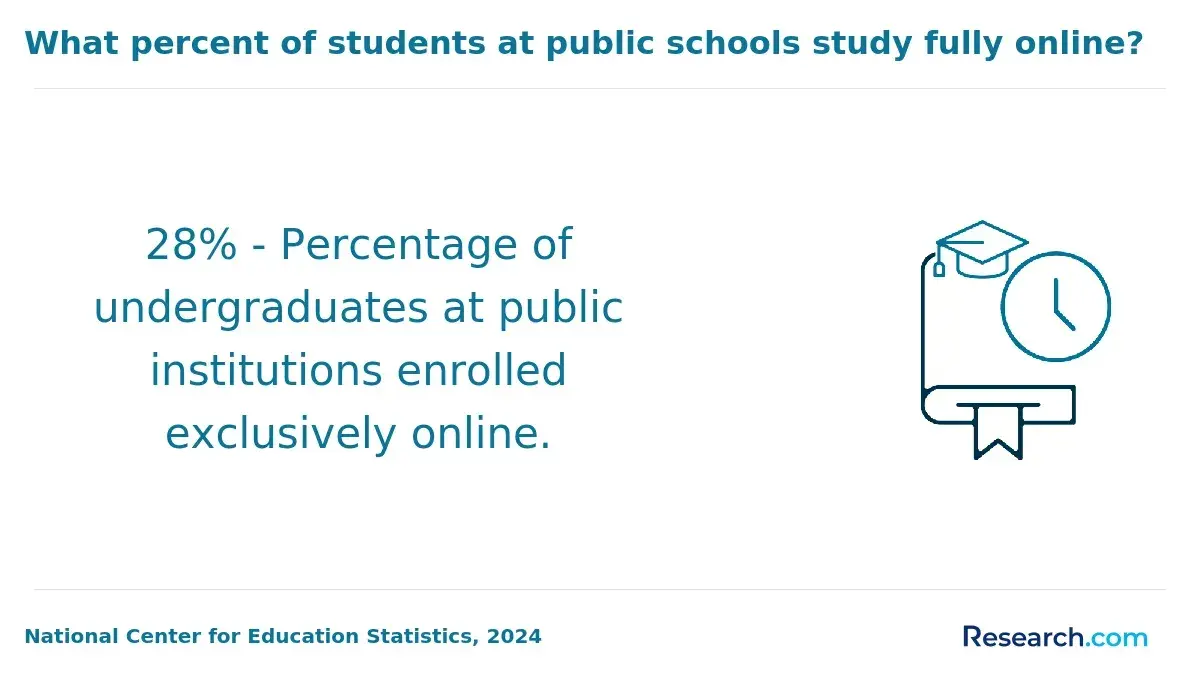
Choosing an accredited online criminal justice degree is really a scheduling, cost, and career-fit decision. NCES distance education data published in 2024 shows that more than half of U.S. undergraduates take at least one online course, which helps explain why adults with jobs are looking for flexible, part-time, and self-paced options.
This guide is for working adults comparing online criminal justice programs and covers accreditation, formats, admissions, costs, transfer credits, career outcomes, and support services so you can choose a program that fits your workweek and long-term goals.
Key Things You Should Know
- Accreditation is the first filter: choose an institution recognized by the U.S. Department of Education or CHEA, because federal financial aid, transfer credit, graduate admission, and employer recognition usually depend on it.
- Most online bachelor's programs require about 120 credits; full-time study often takes around 4 years, while part-time study may take 5 to 6 years, and transfer-friendly programs may accept 60 to 90 credits toward graduation.
- Working adults should compare weekly workload before tuition: one 3-credit accelerated online course can require roughly 9 to 15 hours per week, and advertised flexibility does not always mean self-paced deadlines or no live attendance.
What Is an Accredited Online Criminal Justice Degree Program and Why Does Accreditation Matter?
An accredited online Criminal Justice degree program is a degree offered through an accredited college or university that has been reviewed by a recognized accrediting organization for academic quality, institutional standards, and student support. Accreditation matters because it helps verify that the program meets established educational standards, supports eligibility for financial aid, improves transfer credit opportunities, and increases recognition among employers and graduate schools.
When comparing programs with online classes, verify more than just the degree title. Review accreditation details, program requirements, online enrollment policies, and whether the curriculum aligns with your intended criminal justice career path.
| Item to verify | Why it matters | What to ask the school |
| Institutional accreditation | Supports federal aid eligibility, transfer credit, and employer recognition | Which agency accredits the institution, and is it recognized by the U.S. Department of Education or CHEA? |
| Program name and credential level | Employers may distinguish associate, bachelor's, and master's degrees | Is the credential a BA, BS, BAS, MS, MA, or certificate, and how is it listed on the transcript? |
| State authorization for online learning | Some schools cannot enroll students from every state | Can the program enroll students who live in my state? |
| Licensure or agency alignment | Criminal justice jobs may have requirements beyond the degree | Does the curriculum satisfy any state, academy, or agency education requirement I am targeting? |
| Transfer and graduate recognition | Adults often return later for promotions or graduate school | How often do credits transfer, and do graduates enter accredited graduate programs? |
Which Flexible Criminal Justice Degree Formats Are Best for Working Adults: Part-Time, Full-Time, or Self-Paced?
The best Criminal Justice degree format for working adults depends on employment schedules, family responsibilities, learning preferences, and how quickly you want to complete the program. Part-time and asynchronous formats are often the most practical for professionals who need flexibility, while full-time and structured formats may work better for students who can dedicate more time to coursework.
Compare each format carefully to determine which option fits your availability, study habits, and career goals.
| Format | How it usually works | Best fit | Main trade-off |
| Part-time asynchronous | Courses have weekly deadlines but no required class meeting time | Full-time workers who need structure without live attendance | Graduation takes longer, and some aid may require minimum enrollment |
| Full-time asynchronous | Students take a heavier course load with online deadlines | Adults who can treat school like a second job | High workload can be difficult during busy work seasons |
| Self-paced or competency-based | Students move through material at variable speed within term rules | Independent learners with prior experience or transfer credits | Requires strong self-management and careful review of completion limits |
| Synchronous online | Students attend live virtual classes at set times | Learners who want real-time discussion and instructor access | Less compatible with shift work or family schedules |
| Cohort-based online | Students progress through a set sequence with the same group | Adults who value peer support and predictable planning | May offer fewer start dates and less transfer flexibility |
Before enrolling, ask these questions to understand how the format will work with your schedule:
- Ask whether courses are asynchronous, synchronous, self-paced, or simply "online" with required live sessions.
- Confirm how many hours per week the school expects for one 3-credit course, especially in 7- or 8-week terms.
- Check whether part-time students can take one course at a time and still remain eligible for aid or employer tuition assistance.
- Ask whether self-paced courses have minimum progress requirements, subscription billing periods, or final completion deadlines.
- Review whether required courses are available every term or only once per year, because limited course rotation can delay graduation.
What Are the Admission Requirements for Accredited Online Criminal Justice Degree Programs?
Admission requirements for accredited online Criminal Justice degree programs vary by institution and degree level, but most schools evaluate factors such as previous education, academic history, and readiness for college-level coursework. Requirements may include a high school diploma or GED for associate programs, prior college credits for transfer students, and a completed bachelor’s degree for graduate programs. Some programs may also require transcripts, minimum GPA standards, application materials, and placement assessments.
Use the following checklist before applying so you do not waste application fees or enroll in a program that does not fit your background.
- Request an unofficial transfer evaluation before committing if you have prior college credit.
- Ask whether the school accepts military training, police academy training, CLEP, DSST, professional certifications, or prior learning assessment.
- Confirm minimum GPA rules for admission and for major-specific progression, because they may differ.
- Check whether the program requires statistics, research methods, or writing-intensive courses that may need extra preparation.
- Ask admissions staff to distinguish school admission requirements from law enforcement, corrections, probation, or federal hiring requirements.
Understanding these requirements before enrollment can help working adults avoid delays, identify possible transfer opportunities, and choose a program that matches their academic background and career goals.
How Much Does an Online Criminal Justice Degree Cost, and What Financial Aid Options Are Available?
The cost of an online criminal justice degree depends on tuition per credit, number of credits required after transfer, fees, textbooks, technology costs, residency rules, and whether the school charges online students in-state or special distance-learning rates. Published tuition is only the starting point; the real question is your net cost after transfer credits, grants, scholarships, employer benefits, and loans.
College Board's 2024 Trends in College Pricing reported average published tuition and fees of $11,610 for in-state students at public four-year institutions for 2024-25. That number is useful as a benchmark, not a quote for an online criminal justice degree, because online programs may charge per credit, flat-rate tuition, or separate distance fees.
When comparing schools, calculate total program cost instead of comparing one course or one term. A low tuition rate can become less affordable if the school accepts fewer transfer credits, charges high online fees, or requires extra prerequisites.
Most accredited online students may be able to use the same major aid categories as campus students if they meet eligibility rules. Review these options in this order because gift aid and employer support can reduce borrowing.
- Federal Pell Grants for eligible undergraduate students, with the maximum award set at $7,395 for the 2024-25 award year.
- Federal Direct Loans, which must be repaid and have annual limits based on dependency status and year in school.
- State grants or workforce education funds, which may require residency or enrollment in an approved institution.
- Institutional scholarships for transfer students, military-affiliated learners, first responders, or adult degree completion students.
- Employer tuition assistance or reimbursement, especially for adults already working in public safety, security, corrections, social services, or government.
- Credit for prior learning, which can lower cost by reducing the number of credits you must complete.
Adults should also ask whether tuition is charged per credit, per term, or by subscription. Subscription or competency-based pricing can be cost-effective for fast-moving students, but expensive for learners who need frequent breaks. This is similar to the way business students compare accreditation and total cost when evaluating an MBA AACSB online: the advertised price matters less than the recognized credential and the total cost to finish.
Common cost mistakes include borrowing before reviewing grant eligibility, assuming online means cheaper, ignoring graduation fees and proctoring fees, and choosing a school before receiving a transfer evaluation. A better approach is to ask each school for a written cost estimate based on your exact credits and expected enrollment pace.
How Long Does It Take to Complete an Online Criminal Justice Degree, and Can Transfer Credits Help You Graduate Faster?
Completion time depends on degree level, course load, transfer credits, term length, and course availability. A bachelor's degree usually requires about 120 credits, while an associate degree often requires about 60 credits and a master's degree commonly requires 30 to 36 credits. These totals are standard planning benchmarks, but each school sets its own curriculum.
For working adults, transfer credit is often the biggest time-saver. Someone entering with an approved associate degree may need only upper-division major courses and remaining general education requirements. Someone entering with scattered credits may still save time, but only if the credits apply to the degree rather than transferring as general electives.
The table below shows realistic planning scenarios. It helps you compare pace before committing to a course load that may be too heavy for your work and family obligations.
| Starting point | Typical remaining credits | Common pace for working adults | Planning note |
| No prior college credit | About 120 credits for a bachelor's degree | Part-time study may take 5 to 6 years or more | Choose a program with predictable course rotation and strong advising |
| Completed associate degree | About 60 credits if transfer is maximized | Often 2 to 3 years part time | Confirm whether the associate degree satisfies general education requirements |
| Some prior credits | Varies by applicability | Depends on how many credits count toward major and electives | Request a degree audit, not just a transfer-credit total |
| Police, military, or professional training | May reduce elective or lower-division requirements | Can shorten time if the school awards prior learning credit | Ask for written policies and credit limits |
| Master's applicant | Usually 30 to 36 graduate credits | Often 1.5 to 3 years depending on pace | Check whether a capstone, thesis, or practicum is required |
To graduate faster without overloading yourself, follow a structured transfer-credit process before enrollment. This prevents you from discovering too late that credits do not apply where you expected.
- Send official transcripts from every college you attended, even if the credits are old or incomplete.
- Ask for a degree-specific transfer evaluation that shows exactly which requirements are satisfied.
- Confirm the school's maximum transfer allowance, residency requirement, and upper-division credit requirement.
- Ask whether academy, military, professional certification, CLEP, DSST, or portfolio credit can be evaluated.
- Compare your remaining credits across at least two accredited programs before making a final decision.
Accelerated terms can help, but they compress deadlines. Taking one 7-week course at a time may be more manageable than taking two accelerated courses together while working full time. The fastest path is not always the best path if it raises the risk of withdrawal or poor grades.
What Should You Look for When Comparing Accredited Online Criminal Justice Degree Programs?
A strong online criminal justice program should combine recognized accreditation, relevant curriculum, flexible delivery, transparent cost, transfer-friendly policies, and career-focused support. The goal is not to find the program with the most features; it is to find the program whose rules match your life and goals.
Start with accreditation, then compare curriculum. Many programs include courses in policing, courts, corrections, ethics, criminal law, criminology, juvenile justice, victimology, homeland security, cybercrime, forensic investigation, and research methods. If you want digital investigation or intelligence work, look for electives in cybercrime, data analysis, open-source intelligence, or digital evidence. Students drawn to the technology side may also compare an online cybersecurity degree, because some cyber roles may value deeper technical preparation than a general criminal justice curriculum provides.
The table below organizes the most important comparison factors. Use it as a screening tool before speaking with admissions, then request written answers for anything that affects cost or graduation time.
| Comparison factor | Strong sign | Red flag |
| Accreditation | Institution is accredited by a recognized agency | School avoids naming the accreditor or uses vague approval language |
| Flexibility | Clearly explains asynchronous, synchronous, part-time, and self-paced rules | Uses "flexible" without describing deadlines or live attendance |
| Transfer policy | Provides written degree audit before enrollment | Gives only a verbal estimate or delays evaluation until after enrollment |
| Cost transparency | Lists tuition, fees, books, technology costs, and aid options | Focuses on monthly payments without total cost to finish |
| Curriculum relevance | Matches your target role, such as corrections, policing, probation, policy, or investigation | Offers broad courses but few electives tied to your goals |
| Career support | Includes resume help, interview preparation, employer connections, and internship guidance | Offers little support beyond course registration |
After narrowing your list, ask direct questions that reveal how the program works for adults with jobs. These questions are especially important if you are comparing several schools with similar tuition rates.
- Can I complete the degree fully online, or are there campus visits, proctored exams, internships, or field placements?
- Are any classes offered only during the day, at fixed live times, or in limited annual rotations?
- What happens if I need to pause for a term because of work, deployment, family care, or health issues?
- How many credits can I transfer, and how many must be completed at your school?
- Do graduates pursue the roles I am targeting, and what career support is available to online students?
- Will this program meet any education requirements for my state, agency, employer, or graduate school goal?
Common mistakes include choosing the shortest program without checking accreditation, assuming all online courses are asynchronous, ignoring transfer-credit limits, and treating criminal justice as interchangeable with criminology, forensic science, public administration, or cybersecurity. Each path can lead to different coursework and career preparation.
What Career Opportunities and Salary Potential Can You Expect With a Criminal Justice Degree?
An online criminal justice degree can support careers in law enforcement, corrections, probation, parole, victim advocacy, private security, emergency management, compliance, court administration, homeland security, and policy-related roles. It can also help current public safety professionals qualify for promotion or meet education preferences for supervisory positions.
Salary potential varies widely by role, location, agency, union contract, overtime, seniority, and whether the position requires academy training or a graduate degree. BLS occupational data released in 2024 reported a median annual wage of $74,910 for police and detectives. That figure is a national median, so it should be used as a labor-market benchmark rather than a promise of earnings after graduation.
The table below summarizes common paths connected to criminal justice education. It focuses on role fit rather than promising outcomes, because hiring requirements differ by employer and state.
| Career path | Typical responsibilities | How a criminal justice degree may help |
| Law enforcement officer | Respond to calls, investigate incidents, write reports, testify in court | Builds knowledge of criminal law, ethics, policing, and community relations |
| Correctional officer or supervisor | Maintain safety in correctional facilities and manage inmate procedures | Supports advancement into supervisory, case management, or administrative roles |
| Probation or parole officer | Monitor individuals under supervision and coordinate services | Provides grounding in courts, corrections, rehabilitation, and report writing |
| Federal law enforcement applicant | Apply to competitive agencies with role-specific requirements | May satisfy education preferences, but agencies often require additional qualifications |
| Victim advocate or case coordinator | Support victims, coordinate resources, and document case activity | Strengthens understanding of victimology, trauma-informed systems, and court processes |
| Security, compliance, or investigations specialist | Investigate incidents, manage risk, and support organizational security | Can pair well with electives in cybercrime, fraud, emergency management, or intelligence |
A criminal justice degree is most likely to be worth it when it aligns with a specific role, promotion pathway, or graduate-school plan. It may be less suitable if you want a highly technical forensic science laboratory role, attorney pathway without further education, or cybersecurity engineering career. In those cases, compare the criminal justice curriculum with science, legal studies, public administration, cybersecurity, or data-focused options.
For adults still exploring broad career fit, it can help to compare criminal justice with other fun majors in college that pay well. The best major is not only the one with appealing subject matter; it is the one that matches your skills, risk tolerance, schedule, and target job market.
How Can Working Adults Balance a Criminal Justice Degree With Full-Time Work and Family Responsibilities?
Balancing an online criminal justice degree with full-time work requires a realistic course load, predictable study blocks, and a plan for high-pressure weeks. Criminal justice courses often involve reading, case analysis, discussion posts, research papers, exams, and scenario-based assignments, so the workload can be writing-heavy even when there are no campus meetings.
The safest strategy is to start smaller than your ambition. If you have not taken college courses recently, one course in the first term can help you learn the platform, test your schedule, and build confidence. After that, you can increase your load if your grades, sleep, family schedule, and work performance remain stable.
These practical steps can make online study more manageable for adults with demanding schedules.
- Map your weekly fixed commitments first, including work shifts, commute time, childcare, sleep, meals, and family responsibilities.
- Choose two or three recurring study blocks and protect them like work appointments.
- Read every syllabus in the first week and mark major papers, exams, group assignments, and discussion deadlines on one calendar.
- Tell your instructor early if your job involves mandatory overtime, rotating shifts, court appearances, deployment, or emergency call-outs.
- Use short weekday blocks for reading and discussion posts, then reserve longer weekend blocks for papers, exams, and research.
- Build an emergency buffer by submitting routine assignments before the deadline whenever possible.
Self-paced programs require a different kind of discipline. Without weekly deadlines, it is easy to delay coursework until the end of the term. If you choose self-paced study, set your own internal deadlines and track progress every week. If you regularly need outside accountability, a structured asynchronous program may be a better fit than a fully self-paced model.
One common mistake is planning based on an ideal week instead of a normal week. If your job has overtime, court dates, family obligations, or rotating shifts, choose the pace you can sustain during a difficult month, not the pace you could handle during a quiet one.
What Student Support Services and Online Learning Resources Should You Expect From a Criminal Justice Degree Program?
Online students should receive more than recorded lectures and a login. Strong support services can determine whether a working adult persists through busy terms, solves transfer problems, writes stronger papers, and connects the degree to career goals.
At minimum, look for academic advising, online tutoring, writing support, library access, technical help, career services, disability accommodations, financial aid counseling, and mental health or wellness referrals. Adult learners should also ask whether these services are available outside standard business hours, because daytime-only support may not help students who work full time.
The table below shows support services that matter most in online criminal justice programs. It is especially useful if two schools look similar on tuition and curriculum but differ in the help available to remote learners.
| Support service | Why it matters for working adults | What strong access looks like |
| Dedicated academic advising | Prevents scheduling mistakes and delayed graduation | Advisors understand transfer credits, course rotation, and part-time planning |
| Writing and research support | Criminal justice courses often require reports, policy papers, and case analysis | Online appointments, citation help, and feedback on drafts |
| Library and database access | Students need credible sources for research assignments | Remote access to journals, legal resources, and librarian chat |
| Career services | Adults may be changing fields or seeking promotion | Resume reviews, interview preparation, job-search support, and employer information |
| Technical support | Online coursework depends on reliable platform access | Evening or extended support for login, exam, and software problems |
| Disability accommodations | Eligible students may need testing, platform, or assignment accommodations | Clear online process and timely coordination with instructors |
Current online learning trends also matter. Programs increasingly use simulation tools, digital case files, analytics dashboards, remote proctoring, and AI-supported learning platforms. Those tools can be useful, but students should know the rules for AI use, plagiarism checks, privacy, and proctored exams before classes begin.
If you enjoy the analytical side of criminal justice, such as statistics, risk assessment, crime mapping, or research methods, you may also want to explore adjacent quantitative paths like online math degrees. Criminal justice increasingly overlaps with data literacy, but the depth of quantitative training varies significantly by program.
Do Online Criminal Justice Degree Programs Include Internships, Practicums, or Other Hands-On Learning Requirements?
Some online criminal justice programs include internships, practicums, capstones, simulations, service-learning projects, or field-based assignments, while others are entirely coursework-based. Requirements vary by school, degree level, concentration, and state authorization rules.
Internships can be valuable for students entering the field because they provide exposure to courts, law enforcement agencies, correctional systems, nonprofit victim services, security organizations, or policy offices. However, they can be difficult for working adults if placements require daytime availability, background checks, commuting, unpaid hours, or a set number of on-site hours during one term.
Before enrolling, ask detailed questions about any hands-on component. These questions help you avoid surprises after you have already completed most of the coursework.
- Is an internship, practicum, capstone, simulation, or field project required, optional, or available only in certain concentrations?
- Can working adults complete the requirement at their current workplace, or must it be with a new approved agency?
- Are placements available near my location, and does the school help secure them?
- Are background checks, fingerprinting, drug testing, vaccinations, liability insurance, or agency approvals required?
- Can the requirement be completed during evenings, weekends, or flexible hours?
- What happens if I cannot secure a placement because of location, employment restrictions, or agency availability?
Capstone projects are often more manageable for online adults than internships because they can be completed remotely through research, policy analysis, program evaluation, or applied casework. Still, capstones may involve major writing and presentation requirements, so they should be planned during a term when your workload is manageable.
Do not assume that hands-on learning is automatically better or worse. An internship may be worth the scheduling challenge if you are entering the field and need experience. A capstone or simulation may be better if you are already employed in public safety and need the credential for advancement rather than entry-level exposure.
Other Things You Should Know About Criminal Justice
No. Criminal justice usually focuses on systems and practices, including policing, courts, corrections, investigations, and public safety administration. Criminology is more theory- and research-oriented, focusing on why crime happens, how it is measured, and how society responds.
Many schools may still consider your application, but career options can be affected by background checks, state rules, agency policies, and licensing standards. If you have a record, ask target employers or licensing agencies about eligibility before choosing a program for a specific job.
It can be enough for some entry-level roles, depending on the employer and state. A bachelor's degree may be preferred or required for certain federal, supervisory, probation, policy, or advancement-focused positions.
It can, especially if the program builds strong writing, research, logic, and legal-system knowledge. Law schools do not usually require a specific undergraduate major, so GPA, LSAT, or other admissions requirements, writing ability, and academic rigor matter more than the major name alone.
References
- Top Careers with a Master's in Criminal Justice https://www.onlinemastersdegrees.org/careers/criminal-justice/
- BS in Criminal Justice Online https://www.baypath.edu/academics/undergraduate-programs/criminal-justice/
- Financial Aid Tips for Criminal Justice Students https://www.criminaljusticeprograms.com/financial-aid/
- 13 careers in criminology for graduates - SEEK https://au.seek.com/career-advice/article/top-criminology-degree-jobs
- Online Criminal Justice Degree & Career Information https://www.criminaljustice.com/online-degrees/
- Criminal Justice Associates Degree | Online Associate of Arts (AA) | University of Phoenix https://www.phoenix.edu/online-criminal-justice-degrees/criminal-justice-associate-degree.html
- Best Online Criminal Justice Degrees for Working Adults (2026) https://www.collegetransitions.com/blog/best-online-criminal-justice-degrees-for-working-adults/
- What Are the Entry Requirements for a Criminal Justice Program? | University of Bridgeport https://www.bridgeport.edu/news/entry-requirements-for-a-criminal-justice-program/
- Flexible European Life-Long Learning Pathways: ECIU University’s take on the “European Degree” https://www.eciu.eu/news/flexible-european-life-long-learning-pathways-eciu-universitys-take-on-the-european-degree
- Affordable Online Criminal Justice Degree - iResearchNet https://criminal-justice.iresearchnet.com/criminology/criminology-and-criminal-justice-degrees/affordable-online-criminal-justice-degree/