2027 Online Criminal Justice Degree Programs That Accept 60, 75, or 90 Transfer Credits

Co-Founder and Chief Data Scientist
If you already have college credit, the biggest question is not whether an online criminal justice program accepts transfer credits, but how many will count toward graduation. National Student Clearinghouse reporting released in 2024 showed transfer enrollment rising again, making credit mobility a practical issue for many returning adults.
This guide is for transfer and degree-completion students comparing programs that may accept 60, 75, or 90 credits. You will learn how transfer limits, residency rules, major requirements, and credit evaluations affect completion time, remaining tuition, and the smartest path to finishing a criminal justice degree online.
Key Things You Should Know
- A 120-credit online bachelor's in criminal justice may let you transfer up to 60, 75, or 90 credits, but a 90-credit acceptance limit usually still leaves at least 30 credits to complete because of institutional residency requirements.
- Credits accepted by the university are not always credits applied to the criminal justice major; electives may transfer without reducing core, upper-division, capstone, or concentration requirements.
- Before enrolling, request a written degree audit showing remaining credits, required courses, upper-division credits, estimated tuition, and whether prior learning, military training, exams, or certifications can fill additional gaps.
How Many Transfer Credits Can You Apply Toward an Online Criminal Justice Degree?
Most online bachelor's degrees in criminal justice require about 120 semester credits. When a school says it accepts 60, 75, or 90 transfer credits, that usually refers to the maximum number of previously earned credits the institution may bring onto your record. It does not automatically mean every credit will satisfy a specific degree requirement.
The most important distinction is accepted credits versus applied credits. Accepted credits are credits the school recognizes as college-level work. Applied credits are the ones that actually reduce your remaining general education, major, elective, upper-division, or residency requirements. A student with 90 accepted credits might still need 36 or more credits if too many prior courses transfer only as free electives.
This comparison shows how 60-, 75-, and 90-credit transfer scenarios usually affect a 120-credit online criminal justice bachelor's degree. The actual result depends on the school's catalog, accreditation rules, course equivalencies, and required upper-division work.
| Transfer-credit scenario | Credits remaining in a 120-credit degree | What it usually means | Main risk to check |
| 60 transfer credits | About 60 credits remaining | Often fits students with an associate degree or two years of prior college work. | You may still need most criminal justice major courses if your earlier credits were general education courses. |
| 75 transfer credits | About 45 credits remaining | Can be a strong degree-completion option if prior electives and lower-division courses apply cleanly. | Some programs require a minimum number of upper-division criminal justice credits taken at the new school. |
| 90 transfer credits | About 30 credits remaining | Usually the maximum transfer-friendly bachelor's format because many schools require the final 30 credits in residence. | The school may accept 90 credits overall but apply fewer than 90 to the degree plan. |
For most students, 90 transferable credits can be valuable, but 75 well-matched credits may be better than 90 credits that do not meet criminal justice core requirements. The best program is the one that applies the largest number of usable credits toward the exact degree you want, not simply the one with the highest transfer cap.
Which Online Criminal Justice Degree Programs Accept 60, 75, or 90 Transfer Credits?
Many online criminal justice bachelor's programs are designed for transfer students, especially adults who have completed an associate degree, military coursework, public safety training, or partial bachelor's coursework. The examples below are commonly transfer-friendly options to investigate, but policies can change by catalog year, state authorization, accreditation status, and degree concentration.
This table helps you build a shortlist by comparing programs that publicly emphasize online criminal justice study and substantial transfer credit. Use it as a starting point, then confirm the current maximum and degree applicability with each school's registrar or transfer office.
| School and online criminal justice option | Typical maximum transfer allowance to verify | Why transfer students consider it | Best-fit transfer profile |
| Southern New Hampshire University, BS in Criminal Justice | Up to 90 semester credits | Designed around online degree completion with a large transfer-credit ceiling. | Students with 60 to 90 credits who want a broad criminal justice curriculum. |
| University of Maryland Global Campus, BS in Criminal Justice | Up to 90 semester credits toward a bachelor's degree | Known for serving adult, military, and working learners with multiple credit sources. | Students with community college, military, exam, or prior university credit. |
| Liberty University, BS in Criminal Justice | Up to 75% of the degree, commonly equivalent to 90 credits in a 120-credit program | Offers online criminal justice pathways with a high transfer ceiling. | Students who can complete remaining major and residency courses online. |
| Purdue Global, BS in Criminal Justice | Up to 75% of degree requirements, often expressed in quarter-credit terms | Uses a transfer and prior-learning model that may recognize college, military, and professional learning. | Students comparing semester credits with quarter-credit degree requirements. |
| Colorado State University Global, BS in Criminal Justice | Often up to 90 transfer credits for bachelor's programs | Built for online adult learners and structured degree completion. | Students who need predictable online scheduling and transfer planning. |
| Wilmington University, BS in Criminal Justice | Often up to 90 transfer credits | Provides online completion options and may accept varied prior college credits. | Students with an associate degree or extensive prior coursework. |
Criminal justice is also increasingly connected to cybercrime, digital evidence, fraud investigation, and data privacy. If your transfer credits include information technology courses, comparing a criminal justice pathway with an online cyber security degree may help you decide whether your credits support law enforcement, corrections, homeland security, or cyber-focused career goals.
When comparing schools, avoid treating the transfer-credit maximum as the ranking. A 90-credit cap is attractive only if the school also offers the remaining upper-division criminal justice courses online, accepts your prior grades, and provides a clear route through the capstone or senior seminar.
How Can You Tell Whether Transfer Credits Will Actually Apply Toward Your Criminal Justice Degree?
The only reliable way to know whether credits will apply is to compare each prior course against the new school's degree requirements. Admissions staff may give a preliminary estimate, but the registrar, transfer evaluator, department chair, or academic advisor usually determines how credits apply in the official degree audit.
Use this sequence before you commit to a program. It helps separate a promising transfer policy from a degree plan that truly shortens your time to graduation.
- Request official transcripts from every college, university, military education record, or testing agency that may hold credit.
- Ask the school whether it provides an unofficial pre-enrollment transfer review or only an official evaluation after admission.
- Compare accepted credits against the criminal justice curriculum, including general education, major core, electives, upper-division requirements, and capstone courses.
- Ask for a written list of remaining courses, not just a total number of accepted credits.
- Confirm whether any credits are transferring as free electives that do not reduce major requirements.
- Calculate tuition using remaining credits after the evaluation, not the advertised transfer maximum.
A useful degree audit should show the requirement category for each accepted course. For example, "Introduction to Criminal Justice" may satisfy a major foundation requirement, while an unrelated elective may count toward total credits but not reduce the number of criminal justice courses still required.
Accreditation can also affect transfer decisions. Criminal justice bachelor's programs are usually evaluated through institutional accreditation rather than a single required programmatic accreditor, unlike fields where specialized accreditation is central to employer expectations, such as some MBA AACSB online programs. For criminal justice, your first check should be whether the institution is accredited by an agency recognized for federal financial aid purposes and whether employers or graduate schools in your target field accept the degree.
What Types of Previous College Credits Can Transfer Into an Online Criminal Justice Degree?
Online criminal justice programs may accept several types of prior credits, but each category is evaluated differently. A school may accept a wide range of academic credits while placing limits on technical, vocational, remedial, or nontraditional coursework.
These are the most common credit sources transfer students should organize before requesting an evaluation. The goal is to document every possible source while understanding that not all sources carry equal weight.
- Regionally or institutionally accredited college courses, including general education, social science, psychology, sociology, writing, statistics, public administration, and criminal justice courses.
- Associate degree coursework, especially Associate of Arts, Associate of Science, or Associate of Applied Science programs in criminal justice, law enforcement, corrections, homeland security, or public safety.
- Prior bachelor's coursework from another institution, which may help satisfy electives, upper-division requirements, or major prerequisites.
- Military training and education listed on official military transcripts, often evaluated through recognized credit recommendations.
- Standardized exams such as CLEP, DSST, or other approved examinations if the school has an exam-credit policy.
- Professional training, academy coursework, certifications, or portfolio-based prior learning if the institution awards credit for documented college-level learning.
General education credits often transfer more easily than specialized major credits because courses such as English composition, communication, history, government, psychology, statistics, and ethics appear in many bachelor's curricula. Quantitative courses can be especially useful because criminal justice programs increasingly expect students to understand crime data, research methods, and evidence-based policy. Students comparing transfer-heavy programs in other quantitative fields, such as online math degrees, will see a similar pattern: the course title matters less than whether the course matches a specific degree requirement.
Minimum grade rules also matter. Many schools require a C or higher for transfer, while some major courses may require higher grades or recent completion. If a course transfers but does not meet the grade requirement for the major, it may count only as elective credit or not transfer at all.
How Do Residency and Upper-Division Requirements Affect Criminal Justice Transfer Students?
Residency requirements are one of the main reasons a student with 90 accepted transfer credits may still need about 30 credits at the new institution. In this context, "residency" usually means credits completed through the degree-granting school, not living on campus.
This table summarizes common degree rules that can limit how far transfer credits reduce your remaining coursework. These rules are especially important if you already have 75 or 90 credits.
| Requirement type | Common rule in online bachelor's programs | How it affects transfer students |
| Institutional residency | Often 30 credits must be completed at the school awarding the degree. | Even with 90 accepted credits, you may still need the school's final 30 credits. |
| Upper-division credit | Programs may require a set number of 300- or 400-level credits. | Lower-division community college credits may not replace advanced criminal justice courses. |
| Major residency | Some schools require a portion of the criminal justice major to be completed in-house. | Prior criminal justice courses may transfer as electives if the department wants advanced major work completed through its curriculum. |
| Capstone requirement | Senior seminars, capstones, or research projects are usually not waived. | You should expect to complete the capstone at the degree-granting institution. |
| General education distribution | Credits must fit categories such as writing, math, science, humanities, and social science. | A large block of elective credits may not fix missing general education categories. |
The practical takeaway is simple: ask schools to show both your total remaining credits and the level of those credits. If your remaining 30 credits are all upper-division criminal justice courses, your schedule may be more structured than if you only need open electives.
How Does the Transfer Credit Evaluation Process Work for an Online Criminal Justice Degree?
The transfer evaluation process usually begins before or shortly after admission, but the level of detail varies by school. Some universities provide a preliminary review quickly, while others issue a full evaluation only after official transcripts are received and you are accepted.
Follow these steps to reduce surprises and make program comparisons fair. The same 75 credits can produce different outcomes at different schools, so you need comparable written evaluations.
- Create a transcript inventory listing every institution attended, even if you withdrew, failed courses, or attended many years ago.
- Send official transcripts directly to each school you are seriously considering.
- Provide course descriptions or syllabi for older, specialized, or criminal justice courses that do not have obvious equivalents.
- Ask whether the evaluation is preliminary, official, or final after enrollment.
- Request a degree map showing remaining courses by term and whether each course is offered online often enough for your planned pace.
- Appeal missing or misclassified credits if you can provide stronger documentation, such as syllabi, academy records, or catalog descriptions.
One common red flag is a school that quotes a high transfer maximum but will not show how credits apply until after you enroll. Another is a degree plan that accepts many credits but leaves scattered requirements that are offered infrequently. A transfer-friendly program should give you a clear path, not just a large credit number.
You should also ask whether changing concentrations will change the evaluation. For example, a general criminal justice track, homeland security track, and crime analysis track may treat the same prior coursework differently.
How Long Does It Take to Finish an Online Criminal Justice Degree With 60, 75, or 90 Transfer Credits?
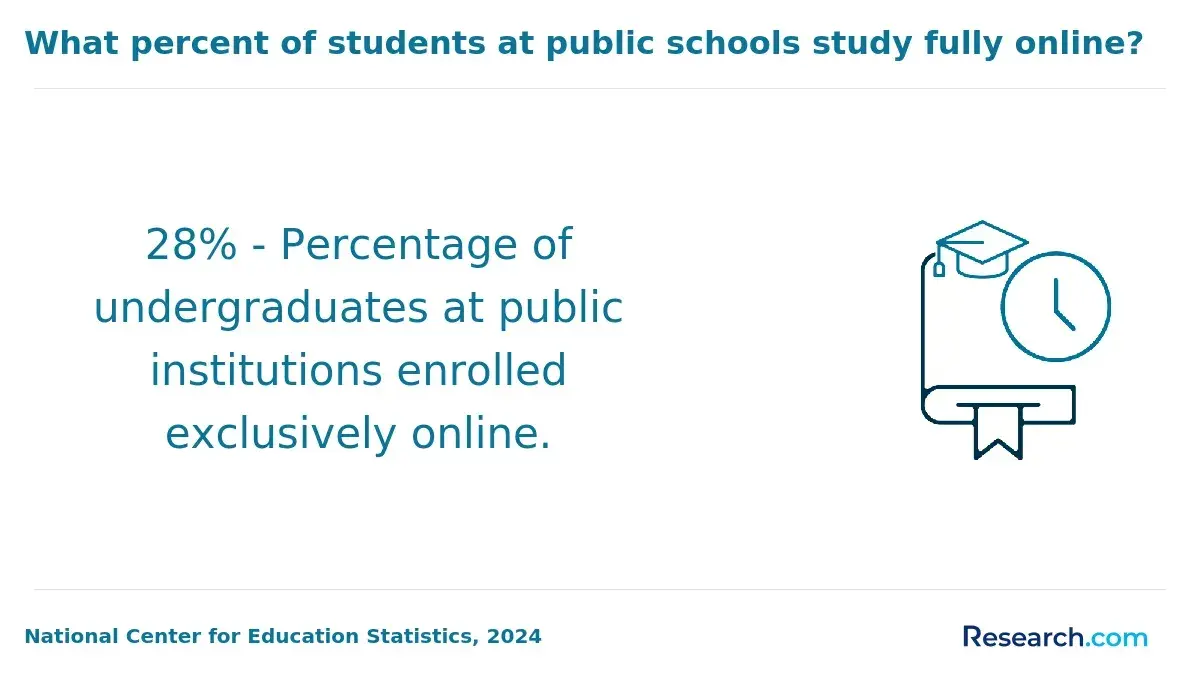
Completion time depends on remaining credits, course availability, term length, and your enrollment intensity. The National Center for Education Statistics reported in 2024 that distance education remained a major part of undergraduate enrollment, which helps explain why more schools now offer flexible online degree-completion paths. For working adults, the format can matter as much as the transfer policy because consistent online course availability can determine whether you finish in one year or several.
This table gives a practical estimate for common transfer scenarios. It assumes a 120-credit bachelor's degree and steady enrollment, but your timeline may change if you pause, take fewer courses, or need sequential prerequisites.
| Transfer credits applied | Approximate credits remaining | Possible full-time timeline | Possible part-time timeline | What to verify |
| 60 credits | 60 credits | About 2 academic years | About 3 to 4 years | Whether major courses are available every term. |
| 75 credits | 45 credits | About 15 to 18 months | About 2 to 3 years | Whether remaining courses include prerequisites or upper-division sequences. |
| 90 credits | 30 credits | About 1 academic year | About 18 to 24 months | Whether the final 30 credits satisfy residency and capstone rules. |
Accelerated terms can shorten the calendar, but they also compress assignments, discussion deadlines, research projects, and exams. If you work in law enforcement, corrections, security, dispatch, social services, or the military, ask whether the school allows stop-outs or flexible course loads without disrupting your degree plan.
The fastest program is not always the best choice. A slightly longer plan may be better if it preserves financial aid eligibility, lets you maintain full-time employment, or gives you access to internships, field-related electives, or graduate school prerequisites.
How Much Can Transfer Credits Reduce the Cost of an Online Criminal Justice Degree?
Transfer credits can reduce cost because most online bachelor's programs charge tuition by the credit. College Board's 2024 Trends in College Pricing reported average published tuition and fees of $11,610 for in-state students at public four-year institutions for the 2024-2025 academic year. That figure is not an online criminal justice price quote, but it illustrates why avoiding duplicate credits can materially change the total cost of finishing a bachelor's degree.
The simplest cost estimate is remaining credits multiplied by tuition per credit, plus fees, books, technology charges, and any prior-learning assessment fees. Use the table below to compare scenarios with your school's actual tuition rate.
| Applied transfer credits | Credits remaining | Tuition calculation to run | Cost question to ask |
| 60 credits | 60 credits | 60 × the school's per-credit tuition | Are there lower-cost partner or community college courses that can still apply before enrollment? |
| 75 credits | 45 credits | 45 × the school's per-credit tuition | Do the 15 extra applied credits reduce a full term or only lower the credit total? |
| 90 credits | 30 credits | 30 × the school's per-credit tuition | Are the final 30 credits all charged at the same tuition rate and offered online? |
Cost savings are strongest when transfer credits eliminate required courses, not just electives. If you transfer 90 credits but still need 42 credits because of major and residency rules, your real savings are based on 78 applied credits, not 90 accepted credits.
Students comparing return on investment should look beyond tuition and ask how the degree supports their career direction. Researching fun majors in college that pay well can provide useful context, but criminal justice decisions should also consider public service goals, agency requirements, promotion policies, graduate study plans, and local labor market conditions.
Can Prior Learning, Military Training, Exams, or Certifications Count Toward an Online Criminal Justice Degree?
Some online criminal justice programs award credit for learning gained outside a traditional college classroom. This can be especially relevant for military service members, veterans, police academy graduates, correctional officers, emergency management personnel, dispatchers, private security professionals, and adult learners with extensive workplace training.
These credit sources can help, but they usually require documentation and may be capped separately from traditional transfer credits. Ask whether they apply to the major, electives, or only total-credit requirements.
- Military credit: Schools may evaluate Joint Services Transcript or Community College of the Air Force records for leadership, security, criminal justice, emergency management, or technical training.
- Credit by exam: CLEP, DSST, and similar exams may satisfy general education or elective requirements if the school accepts the exam and score.
- Police academy or corrections training: Some institutions evaluate academy coursework for lower-division criminal justice or elective credit.
- Professional certifications: Certifications may be reviewed through institutional prior-learning policies, but they rarely replace upper-division major requirements without documentation of college-level outcomes.
- Portfolio assessment: Some schools let students document college-level learning through essays, work products, training records, and supervisor verification.
Prior-learning credit is useful only if the assessment fee is lower than taking the course and the credit applies to your degree plan. Ask for the fee structure, maximum allowable prior-learning credits, and whether these credits count toward residency. In many programs, prior-learning credits can reduce electives but not the required capstone or the minimum credits that must be completed at the institution.
This issue is not unique to criminal justice. Students comparing applied professional pathways, such as BCBA programs online, often face similar questions about whether workplace training, supervised experience, or professional credentials count for academic credit or only support career readiness.
Do Older College Credits Expire When Transferring Into an Online Criminal Justice Degree?
Older college credits do not always expire automatically, but their usefulness depends on the subject, grade, accreditation status, and the receiving school's policy. General education credits in areas like English, history, government, sociology, psychology, or humanities are often more durable than technical or fast-changing courses.
Criminal justice credits can be evaluated differently depending on content. A course in constitutional law, criminal procedure, ethics, or criminological theory may remain relevant if the learning outcomes still match the current curriculum. A course tied to outdated technology, reporting systems, security procedures, or legal standards may be accepted only as elective credit or may require departmental review.
Use this checklist if your credits are more than a few years old. It helps you prepare for the most common questions transfer evaluators ask.
- Collect catalog descriptions or syllabi from the year you took each course.
- Confirm whether the original institution was accredited when you earned the credits.
- Ask whether the criminal justice department has time limits for major courses.
- Find out whether older courses can satisfy general education but not major requirements.
- Ask whether a placement test, exam, or portfolio can validate older learning.
- Request appeal instructions if a course is denied or classified only as elective credit.
Do not assume old credits are worthless. Also do not assume they will apply exactly as they would have when you first earned them. The safest approach is to submit everything, request a written evaluation, and ask whether missing requirements can be filled through exams, prior-learning assessment, or a small number of targeted courses before you enroll full time.
Other Things You Should Know About Criminal Justice
An online criminal justice degree can be respected when it comes from an accredited institution and matches the employer's education requirements. Employers usually care more about accreditation, relevant coursework, experience, skills, and background standards than whether courses were completed online.
It may help if your agency rewards bachelor's completion for promotion, pay incentives, specialized assignments, or eligibility for leadership roles. Requirements vary widely, so check your agency's education policy before choosing a program.
A BA may include more liberal arts, policy, language, or social science coursework, while a BS may emphasize research, administration, technical skills, or applied analysis. The better option is the one that accepts more of your usable credits and supports your career goal.
Yes, if the degree is from an accredited institution and you meet the graduate program's admissions requirements. If you plan to pursue a master's in criminal justice, public administration, social work, law, or cybersecurity, ask whether your bachelor's plan includes needed prerequisites, writing-intensive courses, or research methods.
References
- Earn An Online Criminal Justice Degree | OEDb.org https://www.oedb.org/rankings/online-criminal-justice-programs/
- Criminal Justice A.S. | Tompkins Cortland Community College https://www.tompkinscortland.edu/programs/criminal-justice
- 10 Best Online Criminal Justice Programs in the United States | AscendurePro https://ascendurepro.com/best-online-criminal-justice-programs/
- Online Bachelor's Degree: Criminal Justice (Law Enforcement Track) https://www.umgc.edu/online-degrees/bachelors/criminal-justice-law-enforcement