2027 Fastest Accredited Online Criminal Justice Degree Programs That Accept Transfer Credits

Co-Founder and Chief Data Scientist
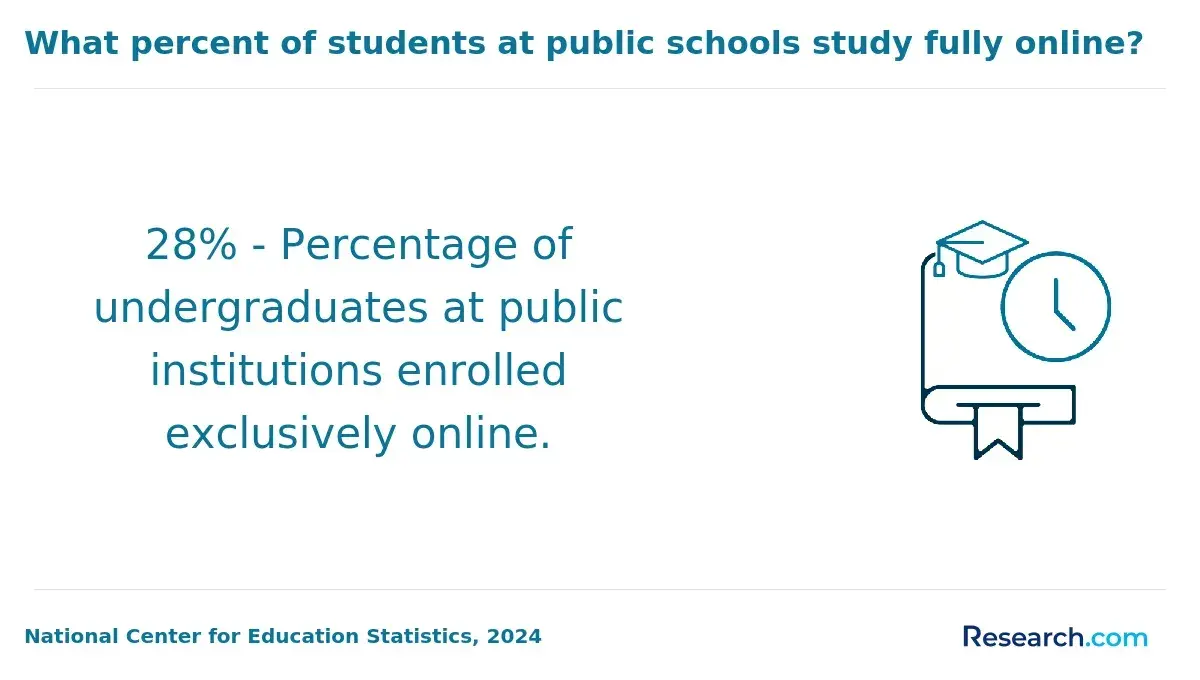
You may not need four more years to finish a criminal justice degree if you already have college, military, academy, or professional training credits. NCES data published in 2024 shows that about 8.5 million U.S. undergraduates took at least one distance education course in fall 2022, making online degree completion a mainstream option.
This guide is for transfer students, working adults, military learners, and degree completers who want the fastest legitimate route to graduation. You will learn how to compare accredited programs, transfer-credit limits, residency rules, cost, and realistic completion timelines before enrolling.
Key Things You Should Know
- The fastest realistic path is usually a 120-credit accredited online bachelor's program that accepts up to 90 transfer credits, leaving about 30 credits that can often be finished in 8 to 16 months with year-round accelerated terms.
- Transfer-friendly online criminal justice options commonly include Southern New Hampshire University, Liberty University, University of Maryland Global Campus, CSU Global, Purdue Global, and Arizona State University Online, but the fastest choice depends on which credits apply to the major, not just the school's maximum transfer limit.
- Most bachelor's programs still require at least 30 institutional or upper-division credits, so a student with 90 accepted credits may not graduate faster if key criminal justice, research, statistics, ethics, or capstone requirements are missing.
What Are the Fastest Accredited Online Criminal Justice Degree Programs That Accept Transfer Credits?
The fastest accredited online criminal justice degree programs are usually degree-completion bachelor's programs with year-round calendars, short academic terms, generous transfer-credit policies, and clear credit evaluations before enrollment.
For most students, "fastest" means the program can apply previously earned credits directly to general education, electives, and criminal justice requirements while still meeting institutional accreditation and graduation rules.
The programs below are not a promise of admission or transfer approval, but they are useful benchmarks because they combine online delivery, recognized institutional accreditation, and transfer-friendly structures.
Students interested in digital investigations or cybercrime may also compare a criminal justice path with an online cyber security degree, especially if their goal is technical security work rather than law enforcement, courts, or corrections.
This table summarizes widely available online criminal justice options that are often considered by transfer students seeking speed and legitimacy. Always request a formal transfer evaluation because catalog rules, course equivalencies, and residency requirements can change:
| Online program | Institutional accreditation | Transfer-friendly feature | Why it may be fast for degree completers | Best fit |
| Southern New Hampshire University, BS in Criminal Justice | New England Commission of Higher Education | Typically allows up to 90 transfer credits toward a 120-credit bachelor's degree | Eight-week terms and broad elective space can help students with many prior credits finish remaining requirements faster | Students with prior general education, electives, associate degrees, or professional training credit |
| Liberty University, BS in Criminal Justice | Southern Association of Colleges and Schools Commission on Colleges | Allows transfer of up to 75% of many bachelor's degrees | Eight-week online courses and multiple start dates support accelerated scheduling | Students who want a faith-based institution with many online start dates |
| University of Maryland Global Campus, BS in Criminal Justice | Middle States Commission on Higher Education | Known for military, community college, and prior-learning transfer pathways | Transfer evaluations can apply credits from prior college, military education, and workplace learning where eligible | Military-affiliated students, adult learners, and students with varied prior credits |
| Colorado State University Global, BS in Criminal Justice | Higher Learning Commission | Accepts substantial transfer credit toward online bachelor's completion | Eight-week courses and fully online delivery can make planning predictable for working adults | Students seeking a public online university model with structured accelerated terms |
| Purdue Global, BS in Criminal Justice | Higher Learning Commission | Uses transfer credit, prior learning, and professional experience evaluations where applicable | Quarter-based online coursework can allow steady year-round progress | Adult learners with professional, military, or previous college experience |
| Arizona State University Online, BS in Criminology and Criminal Justice | Higher Learning Commission | Accepts transfer credit subject to ASU and major requirements | Seven-and-a-half-week sessions can speed progress, though major and upper-division requirements may limit transfer application | Students who want a large public research university with a criminology focus |
The most transfer-friendly program is not always the fastest program for your transcript. A school that accepts 90 credits may still require you to retake or complete specific upper-division criminal justice courses, while a school with a slightly lower maximum may apply more of your credits directly to the degree plan.
Before choosing, ask each school for a written degree audit that shows exactly which credits count, which requirements remain, and how many terms are realistically needed. This is the difference between an advertised transfer policy and a graduation plan you can actually use.
How Fast Can You Complete an Online Criminal Justice Degree With Transfer Credits?
A motivated transfer student can sometimes finish an online criminal justice bachelor's degree in under a year, but the most realistic fast range is 8 to 24 months after transfer credits are applied. The exact timeline depends on remaining credits, course availability, term length, whether the school offers year-round enrollment, and how many courses you can complete while working or meeting family responsibilities.
Use the table below as a planning estimate, not a guarantee. It assumes a 120-credit bachelor's degree, accredited online delivery, and the ability to take courses in multiple terms each year:
| Transfer credits applied to the degree | Credits remaining | Fast but realistic completion range | What usually determines the final timeline |
| 0 credits | About 120 credits | 3 to 4 years | Full-time enrollment, summer study, and whether accelerated terms are manageable |
| 30 credits | About 90 credits | 2 to 3 years | General education completion and course sequencing |
| 60 credits | About 60 credits | 16 to 24 months | Whether an associate degree satisfies lower-division requirements |
| 75 credits | About 45 credits | 12 to 18 months | Remaining upper-division criminal justice courses and electives |
| 90 credits | About 30 credits | 8 to 16 months | Residency rules, capstone timing, and how many courses you can take per term |
The fastest students tend to have clean transfer records: completed general education, a completed associate degree, strong grades, and credits from accredited institutions. Students with credits from multiple schools, older coursework, quarter-credit transcripts, or technical training may still graduate quickly, but they should expect a more detailed evaluation.
To estimate your own fastest path, follow a sequence rather than relying on marketing claims. The steps below help you compare schools on actual time to graduation:
- Collect unofficial transcripts from every college attended, plus military, CLEP, DSST, academy, or certification records if applicable.
- Apply to at least two or three accredited online programs that publish generous transfer-credit policies.
- Request a written transfer evaluation showing accepted credits, applied credits, remaining credits, and remaining major requirements.
- Ask whether required criminal justice courses are offered every term or only once or twice per year.
- Confirm whether a capstone, internship, field experience, or senior seminar can delay graduation.
- Compare the number of remaining credits, not just tuition per credit or the advertised transfer maximum.
A common mistake is assuming that 90 accepted credits means only 30 credits remain. The more accurate question is whether 90 credits apply to the criminal justice degree plan in the right categories.
How Many Transfer Credits Can You Apply Toward an Online Criminal Justice Degree?
Many online criminal justice bachelor's programs allow students to transfer up to 75% of the degree, which often equals 90 credits in a 120-credit program. However, transfer acceptance and degree application are different: a university may accept credits onto your transcript but apply only some of them toward general education, major, elective, or upper-division requirements.
The table below explains how transfer-credit limits usually work in online criminal justice programs. It helps you spot whether a program is genuinely transfer-friendly or only appears generous on the surface.
| Policy area | Common range or rule | Why it matters for speed |
| Maximum transfer into bachelor's degree | Often up to 90 of 120 credits | Higher limits can reduce time, but only if credits apply to the degree plan |
| Institutional residency requirement | Often about 30 credits at the degree-granting school | This usually sets the minimum number of credits you must still complete |
| Community college transfer | Often capped at lower-division credit levels | Associate degree credits may cover general education but not upper-division major courses |
| Major coursework transfer | Varies by school and course match | Criminology, criminal law, policing, corrections, research, and ethics courses may need close equivalency |
| Age of credits | Usually flexible for criminal justice, stricter for technology-heavy subjects | Older credits may count as electives even if they do not satisfy current major requirements |
For associate degree holders, the best-case scenario is that the associate degree satisfies most lower-division general education and elective requirements. The remaining work is then focused on upper-division criminal justice courses, research methods, ethics, policy analysis, and a capstone.
Students with many unrelated credits should be careful. A transcript with 100 earned credits can still leave more than 30 credits remaining if the credits do not fit the criminal justice curriculum or if the school requires a minimum number of upper-division credits in residence.
How Can You Verify Accreditation for Fast Online Criminal Justice Degree Programs?
Accreditation is the most important quality check for a fast online criminal justice degree because it affects financial aid eligibility, credit transfer, graduate school recognition, and employer confidence. A fast program is only useful if the credential is issued by a legitimate institution recognized by the U.S. Department of Education or the Council for Higher Education Accreditation.
Before enrolling, verify accreditation directly instead of relying only on an admissions page. The steps below can prevent costly mistakes:
- Search the institution in the U.S. Department of Education's Database of Accredited Postsecondary Institutions and Programs.
- Confirm that the accreditor listed in the database matches the accreditor named on the school's website.
- Check whether accreditation is institutional, programmatic, or both; criminal justice degrees usually rely on institutional accreditation rather than specialized programmatic accreditation.
- Ask whether the online criminal justice degree is the same credential as the campus-based version, if the school has both formats.
- Confirm that the program is eligible for federal financial aid if you plan to use grants or loans.
- For law enforcement or corrections roles, ask your target agency whether it recognizes the institution and degree format.
Be cautious with schools that promise unusually fast completion without reviewing your transcript, refuse to provide accreditation details, advertise "life experience degrees" without academic assessment, or pressure you to enroll before issuing a transfer evaluation. Speed should come from valid transfer credits, accelerated terms, competency-based learning, or prior-learning assessment, not from bypassing academic requirements.
Institutional accreditation does not guarantee that every employer, graduate school, or agency will treat every program the same way. It does, however, provide a baseline of legitimacy that unaccredited programs cannot offer.
Which Types of Transfer Credits Can Count Toward an Online Criminal Justice Degree?
Transfer credits toward an online criminal justice degree can come from several sources, but each school decides what it will accept and where each credit fits. The strongest credits are usually from accredited colleges because they are easiest to map to general education, electives, and major requirements.
The table below shows common credit sources and how they may affect an accelerated criminal justice degree plan. Use it to prepare documents before requesting a transfer evaluation:
| Credit source | How it may count | Documents usually needed | Speed impact |
| Previous college coursework | General education, electives, lower-division major courses, or upper-division equivalents | Official transcripts | Often the largest time saver |
| Completed associate degree | May satisfy blocks of lower-division or general education requirements | Official transcript showing degree awarded | Can reduce a bachelor's timeline to about two years or less |
| Military training | Electives, leadership, public safety, or criminal justice-related credits when ACE-reviewed | Joint Services Transcript or Community College of the Air Force transcript | Can reduce elective load significantly |
| Police, corrections, or academy training | Electives or field-related criminal justice credit if evaluated by the school | Academy transcript, certificate, training hours, or ACE documentation | Helpful, but less predictable than college credit |
| CLEP and DSST exams | General education or elective credits | Official exam score reports | Can quickly fill missing lower-division requirements |
| Professional certifications | Elective or prior-learning credit if approved | Certification records and training documentation | Useful when aligned with public safety, investigations, security, or administration |
Credits most likely to apply well include English composition, public speaking, statistics, psychology, sociology, American government, criminal law, criminology, policing, corrections, juvenile justice, and ethics. Credits less likely to apply directly include highly specialized technical electives, remedial coursework, duplicate courses, and credits from institutions without recognized accreditation.
If your previous credits are scattered across several subjects, ask the school whether unused credits can fill free electives. Free electives can be valuable in criminal justice degree-completion programs because they may absorb credits that do not match a specific major requirement.
How Do Residency and Major Requirements Affect Transfer Credits for an Online Criminal Justice Degree?
Residency requirements are the minimum credits you must complete at the institution awarding the degree. Major requirements are the specific criminal justice courses, upper-division credits, research courses, and capstones that must be completed to earn the credential. Together, these rules often determine the true fastest completion time.
A school may advertise a high transfer maximum but still require you to complete a certain number of upper-division criminal justice credits through that institution. That can be reasonable academically, but it means you should compare remaining degree requirements instead of transfer limits alone.
The following questions help reveal whether a program's transfer policy will actually shorten your timeline. Ask them before committing to enrollment:
- How many of my credits are accepted by the university, and how many apply directly to the criminal justice degree?
- How many institutional credits must I complete to satisfy residency?
- How many upper-division criminal justice credits must be taken at your school?
- Will my associate degree satisfy general education as a block, or will courses be evaluated one by one?
- Are any required courses offered only in certain terms?
- Is there a required internship, practicum, or capstone that cannot be accelerated?
- Can I take two or more accelerated courses per term without needing special approval?
- Will transfer credits count toward Latin honors, GPA requirements, or prerequisite sequencing?
The biggest red flag is a school that discusses accepted transfer credits but does not provide a term-by-term plan to graduation. A useful degree audit should show remaining courses, course numbers, credit amounts, and the earliest term each requirement can be completed.
Students who should consider a slower or more traditional option include those with low prior GPAs who need academic rebuilding, students working unpredictable shifts, students who need internships for career networking, and learners who are preparing for graduate study and want more time for research, writing, or faculty recommendations.
Can Prior Learning, CLEP, Military Training, or Certifications Help You Finish an Online Criminal Justice Degree Faster?
Yes, prior learning, CLEP, DSST, military training, academy training, and some professional certifications can reduce your remaining credits, but they are not automatic shortcuts. Schools usually require documentation, faculty review, ACE recommendations, portfolio assessment, or minimum exam scores before awarding credit.
Credit for prior learning is most useful when it fills general education or elective requirements. It is less predictable for upper-division criminal justice theory, research, ethics, and policy courses because schools often want those completed through academic coursework.
Students with experience in corrections, probation support, victim services, emergency management, private security, investigations, or military police work should ask whether the institution evaluates professional learning.
Students whose long-term goal is behavioral intervention, rehabilitation services, or work with justice-involved populations may also compare criminal justice pathways with BCBA programs online, since those roles involve different graduate-level education and certification expectations.
Use the following approach to maximize prior-learning credit without delaying admission:
- List every source of prior learning, including college courses, military training, academy instruction, certifications, professional development, and standardized exams.
- Ask each school which sources it evaluates for credit and whether there are fees for portfolio or prior-learning review.
- Prioritize CLEP or DSST exams only for requirements that the school confirms it will accept.
- Do not pay for new exams or portfolio assessments until the school confirms how credits will apply to your degree plan.
- Get all credit decisions in writing and compare them against the total remaining credits required for graduation.
The practical limit is that prior-learning credit can speed up the degree, but it rarely replaces the entire major. Most students still need to complete core criminal justice coursework through the degree-granting institution.
How Much Does a Fast Online Criminal Justice Degree Cost After Transfer Credits and Financial Aid?
The cost of a fast online criminal justice degree depends on tuition per credit, remaining credits after transfer, fees, books, technology costs, prior-learning assessment fees, and financial aid. Transfer credits can reduce cost significantly because each applied credit is one less credit you must pay to complete.
Federal Student Aid set the maximum Pell Grant at $7,395 for the 2024-2025 award year, which matters because grant aid can reduce out-of-pocket cost for eligible undergraduates without increasing loan debt. However, Pell eligibility depends on financial need, enrollment status, cost of attendance, and remaining lifetime eligibility.
The table below shows how remaining credits affect tuition exposure before grants, scholarships, employer assistance, military benefits, or loans. Replace the sample tuition amounts with each school's current per-credit rate to compare real offers:
| Credits remaining after transfer | Estimated tuition at $350 per credit | Estimated tuition at $500 per credit | Decision meaning |
| 90 credits | $31,500 | $45,000 | Transfer credits are limited; compare total program cost carefully |
| 60 credits | $21,000 | $30,000 | Associate degree holders may fall near this range if credits apply well |
| 45 credits | $15,750 | $22,500 | Strong transfer fit can make an accelerated bachelor's more affordable |
| 30 credits | $10,500 | $15,000 | Often the lowest remaining-credit scenario because of residency minimums |
Low tuition is important, but the cheapest per-credit school is not always the lowest total-cost option. A program charging more per credit may cost less overall if it applies more transfer credits and requires fewer remaining courses.
To control cost, compare your net cost after transfer credits rather than the advertised annual tuition. Students comparing criminal justice with broader career-oriented options can also review fun majors in college that pay well to think more clearly about opportunity cost, interests, and long-term earnings potential.
Before enrolling, ask for a total-cost estimate that includes tuition, fees, books, prior-learning assessment charges, graduation fees, and the cost of retaking non-transferable courses. Also ask whether scholarships require full-time enrollment, continuous enrollment, or a minimum GPA.
How Do Accelerated, Competency-Based, and Self-Paced Online Criminal Justice Degree Programs Compare?
Accelerated, competency-based, and self-paced online criminal justice programs can all shorten time to graduation, but they work differently. The best format depends on your transfer credits, schedule, learning style, writing ability, work experience, and tolerance for intense deadlines.
The table below compares common fast online formats. It is especially useful if you are choosing between predictable eight-week courses and more flexible models that require stronger self-direction:
| Format | How it works | Potential speed advantage | Main trade-off | Best fit |
| Accelerated term-based | Courses run in short sessions, often 7 to 10 weeks | Multiple start dates and year-round enrollment can compress the calendar | Deadlines arrive quickly, especially with multiple courses | Students who want structure and predictable weekly work |
| Competency-based | Students progress by demonstrating mastery of required competencies | Experienced learners may move faster through familiar material | Not all criminal justice programs offer this format, and pacing requires discipline | Working adults with strong prior knowledge and independent study skills |
| Self-paced online | Students complete coursework within a broader allowed window | Flexible pacing can help motivated students finish quickly | Procrastination can erase the speed advantage | Students with irregular work schedules but strong time management |
| Traditional online semester | Courses follow a 15- or 16-week semester | Less compressed but still flexible geographically | May take longer even with transfer credits | Students who need a slower pace, deeper discussion, or steadier workload |
Accelerated term-based programs are often the safest fast option because they combine structure with speed. Competency-based programs may be faster for experienced learners, but they are not automatically easier; they require strong reading, writing, evidence-based reasoning, and independent planning.
Artificial intelligence and digital tools are also changing criminal justice education. Programs increasingly emphasize data literacy, digital evidence, cybercrime awareness, policy analysis, and ethical technology use. If your main interest is analytics-heavy public safety, crime mapping, or quantitative research, comparing criminal justice with online math degrees may help clarify whether you want a justice-focused or data-focused academic path.
Choose the format that you can finish, not just the one that sounds fastest. A manageable accelerated schedule beats an overloaded plan that leads to withdrawals, repeated courses, or financial aid complications.
Are Fast Accredited Online Criminal Justice Degrees Respected by Employers and Graduate Schools?
Fast accredited online criminal justice degrees can be respected by employers and graduate schools when they come from properly accredited institutions and the student can show relevant skills, experience, and academic performance. Most employers care more about accreditation, degree completion, job-related skills, background requirements, and experience than whether every course was completed online.
The career value of a criminal justice degree varies by role. Some law enforcement jobs require academy training rather than a bachelor's degree, while federal, investigative, supervisory, probation, intelligence, compliance, and administrative roles may prefer or require higher education.
BLS data published in 2024 reported a $77,270 median annual wage for police and detectives based on May 2023 data, but that figure should be interpreted carefully because pay varies widely by agency, region, rank, overtime, union rules, and experience.
The table below shows common criminal justice-related paths and how a fast online degree may fit. It does not replace agency-specific hiring, certification, or background-check requirements:
| Career path | How the degree may help | Additional requirements may include |
| Law enforcement | Can support hiring competitiveness, promotion, report writing, policy understanding, and leadership development | Academy training, physical standards, background investigation, psychological screening, and state or agency certification |
| Corrections | May support advancement into supervision, classification, reentry, training, or administration | Agency training, security clearance, background checks, and facility-specific requirements |
| Probation or community supervision | Can provide grounding in courts, rehabilitation, ethics, case management, and evidence-based practices | State requirements, field training, background checks, and sometimes social science coursework |
| Private security or loss prevention | May help with investigations, compliance, risk management, and supervisory roles | Licensing, certifications, experience, and employer-specific training |
| Graduate school or public administration | Can satisfy bachelor's degree admission requirements if accredited and academically rigorous | GPA standards, recommendations, writing samples, entrance exams in some cases, and prerequisite coursework |
Graduate schools generally evaluate institutional accreditation, GPA, prerequisites, recommendations, writing ability, and fit with the program. Students planning for leadership, public administration, compliance, or agency management may later compare options such as an MBA AACSB online, a master's in criminal justice, public administration, homeland security, or legal studies.
The strongest applicants use a fast degree strategically. They preserve quality by choosing accredited schools, keeping strong grades, building writing and research skills, completing internships or field projects when useful, and aligning electives with their target career.
Other Things You Should Know About Criminal Justice
Fast-track online criminal justice degree programs typically require a minimum of 30 transfer credits to qualify. This allows students to leverage previous coursework to complete their degree more quickly, often reducing the time needed to graduate by a semester or more.
Not always. Many agencies require a high school diploma, academy completion, background checks, and state certification. A bachelor's degree may still help with competitiveness, promotion, federal roles, or long-term advancement.
Neither is automatically faster. A BA may include more humanities or language requirements, while a BS may include more research, science, statistics, or technical coursework. The faster option is the one that accepts and applies more of your existing credits.
Many schools require an application before issuing an official transfer evaluation. You can still ask admissions for an informal estimate first, but do not make an enrollment decision until you receive a written audit showing remaining credits and requirements.
References
- Academic Program Review https://www.acjs.org/academic-program-review/
- Transfer Credit Policies https://www.towson.edu/admissions/undergrad/transfer/credit/policies.html
- Find Top Online Bachelor's In Criminal Justice Programs https://www.accreditedschoolsonline.org/criminal-justice/bachelors/
- How to Accelerate a Degree in Criminal Justice: Flexible Pathways and Planning Strategies https://www.aiuniv.edu/degrees/criminal-justice/articles/accelerate-online-criminal-justice-degree
- Affordable Online Criminal Justice Degree https://criminal-justice.iresearchnet.com/criminology/criminology-and-criminal-justice-degrees/affordable-online-criminal-justice-degree/
- Why Transfer into Criminal Justice? | University of Bridgeport https://www.bridgeport.edu/news/transfer-into-online-criminal-justice-program/
- Fastest Way to Finish a Criminal Justice Degree Online https://www.collegetransitions.com/blog/fastest-way-to-finish-a-criminal-justice-degree-online/
- 15 Best Online Bachelor's In Criminal Justice https://www.criminaljusticedegreeschools.com/rankings/best-online-bachelors/
- Top Online Schools That Accept Transfer Credits https://www.edvisorly.com/student-guides/online-schools-that-accept-transfer-credits
- Criminal Justice/CRJ - IAI Major Course Recommendations https://itransfer.org/courses/majors/crj/