2027 SAT Fee Waiver: Test Prep Guide, Dates, Scores, and Tips

Co-Founder and Chief Data Scientist
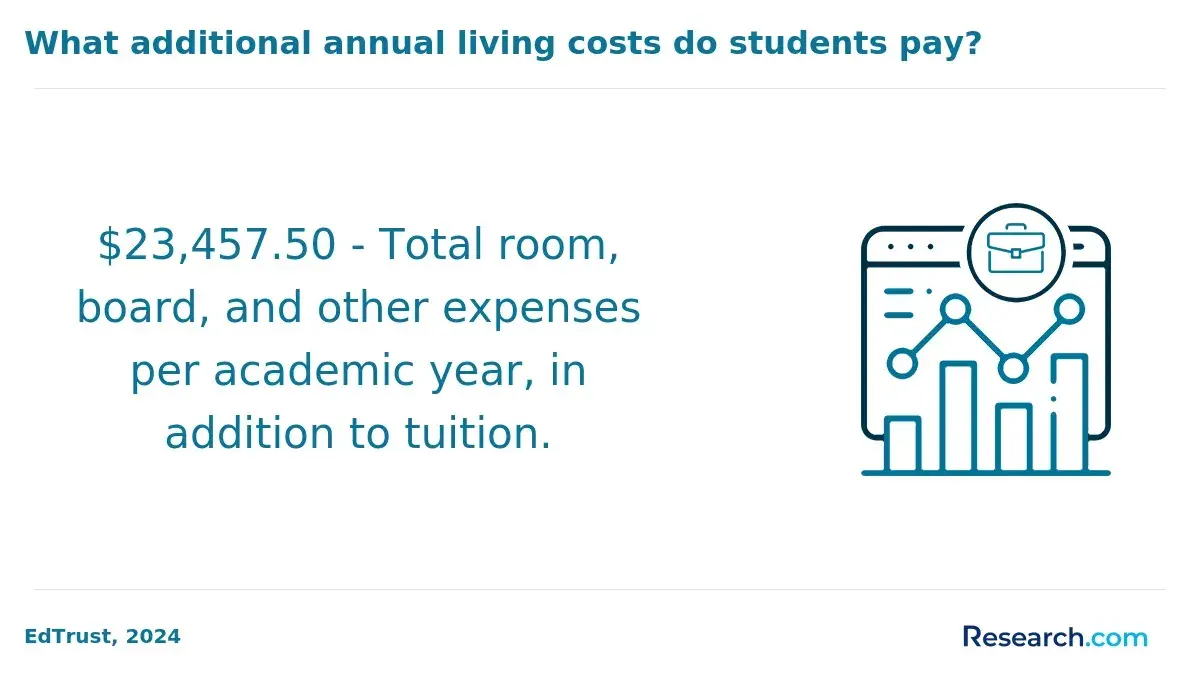
Paying for the SAT can feel small compared with college costs, but it often starts the affordability conversation. College Board's 2024-25 data shows the average published total cost of attendance is $24,920 for in-state students at public four-year colleges, before aid. An SAT fee waiver can remove testing costs and unlock application-related savings.
This guide is for students, families, counselors, and first-generation applicants who need a clear plan for eligibility, registration, score strategy, test prep, college applications, and next steps.
Key Things You Should Know
- The SAT fee waiver can cover up to two SAT registrations for eligible students, while the standard US SAT registration fee listed by College Board for 2024-25 is $68.
- Fee waiver benefits can also include unlimited score sends and access to college application fee waivers at many participating institutions, reducing costs beyond the test itself.
- A strong SAT plan should include one early test, one possible retake, free official practice, and a target score based on the middle 50% range of colleges on the student's list.
What is the SAT fee waiver and who is eligible to receive it?
An SAT fee waiver is a College Board benefit that allows eligible low-income students to take the SAT at no cost and access related college application savings. It is designed to reduce financial barriers for students who would otherwise have trouble paying testing and reporting fees.
Eligibility is usually based on financial need, not academic performance. Students commonly qualify if they meet one or more need-based criteria used by schools and College Board.
The most common eligibility indicators include participation in a free or reduced-price lunch program, family income within federal income guidelines, enrollment in a government assistance program, homelessness or foster care status, being a ward of the state, or participation in a qualifying low-income college access program.
Most students receive the waiver through a high school counselor or authorized school official. Homeschooled students and students who attend schools without a traditional counseling office may need to contact a local high school counselor or College Board support process for verification. Eligibility rules can vary in how they are documented, so students should ask early instead of waiting until the registration deadline.
The table below explains common qualifying situations. Use it as a practical guide, but remember that your school or counselor may need documentation before issuing a code.
| Eligibility situation | What it usually means | What to prepare |
| Free or reduced-price lunch eligibility | The student's household meets income-based criteria used by the school meal program. | School record or counselor confirmation. |
| Public assistance | The family participates in programs such as SNAP, TANF, Medicaid, or similar assistance. | Program participation information if requested. |
| Low-income college access program | The student participates in a recognized program serving low-income or first-generation students. | Program name and staff contact if needed. |
| Homelessness, foster care, orphan, or ward status | The student has a qualifying independent or vulnerable housing or guardianship situation. | Counselor, liaison, or agency confirmation. |
A common mistake is assuming that only students with perfect grades can receive a waiver. The waiver is need-based. Another mistake is assuming family income alone tells the whole story; schools may use several indicators to verify eligibility.
How do you apply for an SAT fee waiver through your high school or counselor?
Most students apply for an SAT fee waiver by asking their high school counselor, college adviser, or approved school official for a fee waiver code before registering for the SAT. The code is entered in the student's College Board account during registration.
Because registration deadlines come before many students realize it, the smartest approach is to treat the fee waiver as part of your test plan, not as a last-minute request. Follow these steps in order so you do not miss a preferred test date:
- Ask your counselor whether you qualify for an SAT fee waiver at least one month before the registration deadline.
- Prepare basic eligibility information, such as lunch-program status, assistance-program participation, or documentation requested by your school.
- Create or sign in to your College Board account using your legal name and school information consistently.
- Enter the fee waiver code during SAT registration and confirm that the balance changes to $0 before submitting.
- Save a screenshot or confirmation email showing the test date, test center, and fee waiver use.
- Ask your counselor how to access college application fee waiver benefits after you take the SAT or become fee-waiver eligible in your College Board account.
If your school offers the SAT during the school day, ask whether fee waiver benefits are automatically connected to your account. School-day testing and weekend testing can interact differently depending on how your school administers the exam.
Students should avoid three red flags: using a code that was not assigned to them, registering under a different name than school records, or waiting until late registration. A name mismatch can delay score access, and late planning can reduce available test center options.
What fees, test dates, and score reports are covered by the SAT fee waiver?
The SAT fee waiver generally covers eligible SAT registrations and can also provide score-reporting and college-application-related benefits. It does not mean every testing-related cost in every circumstance is automatically covered, so students should verify details before registering.
For context, these are key listed costs students should understand when comparing waiver benefits with out-of-pocket testing expenses:
- SAT registration: $68 for US students in the 2024-25 testing year; eligible fee waiver students can reduce covered registrations to $0.
- CSS Profile: $25 for the first application and $16 for each additional report in 2024-25; eligible students may qualify for a $0 cost through CSS Profile fee waiver rules.
The table below summarizes what students should check before choosing dates or sending scores. It is especially useful if you are deciding whether to use your first waiver for a spring test or wait until fall.
| Item | Usually covered or supported? | Decision point for students |
| SAT registration | Covered for a limited number of eligible registrations. | Use the first registration when you have completed enough practice to get useful results. |
| National test dates | Available on the same posted SAT dates as other registrants, subject to seat availability. | Register early if nearby test centers fill quickly. |
| Score reports | Fee waiver students commonly receive broad or unlimited score-send benefits. | Send scores strategically based on each college's score policy. |
| Late or change-related fees | Coverage can depend on the current College Board policy and timing. | Avoid late changes unless necessary; confirm the cost before submitting. |
| Test preparation | Official practice resources are free for all students; waiver students should prioritize them. | Use practice-test results to decide whether a retake is worthwhile. |
SAT test dates are usually offered across the school year, including spring, late spring, summer, and fall administrations. Juniors often benefit from testing once in spring and again in late summer or fall if their first score does not match their college list. Seniors should prioritize dates that release scores before early action, early decision, scholarship, and regular decision deadlines.
How does the SAT fee waiver affect college application fees and CSS Profile costs?
An SAT fee waiver can help with more than the SAT. Many students who qualify can access college application fee waivers through College Board and may also qualify for CSS Profile fee waivers, depending on the student's financial information and the institutions involved.
College application fees can add up quickly because many colleges charge a separate fee for each application. A student applying to eight schools could face hundreds in application costs without waivers. That is why the SAT fee waiver should be viewed as part of a larger affordability plan, not just a test discount.
Students should understand the difference between these waiver types before applying:
| Cost category | How the waiver may help | Important limitation |
| College application fees | Many participating colleges accept application fee waivers connected to SAT fee waiver eligibility. | Not every school uses the same process, so check each application portal. |
| CSS Profile fees | Eligible domestic students may receive automatic CSS Profile fee waivers based on College Board criteria and financial information. | CSS Profile is required only by certain colleges and scholarship programs. |
| Institution-specific fee waivers | Some colleges provide their own codes for low-income, first-generation, military-connected, or campus-visit applicants. | Students may need to request the code from admissions directly. |
| Common App or Coalition-style waivers | Students can often indicate financial need within the application platform. | Counselor confirmation may be required. |
Before submitting applications, make a short list of each school's application fee, waiver method, CSS Profile requirement, priority aid deadline, and scholarship deadline. The biggest mistake is applying late and discovering that the admissions deadline is still open but the priority financial aid deadline has passed.
What SAT test prep resources are free or discounted for fee waiver students?
Fee waiver students should start with free official SAT prep, then add school-based tutoring, library resources, nonprofit programs, or low-cost targeted practice only if practice results show a clear need. Paying for expensive prep is not required to improve.
The SAT is now digital, so practice should include both academic review and familiarity with the testing platform. Students need to practice reading shorter passages, solving math with the built-in tools, pacing through modules, and managing fatigue. Free official practice is especially valuable because it reflects the current digital format better than outdated paper-test materials.
A practical prep plan should combine diagnosis, targeted review, and full-length practice. The following resources are usually the best starting points for students using a fee waiver:
- Official digital SAT practice tests to learn timing, question style, and score bands.
- Free skill practice through school, library, or nonprofit tutoring programs.
- Teacher office hours for Algebra, advanced math, grammar, and evidence-based reading questions.
- Used or library SAT prep books only if they clearly cover the digital SAT format.
- Small-group study sessions where students review missed questions instead of just taking more tests.
If a student is also thinking about career credentials after high school, test prep can become part of a broader affordability strategy. For example, researching short certificate programs that pay well online can help students compare college, certificate, and workforce pathways without assuming one route fits everyone.
The most common prep mistake is practicing passively. Watching videos may feel productive, but score improvement usually comes from reviewing missed questions, identifying patterns, and practicing similar questions until the error disappears.
How should you plan SAT test dates and retakes when using a fee waiver?
Fee waiver students should plan for one primary SAT and one possible retake, with enough time between dates to study based on score feedback. The goal is not to use every available test date; it is to use each free registration strategically.
A strong testing calendar depends on grade level, course progress, college deadlines, and transportation. Students who have not finished key math coursework may benefit from waiting until they have covered more material, while students applying early may need a fall score even if they would prefer more prep time.
Use this planning sequence to decide when to test and whether to retake:
- Take a full-length digital practice test before registering so your first official SAT is not your first real timed attempt.
- Choose a first test date that gives you at least six to eight weeks of focused preparation.
- After scores arrive, compare your results with the middle 50% ranges of colleges on your list.
- Retake only if you can identify specific score gaps and have time to improve before application deadlines.
- Send scores after checking whether each college is test-required, test-optional, test-flexible, or test-blind.
Students should also consider superscoring. Some colleges combine the best section scores from different test dates, which can make a retake useful even if the total score increases only modestly. Other colleges review the highest single sitting or do not require scores at all, so a score-sending strategy should be school-specific.
A major red flag is registering for back-to-back exams without changing your prep plan. If you do not review what went wrong, a retake may repeat the same result and use a limited fee waiver benefit unnecessarily.
What SAT score range should fee waiver students target for competitive colleges?
Fee waiver students should target the SAT score range that matches their college list, scholarship goals, and academic record. There is no single "good" SAT score; a competitive score is one that strengthens your application at the specific schools you are considering.
The SAT is scored from 400 to 1600, with Evidence-Based Reading and Writing and Math each contributing 200 to 800 points. Colleges often publish a middle 50% SAT range for admitted students.
If your score is near or above that range, submitting it may help. If it is below and the college is test-optional, you should compare whether your GPA, course rigor, essays, recommendations, and activities present a stronger case without the score.
The table below gives a practical way to interpret SAT targets. It is not a guarantee of admission, because colleges evaluate many factors beyond scores.
| Approximate SAT position | How to interpret it | Best use of the score |
| Below a college's middle 50% range | The score may be less competitive for that school. | Consider retaking the test, applying test-optional, or strengthening the rest of the application. |
| Within the middle 50% range | The score is broadly aligned with many admitted students. | Submit if the college accepts scores and the rest of the application is consistent. |
| Above the middle 50% range | The score may be a strength, especially at less selective or merit-focused colleges. | Submit and check whether it qualifies you for scholarship review. |
| At or near published honors or merit thresholds | The score may support competitive scholarship or honors program consideration. | Prioritize deadline tracking and score submission rules. |
Low-income students should avoid building a college list made only of highly selective schools. A balanced list should include reach, match, likely, and financial safety schools. Students interested in flexible college formats later on may also want to understand options such as a competency-based master's, where progress can depend more on demonstrated skills than seat time.
How does SAT performance with a fee waiver relate to scholarships and financial aid?
SAT performance can affect scholarships and financial aid, but it works differently depending on the college. Need-based aid is usually driven by financial circumstances, while merit scholarships may consider SAT scores, GPA, course rigor, leadership, and deadlines.
The SAT fee waiver does not reduce the importance of the FAFSA, state aid forms, CSS Profile when required, or institutional scholarship applications. Instead, it helps students remove a cost barrier so they can compete for admissions and aid opportunities with fewer upfront expenses.
Students should separate scholarship opportunities into three categories. Each category has different rules, so the safest strategy is to track deadlines and requirements in a spreadsheet.
- Automatic merit scholarships: Some colleges review applicants automatically based on academic profile, and SAT scores may strengthen consideration where scores are accepted.
- Competitive institutional scholarships: These may require separate essays, interviews, early deadlines, or honors college applications.
- External scholarships: Local foundations, employers, civic groups, and nonprofits may consider financial need, academics, service, identity, intended major, or career goals.
Financial aid should also be evaluated over the full degree timeline. A first-year award may look generous, but students should ask whether scholarships renew, what GPA is required, whether housing costs are covered, and whether tuition increases affect future bills.
Students planning for graduate school should also compare lower-cost pathways, including affordable master's degrees online, before taking on additional debt.
A common mistake is choosing the college with the largest scholarship instead of the lowest net price. The better comparison is total cost after grants and scholarships, expected borrowing, transportation, housing, meal costs, and whether the program fits your academic goal.
How do SAT scores factor into admission at online vs. campus-based degree programs?
SAT scores usually matter more for first-year admission to campus-based bachelor's programs than for many online adult-learner, transfer, certificate, or graduate programs. However, some online bachelor's programs still use SAT scores for placement, scholarships, or first-year admission review.
Campus-based programs often evaluate recent high school graduates using a full admissions profile: GPA, course rigor, SAT or ACT scores when considered, essays, recommendations, activities, and context. Online programs may focus more on high school completion, transfer credits, work experience, prior college coursework, or readiness assessments, especially for adult learners.
The table below compares how SAT scores may fit into different program formats. Use it to decide whether sending scores is likely to help.
| Program type | How SAT scores may be used | Best fit for fee waiver students |
| Traditional campus-based bachelor's | May support admission, placement, honors, or merit aid where scores are accepted. | Students applying directly from high school who have a score aligned with the school's range. |
| Online bachelor's for first-year students | May be optional or used similarly to campus admission, depending on the institution. | Students needing flexibility but still entering as first-year applicants. |
| Online bachelor's for transfer or adult learners | Often places more emphasis on prior college credits and academic history. | Students who may start at community college and transfer later. |
| Certificate and workforce programs | Usually do not require SAT scores. | Students seeking faster entry into a career field before or instead of a degree. |
| Graduate programs | SAT scores are generally not relevant; graduate admissions may use GPA, experience, portfolios, or other exams. | Students planning long-term education after earning a bachelor's degree. |
Online learning can be a smart option when it is accredited, affordable, and aligned with the student's career goal. It is not automatically cheaper or easier. Students should compare accreditation, transfer policy, student support, graduation rates, technology requirements, and career services.
Long-term planners may eventually compare advanced options such as an online doctorate, but the immediate priority after the SAT is choosing a realistic first credential.
How can low-income students build long-term education and career plans after the SAT?
Low-income students should use the SAT as one step in a longer plan that connects college affordability, academic fit, career goals, and debt control. A good score can open doors, but the strongest plan also includes financial aid deadlines, program selection, and career preparation.
Education decisions have long-term consequences. BLS 2024 data shows median weekly earnings of $1,543 for workers with a bachelor's degree compared with $930 for workers with only a high school diploma. This does not mean every degree pays off equally, but it shows why students should evaluate education as a career investment, not just an admissions milestone.
A practical post-SAT plan should connect short-term applications with long-term outcomes. Use these steps after your first score report arrives:
- Build a balanced college list with at least one financial safety school that you would be willing to attend.
- Complete the FAFSA as early as possible and check whether any colleges require the CSS Profile.
- Compare net price, not sticker price, using grants, scholarships, work-study, loans, housing, transportation, and fees.
- Choose a major or exploratory pathway based on interests, course strengths, career outcomes, and transfer flexibility.
- Ask each college how credits transfer if you start at community college or change programs later.
- Use career services early for internships, job shadowing, resume help, and employer connections.
Students who are unsure about a four-year degree can still build strong options. They might start with community college, an apprenticeship, an industry certification, or a transfer pathway. Researching what certifications can I get online can help students compare shorter credentials with degree programs before committing time and money.
The biggest mistake is treating admission as the finish line. The better goal is graduating with manageable debt, useful skills, supportive advising, and a credential that connects to real career opportunities.
Other Things You Should Know About
Usually, a fee waiver must be applied during registration. If you already paid, ask College Board or your counselor whether any option exists, but do not assume a refund will be available.
Colleges may know you are eligible for fee waiver benefits if you use application fee waivers, but this is not a negative factor. Fee waivers exist to expand access for qualified students.
Eligibility can depend on school verification, residency, and College Board rules. Students should speak with a counselor or trusted college access adviser because many schools support undocumented and mixed-status students through fee waiver processes.
Ask what documentation was used and whether another need-based criterion applies. Also check school-day SAT options, local nonprofit programs, college access organizations, and colleges that offer test-optional admission.
References
- SAT Fee Waiver 2026: How to Get it as an International Student? https://prep.yocket.com/sat/sat-fee-waiver
- SAT Fee Waiver: Eligibility and How to Get One (2026) — Makon AI https://www.makon.ai/blog/sat-fee-waiver/
- Test Prep: Free and Low-Cost Opportunities to Prepare for the ACT and SAT - Admission By Design https://admissionbydesign.com/resources/free_and_low_cost_sat_and_act_prep/
- SAT Fees 2026–27: Complete Cost Breakdown, Waivers & How to Save https://www.ivystrides.com/blog/sat-fees/
- Guide To SAT Fee Waivers For International Students https://www.testprepkart.com/sat/blog/guide-to-sat-fee-waivers-for-international-students
- How to improve education for low-income students | Brookings https://www.brookings.edu/articles/how-to-improve-education-for-low-income-students/
- SAT Fees & Waivers https://www.triedandtrueeducation.com/post/sat-fees-waivers
- SAT Weight in College Applications https://www.manhattanreview.com/sat-role-in-college-application/
- The Top Free SAT Prep Courses and Resources - ScienceFair.io: Find Your Research Journey https://www.sciencefair.io/blog/9-sat-prep-courses-that-are-completely-free-of-cost
- Can your college application fees be waived? https://collegemoneymatters.org/applying-to-college/can-your-college-application-fees-be-waived/