2027 AB Degree: Test Prep Guide, Dates, Scores, and Tips

Co-Founder and Chief Data Scientist
Choosing an AB degree means weighing academics, cost, admissions tests, schedule, and career value before you commit. College Board's 2024 pricing report lists average published tuition and fees at $11,610 for in-state public four-year students and $43,350 at private nonprofit colleges, so program choice can strongly affect ROI.
This guide is for high school students, transfer students, working adults, and career changers who want a practical way to compare AB programs, prepare for tests, understand score expectations, and choose an accredited path that fits their goals.
Key Things You Should Know
- An AB degree is usually the Latin-style Bachelor of Arts, a four-year liberal arts bachelor's degree focused on humanities, social sciences, languages, communication, and analytical writing rather than technical or professional specialization.
- Test policies vary: many AB programs are test-optional, but applicants who submit scores should compare their SAT or ACT results with each college's middle 50% admitted-student range; the 2024 national SAT mean was 1024, which is a benchmark, not an admissions target.
- Cost and outcomes depend heavily on school type, aid, transfer credits, and major; College Board reported 2024-25 average published tuition and fees of $11,610 at in-state public four-year colleges and $43,350 at private nonprofit colleges.
What is an AB degree?
An AB degree, short for Artium Baccalaureus, is commonly equivalent to a Bachelor of Arts. Some universities use "AB" instead of "BA," especially institutions with Latin degree traditions. In most cases, an AB degree is a bachelor's degree that emphasizes broad liberal arts learning, critical thinking, research, communication, and cultural or historical analysis.
The degree is a strong fit for students who want flexibility across careers such as education, communications, public service, law-related work, business, policy, marketing, nonprofit management, or graduate study. It may be less ideal for students who need a highly prescribed technical pathway, such as engineering, nursing licensure, accounting CPA eligibility, or computer science roles requiring deep technical coursework.
The main difference between an AB and a BS is usually curriculum balance, not degree level. The table below shows how the choice often affects course planning and career preparation.
| Degree option | Typical academic focus | Best fit | Decision point |
| AB or BA | Liberal arts, writing, languages, humanities, social sciences, broad electives | Students seeking flexible career options, graduate school preparation, or communication-heavy roles | Choose this when broad analytical and communication skills matter more than a technical sequence |
| BS | Quantitative, scientific, technical, or professional coursework | Students pursuing STEM, health science, data, lab, or technical fields | Choose this when employers or graduate programs expect more math, science, or applied technical training |
| Associate-to-bachelor pathway | General education and lower-division major prerequisites before transfer | Cost-conscious students or those testing a field before committing to a four-year school | Choose this when transfer agreements are clear and credits apply directly to the AB program |
If you are not ready to start at a four-year institution, researching online associate degrees can help you compare lower-cost entry points before transferring into an AB program.
What are the admission requirements for an AB degree?
Admission requirements for an AB degree depend on the college's selectivity, test policy, and whether you apply as a first-year or transfer student. Most schools review academic readiness first, then evaluate context such as course rigor, essays, recommendations, activities, and demonstrated fit.
Applicants should confirm each requirement directly with the admissions office because "test-optional" does not always mean tests are irrelevant for scholarships, honors programs, athletic eligibility, or home-schooled applicants. Most AB programs commonly ask for the following materials:
- High school diploma, GED, or equivalent completion credential for first-year applicants
- Official transcripts showing English, math, science, social studies, and foreign language preparation
- SAT or ACT scores if required, recommended, or strategically useful under a test-optional policy
- College essay or personal statement explaining academic interests and readiness
- Letters of recommendation, especially for selective private colleges and honors programs
- Application fee or approved fee waiver
- For transfer students, official college transcripts and minimum transferable credit or GPA rules
A common mistake is applying only to schools where your grades and scores are below the admitted-student range. A stronger strategy is to build a balanced list of reach, match, and likely schools, then compare net price estimates rather than sticker price alone.
How do online and campus AB degree programs compare?
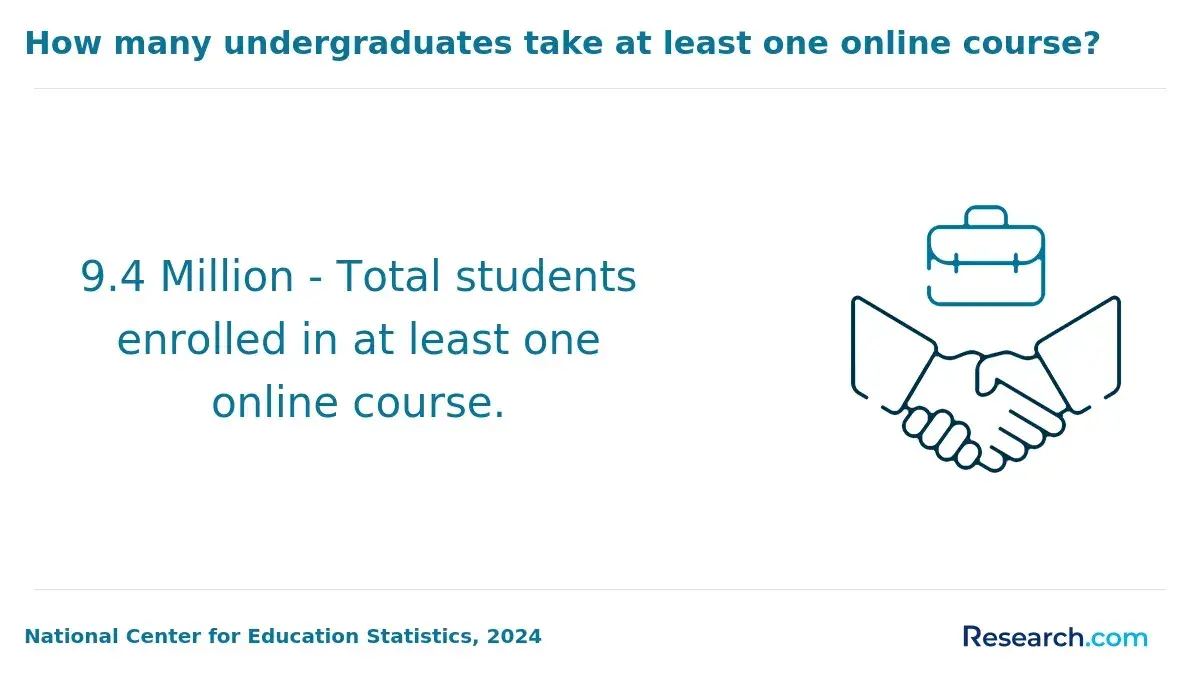
Online and campus AB programs can lead to the same bachelor's credential when they are offered by accredited institutions, but the student experience can be very different. The right format depends on your schedule, learning style, need for campus resources, and whether the program offers your preferred major online.
The table below compares the practical trade-offs that matter most when choosing between online and campus AB study.
| Factor | Online AB program | Campus AB program | Best choice when |
| Schedule | Often asynchronous or evening-friendly | Usually follows fixed class times | Online is better for working adults, parents, military students, and caregivers |
| Cost control | May reduce commuting, housing, and relocation costs | May provide stronger access to campus jobs, labs, and activities | Online helps when living costs are the biggest barrier |
| Networking | Depends on virtual advising, online clubs, and internship support | Often stronger for in-person faculty access, student organizations, and local alumni connections | Campus is better if you need in-person mentoring or a residential college experience |
| Program choice | May have fewer majors or concentrations | Usually offers more electives and minor combinations | Campus is better if your intended field requires specialized electives |
| Learning style | Requires self-direction and strong time management | Provides more structured routines | Online works best if you can manage deadlines without frequent reminders |
Online AB study can be especially useful for adult learners balancing family responsibilities, and students in that situation may also want to compare flexible college programs for moms before choosing a format.
What courses are in an AB degree curriculum?
An AB degree curriculum usually combines general education, major requirements, electives, and a capstone or advanced seminar. The purpose is to build transferable skills-especially writing, analysis, reasoning, research, and communication-while allowing depth in a specific field.
Course names vary by school, but AB programs commonly include a structure like the one below. This layout helps you understand where your credits go and why transfer planning matters.
| Curriculum area | Common examples | Why it matters |
| General education | Writing, quantitative reasoning, natural science, social science, humanities, ethics | Builds broad academic skills and often accounts for a large share of graduation requirements |
| Major core | Introductory and intermediate courses in fields such as English, psychology, history, political science, sociology, philosophy, or languages | Creates subject-matter depth and prepares students for internships, graduate school, or entry-level roles |
| Research and methods | Statistics for social science, research design, textual analysis, historical methods, policy analysis | Shows employers and graduate programs that you can evaluate evidence rather than only summarize information |
| Electives and minors | Business, data literacy, education, communications, digital media, public health, pre-law, nonprofit studies | Lets you tailor the AB toward a career direction |
| Capstone or seminar | Senior thesis, portfolio, advanced research paper, applied project | Provides work samples that can support job applications or graduate school admissions |
To make the degree more career-relevant, choose electives that add applied skills. For example, an English AB paired with digital marketing, a psychology AB paired with statistics, or a history AB paired with public policy can be easier to explain to employers than a disconnected set of electives.
How long does an AB degree usually take?
A traditional AB degree usually takes four academic years of full-time study. Students who bring transfer credits, Advanced Placement credit, dual-enrollment coursework, or prior college credits may finish faster, while part-time students often need five to six years depending on course load and availability.
Your timeline depends less on the name of the degree and more on credit requirements, term structure, transfer rules, and whether required courses are offered when you need them. Use the comparison below to estimate which pace fits your situation.
| Path | Typical timeline | Who it fits | Trade-off |
| Full-time first-year start | About 4 years | Traditional students who can take 12 to 15 credits or more per term | Fastest standard route but may require higher annual cost and less work flexibility |
| Part-time study | Often 5 to 6 years | Working adults, parents, and students managing caregiving or health needs | Lower term-by-term workload but longer time to completion |
| Transfer pathway | Often 2 to 3 years after associate-level credits | Students who completed community college or prior coursework | Can save money, but only if credits transfer into degree requirements |
| Accelerated online terms | Varies by school and credit load | Self-directed students with transfer credits and strong time management | Can shorten the calendar, but condensed courses require steady weekly effort |
Older adults returning to college may prefer shorter, focused options before committing to a full bachelor's pathway, so comparing one-year degrees for seniors can be useful when time, cost, and confidence are major concerns.
How much does an AB degree cost?
The cost of an AB degree depends on tuition, fees, housing, books, transportation, technology, and the number of credits you must complete after transfer or placement. College Board's 2024 pricing report shows why the school sector matters: average published tuition and fees for 2024-25 were $11,610 at in-state public four-year colleges, $30,780 for out-of-state public four-year students, and $43,350 at private nonprofit four-year colleges.
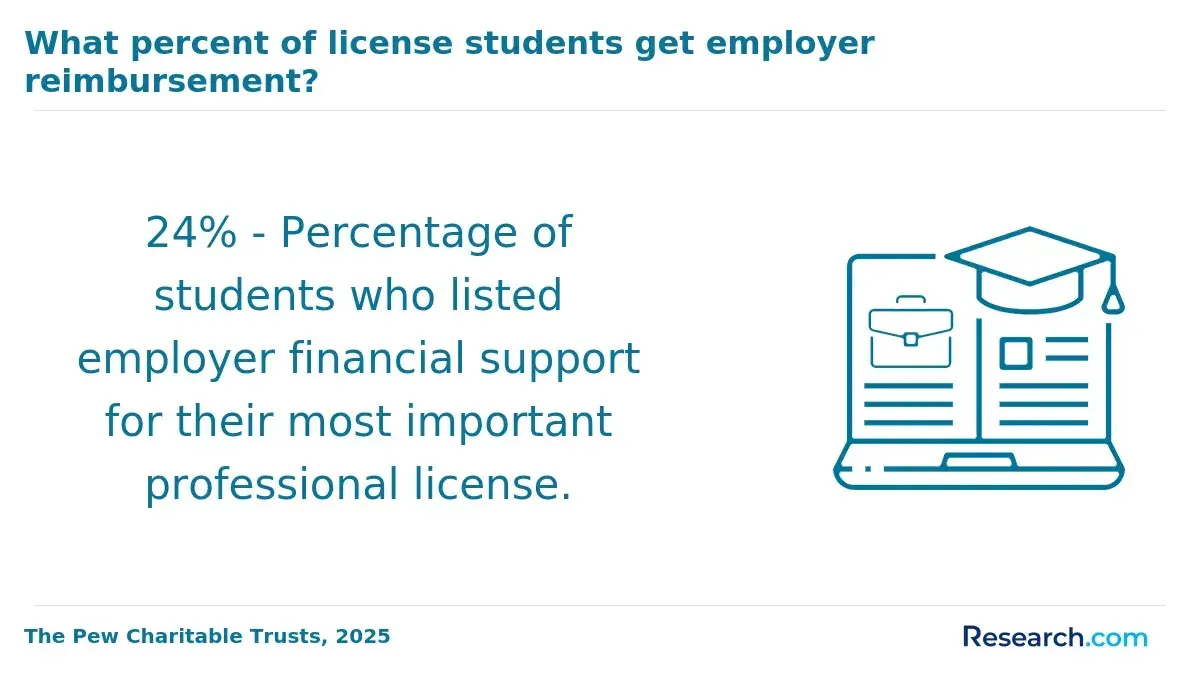
Sticker price is not the same as what you will actually pay. Grants, scholarships, state aid, employer tuition assistance, veterans benefits, transfer credits, and living arrangements can change the final cost substantially. When comparing programs, focus on total net cost and graduation timeline rather than tuition alone.
Common cost categories include the following, and each one can affect whether an AB degree is affordable in practice:
- Tuition and mandatory fees charged per credit, term, or academic year
- Books, course materials, software, and online learning fees
- Housing, food, commuting, parking, and relocation expenses
- Lost income if you reduce work hours to study full time
- Extra credits caused by changing majors, repeating courses, or losing transfer credits
- Graduation, transcript, testing, and portfolio fees
A common red flag is a program that appears cheap per credit but accepts few transfer credits or has limited course availability. If affordability is your top priority, comparing the cheapest easiest online degree options can help you identify flexible pathways, but you should still verify accreditation, completion rates, and career relevance.
What test scores are required for AB degree programs?
Test score requirements for AB degree programs vary widely. Some colleges require the SAT or ACT, many are test-optional, and some are test-free. Even when scores are optional, submitting a strong score can help if it is above the school's middle 50% range, supports a scholarship application, or offsets a weaker part of the transcript.
For context, the College Board reported a 2024 mean SAT total score of 1024 for high school graduates who tested. Use that number only as a national benchmark; selective colleges may expect much higher scores, while open-admission or broad-access schools may not require scores at all.
The table below explains how to interpret test policies before deciding whether to register, submit scores, or focus your effort elsewhere.
| Policy | What it usually means | How to respond |
| Test-required | SAT or ACT scores are part of the application | Plan testing early enough to retake if needed and send scores before the deadline |
| Test-optional | You may apply with or without scores | Submit scores when they strengthen your application compared with the school's admitted-student range |
| Test-flexible | The school may accept AP, IB, SAT, ACT, or other academic evidence | Confirm which scores qualify and whether specific programs have stricter rules |
| Test-free or test-blind | Scores are not considered for admission | Spend more time strengthening grades, essays, activities, and recommendations |
Test dates change each cycle, but the planning logic is consistent. Most AB applicants should work backward from application deadlines so scores, transcripts, and recommendations arrive on time.
- Check each college's application deadline and score submission deadline before registering for a test.
- Take a diagnostic SAT or ACT to decide which exam fits your strengths better.
- Schedule the first official test early enough to allow one retake if your score is below your target range.
- Use the college's middle 50% admitted-student scores to decide whether a submitted score helps or hurts your application.
- Keep a separate calendar for scholarship, honors college, and program-specific deadlines because they may be earlier than general admission.
Effective test prep is usually targeted rather than endless. Focus on missed-question patterns, timed practice, official practice tests, grammar and algebra fundamentals, and test-day pacing. If your GPA and coursework are already strong and your target colleges are test-optional, it may be smarter to invest more time in essays, recommendations, and major-fit research.
How do you choose an accredited AB degree program?
Accreditation is one of the most important checks before enrolling in an AB degree program. In the United States, institutional accreditation from an agency recognized by the U.S. Department of Education or the Council for Higher Education Accreditation is the baseline indicator that a college has met recognized standards for academic quality and administrative integrity.
Programmatic accreditation is less common for broad liberal arts AB majors than for professional fields, but it can matter if your AB connects to teacher preparation, social work, counseling prerequisites, business, or another regulated pathway. Always verify requirements for your intended career or graduate program before assuming the degree will qualify.
Use this checklist before you apply or deposit. It helps prevent the most expensive mistakes students make when choosing a bachelor's program.
- Confirm institutional accreditation through the U.S. Department of Education's recognized accreditation database or the accreditor's official website.
- Check whether the specific campus or online division is included under the accreditation status.
- Ask how many transfer credits will apply to general education, major requirements, and electives before enrolling.
- Review graduation rates, retention rates, average debt, and employment information when available.
- Compare net price estimates after grants and scholarships, not only published tuition.
- Ask whether online students receive the same advising, library access, tutoring, career services, and internship support as campus students.
- Verify whether the AB major prepares you for any graduate, licensure, or certification pathway you are considering.
Red flags include vague accreditation claims, pressure to enroll immediately, unclear credit-transfer policies, unusually low tuition with many added fees, and programs that promise guaranteed jobs or salaries. A trustworthy school should be able to explain accreditation, cost, outcomes, and curriculum without relying on high-pressure sales tactics.
What jobs can you get with an AB degree?
An AB degree can lead to many careers because it develops communication, writing, analysis, research, and problem-solving skills. The best job options depend on your major, internships, portfolio, technical electives, location, and whether you add graduate education or certification.
The table below shows common career directions for AB graduates and the kinds of responsibilities they often involve. These are examples, not automatic outcomes, because employers may prefer specific majors, experience, or software skills.
| Career area | Example roles | Typical responsibilities | Helpful add-ons |
| Communications and media | Content specialist, communications associate, editor assistant, social media coordinator | Write, edit, plan campaigns, manage messaging, analyze audience response | Portfolio, SEO basics, analytics tools, internships |
| Business and marketing | Marketing coordinator, sales development representative, account coordinator, market research assistant | Support campaigns, research customers, prepare reports, coordinate client work | Data literacy, CRM software, Excel, statistics |
| Education and public service | Program coordinator, admissions counselor, museum educator, nonprofit associate | Advise students or clients, organize programs, communicate with stakeholders, track outcomes | Volunteer work, education coursework, public speaking |
| Policy, law, and government | Legislative aide, paralegal assistant, policy assistant, casework coordinator | Research issues, draft memos, manage records, support constituents or legal teams | Research methods, writing samples, pre-law advising |
| Graduate-school pathway | Future teacher, lawyer, counselor, librarian, professor, policy analyst | Use AB preparation as a foundation for advanced credentials | Prerequisite planning, strong GPA, entrance exam preparation |
If your target career requires advanced study, it may help to compare accelerated graduate options such as one-year masters programs after you understand whether an AB degree provides the right undergraduate foundation.
To improve career value, do not wait until senior year to think about employment. Build a portfolio, complete internships, learn basic data tools, request faculty references, and choose electives that connect your liberal arts major to a specific labor-market need.
What salary and job outlook can AB degree graduates expect?
Salary and job outlook for AB graduates vary because the degree is broad rather than tied to one occupation. The U.S. Bureau of Labor Statistics' May 2024 wage data shows this range clearly: the median annual wage for public relations specialists was $69,780, while the median for market research analysts was $76,950. The difference shows why skills, internships, and occupational targeting matter as much as the degree title.
The table below summarizes several AB-friendly occupations using BLS wage and outlook categories where available. Use it as a planning tool, not as a salary promise.
| Occupation | Relevant AB preparation | Median annual wage, May 2024 | Outlook context |
| Public relations specialist | Communication, journalism, English, political science, media studies | $69,780 | Demand is influenced by digital communication, brand reputation, and social media strategy |
| Market research analyst | Psychology, sociology, economics, communication, statistics electives | $76,950 | Stronger prospects for graduates who can combine writing with data analysis |
| Writer or author | English, creative writing, communications, humanities | $72,270 | Portfolio quality and digital publishing skills can be more important than major name alone |
| Editor | English, journalism, communications, liberal arts | $75,260 | Competition can be significant, especially for traditional publishing roles |
| High school teacher | Subject-area AB plus approved teacher preparation | $64,580 | Licensure requirements vary by state and must be confirmed before choosing coursework |
AI and automation are changing AB career planning. Routine writing, editing, research summaries, and basic content tasks are increasingly supported by AI tools, so graduates should strengthen higher-value skills such as source evaluation, audience strategy, data interpretation, ethical judgment, interviewing, project management, and persuasive communication.
The degree is more likely to pay off when you connect it to a clear plan. Strong ROI signals include low net cost, transferable credits, internships, employer-recognized skills, career services, and a major-to-career story you can explain in interviews. Weak ROI signals include high borrowing, unclear major requirements, no experiential learning, and assuming that a general degree alone will qualify you for competitive roles.
Other Things You Should Know About
In most U.S. colleges, yes. AB is the Latin abbreviation for Bachelor of Arts, while BA is the English abbreviation. The curriculum and degree level are usually equivalent, but you should still check the specific school catalog.
Usually not. Employers familiar with higher education generally understand that AB and BA both refer to a bachelor's-level liberal arts degree. If needed, you can list it on a resume as "Bachelor of Arts" followed by the major.
Yes, an AB degree can support graduate study in fields such as law, education, public policy, humanities, social sciences, communication, and business. Admission depends on your GPA, prerequisites, recommendations, writing samples, test requirements, and program fit.
It can be a good option if you want academic flexibility and time to explore related fields. However, if you are considering a licensed or highly technical career, meet with an advisor early so your exploratory credits do not delay graduation or miss required prerequisites.
References
- Academic bachelor https://www.uantwerpen.be/en/study/admission-and-enrolment/admission/academic-bachelor/admission-requirements/
- How Long Does It Take to Get a Business Administration Degree? - Team Academy https://teamacademy.nl/how-long-does-it-take-to-get-a-business-administration-degree/
- AB vs BA Degree: What’s the Difference? https://empowerly.com/faq/ab-vs-ba-degree-whats-the-difference/
- Accreditation https://www.naab.org/accreditation/accredited-programs
- Admission requirements - Esade Bachelors https://www.esade.edu/bachelor/en/degrees/admissions/admission-requirements
- What Test Scores Do You Need for Admission to Top Colleges? https://www.ivyscholars.com/what-test-scores-do-you-need-to-get-into-a-top-college/
- How Much Does a Bachelor's Degree Cost? | SoFi https://www.sofi.com/learn/content/bachelor-degree-cost/
- Artium Baccalaureatus https://charleston.edu/classics/academics/abdegree.php
- Bachelor of Arts | BA Degree | CollegeAtlas https://www.collegeatlas.org/bachelor-of-arts.html
- How does a college degree improve graduates’ employment and earnings potential? - APLU https://www.aplu.org/our-work/4-policy-and-advocacy/publicuvalues/employment-earnings/