2027 Data Science Resume: Test Prep Guide, Dates, Scores, and Tips

Co-Founder and Chief Data Scientist
A data science resume now has to prove more than Python fluency; it must show judgment, statistics, business impact, and responsible AI use. The U.S. Bureau of Labor Statistics reports a 2024 median annual wage of $112,590 for data scientists, which explains why competition for credible credentials and project evidence is rising.
This guide is for students, career changers, bootcamp graduates, and early-career analysts who need to decide what to study, what scores to show, which dates matter, and how to present qualifications clearly to employers.
Key Things You Should Know
- Employers respond best to a data science resume that connects technical tools to measurable outcomes, such as model performance, revenue impact, automation time saved, or decision accuracy.
- Test scores are usually most useful for graduate admissions, not employer screening; certifications, projects, internships, and GitHub portfolios often carry more weight for hiring.
- The career outlook is strong but competitive: BLS data lists a $112,590 median annual wage for data scientists in 2024, while program cost, accreditation, and job-ready coursework strongly affect return on investment.
What are the key sections and skills to include on a data science resume?
A data science resume should make it easy for a recruiter, hiring manager, or applicant tracking system to answer three questions: Can you work with real data, can you build and evaluate models correctly, and can you explain results to people who make decisions? A strong resume is not a list of tools; it is evidence that you can solve business, research, or operational problems with data.
The most effective structure depends on your experience level. Students and career changers often lead with projects and education, while experienced analysts or engineers should lead with measurable work achievements. Use this order when it fits your background:
- Contact information and portfolio links, including a professional email, LinkedIn profile, GitHub, and personal portfolio if it contains polished projects.
- Targeted summary, limited to two or three lines that state your specialty, strongest tools, and domain focus.
- Technical skills grouped by category, such as programming, statistics, machine learning, cloud, databases, visualization, and workflow tools.
- Projects or professional experience with quantified results, model metrics, business context, and your specific contribution.
- Education, certifications, bootcamps, and relevant test scores when they strengthen the application.
The table below shows how to prioritize resume content by candidate type. This matters because the same credential can be valuable in one context and distracting in another.
| Candidate type | Resume priority | What to de-emphasize |
| Undergraduate student | Course projects, internships, research, SQL, Python, statistics, and GPA if strong | Unrelated part-time work unless it shows leadership or communication |
| Bootcamp graduate | Portfolio projects, capstone, deployment, version control, and prior industry knowledge | Generic bootcamp course lists without outcomes |
| Career changer | Transferable domain expertise, analytics projects, business impact, and recent technical training | Old job duties that do not connect to data work |
| Experienced analyst | Production work, stakeholder impact, experimentation, dashboards, model monitoring, and mentoring | Introductory coursework unless it fills a clear skill gap |
For skills, avoid keyword stuffing. A better approach is to group skills and then prove them in your bullets. For example, instead of writing "Python, pandas, scikit-learn, machine learning," show that you used scikit-learn to tune a classification model, evaluated recall against a business constraint, and presented the trade-off to stakeholders.
Common resume mistakes include listing tools you cannot discuss in an interview, describing projects without data size or outcome, and using vague phrases such as "worked on predictive modeling." A stronger bullet uses action, method, and result: "Built a Python churn model using logistic regression and gradient boosting; improved recall on high-risk accounts and summarized retention drivers for a sales team."
What test scores and certifications strengthen a data science resume for employers?
For most data science jobs, standardized test scores are optional or irrelevant after you are admitted to a degree program. Employers usually care more about technical interviews, portfolio quality, and whether you can explain model choices. However, test scores and certifications can help in three situations: applying to graduate school, compensating for a nontechnical undergraduate major, or signaling a specific platform skill.
The table below separates credentials that help with admissions from credentials that may help with hiring. Use it to decide what belongs on your resume and what should stay in an application portal or transcript.
| Credential | Best use | Resume value | When to include it |
| GRE quantitative score | Graduate admissions | Moderate for students, low for experienced applicants | Include only if the score is strong and recent, or if the employer asks for academic evidence |
| TOEFL or IELTS | English-language admissions requirement | Low for most U.S. employer resumes | Include only when requested or when applying internationally |
| Cloud certification | Cloud analytics, MLOps, data engineering, and platform-specific roles | Moderate to high when aligned with the job description | Include certification name, issuer, and date earned |
| Vendor analytics certification | BI, visualization, database, and analytics platform roles | Moderate when the tool is required in the posting | Include if current and directly relevant |
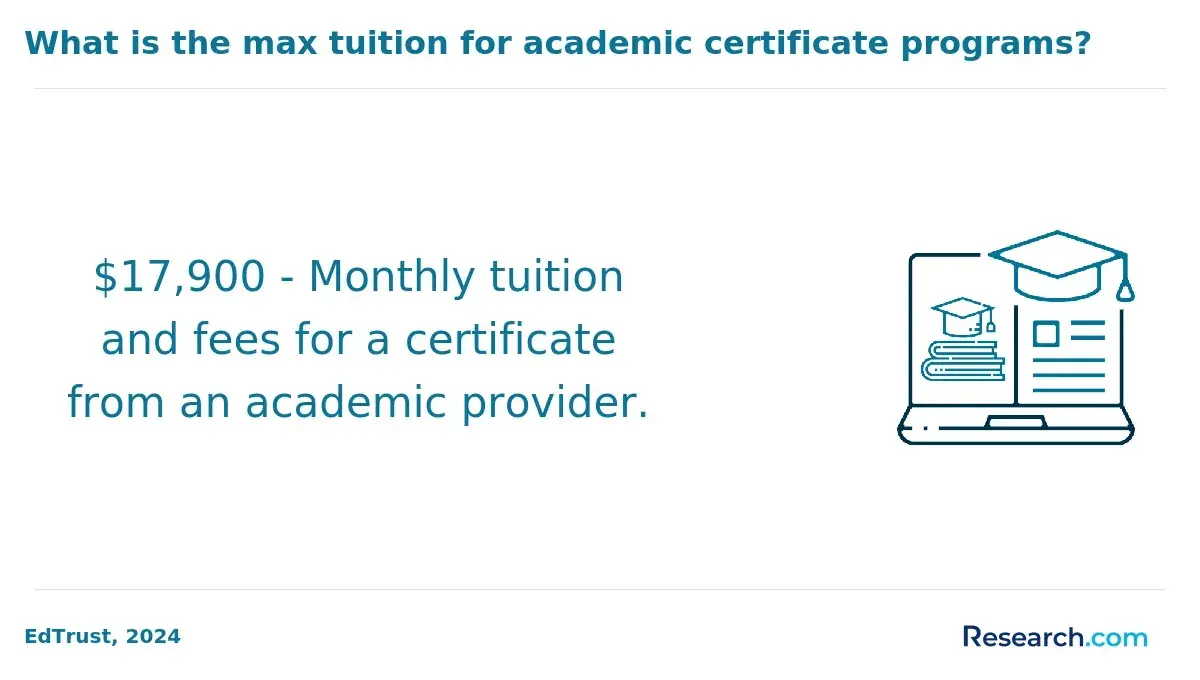
| University certificate | Academic evidence for a skill cluster | Moderate, especially for career changers | Include if it includes statistics, machine learning, databases, or applied projects |
Scores should never replace project evidence. A high quantitative score may reassure a graduate admissions committee that you can handle probability, linear algebra, or algorithms, but hiring teams still need proof that you can use those concepts with messy data, unclear requirements, and stakeholder pressure.
If you are choosing between another test-prep cycle and a stronger portfolio, prioritize the portfolio unless a target graduate program requires the score. A complete data science portfolio should include at least one supervised learning project, one SQL or data wrangling project, one visualization or dashboard, and one written explanation that discusses limitations, bias, or model risk.
How should you list standardized tests, bootcamps, and MOOCs on a data science resume?
Standardized tests, bootcamps, and MOOCs belong on a data science resume only when they help the reader assess your readiness. The key is to provide dates, scope, and evidence without letting coursework crowd out experience or projects.
Use these listing rules to keep credentials clear and credible:
- List standardized test scores only when they are requested, recent, unusually strong, or relevant to graduate admissions.
- For certifications, include the full credential name, issuer, month and year earned, and expiration date if the credential expires.
- For bootcamps, include the provider, program name, completion month and year, technical scope, and one capstone outcome.
- For MOOCs, list only selective courses that match the target role, especially if they produced a project, certificate, or verified assessment.
- Do not list every online course you have taken; group smaller courses under a "Relevant Training" line only if space allows.
Dates matter because employers want to know whether your skills are current. In fast-moving areas such as generative AI, cloud deployment, and MLOps, a credential from several years ago may need to be supported by recent projects or work experience.
Here are examples of stronger resume wording:
- "AWS Certified Machine Learning - Specialty, earned May 2025; built SageMaker pipeline for demand forecasting capstone."
- "Data Science Bootcamp, completed August 2024; capstone used SQL and Python to segment subscription customers and recommend retention actions."
- "GRE Quantitative: 166, taken September 2025; included for graduate data science applications."
If you are still building your academic path, low-cost starting points can reduce risk before a full degree commitment. Students comparing budget-friendly undergraduate options may also review affordable online bachelor degree programs to see how a lower-cost foundation can support later specialization in data science.
Which degrees and academic programs best prepare you for a data science career?
Data science careers do not require one single degree, but the strongest academic preparation usually combines statistics, computing, and applied problem-solving. The right program depends on whether you want to be a data analyst, machine learning engineer, research scientist, analytics manager, or domain specialist in fields such as healthcare, finance, education, or public policy.
The table below compares common academic routes. It is especially useful if you are deciding whether to pursue a full degree, a certificate, or a more specialized graduate program.
| Program type | Best fit | Typical strengths | Potential limitations |
| Bachelor's in data science | Students seeking an entry-level analytics or data science path | Balanced exposure to programming, statistics, databases, and applied projects | Quality varies widely; some programs are lighter on math or computing depth |
| Bachelor's in statistics | Students who want strong modeling, inference, and experimental design skills | Excellent foundation for analytics, research, and graduate study | May require self-study in software engineering or cloud tools |
| Bachelor's in computer science | Students targeting machine learning engineering, data engineering, or AI systems | Strong algorithms, systems, and programming preparation | May need additional statistics, causal inference, or domain analytics coursework |
| Master's in data science | Career changers or analysts seeking advanced applied training | Structured portfolio, graduate-level methods, and employer-recognized credential | Can be expensive; admissions may require prerequisite math or programming |
| Graduate certificate | Professionals filling specific skill gaps | Shorter, cheaper, and often stackable into a master's program | May not carry the same signal as a full degree for advanced roles |
A bachelor's degree often makes the most sense for first-time college students who want a broad technical foundation. A master's degree can be worth considering if you already have a quantitative or technical background and need deeper machine learning, statistical modeling, or applied analytics training. A certificate may be the smarter choice when you already have a degree and only need targeted skills.
Students weighing earning potential across majors may find it useful to compare data science-related paths with the top 10 highest paying degrees. Salary should not be the only factor, but it can help you understand the opportunity cost of choosing one technical major over another.
How do online data science programs compare with campus options for career outcomes?
Online and campus data science programs can both lead to strong outcomes when they offer rigorous coursework, qualified faculty, real projects, career support, and recognized accreditation. Format alone does not determine quality. The better question is whether the program fits your schedule, learning style, budget, and target role.
The comparison below highlights the practical trade-offs. Use it before assuming that online is automatically easier or that campus is automatically more respected.
| Factor | Online data science program | Campus data science program |
| Schedule | Often better for working adults, caregivers, and students outside major metro areas | Often better for students who can attend full time and benefit from a structured schedule |
| Networking | Depends heavily on cohort design, live sessions, alumni access, and project teams | Often easier to access in-person clubs, research labs, employer events, and faculty meetings |
| Hands-on learning | Can be strong if it includes capstones, cloud labs, and collaborative projects | Can be strong if it includes labs, research assistantships, and industry-sponsored projects |
| Cost control | May reduce housing and commuting costs, but tuition varies widely | May include higher living costs, though public in-state options can be competitive |
| Career services | Quality depends on virtual coaching, employer partnerships, and alumni responsiveness | Often stronger for local internships and campus recruiting, but not guaranteed |
Online programs can be especially practical for career changers who need to keep working while studying. Campus programs may be better for students who want research exposure, structured peer interaction, or access to local internships. Either way, ask for recent career outcome information, not broad marketing claims.
If you are focused on institutional credibility, consider whether the school is accredited and whether it operates as a public, private nonprofit, or for-profit institution. Many students prefer non profit colleges because their governance and mission can align well with long-term academic investment, but program quality still needs to be checked course by course.
What admission requirements, GPA, and test prep are needed for data science degrees?
Admission requirements for data science degrees vary by school and level, but most programs want evidence that you can handle quantitative reasoning, programming, and analytical writing. Test policies have also changed: many graduate programs are test-optional, while others still require or recommend the GRE for applicants with limited quantitative coursework.
For undergraduate programs, admissions offices typically review high school GPA, math preparation, standardized test policy, essays, and sometimes prior computing experience. For master's programs, expect closer attention to college GPA, prerequisite coursework, letters of recommendation, statement of purpose, programming experience, and whether your background includes calculus, linear algebra, statistics, or algorithms.
If a target program requires a standardized test, use a timeline rather than cramming. This sequence helps you avoid missed deadlines and weak score reporting:
- Check each program's application deadline, score submission policy, and whether unofficial scores are accepted during review.
- Take a diagnostic test at least three months before the earliest deadline to identify weak areas.
- Study quantitative reasoning, algebra, probability, data interpretation, and timed problem-solving first, because these areas matter most for data science readiness.
- Schedule the exam early enough to allow one retake if your first score does not match the program's competitive range.
- Update your resume and statement of purpose so your scores support a broader story of preparation rather than standing alone.
GPA context matters. A lower overall GPA may be offset by strong grades in recent math, statistics, computer science, or data-related coursework. Conversely, a high GPA without technical prerequisites may still leave admissions committees questioning readiness.
Working professionals should also look for flexible graduate models. Some competency-based master's degrees may appeal to students who can demonstrate existing skills and want to progress by mastery, though applicants should still verify accreditation, faculty support, and employer recognition.
What core courses and technical skills do top data science programs emphasize?
Top data science programs usually emphasize a blend of math, computing, modeling, communication, and ethics. The best curricula do not teach algorithms in isolation; they require students to define problems, clean data, choose valid methods, evaluate results, and explain uncertainty.
The table below summarizes the skill areas that matter most. It can help you judge whether a program is broad enough for the job market or too narrow for your goals.
| Course or skill area | Why it matters | Resume evidence to build |
| Probability and statistics | Supports inference, uncertainty, A/B testing, and model evaluation | Experiment analysis, confidence intervals, hypothesis testing, and interpretation |
| Programming with Python or R | Enables data cleaning, modeling, automation, and reproducible analysis | Readable code, notebooks, packages, scripts, and version-controlled projects |
| SQL and databases | Most workplace data begins in relational databases or warehouses | Complex joins, window functions, data modeling, and query optimization examples |
| Machine learning | Prepares students for predictive modeling and pattern recognition tasks | Model selection, validation, tuning, error analysis, and deployment notes |
| Data visualization and communication | Turns analysis into decisions for nontechnical audiences | Dashboards, executive summaries, and clear recommendations |
| Cloud, MLOps, and deployment | Connects models to real systems and repeatable workflows | APIs, pipelines, monitoring, containers, or cloud notebooks |
| Ethics and responsible AI | Helps prevent biased, unsafe, or poorly governed data use | Bias checks, privacy discussion, model cards, and limitation statements |
Generative AI is changing expectations, but it has not removed the need for fundamentals. Employers increasingly value candidates who can use AI tools responsibly while still understanding data leakage, hallucination risk, evaluation metrics, privacy constraints, and reproducibility.
When reviewing a syllabus, look for applied projects using real or realistic datasets. A program that teaches many tools but has no capstone, internship, practicum, or research option may leave you with weak resume evidence. The strongest learning sequence moves from foundational statistics and programming into databases, machine learning, deployment, communication, and domain-specific applications.
How much do data science programs cost, and what financial aid options exist?
Data science program costs vary widely by school, degree level, residency status, delivery format, and how many credits you can transfer. Published tuition is only part of the cost; technology fees, books, software, housing, commuting, lost work hours, and exam fees can change the true price of attendance.
College Board's 2024-25 data lists average published tuition and fees of $11,610 for in-state students at public four-year colleges and $43,350 at private nonprofit four-year colleges. For data science students, the practical lesson is that institutional category matters less than total net price, transfer policy, and whether the curriculum leads to usable projects and internships.
Use this table to compare the main cost factors before enrolling. It helps separate visible tuition from hidden expenses that affect return on investment.
| Cost factor | Why it matters | Question to ask |
| Tuition per credit | Data science programs may require many technical credits, especially at the graduate level | What is the total program tuition at my expected credit load? |
| Fees | Online, technology, lab, graduation, and course fees can add up | Which fees are mandatory and which are one-time? |
| Transfer credits | Accepted credits can shorten time and reduce cost | How many prior credits can count toward this degree? |
| Prerequisites | Extra math or programming courses may increase cost and timeline | Will I need bridge courses before starting core classes? |
| Career support | Internships, coaching, and employer access can affect job readiness | What career services are available to online and campus students? |
Financial aid may include federal grants, federal loans, state grants, institutional scholarships, employer tuition assistance, military benefits, assistantships, and payment plans. Graduate certificates and bootcamps may have fewer aid options than degree programs, so confirm eligibility before assuming aid will apply.
For advanced learners comparing doctoral routes in analytics, AI, computer science, or quantitative research, a cheap online PhD may reduce cost pressure, but only if the program's accreditation, dissertation support, faculty fit, and research expectations match your goals.
What are typical data science roles, salaries, and long-term job outlook?
Data science career paths range from business-facing analytics to advanced machine learning systems. Your resume should match the role you want, because an employer hiring a product analyst may care more about experimentation and SQL, while an employer hiring a machine learning engineer may care more about software engineering and deployment.
BLS lists the 2024 median annual wage for data scientists at $112,590 and projects much faster-than-average growth for the occupation. This does not mean every graduate will earn that amount; salary varies by experience, location, industry, degree level, portfolio strength, and whether the role is more analytical, engineering-focused, or research-oriented.
The table below outlines common roles and what they typically emphasize. Use it to tailor your resume instead of sending the same version to every posting.
| Role | Typical focus | Resume signals employers look for |
| Data analyst | Reporting, dashboards, SQL analysis, business questions, and stakeholder support | SQL, BI tools, clear communication, metric definitions, and business impact |
| Data scientist | Predictive modeling, experimentation, statistical analysis, and decision support | Python or R, statistics, machine learning, model evaluation, and project outcomes |
| Machine learning engineer | Production models, APIs, pipelines, scalability, and monitoring | Software engineering, cloud, MLOps, containers, testing, and deployment experience |
| Data engineer | Data pipelines, warehouses, quality, governance, and infrastructure | SQL, Python, ETL or ELT, orchestration, cloud platforms, and reliability metrics |
| Analytics manager | Team leadership, strategy, stakeholder management, and decision frameworks | Leadership, prioritization, measurable business outcomes, and cross-functional communication |
AI is reshaping tasks rather than eliminating the need for data talent. Routine coding, data cleaning, and dashboard drafting are increasingly assisted by AI tools, which raises the bar for judgment. Candidates who understand evaluation, causal reasoning, governance, and domain context are better positioned than candidates who only know how to prompt a tool.
A practical career path often starts with analyst, junior data scientist, research assistant, or data engineering support roles. From there, professionals can specialize in machine learning, experimentation, analytics leadership, AI product work, data governance, or domain-specific data science.
How can you verify accredited data science programs and avoid low-quality options?
Accreditation and program quality checks protect you from wasting time, money, and resume space on credentials employers may not respect. In the U.S., the most important baseline is institutional accreditation from an accreditor recognized by the U.S. Department of Education or the Council for Higher Education Accreditation. Some computing programs may also hold programmatic accreditation, but many legitimate data science programs do not have a separate data science-specific accreditor.
Before applying, verify quality through multiple signals rather than relying on rankings, ads, or a single salary claim. A careful review should include:
- Confirm institutional accreditation on the school's official accreditation page and through recognized accreditation databases.
- Review the curriculum for statistics, programming, databases, machine learning, ethics, communication, and a capstone or applied project.
- Check faculty qualifications and whether instructors have relevant research, industry, or applied analytics experience.
- Ask whether online students receive the same career services, library access, tutoring, and employer events as campus students.
- Request transparent information about graduation rates, employment support, internship access, and typical time to completion.
- Read transfer credit, withdrawal, refund, and satisfactory academic progress policies before paying a deposit.
Red flags include pressure to enroll immediately, unclear tuition, vague accreditation language, no faculty names, no technical prerequisites for an advanced program, and career promises that sound guaranteed. Data science is a strong field, but no school can promise a specific job title or salary.
A high-quality program should leave you with more than a credential. It should produce interview-ready projects, stronger technical judgment, clearer communication, and a resume that shows what you can actually do with data.
Other Things You Should Know About
Yes, if the repositories are organized, documented, and relevant. Pin your strongest projects, include readable README files, and remove unfinished exercises that do not show professional judgment.
Most students, bootcamp graduates, and early-career professionals should use one page. Two pages can work for experienced candidates with substantial publications, leadership, patents, or production systems experience.
It can help when you are changing careers, applying to a mission-driven organization, or explaining a specialized domain fit. Keep it specific and connect your technical work to the employer's problem.
A portfolio website is not required, but it can help if it makes your best projects easier to review. A simple site with project summaries, methods, results, and links to code is better than a flashy site with little substance.
References
- 2026 Data Scientist and Data Science Engineer Salary Guide https://motionrecruitment.com/it-salary/data-science
- Financial Aid Overview for Masterâs in Data Science Students https://willamette.edu/cost-aid/financial-aid/graduate/data-science
- What Is Data Quality and Why Is It Important? | Alation https://www.alation.com/blog/what-is-data-quality-why-is-it-important/
- Can I List a MOOC Online Class (Like UDemy) on a Resume? https://www.letseatgrandma.com/how-to-list-online-classes-on-resume-mooc-on-resume/
- 9 tips to improve your data science resume | datacareer.de https://www.datacareer.de/blog/9-tips-to-improve-your-data-science-resume/
- What Is Data Quality? Identify, Prevent, & Fix Common Issues https://montecarlo.ai/blog-data-quality/
- Top Data Science Skills to Boost Your Resume — by Faithe Day https://blog.nobledesktop.com/top-data-science-skills-for-resumes
- Mooc On Resume: How To List Professional Development, Technical Ski... https://www.visualcv.com/mooc-on-resume/
- Data Scientist Job Outlook 2025: Trends, Salaries, and Skills – 365 Data Science https://365datascience.com/career-advice/career-guides/data-scientist-job-outlook-2025/
- What Does it Take to Earn a Master's in Data Science? https://datascienceprograms.com/grad-school/ms-in-data-science-requirements/