2027 Humanities Major: Complete Student Guide

Co-Founder and Chief Data Scientist
Choosing a humanities major means weighing intellectual fit against career outcomes, cost, and employer expectations. The decision matters because communication-heavy roles still reward adaptable graduates: BLS May 2024 data reports a median annual wage of $91,670 for technical writers, a path often open to strong writers with subject-matter knowledge.
This guide is for students, transfer applicants, working adults, and parents comparing humanities programs. You will learn what the major includes, what it can lead to, how online options compare, and how to choose a program with better value and lower risk.
Key Things You Should Know
- A humanities major is best viewed as a flexible skills degree: it builds writing, interpretation, ethics, cultural analysis, research, and argumentation rather than training for one licensed occupation.
- Cost varies sharply by institution; College Board's 2024-25 figures place average published tuition and fees at $11,610 for in-state public four-year students and $43,350 at private nonprofit four-year colleges.
- Career value depends on how you package the degree; BLS May 2024 wage benchmarks range from $57,120 for archivists, curators, and museum workers to $91,670 for technical writers, but internships, portfolios, digital skills, and location strongly affect outcomes.
What is a humanities major, and how does it differ from other liberal arts degrees?
A humanities major is an undergraduate program focused on how people create meaning, preserve memory, communicate ideas, debate values, and interpret culture. Common fields include literature, history, philosophy, religious studies, classics, languages, cultural studies, ethics, and interdisciplinary humanities. It differs from many pre-professional majors because the curriculum is not built around a single job title; instead, it develops transferable reasoning and communication skills.
The term "liberal arts" is broader than "humanities." Liberal arts can include humanities, social sciences, natural sciences, mathematics, and interdisciplinary general education. A humanities degree is usually one part of the liberal arts family, but it leans more toward texts, culture, history, language, philosophy, and interpretation than toward empirical social science or laboratory science.
The table below clarifies the differences because students often compare humanities with other broad degrees before choosing a major.
| Degree area | Typical focus | Best fit | Common limitation |
| Humanities | Meaning, culture, language, history, ethics, interpretation, and written argument | Students who enjoy reading, writing, analysis, and big-picture questions | Requires intentional career planning because many jobs are not tied to the major name |
| Social sciences | Human behavior, institutions, policy, research methods, and data about society | Students interested in psychology, sociology, economics, politics, or public policy | May require statistics, methods courses, or graduate study for advanced roles |
| Fine arts | Creative production, performance, studio practice, and artistic technique | Students building a creative portfolio or performance career | Career outcomes can depend heavily on portfolio, network, and market demand |
| Professional or technical majors | Specific occupational preparation such as accounting, nursing, engineering, or information technology | Students who want a more direct path into a defined occupation | May offer less room for interdisciplinary exploration |
| Interdisciplinary liberal studies | Broad study across multiple liberal arts fields | Students seeking maximum flexibility or transfer-credit efficiency | Can look unfocused unless paired with a clear concentration or career plan |
If your main concern is speed or perceived difficulty rather than subject fit, compare humanities against broader guides that explain what is the easiest bachelor's degree to get. Just remember that "easiest" is personal: a writing-intensive major may feel natural to one student and demanding to another.
Is a humanities major worth it, and what skills will I gain for my career?
A humanities major can be worth it when you want a broad education that can move across industries and you are willing to build practical experience alongside coursework. It is less likely to be worth it if you expect the degree title alone to produce a specific high-paying job without internships, technical skills, networking, or a targeted portfolio.
The strongest return usually comes from combining humanities strengths with applied skills. Employers in communications, publishing, public relations, policy, education, museums, law, technology, and non-profit work often need people who can interpret complex information and communicate it clearly. AI has made this more important, not less: automated tools can draft text quickly, but workers are still needed to verify accuracy, judge tone, understand context, interview experts, evaluate sources, and make ethical decisions.
Humanities graduates commonly build the following career-relevant skills. These skills matter because they are portable across roles even when job titles change.
- Advanced writing and editing: drafting, revising, organizing, and adapting messages for different audiences.
- Research and source evaluation: finding credible information, interpreting evidence, and identifying weak claims.
- Critical thinking: comparing perspectives, recognizing assumptions, and building reasoned arguments.
- Cultural and historical literacy: understanding context, identity, institutions, and audience differences.
- Ethical reasoning: weighing consequences, values, responsibilities, and competing interests.
- Presentation and discussion: explaining complex ideas clearly in speech and writing.
Students comparing humanities with majors marketed as more lucrative should look beyond labels. Guides to the easiest college majors with high pay can help frame the trade-off, but salary potential depends on occupation, location, experience, internships, and graduate credentials, not the major alone.
The table below summarizes when a humanities major is a strong fit and when another path may make more sense.
| Student situation | Humanities major fit | Reason |
| You want law school, public policy, communications, publishing, museum work, education, or nonprofit leadership | Strong fit | The major builds reading, argumentation, research, and writing habits that align with these paths |
| You want a licensed clinical, engineering, nursing, or accounting role immediately after graduation | Weak fit unless paired with prerequisites | Those careers usually require specific coursework, licensure, or professional accreditation |
| You enjoy writing but also want technology-sector options | Good fit with add-ons | Pair the major with UX writing, technical writing, data literacy, content strategy, or digital humanities |
| You are undecided and need flexibility | Possible fit | A broad humanities program can work if you use electives, advising, and internships to create direction |
| You dislike extensive reading, essays, and class discussion | Poor fit | Most humanities programs are reading- and writing-intensive by design |
What careers can you pursue with a humanities degree, and in which industries?
Humanities graduates work in many industries because the degree is not tied to only one occupation. The most realistic career planning approach is to pick a target function, such as writing, research, education, communications, policy, cultural preservation, or client service, then build evidence that you can do that work.
The table below uses BLS May 2024 median wage benchmarks for selected occupations that commonly value humanities-related skills. These are occupation-level figures, not guaranteed earnings for humanities graduates.
| Career path | Typical responsibilities | Industries hiring | BLS May 2024 median annual wage |
| Technical writer | Create manuals, documentation, help content, product explanations, and process guides | Software, engineering, healthcare, manufacturing, government contracting | $91,670 |
| Editor | Review structure, clarity, accuracy, tone, style, and publication readiness | Media, publishing, higher education, nonprofits, marketing, corporate communications | $75,260 |
| Writer or author | Develop articles, scripts, books, web copy, proposals, or narrative content | Media, advertising, entertainment, publishing, freelance markets | $72,270 |
| Public relations specialist | Write releases, manage messaging, support campaigns, prepare briefings, and coordinate media outreach | Business, healthcare, education, nonprofits, government, agencies | $69,780 |
| Market research analyst | Study audiences, synthesize data, interpret trends, and help organizations understand consumers | Consulting, technology, retail, finance, healthcare, media | $76,950 |
| Archivist, curator, or museum worker | Preserve collections, interpret materials, design exhibits, manage records, and support public education | Museums, libraries, universities, historical societies, government agencies | $57,120 |
| Lawyer | Research legal questions, write arguments, advise clients, negotiate, and represent parties | Law firms, government, corporations, public interest organizations | $151,160 |
Entry-level roles may not include "humanities" in the title. Students should search by function and skill rather than major name. Examples include editorial assistant, communications coordinator, grant writer, legislative aide, library assistant, research assistant, content associate, proposal coordinator, customer education specialist, community outreach coordinator, and museum program assistant.
Industries that often value humanities preparation include the following because they depend on interpretation, persuasion, documentation, audience understanding, and trust.
- Technology: UX writing, content design, documentation, ethical AI review, product education, and knowledge management.
- Healthcare and life sciences: patient education, medical communications, grant writing, compliance documentation, and community outreach.
- Government and public policy: legislative research, public affairs, records management, program coordination, and policy communication.
- Education and cultural institutions: teaching support, museums, archives, libraries, academic advising, and educational publishing.
- Business and nonprofits: marketing, public relations, fundraising, donor communications, training, and organizational storytelling.
What courses, concentrations, and learning outcomes are typical in a humanities program?
A humanities bachelor's program usually combines general education, major core courses, electives, a concentration, and a capstone or senior project. The exact curriculum depends on the school, but the academic workload is typically reading-heavy and writing-intensive.
Common course areas include the following. These categories help you evaluate whether a program is broad enough to build transferable skills and focused enough to support a career direction.
- Foundational humanities: introduction to humanities, world civilizations, major texts, cultural traditions, and methods of interpretation.
- Literature and writing: literary analysis, rhetoric, creative writing, professional writing, editing, and genre studies.
- History and culture: U.S. history, world history, cultural history, intellectual history, gender studies, ethnic studies, and regional studies.
- Philosophy and ethics: logic, moral philosophy, political philosophy, applied ethics, religion, and theories of knowledge.
- Languages and classics: modern languages, Latin, Greek, translation, classical civilization, and comparative literature.
- Digital or public humanities: digital archives, text analysis, museum interpretation, public history, media studies, and community-based projects.
Concentrations can make a broad humanities degree easier to explain to employers or graduate schools. The table below shows common options and the outcomes they tend to support.
| Concentration | What you study | Career or pathway fit |
| Writing, rhetoric, or professional communication | Argument, style, editing, workplace writing, digital content, and audience analysis | Editing, content strategy, technical writing, communications, public relations |
| History or public history | Historical research, archives, interpretation, oral history, and public memory | Museums, archives, policy research, education, cultural resource work |
| Philosophy or ethics | Logic, ethical theory, social thought, law, technology ethics, and reasoning | Law school, policy, compliance, ethics review, graduate study |
| Languages or global cultures | Language proficiency, translation, literature, intercultural communication, and regional studies | International organizations, education, translation support, diplomacy-related pathways |
| Digital humanities | Digital archives, media analysis, mapping, text tools, databases, and public-facing projects | Libraries, museums, UX research support, digital publishing, knowledge management |
By graduation, a strong humanities program should leave you with evidence of learning, not just completed courses. Look for programs that require substantial writing samples, research projects, presentations, internships, portfolio work, or community-engaged assignments. Those artifacts can become interview materials, graduate school writing samples, or proof of job readiness.
How do online humanities degrees compare to campus-based programs in quality and outcomes?
Online humanities degrees can be comparable in quality to campus-based programs when they are offered by accredited institutions, taught by qualified faculty, and supported by strong advising, library access, writing feedback, and career services. Humanities courses often translate well online because much of the work involves reading, discussion, research, writing, and revision.
Online study is now mainstream rather than unusual. NCES reported in 2024 that more than half of U.S. undergraduates enroll in at least one distance education course, which means employers and graduate schools increasingly encounter applicants with online coursework. The key question is not whether a course is online; it is whether the school is reputable and whether the student produces strong work.
The table below compares online and campus-based humanities programs in areas that affect learning quality and career preparation.
| Factor | Online humanities degree | Campus-based humanities degree |
| Flexibility | Often better for working adults, caregivers, military students, and students with long commutes | Better for students who want a fixed schedule and in-person accountability |
| Discussion quality | Can be strong when courses include active forums, seminars, peer review, and faculty feedback | Can be strong through live seminars, office hours, and informal conversation |
| Networking | Requires more intentional effort through virtual events, alumni outreach, and internships | Often easier through campus organizations, faculty relationships, and local events |
| Cost control | May reduce commuting or housing costs, but tuition policies vary | May provide stronger access to campus jobs, local internships, and residential scholarships |
| Best student fit | Self-directed students who can manage deadlines and communicate proactively | Students who learn best through face-to-face structure and campus involvement |
If you need maximum scheduling flexibility, compare asynchronous programs and self-paced colleges carefully. Self-paced formats can be efficient, but they require discipline and may offer less live discussion, which is a meaningful trade-off in a humanities major.
Before choosing an online program, ask practical questions that reveal quality. These checks are especially important because weak online programs may look convenient while offering limited academic support.
- Confirm institutional accreditation through the U.S. Department of Education's recognized accreditor database or the accreditor's own site.
- Ask whether online students can access the same library databases, writing center, advising, career services, and internship support as campus students.
- Review sample syllabi to see whether assignments require research, revision, discussion, and original analysis rather than only quizzes.
- Check whether faculty are full-time, adjunct, or a mix, and whether they hold relevant academic or professional credentials.
- Ask how often online courses are offered so a missing course does not delay graduation.
What are the admission requirements and prerequisites for a humanities bachelor's program?
Admission requirements for a humanities bachelor's program are usually similar to other undergraduate liberal arts majors. Most schools do not require specialized high school prerequisites beyond the institution's standard college-preparatory curriculum, although strong grades in English, history, languages, and social studies can help demonstrate readiness.
Typical first-year admission materials include the following. Requirements vary by school, so use this as a planning checklist rather than a universal rule.
- High school transcript or GED documentation.
- Minimum GPA requirement or holistic academic review.
- Application form and fee or fee waiver.
- Personal statement, essay, or short-answer responses at selective colleges.
- Letters of recommendation at some institutions.
- ACT or SAT scores if required, optional, or used for placement or scholarships.
- English proficiency documentation for applicants whose prior education was not in English.
Transfer students usually need college transcripts, minimum credit and GPA standards, and course equivalency review. If you are beginning with an associate-level route, including research into a Barbados Community College or any other lower-cost starting point, verify transferability before enrolling because not every course will count toward a U.S. bachelor's degree.
Students can prepare for a humanities major by strengthening reading stamina, writing clarity, and research habits. The following steps are practical before enrollment and during the first semester.
- Take the highest-level writing or literature course you can handle successfully.
- Save strong essays because they may become scholarship, honors, or writing placement materials.
- Practice citation basics in MLA, Chicago, or APA style, depending on the field.
- Build comfort with library databases, not just web searches.
- Meet with an advisor early to map general education, major requirements, electives, and possible minors.
How long does it take to complete a humanities degree, and what does it cost?
A full-time humanities bachelor's degree typically takes four academic years, or about 120 semester credits, at U.S. institutions. Transfer credits, summer courses, prior learning assessment, AP or IB credit, and accelerated terms can shorten the timeline, while part-time enrollment can extend it.
Cost depends more on institution, residency, aid, living arrangements, and time to completion than on the humanities major itself. The College Board's 2024-25 published tuition and fee averages provide a useful benchmark for comparing sticker prices before financial aid.
- Public four-year in-state average published tuition and fees: $11,610.
- Public four-year out-of-state average published tuition and fees: $30,780.
- Private nonprofit four-year average published tuition and fees: $43,350.
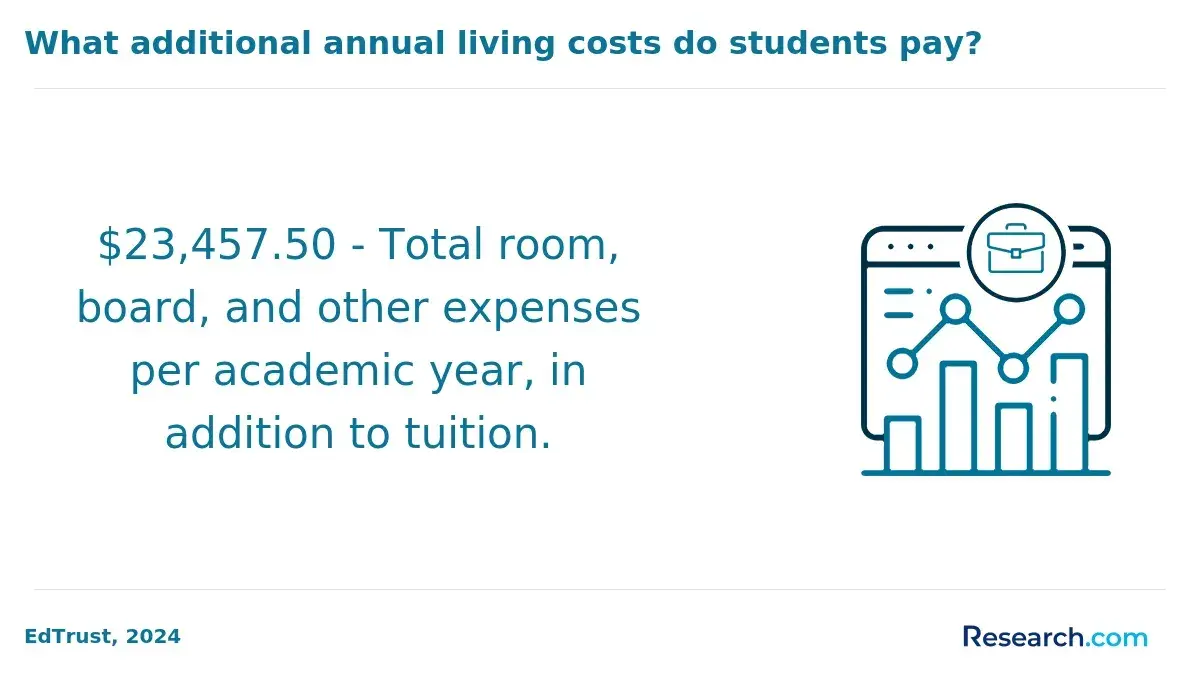
Sticker price is not the same as net price. Grants, scholarships, tuition discounts, state aid, employer benefits, and transfer credits can reduce what you actually pay, while housing, transportation, books, technology, and extra semesters can increase total cost.
The table below breaks down cost factors that students often overlook when comparing humanities programs.
| Cost factor | Why it matters | How to compare schools |
| Net price after grants | The advertised tuition may differ greatly from your actual cost | Use each school's net price calculator and compare financial aid offers line by line |
| Transfer-credit acceptance | Lost credits can add semesters and increase borrowing | Request a written transfer evaluation before committing |
| Course availability | Required courses offered infrequently can delay graduation | Ask for a two-year course rotation for upper-level humanities courses |
| Living and commuting costs | Housing can exceed tuition at some schools | Compare total cost of attendance, not tuition alone |
| Internship access | Unpaid or low-paid internships may create hidden costs | Ask whether the school offers paid internships, stipends, or local employer partnerships |
| Time to degree | One extra term can raise cost and delay full-time work | Ask about average credits completed at graduation and four-year completion support |
To reduce costs, prioritize accredited public options, generous transfer policies, scholarship renewal rules you can realistically meet, and programs with clear degree maps. Avoid choosing the cheapest option if poor advising or limited course availability makes graduating on time unlikely.
What is the job outlook and salary potential for humanities graduates in the U.S.?
The job outlook for humanities graduates is mixed because the major feeds into many occupations rather than one labor category. Some paths tied to communication, technical documentation, market research, law, and public relations show steady demand, while traditional editing or print publishing paths can be more competitive.
BLS projections show how different humanities-adjacent occupations may grow or contract. Use these figures as occupational context, not as a promise of employment after graduation.
| Occupation | BLS projected employment change through 2033 | Interpretation for humanities students |
| Technical writers | 4% | Useful path for students who pair writing skill with technical, scientific, medical, or software knowledge |
| Writers and authors | 5% | Opportunities exist, but competition is common and portfolio quality matters |
| Editors | -2% | Traditional editing roles may be limited, so digital content and specialized subject knowledge can help |
| Public relations specialists | 6% | Good fit for students who combine writing, media awareness, and campaign experience |
| Market research analysts | 8% | Stronger fit when humanities students add data analysis, survey methods, or consumer research skills |
| Archivists, curators, and museum workers | 4% | Mission-driven path, often strengthened by internships, museum studies, or graduate training |
Salary potential depends on how close your job is to high-demand business, technology, legal, healthcare, or data functions. A humanities graduate in technical documentation or market research may face a different salary range than one entering museum education or nonprofit programming. Geography also matters: major metro areas may offer more communications and media roles, while government, education, and cultural roles vary by region and funding cycle.
To improve employment outcomes, students should build career evidence before graduation. The following actions are more useful than simply listing the major on a resume.
- Complete at least one internship, practicum, research assistantship, or substantial community project.
- Create a portfolio with writing samples, research summaries, presentations, digital projects, or publications.
- Add one marketable technical skill, such as content management systems, accessibility basics, data visualization, SEO, grant writing, or documentation tools.
- Use electives strategically by pairing humanities with a minor in business, computer science, data analytics, education, public policy, or communication.
- Translate coursework into employer language, such as "researched policy sources," "edited public-facing materials," or "analyzed audience needs."
How do I choose an accredited, reputable humanities program and avoid low-quality schools?
Accreditation is the first quality check for a humanities program. In the U.S., students should look for institutional accreditation from an agency recognized by the U.S. Department of Education or the Council for Higher Education Accreditation. Humanities majors usually do not have the same specialized accreditation requirements as fields like nursing, engineering, counseling, or teacher preparation, but institutional accreditation still affects transfer credit, financial aid eligibility, graduate admission, and employer trust.
Reputation should be evaluated through evidence, not branding alone. A famous school is not automatically the best value, and a less famous regional public university may provide excellent instruction, lower net cost, and strong transfer pathways.
The table below highlights red flags that can signal a low-quality or poor-fit program.
| Red flag | Why it matters | Better evidence to request |
| Unclear accreditation status | Credits may not transfer and financial aid eligibility may be limited | Accreditor name, recognition status, and current accreditation standing |
| Vague curriculum | A weak program may lack depth, upper-level coursework, or coherent learning outcomes | Degree map, course descriptions, syllabi, and capstone requirements |
| No writing or research portfolio expectations | Graduates may leave without strong evidence of skills | Sample assignments, capstone examples, internship requirements, and portfolio options |
| Poor transfer transparency | Students can lose credits and pay for repeated coursework | Written transfer evaluation before enrollment |
| Aggressive admissions pressure | High-pressure sales tactics can indicate weak student-centered advising | Time to review aid offers, policies, outcomes, and graduation requirements |
| No career support for humanities students | Broad majors need help translating skills into career pathways | Career advising, alumni examples, internship partners, and resume support |
Use the following process before committing to a program. It helps you compare quality, cost, and fit consistently.
- Verify institutional accreditation directly through recognized accreditor or federal databases.
- Compare total cost of attendance after aid, not only tuition.
- Ask for a four-year or transfer degree plan showing when required courses are offered.
- Review faculty profiles for relevant academic training, publications, professional experience, or public humanities work.
- Ask how the program supports internships, undergraduate research, study abroad, service learning, or digital projects.
- Check graduate school placement, alumni examples, and career services for humanities students, while remembering that outcomes vary by student effort and local market.
- Read student policies on withdrawal, credit transfer, academic probation, financial aid renewal, and online course participation.
How can a humanities major prepare you for graduate school, law school, or other pathways?
A humanities major can be strong preparation for graduate school, law school, teaching pathways, library and information science, public policy, museum studies, communications, theology, and doctoral study. The reason is simple: advanced academic and professional programs require sustained reading, careful argumentation, research judgment, and clear writing.
Law school is a common pathway because humanities coursework builds close reading, logic, historical reasoning, and persuasive writing. However, law school admission depends on GPA, LSAT or other accepted test policies, application materials, recommendations, and school-specific criteria. The major can help you prepare, but it does not replace the need to research law school costs, bar passage outcomes, employment reports, and state licensing requirements.
Students considering research or teaching careers should understand that academic pathways can be long and competitive. If you are exploring flexible graduate formats later, compare reputable online doctoral programs with traditional options by accreditation, faculty mentorship, dissertation support, funding, and career relevance.
The table below summarizes common post-bachelor's pathways for humanities majors.
| Pathway | Typical next credential | Best preparation during the bachelor's degree |
| Law | JD | Logic, philosophy, history, political thought, intensive writing, internships, strong GPA, test preparation |
| Graduate humanities study | MA or PhD | Research languages when needed, faculty mentorship, thesis or capstone, conference or publication experience |
| Library and archives | MLIS or related master's | Archives coursework, digital humanities, library work, metadata exposure, preservation projects |
| Museum or public history | MA in museum studies, public history, or history | Museum internships, exhibit projects, public writing, collections experience |
| Teaching | Teacher preparation, MAT, or state-approved licensure route | Education prerequisites, subject-area coursework, classroom experience, state licensure research |
| Public policy or nonprofit leadership | MPP, MPA, or related master's | Policy writing, statistics basics, economics or political science electives, service learning |
To prepare early, build relationships with faculty, keep your best papers, seek feedback on research methods, and choose a capstone that aligns with your next step. If graduate school is uncertain, work for a year or two in a relevant role before applying; real-world experience can clarify whether another degree is worth the cost.
Other Things You Should Know About
Humanities can be a good major if you enjoy reading, writing, research, culture, history, ethics, or language and are willing to connect the degree to practical experience. It is strongest when paired with internships, a portfolio, digital skills, or a clear graduate-school plan.
Humanities is a branch of the liberal arts focused on culture, texts, language, philosophy, history, religion, and meaning. Liberal arts is broader and may also include social sciences, natural sciences, mathematics, and interdisciplinary studies.
Yes. Many accredited colleges offer online humanities or liberal studies degrees. Quality depends on accreditation, faculty interaction, writing feedback, library access, advising, course availability, and career support, not simply whether the format is online.
Useful minors depend on your goal. Common pairings include communication, business, data analytics, computer science, education, public policy, marketing, a foreign language, or professional writing. Choose a minor that gives your broad humanities training a clearer career direction.
References
- Bachelor’s Admission https://en.ehuniversity.lt/admissions/bachelors-admission/
- Accreditation Guide - Quality Online Schools | Sora Schools https://soraschools.com/blog/accreditation-a-parents-guide-to-quality-online-schools
- How Long Does it Take to Get a Master’s Degree in Humanities? | Tiffin University https://go.tiffin.edu/blog/how-long-does-it-take-to-get-a-masters-degree-in-humanities/
- Applying to Arts & Humanities programs in Europe - StudyinEurope.eu https://www.studyineurope.eu/art-humanities/arts-humanities-admission/
- Why ‘worthless’ humanities degrees may set you up for life https://www.bbc.com/worklife/article/20190401-why-worthless-humanities-degrees-may-set-you-up-for-life
- A Guide to Choosing the Right International School https://www.qahe.org/article/a-guide-to-choosing-the-right-international-school/
- A Guide for the Best Accredited Online High School | Dwight Global https://www.dwight.edu/dwight-global-online-school/about/online-learning-blog/online-learning-blogbest-accredited-online-high-school
- What Are Humanities Classes? | StraighterLine https://www.straighterline.com/blog/what-are-humanities-classes
- Humanities Degree: Careers, Jobs, and What You Can Really Do with It - CIS University https://www.cis-spain.com/en/blog/humanities-degree-careers-jobs-and-what-you-can-really-do-with-it/
- Employment https://humanitiesworks.org/employment/