2027 International Business Major: Complete Student Guide

Co-Founder and Chief Data Scientist
Choosing an international business major means deciding whether global trade, finance, marketing, logistics, and cross-cultural management fit your career goals. The decision matters because U. S. goods and services trade exceeded $7 trillion in 2024, according to federal trade data, creating demand for professionals who understand markets beyond one country. This guide is for students comparing business majors, online programs, costs, and career outcomes. You will learn what the degree covers, what it can cost, which jobs it may support, and how to choose a reputable program.
Key Things You Should Know
- An international business major is usually best for students who want business careers connected to trade, supply chains, global marketing, finance, consulting, or multinational operations rather than a narrowly domestic business path.
- Cost varies widely: College Board data for 2024-2025 lists average published tuition and fees at $11,610 for in-state public four-year colleges, $30,780 for out-of-state public colleges, and $43,350 for private nonprofit four-year colleges.
- Career outcomes depend on role and experience; BLS data shows the median annual wage for business and financial occupations was about $80,920 in May 2024, but entry-level salaries are often lower and vary by industry, location, and internship experience.
What is an international business major and what do students learn in this degree?
An international business major is a business degree focused on how companies operate across national borders. Students study core business areas such as accounting, economics, finance, marketing, management, and operations, then apply those subjects to global markets, exchange rates, international regulations, trade policy, cultural differences, and multinational strategy.
The degree is not the same as simply studying business with a travel component. A strong program teaches students how companies source products, enter foreign markets, manage global teams, reduce supply chain risk, adapt marketing messages across cultures, and analyze international financial decisions. Many programs also encourage or require foreign language study, study abroad, international internships, or projects with global companies.
Students usually build both technical and interpersonal skills. The technical side may include data analysis, market research, financial modeling, contract basics, logistics, and economic analysis. The interpersonal side includes negotiation, cross-cultural communication, ethical decision-making, and leadership across time zones and legal systems.
The table below shows how the major differs from related business paths. This comparison helps you decide whether international business is the right focus or whether a more specialized major would better match your target job.
| Major | Main focus | Best fit | Possible limitation |
| International business | Business strategy across countries, cultures, regulations, and markets | Students interested in global companies, trade, consulting, logistics, or market expansion | May need a specialization, internship, or language skill to stand out |
| Finance | Investments, corporate finance, financial analysis, and risk | Students targeting analyst, banking, investment, or corporate finance roles | Less emphasis on culture, trade, and international operations unless electives are chosen |
| Marketing | Consumer behavior, branding, digital campaigns, and market research | Students interested in brand management, advertising, analytics, or sales strategy | Global content may be limited unless the program offers international marketing courses |
| Supply chain management | Procurement, logistics, inventory, transportation, and operations | Students who want roles in logistics, sourcing, or operations | Less broad preparation for finance, marketing, or consulting roles |
Is an international business degree worth it for today's global job market?
An international business degree can be worth it if you use it as a platform for a specific career direction. The strongest outcomes usually come when students pair the major with internships, data skills, a second language, study abroad, sales experience, supply chain exposure, or a concentration such as finance or marketing. Employers rarely hire someone just because the word "international" appears on a diploma; they look for evidence that the graduate can solve business problems across markets.
The degree is most valuable for students who want flexibility across business functions and are willing to build practical experience early. It can also be a good choice for students comparing top degrees in demand for the future, because global operations, analytics, trade compliance, and supply chain resilience remain important to many U.S. employers.
It may not be the best choice for every student. If you already know you want to become a CPA, software engineer, actuary, or licensed financial planner, a more specialized major may create a clearer path. If you are interested in international affairs but not business, majors such as political science, economics, public policy, or international relations may fit better.
Use the degree as an investment decision, not just an academic interest. Before enrolling, compare the program's internship access, employer partnerships, alumni roles, language options, study abroad affordability, and graduate outcomes. A lower-cost program with strong internships can be a better value than a higher-priced program with limited career support.
What types of international business degrees can you earn (associate, bachelor's, master's)?
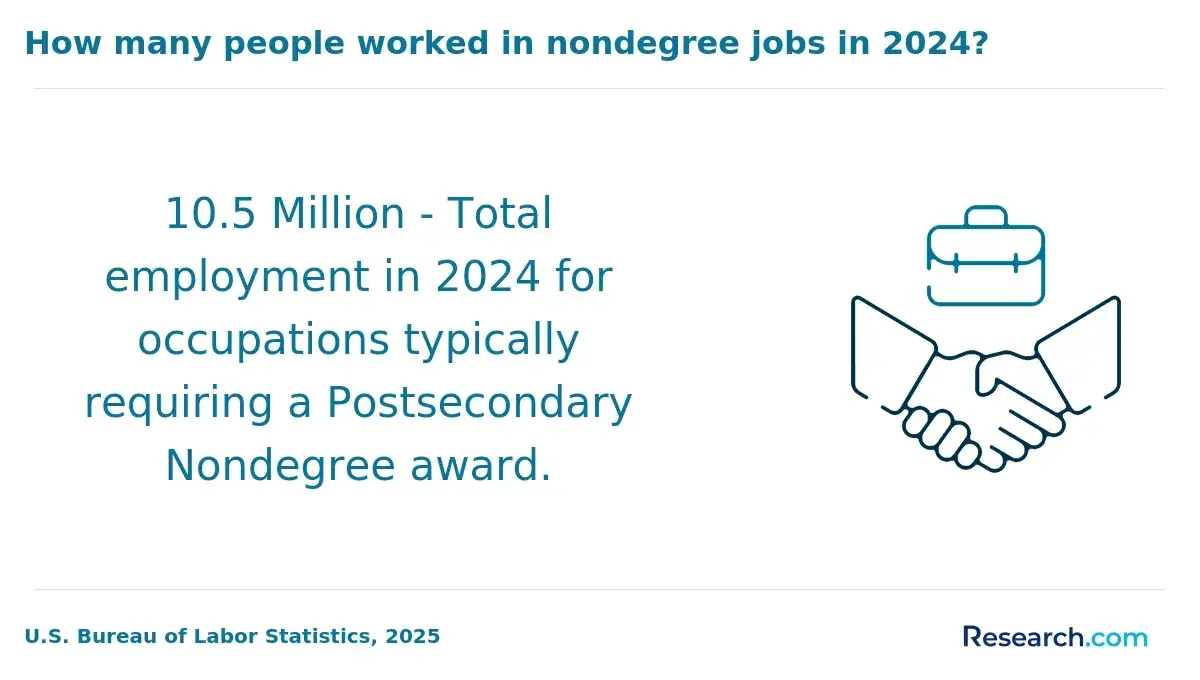
Students can study international business at several levels, from two-year associate degrees to graduate programs. The right level depends on your current education, budget, timeline, and career target.
The table below summarizes common degree options. It is designed to help you match each credential to realistic entry points and advancement goals.
| Degree type | Typical length | What students study | Best for |
| Associate degree | About 2 years full time | Introductory business, economics, accounting, communication, and general education | Students planning to transfer or qualify for entry-level administrative, sales, or operations roles |
| Bachelor's degree | About 4 years full time | Core business courses plus international trade, global strategy, finance, marketing, and management | Most students seeking entry-level professional business roles |
| Master's degree | About 1 to 2 years full time | Advanced global strategy, analytics, international finance, leadership, and market expansion | Professionals seeking advancement, a career pivot, or global management preparation |
| MBA with international business concentration | About 1 to 3 years depending on format | Broad graduate business training with global electives or consulting projects | Working professionals who want management mobility rather than a narrowly academic international business degree |
| Graduate certificate | Often under 1 year | Focused topics such as global supply chain, trade compliance, or international marketing | Professionals who already have a degree and need a targeted credential |
A bachelor's degree is the standard starting point for many professional roles, but it is not the only route. Transfer students may begin with an associate degree to reduce cost, while working adults may prefer graduate certificates or accelerated programs for career changers if they already have credits or professional experience.
How do online international business programs compare with on-campus options?
Online and on-campus international business programs can both be legitimate if they are accredited and academically rigorous. The better choice depends on how you learn, whether you need schedule flexibility, and how important campus recruiting, study abroad, and in-person networking are for your goals.
The table below compares the main trade-offs. Use it to identify which format aligns with your work schedule, learning style, and career-development needs.
| Factor | Online program | On-campus program |
| Flexibility | Often stronger for working adults, parents, military students, and students outside commuting range | Usually better for students who can attend scheduled classes and campus activities |
| Networking | Can be strong if the program includes live sessions, cohort projects, alumni access, and virtual recruiting | Often easier through student clubs, career fairs, faculty office hours, and local employer events |
| Global experiences | May offer virtual consulting projects, short residencies, or optional travel | May offer more built-in study abroad, exchange programs, and in-person international events |
| Cost structure | May reduce housing and commuting costs, though tuition varies by school | May include higher living costs but can provide richer campus resources |
| Best fit | Self-directed students who need flexibility and can actively seek internships and networking | Students who want a traditional college experience and structured career engagement |
Online programs are strongest when they include real interaction, not just recorded lectures. Look for live case discussions, group projects, faculty feedback, internship support, and access to the same career services as campus students. Working adults may also compare accelerated online degrees if they want to finish faster, but speed should not come at the expense of accreditation, transfer policies, or employer recognition.
What courses and specializations are typically offered in an international business major?
Most international business majors combine a business core with globally focused electives. This structure matters because the major should leave you with both broad business literacy and a practical specialty that employers can understand.
Common courses often include the following areas. These subjects help students connect domestic business fundamentals to global decision-making.
- Financial accounting, managerial accounting, microeconomics, macroeconomics, business statistics, and business law.
- International trade, global business strategy, international marketing, international finance, and global supply chain management.
- Cross-cultural management, business ethics, negotiation, foreign language, regional business studies, and emerging markets.
- Business analytics, market research, project management, entrepreneurship, and digital commerce in global contexts.
Specializations are important because international business is broad. A student who wants supply chain roles should not build the same course plan as a student aiming for global marketing or finance.
| Specialization | What it emphasizes | Career direction it may support |
| International finance | Exchange rates, risk, capital markets, corporate finance, and financial analysis | Financial analyst, treasury analyst, global finance associate |
| Global marketing | Consumer behavior, brand localization, market research, and digital campaigns | Marketing analyst, international sales coordinator, brand associate |
| Supply chain and logistics | Procurement, transportation, inventory, sourcing, and risk management | Logistics analyst, procurement specialist, supply chain coordinator |
| Trade compliance | Import-export rules, documentation, sanctions awareness, and regulatory processes | Trade compliance analyst, import-export coordinator |
| Global management | Leadership, organizational behavior, strategy, and multinational operations | Management trainee, operations associate, consulting analyst |
A useful course plan should show a clear story. For example, "international business plus analytics plus Spanish plus a logistics internship" is easier for employers to evaluate than a random mix of global electives.
What are the admission requirements and prerequisites for an international business program?
Admission requirements vary by school and degree level, but most international business programs look for evidence that you can handle quantitative business courses, communicate well, and complete general education requirements. Selective programs may also review leadership experience, extracurriculars, work history, essays, and recommendations.
For undergraduate admission, schools commonly ask for these materials. Checking them early helps you avoid application delays and missed scholarship deadlines.
- High school transcript or GED documentation, with attention to math, English, social science, and foreign language preparation.
- College transcripts if you are a transfer applicant, including syllabi or course descriptions when transfer credit is being evaluated.
- Standardized test scores only if the school requires or recommends them, since many colleges now use test-optional policies.
- Application essay, resume, recommendation letters, and proof of English proficiency for applicants whose prior education was not in English.
Graduate programs usually evaluate a different set of factors. They may require a bachelor's degree, resume, statement of purpose, recommendation letters, quantitative readiness, and sometimes professional work experience. Some MBA programs waive GMAT or GRE scores for applicants with strong academic or professional records.
Prerequisites can affect your timeline. If you have not taken accounting, economics, statistics, or business calculus, you may need foundation courses before advanced business classes. Transfer students should ask whether prior credits apply to the major, not just to general electives.
Common mistakes include assuming admission to the university automatically means admission to the business school, ignoring GPA requirements for upper-division business courses, and waiting too long to apply for internships. The safer approach is to ask the admissions office and business department for the exact progression requirements before you enroll.
How long does it take to complete an international business degree and what does it cost?
A traditional bachelor's degree usually takes about four years of full-time study, while an associate degree often takes about two years and a master's degree often takes one to two years. Part-time study can extend the timeline, while summer courses, transfer credits, credit for prior learning, and accelerated formats may shorten it.
Cost depends on tuition, fees, books, housing, transportation, technology, travel, and lost work time. College Board data for 2024-2025 shows a large tuition spread by institution type, which means school selection can change the financial return of the degree.
| Institution type | Average published tuition and fees for 2024-2025 | How to interpret the figure |
| Public two-year college | $4,050 | Often a lower-cost starting point for students planning to transfer |
| Public four-year in-state | $11,610 | Often one of the most cost-effective bachelor's options for state residents |
| Public four-year out-of-state | $30,780 | Can be expensive unless scholarships, reciprocity, or a strong program advantage offsets the cost |
| Private nonprofit four-year | $43,350 | Sticker price can be high, but institutional aid may reduce the net price substantially |
Do not compare programs by tuition alone. Net price after grants and scholarships, transfer credit acceptance, internship access, graduation rate, and time to completion can matter more than the advertised rate.
To control costs, take a practical sequence before committing. These steps can help you estimate the real price of the degree.
- Request the school's estimated total cost of attendance, not just tuition.
- Use the net price calculator and compare grant aid, scholarships, and required fees.
- Ask how many of your transfer credits apply directly to the major.
- Check whether study abroad, international travel, or residency requirements are optional or required.
- Compare the cost of bachelor's-to-master's pathways if you may continue to graduate school.
If graduate study is part of your plan, compare public, private, and online options carefully. Students focused on cost can also review options for a cheapest online master's degree, but affordability should still be balanced with accreditation, employer relevance, and academic support.
How do you choose an accredited, reputable international business program in the U.S.?
Accreditation is one of the first things to verify because it affects transfer credit, financial aid eligibility, graduate school options, and employer confidence. In the U.S., start by confirming that the institution is accredited by an agency recognized by the U.S. Department of Education or the Council for Higher Education Accreditation.
Business program accreditation can add another layer of quality review. Common business accreditors include AACSB, ACBSP, and IACBE. AACSB is often associated with research-intensive business schools, while ACBSP and IACBE also accredit many teaching-focused business programs. Programmatic accreditation is not always mandatory for employment, but it can signal that the business curriculum has been externally reviewed.
Use the following checklist before applying. It focuses on practical evidence that a program can support your goals, not just marketing claims.
- Verify institutional accreditation through official accreditation databases, not only the school's website.
- Check whether the business school or business programs hold AACSB, ACBSP, IACBE, or another recognized business accreditation.
- Review the curriculum for international finance, global marketing, trade, logistics, analytics, and cross-cultural management.
- Ask for internship support, employer connections, career placement resources, and examples of recent graduate roles.
- Confirm whether online students receive the same advising, library, tutoring, and career services as campus students.
- Compare graduation rates, retention rates, net price, transfer policies, and student support services.
Red flags include vague accreditation language, pressure to enroll immediately, unclear tuition and fee information, few details about faculty qualifications, poor transfer credit transparency, and career claims that sound guaranteed. A reputable school should be willing to explain costs, outcomes, policies, and academic expectations in writing.
What careers can you pursue with an international business degree?
An international business degree can lead to several business career paths, but the job title you qualify for depends heavily on your specialization, internships, software skills, language ability, and prior experience. Entry-level roles often begin in analysis, coordination, sales, operations, or support functions before moving into management.
The table below connects common roles with typical responsibilities. This helps you see which jobs match the skills you want to build during the degree.
| Career path | Typical responsibilities | Helpful preparation |
| International marketing analyst | Research markets, analyze customer data, support campaigns, and adapt messaging for different regions | Marketing analytics, statistics, consumer behavior, digital marketing, language study |
| Global supply chain or logistics analyst | Track shipments, analyze vendor performance, support sourcing decisions, and reduce operational disruptions | Supply chain courses, Excel, ERP systems, analytics, internship in operations |
| Import-export coordinator | Prepare documentation, coordinate shipments, communicate with vendors, and support compliance processes | Trade compliance, logistics, attention to detail, communication skills |
| Financial analyst with international exposure | Analyze budgets, forecasts, currency impacts, and performance across business units or regions | Finance, accounting, modeling, data visualization, strong quantitative skills |
| International sales representative | Build client relationships, support market expansion, negotiate terms, and coordinate with internal teams | Sales experience, negotiation, cultural knowledge, CRM software, language skills |
| Management or strategy analyst | Evaluate business problems, research competitors, improve processes, and support expansion decisions | Consulting projects, analytics, economics, presentation skills, internships |
Students seeking higher-earning business paths should compare role requirements early, because some jobs require more quantitative preparation than others. For broader salary comparisons across undergraduate programs, reviewing highest paying majors can help you understand how international business compares with fields such as engineering, computer science, finance, and economics.
To improve employability, build a portfolio of evidence before graduation. Useful examples include market entry reports, data dashboards, supply chain analyses, case competition projects, internship deliverables, and foreign-language business presentations.
What salary ranges and job outlook can international business majors expect?
Salary expectations for international business majors should be tied to specific occupations, not the major name alone. The degree can lead to many roles, and pay varies by industry, metro area, employer size, experience, and technical skill level.
The table below uses BLS May 2024 median wage data for U.S. occupations that international business graduates may pursue with the right preparation. These figures are not starting salary guarantees; they are occupational medians across workers with varying experience levels.
| Occupation | Median annual wage, May 2024 | Why it may fit international business majors |
| Market research analysts | $76,950 | Applies research and data analysis to customer behavior, market entry, and campaign decisions |
| Logisticians | $80,880 | Connects directly to global supply chains, transportation, sourcing, and operations |
| Management analysts | $101,190 | Supports consulting, process improvement, and strategy work for organizations operating across markets |
| Financial analysts | $101,910 | Fits students who add strong finance, accounting, and modeling skills to the international business major |
| Sales managers | $138,060 | May be a longer-term path for graduates who build sales, leadership, and industry experience |
Job outlook also differs by occupation. BLS projections released for the 2024-2034 period show especially strong growth for logisticians compared with the average for all occupations, reflecting continued employer attention to supply chains. For students, that means supply chain and analytics coursework can make an international business degree more marketable.
AI and automation are changing the skill mix rather than eliminating the need for business judgment. Routine reporting, translation support, and basic market scanning are increasingly automated, so students should focus on skills that tools cannot fully replace: interpreting data, managing relationships, understanding context, evaluating risk, and communicating recommendations clearly.
The most realistic salary strategy is to choose a target role by sophomore or junior year, then align electives and internships with it. A student aiming for financial analysis should prioritize accounting, corporate finance, Excel, SQL, and modeling. A student aiming for logistics should prioritize supply chain systems, operations analytics, procurement, and project management.
Other Things You Should Know About
It can be challenging because it combines business fundamentals with global economics, culture, law, finance, and strategy. Students who are comfortable with writing, presentations, data analysis, and applied problem-solving usually adapt well.
Not always, but language skills can strengthen your profile, especially for roles involving regional markets, sales, supplier relationships, or overseas assignments. Even when not required, language study shows cultural commitment and can support internships or study abroad.
Possibly, but overseas employment depends on work authorization, language skills, employer sponsorship, experience, and local labor rules. Many graduates first work for U.S.-based companies with international clients, suppliers, or offices before seeking roles abroad.
It is better if your goals involve global markets, trade, supply chains, multinational firms, or cross-cultural management. A general business degree may be better if you want maximum flexibility and are not sure whether international work is part of your career plan.
References
- International Business Course Details - Fees, Subjects, Syllabus, Duration, Eligibility, Career Scope https://www.careers360.com/courses/international-business-course
- International Business Courses: Requirements & Career Prospects - AECC https://www.aeccglobal.my/popular-courses/international-business/
- Study International Business in the USA | Study in the USA https://www.studyusa.com/en/field-of-study/526/international-business
- International Business Salaries (Roles & Salary Ranges) https://www.allbusinessschools.com/international-business/salary/
- What to do after a Bachelor's degree in International Business https://www.ipag.edu/en/blog/what-do-after-bachelors-degree-international-business
- International Business Careers You Can Pursue with a Bachelor’s | Tiffin University https://www.tiffin.edu/news/international-business-careers-you-can-pursue-with-a-bachelors/
- What Can You Do with an International Business Degree? - University of the Potomac https://potomac.edu/jobs-for-international-business-majors/
- Business: International Business https://www.monroecc.edu/academics/majors-programs/hospitality/international-business-associate-degree/
- Bachelor, International Business https://www.studyinpoland.pl/en/programme