2027 Social Work Roles When Clients Decline Recommended Services
Audited and Verified:
Our Editorial and Data Verification Process
Research.com uses government datasets, official education statistics and primary institutional information to support its career and degree guides. Our review process checks factual accuracy, occupational definitions, source dates and the requirements associated with the credentials discussed.
How This Article Was Fact-Checked
Our editorial team verifies salary estimates, employment projections, education requirements and program information against original data providers and official organizations. Salary figures are checked against the relevant occupational definitions and reporting periods. Information about licensure, accreditation and required in-person training is reviewed separately.
Fact-checked and verified on:

Co-Founder and Chief Data Scientist
A client's decision to decline a recommended service does not end a social worker's responsibilities - but it does change what responsible practice looks like. Social workers must respect informed choices while assessing immediate risks, explaining any legal obligations, and keeping a path open for future help.
For students, new practitioners, and social-services staff, the challenge is knowing where support ends and coercion begins. This guide explains how to respond, when to consult a supervisor, what to document, and which roles and training prepare workers for these decisions.
Key Things You Should Know
- Start by clarifying what the client is declining, whether the choice is informed and voluntary, and whether an immediate safety or legal obligation changes your response.
- A refusal of one service is not necessarily a refusal of all help: explore barriers, offer feasible alternatives, document the discussion, and leave an appropriate route back to care.
- Authority depends on the setting and role. Court orders, reporting laws, consent rules, agency policy, and professional scope must be checked rather than assumed.
What should social workers do when clients decline recommended services?
Respect the decision, clarify its scope, assess relevant risk, and plan the next contact. A client may decline a particular referral because it is unaffordable, inaccessible, culturally unsuitable, or simply not what they want. Treating that answer as noncompliance can obscure the problem the worker is supposed to help solve.
A practical response follows this sequence. Adapt it to the client's circumstances, your authority, and agency procedures.
- Confirm which service the client is declining and whether they understand its purpose, likely benefits, limitations, and available alternatives.
- Ask about concerns without arguing, and check whether language access, disability accommodations, transportation, cost, past harm, or scheduling affect the choice.
- Assess immediate safety concerns within your role; seek supervision or activate the applicable agency process when a concern requires it.
- Agree on any acceptable next step, such as a different referral, a later check-in, or information the client can use independently.
- Record the discussion and any required consultation, referral, or follow-up.
Students should practice this sequence under field instruction rather than treating a classroom exercise as authorization to manage a high-risk encounter alone. When comparing online programs, ask about online MSW placement responsibilities before enrollment, including how field instructors support difficult consent and referral decisions.
Can clients refuse social work services?
Generally, a person who can make the relevant decision may decline a voluntary social work service. Refusing a housing referral, counseling appointment, or benefits application does not automatically show that the person lacks decision-making capacity. Nor does agreement to meet with a social worker mean agreement to every recommendation.
The worker should distinguish three questions: Is the service voluntary? Does the person have the ability and information needed for this particular decision? Is there a separate legal duty or order affecting what the worker must do? Capacity is decision-specific and may require assessment by an appropriately qualified professional under applicable rules; a social worker should not infer incapacity merely from a choice they consider unwise.
For prospective students, social work degree program format comparisons are less important to this skill than supervised opportunities to explain consent, hear a refusal, and respond within agency policy. Ask how a program teaches and evaluates those interactions.
How does client self-determination guide social workers' ethical responsibilities?
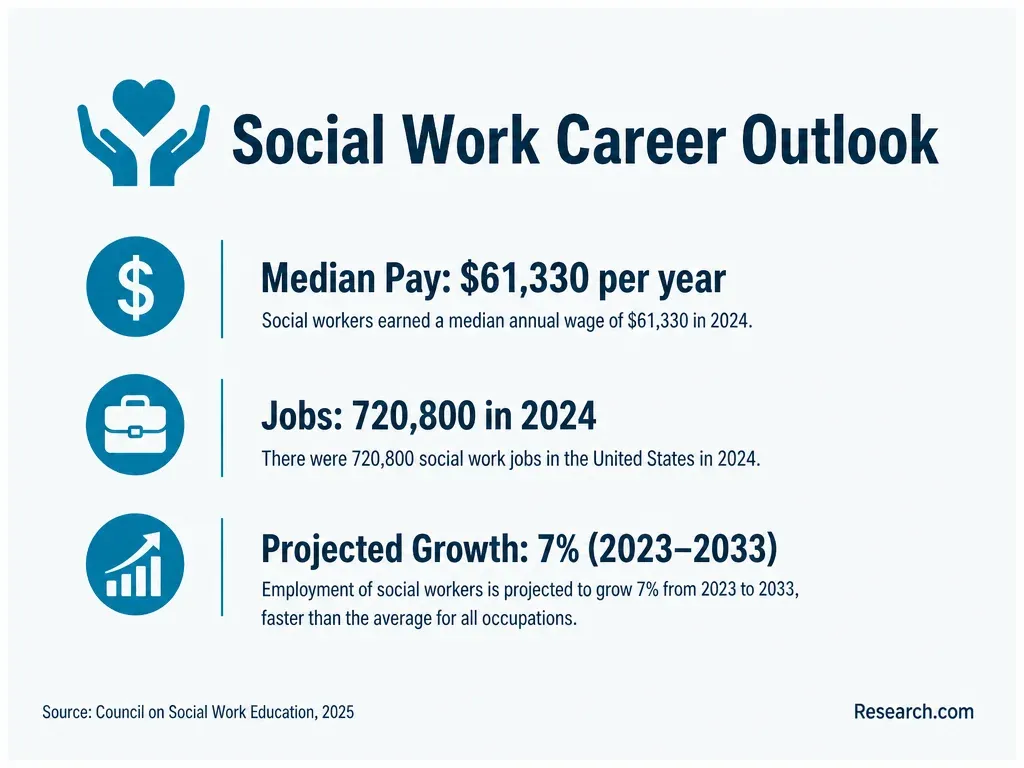
Self-determination means supporting clients' ability to set goals and make informed choices, not abandoning them when they disagree. The NASW Code of Ethics directs social workers to respect and promote self-determination, while recognizing limited circumstances in which a client's actions or potential actions pose a serious, foreseeable, and imminent risk to themselves or others.
The Code is professional ethical guidance; law, regulation, and agency duties may impose additional or different requirements.
Ethical practice also requires attention to power. A client may say "yes" to avoid losing benefits, displeasing a caseworker, or appearing uncooperative. Explain what is optional, what information may be shared, and what consequences - if any - come from declining. Do not promise confidentiality or freedom from consequences that your role cannot provide.
BSW students exploring online social work bachelor's education pathways should look for supervised field learning in informed consent and client engagement, not just ethics coursework. Observed practice and feedback help turn the principle into a usable skill.
A refusal does not erase a social worker's independent duties. Depending on the jurisdiction and setting, those duties may involve reporting suspected child or vulnerable-adult abuse, responding to a serious threat, following an applicable court order, or complying with rules governing emergency evaluation. The threshold, authorized response, and permitted disclosures differ; a general ethical concern is not itself permission to override consent.
When a safety concern arises, separate what you observed from what you infer. Consult a supervisor and the applicable law and agency protocol promptly, use the least intrusive authorized response, and disclose only information permitted or required for that purpose. In an immediate emergency, follow the setting's emergency procedure rather than waiting for a routine referral.
Licensure can affect who may perform an assessment or clinical intervention, but it does not replace knowledge of local reporting and consent rules. Students considering online social work master's programs and state board requirements should verify the rules for the jurisdiction where they intend to practice.
Explain the mandate accurately, preserve the choices the client still has, and report only what your authority requires. Court-mandated involvement does not mean a worker can compel every recommended intervention. The order, referral agreement, and agency role determine which activities are required and what information must go back to the court or referring authority.
At the outset, explain the worker's role, confidentiality limits, required participation, and how attendance or progress will be reported. If a client declines, distinguish declining an optional recommendation from declining an ordered activity. Ask what would make participation workable, document observable facts rather than labels such as "resistant," and consult before describing legal consequences. The court - not the social worker's speculation - determines those consequences.
For early-career workers comparing graduate routes, admission ease is a poor proxy for preparation for mandated practice. Even when reviewing understanding barriers to online MSW admission, ask whether placements and supervision offer experience with role clarity, confidentiality limits, and interagency communication.
Which social work roles address service refusals, and what do they pay?
Refusals arise across direct-service jobs, but the decision changes with the setting: a school social worker may coordinate with a family and school team; a healthcare social worker may address discharge-related service choices; and a mental health social worker may discuss treatment options within their authorized scope. Job titles do not establish licensure requirements - check the employer's duties and the state's protected-title and practice rules.
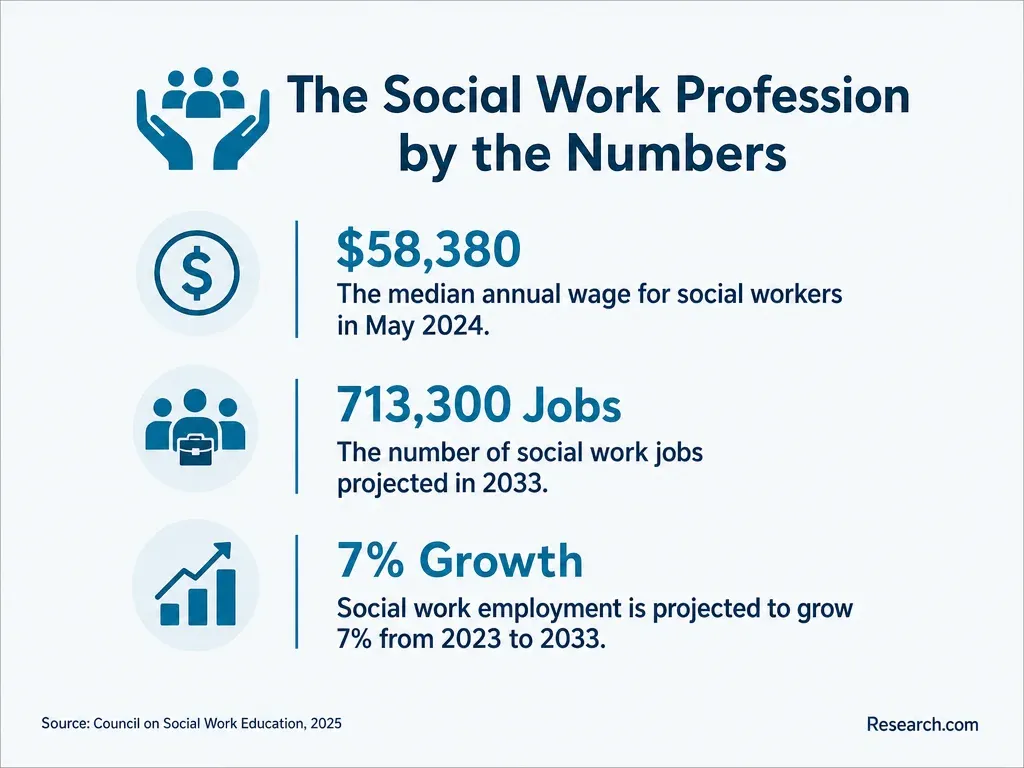
The table matches common settings to U.S. Bureau of Labor Statistics occupational categories. May 2025 medians describe entire occupations, not starting pay, a specific job offer, or a return on an MSW.
| Relevant BLS occupation | May 2025 median annual pay | Projected employment growth, 2025-2035 | Typical refusal-related context |
| Child, family, and school social workers | $59,550 | 4% | Family services, child welfare, and school referrals |
| Healthcare social workers | $67,880 | 8% | Care coordination and discharge-related referrals |
| Mental health and substance abuse social workers | $60,280 | 10% | Behavioral health service and treatment choices |
The best role is not necessarily the highest-paid category. Compare caseloads, on-call expectations, supervision, safety procedures, documentation time, and how much authority the position actually gives you. For a broader view of MSW education and career pathway connections, compare job postings against your current degree, license, and experience before enrolling in more education.
Other Things You Should Know About Social Work
Follow the client's preferences, the agreed follow-up plan, and agency rules. A reasonable invitation to reconnect is different from repeated unwanted contact; mandated cases may have separate contact requirements.
Not automatically. Check the client's consent, applicable confidentiality law, and any authorized exception before sharing information, even if family members are concerned.
Students may participate within their approved learning tasks and supervision. They should promptly involve their field instructor or designated agency supervisor when risk, reporting, or authority is unclear.
Not necessarily. A refusal may identify an access barrier or a mismatch with the client's goals. Evaluate whether the worker explained options, respected the decision, addressed applicable risks, and arranged appropriate follow-up.
- Section 2151.421 | Reporting child abuse or neglect. https://codes.ohio.gov/ohio-revised-code/section-2151.421
- Shared Decision Making and Motivational Interviewing - PMC https://pmc.ncbi.nlm.nih.gov/articles/PMC4018376/
- Refusal of Care - StatPearls - NCBI Bookshelf https://www.ncbi.nlm.nih.gov/books/NBK560886/
- Disability Barriers to Inclusion | cdc.gov https://www.cdc.gov/disability-inclusion/barriers/index.html
- G1.1 Ethical Practice | ky.gov https://manuals-sp-chfs.ky.gov/G1/Pages/1-1.aspx
- NASW Standards for Social Work Case Management | nycourts.gov https://www.nycourts.gov/reporter/webdocs/nasw_standards_socialwork_casemgt.htm
- Ethical Dilemmas in Social Work: Principles & Examples | UK College of Social Work https://socialworkonline.uky.edu/resources/article/ethical-dilemmas/
- How Does the Assessment of Capacity Impact Social Work With Vulnerable Older Adults? https://onlinemsw.fsu.edu/blog/how-does-assessment-capacity-impact-social-work-vulnerable-older-adults
- Understanding Motivational Interviewing https://motivationalinterviewing.org/understanding-motivational-interviewing
- When patients refuse treatment: Communication, shared decision making and documentation | PracticeLink https://www.practicelink.com/resource-center/physician-best-practice/when-patients-refuse-treatment-communication-shared-decision-making-and-documentation/