2027 Life Course Theory in Social Work: Transitions, Timing, and Social Context
Audited and Verified:
Our Editorial and Data Verification Process
Research.com uses government datasets, official education statistics and primary institutional information to support its career and degree guides. Our review process checks factual accuracy, occupational definitions, source dates and the requirements associated with the credentials discussed.
How This Article Was Fact-Checked
Our editorial team verifies salary estimates, employment projections, education requirements and program information against original data providers and official organizations. Salary figures are checked against the relevant occupational definitions and reporting periods. Information about licensure, accreditation and required in-person training is reviewed separately.
Fact-checked and verified on:

Co-Founder and Chief Data Scientist
A change in housing, caregiving, employment, or health can mean different things depending on when it happens and what came before it. Life course theory gives social workers a way to examine those connections without reducing a person to an age or diagnosis. For students and early-career practitioners, it is especially useful for assessment, service planning, and understanding structural barriers.
This guide explains the theory's principles, shows where it helps in practice, and clarifies what social work education and credentials do - and do not - add.
Key Things You Should Know
- Life course theory examines how transitions, their timing, relationships, and historical conditions shape opportunities over time; it is an assessment lens, not a treatment protocol.
- A useful life-course assessment asks about both an immediate event and the earlier resources or barriers that affect its impact, while leaving room for the person's own interpretation.
- In BSW and MSW education, the theory is learned through coursework and supervised application; neither knowledge of the theory nor degree completion alone grants a social work license.
What is life course theory in social work?
Life course theory is a framework for understanding how lives unfold within relationships, institutions, and historical periods. It looks at trajectories - longer patterns such as work, education, or family life - and transitions, such as leaving school, becoming a caregiver, or moving into supported housing. A turning point is a change that substantially redirects a trajectory; not every transition becomes one.
In social work, the framework adds a time dimension to person-in-environment assessment. Rather than asking only what support someone needs now, a practitioner considers when a change occurred, what opportunities were available then, and how earlier experiences may affect current choices. Those connections are hypotheses to explore with the person, not conclusions to impose.
Students may encounter this perspective in human behavior and social environment courses, aging studies, or field seminars. Someone comparing online bachelor of social work program options should look beyond a course title to how the program teaches students to use developmental and social-context concepts in supervised practice.
What are the key principles of life course theory?
Four connected principles make the framework useful for assessment. They help explain why the same event may have different consequences for different people.
- Timing: The meaning and consequences of an event depend partly on when it occurs in a person's life and in society. Losing work while caring for a child, for example, can create different constraints from losing work after retirement.
- Linked lives: People's opportunities and decisions are connected to family members, peers, caregivers, employers, and communities. Those ties can provide support or create obligations.
- Historical time and place: Policies, economic conditions, discrimination, migration, and access to services shape which options are realistically available.
- Agency: People make choices and adapt, but they do so within unequal resources and constraints. Agency should not be mistaken for unlimited control.
These principles work best together. A practitioner might explore whether an adult's return to school coincides with caregiving responsibilities, accessible transportation, and eligibility for financial support. In online social work study and professional preparation, a useful question is how students practice connecting those factors in case discussions, skills work, and field learning - not merely memorizing the terms.
How do social workers apply life course theory in practice?
Social workers can use a life-course perspective to make an assessment more precise, then check their interpretation with the person receiving services. Consider a hypothetical adult seeking housing assistance after leaving a caregiving role. The current housing need matters, but so might an interrupted work history, benefits eligibility, support from relatives, and the timing of a recent move. The theory helps organize questions; it does not establish eligibility or dictate an intervention.
A practical sequence keeps the assessment collaborative and within the worker's role:
- Ask what change prompted contact and which goals the person considers most urgent.
- Explore relevant earlier transitions and supports without assuming that every past event needs disclosure.
- Identify present barriers and resources at the individual, family, agency, and policy levels.
- Agree on feasible next steps, document only information needed for service, and revisit the plan as circumstances change.
This approach can inform case management, school and healthcare coordination, aging services, and community work. Duties and qualifications differ across those settings; understanding work opportunities associated with an MSW can help a student connect an interest in life-course assessment to an actual role. Confidentiality, reporting, and referral decisions still follow applicable law and agency policy, not the theory alone.
Programs may introduce the framework through human behavior courses, research readings, policy analysis, and discussions of development across adulthood and childhood. Students can then practice using timelines or hypothetical cases to distinguish a transition from a turning point, consider alternative explanations, and avoid age-based assumptions. Field education provides an opportunity to test whether those classroom interpretations help with engagement and assessment under supervision.
Good learning evidence is more than naming a principle in an assignment. A student should be able to explain why timing matters in a particular situation, identify missing information, ask permission before exploring sensitive history, and revise an interpretation after feedback. A simulated case shows reasoning; it does not establish competence with clients.
If choosing an MSW program, compare the curriculum and field opportunities before focusing on application convenience. Online MSW admission routes with fewer reference documents may reduce one application hurdle, but they do not substitute for checking how the program teaches assessment or supports field instruction.
What are the salary and job outlook for social workers?
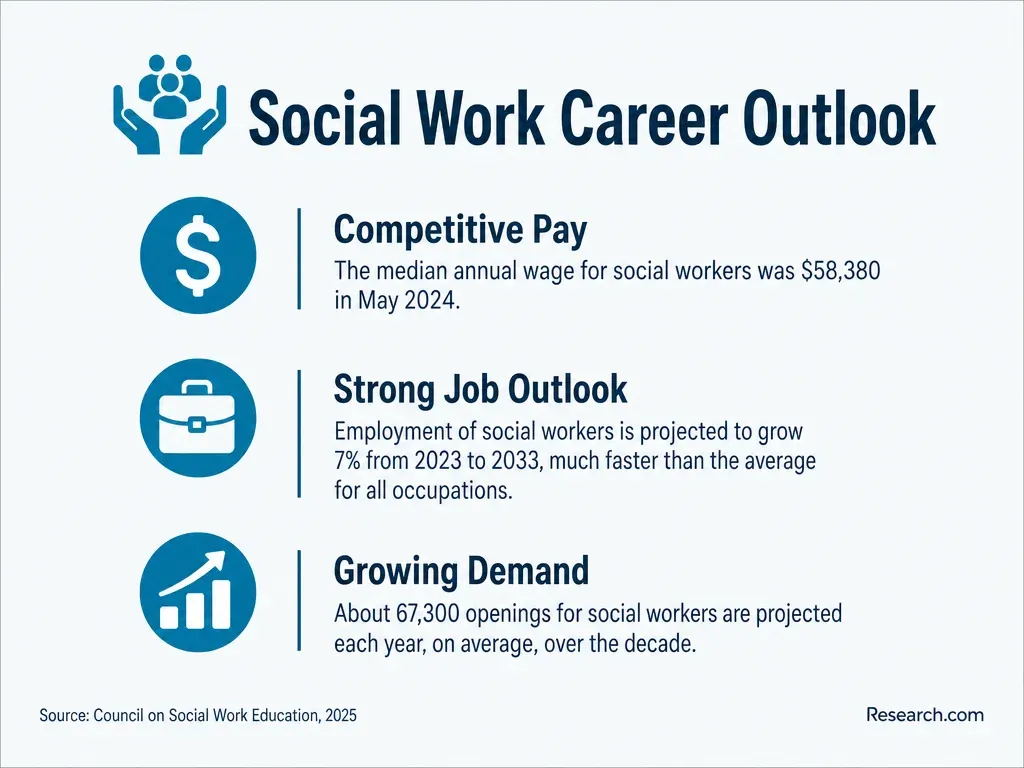
U.S. Bureau of Labor Statistics occupation data can give prospective students a labor-market reference, provided they match the occupation to the work they seek. The figures below are May 2025 median annual wages and projected U.S. employment changes for 2025-2035; they are not starting salaries or predicted earnings from a specific degree.
| BLS occupation | Median annual wage, May 2025 | Projected employment change, 2025-2035 |
| Social workers, all specialties | $61,780 | +6% |
| Child, family, and school social workers | $59,550 | +4% |
| Healthcare social workers | $67,880 | +8% |
| Mental health and substance abuse social workers | $60,280 | +10% |
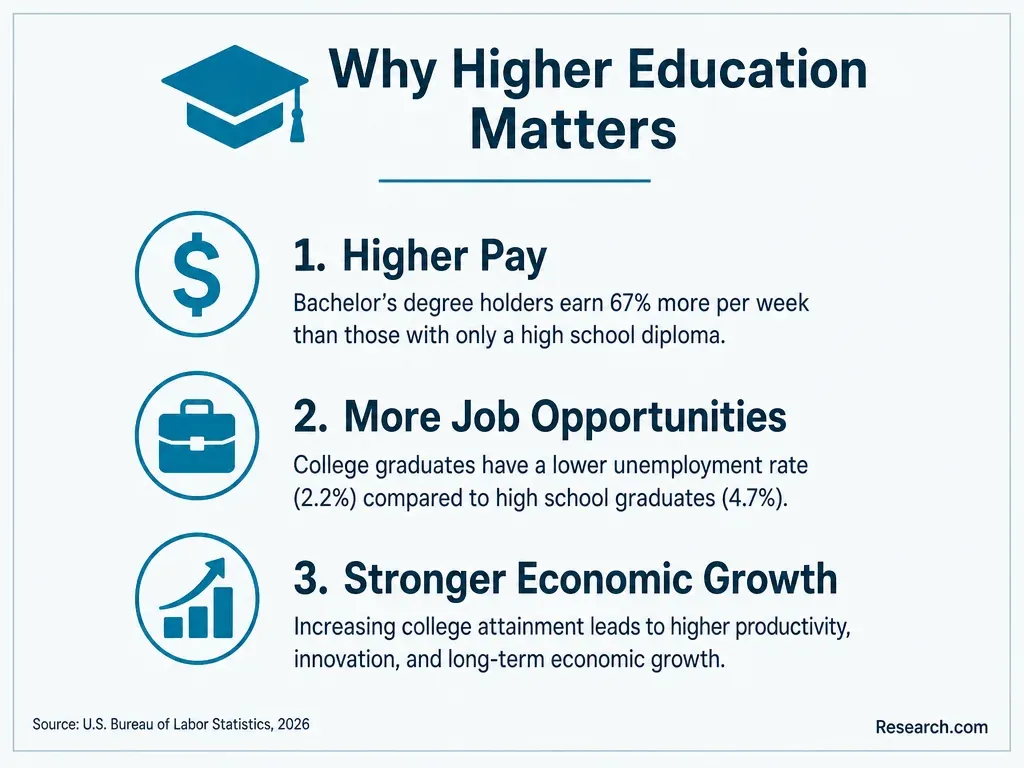
The specialty rows describe occupations, not license categories or guarantees for new graduates. Pay also varies with location, setting, experience, and duties; social work salary differences across states can help frame a geographic comparison. For an education decision, pair wage data with local job requirements, realistic field and licensing timelines, and the program's full cost.
Other Things You Should Know About Social Work
No. A timeline organizes events over time; a genogram maps family relationships and patterns. Either may support a conversation, but use only information relevant to the person's goals and your role.
No. Earlier experiences can matter, but later relationships, resources, policies, and choices can change a trajectory. Avoid treating someone's history as a prediction.
No. An account can identify meaningful experiences and guide questions, but a sequence of events alone does not establish causation. Check interpretations collaboratively and consider other explanations.
Use a fictional or properly de-identified example permitted by the program and agency. Explain the reasoning and feedback received without including client records, identifiable relatives, or unsupported claims about outcomes.
- The Far-Reaching Impact of Job Loss and Unemployment - PMC https://pmc.ncbi.nlm.nih.gov/articles/PMC4553243/
- Experiences and effects of life events | aifs.gov.au https://aifs.gov.au/research/family-matters/no-90/experiences-and-effects-life-events
- Framework to implement a life course approach in practice | who.int https://www.who.int/publications/i/item/9789240112575
- Family Relationships and Well-Being | Innovation in Aging https://academic.oup.com/innovateage/article/1/3/igx025/4617833
- Life-course transitions and exclusion from social relations in the lives of older men and women - ScienceDirect https://www.sciencedirect.com/science/article/pii/S0890406523000890
- Research - Glen H. Elder, Jr. https://elder.web.unc.edu/research-projects/
- Life course approach | Social Sciences and Humanities | EBSCO https://www.ebsco.com/research-starters/social-sciences-and-humanities/life-course-approach/
- The Life Course Perspective or Life Course Theory (LCT) | aucd.org https://www.aucd.org/the-life-course-perspective-or-life-course-theory