2027 Developmental Disabilities Social Worker: Responsibilities, Education, and Career Fit
Audited and Verified:
Our Editorial and Data Verification Process
Research.com uses government datasets, official education statistics and primary institutional information to support its career and degree guides. Our review process checks factual accuracy, occupational definitions, source dates and the requirements associated with the credentials discussed.
How This Article Was Fact-Checked
Our editorial team verifies salary estimates, employment projections, education requirements and program information against original data providers and official organizations. Salary figures are checked against the relevant occupational definitions and reporting periods. Information about licensure, accreditation and required in-person training is reviewed separately.
Fact-checked and verified on:

Co-Founder and Chief Data Scientist
Developmental disability services need professionals who can coordinate support without treating a person's disability as the whole story. For someone considering this work, the key decision is whether a social work degree - and possibly a license - matches the job they want.
This guide explains what developmental disabilities social workers do, where they work, how education and field training differ from clinical authorization, and what salary data can and cannot tell you. It also identifies the workplace conditions worth checking before you apply.
Key Things You Should Know
- Developmental disabilities social workers coordinate services and advocate for access; some jobs require a BSW or MSW, while other service-coordination jobs accept different qualifications.
- A social work degree does not grant a license or independent clinical authority.
- Requirements depend on the state and the duties of the position. The U.S. Bureau of Labor Statistics reports a $61,780 median annual wage for social workers overall in May 2025, not a disability-specialty salary.
What does a developmental disabilities social worker do?
A developmental disabilities social worker helps people with conditions that arise during development and can affect learning, communication, daily living, or other areas of functioning. The work centers on the person's goals and environment - not simply a diagnosis. Responsibilities vary by age, service system, employer, and professional scope.
Typical work includes assessing support needs, developing person-centered service plans, coordinating with families and providers, helping people navigate benefits or housing services, documenting progress, and addressing barriers to participation. A worker might help a young adult plan the move from school-based supports to adult services, while another might coordinate community living supports for an older client.
The role can also involve advocacy when a service is inaccessible or a person's preferences are being overlooked. It does not automatically include psychotherapy, diagnosis, or authority to determine benefit eligibility. For a broader view of how duties can change with education and experience, see planning professional progression with an MSW.
What degree do you need to become a developmental disabilities social worker?
There is no single degree requirement for every disability-services position. Start with actual postings in your state: a service coordinator may be hired under a different occupational title and qualification standard than a licensed social worker.
The following comparison shows which educational route is most relevant to the work you want to do. Employer rules and state title protections still determine eligibility for a particular job.
| Route | Potential fit | Important limit |
| BSW | Generalist social work and some entry-level disability-services roles | Does not confer independent clinical authority |
| Traditional MSW | Advanced practice preparation for applicants with a bachelor's degree in another field or a BSW | Still requires any applicable state licensing steps |
| Advanced-standing MSW | A shorter MSW sequence for applicants with a qualifying social work degree who meet program rules | A psychology, human services, or other non-BSW degree does not ordinarily qualify |
| Human services or related degree | Some case-management and service-coordination jobs | May not meet requirements for a social worker title or license |
An MSW is most useful when target employers require graduate social work preparation or when you intend to pursue an eligible clinical or advanced-practice pathway. If your goal is a nonlicensed coordination job that accepts your existing degree, targeted disability-services experience may be more direct. Applicants considering a shortened graduate route should review comparing advanced standing and standard MSW pathways and confirm eligibility with each program.
What licenses or certifications do developmental disabilities social workers need?
Requirements follow the position and state, not the population served. Some disability-service coordination jobs are nonlicensed; others require a state social work license. Clinical jobs may require an MSW, a qualifying license, documented post-degree supervised experience, and other state-specific steps before independent practice.
Distinguish graduation, eligibility to apply for a license, and license issuance. BSW or MSW field education is part of the degree; it is not automatically post-degree clinical supervision. Likewise, an agency training certificate or voluntary specialty credential does not expand a state-defined scope of practice.
Before accepting a job offer or enrolling, ask the employer for the exact required license title and check the state board's current education, examination, and supervision rules. Use social work master's licensure disclosure questions when assessing whether a program prepares students for the jurisdiction where they intend to work.
First confirm the institution's accreditation and the specific BSW or MSW program's CSWE accreditation status for your intended entry period. Then check whether the program can enroll and place students where you live and whether its curriculum meets relevant state educational requirements. A school's general accreditation claim is not a substitute for checking the social work program and your licensing jurisdiction.
For this career, field access may matter more than an advertised disability elective. Ask whether the school has suitable disability-service partners, who finds placements, how qualified field instruction is arranged, and whether students can gain experience with person-centered planning and adult as well as youth services. Compare live class meetings, skills labs, campus visits, and placement schedules before assuming an online program will fit a workweek. Social work master's programs with field education support can help frame those questions, but confirm arrangements directly with each school.
What is the job outlook for developmental disabilities social workers?
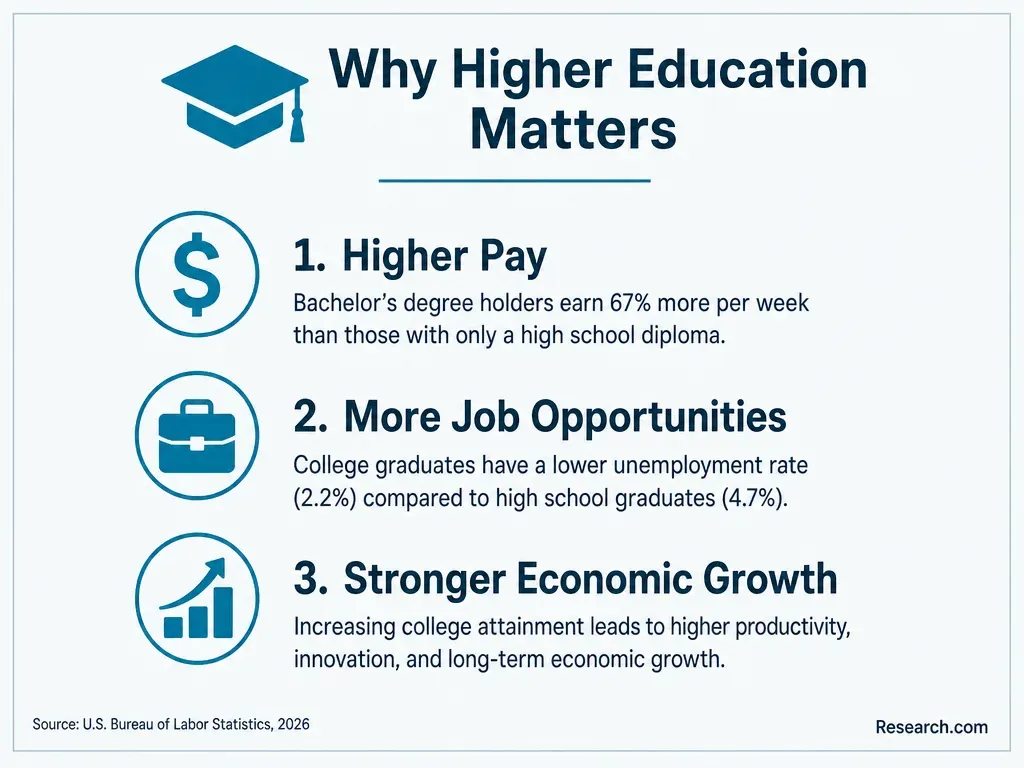
BLS projects 6% employment growth for social workers overall from 2025 to 2035. That projection is for a broad occupation, not a forecast of openings in developmental disability services. Local demand depends on agency funding, public programs, turnover, and the qualifications attached to available positions.
Compare postings across several employers rather than relying on one projected growth rate. Note whether recurring openings ask for a BSW, MSW, license, or experience with a particular service system. If you hope to move into clinical work later, confirm the separate post-degree requirements early; comparing field education and post-degree experience requirements helps clarify why an entry-level disability-services job may not automatically advance that goal.
This career is a strong fit if you value sustained coordination, client-directed planning, and systems advocacy as much as direct conversation. If you primarily want psychotherapy - or prefer a coordination role that does not require a social work credential - let verified job requirements guide your next step rather than the job title alone.
Other Things You Should Know About Social Work
Not by virtue of the job title. Diagnostic authority depends on the professional's license, scope, training, and setting. A social worker may help someone seek an appropriate evaluation without performing it.
Usually, service coordination and direct personal care are different jobs. Duties vary by employer, so check whether a posting includes caregiving tasks before applying.
No. Programs may have separate eligibility criteria, assessments, funding rules, and availability limits. A social worker can help explain the application and appeal process but cannot guarantee approval.
Often, yes, but decision-making rights and any legally authorized representative's role depend on the individual circumstances and applicable law. Workers should seek supervision rather than assume a caregiver's preference controls.
- Mental health at work | who.int https://www.who.int/news-room/fact-sheets/detail/mental-health-at-work
- Informed Consent FAQs | hhs.gov https://www.hhs.gov/ohrp/regulations-and-policy/guidance/faq/informed-consent/index.html
- Social Worker (SW) | wi.gov https://dsps.wi.gov/a-z-professions-list/social-worker-sw/
- NASW Standards for Social Work Case Management | nycourts.gov https://www.nycourts.gov/reporter/webdocs/nasw_standards_socialwork_casemgt.htm
- 6: Confidentiality | United States Department of Justice https://www.justice.gov/elderjustice/mdt-guide-toolkit/6-confidentiality
- Organizational Best Practices Supporting Mental Health in the Workplace - PMC https://pmc.ncbi.nlm.nih.gov/articles/PMC8631150/
- Levels and Eligibility Requirements | North Carolina Social Work Certification and Licensure Board https://www.ncswboard.gov/levels-and-eligibility-requirements/
- Informed Consent - StatPearls - NCBI Bookshelf - NIH https://www.ncbi.nlm.nih.gov/books/NBK430827/
- Explore Impactful Careers in Social Work | Colorado State University https://engagement.source.colostate.edu/explore-impactful-careers-in-social-work/
- The Role of Social Work in Public Health - Online M.S.W. | Virginia Commonwealth University https://onlinesocialwork.vcu.edu/blog/role-of-social-work-in-public-health/