2027 Adult Protective Services Social Worker: Responsibilities, Education, and Career Fit
Audited and Verified:
Our Editorial and Data Verification Process
Research.com uses government datasets, official education statistics and primary institutional information to support its career and degree guides. Our review process checks factual accuracy, occupational definitions, source dates and the requirements associated with the credentials discussed.
How This Article Was Fact-Checked
Our editorial team verifies salary estimates, employment projections, education requirements and program information against original data providers and official organizations. Salary figures are checked against the relevant occupational definitions and reporting periods. Information about licensure, accreditation and required in-person training is reviewed separately.
Fact-checked and verified on:

Co-Founder and Chief Data Scientist
Adult protective services (APS) work combines safeguarding, investigation, and practical help for adults who may be experiencing abuse, neglect, or exploitation. For prospective social workers and career changers, the challenge is knowing what the job actually involves - and whether a BSW, MSW, license, or relevant human services experience is the right entry point.
This guide explains APS duties, qualifications, pay context, training, and workplace realities so you can compare job postings and education options before committing to a path.
Key Things You Should Know
- APS workers assess reports of possible adult abuse, neglect, or exploitation, coordinate services, document findings, and work within state law and agency policy; they do not automatically have authority to remove an adult from their home.
- Entry qualifications vary by agency and civil-service classification. Some roles accept a BSW or another relevant bachelor's degree; an MSW or social work license may be preferred or required for particular positions.
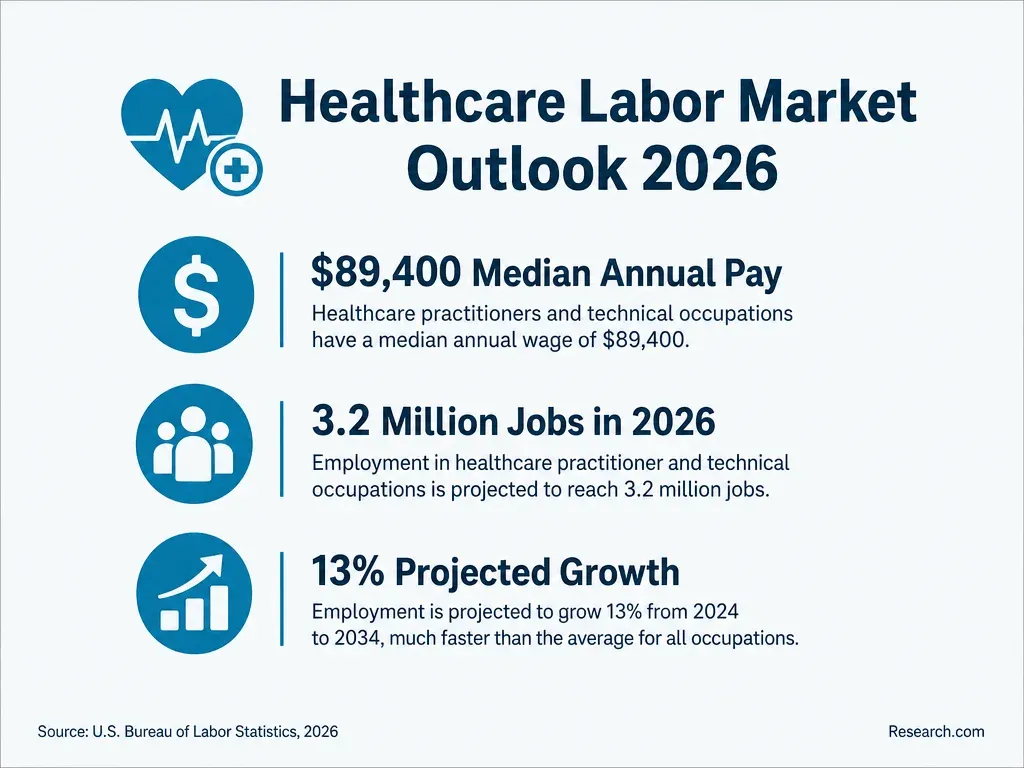
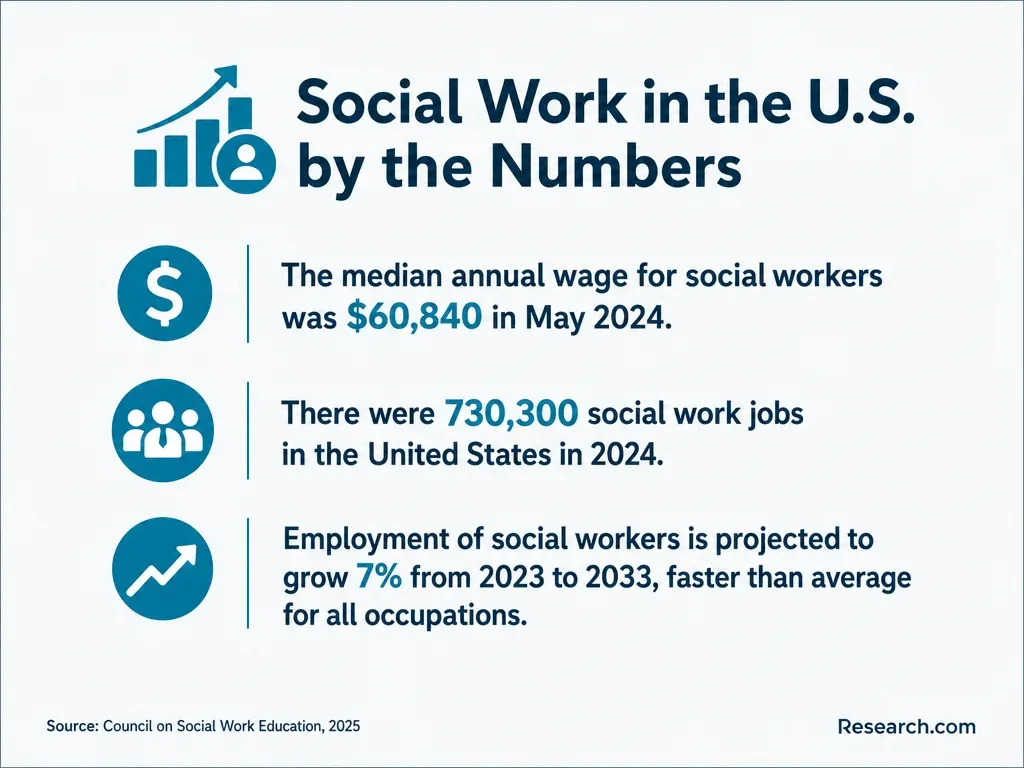
- The U.S. Bureau of Labor Statistics reports a May 2025 median annual wage of $61,780 for social workers overall and projects 6% employment growth from 2025 to 2035. Neither figure represents APS jobs specifically.
What does an adult protective services social worker do?
APS is a state- or locally administered response to reports that an adult may be experiencing abuse, neglect, self-neglect, or financial exploitation. The population served, definitions of maltreatment, investigative authority, and available remedies vary by state. An APS worker may interview the adult and other relevant people, assess immediate risks and decision-making needs within their role, review available records, arrange services, and document the agency's findings and actions.
The work is neither purely investigative nor purely supportive. A worker might coordinate housing, healthcare, benefits, or legal referrals while respecting an adult's right to make decisions. When consent, capacity, confidentiality, or urgent safety concerns are disputed, the worker follows applicable law, agency procedures, and supervisory guidance rather than making a unilateral legal or clinical determination.
Before applying, distinguish a front-line investigator role from ongoing case management, intake, or supervisory work. Those positions can differ substantially in travel, after-hours coverage, court involvement, and caseload. For a broader view of where APS experience may lead, see planning professional progression with an MSW.
What education is needed to become an adult protective services social worker?
There is no single national APS degree requirement. Hiring rules belong to the employing agency and, often, a state or county civil-service system. Read the exact posting: an "APS social worker" title may require a social work degree, while an investigator or specialist classification may also accept psychology, human services, or another related field plus specified experience.
The routes below differ in what they prepare you to do; a higher degree is not automatically necessary for an entry-level APS position.
| Route | Potential APS relevance | Decision point |
| Relevant bachelor's degree, including a BSW | May meet entry requirements for generalist investigation or casework, depending on the posting | Check accepted majors, experience substitutions, and whether the title is regulated |
| Traditional or foundation MSW | Builds advanced social work preparation for applicants with a bachelor's degree in another discipline | Worth considering if target roles require an MSW or it supports a specific advancement goal |
| Advanced-standing MSW | May offer a shorter MSW sequence to graduates with a qualifying social work bachelor's degree | Confirm the program's BSW accreditation and other eligibility rules |
For someone starting undergraduate study, online bachelor of social work program options can be a useful comparison. If you already qualify for an APS job through another degree, apply first and investigate employer training or education assistance before paying for a second degree.
Do adult protective services social workers need a license or certification?
Not necessarily. APS employment requirements vary by state, job classification, and duties. Some agencies hire unlicensed caseworkers; others require or prefer a particular state social work license. A job title containing "social worker" does not, by itself, tell you whether the position requires licensure or whether state law protects that title.
Check the posting against the state licensing board's rules for the specific license named. Degree completion, eligibility to take an exam, and issuance of a license are separate steps. An MSW does not independently authorize psychotherapy, and academic field hours do not automatically count toward post-degree clinical supervision. Voluntary certificates and agency onboarding also do not replace a required state license.
If licensure is part of your longer-term plan, compare online social work master's programs and state board requirements for the jurisdiction where you intend to practice, then confirm eligibility directly with that board.
APS suits people who can build rapport without promising an outcome, notice competing explanations for a concern, and document facts separately from interpretations. Clear interviewing, cultural responsiveness, knowledge of community resources, and collaboration with healthcare, housing, legal, and law-enforcement partners all matter. So do boundaries: a worker must respect self-determination while acting on reporting and safety duties that apply in their jurisdiction.
Assess the workplace as carefully as your own skills. Ask about average caseloads, travel radius, after-hours rotation, field-visit safety procedures, supervisory consultation, training in financial exploitation and self-neglect, and access to interpreters. Experience in healthcare, benefits, community outreach, or crisis services may transfer well, but APS-specific law and agency procedures still require training.
If an MSW would mean substantial debt or reduced earnings, weigh MSW affordability and career value considerations against the qualifications your target employer actually requires. A bachelor's-level opening with strong supervision may be the more direct first step.
Useful preparation includes human behavior and aging, disability, social policy, ethics, interviewing, assessment, research literacy, and case documentation. Coursework on abuse and exploitation is particularly relevant, but students also need practice distinguishing an adult's preferences from a worker's assessment of risk and identifying when to seek legal, clinical, or supervisory consultation.
In approved BSW or MSW field education, look for supervised opportunities to engage adults, coordinate referrals, write defensible notes, and navigate confidentiality under an agency's rules. A school must approve the placement and learning tasks; paid work or volunteering does not automatically count.
Academic field instruction is also distinct from post-degree supervised practice for a clinical license. If clinical work is a separate career goal, consult guidance on planning supervised experience in a social work career and verify the applicable board's rules.
What career advancement opportunities exist in adult protective services?
With experience, an APS worker may move into complex investigations, training, quality review, supervision, program management, or related aging and disability services. Advancement usually depends on demonstrated judgment, documentation quality, leadership ability, and the employer's classification rules - not a degree alone. Review internal postings to see whether an MSW, license, management experience, or particular civil-service exam is required.
An MSW may be useful for broader social work mobility or positions that specify it. A practice-focused DSW or research-focused PhD is generally unnecessary for front-line APS work; consider doctoral study only for a clearly defined leadership, teaching, or research objective and a realistic financing plan.
Even online DSW programs organized by tuition should be evaluated against total cost and the qualifications of the role you want. For many APS professionals, targeted training and a well-supported promotion opportunity are the more direct next step.
Other Things You Should Know About Social Work
Often, an adult can decline voluntary services. The response depends on applicable law, the circumstances, and any legally relevant decision-making or immediate-safety concerns; APS staff should follow agency procedures rather than assume that a report overrides the adult's choices.
No. APS generally assesses concerns and coordinates protective services. It may collaborate with law enforcement when suspected crimes or urgent safety issues warrant it, but the agencies have different authority and responsibilities.
Jurisdiction varies. Depending on the state and allegation, APS, a long-term care ombudsman, a licensing agency, or law enforcement may be involved. Check the state's reporting guidance for the facility and concern.
Use the relevant state or local APS reporting channel and provide specific observations rather than an unverified conclusion. If someone faces an immediate emergency, contact emergency services. Reporting duties and confidentiality rules vary by jurisdiction and professional role.
- Adult Protective Services Policy | wv.gov https://bss.wv.gov/media/20616/download
- APS SUPERVISOR SOCIAL WORKER | City of New York Jobs https://cityjobs.nyc.gov/job/aps-supervisor-social-worker-in-manhattan-jid-37770
- 1004 Guiding Principles in Adult Protective Services | ga.gov https://pamms.dhs.ga.gov/das/aps-5500-manual/1004-guiding-principles/
- Adult Protective Services | ny.gov https://ocfs.ny.gov/programs/adult-svcs/aps/
- Levels and Eligibility Requirements | North Carolina Social Work Certification and Licensure Board https://www.ncswboard.gov/levels-and-eligibility-requirements/
- Adult Protective Services: Background and Funding | congress.gov https://www.congress.gov/crs-product/IF12917
- SOCIAL WORKER III ADULT SERVICES | Iredell County, NC https://www.iredellcountync.gov/DocumentCenter/View/25316/SW-III-Adult-Services-7-29-2024
- Adult Protective Services Functions and Grants Programs | Federal Register https://www.federalregister.gov/documents/2024/05/08/2024-07654/adult-protective-services-functions-and-grants-programs
- eCFR:: 45 CFR Part 1324 Subpart D -- Adult Protective Services Programs https://www.ecfr.gov/current/title-45/subtitle-B/chapter-XIII/subchapter-C/part-1324/subpart-D
- DDARS: Adult Protective Services | in.gov https://www.in.gov/fssa/ddars/bba/adult-protective-services/