Most Affordable Trade School & Training Programs - Leading Certification Courses in Victoria for 2026

Co-Founder and Chief Data Scientist
Looking for the most affordable trade schools in Victoria for 2026? This article is here to guide you through your options with a helpful trade school programs ranking created by the Research.com team of data scientists. It’s designed to make your decision easier by highlighting programs that offer real value.
Trade school diplomas and certifications open doors to rewarding careers and practical skills. Reading this article will empower you to choose the right path confidently and invest in your future without breaking the bank.
Key benefits of finishing trade school programs trade school in Victoria
Trade school diplomas in Victoria offer several exciting benefits that can boost your career and earnings.
- Expected salary: Graduates can start with an average annual salary around $33,100, rising to $40,600 after ten years, with construction trades like plumbing earning about $23 per hour or roughly $47,800 yearly.
- Popular career paths: Many choose skilled fields like plumbing, electrical, and HVAC, all in high demand locally, ensuring stable jobs with growth opportunities.
- Online certification benefits: Completing trade programs online offers flexibility and convenience, making it easier to balance work or family while gaining valuable skills.
- Most Affordable Trade School & Training Programs - Leading Certification Courses in Victoria for 2026
- What can I expect from trade school programs trade schools in Victoria?
- Where can I work after finishing trade school programs trade schools in Victoria?
What can I expect from trade school programs trade schools in Victoria?
The average cost of a trade school program in Victoria varies depending on the type of program and institution. Graduates from local trade schools often share how these programs balance affordability with quality, making the investment feel worthwhile. For instance, courses at Victoria College range from noncredit options that have minimal fees-perfect for those seeking quick, practical credentials-to credit programs like associate degrees, which have higher tuition but offer pathways to specialized careers.
Many students appreciate that trade schools like Mid Coast Construction Academy integrate paid on-the-job training, effectively reducing financial strain while gaining valuable experience. This hands-on apprenticeship model allows students to earn income, sometimes close to $23 per hour for skilled positions, which helps offset educational costs.
You can expect some flexibility with scheduling and opportunities for scholarships or financial aid tailored to local workforce needs. The combination of manageable tuition and support services makes it easier for students from varied backgrounds to succeed without overwhelming debt.
Where can I work after finishing trade school programs trade schools in Victoria?
After finishing a trade school program in Victoria, you'll find many rewarding career opportunities waiting for you. Graduates often step directly into jobs like carpentry, electrical work, HVAC, plumbing, or pipefitting, thanks to strong local demand and partnerships between schools and employers. For example, grads from Mid Coast Construction Academy frequently start apprenticeships with trusted construction firms or utilities companies, gaining hands-on experience that leads to steady employment.
Others who complete programs at Victoria College's Process Technology Program often become process technicians or plant operators in industries such as petrochemical plants or power generation. Imagine yourself overseeing vital systems that keep large facilities running smoothly-many graduates describe this role as both challenging and fulfilling.
The bustling industrial and service sectors around Victoria regularly post openings for skilled tradespeople like field service technicians or journeyperson plumbers. Many graduates say they feel confident entering the workforce knowing their training matches local employers' needs, making the job hunt less stressful and more promising.
After finishing a trade school program in Victoria, many graduates find themselves starting with salaries close to $39,000 to $48,000 a year, which aligns well with state averages. For example, graduates from Victoria College often step into entry-level roles earning around these figures, gaining confidence as they build experience.
Electrical apprenticeships, a popular choice among Victoria students, usually offer starting pay around $40,000, with room to grow quickly. Some former students in the area now make upwards of $56,000 annually, reflecting the national median for electricians. Trades like plumbing and HVAC also show similar paths, beginning in the low $40,000s but advancing steadily with certifications and on-the-job training.
Many graduates describe their early years as challenging but rewarding, feeling proud to fill essential roles with steady demand. These earnings may start modestly but increase as skills sharpen, showing that studying in Victoria can open doors to solid, growing incomes.
- Applicants typically need a high school diploma, GED, or equivalent, and must be at least 16 years old; some programs accept mature students or those with homeschooling backgrounds.
- Program costs generally range from $5,700 to $8,000 per year, with financial aid options like scholarships, payment plans, and federal aid through FAFSA available.
- Trade school programs usually last from several months up to two years, focusing on hands-on training combined with classroom instruction.
- Common career fields include welding, HVAC, electrical, and healthcare, with average starting salaries between $39,000 and $43,000 annually.
- Many programs have rolling admissions with multiple start dates and may require placement tests or interviews for competitive fields.
If you're considering a trade school program in Victoria, expect most full-time courses to take between 6 to 12 months to complete. For instance, graduates from popular programs in automotive technology often finish their foundation training in about 30 weeks, gaining hands-on experience that feels immediately relevant and empowering.
Others pursuing building and construction certificates usually complete their studies within a single academic year, which feels manageable and fits well alongside secondary education commitments. Many students appreciate this blend of theory and practice, as it prepares them directly for apprenticeships without unnecessary delay.
Some continuing education short courses offer even faster routes-just a few weeks-to sharpen a particular skill, which is ideal if you want to jump into the workforce quickly or enhance your existing abilities. A graduate from Victoria College shared how completing a short welding program boosted their confidence and job prospects in just a couple of months.
Apprenticeship credit pathways further speed up career progress by recognizing prior learning. Students often feel motivated knowing their time investment counts toward practical, paid work experience, making the journey both efficient and rewarding.
Online trade school programs in Victoria offer the flexibility to study from anywhere, perfect for busy students balancing work or family. Graduates from institutions like Victoria College often share how the ability to control their own pace and schedule made completing courses feel manageable and less stressful. Many online courses use a mix of self-paced lessons and live virtual sessions, allowing students to connect with instructors despite the distance.
On-campus programs, such as those at Victoria University, provide a very different experience. Students often highlight the value of hands-on learning, using real equipment and participating in labs that can't be replicated online. Being physically present creates a dynamic, interactive environment where immediate feedback and peer support strengthen skills and confidence.
While online programs excel in flexibility, on-campus study shines where practical, supervised training is crucial. Graduates from both paths attest that choosing the right format depends on personal learning styles and career goals in Victoria's trade fields.
The average trade school tuition in Victoria generally ranges from $5,000 to $15,000, depending on the program length and field of study. Graduates from popular local schools often share how shorter certificate programs, like those for cosmetology or truck driving, can cost just a few thousand dollars, making them a budget-friendly choice. On the other hand, associate degrees or diplomas tend to lean toward the higher end of this range, especially when taken at private institutions.
Many students find that public trade schools in Victoria offer more affordable options, particularly for residents, with costs typically lower than private, for-profit schools. One graduate recalled choosing a public school due to its affordability, which allowed them to focus fully on gaining hands-on experience without overwhelming financial stress. This emphasizes the importance of evaluating both the cost of vocational programs Victoria 2026 offers and the value provided, including factors like program accreditation and job placement support.
It's also crucial to consider additional expenses such as books, supplies, and living costs, which can add up quickly. Fortunately, a number of schools provide financial aid and scholarships, helping many students turn their aspirations into reality. For those curious about which trades might lead to lucrative careers, exploring trades that pay well can be a motivating step after planning the financial side of their education.

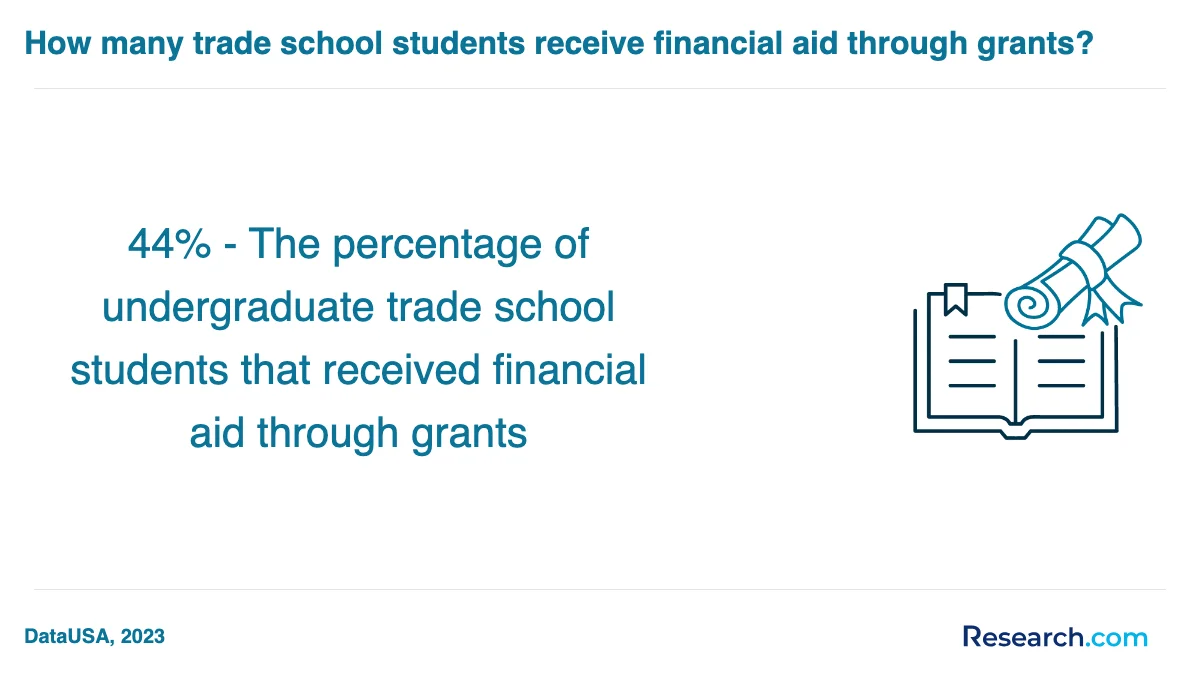
Trade school students in Victoria can access a variety of financial aid options that make pursuing their education more manageable. Most students start by completing the FAFSA, which opens the door to federal grants like Pell Grants that never require repayment, and low-interest Direct Student Loans. One graduate from Victoria College shared how the Pell Grant significantly reduced their tuition burden, allowing them to focus on hands-on learning without financial stress.
For those who are non-citizens or undocumented, the Texas Application for State Financial Aid (TASFA) is an important resource. Another helpful program is the Texas Public Education Grant (TPEG), which supports students attending public institutions in Texas based on financial need, no matter their residency status.
Scholarships are also key-Victoria College Foundation alone awards over 100 scholarships each year. Graduates often mention how the single application process made finding and securing scholarships less overwhelming, boosting their confidence and motivation during their studies.
Students in Victoria are encouraged to stay on top of their aid applications and communicate promptly with their school's financial aid office to ensure timely processing.
To enroll in a trade school program in Victoria, you'll find the process welcoming, especially at community-oriented schools like Victoria College. Most students appreciate the open-door admissions policy, which means no stress over SATs or high school GPA for many non-credit courses. However, if you're going for credit or a degree, be ready to show your high school diploma or GED-just like many graduates who've found success after providing these simple documents.
Here are some key prerequisites to keep in mind:
- Proof of residency in Texas to access in-state tuition rates, which makes education more affordable for locals.
- Compliance with Texas immunization laws, including a bacterial meningitis vaccine within five years-this is usually straightforward and easily handled during registration.
- Filling out a FAFSA form if you want financial aid like the TPEG-CE grant, something many students rely on to make their education possible.
- Male students need to be registered with Selective Service or have an exemption, a small step many handle quickly.
Some specialized programs, such as allied health or technical trades, require extra steps like background checks or drug testing. Graduates often recall how knowing these ahead of time helped them stay confident and prepared. With each institution in Victoria having slightly different requirements, checking early with your program advisor sets you up for a smooth start on your career path.
Trade school programs in Victoria cover a range of practical courses designed to get you job-ready fast. Graduates from well-known institutions like SEDA College and Victoria College often mention how hands-on their learning experiences were, giving them real skills employers want.
Typical courses include:
- Building and construction trades: carpentry, plumbing, electrical work, bricklaying, plastering, and tiling, often with a modern twist like "Green Building" technologies and energy-efficient practices;
- Industrial trades: welding, cabinetry, woodworking, electrical apprenticeships, and auto inspection, perfect for those who enjoy working with their hands;
- Business trades: diplomas in leadership, project management, and digital business, ideal if you want to blend practical skills with supervisory roles.
Many students appreciate the mix of workshops, online learning, and industry placements that make the skills stick while opening doors to apprenticeships or full-time roles.
For example, graduates from Victoria University praise the efficient pathway through their Diplomas of Leadership and Project Management, which lead directly to workforce opportunities or further study.
Trade school programs in Victoria offer a wide array of specializations that prepare students for rewarding careers in local industries. Graduates from Victoria College often highlight hands-on training in industrial trades like welding, electrical technology, HVAC (Heating, Ventilation, and Air Conditioning), and industrial maintenance. For those seeking flexible, short-term courses, the Career & Technical Education-Continuing Education (CTE-CE) programs provide options such as healthcare roles (phlebotomy, medical billing), truck driving, office technology, and cosmetology, many leading to valuable state credentials.
Victoria University's TAFE programs expand choices further, with popular fields including business administration, hospitality, early childhood education, and community services. Many graduates appreciate VU's practical workshop-style classes and industry placements that boost real-world readiness. Students enthusiastic about technology can focus on Artificial Intelligence & Technology Management, blending coding and analytics to meet evolving workforce demands.
For those exploring HVAC, Victoria offers highly sought-after certificate hvac courses online, which combine convenience with expert instruction. This variety lets you find your niche while building skills that align with Victoria's strong job market.
Choosing the best trade school programs in Victoria means seeking hands-on training that mirrors real job sites. Graduates from BCIT and Vancouver Island University often share how their practical workshops and industry placements helped them feel confident on day one of their careers. These schools emphasize skills employers are looking for, and many programs offer pathways to earn the valuable Red Seal certification, boosting your chances for work throughout Canada.
When choosing affordable trade schools in Victoria, don't overlook financial support options. For example, several students benefited from the StrongerBC Future Skills Grant, which can provide up to $3,500 toward tuition, making quality training more accessible. Exploring programs at Okanagan College or BCIT with a focus on apprenticeship opportunities can also open doors if you already possess some experience in your trade.
It's wise to connect with recent graduates and compare job placement rates. For instance, BCIT proudly reports a 98% employment rate post-apprenticeship, helping new tradespeople start earning sooner. To explore which trades offer strong career prospects, check out trade school highest paying jobs to guide your decision.

Trade school graduates in Victoria find career opportunities in a variety of high-demand trades in Victoria that offer rewarding and stable work. Many graduates from popular institutions like Victoria College step directly into roles such as electricians, welders, HVAC technicians, and industrial mechanics. Their hands-on training allows them to excel quickly, meeting the real-world demands of infrastructure and manufacturing sectors. Others explore career paths in healthcare, becoming medical assistants or pharmacy technicians, roles that provide meaningful patient interactions and steady job growth.
For those interested in technical or business fields, programs in cybersecurity, IT support, and business administration open doors to dynamic office environments and tech startups. The practical skills gained equip graduates to flourish in entry-level roles that can lead to rapid advancement.
Trade schools also prepare students for skilled trades like plumbing, carpentry, and automotive repair. Many graduates benefit from engaging in automotive mechanic online training, which enhances their expertise and career flexibility.
- Industrial trades with strong local demand
- Healthcare roles with certification opportunities
- Technical and business careers with growth potential
The trade school job opportunities in Victoria are thriving, thanks to strong sector growth and government support. Graduates from popular Victorian trade schools often find themselves in high demand in areas like construction, healthcare, and manufacturing. For example, many graduates specializing in plumbing or electrical work quickly secure roles due to the surge of 45,900 new workers needed in construction in 2024 alone.
Victorian employment projections for trade graduates show ongoing demand across multiple industries, with sectors such as healthcare expanding rapidly to meet community needs. Graduates frequently land roles in aged care or allied health services, where their skills are essential and appreciated.
Many successful graduates also share how programs that focus on practical experience make transitioning into jobs smoother. With initiatives like Free TAFE backing skills development, students can pursue affordable, hands-on education focused on real-world skill sets.
To seize such opportunities, consider exploring the cheapest online maintenance technician trade programs, which offer flexible pathways into this robust job market.
Most Affordable Trade School & Training Programs - Leading Certification Courses in Victoria for 2026
# 1 position
Victoria College - Criminal Justice/Police Science.
associateVictoria College offers a Criminal Justice/Police Science program delivered in a hybrid format with some distance-education options. The program prepares students for police and public security duties such as patrol, investigations, traffic and crowd control, witness interviewing, evidence management, crime prevention, weapon use, and report writing. Annual in-state tuition is $2,853. The program is accredited by the Southern Association of Colleges and Schools Commission on Colleges.
# 2 position
Victoria College - Physical Therapy Assistant.
associateThe Physical Therapy Assistant program at Victoria College offers a hybrid format with some distance education options. It prepares students to assist physical therapists by implementing treatment plans, training patients, and documenting progress. The curriculum includes anatomy, physiology, biomechanics, communication, and professional ethics. Annual in-state tuition is $2,853. Graduates earn a median salary of $49,346 one year after completion. The program is accredited by the Southern Association of Colleges and Schools Commission on Colleges.
# 3 position
Victoria College - Business Administration and Management, General.
associateVictoria College offers a hybrid Business Administration and Management, General program that prepares students to plan, organize, direct, and control business functions. The curriculum includes management theory, human resources, accounting, purchasing, logistics, marketing, and decision-making. The annual in-state tuition is $2,853. The program is accredited by the Southern Association of Colleges and Schools Commission on Colleges.
# 4 position
Victoria College - Welding Technology/Welder.
certificate or diplomaThe Welding Technology/Welder program at Victoria College offers a hybrid format, combining in-person and distance education. The curriculum covers arc welding, resistance welding, brazing, soldering, cutting, welding metallurgy, and safety practices. Students learn various welding processes, structural design, and applicable codes. The annual in-state tuition is $2,853. The program is accredited by the Southern Association of Colleges and Schools Commission on Colleges.
Frequently Asked Questions about trade school programs
After completing trade school in Victoria, preparing for the job market involves practical steps to enhance employability. Start by building a professional resume that highlights your acquired skills, certifications, and hands-on experience from your program.
Networking is vital; engage with industry professionals through job fairs, online platforms, and local trade associations. According to the Bureau of Labor Statistics, skilled trades often have quicker job placements post-completion compared to other fields.
Additionally, consider obtaining relevant industry certifications beyond your trade school credentials to boost your resume. Employers in areas like electrical or HVAC sectors highly value such certifications.
Internships and apprenticeships remain effective ways to gain real-world experience and increase job prospects substantially in Victoria's competitive trade market.
Employers in Victoria highly value trade school graduates who demonstrate strong technical skills relevant to their field, such as proficiency in HVAC systems, electrical wiring, or welding techniques. According to the U.S. Bureau of Labor Statistics, practical hands-on experience remains crucial, as 75% of employers prefer candidates with demonstrated competencies.
Beyond technical ability, soft skills like communication, teamwork, and problem-solving are increasingly important. The National Association of Manufacturers notes that 83% of manufacturers seek workers capable of collaborating effectively within diverse teams.
Time management and adaptability are also in demand, given the fast-paced nature of trade industries. These skills enable graduates to meet project deadlines and adjust to evolving technologies.
Finding internships related to your trade school program in Victoria requires a strategic approach. Start by contacting your school's career services office, as many trade schools partner with local businesses to offer internship opportunities.
The Victorian government supports vocational training through organizations like the Victorian Skills Gateway, which lists apprenticeships and traineeships that often include internship components. According to the National Centre for Vocational Education Research, approximately 70% of Victorian apprentices secure placements through these official channels.
Additionally, visiting local trade unions and industry associations can provide valuable leads. Many companies advertise internships on platforms such as the Australian Apprenticeships Pathways website, a reliable source for trade-related roles.
Networking remains key; attending local job fairs and trade expos can directly connect you with employers hiring interns in your field.
In Victoria, a trade school diploma can significantly enhance career mobility and advancement opportunities. Graduates often find quicker entry into the workforce compared to traditional four-year degree holders. According to the National Center for Education Statistics, vocational credentials lead to a 15% higher employment rate within the first year after graduation.
Trade diplomas focus on skills in high-demand areas such as healthcare, construction, and technology. This practical training aligns with local industry needs, increasing job security and potential for promotion. Employers in Victoria value these diplomas for their direct applicability.
Furthermore, many trade schools offer apprenticeship pathways, enabling students to earn while they learn, which supports upward career movement and wage growth.
Part-time job opportunities in Victoria can significantly complement trade school education, offering practical experience alongside academic learning. Many students work as apprentices or assistants in fields such as automotive repair, HVAC, and electrical work, which align closely with their studies. According to the U.S. Bureau of Labor Statistics, part-time roles in these industries often provide flexible hours ideal for trade students balancing coursework.
Retail positions in hardware stores or construction supply outlets are also common, allowing students to develop product knowledge and customer service skills. Additionally, roles like warehouse associates or delivery drivers provide insight into logistics, beneficial for trade careers related to manufacturing or supply chain management.
Engaging in relevant work helps students enhance their resumes while earning income. These jobs often pay hourly wages ranging from $12 to $18, depending on the role and local market conditions. Employment in related trades increases the likelihood of job retention post-graduation and helps build professional networks within Victoria's skilled labor sectors.
Yes, there are affordable degree programs available near Victoria, TX, catering to students looking for accessible education options. Several colleges and universities, including community colleges, offer programs that could be considered budget-friendly, potentially providing the education needed without significant financial strain. For more detailed information on specific programs and their affordability, Research.com could serve as a helpful resource when exploring what's available near me.
- Most Affordable Trade School & Training Programs - Leading Certification Courses in Tulsa for 2026
- Most Affordable Trade School & Training Programs - Leading Certification Courses in Olathe for 2026
- Most Affordable Trade School & Training Programs - Leading Certification Courses in Topeka for 2026
- Most Affordable Trade School & Training Programs - Leading Certification Courses in Overland Park for 2026
- Most Affordable Trade School & Training Programs - Leading Certification Courses in Ocala for 2026
- Most Affordable Trade School & Training Programs - Leading Certification Courses in Statesboro for 2026
- Do an apprenticeship or traineeship | vic.gov.au https://www.vic.gov.au/do-apprenticeship-or-traineeship
- How to Prepare for a Trade Apprenticeship While at School https://www.migas.com.au/blog/how-to-prepare-for-a-trade-apprenticeship-while-at-school
- School-Based Apprenticeships and Traineeships: Policy | VIC.GOV.AU | Policy and Advisory Library https://www2.education.vic.gov.au/pal/school-based-apprenticeships-and-traineeships/policy
- Building and Trade Program - SEDA College https://seda.vic.edu.au/educational-programs/building-and-trade-program/
- Trades https://www.vu.edu.au/study-at-vu/tafe/trades
- Trade Training Centre – Hallam Secondary College https://hallamsc.vic.edu.au/services-facilities/trade-training-centre/
- Work-based learning | schools.vic.gov.au https://www.schools.vic.gov.au/career-education/work-based-learning
- Construction Estimator Roles and Earnings | TIV https://www.tiv.vic.edu.au/how-to-prepare-for-getting-a-job-in-the-construction-industry-after-you-finish-studying/
- Trade Courses In Australia For International Students https://pathwaytoaus.com/blog/studying-a-trade-in-australia/