Most Affordable Trade School & Training Programs - Leading Certification Courses in Troy for 2026

Co-Founder and Chief Data Scientist
Choosing the right trade school in Troy can feel overwhelming, but finding an affordable program that fits your goals is a great first step. This article features a trade school programs ranking created by the Research.com team of data scientists to help you make an informed choice.
By exploring these options, you’ll discover quality programs that offer valuable skills and certifications without breaking the bank. Earning a trade school diploma can open doors to steady work and personal growth, making this journey well worth your effort.
Key benefits of finishing trade school programs trade school in Troy
- Trade school graduates in Troy can expect competitive salaries, with technicians earning around $45,723 annually and top performers making up to $87,159, offering a strong financial start.
- Popular career paths include HVACR technician, welding, and industrial maintenance, which provide steady work and opportunities to grow skills in trades that are always in demand.
- Online trade school diplomas offer flexibility and convenience, allowing students to balance work and study, just like many successful graduates from Troy's well-known online programs.
- Most Affordable Trade School & Training Programs - Leading Certification Courses in Troy for 2026
- What can I expect from trade school programs trade schools in Troy?
- Where can I work after finishing trade school programs trade schools in Troy?
What can I expect from trade school programs trade schools in Troy?
The average cost for a trade school program in Troy typically ranges between $10,000 and $20,000, depending on the duration and specialization chosen. Graduates from popular institutions like Universal Technical Institute (UTI) in Canton report investing around $15,000 for programs such as welding or HVACR, which are designed for rapid completion-often in 10 months. This cost covers hands-on training with industry-standard equipment and expert instructors, providing a practical learning experience that students find highly valuable.
Students at Oakland Schools Technical Campuses (OSTC) experience a variety of programs, with tuition fees generally falling in the lower to mid-range of this spectrum. Many appreciate the inclusion of opportunities to earn licenses and certifications within their program fee, which enhances their employability without hidden expenses.
Trade school attendees also find the financial investment worthwhile because of the career counseling and job placement support included, aiding smooth transitions into the workforce. Graduates relay a strong sense of confidence and readiness, reflecting satisfaction in the value received from these programs.
Where can I work after finishing trade school programs trade schools in Troy?
Graduates of trade school programs in Troy consistently find employment in several high-demand sectors. For instance, welders trained at popular local schools quickly secure roles as welding specialists in manufacturing and construction firms. HVACR program completers often join residential and commercial service companies, applying their skills to maintain and install critical climate control systems.
Industrial maintenance and robotics students benefit from Troy's strong automotive and automation industries, where employers seek technicians familiar with modern tools. Many graduates describe starting as entry-level technicians or apprentices, earning wages from $16 to $40 per hour while gaining valuable hands-on experience. This combination of paid learning and real-world application boosts confidence and career readiness.
Trade school credentials also open doors to supervisory and specialized technical positions over time. Employers in Troy appreciate candidates with up-to-date certifications and practical skills. Graduates who continue education toward associate degrees report smoother transitions into leadership roles, highlighting a clear pathway from trade training to sustainable career growth locally.
Graduates from trade school programs in Troy typically enter the workforce with competitive salaries reflecting the strong local demand for skilled trades. For instance, technicians in Troy earn an average of $45,723 annually, covering roles like industrial maintenance and HVACR, popular specialties at local trade schools. Many graduates report satisfaction knowing they can start earning close to $40,000 a year, with clear pathways for salary growth as experience and certifications increase.
Welding graduates often find entry-level jobs paying between $40,000 and $55,000 annually, depending on project complexity and employer. These roles easily connect new professionals from Troy's welding programs to steady employment in manufacturing or construction, creating a solid financial foundation right after certification.
HVACR careers in Troy also offer promising salaries starting around $40,000 to $50,000. Graduates frequently highlight the rewarding feeling of quickly landing jobs in commercial or industrial settings while building valuable skills. Similarly, those trained in robotics and automation begin near $45,000, with high demand adding upward salary momentum as expertise deepens.
Trade school alumni in Troy emphasize how practical training equips them to earn well immediately, making these programs a smart investment for local students eager to join thriving industries.
- Applicants for trade school programs in Troy must be at least 17, have a high school diploma or GED, proof of U.S. citizenship or work authorization, and may need to complete reading and math tests.
- Programs offered include welding, HVACR, robotics, medical and dental assisting, and IT, with certificate courses lasting from six weeks to one year and associate degrees typically taking two years.
- Tuition for short-term certification programs ranges from $3,000 to $15,000, with some schools offering full scholarships to eligible students.
- Flexible class schedules such as hybrid and evening options are available, and financial aid can help reduce costs further.
- Entry-level salaries for HVACR technicians in Troy range from $40,000 to $45,000 annually, while experienced welders and automation technicians can earn $50,000 to $60,000 or more.
Trade school programs in Troy typically take several months up to one year to complete, offering a fast track to employment. Graduates from Universal Technical Institute, for example, often complete technical certificates like Welding Specialist or HVACR Technician in about 10 months, allowing them to dive quickly into hands-on jobs.
For those in the TRAC program, the journey lasts roughly 6 months to a year, blending in-person classes and online work. Many students appreciate this mix, feeling confident as they prepare for industry exams by the following June after starting in July.
Some prefer even shorter options; Oakland County's programs wrap up in as little as 14 weeks. This speed appeals to those eager to begin careers in healthcare or manufacturing without lengthy delays.
Meanwhile, SEMCA offers a one-semester intro course to get students started swiftly, with options to extend training into multi-year apprenticeships if desired. Overall, Troy's trade schools meet students' needs for rapid skill-building and early workforce entry.
The key difference between online and on-campus trade school programs in Troy lies in how students engage with coursework and hands-on training. Online programs, such as those offered by Troy Adult Education & Careers (TRAC), allow students to study from home with flexible schedules. Graduates appreciate being able to watch video lectures and submit assignments asynchronously, fitting their education around work or family life.
On the other hand, on-campus programs like those at Oakland Schools Technical Campuses (OSTC) Southeast or Universal Technical Institute (UTI) require attendance at physical locations with set class times. Students benefit from direct interaction with instructors and access to real equipment, which is crucial for trades like welding and HVAC.
Many graduates highlight how on-campus training builds confidence through immediate feedback and hands-on practice. Meanwhile, online students value the hybrid models combining virtual lessons with occasional in-person labs for the practical skills needed in their trade.
The average trade school cost in Troy Michigan generally ranges from $17,000 to $22,000 for the full program, covering tuition, books, and necessary equipment. Graduates from popular Troy trade schools often highlight how tuition alone typically accounts for the largest expense, usually between $14,000 and $22,000 depending on the program. This is consistent with statewide figures, where tuition and fees play a significant role in financial planning for prospective students.
When breaking down Troy Michigan trade school tuition and fees specifically, students attending public 2-year programs find annual tuition averages around $3,973, while private institutions, including for-profit and not-for-profit schools, usually range from $15,000 to $16,800 per year. Graduates often share that budgeting for additional yearly costs like books ($500-$1,000), specialized equipment ($500-$5,000), and accommodation ($1,200-$1,800) is crucial for an accurate financial picture.
Fields of study significantly influence overall expenses. For instance, automotive technology programs popular in Troy may cost $5,000 to $12,000 in total, while welding and medical assisting programs might range from $2,000 to $20,000 depending on the specialization and duration. Many students feel reassured knowing financial aid options, including scholarships and federal grants, help reduce actual out-of-pocket costs, making the investment more manageable. For those exploring accessible pathways, cheapest maintenance technician online courses offer affordable options aligning well with Troy's cost expectations.
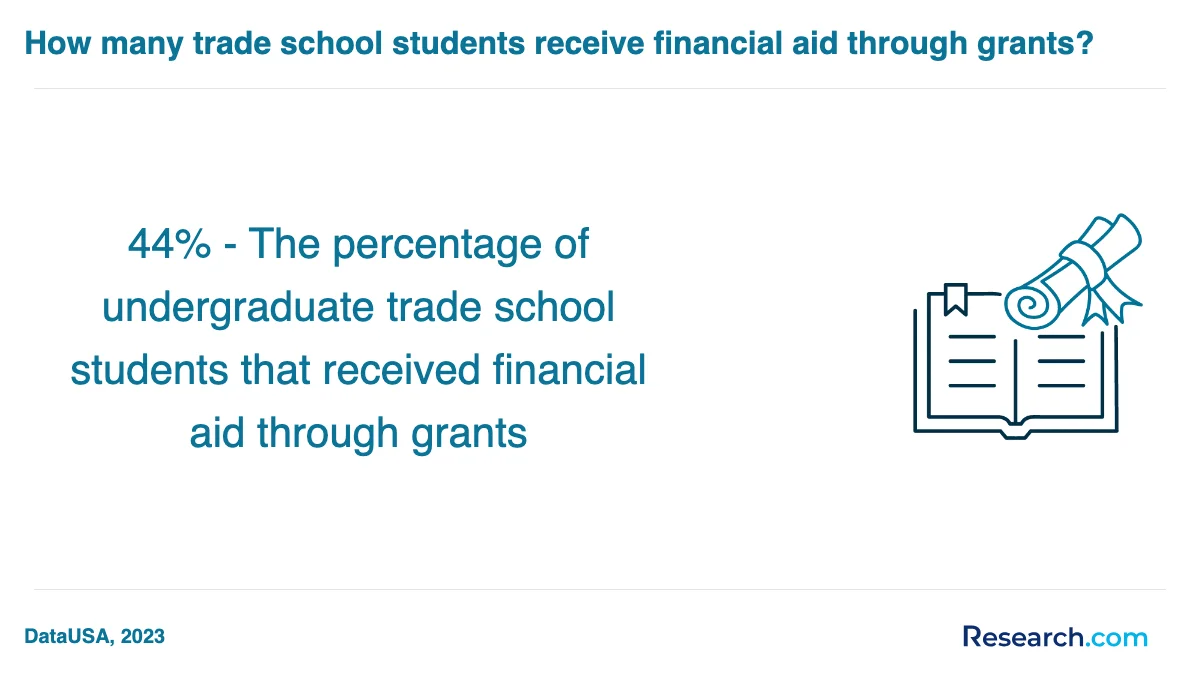
Trade school students in Troy benefit from multiple financial aid sources that significantly reduce educational costs. The Free Application for Federal Student Aid (FAFSA) is a key step; by submitting it early, applicants become eligible for federal grants like the Pell Grant and low-interest loans. Graduates from trade schools like UTI Canton often highlight how the school's financial aid team simplified this process, making it easier to qualify for funding.
Additionally, specialized scholarships specifically for trade and technical fields add substantial support. National programs such as the Ford Sons & Daughters Scholars and CDM Constructors Inc. Workforce Development Scholarship offer awards ranging from $500 to $40,000. These scholarships, often aimed at fields like welding or HVAC, make hands-on training more accessible.
Local scholarships through The Troy Foundation provide targeted assistance for area residents and graduates of local high schools. Applications open in January and close in early March, enabling many Troy-based students to secure extra funding.
Enrolling in a trade school program in Troy primarily requires a high school diploma or GED equivalent, which serves as the foundational credential accepted by almost all institutions. For example, graduates from Troy's TRAC program often recall that proving this basic educational background was straightforward yet essential.
Students must also demonstrate legal work authorization in the U.S., sometimes through a valid work permit or Employment Authorization Document (EAD). This ensures compliance with federal regulations and is a common step, especially for international applicants aiming to launch careers locally.
- Completion of an application form with supporting documents such as a photo ID and resume
- Attendance at an information session to understand campus expectations, program details, and career pathways
- Some programs require fingerprint or background checks, like TRAC, enhancing safety in training environments
- Eligibility testing for basic skills in reading, math, or English, confirming readiness for hands-on learning
- Interviews to assess genuine intent toward employment after training, a crucial step many Troy graduates appreciated for aligning personal goals with program offerings
Notably, specialized fields like welding or robotics at Troy trade schools do not demand prior college credits, focusing instead on practical readiness. In contrast, nursing programs may ask for prior coursework evaluations, reflecting the program's rigor.

Trade school programs in Troy commonly include hands-on, technical courses that prepare students for swift employment in growing industries. Graduates from local programs such as those at Universal Technical Institute (UTI) describe immersive experiences working directly with industry-standard equipment, building skills that employers actively seek.
Typical courses feature:
- Welding Specialist and HVACR Technician training, both approximately 10 months long, offering practical certifications.
- Airframe and Powerplant Technology, Industrial Maintenance, Robotics and Automation, and Wind Power Technology-fields reflecting Troy's expanding skilled trades sector.
- Healthcare, logistics, and supply chain management courses, often short-term, leading to certifications or apprenticeship preparation at institutions like Oakland Community College.
- Microsoft Office and vocational classroom training funded through Troy Michigan Works! to support career switchers and rapid workforce entry.
Students frequently highlight the blend of certification preparation, hands-on labs, and employer partnerships that make these courses highly effective for launching careers locally. Whether training in welding shops or robotics labs, the real-world applications students master create confidence and job readiness.
Trade school programs in Troy offer a range of specialized technical training tailored to prepare students for the current job market. Graduates from Universal Technical Institute (UTI) near Troy commonly highlight hands-on learning in fields like Welding Specialist, Airframe and Powerplant Technician, and HVACR Technician. Many enjoyed completing these programs in under a year, gaining industry certifications that made entering manufacturing or energy sectors straightforward and rewarding.
High school students benefit from Oakland Schools Technical Campuses (OSTC), which provides 17 state-approved Career and Technical Education (CTE) programs spanning sectors such as Automotive Technology, Health Sciences, and Business. Learners appreciate the combination of classroom and real-world work experiences, with certifications and early college credit shaping their career paths effectively.
Adult learners often praise the Troy Adult Education & Careers (TRAC) program for personalized guidance, connecting their interests with in-demand trade fields. Many locals find success exploring top trade school degrees that align with Troy's market needs, including manufacturing, energy, and healthcare.
Choosing from the best trade school programs in Troy MI starts with pinpointing your area of interest. Graduates from popular Troy institutions often praise programs in welding, HVACR, and industrial maintenance for offering hands-on labs and apprenticeships that closely simulate real job environments. For instance, students completing HVACR certificate courses highlight how evening classes allowed them to maintain their full-time jobs without losing momentum.
When evaluating schools, focus on accreditation and outcomes. Local programs accredited by recognized bodies ensure credits transfer smoothly and employers value your credential. Graduates often share positive experiences regarding career services that helped them secure apprenticeships, reinforcing the importance of program reputation and network ties.
To understand how to compare trade school costs in Troy, assess tuition alongside financial aid offerings. Public community colleges usually provide more affordable rates, and many Troy students benefit from scholarships and grants. For a detailed look at tuition rates and aid options, consider resources like most affordable online freight broker training, which guide cost-effective choices tailored to trade fields.

Trade school career opportunities in Troy MI cover a broad spectrum of high-demand skilled trades jobs Troy Michigan, reflecting the diverse programs available through institutions like Universal Technical Institute (UTI) and Oakland Schools Technical Campuses (OSTC). Graduates from welding specialist programs often step directly into roles as welders or fabricators in manufacturing and automotive sectors after about 10 months of hands-on training, earning wages above the national average.
HVACR technicians trained locally maintain climate control systems in residential and commercial buildings, a field growing steadily by 5% nationally through 2031. Beyond these areas, Troy's trade schools offer pathways into industrial maintenance, robotics, and wind power technology-careers critical to Michigan's advanced manufacturing and renewable energy industries.
OSTC graduates frequently secure positions in automotive technologies, cybersecurity networking, and health sciences, often armed with industry certifications that boost immediate employability in Troy's vibrant job market. Additionally, programs at Troy Adult Education & Careers open doors to IT, office administration, and human resources, with scholarships increasing accessibility.
Many students appreciate the practical, career-focused training at these schools, which equips them for rewarding jobs. Those interested can explore low cost online electrician training to expand their opportunities further.
The job market for trade school graduates in Troy shows strong demand, with over 300 skilled trade job opportunities available locally. Graduates from programs at schools like UTI in nearby Canton find roles as maintenance technicians, mechanics, electricians, and HVAC supervisors, reflecting the active industrial and technological sectors in the area. These careers offer considerable financial rewards, a key factor when evaluating trade school graduate salaries in Troy Michigan.
Key advantages for local graduates include:
- Hands-on training tailored to employer needs in Troy's manufacturing and tech industries
- Stable but competitive job openings across HVAC, welding, robotics, and industrial maintenance
- An average annual salary around $58,527, with entry-level jobs starting near $44,000 and experienced professionals exceeding $87,000
Many graduates report successful placement due to programs that emphasize the latest industry tools. State initiatives like Michigan Reconnect further enhance access to training in high-demand fields. For students weighing options, exploring cheapest online landscaping technology courses can complement local opportunities and diversify skill sets in Troy's job market.
Most Affordable Trade School & Training Programs - Leading Certification Courses in Troy for 2026
# 1 position
Hudson Valley Community College - Electrical and Power Transmission Installation/Installer, General.
associateHudson Valley Community College offers a hybrid Electrical and Power Transmission Installation/Installer, General program that prepares students to install residential, commercial, and industrial electrical systems and power transmission lines. The curriculum covers electricity, safety, wiring, insulation, grounding, blueprint interpretation, equipment operation, and codes. Annual in-state tuition is $6,694. Graduates earn a median of $49,095 one year after completion. The program is accredited by the Middle States Commission on Higher Education.
# 2 position
Hudson Valley Community College - Heating, Air Conditioning, Ventilation and Refrigeration Maintenance Technology/Technician.
associateHudson Valley Community College offers a hybrid program in Heating, Air Conditioning, Ventilation and Refrigeration Maintenance Technology/Technician. The curriculum trains students to repair, install, service, and maintain HVAC and refrigeration systems, emphasizing diagnostic techniques, testing equipment, and mechanical, electrical, and electronic principles. Annual in-state tuition is $6,694. Graduates earn a median salary of $47,134 one year after completion. The program is accredited by the Middle States Commission on Higher Education.
# 3 position
Hudson Valley Community College - Automobile/Automotive Mechanics Technology/Technician.
associateHudson Valley Community College offers a hybrid program in Automobile/Automotive Mechanics Technology/Technician, preparing students to repair, service, and maintain various automobiles. The curriculum covers brake systems, electrical systems, engine performance and repair, suspension and steering, transmissions, and heating and air conditioning systems. The program is accredited by the Middle States Commission on Higher Education. Annual in-state tuition is $6,694, and median earnings one year after completion are $43,799.
# 4 position
Hudson Valley Community College - Welding Technology/Welder.
associateHudson Valley Community College offers a hybrid Welding Technology/Welder program that equips students with technical skills in arc welding, resistance welding, brazing, soldering, and cutting. The curriculum covers welding metallurgy, processes, safety, structural design, and relevant codes. The program’s annual in-state tuition is $6,694. It is accredited by the Middle States Commission on Higher Education and includes some distance-education options for flexible learning.
# 5 position
Hudson Valley Community College - Allied Health and Medical Assisting Services, Other.
associateHudson Valley Community College offers a hybrid program in Allied Health and Medical Assisting Services, Other, providing some distance-education options. The program is accredited by the Middle States Commission on Higher Education. Annual in-state tuition costs $6,694. This program covers instructional content not listed under other allied health and medical assisting categories, focusing on specialized skills within the field.
# 6 position
Hudson Valley Community College - Marketing/Marketing Management, General.
associateHudson Valley Community College offers a Marketing/Marketing Management, General program that prepares students to manage marketing processes, including buyer behavior, marketing research, demand analysis, pricing theory, strategic planning, and sales operations. The program covers advertising methods, consumer relations, retailing, and product-specific applications. Annual in-state tuition is $6,694. The program is accredited by the Middle States Commission on Higher Education.
# 7 position
Hudson Valley Community College - Business Administration and Management, General.
associateHudson Valley Community College offers a program in Business Administration and Management, General, designed to prepare students to plan, organize, direct, and control business functions. The curriculum includes management theory, human resources, accounting, logistics, marketing, and business decision-making. The program’s annual in-state tuition is $6,694. Graduates have median earnings of $38,018 one year after completion. The program is accredited by the Middle States Commission on Higher Education.
# 8 position
Hudson Valley Community College - Medical Administrative/Executive Assistant and Medical Secretary.
associateHudson Valley Community College offers a program in Medical Administrative/Executive Assistant and Medical Secretary, preparing students to support physicians, nurses, and healthcare administrators. The curriculum includes business and medical communications, medical terminology, healthcare operations, software applications, scheduling, and professional ethics. Annual in-state tuition is $6,694. Graduates earn a median income of $36,061 one year after completion. The program is accredited by the Middle States Commission on Higher Education.
# 9 position
Hudson Valley Community College - Accounting.
associateThe Accounting program at Hudson Valley Community College offers a hybrid format with some distance-education options. It prepares students for careers in accounting and related business functions, covering principles such as financial, managerial, cost, and tax accounting, auditing, and business information systems. The program is accredited by the Middle States Commission on Higher Education. Annual in-state tuition is $6,694, and median earnings one year after completion are $31,829.95.
# 10 position
Hudson Valley Community College - Accounting Technology/Technician and Bookkeeping.
associateHudson Valley Community College offers a hybrid Accounting Technology/Technician and Bookkeeping program designed to prepare students for technical administrative roles supporting accountants and financial managers. The curriculum covers posting transactions, record-keeping systems, accounting software, and general accounting principles. Annual in-state tuition is $6,694. The program is accredited by the Middle States Commission on Higher Education. Median earnings one year after completion are $31,829.95.
Frequently Asked Questions about trade school programs
Preparing for the job market after completing trade school in Troy involves several practical steps. First, graduates should leverage career services offered by their schools, which often include job placement assistance and resume workshops. According to the National Center for Education Statistics, over 70% of trade school graduates find employment within six months of completing their programs.
Networking is crucial; attending local industry events and joining professional associations in Troy can increase job opportunities. Additionally, obtaining relevant certifications beyond your trade school diploma can enhance employability, especially in fields like HVAC, electrical work, and welding, which are in demand locally.
Finally, gaining hands-on experience through internships or apprenticeships increases the chances of securing stable employment. The U.S. Bureau of Labor Statistics highlights that skilled trades in Troy face a consistent demand, particularly in construction and manufacturing sectors.
Employers in Troy value trade school graduates who possess strong technical skills related to their specific field. For instance, proficiency in HVAC systems, welding techniques, or automotive repair is essential depending on the program completed. According to the National Center for O*NET Development, practical expertise combined with the ability to operate advanced tools is highly sought after.
In addition to technical know-how, employers emphasize soft skills such as problem-solving, communication, and teamwork. A 2023 survey by the National Association of Manufacturers found that 82% of hiring managers in manufacturing industries prioritize effective communication.
Time management and adaptability also rank highly, given the fast-paced nature of trade jobs in Troy's expanding industrial sector.
Finding internships in Troy that align with your trade school program involves several practical steps. Start by exploring local employers in industries related to your field. Troy has a growing manufacturing sector and various service providers that often offer internships.
Check with your trade school's career services office, as many schools maintain partnerships with regional businesses. According to the National Association of Colleges and Employers, about 60% of students secure internships through school-facilitated connections.
Online platforms such as Handshake and Indeed also list internships specific to the Troy area. Local chambers of commerce websites can provide leads on small businesses seeking interns. Networking at job fairs and community events increases your chances of finding relevant opportunities.
Remember to tailor your resume to highlight trade-specific skills, improving your appeal to employers in Troy's competitive internship market.
In Troy, obtaining a trade school diploma significantly enhances career mobility and advancement opportunities. According to the U.S. Bureau of Labor Statistics, workers with vocational training often experience faster job placement compared to those with only a high school diploma. Local employers in industries like manufacturing and healthcare value the hands-on skills provided by trade programs. A diploma from a Troy trade school can lead to higher starting wages, with some fields reporting increases of 10% to 20% over uncertified workers. Additionally, trade credentials often allow employees to qualify for promotions and specialized roles, supporting long-term career growth within the community.
In Troy, part-time job opportunities that complement trade school education are diverse and practical. Many students find roles in local manufacturing companies, warehouses, and automotive repair shops, which align well with technical training. According to the U.S. Bureau of Labor Statistics, Troy's manufacturing sector employs a notable percentage of the workforce, offering roles such as machinists and assemblers with flexible hours.
Additionally, healthcare-related positions like medical assistants or pharmacy technicians provide part-time options for students enrolled in allied health programs. These positions often offer on-the-job training which reinforces classroom learning.
Retail and customer service jobs in Troy can help develop communication skills useful for fields like HVAC or electrical work, where client interaction is essential. Websites like Indeed.com report growing demand for part-time skilled labor roles in this region.
To find the most affordable degree program near me in Troy, NY, you can start by researching local universities and colleges, comparing tuition fees, and available financial aid options. Utilize resources such as Research.com to get a comprehensive list of institutions near Troy, NY, and evaluate their cost-effectiveness relative to your academic interests and requirements. Additionally, consider reaching out to admissions offices directly for detailed information on program specifics and potential scholarships.
- How to Choose a Trade School to Fits Your Needs | Interplay https://www.interplaylearning.com/blog/7-unconventional-tips-to-find-a-trade-school-that-best-meets-your-needs/
- Skilled Trades | HVCC https://www.hvcc.edu/programs/all/subjects/skilled-trades.html
- How Virtual Trade Schools are Transforming the Workforce https://thebluecollarrecruiter.com/the-power-of-education-how-virtual-trade-schools-are-transforming/
- About Us - Ranken Technical College https://ranken.edu/about-us/